


Should I open or buy a FACE FOUNDRIÉ franchise in 2027?
Quality
Certified
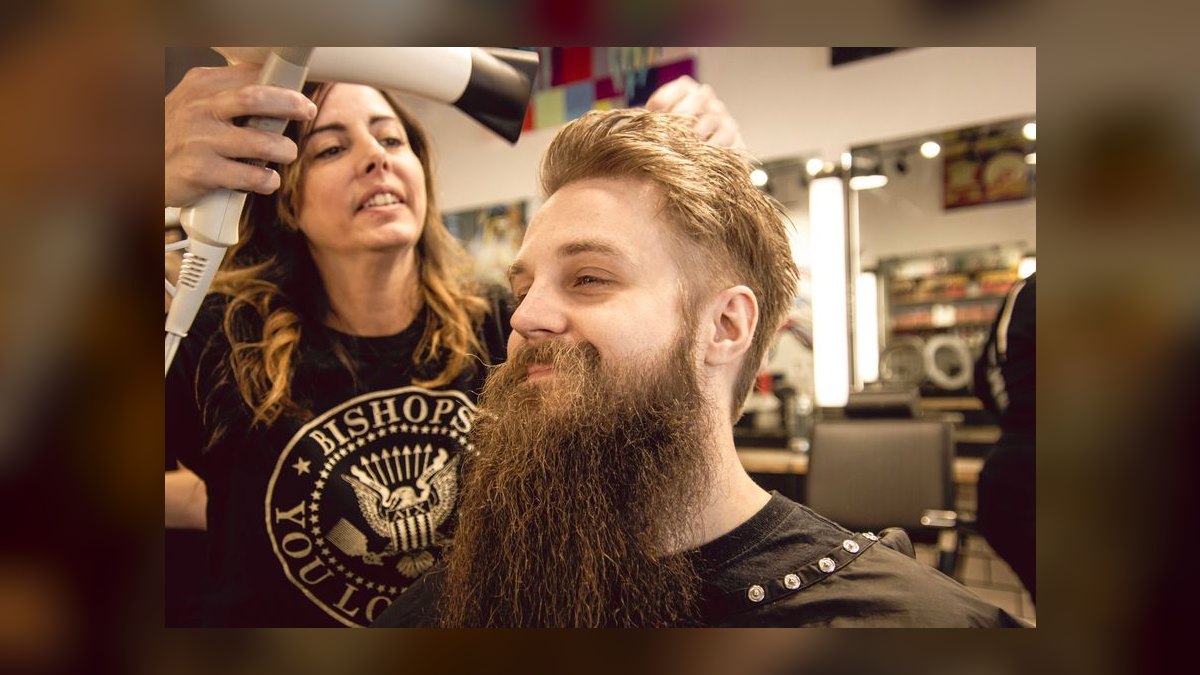
Open a new FACE FOUNDRIÉ only if you can recruit and retain licensed estheticians and lash techs; otherwise buy an existing studio with a seasoned team and a live membership base. Building costs roughly $300,000–$650,000 and 12–18 months to cash flow. Buying costs more upfront but skips the ramp.
Opening a new studio versus buying an existing one
These are two genuinely different businesses wearing the same brand. A new build is a construction-and-recruiting project that happens to end in a facial bar. An acquisition is an operations turnaround that happens to come with a lease. Confusing them is the most expensive mistake prospective franchisees make, because the skills that make you good at one are close to irrelevant for the other.
When you open a new location, you sign the franchise agreement, pay the initial franchise fee (the 2026 FDD range is roughly $40,000–$50,000), then spend six to nine months on site selection, lease negotiation, permitting, buildout, equipment installation, hiring, and pre-sale marketing before a single client walks in. During that window you are paying rent — unless you negotiated abatement — plus loan interest, plus your own living expenses, with zero revenue. Total Item 7 investment lands somewhere around $300,000 to $650,000 depending on square footage, market, and how much buildout the landlord funds. You choose your own trade area, your own site, your own team, and your own culture. Nothing is inherited, which cuts both ways: no bad hires to unwind, and no clients on day one.
When you buy an existing FACE FOUNDRIÉ, you are buying a cash-flowing asset. Beauty and wellness studio resales typically price on a multiple of seller's discretionary earnings — commonly in the 2x to 3.5x range for franchised service businesses, with stronger multiples for studios with high membership counts, low staff turnover, and remaining lease term. On a studio earning $150,000 in SDE, that is a $300,000–$525,000 purchase price, plus the franchisor's transfer fee (often a percentage of the initial franchise fee, frequently 25%–50% of it), plus attorney and escrow costs, plus whatever capital expenditure the studio has deferred. You also inherit the lease at whatever rate the previous owner negotiated, the equipment at whatever age it is, the Google reviews at whatever star rating they sit at, and the staff at whatever wage and commission structure they were promised.

The critical asymmetry: a new build gives you a clean membership ledger and a long ramp. A resale gives you an existing membership ledger and no ramp — but that ledger may be actively bleeding. A studio with 220 members that is losing 12 per month is worth dramatically less than one with 180 members growing by 8 per month, and a naive multiple on trailing earnings will not tell you which one you are looking at. You have to pull the membership cohort data yourself.
There is a third option most people skip past: buying a distressed or underperforming existing studio at an asset-value price. If a location is doing $420,000 in revenue with 90 members and the owner is burned out, you may be able to acquire it for the value of the leasehold improvements and equipment — call it $120,000–$200,000 — rather than an earnings multiple, because there are barely any earnings to multiply. You inherit a built-out space worth $200,000+ in construction costs and skip nine months of permitting. The risk is that the studio underperforms for a structural reason — a bad trade area, a competitor that opened across the street, a reputation you cannot repair — rather than an operator reason you can fix. That distinction is the entire underwriting question, and answering it honestly is worth more than any spreadsheet.
Franchisor approval sits on top of both paths. Whichever route you choose, FACE FOUNDRIÉ approves you as a franchisee, and in a resale it also has to approve the transfer and usually holds a right of first refusal on the sale. Do not sign a purchase agreement without confirming the franchisor will consent and telling you what remodel obligations attach to the transfer — many franchise agreements require a resale buyer to bring the studio to current brand standards within 12 to 24 months, which can be a $60,000–$120,000 obligation nobody mentioned during the tour.
How to decide between building and buying
The decision is not about which path is better in the abstract. It is about which specific constraint binds hardest in your situation — capital, time, or talent — and choosing the path that relieves it.
Start with talent, because in this model talent is the binding constraint far more often than capital. FACE FOUNDRIÉ studios run on licensed estheticians and lash technicians, and a chair with no tech in it generates exactly zero revenue while still consuming rent. If you have no relationships in the local beauty industry, no history of managing hourly service staff, and no idea what a competitive commission structure looks like in your market, opening from scratch means you will be recruiting three to five licensed professionals cold, in a market where med spas and independent studios are recruiting the same people. That is a brutal way to start. Buying a studio with a stable team — verified by pulling the last 24 months of payroll records and asking how many current employees have been there over 18 months — solves your hardest problem on day one.
Next, test capital. Building gives you more control over the total spend and lets you sequence it: you can value-engineer the buildout, negotiate tenant improvement allowance, and phase equipment purchases. Buying is a lump-sum event, usually with an SBA 7(a) loan requiring 10%–20% equity injection, and the bank will want a business valuation that supports the price. If your liquid capital is at the bottom of the range — say $100,000–$150,000 — a resale at a fair multiple may simply be out of reach unless the seller carries paper.
Then test time horizon. A new build will not produce owner income for 12 to 18 months in most markets. If you need distributions within six months because you left a job, building is financially reckless regardless of how good the site is. A profitable resale can pay you from month one, minus debt service.

Finally, test market availability. FACE FOUNDRIÉ, like most franchisors, sells protected territories. If the metros you want are already awarded, the only way in is a resale — the decision makes itself. Conversely, if no franchisee has ever operated in your state, there is no resale to buy and building is the only option. Check territory availability before you spend a month on financial modeling.
Run this tree honestly rather than working backward from the answer you already want. The most common failure I see is a buyer who has decided emotionally to build, then reverse-engineers optimistic staffing assumptions to justify it.
The concrete numbers behind each path
Here is what each option actually costs and returns, with the line items broken out so you can substitute your own market's figures.
Opening new. The 2026 FDD puts total initial investment at approximately $300,000 to $650,000. The components break down roughly as follows: initial franchise fee $40,000–$50,000; buildout and leasehold improvements $130,000–$300,000; treatment equipment, facial stations, lash beds, and sterilization $50,000–$120,000; signage and interior decor $18,000–$48,000; opening skincare retail inventory $20,000–$50,000; grand-opening and pre-sale marketing $12,000–$32,000; training and travel for you and your lead techs $10,000–$25,000; and working capital $25,000–$65,000. Ongoing, you pay a royalty in the 6%–7% range on gross revenue and a marketing fund contribution around 2%.
That working capital line is where new builds die. A $25,000–$65,000 reserve is what the FDD contemplates for the initial ramp period, but on a studio with $12,000 in monthly fixed costs, $45,000 covers less than four months of full burn. Budget an additional $60,000–$100,000 of personal reserves beyond the Item 7 total. If you cannot do that, you are underfunded regardless of what the disclosure document says.
Buying existing. Price = SDE multiple + transfer fee + closing costs + deferred capex + required remodel. Work an example. A studio grosses $780,000, and after cost of goods, labor, rent, royalty, marketing fee, and all operating expenses, produces $140,000 in seller's discretionary earnings with the owner working full-time. At a 2.75x multiple, the price is $385,000. Add a transfer fee — if the current initial fee is $45,000 and the agreement calls for 50%, that is $22,500. Add $8,000–$15,000 in legal and escrow. Add whatever the equipment audit turns up: if the lash beds and the steamer units are seven years old, budget $25,000–$40,000 to replace them within 18 months. Add a brand-standards remodel if the franchisor requires one on transfer — potentially $60,000–$120,000. Your real all-in is closer to $500,000–$560,000, not the $385,000 on the listing.
Now compare returns. That resale throws off $140,000 in SDE from month one. With an SBA 7(a) loan at, say, $400,000 over 10 years, annual debt service runs roughly $55,000–$65,000 depending on rate, leaving $75,000–$85,000 in owner cash flow in year one — real money, immediately. The new build produces nothing for 12 months, likely a loss of $40,000–$90,000 across the ramp, and then climbs toward the FDD's stated owner earnings band of roughly $60,000 to $190,000 on gross revenue of $500,000 to $1,200,000 as memberships mature. Over five years the new build often wins on total return because you bought at cost rather than at a multiple. Over eighteen months, the resale wins decisively.
The labor line, honestly. For a studio doing $700,000 in annual service revenue with three full-time estheticians, expect base pay in the $35,000–$55,000 range each plus commission around 10%–20% of service revenue they personally produce and 5%–10% on retail they sell. Fully loaded — base, commission, payroll taxes, and benefits — that team lands around $180,000–$250,000, which on $700,000 of service revenue is roughly 26% to 36% of gross. Front-desk and management payroll sits on top of that. Model service labor at the top of that band, not the bottom, because the studios that hit it at 26% are the ones with tenured techs producing at full capacity, and you will not have those in year one of a new build.
The membership engine. Memberships in this category typically run $49–$79 per month and include one facial, plus a discount on retail and add-ons. Direct cost to deliver that included service is roughly $15–$25 in product and $20–$35 in esthetician labor, so the membership fee alone contributes only $14–$19 per member per month. The money is in what members buy on top: add-on services like lash lifts, brow tints, and LED sessions, plus take-home skincare. A member spending $25–$60 per visit on add-ons and $15–$40 monthly on retail lifts total revenue per member to roughly $90–$180 per month against $50–$85 in direct cost — a net contribution around $40–$95 per member per month.
Run break-even from there. With $12,000 in monthly fixed costs — rent, utilities, insurance, front desk, royalty, marketing fee, debt service — you need roughly 130 to 200 members contributing at that rate just to cover fixed costs before any walk-in or a la carte revenue. That number is your survival threshold, and it is the single most important figure to compute for either path. On a resale, you are buying a studio that has already cleared it or has not; on a new build, every day before you cross it is a day you are funding from reserves.
Retention math. Target 70%–80% annual membership retention. Above 35% annual churn, your acquisition cost stops paying back and you are running a treadmill. At $150–$300 in fully loaded acquisition cost per member and $40–$95 in monthly contribution, a member who stays 24 months returns three to six times acquisition spend. A member who quits at month five barely returns it. The dominant churn driver in this category is inconsistent service quality — a member who gets two mediocre facials in a row does not complain, they just stop rebooking. That is why staffing stability and membership profitability are the same problem wearing two hats.

Real estate, since it drives everything above. Target $25–$45 per square foot annually for roughly 1,500 square feet in a Class B or C center with visibility and easy parking — $3,125 to $5,625 monthly. Class A lifestyle centers at $50–$80 per square foot break the unit economics unless your average ticket clears $150. Refuse percentage-rent clauses; take a fixed 2%–3% annual escalation instead, and if the landlord insists on a percentage kicker, cap it well above any revenue you will hit in years one and two. Push hard for tenant improvement allowance — in soft centers, landlords will fund $30–$60 per square foot, which is $45,000–$90,000 against a buildout running $130–$200 per square foot. Free rent during construction is worth another $37,500–$67,500. Cap the term at five years with one five-year option; this category's equipment and consumer expectations are moving fast enough that a ten-year anchor is a liability. And budget $3,000–$6,000 annually for HVAC service, because steamers, hot towel cabinets, and humidity in treatment rooms punish systems that were specified for a retail shell.
Sequencing the work, whichever path you choose
Both paths have a correct order of operations, and doing steps out of order is how people lose deposits.
If you are buying, the sequence runs: sign an NDA and get the listing package; request the last three years of profit and loss statements plus the trailing twelve months of point-of-sale exports; sign a letter of intent with a 45- to 60-day diligence window and a refundable deposit; then do the real work. Pull membership data by cohort — how many members joined each month for the last 24 months and how many of each cohort are still active. That single table tells you whether the business is growing or dying better than any P&L. Pull payroll records and count how many current staff have 18+ months of tenure. Interview the estheticians privately, with the seller's consent, and ask whether they intend to stay through a sale; if the top producer leaves, a meaningful share of the revenue leaves with them. Get the lease assigned and read the assignment clause — some landlords use a transfer as an opportunity to reset rent. Contact the franchisor early to confirm approval, transfer fee, remaining term, and any remodel obligation. Only then negotiate final price against what diligence uncovered.

If you are opening, the sequence runs: confirm territory availability and get through the franchisor's qualification process; secure financing pre-approval so you can move on a site; then site selection with the franchisor's real estate support, with letters of intent on two or three candidates so you retain negotiating leverage. Sign the lease only after the franchisor approves the site. Then permitting and buildout, which in most jurisdictions runs three to six months for a facial bar with plumbing changes — assume the longer end, because plumbing and health department review for treatment rooms is not a fast process. Recruiting starts long before the space is finished: begin building your esthetician pipeline at least six months before projected opening, well before you have a space to show them. Build relationships with local cosmetology programs, offer externship slots, attend state board exam sessions in your radius, and run an employee referral bonus in the $1,000–$2,000 range paid after 90 days of retention. Pre-sell memberships during the final 45 days of construction with a founding-member rate; every membership sold before opening is a day of ramp you skip.
Two sequencing rules apply to both. First, retain a franchise attorney before you sign anything — the franchise agreement, the lease, and the purchase agreement each contain clauses that are negotiable if raised early and immovable once executed. A $2,000–$4,000 review fee is trivial against a ten-year lease or a transfer remodel obligation. Second, talk to existing franchisees before either commitment. Item 20 of the FDD lists current and former franchisees with contact information; call at least eight, including at least two who left the system. Ask specifically about tech recruiting in their market, actual membership counts at months 6, 12, and 24, retail attachment rate, and what they would do differently. Former franchisees will tell you things current ones will not.
The trade-offs nobody puts in the brochure

A few realities worth internalizing before you commit either way.
This is not a semi-absentee business, whatever anyone tells you. The model depends on service consistency, membership selling at the front desk, and scheduling density, and all three degrade quickly without an owner present. Most successful operators are on site 30–40 hours a week for the first two years. You can hire a general manager at $50,000–$65,000 plus incentive, but that expense comes directly out of the owner earnings band, which is why absentee studios cluster at the bottom of it.
Competition is real and getting denser. Heyday, The Lash Lounge, Amazing Lash, Deka Lash, and a long tail of independent facial and lash studios are chasing the same client and, more importantly, the same technicians. Before you commit to a trade area, drive it and count competing studios within a fifteen-minute radius. Then check whether any of them are hiring — a competitor with a permanent "now hiring esthetician" sign is telling you the labor market is tight there.
Your inherited reputation matters on a resale in a way it does not on a build. A studio with 3.4 stars and 200 reviews carries a drag you will spend a year unwinding, because review averages move slowly once the denominator is large. Price that in, or walk.
Finally, be honest about which risk you would rather own. Building means you own execution risk: your site, your team, your ramp, all unproven. Buying means you own inheritance risk: someone else's lease, someone else's staff promises, someone else's client relationships. Neither is safer in general. The right question is which of those two you are actually equipped to manage — and for most first-time franchisees in this category, a stable existing team is worth paying a multiple for.
Related questions
How long until a FACE FOUNDRIÉ studio breaks even?
New builds commonly reach positive cash flow between months 12 and 18, driven mostly by how quickly membership count crosses the 130–200 threshold that covers fixed costs. A well-run resale is cash-flowing at close, so break-even is really about covering debt service from day one.
Can I get an SBA loan for a FACE FOUNDRIÉ?

Franchises listed in the SBA Franchise Directory are generally eligible for 7(a) financing. Expect a 10%–20% equity injection, personal guarantees, and a lien on business assets. Acquisitions often underwrite more easily than startups because there is historical cash flow to service the debt.
Is a distressed studio worth buying?
Only if you can prove the underperformance is operator-caused rather than market-caused. Weak marketing, high staff turnover, and neglected memberships are fixable. A saturated trade area, a poor site, or a rent rate above market are not, and no amount of energy will fix them.
How many members do I need to be profitable?
Roughly 130–200 members at typical contribution levels just to cover $12,000 in monthly fixed costs. Profitability comes from what sits above that: a la carte clients, retail attachment, and add-on services. Compute your own number from your actual rent and debt service.
Should I plan for multiple units?
Multi-unit works once your first studio runs without you daily and you have a bench of senior techs who can seed a second location. Signing a multi-unit development agreement before proving unit one is how operators end up obligated to open studios they cannot staff.
FAQ
What does it actually cost to open a FACE FOUNDRIÉ from scratch?
The 2026 FDD puts total initial investment at roughly $300,000 to $650,000, including a $40,000–$50,000 franchise fee, buildout, equipment, signage, opening inventory, marketing, training, and working capital. Plan on an additional $60,000–$100,000 of personal reserves beyond that figure, because the working capital allowance in Item 7 rarely covers a realistic ramp.
How is an existing FACE FOUNDRIÉ studio priced?

Franchised service businesses in this category typically trade at roughly 2x to 3.5x seller's discretionary earnings, with the multiple driven by membership count, retention trend, staff tenure, and remaining lease term. Add the franchisor's transfer fee, legal and escrow costs, deferred equipment replacement, and any brand-standards remodel the franchise agreement triggers on transfer.
What are the ongoing fees?
Expect a royalty in the 6%–7% range on gross revenue plus a marketing fund contribution around 2%. On a studio grossing $800,000, that is roughly $64,000–$72,000 combined per year — money that comes off the top before rent, labor, or product cost, so build it into your model at the start rather than treating it as an afterthought.
Why is hiring the biggest risk?
Every dollar of service revenue requires a licensed esthetician or lash tech to produce it, and those professionals are recruited aggressively by med spas, resort spas, and independent studios in the same trade area. An empty chair still costs you rent. Stability comes from guaranteed hours, benefits, and a real progression to senior commission tiers — not from paying slightly above market.
Does buying an existing studio require franchisor approval?
Yes. The franchisor approves you as a franchisee and consents to the transfer, and most agreements include a right of first refusal on the sale. Contact the franchisor early in diligence to confirm remaining agreement term, transfer fee, and whether a remodel obligation attaches — discovering a $100,000 remodel requirement after closing is a common and avoidable disaster.
Is 2027 a reasonable year to enter, or should I wait?
Demand for facials, lashes, brows, and retail skincare remains strong, and soft strip-center leasing gives new builds real negotiating leverage on tenant improvement allowance and free rent. Competition and tech scarcity are also rising. There is no universally good year — the answer turns on your specific trade area, your capital position, and whether you can staff the studio.
Sources
- https://www.sba.gov/funding-programs/loans/7a-loans — SBA 7(a) loan program terms, eligibility, and equity requirements.
- https://www.sba.gov/document/support-sba-franchise-directory — the SBA Franchise Directory used to confirm financing eligibility for a brand.
- https://www.ftc.gov/business-guidance/resources/franchise-rule-compliance-guide — FTC Franchise Rule compliance guide covering the FDD and its 23 items.
- https://consumer.ftc.gov/articles/buying-franchise-consumer-guide — FTC consumer guide to evaluating a franchise purchase.
- https://www.bls.gov/ooh/personal-care-and-service/skincare-specialists.htm — Bureau of Labor Statistics outlook, wages, and employment projections for skincare specialists.
- https://www.franchise.org/ — International Franchise Association, industry benchmarks and franchisee resources.
- https://www.franchisebusinessreview.com/ — independent franchisee satisfaction surveys across beauty and wellness brands.
- https://www.bizbuysell.com/ — marketplace listings and valuation data for existing franchise resales.
- https://www.facefoundrie.com/franchise/ — the brand's own franchise development site and current disclosure request process.
- https://www.entrepreneur.com/franchises — franchise rankings and category analysis for beauty and wellness concepts.
Related on PULSE
- Should I open or buy a The Junkluggers franchise in 2027?
- Should I open or buy a Pak Mail franchise in 2027?
- Should I open or buy a PostNet franchise in 2027?
- Should I open or buy a Fish Window Cleaning franchise in 2027?
- Should I open or buy a Shine Window Care franchise in 2027?
- Should I open or buy an Image360 franchise in 2027?
This page will be disappearing soon. Save it to your device for $1 — or read it free while it is here.
@Kory-White- · if Venmo asks, the last 4 of my number are 2012
This page is gone.
This one is off the shelf now. $1 keeps it on your phone for good — the whole page, pictures and diagrams included.
 pulse-qHow Many Employees Should I Schedule Each Shift at My Ice Cream Shop in 2027?
 pulse-qHow Do I Score My Reps Fairly Across Territories in 2026?
 pulse-qShould I Hire a Fractional CRO If I Have No RevOps Function Yet in 2026?
 pulse-qShould I open or buy a PrimoHoagies franchise in 2027?
 pulse-qShould I open or buy a Biscuitville franchise in 2027?
 pulse-qShould I open or buy a Garbanzo Mediterranean Fresh franchise in 2027?
 pulse-qShould I open or buy a Hammer & Nails franchise in 2027?
 pulse-qShould I open or buy a Two Maids franchise in 2027?
 pulse-qShould I open or buy a Salon Lofts franchise in 2027?
 pulse-qShould I Hire a Fractional CRO If My Win Rate Is High but Volume Is Low in 2026?