
Should I open or buy a Bishops Cuts/Color franchise in 2027?
 Curated byKory White · Fractional CRO · Maryland
 PULSEKNOWLEDGE LIBRARY
Quality
Certified

Buy an existing Bishops Cuts/Color location if one is available in a market you understand; otherwise open new. Total Item 7 investment runs roughly $180,000 to $400,000 per the 2026 FDD, with ~6% royalty. This is an owner-operator business where stylist recruiting and retention, not real estate, decides whether you clear $60,000 or $180,000.
The outcome you should expect
Set your expectations against the two realistic paths, because they produce very different first-year cash curves.
If you open a new Bishops salon, plan on 5 to 7 months from signed franchise agreement to opening day: site search and lease negotiation eats 60 to 90 days, permitting and buildout another 90 to 120, and stylist recruiting overlaps the last 45. You will spend the full $180,000 to $400,000 range before a single client sits in a chair, and you will operate at a loss for the first several months while the client book builds from literal zero. A well-located, well-staffed new salon typically reaches monthly break-even somewhere in month 6 to month 9. If staffing goes badly or the site underperforms, that stretches to month 12 to 18 — and that gap, not the buildout cost, is what bankrupts underfunded franchisees.
If you buy an existing location, you are buying a client book, a trained stylist team, and a revenue history you can underwrite. Resale pricing for small service businesses is typically negotiated off seller's discretionary earnings, and salon resales generally trade in a range of roughly two to three times SDE depending on stylist tenure, lease terms, and how much of the revenue walks out the door with the owner. The critical diligence question on a resale is not the P&L — it is the stylist roster. A salon grossing $700,000 with four stylists who have each been there five years is a real asset. The same $700,000 with a roster that turned over twice last year is a liability wearing a good number.
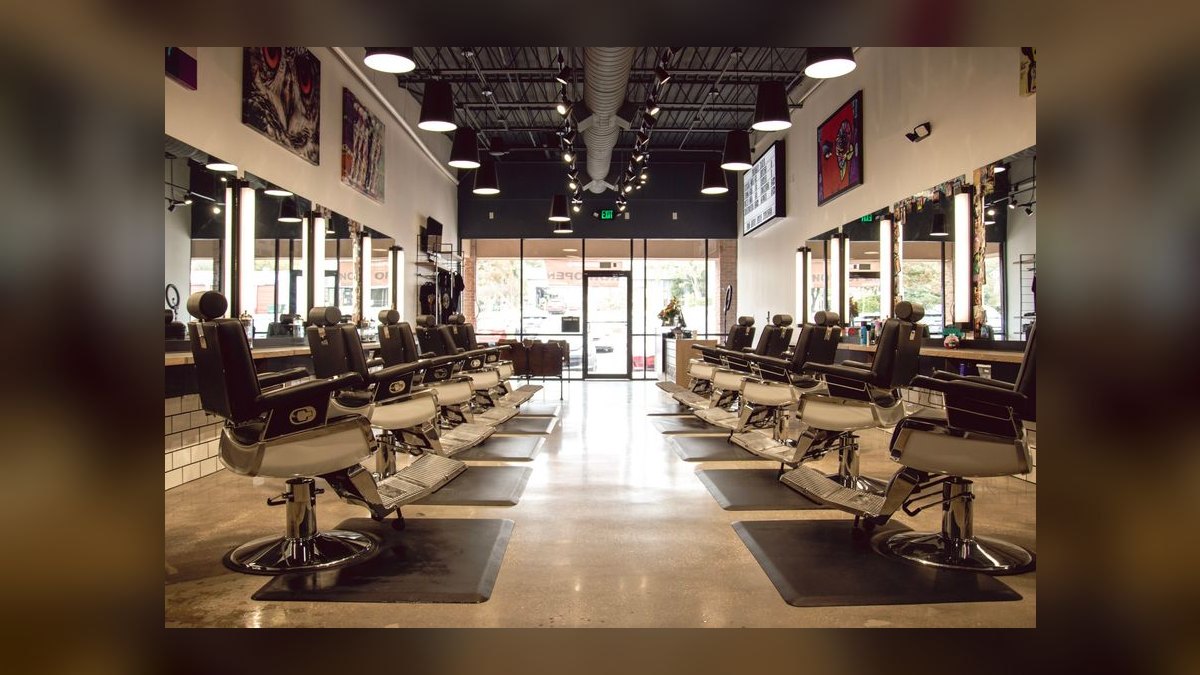
The honest expected outcome for a competent operator on either path: a business that grosses $400,000 to $900,000+ at maturity and pays the owner $60,000 to $180,000 for full-time, on-the-floor work. That is a real income and a sellable asset. It is not passive income, and anyone selling you a semi-absentee version of this model is selling you something the economics do not support. You are on the floor 40 to 50 hours a week for at least the first 18 months.
The decision between the two paths comes down to one variable: whether you already know how to hire stylists. If you have run a salon or a service team of 8 to 15 people, opening new is fine — you can build the team you want from scratch with no inherited culture problems. If you have never recruited a licensed stylist in your life, buy an existing salon with a stable team and learn the labor side while a functioning business pays your rent. That inversion catches people. First-time operators instinctively want to open new because it feels cleaner. It is actually the harder path.
What drives that outcome
Four levers move the P&L, and they are not equally weighted. Rank them the way the income statement does, not the way the brochure does.
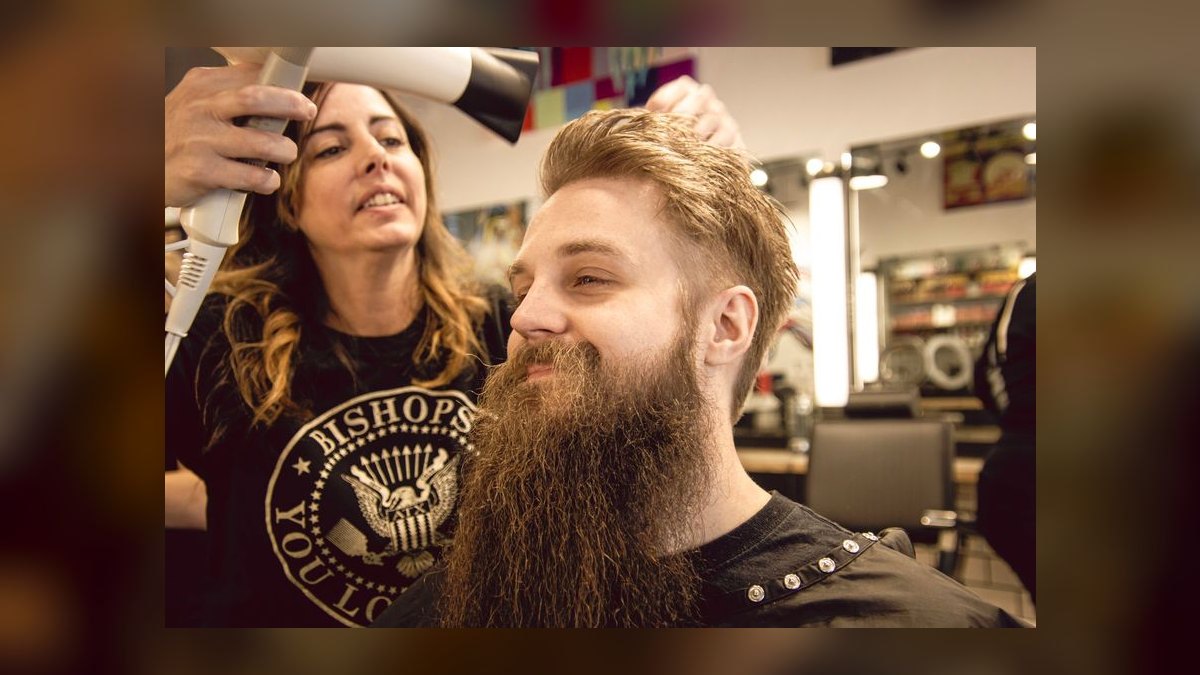
Stylist labor is the dominant line. Stylist payroll runs roughly 45% to 55% of revenue in this model. That single line is larger than rent, royalty, marketing, and product combined. A five-point swing in labor cost on a $600,000 salon is $30,000 — more than the difference between a good year and a mediocre one for the owner. Everything about how you schedule, pay, and retain stylists flows straight to your take-home.
Service mix drives ticket, and ticket drives everything above the labor line. This is where the Bishops model earns its positioning. Most quick-service hair franchises only cut. Bishops does cuts and color, and color is the higher-ticket, more time-intensive, more loyalty-generating service. A cut is a 20 to 30 minute transaction at a modest price point. A color service is a 90 to 150 minute appointment at a multiple of that, and a color client is far more locked in — once someone trusts a specific colorist with their formula, they do not casually shop around. Moving your mix even ten points toward color materially changes revenue per square foot and revenue per stylist-hour. The salons stuck at $400,000 are usually cut-heavy salons that never built a color book.
Walk-in conversion is the free lever nobody pulls. The model runs on no-appointment-necessary walk-in traffic plus booked appointments. Walk-ins are volume; booked appointments are predictability. The operational difference between a $500,000 salon and a $900,000 salon is very often just this: whether the front desk is trained to rebook every walk-in before they leave the building. A walk-in who books their next visit becomes a recurring client on a four-to-six-week cadence. A walk-in who leaves unbooked is a coin flip. Rebooking rate is the highest-ROI metric in the business and it costs nothing to improve.
Occupancy and fixed cost set your floor. Rent, royalty (~6% of gross), and the marketing fee are largely non-negotiable once signed. They do not flex with a slow January. This is why the lease terms you negotiate in month one govern your profitability in year five.

Notice what the diagram makes obvious: stylist retention appears twice. It compresses labor cost *and* it protects revenue, because a departing stylist takes their client book with them. That double effect is why retention is the whole ballgame in this model and why an owner who is bad with people cannot buy their way out of the problem with a better location.
Benchmarks and realistic ranges
Here is what to underwrite against. Treat any of these as a starting hypothesis to verify in Item 19 of the current FDD and in your own franchisee calls — never as a substitute for them.
Capital structure. Franchise fee in the $35,000 to $45,000 range. Buildout and leasehold improvements are the largest and most variable line, roughly $90,000 to $220,000 for a 1,200 to 1,800 square foot space. Equipment and stations — chairs, dryers, shampoo bowls, color processing stations — run about $35,000 to $90,000. Signage and decor $15,000 to $40,000, which sounds high until you remember the brand identity is specifically a hip, edgy, designed look rather than generic salon beige. Initial color and retail inventory $8,000 to $22,000. Grand opening marketing $12,000 to $30,000. Training and travel for you and your first stylists $8,000 to $22,000. Working capital $20,000 to $55,000. That totals to the roughly $180,000 to $400,000 Item 7 range.

Liquidity beyond Item 7. This is the number that separates survivors from casualties. Plan on $50,000 to $100,000 in liquid reserves *after* opening, on top of the Item 7 total. Item 7 gets you open; reserves get you to break-even. Franchisees who run out of cash in month four almost always did so because they treated the Item 7 high end as their total capital requirement. If you are financing buildout with an SBA 7(a) loan, model a monthly debt service payment in the low-to-mid thousands and put it in your break-even math from day one, not as an afterthought.
Revenue. Mature salons gross roughly $400,000 to $900,000+. The spread is enormous and it is almost entirely explained by three things: stylist count and tenure, color mix, and location traffic quality. A four-chair salon in a mediocre location with high turnover lives at the bottom of that range. A six-to-eight-chair salon in a dense, demographically-matched corridor with a tenured team and a strong color book lives at the top.
Owner earnings. Roughly $60,000 to $180,000. Where you land is a function of whether you are the manager or you pay a manager. If you are on the floor running the schedule, you keep the manager's salary. If you hire that role out, subtract it. Model both scenarios before you sign, because your year-three self may want to step back.

A worked unit economic model. Take a $600,000 salon. Stylist labor at 42% is $252,000. Occupancy at 13% including NNN charges is $78,000. Royalty plus marketing fee at roughly 8% combined is $48,000. Product cost, insurance, utilities, software, credit card fees, and general operating expense at 15% is $90,000. That leaves approximately $132,000 in owner earnings before debt service. Subtract SBA payments and you are in the $85,000 to $100,000 range of actual cash to the owner. That is a fair, defensible outcome for an owner-operator working full time — and it is why the labor line matters so much. Push labor to 50% and that $132,000 becomes roughly $84,000 before debt service.
Operating benchmarks to track weekly. Revenue per stylist-hour is the single best productivity metric — it normalizes across schedules and tells you instantly whether a slow week was a traffic problem or a staffing problem. Rebooking rate on walk-ins. Color as a percentage of service revenue. Retail attachment rate. Average ticket, split cut versus color. Stylist tenure in months, tracked per person, because a stylist's risk of leaving is highest in months 3 through 9. Track these six and you will see problems eight weeks before they show up in the bank balance.
Ramp curve. Month 1 to 3 you are building awareness and your stylists are building books; expect to run at a loss. Month 4 to 6 revenue climbs steeply as rebooking compounds. Month 6 to 9 is the realistic break-even window for a well-executed opening. Month 12 to 24 is when you approach mature run-rate, assuming you have held your team together. A resale purchase skips this curve entirely, which is the single strongest argument for buying rather than opening.

Risks, edge cases, and failure modes
Stylist churn is the primary failure mode, and it is expensive in two directions. When a good stylist leaves, you lose their client book — commonly 30 to 50 clients who follow them to their next chair. Recruiting and onboarding a replacement costs real money, and the new stylist needs three to six months to build a book of their own. Lose three stylists in a year, which is not unusual, and you have absorbed both direct replacement costs and a substantially larger hit in lost revenue. The defenses are unglamorous and they work: pay above-market commission rather than matching the local floor, offer something the independent down the street cannot (a health insurance stipend, real paid time off, a predictable schedule), and build a culture where stylists feel like partners. Paying five points more in commission is dramatically cheaper than replacing a producer twice a year. This is also why the "hire a manager and go passive" plan fails — culture is set by the owner's presence, and stylists know when the owner has checked out.
Territory protection is thinner than buyers assume. Bishops grants a protected area measured in a small radius around your location — verify the exact definition in your FDD, because the protected radius and what it actually prohibits are separate questions. A competing Bishops that opens outside that radius is entirely permitted. In dense urban markets, that is not hypothetical. Before signing, ask the franchisor directly and in writing about development plans in your metro, and ask existing franchisees in growing markets whether a second location landed near them and what it did to their traffic.
Competitive pressure comes from three directions, and only one is a franchise. The high-volume quick-cut chains — Great Clips, Sport Clips, Supercuts — have enormous unit counts, national marketing budgets, and a lower price point for a basic cut. You will not win on price against them and should not try. Their structural weakness is color: they are not built for it, staffed for it, or positioned for it. That gap is precisely the Bishops thesis. The more dangerous competitor is the independent hip salon — every city has several that look and feel similar to a Bishops, pay no royalty, and can therefore price more aggressively at the same experience level. Your counter is the things they cannot replicate: training systems, supply chain, brand recognition, and consistency. If you cannot articulate why a client should choose you over the independent two blocks away, you have not finished your business plan.

At-home color is the slow-moving structural risk. Direct-to-consumer color brands have improved substantially and consumer adoption has grown. If color is a large share of your service revenue — and in this model it should be — then any sustained consumer shift toward at-home color hits you where you are most exposed. The defense is experience quality: consultation, correction work, precision placement, and the things a box genuinely cannot do. Salons that treat color as a commodity transaction are the ones at risk. Salons that treat it as a skilled service with a relationship attached are considerably more durable.
Buildout overruns are near-universal. The Bishops aesthetic — exposed surfaces, industrial lighting, statement decor, custom signage — is not a cheap fit-out, and salons carry hidden technical requirements. Color stations and dryers draw meaningful power, and older retail spaces frequently need electrical upgrades that no one priced. Plumbing for shampoo bowls in a space that was previously a clothing store is another common surprise. Add a 25% contingency to every buildout quote and get a second bid from a contractor who has specifically built salons before. A general retail contractor will underquote a salon every time, in good faith.
Lease terms quietly determine your ceiling. The locations this brand wants — high-traffic retail corridors, ground-floor mixed-use — typically carry triple net charges on top of base rent, and landlords in strong corridors often push percentage rent clauses that take a slice of gross revenue above a threshold. On a salon doing serious volume, that clause can cost you tens of thousands annually. Negotiate percentage rent out entirely if you have any leverage; if you cannot, push the breakpoint threshold as high as possible so it only triggers in genuinely great years. Also negotiate for a co-tenancy clause, a personal guarantee that burns off after a few years, and a landlord contribution to buildout. These are the three concessions most often available and least often asked for.
Equipment replacement is a real recurring cost the pro forma omits. Hydraulic chairs, dryers, and color stations are used all day, every day, and they wear out on a multi-year cycle. Carry an annual line for maintenance and replacement rather than treating equipment as a one-time capital event.
Market fit failure. The brand's positioning is deliberately hip and inclusive, aimed at a younger, style-conscious customer. That positioning is an asset in a gentrifying urban neighborhood, a college town, or a dense young-professional suburb. It is a liability in a market whose salon demand is families and retirees, where a generic family salon at a lower price point wins. Do not put this brand in a market that does not want it and then blame the brand.
Financing failure. Underestimating post-opening capital is the most common way a fundamentally viable salon dies. If your total available capital is exactly the Item 7 high end and nothing more, you are not funded — you are gambling that everything goes right in the first six months. It rarely does.
A practical rollout plan
Run this as a sequential 130-day evaluation and launch process. Do not compress the diligence phases to get to buildout faster; the diligence is where the money is made or lost.

Days 1 to 20 — read the documents. Get the current FDD and read all of it, not just Item 7. Item 19 (financial performance representations) tells you what the system will actually claim about unit economics; Item 20 shows unit counts, openings, closures, and transfers over recent years, which is the single most honest signal about system health. A system with rising transfers and terminations is telling you something. Item 12 defines your protected territory in precise language — read that clause with a lawyer. Have a franchise attorney review the agreement before you talk to a single landlord.
Days 21 to 40 — call franchisees, including the unhappy ones. The FDD lists current and former franchisees. Call at least ten current owners and every former owner you can reach; the former owners will tell you more in fifteen minutes than the current ones tell you in an hour. Ask specifically: what is your annual stylist turnover, what is your color-versus-cut revenue split, what is your rebooking rate, what did your buildout actually cost versus the estimate, how long to break-even, and what is your genuine owner take-home after paying yourself for the hours you work. Ask what they wish they had known. Ask whether they would sign again.
Days 41 to 60 — validate the market and the site. Run three screens on any candidate trade area: demographic density of the target customer, distance to the nearest existing Bishops location, and the count of comparable independent salons within a short radius. A saturated independent market is a real warning sign — it means the customer exists but is already served. Sit in the parking lot of your candidate site on a Tuesday afternoon and a Saturday morning and count traffic yourself. Do not accept the landlord's traffic study.

Days 61 to 100 — build and recruit in parallel. This is where new operators lose time. Start recruiting stylists the day the lease is signed, not the week before opening. Licensed stylists give notice at their current salon and often have their own clients to transition, so your best hires need 30 to 60 days of lead time. Recruit through cosmetology schools, targeted social outreach, and — most effectively — referrals from the first strong stylist you hire. Meanwhile, manage the buildout actively with weekly site visits; contractors slip when nobody is watching.
Days 101 to 130 — open and build the book. Open with your full intended team, not a partial one; a thin opening week creates long waits, bad reviews, and a reputation you spend six months fixing. Train the front desk on rebooking from day one. Push hard on local awareness — neighborhood partnerships, opening promotions, and social proof from real clients. Track your six operating metrics weekly from the first week.
Beyond day 130 — build color and consider unit two. Once the salon is stable, deliberately grow the color book: promote color services to existing cut clients, ensure you have genuinely skilled colorists on staff, and measure the mix monthly. Only after unit one is running at target with a stable team and a manager you trust should you evaluate a second location. Multi-unit works in this system, but a second salon opened before the first is stable simply doubles your staffing problem.
Related questions
Is buying an existing Bishops location safer than opening new?
Usually yes, for a first-time operator. You inherit revenue history, a trained team, and a client book, skipping the 6-to-18-month ramp. The risk shifts from execution to diligence: verify stylist tenure and lease terms, because a resale with an unstable roster is worse than opening fresh.
How much liquid capital do I need beyond the Item 7 investment?
Plan on $50,000 to $100,000 in reserves after opening. Item 7's $180,000 to $400,000 gets the doors open; reserves carry you through the months before break-even. Most franchise failures in this category are cash-timing failures, not demand failures.
Can I run a Bishops franchise semi-absentee?
Not realistically in the first 18 months. Stylist culture is set by owner presence, and turnover — the model's biggest profit leak — accelerates when the owner is absent. Budget 40 to 50 hours weekly on-site initially, then transition to a trusted manager once the team is stable.
What single metric best predicts salon profitability?
Revenue per stylist-hour. It normalizes across schedules and headcount and instantly separates a traffic problem from a staffing problem. Pair it with rebooking rate on walk-ins and color as a percentage of service revenue for a complete weekly read.
Does the cuts-and-color model actually beat cut-only franchises?
On unit economics, yes — color carries a higher ticket, longer appointment, and stickier client relationship than a cut. The trade-off is that color demands more skilled stylists, more training, and more product inventory, which raises both your labor cost and your recruiting difficulty.
FAQ
What is the total investment range for a Bishops Cuts/Color franchise?
Per the 2026 FDD, total Item 7 investment runs roughly $180,000 to $400,000. That includes a franchise fee in the $35,000 to $45,000 range, plus buildout, equipment and stations, signage and decor, initial inventory, grand opening marketing, training and travel, and working capital. Verify the current FDD figures directly — these ranges change between disclosure years.
How much can I expect to earn as a Bishops franchise owner?
Mature salons generally gross $400,000 to $900,000+, with owner earnings commonly in the $60,000 to $180,000 range. Where you land depends heavily on whether you manage the salon yourself, how well you hold labor cost at or below the mid-40s as a percentage of revenue, and how much of your service revenue comes from color rather than cuts alone.
What are the ongoing fees?
A royalty of approximately 6% of gross sales plus a marketing fee. On a $600,000 salon, that combination represents roughly $48,000 annually — a fixed drag that does not flex with slow months. Confirm the exact percentages and any additional technology or local advertising requirements in your specific franchise agreement, since terms can vary by agreement and market.
How long until I break even?
For a well-located new salon with adequate staffing, month 6 to month 9 is the realistic monthly break-even window, with mature run-rate arriving somewhere in months 12 to 24. Staffing trouble or a weak site pushes break-even to month 12 to 18. Buying an existing profitable location largely eliminates this ramp, which is the main argument for the resale path.
What actually differentiates Bishops from other hair franchises?
Cuts and color in a walk-in-friendly, appointment-flexible format with a deliberately hip, inclusive brand at accessible prices. Most quick-service hair franchises only cut. Color is the higher-ticket, more recurring, more relationship-driven service, and it is the structural gap in the high-volume quick-cut chains' offering. That gap is the entire strategic thesis of the brand.
What is the biggest risk I should underwrite before signing?
Stylist recruiting and retention, without close competition. Labor is 45% to 55% of revenue, and a departing stylist takes 30 to 50 clients with them — so turnover hits both the cost and revenue sides simultaneously. If you have never hired and retained licensed stylists, either buy an existing salon with a tenured team or get that experience before you sign anything.
Sources
- https://www.franchise.org — International Franchise Association, franchise industry data and evaluation guidance.
- https://www.ftc.gov/business-guidance/resources/franchise-rule-compliance-guide — FTC Franchise Rule compliance guide, explains the FDD and its 23 items.
- https://www.sba.gov/funding-programs/loans/7a-loans — U.S. Small Business Administration 7(a) loan program, the standard financing path for franchise buildouts.
- https://www.bls.gov/ooh/personal-care-and-service/barbers-hairstylists-and-cosmetologists.htm — Bureau of Labor Statistics occupational outlook for hairstylists and cosmetologists.
- https://www.entrepreneur.com/franchises/franchise500 — Entrepreneur Franchise 500 rankings and franchise system profiles.
- https://franchisebusinessreview.com — Franchise Business Review, independent franchisee satisfaction surveys.
- https://www.bbb.org — Better Business Bureau, complaint history and accreditation records.
- https://www.census.gov/programs-surveys/acs — U.S. Census American Community Survey, for trade-area demographic validation.
- https://www.ibba.org — International Business Brokers Association, resources on valuing and buying an existing business.
Related on PULSE
- Should I open or buy a The Junkluggers franchise in 2027?
- Should I open or buy a Pak Mail franchise in 2027?
- Should I open or buy a PostNet franchise in 2027?
- Should I open or buy a Fish Window Cleaning franchise in 2027?
- Should I open or buy a Diesel Barbershop franchise in 2027?
- Should I open or buy a salon-suite franchise in 2027?
This page will be disappearing soon. Save it to your device for $1 — or read it free while it is here.
@Kory-White- · if Venmo asks, the last 4 of my number are 2012
This page is gone.
This one is off the shelf now. $1 keeps it on your phone for good — the whole page, pictures and diagrams included.
 pulse-qShould I open or buy a Concrete Craft franchise in 2027?
 pulse-qShould I open or buy a Paul Davis Restoration franchise in 2027?
 pulse-qWhat Service Fees Should a Painting Contractor Charge in 2026?
 pulse-qShould I open or buy a Code Wiz franchise in 2027?
 pulse-qShould I open or buy a Stanton Optical franchise in 2027?
 pulse-qShould I open or buy a PDQ franchise in 2027?
 pulse-qHow Many Stylists Should I Schedule Each Day at My Hair Salon in 2026?
 pulse-qShould I open or buy an Office Evolution franchise in 2027?
 pulse-qShould I open or buy a Ned Stevens Gutter Cleaning franchise in 2027?
 pulse-qShould I open or buy a Dent Wizard franchise in 2027?