
Should I open or buy a Modern Market Eatery franchise in 2027?
 Curated byKory White · Fractional CRO · Maryland
 PULSEKNOWLEDGE LIBRARY
Quality
Certified
Only if you can fund $800K–$1.5M with $250K–$450K liquid, run a scratch kitchen across three dayparts, and site it in a health-conscious, higher-income trade area. Buying an existing Modern Market Eatery franchise with proven revenue de-risks the build; opening new costs more but lets you pick the real estate.
The operator who almost signed the wrong lease
Picture a buyer with $600,000 in cash and a $1.1M SBA pre-qualification, sitting in front of the 2026 Franchise Disclosure Document with a highlighter. On paper it works. The Item 7 range tops out around $1.5M, the franchise fee is roughly $35,000, and mature restaurants gross between $1.2M and $2.4M. The math looks like a mid-six-figure income. That is exactly the moment most first-time restaurant buyers make the decision that determines the next seven years of their life — and they make it on the wrong variable.
The variable that matters is not the investment range. It is the gap between the range's low end and its high end. That $700,000 spread is not noise or vendor padding; it is almost entirely site-driven. A second-generation restaurant space with an existing hood, grease interceptor, and three-phase power might land you near $850,000 all-in. A gray shell in a new mixed-use development, where you are building a 3,000-square-foot scratch kitchen from bare slab, will run past $1.4M before you have bought a single case of romaine. Same brand, same menu, same royalty — nearly double the capital at risk, and the higher-cost location does not automatically generate proportionally higher sales.
Now change one fact in the scenario. Suppose instead of a gray shell, a existing franchisee in the same metro is retiring and listing a location doing $1.6M in annual revenue. Resale multiples in fast casual typically run 2.5x to 3.5x on seller's discretionary earnings. If that restaurant produces $210,000 in SDE, the asking price lands somewhere between $525,000 and $735,000 plus assumed lease and any transfer fee the franchisor charges. You would be paying less than half the new-build cost for a business with a proven daypart mix, a trained crew, and a rent number you can underwrite from actual P&Ls rather than a broker's pro forma.
That is the real question buried inside "should I open or buy." It is not a philosophical preference. It is a spread between known and unknown cash flow, and the size of that spread changes with every specific deal you look at. The buyer who understands this stops asking whether Modern Market is a good brand and starts asking whether *this specific unit or this specific site* clears their cost of capital. Adjacent operators in franchised bakery-café, premium soup-and-salad, and build-your-own bowl concepts face the identical fork — the brand name changes, the underwriting logic does not.
The scenario resolves the same way it usually does in practice: the buyer who tours four existing resales before signing any new-build LOI negotiates better on both paths, because they finally have real P&Ls to compare against the FDD's Item 19.
How the unit economics actually work
Strip away the brand story and a Modern Market Eatery restaurant is a machine that converts three cost lines into a margin. Understanding the sequence matters more than memorizing any single percentage, because the order in which money leaves determines which levers you can still pull when things go sideways.
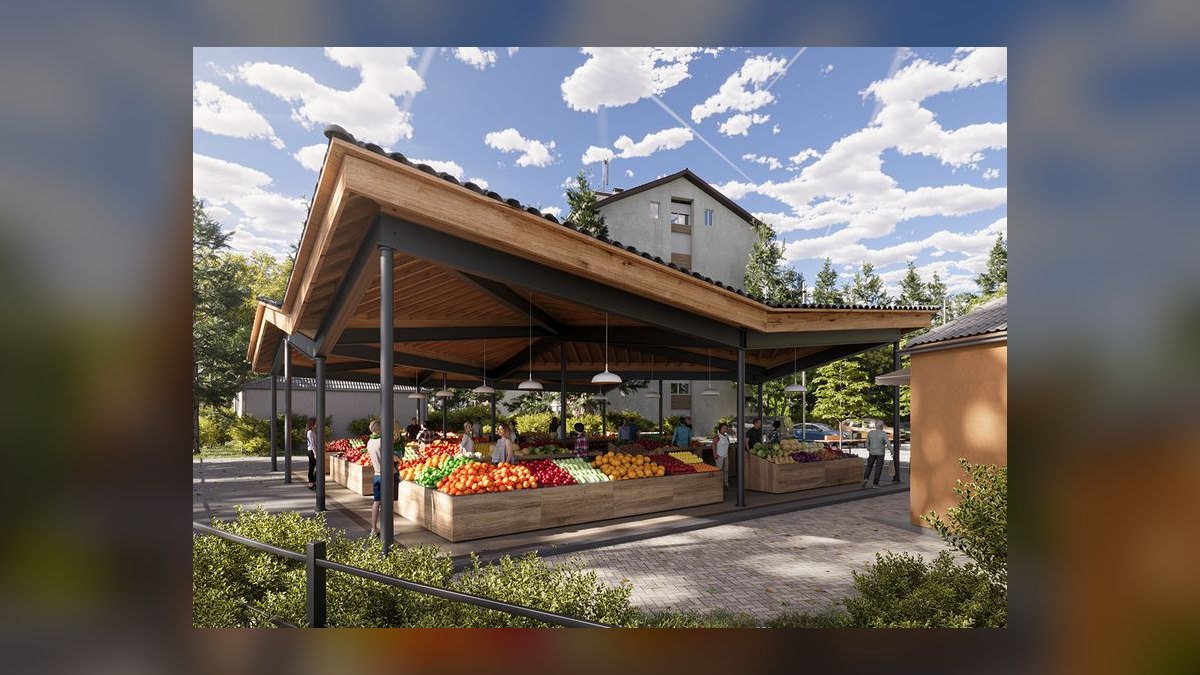
Start with gross revenue. The broad menu — grain bowls, salads, sandwiches, flatbread pizzas, breakfast — is the reason a single location can carry $1.2M to $2.4M. A focused concept selling one category effectively has one or two revenue windows per day. Modern Market's format opens three. Breakfast adds roughly 15–25% to the top line where the trade area supports it. That is meaningful volume against a fixed rent number, and it is the single biggest structural argument for the concept.
Then the deductions begin, in this order:
Food cost, 29–33%. Scratch preparation with fresh produce sits at the higher end of fast-casual COGS. Fresh inventory also spoils. A frozen-and-fry concept can run 26–28% and shrug at a slow Tuesday; a scratch kitchen with prepped bowls and cut produce eats the waste. Every point of unmanaged spoilage on $1.7M in sales is $17,000 straight off your distribution.
Labor, 28–32%, and climbing. Menu breadth means your line cooks need real skill. A cook who can execute a breakfast scramble, then pivot to a grain bowl, then fire a flatbread is not a $14/hour hire. In higher-wage states, experienced cooks command $18–$22/hour, and fast-casual turnover routinely runs well above 100% annually. Budget $15,000–$25,000 a year for recruiting, training, and the overtime that covers gaps.
Occupancy, typically 8–12% of sales, sometimes higher. This is the line that quietly kills restaurants. Triple-net leases with annual escalators of 3–5% compound against a sales line that may not grow at the same rate. A restaurant paying $14,000 a month at $1.5M in sales is at 11.2% occupancy. The same box at $22,000 a month is at 17.6% — and 17.6% occupancy in a fast-casual P&L is generally not survivable.
Royalty, about 5% of gross. Non-negotiable and calculated on revenue, not profit. On $1.7M that is $85,000, taken whether you had a good year or not.
Marketing fee, roughly 1–2% of gross. Funds brand-level advertising. Local marketing spend is typically on top of this.
What remains after all of it — plus utilities, insurance, repairs, and supplies — lands restaurant-level margins around 11–18%, producing owner earnings of roughly $120,000 to $300,000 on mature volume. That range is wide for a reason: it is almost entirely the difference between a well-sited, tightly-run restaurant and a marginal one.
Read that diagram as a sequence of gates rather than a snapshot. Royalty and marketing fees are fixed percentages you cannot influence. Food and labor you influence daily. Occupancy you set once, at lease signing, and then live with for a decade. Which is why the lease is the highest-stakes decision in the entire process, and the one most buyers rush.
One more mechanism worth naming: the relationship between menu breadth and operational complexity is not linear. Adding a daypart adds maybe 20% revenue but can add 30–40% to scheduling and prep complexity. That asymmetry is the concept's central trade — and it is why the same brand produces $300,000 owners and $80,000 owners.
The numbers you should actually underwrite
Here is the capital stack in the detail a lender will want to see. These figures track the 2026 FDD's Item 7 disclosure ranges; verify every one against the current-year document before you commit, because franchisors update them annually.
| Line item | Low | High |
|---|---|---|
| Franchise fee | $35,000 | $35,000 |
| Buildout / leasehold | $400,000 | $850,000 |
| Equipment & POS | $220,000 | $430,000 |
| Signage & decor | $25,000 | $80,000 |
| Initial inventory | $15,000 | $35,000 |
| Grand opening marketing | $20,000 | $55,000 |
| Training & travel | $10,000 | $28,000 |
| Working capital | $60,000 | $150,000 |
| Total | ~$800,000 | ~$1,500,000 |
Three underwriting tests separate serious buyers from optimistic ones.
The debt service coverage test. If you finance $1.0M through an SBA 7(a) loan on a ten-year amortization, annual principal and interest will consume a substantial share of your restaurant-level profit. Lenders typically want a debt service coverage ratio of at least 1.25x. Run it against the *low* end of the AUV range, not the midpoint. A restaurant that only pencils at $1.8M in sales is a restaurant that fails at $1.4M — and $1.4M is inside the disclosed range.
The occupancy ceiling test. Set your maximum rent before you tour a single site. Take your conservative sales estimate, multiply by 0.10, and divide by twelve. On a $1.5M projection that is $12,500 a month — your walk-away number. Every dollar above it must be justified by demonstrably higher traffic, not by a broker's enthusiasm. Include CAM, taxes, and insurance in the calculation; a $10/foot NNN load on 3,000 square feet is another $2,500 a month.
The square footage test. A scratch kitchen with a walk-in cooler, dedicated prep station, and a hood system sized for flatbread ovens and griddled breakfast items needs meaningful back-of-house. Plan for 2,500–3,500 total square feet. A smaller box either cannot execute the full menu or forces prep into hours that inflate labor. This is the most common way an attractively-priced site turns out to be unbuildable.
For the buy path, the diligence set is different but equally concrete. Request three years of P&Ls, not one. Pull daypart-level sales reports from the POS — a restaurant doing $1.6M with 55% at lunch is a different asset than one doing $1.6M evenly split, because concentrated lunch revenue is more vulnerable to a single office tenant relocating. Verify the remaining lease term; buying a business with three years left on the lease means buying a renegotiation. Confirm what the franchisor charges to transfer, whether the remodel clock resets on transfer, and how many years remain on the franchise agreement itself. A ten-year agreement with two years remaining plus a mandatory $250,000 refresh at renewal is a materially worse deal than the multiple implies.
Interview eight or more existing franchisees — the FDD lists them, including departures from the system. Ask about actual AUV, daypart mix, labor percentage, and net profit after debt service. Then call the ones who left. Departing franchisees give the most honest answers in the entire process, and almost nobody calls them.
Trade-offs, and the alternatives worth pricing
Opening new gives you site selection, a fresh buildout under current specs, no inherited reputation, and full control of the crew you hire. It costs the most, takes 12–18 months from signing to opening, and gives you zero revenue history to underwrite. Your ramp period — the months where you are paying rent and full labor against half-volume sales — is the highest-risk window in the venture, and it is exactly why working capital of $60,000–$150,000 is a line item rather than a suggestion.
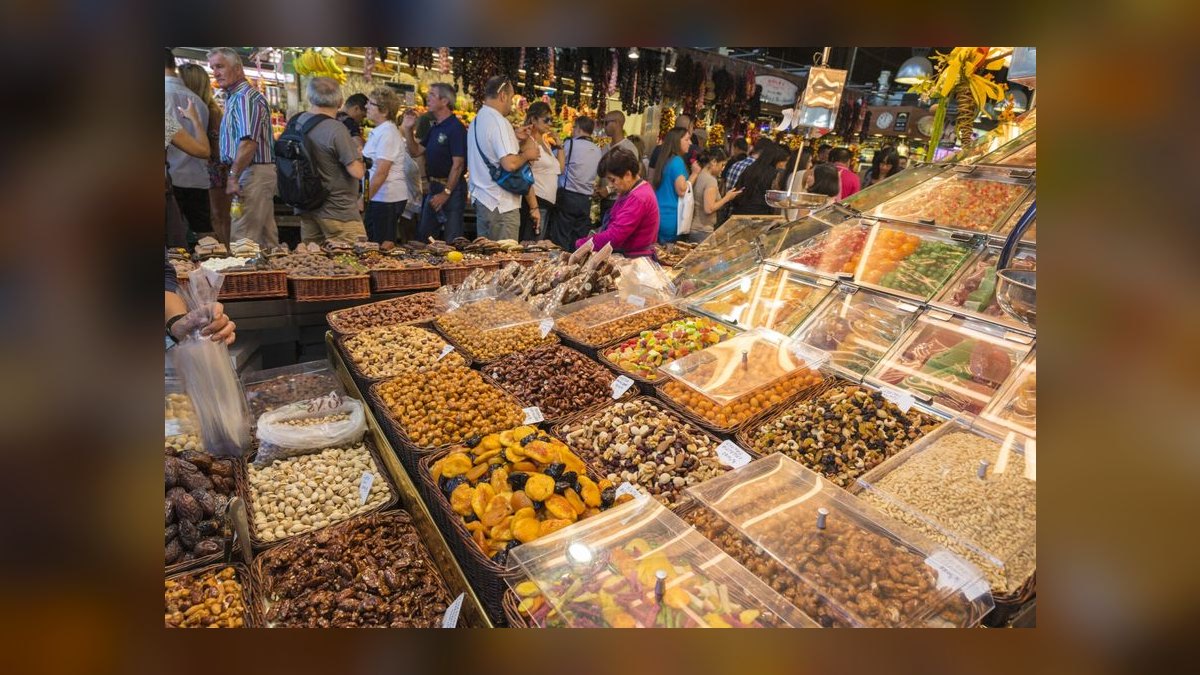
Buying an existing location inverts every one of those. You get a revenue history, a trained crew, and immediate cash flow. You also inherit the previous operator's problems: deferred equipment maintenance, a lease with unfavorable escalators, a local reputation you did not build, and possibly a remodel obligation. Price the equipment condition carefully — a walk-in compressor or a hood system at end of life is a five-figure surprise in month four. The best resale candidates are retirements and portfolio consolidations. The worst are distressed sales where the seller's problem is the trade area itself, which no amount of better operating will fix.
Beyond the open-versus-buy fork, price the adjacent concepts honestly before committing. Premium soup-salad-sandwich scratch fast-casual, other health-forward bowl brands, and broad bakery-café formats compete for the same customer with different cost structures. Some run simpler kitchens at lower AUV; others carry higher buildout with stronger brand pull. An independent health-forward restaurant eliminates the fee entirely — no $35,000 upfront, no 5% royalty, no marketing fee — which on $1.5M in sales is over $100,000 a year retained. What you give up is the playbook, the supply chain, the recognized name, and the site-selection support. For a first-time operator, that trade usually favors the franchise. For an experienced multi-unit operator with an existing back office, it often does not.
There is also a multi-unit consideration that changes the math entirely. Area development agreements typically discount the franchise fee on subsequent units and let you amortize a general manager, a marketing budget, and a commissary-style prep approach across three or four restaurants. Single-unit ownership in this segment is the hardest version of the business — you carry full overhead against one revenue stream. If you can only fund one unit and have no path to a second, weigh that against a lower-capital concept where a single location is a complete business.
Where operators actually lose the money
Signing the lease before running the occupancy math. This is the number one killer, and it is irreversible. A location at 11% occupancy and one at 17% occupancy can carry identical sales and only one survives. Rent is set once and compounds annually. Negotiate the escalator, negotiate a tenant improvement allowance, negotiate the free-rent period during buildout, and get a co-tenancy or kick-out clause if you are anchoring a new development that has not leased up. The buildout schedule slipping by two months while you pay rent is a $30,000 mistake that a well-drafted lease prevents.

Opening the breakfast daypart without the traffic to support it. Breakfast looks like free revenue and is not. It requires prep staff arriving before dawn, separate inventory, and a line that transitions cleanly to lunch. In a location without dense morning traffic — an office corridor, a commuter route, a dense residential pocket — that daypart can burn $40,000–$60,000 a year in labor and waste against thin sales. The test is simple: if you cannot credibly project morning covers at roughly half your lunch volume, do not open for breakfast in year one. Add it later once you know the trade area's rhythm.
Under-capitalizing working capital. Buyers routinely fund the build and treat working capital as a rounding error. A restaurant that opens at 60% of mature volume and takes nine months to ramp needs cash to cover the gap. Running out of working capital in month five forces exactly the wrong decisions — cutting labor below service standards, cutting local marketing when you most need traffic, stretching vendors. Hold the full $60,000–$150,000 and treat it as untouchable.
Underestimating menu complexity. Broad menu means more SKUs, more prep steps, more training hours, more waste vectors, and more ways for a shift to go wrong. Operators coming from focused concepts consistently underestimate this. Mitigate with rigorous prep sheets, par levels reviewed weekly, and a cross-trained crew deep enough that one call-out does not collapse a daypart. Track waste as its own line, not buried in food cost, or you will never see the leak.

Choosing the market by preference rather than data. The concept works in health-conscious, higher-income, multi-daypart trade areas. Pull daytime population, median household income, and competitive density before you fall in love with a site. Competing health-forward fast-casual brands in the immediate area is not automatically disqualifying — clustering often signals a validated market — but a trade area with zero comparable concepts operating successfully is a warning, not an opportunity.
Skipping the departed-franchisee calls. Every FDD lists franchisees who left the system. They are the highest-signal source in the entire diligence process and the most commonly skipped. Ten calls costs you a week and can save you a million dollars.
Financing on the optimistic case. Model the low end of the AUV range, the high end of labor, and a rent escalator that actually escalates. If the deal only works on best-case assumptions, it is not a deal — it is a bet.
Related questions
Is buying an existing location always cheaper than opening new?
Usually, but not always. A resale at 3.5x SDE on strong earnings plus a mandatory remodel and a short remaining lease term can approach new-build cost with less upside. Compare total capital at risk against verified cash flow, not asking price against Item 7.
How long until a new location reaches mature volume?
Most fast-casual restaurants ramp over 12–24 months, depending on trade area density and local marketing. Positive cash flow often arrives earlier than mature volume. Underwrite the gap with working capital rather than assuming a fast ramp.
Can I run a Modern Market Eatery franchise semi-absentee?
Realistically, no. A scratch kitchen across three dayparts requires an owner-operator or a genuinely strong general manager you are paying market rate for — which comes out of your distribution. Absentee models fit simpler, lower-labor concepts better.
Does competition from other health-forward brands hurt or help?
Clustering usually validates demand. Multiple successful health-forward concepts in a trade area signal that customers exist and will pay the price point. The bigger risk is a market with no comparable concepts operating profitably at all.
What happens at franchise agreement renewal?
Expect a renewal fee and typically a required remodel to current brand standards, which can run six figures. Confirm the remaining term and renewal obligations before buying an existing unit — they materially change the effective purchase price.
FAQ
How much does it cost to open a Modern Market Eatery franchise?
Per the 2026 FDD, total Item 7 investment runs roughly $800,000 to $1,500,000, including a franchise fee near $35,000. The spread is driven almost entirely by site condition — a second-generation restaurant space lands near the low end; a gray shell requiring a full scratch-kitchen build lands near the top. Verify current-year figures directly in the FDD.
What revenue and owner income should I expect?
Mature restaurants gross approximately $1.2M to $2.4M. After food cost of 29–33%, labor of 28–32%, occupancy, the roughly 5% royalty, and marketing fees, restaurant-level margins land around 11–18%, producing owner earnings of roughly $120,000 to $300,000. Debt service on the build comes out of that figure, not before it.
What are the ongoing fees?
A royalty of about 5% of gross sales plus a marketing fee typically in the 1–2% range. Both are calculated on revenue, not profit, so they are owed in weak months as well as strong ones. Local marketing spend is generally on top of the brand marketing fee.
Is the broad menu an advantage or a liability?
Both, and the balance depends entirely on the operator. Menu breadth across bowls, salads, sandwiches, flatbreads, and breakfast captures multiple dayparts and supports higher AUV than single-category concepts. It also raises prep complexity, SKU count, waste exposure, and the skill level required from line staff. Strong operators monetize the breadth; weak ones drown in it.
How much liquid capital do I need beyond the total investment?
Franchisors in this segment typically look for $250,000–$450,000 in liquid assets alongside a net worth requirement, and lenders want to see reserves past closing. Treat the $60,000–$150,000 working capital line as separate from your personal reserve — it funds the ramp, not your living expenses during it.
What is the single biggest risk in 2027?
Occupancy cost locked in at signing, compounded by wage pressure on a labor-heavy scratch format. Rent is the one major expense you cannot fix after the fact, and a labor line that drifts from 30% to 38% converts a healthy restaurant into a break-even one. Both are underwritable in advance — which is precisely why they are the risks worth obsessing over.
Sources
- https://www.ftc.gov/business-guidance/resources/franchise-rule-compliance-guide
- https://www.sba.gov/funding-programs/loans/7a-loans
- https://www.franchise.org/
- https://www.entrepreneur.com/franchises/franchise500
- https://www.franchisebusinessreview.com/
- https://www.restaurant.org/research-and-media/research/
- https://www.bls.gov/oes/current/oes351012.htm
- https://www.modernmarket.com/
Related on PULSE
- Should I open or buy a Beyond Juicery + Eatery franchise in 2027?
- Should I open or buy a Roti Modern Mediterranean franchise in 2027?
- Should I open or buy a Frenchies Modern Nail Care franchise in 2027?
- Should I Hire a Fractional CRO If I Am Taking the Company to Market in a Year?
- Should I Hire a Fractional CRO If I Cannot Hire a Great Full-Time CRO in My Market?
This page will be disappearing soon. Save it to your device for $1 — or read it free while it is here.
@Kory-White- · if Venmo asks, the last 4 of my number are 2012
This page is gone.
This one is off the shelf now. $1 keeps it on your phone for good — the whole page, pictures and diagrams included.
 pulse-qShould I open or buy a 3 Day Blinds franchise in 2027?
 pulse-qDo I Need a Full-Time or Part-Time Fractional CRO in 2026?
 pulse-qShould I Hire a Fractional CRO If I Am Preparing for a Recapitalization in 2026?
 pulse-qHow Many Sales Reps Do I Need to Hire for My Home Security and Alarm Company in 2026?
 pulse-qHow Do I Get My Jewelry Staff to Offer Financing on Every Sale in 2026?
 pulse-qHow Many Employees Should I Schedule Each Shift at My Skate Park in 2026?
 pulse-qShould I Hire a Fractional CRO If My PLG Motion Stalls at the Sales Handoff in 2026?
 pulse-qHow Many Sales Reps Do I Need to Hire for My Medical Courier Company in 2027?
 pulse-qShould I Hire a Fractional CRO If I Am Prepping for an Exit in 18 Months in 2026?
 pulse-qShould I open or buy a Stanton Optical franchise in 2027?