
Should I open or buy a Wild Birds Unlimited franchise in 2027?
 Curated byKory White · Fractional CRO · Maryland
 PULSEKNOWLEDGE LIBRARY
Quality
Certified
Consider a Wild Birds Unlimited franchise in 2027 only if you have roughly $200,000–$400,000 in total investment capacity, want a hands-on suburban retail business, and are drawn to the recurring seed revenue rather than the birds. Mature stores commonly gross $500,000–$1.2M with owner earnings around $60,000–$180,000.
What a backyard bird-feeding franchise actually is, and why the model works
Wild Birds Unlimited has franchised specialty retail stores since 1981. The store sells bird feeders, seed and suet, birdbaths, optics, nature-themed gifts, and the advice that goes with all of it. The typical footprint is 1,500–2,500 square feet in a suburban strip center or lifestyle retail plaza — not a mall, not a standalone pad site. You are signing a commercial lease, hiring two to four part-time employees, and standing on a sales floor. That is the shape of the business before anything else is true about it.
The reason this model deserves a serious look is not the hobby appeal. It is the consumable. Bird seed is bought, dispensed, eaten, and bought again. A customer who installs two feeders in October is back in your store in four to six weeks, and again after that, all the way through the spring. Feeders and poles are durable goods sold once every several years; seed and suet are the engine that brings people through the door on a predictable cycle. In most mature stores, consumables account for the majority of revenue by dollar volume, and — more importantly — nearly all of the visit frequency.
Frequency is what separates this from ordinary specialty retail. A gift shop or a furniture store fights for a purchase decision every single time. A store built on consumables inherits the purchase decision from the last visit. Your job shifts from "convince someone to buy" to "be the place they already planned to go." That changes your marketing math, your staffing model, and the value of every customer relationship you build.
It also changes what "good" looks like operationally. In a one-off retail business, you obsess over conversion rate and average ticket. Here you obsess over three things: how many active households are on your customer list, how often they come back, and how much they spend per visit. Those three numbers multiplied together are your revenue. If you cannot recite them from memory after your first year, you are running the store as a hobby.

The trade-off is honest and worth stating plainly. This is a niche with a ceiling. There is a finite population of households in your trade area who will spend real money feeding wild birds, and no amount of operational excellence adds a zero to that number. You are not building a company that gets acquired at a revenue multiple. You are building a durable local business that pays you a solid living, holds its value, and is sellable to another owner-operator. Buyers who want a growth story should look elsewhere. Buyers who want predictable cash flow from a defensible local niche are looking at the right thing.
The customer base is the other half of the moat. Backyard bird feeding skews heavily toward older, homeowning, suburban households with disposable income and time. That demographic is comparatively insulated from economic cycles, is loyal to a store that treats them well, and — critically — is not primarily shopping on price. They are shopping for the right seed for the birds they want and someone who can tell them why the feeder keeps getting emptied overnight. Price-led competitors do not compete for that customer very effectively, because the thing being purchased is partly the advice.
The step-by-step process from first inquiry to open doors
The path from "I'm curious" to "I'm open" is longer than most prospective franchisees plan for, and the sequencing matters more than the speed. Here is the order that protects your money.

Step one — read the Franchise Disclosure Document end to end, twice. The FDD is a legally required document delivered at least 14 days before you sign anything or pay anything. Item 7 gives you the estimated initial investment range. Item 19 is the financial performance representation — the only place the franchisor is permitted to make earnings claims, and the one section most candidates skim. Read Item 19 for what it actually measures: is it gross revenue or net? All stores or a subset? Which quartile? A range that describes only top-quartile stores is not a forecast for your store. Items 3 and 4 disclose litigation and bankruptcy history. Items 5 and 6 list every fee. Item 20 gives you the outlet table — openings, closures, transfers, and terminations over the past three years, plus the contact list for current and former franchisees. That list is the single most valuable page in the document.
Step two — call franchisees, including the ones who left. Aim for at least ten current owners across different market types and store ages, and every former owner you can reach. Ask current owners specific questions: what were your actual Item 7 costs versus the disclosed range; what percentage of revenue comes from seed and suet; what is your gross margin by category; how many active customers are on your list; what does your owner compensation look like after paying yourself a market salary; what surprised you in year one. Ask former owners the only question that matters: what would you have needed to know to make a different decision?
Step three — validate your trade area before you fall in love with a site. Bird feeding demand tracks single-family homeownership, yard access, household income, and age skew. A dense urban core with mostly apartments is structurally weak no matter how good an operator you are. Drive the area. Count how many homes have feeders already up. Look at whether there is an established independent bird store, a well-stocked garden center, or a farm-supply retailer that already owns the category locally.
Step four — attend discovery day and meet the support team. You are evaluating whether the franchisor's field support, product development, and training are real or ceremonial. Ask how many field visits a store gets per year, who answers the phone when your point-of-sale breaks, and what happens when a store underperforms.
Step five — secure financing and finalize the lease. Franchise buyers commonly use SBA 7(a) loans, which typically expect meaningful equity injection and a personal guarantee. Expect to need substantial liquid capital on top of borrowed funds, plus a lease negotiation that includes tenant improvement allowance, free-rent period during buildout, and an assignment clause that lets you sell the business later.
Step six — build out, train, stock, and open. Buildout, fixtures, signage, and initial inventory happen in parallel with your training. Plan your grand opening for late summer or early fall so that your first full quarter lands in the strongest part of the feeding season rather than the weakest.
One note on buying an existing store versus opening a new one. An existing store comes with a customer list, established seed volume, trained staff, and a proven site — which is worth paying a premium for, because the customer list is the actual asset. A resale removes most of the ramp risk and much of the site-selection risk. What it adds is the risk you are buying someone else's problem: check why they are selling, review three years of tax returns against the point-of-sale data, and verify that the transfer fee and any required remodel obligations are disclosed before you agree on a price. If the seller's revenue has been declining for two years, you are buying a repair job, and the price should reflect that.
Costs, timelines, and the ranges you should plan around
The initial franchise fee has historically run in the range of roughly $40,000–$50,000. Total initial investment as disclosed in Item 7 typically lands somewhere between about $200,000 and $400,000, with the spread driven almost entirely by three variables: how much buildout your space needs, how expensive your market's construction labor is, and how deep you stock your opening inventory.
The rough shape of that investment breaks down along these lines. The franchise fee is the fixed piece. Leasehold improvements and buildout are usually the largest single line and vary enormously — a second-generation retail space that already has usable flooring, lighting, and restrooms can cost a fraction of a raw shell. Fixtures, shelving, seed bins, and point-of-sale equipment are a meaningful block. Signage, including any landlord-required exterior work and permits, is easy to underestimate. Initial inventory for a bird-feeding store is substantial because you need breadth across seed types, feeder styles, and price points from day one. Then training and travel, initial marketing and grand opening, professional fees, deposits, and — the line people shortchange — working capital.
Underfunding working capital is the most common way a well-located store fails. You need enough cash to cover rent, payroll, restocking, and your own living expenses through the ramp period without pulling money out of inventory. Whatever the disclosed working capital figure is, treat it as a floor rather than a target, and add a cushion sized to your personal burn rate.
Ongoing fees are structured conventionally: a royalty in the range of roughly 4%–5% of gross sales, plus a marketing or brand fund contribution of roughly 1%–2%. Those come off the top of gross revenue, not off profit, which is exactly why gross margin discipline matters so much in this model.
Here is a plausible operating picture for a mature store, using round numbers to show the shape rather than to predict your result. On $700,000 of gross revenue, cost of goods sold at roughly 50% consumes $350,000, leaving about $350,000 of gross profit. Payroll for part-time floor staff at roughly 16% is about $112,000. Occupancy — rent, common area maintenance, taxes, insurance, utilities — at roughly 10% is about $70,000. Royalty and marketing fees combined at roughly 6% take about $42,000. That leaves roughly $126,000 before remaining operating expenses such as bank fees, supplies, professional services, and debt service. Whether that number becomes $60,000 or $180,000 of owner earnings depends on your revenue level, your rent, whether you work the floor yourself or pay a manager, and how disciplined you are about margin.
Category mix drives the whole thing. Seed and suet carry gross margins commonly in the 40%–55% range depending on supplier terms and local pricing; hard goods like feeders, poles, and accessories typically carry margins in the 35%–45% range. If consumables are 55%–65% of your revenue, a $700,000 store is doing roughly $385,000–$455,000 in seed and suet, which at a 48% blended margin produces roughly $185,000–$218,000 of gross profit from that category alone. Hard goods at 25%–30% of revenue — call it $175,000–$210,000 of sales — produce roughly $61,000–$94,000 of gross profit at those margins. Notice how much more gross profit the consumable category contributes despite carrying similar per-unit margins: the volume advantage compounds because the purchase repeats.
Customer economics follow the same logic. A regular customer spending on the order of $80–$150 per visit and returning every four to six weeks during the September-through-May feeding season is worth several hundred to well over a thousand dollars in annual revenue. Retain that household for three to five years — and many stay far longer — and the relationship is worth thousands. Local acquisition through workshops, community events, garden club partnerships, and word of mouth is cheap relative to that lifetime value, which is why the store's marketing budget should skew local and relational rather than broad and paid.

On timelines: from signed franchise agreement to open doors, plan on roughly six to twelve months depending on how quickly you find a site and how long municipal permitting takes in your jurisdiction. Permitting is the wild card and the most common source of slippage. Break-even is commonly reported in the 12–24 month range, with some stores taking closer to three years, and the difference is mostly trade-area quality plus how fast you build the customer list. Seasonality means your ramp is not linear: a store that opens in June looks alarming until October, then transforms.
Seasonality deserves its own planning line. The fourth and first quarters together commonly account for the majority of annual sales — cold weather drives feeding, and the holiday gift business overlaps it. Summer is the trough, with sales dropping meaningfully from peak. Your cash planning, staffing, and inventory ordering all have to respect that curve rather than average across it.
Where prospective owners and new operators get it wrong
They buy the hobby instead of the business. Loving birds is a fine reason to enjoy the work, and a terrible reason to sign a lease. The people who struggle are the ones who never built a revenue model, never validated the trade area, and assumed passion substitutes for merchandising discipline. The people who thrive love the birds *and* can tell you their consumable attachment rate off the top of their head.
They underestimate the retail grind. During peak season, an owner-operator can easily work 55–65 hours a week, and heavier in the holiday crush. You are on the floor Tuesday through Saturday, ordering and counting inventory on Monday, and doing paperwork on Sunday. Summer drops to something more like 45–50 hours, which sounds like relief until you realize revenue drops with it. Anyone planning this as a semi-absentee investment from day one is planning to fail; a manager is something you earn your way into after you personally understand every part of the operation, and the manager's salary comes straight out of your owner earnings.

They mismanage seed inventory. Seed has a real shelf life — commonly on the order of six to twelve months depending on storage conditions, and much shorter in heat and humidity. Over-order in spring and you carry stale product into summer at a loss. Under-order in November and you send loyal customers to a competitor during the single highest-demand month of the year, which risks the relationship, not just the sale. The operators who get this right order to a two-to-four-week supply window, track weekly sell-through by SKU, and adjust against the seasonal curve rather than a flat average. Storage conditions matter as much as order quantity: cool, dry, sealed, rotated first-in-first-out.
They hire for availability instead of knowledge. Bird-feeding retail is advice-led. A customer asks why the goldfinches abandoned the nyjer feeder, why squirrels defeat the baffle, whether a suet cake is safe in August heat, or what to do about a sick bird at the feeder. An employee who cannot answer converts a loyal customer into someone who "will look it up online" — and buys online next time. Training a new hire to genuine competency takes weeks, not days, and retail turnover is high enough that you will be recruiting and training more or less continuously. Budget real time for it.
They compete on price against big-box and online sellers. This is a losing fight and an unnecessary one. Mass retailers sell commodity seed blends. The store's advantage is specialized blends, regional expertise, feeder systems that actually work, and a person who knows the customer's yard. Discounting your way toward the big-box price point destroys the margin that funds your expertise without winning the price shopper, who was never going to be your customer. Compete on outcome — more birds, better species, fewer problems.
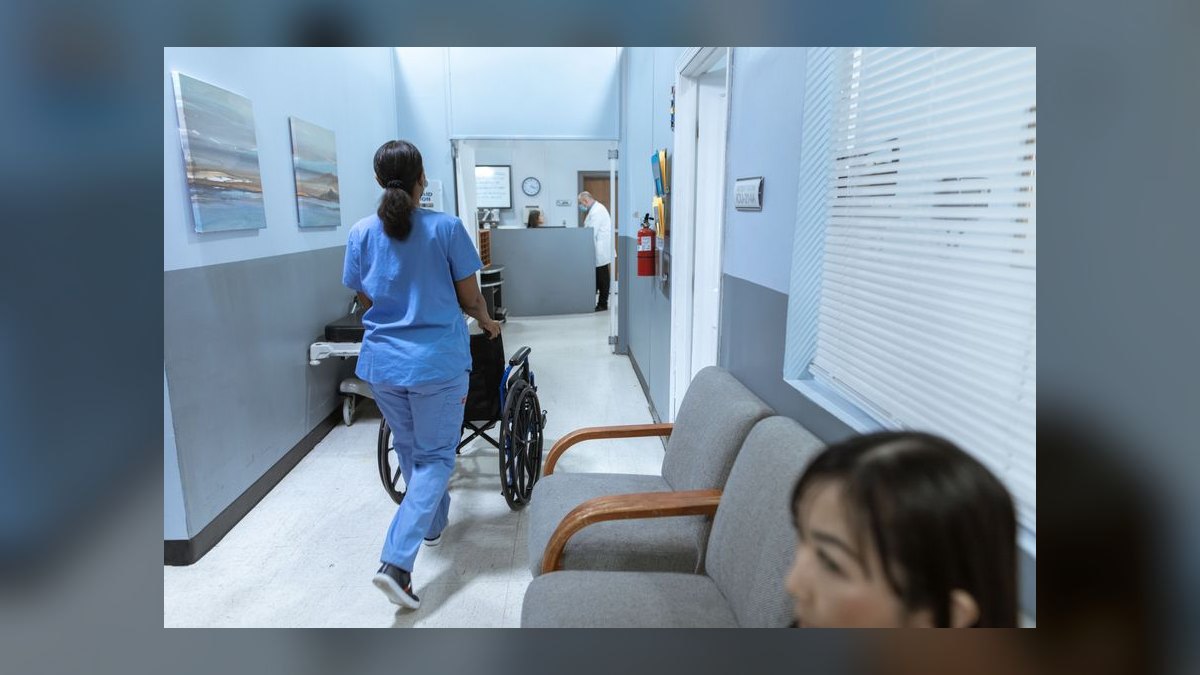
They treat the customer list as an afterthought. The list is the business. Every workshop attendee, every first-time buyer, every person who asks a question at the counter should end up on it with permission to contact them. Seasonal reminders, species-specific tips, and event invitations are what convert a one-time buyer into an eight-visits-a-year household.
They ignore the local independent. Most markets have one or more established independent bird or nature stores, often with 10%–15% lower shelf prices because they carry no royalty or brand fund cost. They are real competitors with real local loyalty. The franchise counters with brand recognition, proprietary blends, systems, and cooperative marketing — but only if you actually deploy those advantages instead of assuming the sign does the work.
They assume recession-proof. Backyard bird feeding is discretionary. In a downturn, households trim it, and seed volume can soften materially. The category has historically recovered within a year or so after downturns, helped by a core customer base that is older and less exposed to job loss. Plan for the dip with a cash reserve; do not plan as though it cannot happen.
A decision framework for choosing your path
The question is rarely just "yes or no." It is "which version of this, in which market, with which capital structure." Work through it in this order.

Capital gate first. If you cannot cover the full Item 7 range plus a personal living-expense cushion through the ramp — realistically substantial liquid capital alongside financing — stop here. Underfunding is not a risk you manage; it is a decision you regret. If capital is thin, the honest alternatives are to keep saving, take on a partner with cash, or look at a lower-investment franchise category entirely.
Then the market gate. Score your trade area on single-family homeownership rate, median household income, share of population over 55, yard density, and existing category competition. Strong on most of those and you have a real shot. Weak on homeownership or income and no operational skill compensates. Also check whether an existing franchise territory already covers the area you want — territory availability is often the constraint that decides your geography for you.
Then the fit gate. Are you genuinely willing to work retail hours on a sales floor for at least the first two years? Do you like talking to customers, repeatedly, about the same questions, with patience? Can you handle five to fifteen customer complaints a week in peak season, some of them unreasonable? If any of those is a no, the model will grind you down regardless of the financials.

Then choose new versus resale. Prefer a resale if a healthy one is available in a market you validated, you value reduced ramp risk over customization, and the seller's books hold up under scrutiny. Prefer a new store if no quality resale exists, you want to choose the site and layout yourself, and you have the working capital and patience for a 12–24 month ramp.
Then compare honestly against alternatives. Adjacent options include other specialty or pet-supply retail franchises with similar consumable dynamics, other hobby-niche retail concepts, and going fully independent as a bird and nature store — which trades brand recognition, proprietary blends, and systems for total control and no royalty. Independent is the right answer for a small number of experienced retailers with existing supplier relationships and a merchandising background. For most first-time owners, the franchise structure buys a playbook that is worth its cost.
Run this whole framework inside a disciplined 90-day window so it does not drift. Days 1–20: obtain and study the FDD, with particular attention to Items 7, 19, and 20. Days 21–45: franchisee interviews, current and former, plus a first pass at financing pre-qualification. Days 46–70: trade-area validation, territory availability, and preliminary site scouting; attend discovery day. Days 71–90: financial modeling with your accountant, franchise agreement review with a franchise attorney, and a go/no-go decision. Buildout and opening happen after that window and on their own timeline, typically another six to twelve months.
One last discipline: put a written "no" condition in place before you start. Decide in advance what finding would make you walk — a franchisee closure rate above a threshold you set, an Item 19 that measures only top performers, a market that fails your homeownership screen, a lease with no assignment clause. Candidates who never define their walk-away condition tend to talk themselves into the deal by month three.
Related questions
How much does a Wild Birds Unlimited owner actually make?
Mature stores commonly gross $500,000–$1.2M with owner earnings roughly $60,000–$180,000, depending on rent, revenue level, and whether you work the floor or pay a manager. Verify the range against Item 19 and franchisee interviews, not marketing material.
Is it better to buy an existing store or open a new one?
A resale removes ramp and site risk and comes with the customer list — the real asset — but costs a premium and may hide declining performance. A new store lets you choose the site but requires 12–24 months to reach break-even.
What percentage of revenue comes from bird seed?
In most mature stores, seed and suet make up the majority of revenue and nearly all repeat visits — commonly 55%–65% of sales. Confirm the actual split with the franchisees you interview, since mix varies by market and merchandising.
Can I run this semi-absentee?
Not in year one. The model is built for an owner-operator on the floor. Some owners promote a manager after the first year or two, but that salary comes directly out of owner earnings and requires you to already know the operation cold.
How long does it take to open after signing?
Typically six to twelve months from franchise agreement to open doors, driven mostly by site selection and municipal permitting. Aim to open in late summer or early fall so your first full quarter falls in the strongest feeding season.
FAQ
What is the total investment range for a Wild Birds Unlimited franchise?
The franchise fee has historically run roughly $40,000–$50,000, with total initial investment as disclosed in Item 7 typically in the range of about $200,000–$400,000. That covers buildout, fixtures, signage, initial inventory, training, and working capital. Actual cost depends heavily on your lease terms and how much construction the space requires — always confirm current figures in the FDD you are given.
What ongoing fees should I expect?
Plan on a royalty of roughly 4%–5% of gross sales plus a marketing or brand fund contribution of roughly 1%–2%. Those are taken off gross revenue rather than profit, which is why maintaining gross margin discipline is the single highest-leverage operating habit. Confirm the current fee schedule in Items 5 and 6 of the FDD.
How seasonal is the business?
Very. The fourth and first quarters together typically account for the majority of annual sales as cold weather drives feeding and holiday gifting overlaps. Summer is the trough, with sales dropping meaningfully. Build your cash plan, staffing schedule, and inventory ordering around that curve rather than around a flat monthly average.
Is bird feeding recession-resistant?
Partially. It is a relatively low-cost hobby with an older, homeowning core customer base that is less exposed to job loss, and the category has historically recovered within roughly a year after downturns. But it is discretionary spending, and seed volume can soften noticeably in a real recession. Hold a cash reserve rather than assuming immunity.
How do I compete with Amazon and big-box stores?
Not on price. Mass retailers sell commodity blends; your advantage is specialized seed, feeder systems that solve specific yard problems, and expertise the customer cannot get from a shelf tag. Free workshops, community events, and a well-maintained customer list convert that expertise into repeat visits. Discounting toward big-box pricing destroys margin without winning the price shopper.
What is the single biggest reason new owners fail?
Underfunded working capital, followed closely by underestimating the retail hours. Stores that open with just enough cash to stock the shelves have no cushion for a slow ramp, a permitting delay, or a soft first summer. Fund the working capital line generously and treat the disclosed estimate as a floor.
Sources
- https://www.wbu.com/franchise/
- https://www.ftc.gov/business-guidance/resources/consumers-guide-buying-franchise
- https://www.sba.gov/funding-programs/loans/7a-loans
- https://www.franchise.org/
- https://www.franchisebusinessreview.com/
- https://www.allaboutbirds.org/news/
- https://www.audubon.org/news
- https://www.census.gov/programs-surveys/ahs.html
- https://www.bls.gov/iag/tgs/iag44-45.htm
- https://www.fws.gov/program/national-survey-fishing-hunting-and-wildlife-associated-recreation
Related on PULSE
- Should I open or buy a The Junkluggers franchise in 2027?
- Should I open or buy a Pak Mail franchise in 2027?
- Should I open or buy a PostNet franchise in 2027?
- Should I open or buy a Fish Window Cleaning franchise in 2027?
- Should I open or buy a Shine Window Care franchise in 2027?
- How Do I Get My Car Wash Staff to Sell Unlimited Membership Plans?
This page will be disappearing soon. Save it to your device for $1 — or read it free while it is here.
@Kory-White- · if Venmo asks, the last 4 of my number are 2012
This page is gone.
This one is off the shelf now. $1 keeps it on your phone for good — the whole page, pictures and diagrams included.
 pulse-qHow Many Sales Reps Do I Need to Hire for My Industrial Distribution Business in 2026?
 pulse-qShould I Hire a Fractional CRO If My PLG Motion Stalls at the Sales Handoff in 2026?
 pulse-qWhat Is the Difference Between a Fractional CRO and a Fractional VP of Sales in 2026?
 pulse-qShould I open or buy a Stanton Optical franchise in 2027?
 pulse-qShould I open or buy a 3 Day Blinds franchise in 2027?
 pulse-qShould I Hire a Fractional CRO If I Just Raised a Series A in 2026?
 pulse-qWhat Service Fees Should a Pool Service Company Charge in 2026?
 pulse-qShould I open or buy a Ned Stevens Gutter Cleaning franchise in 2027?
 pulse-qShould I open or buy a Nekter Juice Bar franchise in 2027?
 pulse-qShould I Hire a Fractional CRO If My Reps Are Sandbagging the Forecast in 2026?