
Should I open or buy a Dogdrop franchise in 2027?
 Curated byKory White · Fractional CRO · Maryland
 PULSEKNOWLEDGE LIBRARY
Quality
Certified

Neither, in most cases — 2027 favors buying an existing Dogdrop over opening a new one. A new build runs roughly $283,000 to $685,000 per the 2026 FDD line items, with 24–36 months to real cash flow. An existing unit with a seasoned membership base and a signed lease costs more upfront but pays sooner.
Building new versus buying an existing Dogdrop unit
The two paths look similar on a spreadsheet and behave nothing alike in practice. Opening a new Dogdrop franchise means you write a $40,000–$50,000 franchise fee, sign a lease before you have a single member, and then spend six to nine months converting raw retail square footage into a licensed, insured, dog-safe facility. Everything from that point is a forecast. Buying an existing unit means you inherit a P&L, a roster of paying members, a staff that already knows the closing checklist, and a lease with a known rent number and a known remaining term.
The tradeoff is control versus certainty. New builds let you pick the neighborhood, negotiate the lease from scratch, design the floor plan around your own play-group logic, and avoid inheriting a bad reputation on Google reviews. You also get whatever incentives the franchisor is offering to hit development targets — waived or reduced franchise fees, extended royalty ramps, or territory rights on adjacent units. Resales offer none of that. What resales offer is a business that already survived the hardest part.
That hardest part is the membership ramp. Dogdrop's model runs on recurring memberships plus drop-in visits booked through the brand's app. Memberships are what make the unit economics work, and memberships take twelve to twenty-four months to build to density. A new location opens at near-zero recurring revenue and burns working capital while it climbs. An existing location that has been open three years is at or near its ceiling, which is exactly what you want to buy — provided the seller isn't selling because the ceiling is lower than the rent.
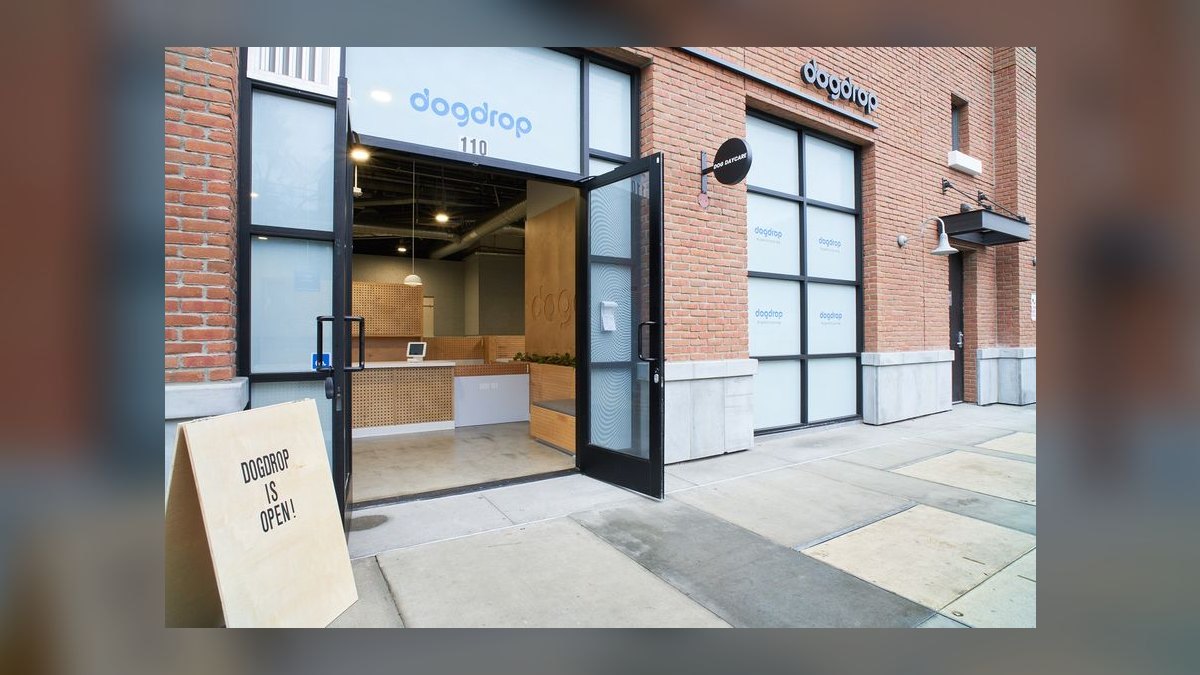
There is a third path most prospective franchisees skip past: opening an independent urban dog daycare with no franchise attached. You save the $40,000–$50,000 fee and the ongoing 6%–7% royalty plus roughly 2% marketing fee — call it 8%–9% of gross revenue forever. On $500,000 in revenue, that's $40,000–$45,000 a year you keep. What you give up is the app, the operating playbook, the brand recognition among urban renters who already know the name, the vendor pricing, and the site-selection support. For a first-time operator with no pet-care background, that support is worth paying for. For an operator who has already run a daycare or a boarding facility, the arithmetic gets much less obvious.
A decision framework you can actually run
The decision is not "which is better" — it is "which is better given your capital, your market, and your timeline." Work through it in that order, because capital eliminates options faster than anything else.
Start with liquidity. If you have under roughly $100,000 in genuinely liquid, non-retirement cash, neither path is realistically financeable without a partner or an SBA loan with a strong personal guarantee. Lenders on a service franchise like this typically want 20%–30% equity injection on the total project cost. On a $400,000 project, that's $80,000–$120,000 of your own money before a bank writes a dollar, and you still need three to six months of operating reserve on top of it. Undercapitalization is the single most common cause of franchise failure across every brand and every category — not bad concepts, not bad locations, just running out of runway before the ramp finishes.
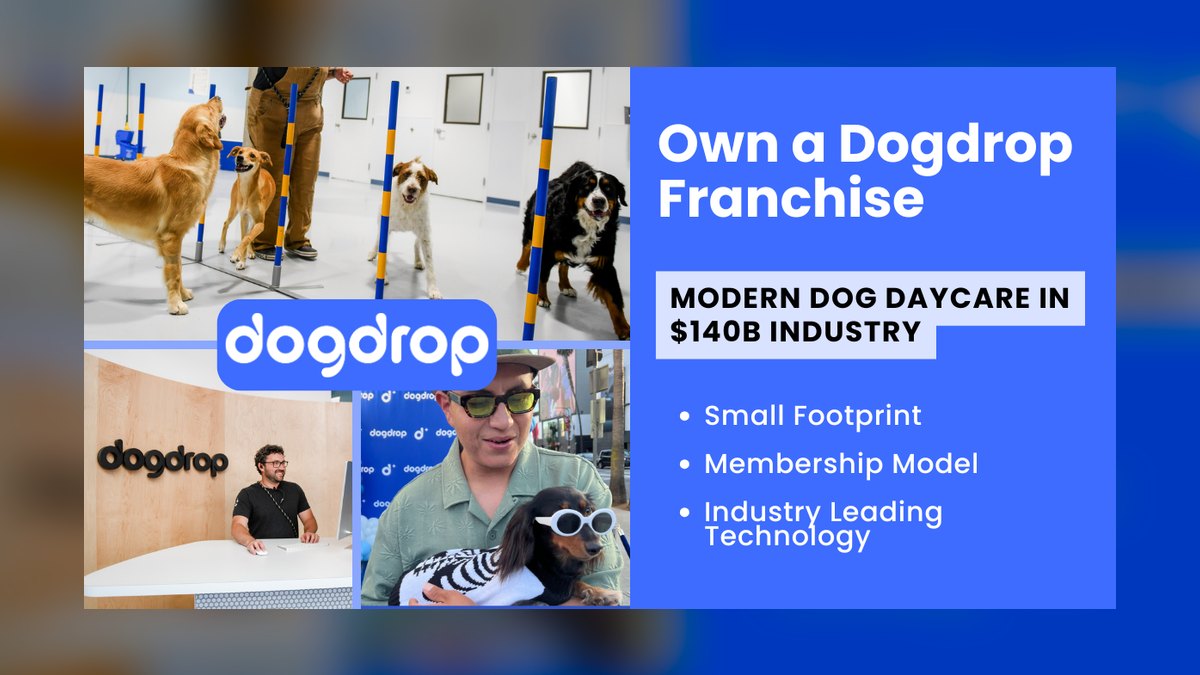
Then look at your market. Dogdrop's small-format urban model needs residential density, high rates of dog ownership, and a working population that leaves the house. Run the numbers yourself before you trust anyone's territory map: pull census tract data for households within a one-mile radius, filter for renter-occupied units and household incomes above $100,000, and look at how many competing daycares and boarding facilities already serve that radius. A dense, high-income, renter-heavy urban core with two competitors is a viable site. A suburban strip center with 4,000 households in the radius and a PetSmart doing daycare down the road is not, regardless of what the pro forma says.
Then look at your timeline and your tolerance for operating in the dark. If you need income from this business inside eighteen months, buying is the only serious answer. If you can fund your household for three years from other sources and you want the site and the buildout to be exactly what you want, a new build is defensible.
Run every branch of that tree before you talk to a franchise broker, because brokers are paid on closed deals and will steer you toward whichever path closes fastest. Their commission comes from the franchisor on new units, which is worth knowing when someone enthusiastically explains why a new build is a better deal than the resale you asked about.

What each path actually costs
Here is the honest arithmetic, built from the 2026 FDD's Item 7 line items rather than from a summary range.
Opening new. The franchise fee runs $40,000–$50,000. Buildout and leasehold improvements on a small-format urban space of 1,500–3,000 square feet run $120,000–$300,000 — the spread is enormous because a second-generation space that already has plumbing and drainage in roughly the right places costs a fraction of a raw white box. Play equipment, kennels, gates, flooring, and the tech package run $40,000–$110,000. Signage and interior decor to brand standard run $15,000–$45,000. Opening inventory of supplies and retail runs $8,000–$22,000. Pre-opening marketing to build the founding membership base runs $20,000–$50,000. Training and travel for you and your first staff run $10,000–$28,000. Working capital for the ramp runs $30,000–$80,000.
Add those honestly and the total is $283,000 on the low end and $685,000 on the high end. That is the number to plan against. The low end assumes a second-generation space in a mid-cost market with a lean opening; the high end assumes a raw build in an expensive metro. Most first-time operators land in the middle — call it $400,000–$500,000 all-in — and nearly everyone underestimates the working capital line, which is the one that determines whether you survive month fourteen.

On top of the buildout, budget for what the FDD does not itemize: legal review of the franchise agreement and the lease ($5,000–$12,000), an accountant to set up books and entity structure ($2,000–$5,000), permits and inspections that vary wildly by municipality, and the deposit and personal guarantee on the lease itself, which is usually three to six months of rent held by the landlord.
Buying existing. Service businesses of this size typically trade somewhere in the range of two to three-and-a-half times seller's discretionary earnings, though franchise resales vary widely and distressed units trade far below that. If a unit is producing $120,000 in SDE, a market price is roughly $250,000–$400,000, plus you assume the lease and typically pay a transfer fee to the franchisor — usually a percentage of the initial franchise fee or a flat figure disclosed in Item 6. You may also owe for inventory at cost and a portion of prepaid expenses.
The critical difference is what you get for the money. A new build at $450,000 produces $0 in revenue on day one. A resale at $350,000 that is producing $120,000 in SDE covers debt service immediately. On a seven-year SBA loan at 8%–9%, $350,000 of debt costs roughly $5,400–$5,700 per month, or $65,000–$68,000 annually. A unit at $120,000 SDE services that and leaves you something. A new build servicing similar debt while producing nothing is why undercapitalized franchisees fail in year two.

Ongoing costs are identical on both paths. Royalty runs roughly 6%–7% of gross revenue, plus roughly 2% for the brand marketing fund. That is 8%–9% off the top, permanently, before you pay rent or payroll. Model it as a fixed drag on every revenue scenario you build.
The operating cost structure for a mature unit tends to distribute roughly like this: staff at around 36% of gross, occupancy at around 16%, royalty and marketing fees at around 9%, and other operating expenses — insurance, utilities, software, cleaning supplies, waste disposal, repairs — at around 17%. That leaves roughly 20%–22% as owner earnings before debt service in a well-run unit. On $700,000 of gross revenue, that math produces roughly $150,000 in owner earnings. On $450,000 of gross revenue with the same percentage rent but a fixed dollar lease, it collapses fast, because occupancy is a fixed cost that does not scale down when revenue disappoints.
Mature centers across the brand span a wide range of gross revenue, and owner earnings span an equally wide range. That spread is the whole story. The top-quartile unit and the bottom-quartile unit are running the same playbook with the same app in different neighborhoods with different rent. Site selection and membership density are not one factor among many — they are effectively the entire outcome.
Reading Item 19 without fooling yourself
Every FDD includes a Financial Performance Representation in Item 19, or discloses that the franchisor makes none. Dogdrop is a younger system — founded around 2020 — which means its Item 19 covers a smaller, younger cohort of units than what you would see from Dogtopia or Camp Bow Wow. That matters more than most buyers appreciate.

Ask for medians, not averages. An average is dragged upward by a handful of high performers in exceptional locations. A median tells you what a typical unit does. If the franchisor reports only averages, ask directly for the median and for the distribution — how many units fell below the average, and by how much. The answer, or the refusal, is data.
Ask which units are excluded. Item 19 tables commonly exclude units open less than twelve months, corporate-owned units, or units that closed during the reporting period. Every exclusion moves the number up. A table showing "units open at least 24 months, excluding closures" is describing survivors, not applicants.
Ask about the age cohort. In a system founded around 2020, a meaningful share of units are still in ramp. A unit in month eight is not a data point about steady-state performance; it is a data point about ramp. Ask for the figures broken out by years-open, and ask what a unit looks like in year one versus year three.

Then verify the whole thing against Item 20, which lists franchisees, transfers, terminations, and closures over the past three years, along with contact information for current and former franchisees. Item 20 is the most useful page in the entire document and the one prospective buyers most often skip. Turnover, transfers, and closures tell you what the marketing does not.
Call at least eight to ten franchisees from that list, and specifically call former franchisees — the ones who left. Ask each of them a consistent set of questions: what did you actually invest all-in versus what the FDD projected; how many months to break even; what is your current membership count and monthly churn; what does the franchisor's field support actually look like in practice; how many units does your business coach cover; what would you do differently. Take notes and compare across calls. Patterns emerge quickly, and they are far more predictive than any pro forma.
Diligence, sequencing, and the first hundred days
Whichever path you choose, sequence it deliberately. Franchise sales processes are built to create urgency; your job is to slow them down. There is a mandatory federal disclosure waiting period — the FDD must be in your hands at least fourteen calendar days before you sign anything or pay any money. Treat that as a floor, not a target.
Weeks 1–3: read the document. Read the entire FDD, not the summary. Pay particular attention to Item 6 (all fees, including transfer, renewal, technology, and audit fees), Item 7 (the investment table, which you should sum yourself rather than trusting the stated total), Item 8 (required purchases and whether the franchisor takes rebates from suppliers), Item 12 (territory — is it exclusive, and can the franchisor open a company unit or a different channel inside it), Item 17 (renewal, termination, transfer, and non-compete terms), Item 19, and Item 20.
Weeks 3–6: franchisee validation calls. Eight to ten calls minimum, including former operators. Do not let the franchisor pick your list.
Weeks 4–7: professional review. Hire a franchise attorney — not a general business attorney — to review the agreement, and an accountant to build your own pro forma from your own market's rent and wage data rather than the brand's template. Budget $5,000–$12,000. This is the cheapest insurance in the entire process.

Weeks 6–12: market and site validation. For a new build, tour a minimum of three to five candidate sites and pull demographic data for each. For a resale, this is where you dig into the actual books: three years of tax returns, bank statements, the membership roster with join dates so you can compute real churn, the payroll register, and the existing lease including remaining term, escalation schedule, options, and assignment terms.
Weeks 10–16: lease and financing. Never sign a lease before you have financing committed and a franchise agreement you intend to execute. Negotiate for a tenant improvement allowance, rent abatement during buildout, a personal guarantee that burns off after two or three years, and an assignment clause that lets you sell the business later without the landlord's unreasonable refusal. That last clause determines your exit value.
The first ninety days determine the next three years. For a new build, the founding-membership campaign should start sixty to ninety days before you open the doors, not on opening day. Pre-sell founding memberships at a discounted rate locked for twelve months. Every member signed before opening is revenue on day one instead of month four.
For a resale, the first ninety days are about not breaking anything. Keep the existing staff — the members trust them, and turnover in dog daycare is high enough without you triggering it. Do not raise prices in month one. Do not rebrand the interior. Meet every member in person if you can, learn the dogs' names, and let the transition be boring. Then, once churn has stabilized, start making changes.
Watch membership count weekly, not revenue monthly. Recurring membership count is the leading indicator; revenue is the lagging one. If net memberships are flat or falling for three consecutive weeks, you have a problem that will show up in the P&L sixty days later. Track gross adds, cancellations, and net separately, because a unit adding twenty and losing eighteen looks stable and is actually on fire.
Budget for staffing turnover as a line item. Dog daycare is high-touch work at hourly wages, and industry turnover in this kind of role is steep. Assume you will be recruiting and training continuously. Build a real onboarding checklist, cross-train so no single departure breaks the schedule, and treat dog-safety protocol training as non-negotiable — an incident is both a lawsuit and a reputation event that shows up in your Google reviews within the week.
Related questions
Is an SBA loan realistic for a Dogdrop franchise?
Often yes. Franchise brands listed in the SBA Franchise Directory streamline eligibility. Expect a 20%–30% equity injection, a personal guarantee, and a lien on personal assets including your home in many cases. Terms of seven to ten years are typical for a business acquisition or buildout.
Can I negotiate the royalty rate?
Almost never on a single unit. Royalty and marketing fee rates are set in the standard agreement and franchisors resist changing them because it creates precedent. What is sometimes negotiable: reduced or waived franchise fees on additional units, extended development schedules, and territory rights in a multi-unit agreement.
How long is the franchise agreement term?
Service franchise terms commonly run ten years with renewal options, though you must read Item 17 for the specific figures. Critically, the agreement term should not be shorter than your lease term — being locked into rent without the right to operate the brand is the worst position in franchising.
What happens if I want to sell before the term ends?
Item 17 governs transfers. Expect the franchisor to hold approval rights over your buyer, charge a transfer fee, require the buyer to complete training and sign the then-current agreement, and often hold a right of first refusal on your sale. Confirm your lease is assignable on comparable terms.
Should I look at other pet-care franchises first?
Compare at least two or three before committing. Dogtopia and Camp Bow Wow are older systems with longer track records and larger footprints; independent operation trades brand support for eliminating 8%–9% of gross in fees. Reading three FDDs side by side clarifies which risks are Dogdrop-specific and which are category-wide.
FAQ
What total investment should I plan for to open a new Dogdrop location?
Summing the 2026 FDD's Item 7 line items yields roughly $283,000 at the low end and $685,000 at the high end. The low end assumes a second-generation space in a moderate-cost market; the high end assumes a raw buildout in an expensive metro. Most first-time operators should plan for $400,000–$500,000 all-in, plus separate budgets for legal, accounting, permits, and lease deposits that the investment table does not capture.
How much liquid cash do I need before a lender takes me seriously?
Roughly $100,000–$180,000 in genuinely liquid, non-retirement funds. Lenders typically require a 20%–30% equity injection on the total project cost, and you need three to six months of operating reserve beyond that. If your entire net worth goes into the buildout, you have no runway for the membership ramp, which is precisely when new units fail.
What are the ongoing fees?
Royalty runs approximately 6%–7% of gross revenue plus a marketing fund contribution of approximately 2%. Together that is 8%–9% off the top of every dollar, before rent or payroll. Check Item 6 for additional fees — technology, audit, transfer, renewal, and required training charges are common and easy to overlook when you are focused on the headline royalty number.
How long until a new unit breaks even?
Plan for twenty-four to thirty-six months to meaningful cash flow, not the twelve to eighteen a broker will quote. The variable is membership density, which builds over quarters rather than months. A resale of a mature unit can cover debt service from month one, which is the core reason buying beats building for anyone who needs income from the business.
Do I need pet-care experience?
No, and the franchisor provides training. But operational experience matters more than dog experience: hiring, scheduling, managing hourly staff, controlling occupancy costs, and selling memberships. The people who struggle are not the ones who don't know dogs — they are the ones who have never managed a payroll or negotiated a commercial lease.
What is the biggest risk specific to a younger franchise system?
Fewer proven units, a shorter Item 19 history, and franchisor support that stretches thin as the network grows. Ask directly how many units each field-support person covers and what the current unit count is versus a year ago. A system adding units faster than it adds support staff is a system where your business coach becomes a voicemail.
Sources
- https://www.ftc.gov/business-guidance/resources/consumers-guide-buying-franchise
- https://www.sba.gov/funding-programs/loans/7a-loans
- https://www.sba.gov/document/support-sba-franchise-directory
- https://www.franchise.org/
- https://www.ftc.gov/legal-library/browse/rules/franchise-rule
- https://www.bls.gov/ooh/personal-care-and-service/animal-care-and-service-workers.htm
- https://www.entrepreneur.com/franchises
- https://www.franchisebusinessreview.com/
- https://www.americanpetproducts.org/
- https://www.score.org/resource/business-plan-template-startup-business
Related on PULSE
- [Should I open or buy a The Junkluggers franchise in 2027?](/knowledge/ed0978)
- [Should I open or buy a Pak Mail franchise in 2027?](/knowledge/ed0988)
- [Should I open or buy a PostNet franchise in 2027?](/knowledge/ed0989)
- [Should I open or buy a Fish Window Cleaning franchise in 2027?](/knowledge/ed0982)
- [Should I open or buy a Shine Window Care franchise in 2027?](/knowledge/ed0981)
- [Should I open or buy an Image360 franchise in 2027?](/knowledge/ed0990)
This page will be disappearing soon. Save it to your device for $1 — or read it free while it is here.
@Kory-White- · if Venmo asks, the last 4 of my number are 2012
This page is gone.
This one is off the shelf now. $1 keeps it on your phone for good — the whole page, pictures and diagrams included.
 pulse-qHow Many Sales Reps Do I Need to Hire for My Pharmaceutical Company in 2026?
 pulse-qShould I open or buy a FirstLight Home Care franchise in 2027?
 pulse-qHow Do I Set Attach Rates for My Service Fees in 2026?
 pulse-qHow Many Stylists Should I Schedule Each Day at My Hair Salon in 2026?
 pulse-qHow Do I Make a Service Fee Tangible So It Adds Real Value in 2026?
 pulse-qHow Many Employees Should I Schedule Each Shift at My Wine Bar in 2026?
 pulse-qShould I open or buy a Farmer Boys franchise in 2027?
 pulse-qShould I open or buy a Stanton Optical franchise in 2027?
 pulse-qShould I open or buy Domino's franchise or open an independent sandwich shop in 2027?
 pulse-qHow Do I Make My Sales Goals Visible to the Whole Team in 2026?