
Should I open or buy a Hounds Lounge franchise in 2027?
 Curated byKory White · Fractional CRO · Maryland
 PULSEKNOWLEDGE LIBRARY
Quality
Certified

Open a Hounds Lounge franchise in 2027 only if you have $400,000–$900,000 in total capital, $150,000–$275,000 liquid, a dog-dense trade area, and the temperament for a hands-on operator role. The recurring-membership economics are real, but staffing and facility costs punish under-capitalized buyers badly.
The outcome you should expect
Set your expectations against the actual Item 7 range, not the aspirational one. The 2026 FDD puts total initial investment at roughly $400,000 to $900,000, with a franchise fee of $50,000 to $60,000 sitting inside that. Royalty runs approximately 6%–7% of gross revenue, plus a marketing fee of roughly 2%. That is a nine-point haircut off the top line before you have paid a single kennel tech. Any pro forma you build should start there, not at gross revenue.
On the revenue side, mature centers gross $700,000 to $2,000,000-plus annually, and owners in that mature band clear roughly $100,000 to $350,000. Note both words: *mature* and *range*. A center in month nine is not a mature center. The gap between the low and high end of both figures is not noise — it is the difference between a well-sited, well-staffed, membership-driven location in an affluent suburb and a marginal one that opened on a secondary road with a manager who quits every eight months.
Here is the realistic arc. Months one through six after opening, you are buying customers. Expect to run negative on cash flow while you fill daycare slots, build a boarding client list, and get grooming appointments onto the book. Months seven through eighteen, you cross into break-even if the market is right and your marketing is disciplined. Most franchisees in this category reach profitability somewhere in the 12–24 month window after opening, and the opening itself typically takes six to twelve months from signing depending on how fast you find and build a site. Add those together and you are looking at 18 to 36 months from signature to a business that pays you a real salary.

The outcome you should *plan* for — the middle of the distribution, not the top — is a center grossing $900,000 to $1.3 million by year three, throwing off $150,000 to $250,000 in owner earnings, having consumed roughly $600,000 of capital including reserves. That is a solid small-business return on a hands-on, full-time job. It is not passive income, and it is not a quick flip. If you decide to exit after five to ten years, franchises in this category commonly trade at roughly two to three times annual net profit, so a center clearing $175,000 might list somewhere in the $350,000–$525,000 zone. You recover your capital through years of owner earnings first, and the sale is the bonus — not the other way around.
The single most important thing to internalize before you sign: this is an operations business wearing a pet-lover's costume. The dogs are the product, but your day is scheduling, payroll, HVAC, insurance renewals, and hiring. Franchisees who go in expecting the former and get the latter are the ones who sell at a loss in year three.
What drives that outcome
Four levers move the number more than anything else, and three of them are inside your control.
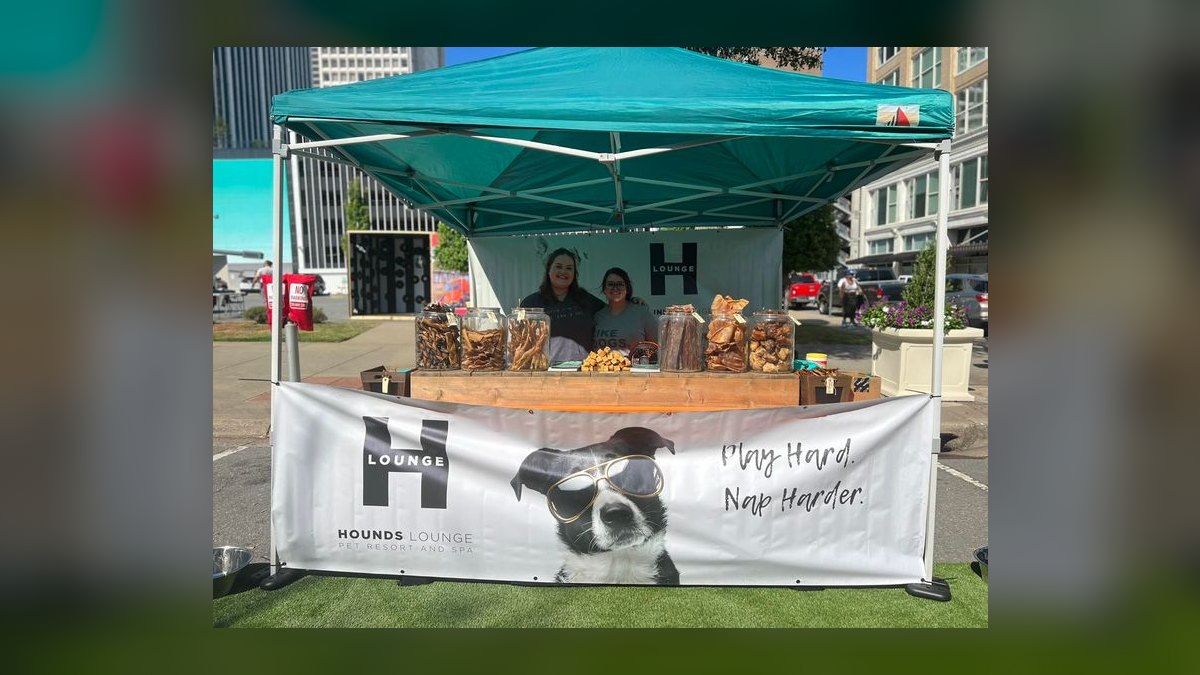
Recurring daycare memberships. This is the flywheel. Packages — ten-day punch cards, monthly unlimited plans — convert a transactional dog-boarding customer into predictable monthly revenue. In mature centers, a substantial share of daycare revenue, commonly in the 40%–60% band, comes from these recurring products rather than one-off drop-ins. That does two things: it smooths the seasonal trough between holiday boarding peaks, and it makes your staffing model forecastable, because you know roughly how many dogs are walking in on a Tuesday. Franchisees who never build the membership base run a boarding business with a daycare hobby attached, and their revenue whipsaws with the travel calendar.
Multi-stream attach rate. Daycare, overnight boarding, and grooming are three separate revenue lines running through the same facility and largely the same fixed cost base. The economics work because a dog already in your building for daycare is a low-cost sale for a bath, a nail trim, or a full groom. Add-ons — grooming, spa packages, retail leashes and treats — can lift the ticket by $10 to $50 per visit. Getting average revenue per dog from $30 to $60 does not require twice the dogs; it requires a front desk that asks. That attach discipline is a training-and-culture problem, not a marketing-spend problem, which is why it is the cheapest lever you own.
Labor cost as a share of revenue. This is the one that quietly eats franchises. Kennel techs run roughly $15–$20 per hour in 2027 markets, groomers $20–$35 per hour plus commission, and a center manager $50,000–$70,000 annually. Across a full staff of eight to fifteen people, labor commonly consumes 35%–50% of revenue. The spread between 35% and 50% on a $1.2 million center is $180,000 — which is most of your owner earnings. Turnover is the mechanism: every departure costs you recruiting time, training hours, and a temporary service-quality dip that shows up in reviews.

Occupancy cost. A dog-care center needs 5,000 to 10,000-plus square feet in a visible, accessible location, ideally near affluent residential density. At $15–$30 per square foot annually on a triple-net lease, annual rent lands somewhere between $75,000 and $300,000. On a $1.2 million top line, that is 6% to 25% — an enormous swing driven almost entirely by a decision you make once, before you open. Sign a bad lease and no amount of operational excellence recovers it.
Run a napkin model before you talk to anyone. On $1.2 million gross: staff at 35% is $420,000; occupancy at 14% is $168,000; royalty plus marketing at roughly 9% is $108,000; supplies and other operating expense at 18% is $216,000. That leaves owner earnings near $288,000 — the optimistic end. Now rerun it with labor at 48% and occupancy at 20% and watch the owner line collapse toward $60,000. Both scenarios are the same brand, the same FDD, the same national marketing. The difference is entirely the four levers above.
Benchmarks and realistic ranges
Build your investment estimate line by line rather than trusting a single headline number.

The franchise fee is $50,000 to $60,000 per the 2026 FDD. Buildout and leasehold improvements for a dog-care facility run roughly $220,000 to $520,000 — the widest line in the model, because converting a bare warehouse shell into a compliant, drained, ventilated, sound-managed dog facility is far more involved than fitting out a retail suite. Equipment and kennels add $80,000 to $200,000, covering kennel runs, grooming stations, washing setups, and play-yard equipment. Signage and decor land at $20,000 to $60,000. Initial inventory for supplies and retail runs $10,000 to $30,000. Initial marketing to seed your membership base is $25,000 to $60,000. Training and travel for you plus your first staff cohort is $12,000 to $35,000. Working capital inside the Item 7 estimate is $40,000 to $110,000. Those sum to the roughly $400,000–$900,000 total.
Liquidity requirement is $150,000 to $275,000. That is what you need available, not what you need in total — the rest is typically financed. Understand the difference before you talk to a lender, because franchisees who confuse the two discover the gap at the worst possible moment.
Now the numbers that are not in the Item 7 table. Insurance — general liability, workers' compensation, and animal liability — commonly runs $10,000 to $25,000 annually depending on your state and claims history. Dog bites and injuries occur even in immaculately run facilities, and thin coverage is not a place to economize. Maintenance and equipment replacement deserve a reserve of roughly 3%–5% of revenue; kennels, fencing, laundry equipment, and especially HVAC take real abuse in a building full of dogs generating heat, moisture, and odor. Local marketing sits on top of the national fund, which buys brand-level presence but not your neighborhood: budget $15,000 to $30,000 in year one for social, community events, and partnerships with local veterinarians and pet retailers.

Most importantly, hold an additional $50,000 to $100,000 in cash reserves beyond the Item 7 working-capital line. The FDD figure is designed to get you open; the reserve is what carries you through six to twelve months of negative cash flow while the client base builds. Franchisees who skip this are the ones who make bad decisions in month eight — cutting marketing exactly when they need it, or understaffing on a holiday weekend and generating the one-star review that costs them a year of word of mouth.
Two more operating benchmarks worth carrying. First, recruiting is a standing line item on your calendar, not an event — plan on several hours per week indefinitely in a high-turnover category. Second, holiday boarding is disproportionately profitable and disproportionately risky: it is your highest-margin period and the period where a staffing failure does the most reputational damage.
Risks, edge cases, and failure modes
Under-capitalization is the top killer. Someone who scrapes together the minimum liquid requirement and finances aggressively enters the ramp with no margin. The first HVAC failure, the first insurance claim, the first manager resignation becomes an existential event rather than a bad week. If your total available capital is at the bottom of the range and you have no personal income during the ramp, the honest answer is to wait a year and build reserves.

The semi-absentee fantasy. This is an owner-operator model, particularly in the first two years. Buyers looking for a passive investment consistently underperform here, because the levers that drive profit — attach rate, staff retention, local reputation — all respond to a present owner and decay without one. If your plan is to hire a manager and check in monthly from month one, you are buying a different business than the one that produces the earnings figures above.
Staffing collapse. Dog daycare is a low-wage, high-turnover industry. A center that loses its manager and two senior techs in the same quarter can slide from profitable to breakeven within two months as service quality dips, incidents rise, and reviews turn. Mitigation is unglamorous: pay slightly above local market, build a real schedule people can plan around, promote from within, and treat recruiting as permanent infrastructure.
A bad site you cannot exit. A triple-net lease on 8,000 square feet is a multi-year obligation. Sign the wrong location — poor visibility, wrong side of a divided road, insufficient dog density within a reasonable drive — and you have locked in the one variable operational skill cannot fix. Negotiate hard for landlord concessions such as three to six months of free rent to offset buildout, but never assume you will get them.

Competition and commoditization. You will face other pet-care brands, independent daycares, big-box retailers offering services, and mobile groomers. Brand recognition, standardized safety training, and group purchasing help, but the local reputation game is won facility by facility. In a trade area already served by two well-reviewed incumbents, your ramp will be slower and your marketing spend higher than the model assumes — factor that in before you sign, not after.
Incidents and liability. Dogs fight. Dogs get injured. Dogs occasionally escape. Even best-in-class facilities have incidents, and each one is simultaneously an insurance question, a reputation question, and an emotional conversation with an owner who considers the animal family. Your protocols, your camera coverage, and your communication discipline in the first hour after an incident matter more than any marketing you will ever buy.
Low-dog-density markets. The model needs a critical mass of dog-owning households with disposable income within a short drive. Rural markets, markets skewing toward single-family homes with large yards, or price-sensitive markets can all fail to produce the recurring membership volume the economics depend on. Validate this with real data before you validate anything else.

The seasonality trap. Boarding peaks around holidays and travel seasons; daycare is steadier but still dips. An operator who staffs to the peak carries dead labor cost through the trough; one who staffs to the trough fails at the peak. Membership revenue is what flattens the curve, which is why the membership program is a risk-management tool as much as a growth tool.
A practical rollout plan
Work the timeline in phases rather than sprinting. Realistically, signature to open is six to twelve months, and signature to profitability is eighteen to thirty-six.
Days 1–25: read the documents. Get the 2026 FDD and work through it slowly, with a franchise attorney. Item 7 gives you the investment table. Item 19, if present, gives you financial performance representations — read exactly what population it covers and what it excludes. Item 20 tells you how many units opened, closed, transferred, and were terminated in recent years; closures and transfers are the most honest signal in the entire document. Item 12 defines your territory protection.

Days 26–50: talk to operators. Interview at least eight current franchisees, and make a point of reaching some who are not on the franchisor's referral list — Item 20 includes contact information. Ask specific questions: What percentage of your daycare revenue is recurring membership? What is your labor as a percent of revenue? What did you actually spend to open versus the Item 7 estimate? What is your grooming attach rate? What is your annual net profit, and what did it look like in years one, two, and three? Also find and call at least one former franchisee.
Days 51–70: validate the market and the site. Pull dog-ownership and household-income data for the trade area. Drive the competitive set and count cars at 8am on a weekday. Identify candidate sites of 5,000–10,000-plus square feet with real visibility, and get preliminary lease terms so you can put an actual occupancy number into your model instead of a guess.
Days 71–150: build, hire, and pre-sell. Buildout is the long pole. In parallel, recruit your manager first and let them help hire the techs — a manager who inherits a staff they did not choose starts at a disadvantage. Begin pre-selling memberships before you open: a founding-member offer that fills your first sixty days of daycare slots is worth more than the discount costs.

Months 6–18: build the membership base. Post-opening, your single operational priority is converting drop-in customers to recurring packages and lifting the grooming attach rate. Track both weekly. Establish the vet and pet-retailer partnerships that drive local referrals. Hold your marketing spend steady through the trough even when cash is tight.
Months 18+: stabilize, then consider a second unit. Only evaluate multi-unit expansion once the first center is genuinely stable — profitable, staffed with a manager who can run it without you, and holding its reviews. Expanding on top of an unstable first location multiplies the problem rather than the profit.
Throughout, keep one discipline: every assumption in your model should trace to either a document you read or an operator you spoke to. Numbers you invented to make the spreadsheet work are the numbers that will be wrong.
Related questions
How much liquid capital do I actually need?
Roughly $150,000 to $275,000 liquid against a total investment of $400,000 to $900,000. Add $50,000–$100,000 in reserves beyond that to survive the ramp. Lenders check liquidity; the ramp checks your reserves.
Can I run this semi-absentee?
Not in the first two years. The profit levers — grooming attach, membership conversion, staff retention, local reputation — all degrade without an owner present daily. Manager-run operation is a year-three goal, not a day-one structure.
How long until I break even?
Six to twelve months from signing to opening, then typically twelve to twenty-four months from opening to profitability. Plan on eighteen to thirty-six months total before the business pays you a real salary.
What kills most dog-care franchises?
Under-capitalization and staffing turnover, usually together. A thin cash position forces bad short-term decisions during the exact months when service quality and marketing determine whether the membership base ever forms.
Is a competing brand a better fit?
Compare Item 7, Item 19, and Item 20 across the pet-care brands you are considering rather than choosing on brand feel. Closure and transfer rates in Item 20 are the most revealing comparison metric available to you.
FAQ
How much does it cost to open a Hounds Lounge franchise in 2027?
Total initial investment runs roughly $400,000 to $900,000 per the 2026 FDD, including a franchise fee of $50,000 to $60,000. That covers buildout, kennels and equipment, signage, initial inventory, opening marketing, training, and a working-capital allowance. Actual cost depends heavily on facility size and how much conversion work your site needs. Budget separately for $50,000–$100,000 in cash reserves.
What ongoing fees will I pay?
A royalty of approximately 6%–7% of gross revenue plus a marketing fee near 2%, so roughly nine points off the top line. Those are typical for the pet-care franchise category and fund brand support and national advertising. Local marketing is additional and comes from your own budget — plan $15,000 to $30,000 in the first year.
What do owners actually earn?
Mature centers gross $700,000 to $2,000,000-plus annually, with owner earnings generally in the $100,000 to $350,000 range. Where you land inside that range is driven mostly by labor cost as a percentage of revenue, occupancy cost, and how much of your daycare revenue is recurring membership rather than drop-in.
Do I need prior dog-care experience?
No formal dog-care background is required, and the franchise provides training. What you genuinely need is operational management skill: scheduling and payroll for eight to fifteen people, safety protocol discipline, hiring and retention in a high-turnover category, and comfort with the physical realities of the work. Team management experience matters more than animal experience.
Is dog daycare stable heading into 2027?
The category is supported by durable pet-humanization spending, and recurring memberships plus boarding and grooming give it multiple revenue streams. That said, "stable category" and "stable location" are different claims. Competition from other brands, independents, and mobile groomers is real, and a poorly sited or poorly staffed center underperforms regardless of category tailwinds.
What is the realistic exit?
Franchises in this category commonly sell at roughly two to three times annual net profit, so a center clearing $150,000–$200,000 might trade in the $300,000–$600,000 range. Plan to hold at least five years. You recover your investment through accumulated owner earnings, with the sale as an addition rather than the primary return.
Sources
- https://www.franchise.org/ — International Franchise Association: franchise regulations, FDD guidance, and industry data.
- https://www.sba.gov/funding-programs/loans — U.S. Small Business Administration: franchise financing, SBA loan programs, and eligibility.
- https://www.ftc.gov/business-guidance/resources/consumers-guide-buying-franchise — FTC guide to buying a franchise and reading the FDD.
- https://www.bls.gov/ooh/personal-care-and-service/animal-care-and-service-workers.htm — Bureau of Labor Statistics: animal care worker wages and employment outlook.
- https://www.americanpetproducts.org/ — American Pet Products Association: U.S. pet ownership and spending data.
- https://www.avma.org/resources-tools/reports-statistics — American Veterinary Medical Association: pet ownership statistics and demographics.
- https://www.entrepreneur.com/franchises — Entrepreneur franchise rankings, startup cost data, and category coverage.
- https://www.bbb.org/ — Better Business Bureau: company ratings and complaint history.
- https://www.pijac.org/ — Pet Industry Joint Advisory Council: pet care industry standards and regulatory issues.
Related on PULSE
- Should I open or buy a The Lash Lounge franchise in 2027?
- How Many Employees Should I Schedule Each Shift at My Cocktail Lounge?
- How Many Employees Should I Schedule Each Shift at My Cigar Lounge?
- Should I open or buy a The Junkluggers franchise in 2027?
- Should I open or buy a Pak Mail franchise in 2027?
- Should I open or buy a PostNet franchise in 2027?
This page will be disappearing soon. Save it to your device for $1 — or read it free while it is here.
@Kory-White- · if Venmo asks, the last 4 of my number are 2012
This page is gone.
This one is off the shelf now. $1 keeps it on your phone for good — the whole page, pictures and diagrams included.
 pulse-qHow Many Employees Should I Schedule Each Shift at My Cigar Lounge in 2026?
 pulse-qHow Many Sales Reps Do I Need to Hire for My Smart Home Integration Company in 2027?
 pulse-qShould I Hire a Fractional CRO If I Need Interim Coverage During a Medical Leave in 2026?
 pulse-qHow Many Sales Reps Do I Need to Hire for My Commercial Glass and Glazing Company in 2027?
 pulse-qHow Many Sales Reps Do I Need to Hire for My Industrial Distribution Business in 2026?
 pulse-qShould I Hire a Fractional CRO If My Reps Are Sandbagging the Forecast in 2026?
 pulse-qHow Many Employees Should I Schedule Each Shift at My Cocktail Lounge in 2026?
 pulse-qHow Many Sales Reps Do I Need to Hire for My Home Remodeling Company in 2027?
 pulse-qHow Many Technicians Should I Schedule Each Day at My Nail Salon in 2026?
 pulse-qShould I open or buy an I Love Juice Bar franchise in 2027?