
Should I open or buy a Pinch A Penny franchise in 2027?
 Curated byKory White · Fractional CRO · Maryland
 PULSEKNOWLEDGE LIBRARY
Quality
Certified
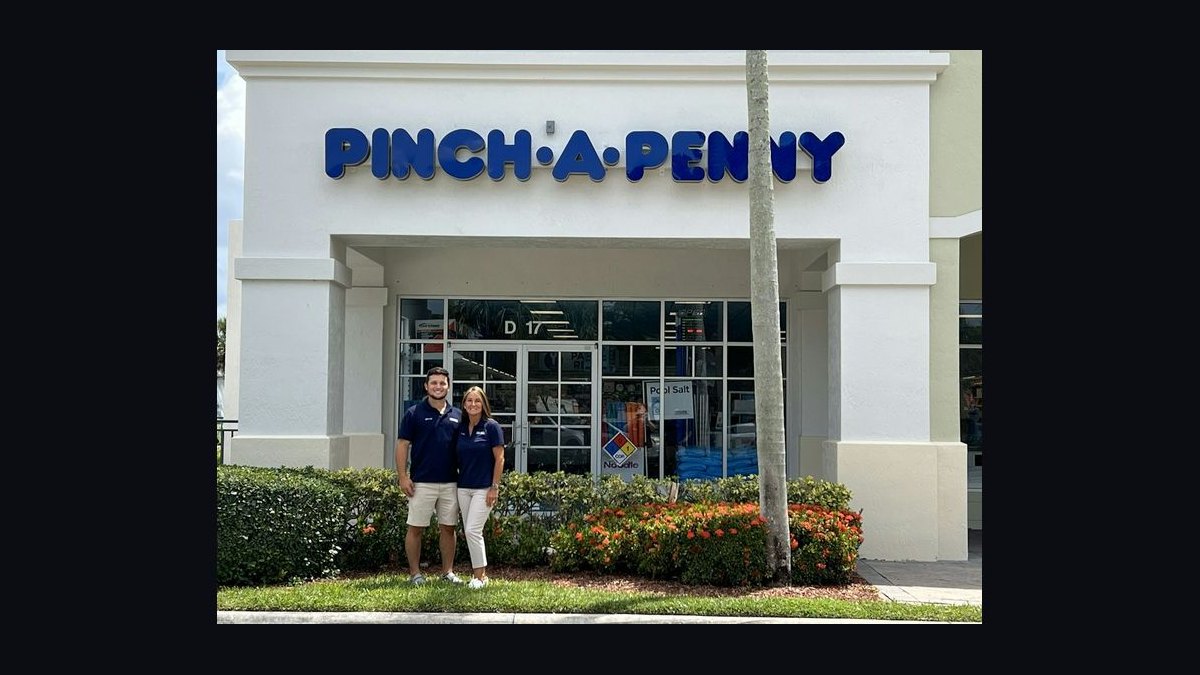
Open a new Pinch A Penny only in a pool-dense Sunbelt territory with roughly $400,000–$700,000 of total investment and $150,000–$250,000 liquid; otherwise buy an existing store with a proven service route. Buying costs more upfront but skips the 12–18 month route-building drag that sinks most first-time owners.
Opening new versus buying an existing store
These are not the same business with different price tags. They are two different risk profiles, and the deciding variable is whether you are buying a customer list or building one.
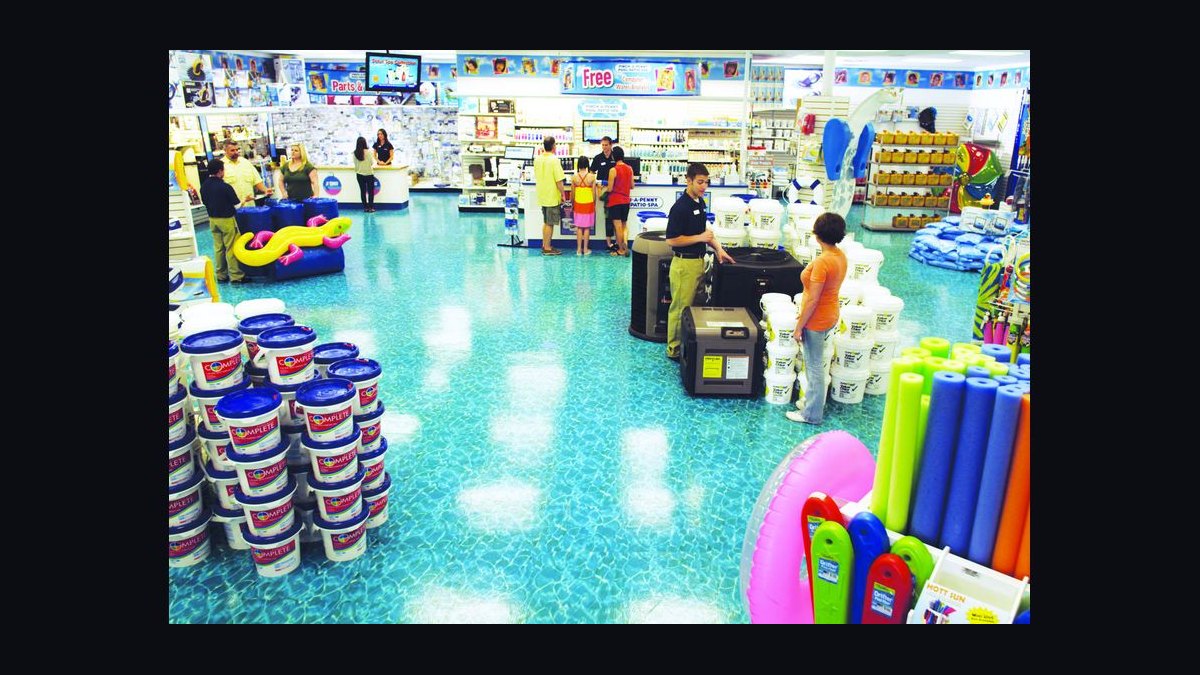
Opening new means you sign a fresh franchise agreement, pay the initial franchise fee (roughly $30,000–$40,000 per recent disclosure), negotiate your own retail lease, build out a 2,000–3,500 square foot store, stock initial inventory, buy or lease service vehicles, hire technicians, and then start at zero recurring accounts. Every service customer you eventually bill is one you personally sold. The upside is that you choose the territory, you choose the real estate, you set the culture, and you are not inheriting anyone else's deferred maintenance, angry customers, or badly priced service contracts. The downside is brutal and specific: a Pinch A Penny store is a hybrid model, and the half that produces the strongest margins — recurring pool service and repair — is the half that takes the longest to build. You will carry retail overhead on day one while service revenue trickles in over the first year and a half.
Buying an existing store means you acquire a going concern from a retiring or exiting franchisee. You inherit the retail location, the inventory, the vehicles, the technicians (usually), and — the actual asset — the recurring service route. You will also pay a transfer fee to the franchisor and typically go through the same training and approval process a new franchisee does. The seller's asking price generally reflects a multiple of adjusted earnings, and in service-heavy small businesses that multiple commonly lands in the low-to-mid single digits, with the recurring route valued separately and more richly than the retail inventory. You are buying time. You are also buying whatever is wrong with the store, which is why diligence on the route matters more than diligence on the storefront.
A third option deserves naming because plenty of buyers back into it: acquiring a struggling store cheaply and turning it around. This is the highest-variance play. A store underperforming because the prior owner never built service routes is a fixable problem. A store underperforming because there are 8,000 pools in a 40,000-household territory is not fixable — the math simply is not there, and no operator skill overcomes low pool density.
The honest framing for 2027: if you have operating experience and want control, open new in a market you have personally validated. If you have capital but limited runway for an 18-month cash burn, buy an existing store with a documented route and verified retention.
How to decide between them
Work the decision as a sequence of gates, not a gut call. Each gate can kill the deal, and the cheap gates come first.
Gate one — capital reality. Add your total investment estimate to twelve months of personal living expenses plus a working-capital cushion beyond what the disclosure document lists. If you cannot fund the build and eat for a year without store income, you are not a candidate for opening new. Buying an existing cash-flowing store changes this calculation because you may be able to service acquisition debt out of existing earnings from month one.
Gate two — pool density. This is the single hardest filter and the one people skip. Count actual pools, not households. County property appraiser records in most Sunbelt states flag pool improvements on residential parcels, which gives you a real number rather than a guess. A territory with 30,000–50,000 households means nothing if only a fraction of them own pools. You want dense, mature, single-family neighborhoods where in-ground pools are standard rather than exceptional.
Gate three — season length. Warm-climate markets support year-round chemical sales and weekly service. Seasonal markets compress most of your revenue into a five-to-seven month window, force winterization and reopening as your shoulder-season revenue, and require you to either carry technicians through dead months or rebuild your crew every spring. Both are expensive.
Gate four — operator fit. This business runs a retail floor and a field service crew simultaneously. If you are energized by neither, the franchise system's training will not manufacture the interest for you.
Two failure patterns show up repeatedly and both are avoidable at the gate stage. The first is signing for a territory because it is available rather than because it is good — franchisors have inventory to place, and an open territory in a weak market is open for a reason. The second is buying a resale on the seller's tax returns alone without ever auditing the route. Tax returns tell you what happened; the route tells you what happens next.
Concrete numbers behind each option
Opening new. Recent disclosure documents put total initial investment in the range of roughly $400,000 to $700,000, with the components breaking down approximately as follows: initial franchise fee $30,000–$40,000; retail buildout $120,000–$300,000 depending heavily on the condition of the space and whether the landlord contributes; store fixtures, equipment, and service vehicles $80,000–$180,000; signage and exterior branding $15,000–$45,000; opening inventory $80,000–$180,000; grand-opening and local marketing $15,000–$40,000; training and travel $12,000–$30,000; and working capital $40,000–$90,000. Note that these ranges are not meant to be summed at their extremes — the high end of every single line simultaneously is not a realistic build, which is why the published total range sits below a naive high-end sum. Price your own build by getting real quotes on the two line items that swing hardest: buildout and inventory.
Ongoing fees run approximately 5%–6% of gross sales in royalty plus a marketing fee in the low single digits. Budget the combined burden at roughly 7%–8% of gross when you model your P&L, and remember these come off the top line, not off profit.
Buying existing. Purchase price is negotiated between you and the selling franchisee, so there is no published range — but the structure is predictable. You will underwrite the seller's discretionary earnings, apply a multiple, and adjust for inventory at cost, vehicle condition, lease terms, and route quality. Expect the franchisor to require approval of you as a transferee, a transfer fee, completion of the standard training program, and possibly a remodel commitment if the store is dated. That remodel obligation is a real number people forget to negotiate — ask for it in writing before you agree on price.
Revenue and earnings. Mature stores in strong markets commonly gross in the range of $1,000,000 to $2,500,000 or more, with owner earnings frequently landing between $150,000 and $450,000. Seasonal-market stores run materially lower on both lines. Treat any figure a seller or a broker quotes as a hypothesis until you have verified it against the franchisor's financial performance representations and the seller's own filed returns.
Unit economics of the service side. This is where the model actually pays. Retail gross margin on chemicals typically runs in the 25%–35% band and equipment lower, because you are price-anchored against big-box and online competitors on commodity items. Service work — weekly cleaning, chemical balancing, filter service, equipment repair — carries substantially higher gross margin and much stickier retention, because a pool owner who trusts you with their equipment does not shop the price every spring.
A fully loaded service truck (payment or lease, insurance, fuel, chemicals carried, technician wages and payroll burden) is a meaningful annual cost, and the whole question is how many accounts you put behind it. Route density is everything: a technician driving fifteen minutes between stops earns you far less per day than one driving four minutes. The practical target is to load each truck to a full daily stop count within a tight geographic cluster rather than spreading thin accounts across your whole territory. When a route is dense, one additional account is nearly pure margin. When it is thin, every account costs you windshield time.
Labor. Qualified pool technicians are genuinely scarce and wages have risen. Budget competitive hourly pay plus payroll taxes and workers' compensation, and assume you will need to pay above your instinct to hold good people. A technician who leaves in June takes route knowledge and customer relationships with them, and churn at the wrong moment costs more than the wage differential ever would.
Inflation and input costs. Pool chemical pricing has been volatile in recent years, and swings compress retail margin fast. Franchise buying power helps but does not immunize you. Build annual price escalators into service agreements and revisit retail pricing more often than once a year.
Implementation details and sequencing
Whichever path you choose, run it as a staged process with kill points, not a single leap.
Weeks 1–4: Documents. Request and read the current franchise disclosure document in full, including the financial performance representations and every footnote. Read the franchise agreement separately with a franchise attorney — not a general business attorney. Pay specific attention to territory definition, renewal terms, transfer rights, remodel obligations, personal guarantee scope, and what happens if you want to sell.
Weeks 5–8: Operator calls. Talk to at least eight current franchisees, chosen by you from the disclosure document's contact list rather than handed to you by the franchisor. Ask each one four things: what percentage of revenue is service versus retail, how long it took to reach that mix, what they pay technicians and how hard hiring is, and what they would do differently. Also call at least two former franchisees. The exits tell you more than the successes.
Weeks 9–12: Territory validation. Pull parcel data and count pools. Drive the territory. Map every competing pool store and independent service operator you can find. Identify the nearest other Pinch A Penny locations and understand exactly what your territory protection does and does not prevent. Ask the franchisor for a written territory analysis and treat any refusal as a signal.
Weeks 13–16: Decision and financing. Commit to open or buy. Line up financing — small-business lending programs commonly used for franchise acquisition are a realistic path given the brand's track record, but expect to inject meaningful equity and sign personally. If buying, this is when you conduct route diligence: sample-call twenty current service customers, verify billing continuity over the trailing twelve months, and check how many accounts churned and why.
Months 5–8: Build or transition. New store: sign the lease, execute buildout, order opening inventory, hire and train your first technicians, and start selling service accounts before the doors open. Presold accounts on opening day are the difference between a fast ramp and a slow bleed. Acquisition: retain the existing technicians through the transition, meet the top service customers personally in the first thirty days, and change nothing operationally for a full season while you learn the route.
Months 9–18: Route density. This is the whole game. Sell service to every retail walk-in and sell retail to every service customer. Cluster new accounts geographically instead of accepting every job anywhere. Raise prices on the routes that are already dense before you chase thin new territory.
What to watch through 2027 and beyond. Automated pool equipment — chemical feeders, robotic cleaners, remote water-chemistry monitoring — continues to improve, and it changes the shape of service demand rather than eliminating it. A pool with good automation may need a lighter-touch visit cadence, which pressures the classic weekly-cleaning account. The counterweight is that automated equipment breaks, needs calibration, and needs someone who understands it. Operators who position themselves as the equipment expert — repairs, leak detection, filter service, heater and pump work, automation installation and support — convert a shrinking commodity service into a higher-ticket technical one. Build that capability deliberately rather than assuming weekly cleaning revenue is permanent.
Exit planning from day one. A Pinch A Penny with a documented, dense, high-retention service route is a saleable asset. One that is mostly retail walk-in traffic is a job you own. Keep clean books, keep route records in a system rather than in a technician's head, and keep customer agreements documented. The buyer of your store in ten years is buying the same thing you should be buying today.
Related questions
Is a Pinch A Penny resale cheaper than opening new?
Not necessarily cheaper in total dollars — a profitable store with a strong route often prices above the new-build investment range. It is cheaper in time and risk, because you skip the 12–18 month ramp and start with cash flow.
How much liquid capital do I actually need?
Plan on roughly $150,000–$250,000 liquid on top of financing, plus personal living expenses for a year. Lenders will want meaningful equity injection and a personal guarantee regardless of which path you take.
Does pool service really outperform retail?
Yes, on margin and retention. Retail chemicals and equipment are price-shopped against big-box and online sellers. Service is relationship-based, recurring, and far harder for a competitor to poach mid-season.
What kills most new pool franchise owners?
Low pool density in the territory, underestimating inventory and buildout capital, and inability to hire and hold technicians. All three are visible before you sign if you do the diligence honestly.
Can I run it absentee?
Realistically, no — not in the first two years. The model needs an owner on the floor and in the routes while systems and staffing stabilize. Absentee ownership becomes plausible only after a proven manager is in place.
FAQ
What is the total investment to open a new Pinch A Penny franchise?
Recent disclosure documents place total initial investment in the range of roughly $400,000 to $700,000, covering the initial franchise fee, retail buildout, fixtures and vehicles, signage, opening inventory, initial marketing, training, and working capital. Your actual number depends most on lease condition and how much buildout the landlord absorbs. Get contractor quotes before you finalize your model rather than relying on the midpoint.
What are the ongoing fees?
Expect a royalty of approximately 5%–6% of gross sales plus a marketing or brand fund contribution in the low single digits. Model the combined burden at roughly 7%–8% of gross revenue. These come off the top line before any of your operating expenses, so a store doing $1.5 million in sales is sending a meaningful six-figure amount to the system annually.
How long until the store is profitable?
Many operators reach profitability somewhere in the first one to two years, but the range is wide and driven almost entirely by how fast the service route builds. A store that presells accounts before opening and clusters them tightly gets there materially faster than one that opens with retail traffic only and hopes service follows.
Do I need pool industry experience?
No. The franchisor provides training on chemistry, equipment, and service operations. What you cannot be trained into is comfort running a retail floor and a field crew at the same time, managing inventory, and selling recurring service. Technical pool knowledge is teachable; operator temperament is not.
Why does territory pool density matter so much?
Both revenue streams depend on the same underlying asset — nearby pools. Retail needs enough pool owners within driving distance to sustain store traffic, and service needs enough accounts within a tight radius to keep trucks productive. Verify pool counts from county parcel records rather than accepting household counts as a proxy.
What is the biggest risk specific to 2027?
Labor. Qualified pool technicians are scarce and wages have risen, and you are competing for them with pool builders, property managers, and adjacent trades. A three-truck operation's annual wage bill is one of your largest line items, and turnover mid-season costs route knowledge and customer relationships you cannot immediately replace.
Sources
- https://www.pinchapenny.com/franchise/
- https://www.ftc.gov/business-guidance/resources/consumers-guide-buying-franchise
- https://www.sba.gov/business-guide/plan-your-business/buy-existing-business-or-franchise
- https://www.franchise.org/
- https://www.franchisebusinessreview.com/
- https://www.poolspanews.com/
- https://www.phta.org/
- https://www.bls.gov/ooh/installation-maintenance-and-repair/home.htm
- https://www.irs.gov/businesses/small-businesses-self-employed
Related on PULSE
- Should I open or buy a The Junkluggers franchise in 2027?
- Should I open or buy a Pak Mail franchise in 2027?
- Should I open or buy a PostNet franchise in 2027?
- Should I open or buy a Fish Window Cleaning franchise in 2027?
- Should I open or buy a Shine Window Care franchise in 2027?
- Should I open or buy an Image360 franchise in 2027?
This page will be disappearing soon. Save it to your device for $1 — or read it free while it is here.
@Kory-White- · if Venmo asks, the last 4 of my number are 2012
This page is gone.
This one is off the shelf now. $1 keeps it on your phone for good — the whole page, pictures and diagrams included.
 pulse-qShould I open or buy a Curry Up Now franchise in 2027?
 pulse-qShould I Hire a Fractional CRO If My PLG Motion Stalls at the Sales Handoff in 2026?
 pulse-qShould I Hire a Fractional CRO If My Reps Are Sandbagging the Forecast in 2026?
 pulse-qShould I Hire a Fractional CRO If I Am Preparing for a Recapitalization in 2026?
 pulse-qDo I Need a Full-Time or Part-Time Fractional CRO in 2026?
 pulse-qShould I Hire a Fractional CRO If I Just Raised a Series A in 2026?
 pulse-qHow Many Sales Reps Do I Need to Hire for My Smart Home Integration Company in 2027?
 pulse-qHow Many Sales Reps Do I Need to Hire for My Garage Door Company in 2027?
 pulse-qShould I Hire a Fractional CRO If I Am Prepping for an Exit in 18 Months in 2026?
 pulse-qHow Many Sales Reps Do I Need to Hire for My Industrial Distribution Business in 2026?