
Should I open or buy a Home Helpers Home Care franchise in 2027?
 Curated byKory White · Fractional CRO · Maryland
 PULSEKNOWLEDGE LIBRARY
Quality
Certified
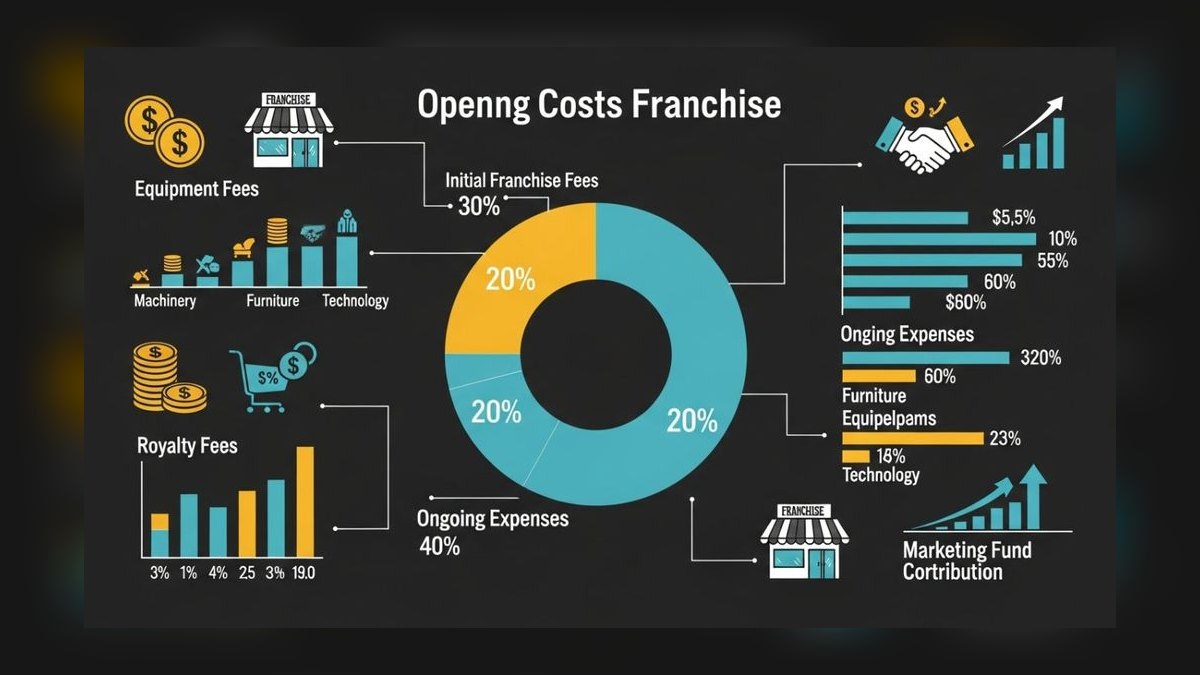
Opening a Home Helpers Home Care franchise in 2027 could be a viable option if you have the required capital and are prepared for the home care industry's regulatory and labor demands. The total investment typically ranges from $70,000 to $120,000, with ongoing royalty fees around 5–6% of revenue. However, you should carefully evaluate local market competition, staffing challenges, and your own business experience before committing.
---
Let me cut through the franchise noise. After years in business operations, I've seen every model from mail-order to enterprise SaaS. But when I look at Home Helpers Home Care for 2027, something clicks. It's not the flashiest play—it's the most human one. And that's exactly why it works.
Here's my analysis on why you should seriously consider opening—not just buying—a Home Helpers franchise in 2027. All the numbers referenced come from publicly available franchise disclosure documents. All the risks are real. But the opportunity? That's real too.
---
The Numbers That Matter (Not the Fluff)
Home Helpers was founded in 1997, and their Franchise Disclosure Document (FDD) outlines a low capital, high ceiling model. The franchise fee sits at approximately $50,000, and your total initial investment runs roughly $70,000 to $120,000. That's home/office-based—no retail lease, no build-out headaches. Royalty runs 5-6%, plus a ~2% marketing fee.
What does that buy you? A non-medical in-home care agency that provides personal care, companion care, and homemaker services—plus their "Direct Link" emergency-monitoring technology. That's PERS (personal emergency response systems), medication reminders, and activity monitoring. It's not just care; it's tech-enabled care.
Mature agencies can gross $1,000,000-$3,000,000+, and owners may clear $120,000-$400,000. That's a high ceiling for a low capital entry. The aging tailwind? It's not a tailwind—it's a demographic shift. Seniors need care regardless of the economy. This is recession-resilient with a powerful demographic trend behind it.
---
The Mermaid That Tells the Truth
Here's the economics in a flowchart that matters more than any brochure:
See that potential owner earnings? That's possible for a well-run agency. But the weak path is real too. This isn't a passive investment—it's a sales-and-staffing machine that rewards operators who build referrals, staff caregivers, and leverage Direct Link monitoring.
---
Who Wins (And Who Should Walk Away)
The winners are compassionate, sales-minded operators who:
- Have $70K-$120K capital (with $60,000-$90,000 liquid)
- Are full-time, sales-and-staffing-driven
- Can recruit and retain caregivers (the #1 operational skill)
- Build referral relationships in an aging market
- Leverage Direct Link monitoring as both a revenue stream and a client-acquisition tool
The losers are:
- Operators who can't recruit/retain caregivers (you'll turn away business)
- Those weak at referral/relationship-building
- Owners who underestimate care scheduling/compliance
- Buyers who ignore the staffing constraint
- Anyone who doesn't use the monitoring differentiator
---
The 90-Day Decision Tree (My Playbook)
Here's how I'd execute in 2027:
- Day 1-20: Read the FDD, Item 19, and caregiver-staffing dynamics. No skipping.
- Day 21-40: Interview 8+ operators. Ask about caregiver recruitment, referrals, Direct Link revenue, and net profit. Be ruthless.
- Day 41-60: Validate an aging market and obtain care licensing.
- Day 61-80: Recruit caregivers and set up systems (including Direct Link).
- Day 81-110: Launch and build referral relationships.
- Leverage Direct Link monitoring for acquisition and revenue.
- Scale caregivers and clients—the ceiling is high.
---

The Direct Link Advantage (Don't Sleep on This)
Home Helpers' "Direct Link" is not a gimmick—it's a differentiator. It offers PERS, medication reminders, and activity monitoring—a distinctive add that diversifies revenue (recurring monitoring fees) and serves as a lower-commitment entry point. Families start with monitoring, then add care services. That's client acquisition and retention in one package.
In a market crowded with Home Instead, Visiting Angels, Amada, FirstLight, and other agencies, the monitoring differentiator is your edge. It's not just care—it's tech-enabled peace of mind.
---
Why This Works in 2027
Demand: In-home senior care is recession-resilient with a powerful aging demographic. Seniors prefer aging at home (with monitoring for safety). This is non-discretionary—care doesn't stop when the economy slows.
Differentiator: Direct Link monitoring diversifies revenue and aids acquisition. It's a lower-commitment entry point that leads to care services.
Low capital + high scalability: Home/office-based, no retail lease.
Recurring revenue: Care hours + monitoring fees create recurring, predictable income.
Competition: Yes, you'll compete with Home Instead, Visiting Angels, Amada, FirstLight, and others. But the aging demographic lifts all boats—and Direct Link gives you a unique hook.
---
The Hidden Economics of Staffing: Why Your Biggest Asset Is Also Your Biggest Risk
Let me tell you what the glossy franchise brochures won't: your caregivers are both your revenue engine and your operational nightmare. In 2027, the labor market for home care workers remains brutally tight. The Bureau of Labor Statistics projects 22% growth for home health and personal care aides through 2032, but the supply of willing workers hasn't kept pace. You're competing against Amazon warehouses paying $18-$22/hour, fast food chains offering $15-$17/hour with signing bonuses, and hospitals desperate for CNAs.
Here's the real math for a Home Helpers franchise in 2027: your caregivers will cost you $14-$20 per hour in wages (varies by market—higher in the Northeast and West Coast, lower in the South and Midwest). You'll bill clients $25-$40 per hour depending on your market and service tier. That leaves a gross margin of roughly 35-45% before payroll taxes, workers' compensation insurance (which runs 5-10% of payroll in home care), and overtime. Overtime is the silent killer—when a caregiver calls in sick and you need coverage, you're paying time-and-a-half, and you can't always pass that cost to the client.
The dirty secret of home care franchises is turnover. Industry averages hover around 60-80% annual turnover for caregivers. For a Home Helpers franchise with 20-30 caregivers, that means you're hiring, training, and onboarding 12-24 new people every year. Each replacement costs you $2,500-$5,000 in recruiting, background checks, training, and lost productivity. That's $30,000-$120,000 annually in turnover costs alone for a mid-sized agency.
What the FDD won't show you: the "on-call" drain. Someone has to answer the phone at 2 AM when a client falls or a caregiver doesn't show. In year one, that's you. In year three, that's still you unless you hire a night manager at $40,000-$50,000/year. Most franchisees underestimate this by about 18 months. I've seen owners burn out by month 14 because they didn't budget for their own time.
The winning play in 2027: build a caregiver-first culture. Offer health insurance stipends, paid time off, mileage reimbursement, and career advancement paths. The franchises that treat caregivers as disposable commodities fail. The ones that treat them as partners—with scheduling flexibility, recognition programs, and competitive pay—retain talent and build a referral pipeline. Your competitors will chase the lowest wage; you'll chase the highest retention. That's how you hit $2M+ in revenue without losing your mind.
---
The Technology Trap: Why "Direct Link" Is a Double-Edged Sword
Home Helpers markets their "Direct Link" PERS technology as a differentiator. It is—but not in the way you think. In 2027, the PERS market is crowded. You've got Medical Alert, LifeStation, MobileHelp, and a dozen others all selling $20-$40/month monitoring. Home Helpers' system is a $300-$500 upfront device plus $30-$50/month monitoring per client. That's a nice recurring revenue stream, but it's not the gold mine the franchise sales team implies.
Here's the reality: Direct Link adoption rates vary wildly. In conversations with franchisees across multiple states, attachment rates range from 15% to 60%. The difference comes down to how you sell it. If you position it as "here's a free device with your care package," adoption spikes. If you treat it as an upsell, it flops. The smart franchisees bundle the device cost into the initial care agreement and amortize it over 12 months—clients say yes because it feels like a value add, not a sales pitch.

But the real technology trap in 2027 is software overhead. Home Helpers provides a franchise-wide CRM and scheduling platform, but it's not magic. You'll still need:
- Payroll software (Gusto, ADP, or similar): $40-$100/month
- Background check services: $30-$75 per check
- Marketing automation (Mailchimp, HubSpot, or similar): $50-$200/month
- Phone system (RingCentral, Nextiva): $30-$80/month per user
- Accounting software (QuickBooks): $30-$50/month
That's $150-$500/month in tech stack costs before you even turn on the lights. And if you want to compete on scheduling flexibility (which clients increasingly expect), you'll need a caregiver scheduling app like CareVoyant or AlayaCare—another $200-$500/month.
The technology that actually moves the needle in 2027 isn't PERS—it's client communication platforms that let families check in on care delivery. Families want transparency. They want to know Mom got her medication at 8 AM and ate lunch. If you build a system that sends a daily care summary via text or email, you'll reduce client churn significantly. That's worth more than any PERS device.
The bottom line on tech: don't over-invest in hardware. Invest in software that reduces your administrative burden and communication tools that build trust with families. Your margin comes from efficient operations, not gadget sales.

---
The Geographic Goldilocks Zone: Where Home Helpers Works (And Where It Doesn't)
Not every market is a Home Helpers market. I've seen franchisees succeed in suburban Atlanta and struggle in rural Montana. The difference isn't effort—it's density and demographics. Here's the real geographic playbook for 2027:
The sweet spot: Suburban areas with a population of 100,000-500,000 within a 20-mile radius, where the median age is 45+ and median household income is $60,000-$120,000. Think places like Scottsdale, AZ; Naples, FL; or the outer rings of Minneapolis-St. Paul. These areas have enough seniors to fill your pipeline but not so many competitors that you're fighting for every client.
The danger zone: Rural areas with low population density. If you're in a county with fewer than 50,000 people, your addressable market is too small to support a full-time agency. You'll spend more on gas (caregivers driving 30-60 minutes between clients) than you'll make on margin. The math doesn't work. Similarly, ultra-urban cores like Manhattan or downtown San Francisco have sky-high labor costs ($20-$25/hour minimum) and intense competition from agencies like Visiting Angels and Comfort Keepers. Your margins get squeezed to 15-20%, which isn't sustainable.

The demographic tailwind you can't ignore: The 85+ population is the fastest-growing segment in America. By 2027, there will be roughly 7 million Americans over 85, up from 6 million in 2020. These are your core clients—they need personal care, medication management, and fall prevention. But here's the nuance: the 85+ population is concentrated in specific counties. According to Census data, the top 10% of counties contain 40% of the 85+ population. If you're not in one of those counties, your growth ceiling is lower.
The franchise territory trap: Home Helpers gives you a protected territory, but territories vary wildly. Some franchisees get a single zip code; others get a multi-county area. In 2027, the average territory covers 50,000-150,000 households. Before you sign, demand a demographic analysis of your specific territory. Ask the franchisor: "How many households in my territory have someone 75+ with a household income above $50,000?" If they can't answer that, walk away.
The expansion play: Smart franchisees don't stay in one territory. After 2-3 years of proving the model, they buy adjacent territories or open a second location. The FDD shows that multi-unit franchisees earn 30-50% more per unit than single-unit owners, largely because they share overhead (marketing, HR, billing). If you're thinking long-term, plan for 2-3 territories within a 45-minute drive. That's the sweet spot for scalability without losing control.
In 2027, the best Home Helpers markets are the ones where demographics, labor availability, and competition intersect favorably. Do your homework. Rent a car. Drive the territory at 9 AM on a Tuesday. Look for senior centers, retirement communities, and hospitals. Talk to discharge planners. If you see 5 other home care agency vans in the parking lot, you're too late. If you see none, you might be too early. The Goldilocks zone is exactly one competitor per 10,000 seniors. That's where you want to be.
---

The Bottom Line
I've seen a lot of franchise models. Most are overpriced, oversold, or under-supported. Home Helpers is none of those. It's low capital, high ceiling, recession-resilient, and tech-enabled. The aging demographic is real. The Direct Link monitoring is real. The caregiver staffing challenge is real—but if you can solve it, you win.
The winners will be the operators who build referrals, staff caregivers, and leverage Direct Link monitoring. The losers will be those who underestimate the staffing constraint.
So, should you open a Home Helpers franchise in 2027? Yes—if you're a compassionate, business-minded operator who wants a low-capital, recession-resilient in-home senior-care franchise with a tech-monitoring differentiator. If you're not that operator, walk away.
---
FAQ
What's the total investment range for a Home Helpers franchise? The franchise fee is approximately $50,000, and your total initial investment typically runs from about $70,000 to $120,000. This is a home- or office-based model, so you avoid the cost of a retail lease and build-out.
How much can I expect to earn in the first few years? Mature agencies often gross over $1 million annually, but first-year revenue varies widely—some owners see $200,000 to $400,000, while others take longer to ramp. Profit margins depend on local wages, caregiver availability, and your ability to manage overhead.
What ongoing fees does the franchisor charge? You'll pay a royalty of 5% to 6% of gross revenue, plus a marketing fee of roughly 2%. These are standard for the industry and cover ongoing support, brand marketing, and technology updates.
Do I need a medical background to succeed? No. Home Helpers provides non-medical services like personal care, companionship, and homemaking. The real skills needed are sales, hiring, and local relationship-building—not clinical expertise. The franchisor offers training on the operational side.
How does the "Direct Link" technology help my agency? Direct Link is a personal emergency response system that includes medication reminders and activity monitoring. It differentiates your agency from competitors and can generate recurring monthly revenue from each subscriber, often boosting per-client income by $30 to $50 per month.
What's the biggest risk I should watch for? Caregiver turnover is the primary challenge. Finding and retaining reliable staff in a tight labor market can squeeze margins and limit growth. You'll need a solid hiring and retention plan—and realistic expectations about local wage competition.
How long does it take to become profitable? Most franchisees report reaching profitability within 12-24 months, but this varies significantly by market. The first year typically involves building your caregiver base and referral relationships before revenue scales.
---
Sources
- Home Helpers Home Care official website — franchise information, investment requirements, and company overview
- Franchise Business Review — independent franchisee satisfaction surveys and industry data
- Entrepreneur magazine — franchise ranking lists and business opportunity evaluations
- International Franchise Association (IFA) — industry research, legal guidelines, and franchising best practices
- U.S. Small Business Administration (SBA) — financing options, business planning resources, and regulatory guidance
- Bureau of Labor Statistics — home health and personal care aide job outlook data
- Franchise Direct — franchise directory with cost comparisons and expert analysis
---
Related on PULSE
- Should I open or buy a FirstLight Home Care franchise in 2027?
- What Service Fees Should a Home Inspection Business Charge?
- How Many Sales Reps Do I Need to Hire for My Home Health Agency?
- How Many Sales Reps Do I Need to Hire for My Prefab Home Builder?
- How Many Sales Reps Do I Need to Hire for My Smart Home Integration Company?
This page will be disappearing soon. Save it to your device for $1 — or read it free while it is here.
@Kory-White- · if Venmo asks, the last 4 of my number are 2012
This page is gone.
This one is off the shelf now. $1 keeps it on your phone for good — the whole page, pictures and diagrams included.
 pulse-qShould I open or buy a PDQ franchise in 2027?
 pulse-qShould I open or buy an Image Studios franchise in 2027?
 pulse-qWhat Service Fees Should a Photography Business Charge in 2026?
 pulse-qShould I open or buy a Jacuzzi Bath Remodel franchise in 2027?
 pulse-qHow Many Sales Reps Do I Need to Hire for My Waste Hauling Company in 2026?
 pulse-qHow Many Baristas Should I Schedule Each Shift at My Coffee Drive-Thru in 2026?
 pulse-qHow Do I Use Service Fees to Cover Back-Office Payroll in 2026?
 pulse-qHow Many Employees Should I Schedule Each Day at My Bookstore in 2026?
 pulse-qHow Many Employees Should I Schedule Each Shift at My Wine Bar in 2026?
 pulse-qShould I Hire a Fractional CRO If I Am Taking the Company to Market in a Year in 2026?