

Should I open or buy a MassageLuXe franchise in 2027?
 Curated byKory White · Fractional CRO · Maryland
Quality
Certified

Open a MassageLuXe franchise in 2027 only if you can fund roughly $400,000–$700,000 of Item 7 investment, hold $150,000–$250,000 liquid, and personally own therapist recruiting. The membership model produces predictable revenue, but licensed-therapist supply and monthly churn — not massage skill — decide whether the studio earns.
What a MassageLuXe studio actually is, and why the model works or fails
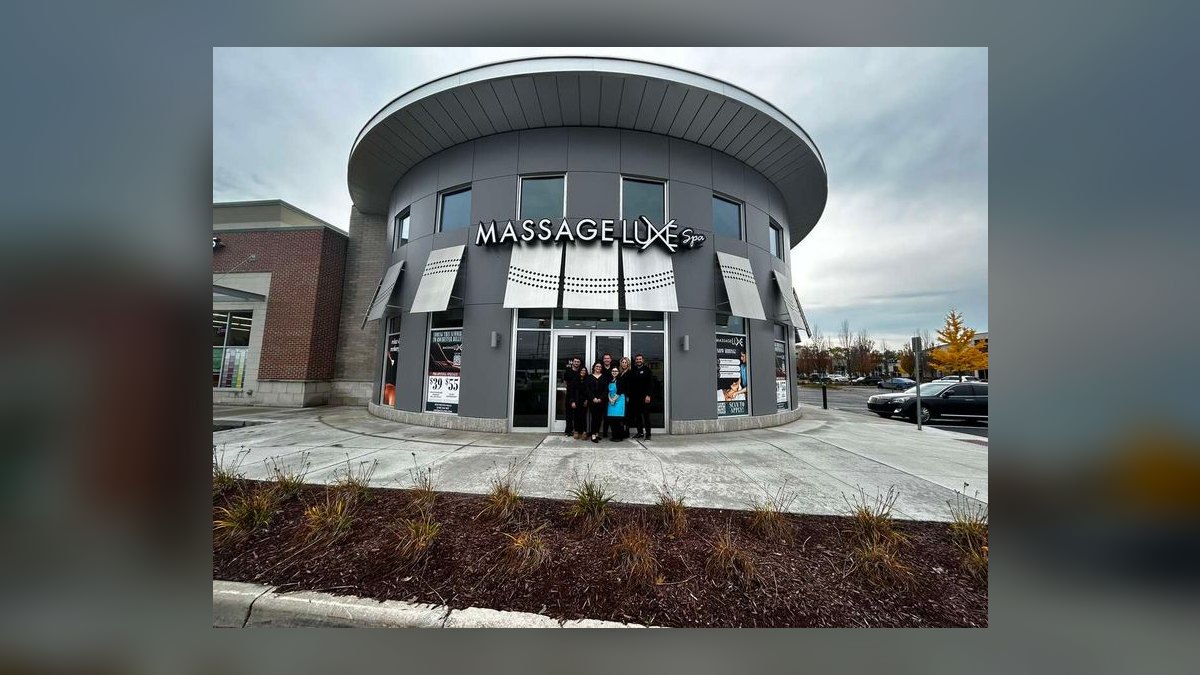
MassageLuXe, founded in 2008, franchises membership-based massage-and-spa studios that sell therapeutic massage, facials, and adjacent self-care services on a recurring monthly membership. The physical footprint is typically 3,000–4,500 square feet holding six to ten soundproofed treatment rooms, a reception and retail area, a laundry room, and back-of-house staff space. Services are delivered by licensed massage therapists and licensed estheticians. The 2026 FDD lists a franchise fee in the $40,000–$50,000 range, total Item 7 investment of roughly $400,000 to $700,000, a royalty near 6% of gross, and a brand marketing fee on top.
Strip away the spa aesthetics and what you are buying is a subscription business with a labor-delivery constraint bolted to it. That framing matters more than any other sentence on this page, because it tells you which two numbers govern your outcome: how many active members you carry, and how many therapist hours you can reliably put on the schedule to serve them. Everything else — décor, retail product, aromatherapy upgrades — moves the margin a few points at the edges.
The subscription half is the attractive half. A member on a $59–$99 monthly plan for one 60-minute service generates revenue whether or not they book in a given month, and unused credits create future obligation rather than lost cash. At 300–500 active members plus walk-in and gift-card volume, mature studios in the system gross roughly $700,000 to $1,500,000 or more, with owners clearing something in the $120,000–$350,000 band depending on rent, payroll structure, and whether the owner is also managing. That range is wide for a reason: it reflects execution, not a formula the brand hands you.
The delivery half is where the model bites. You cannot serve a member without a licensed therapist in a room. Massage therapy licensure is state-regulated, training programs run several hundred to over a thousand hours depending on the state, and the credentialed labor pool in any given trade area is finite and well aware of its options. Therapists can work for you, for Massage Envy or Hand & Stone or Elements down the road, for a chiropractic office, for a hotel spa, or independently out of a rented room where they keep the whole ticket. Your studio competes for that person every single week.

Why does this matter for a 2027 decision specifically? Because the demand side of wellness — regular massage, facials, stress relief as routine rather than luxury — has been a durable and growing consumer category, while the supply side of licensed therapists has stayed tight. That combination is good news for revenue and bad news for cost. It means you are unlikely to fail because nobody wants massages in your town. You are far more likely to fail because you booked demand you could not staff, refunded frustrated members, and watched retention collapse from the inside.
There is also a real strategic advantage in the spa add. Adding facials and esthetician services to a massage membership raises revenue per member, gives you a second labor pool to schedule against, and lets you fill rooms during hours when massage demand is soft. A member who books massage monthly and a facial quarterly is worth materially more than a massage-only member and is measurably harder to lose, because they have two service relationships to abandon instead of one. Operators who never build the facial side leave that on the table and stay fully exposed to therapist supply.
The step-by-step process from inquiry to opening
Treat the path from first phone call to first paying member as a defined project with gates you do not skip. The diagram below is the sequence, and the narrative that follows tells you what each stage actually costs you in attention.
Weeks one through three — read the document, not the brochure. Federal rules require the franchisor to give you the Franchise Disclosure Document and observe a minimum waiting period before you sign or pay. Use that time. Item 7 gives the investment range and its assumptions. Item 19 is the financial performance representation — read exactly which units are included, whether the figures are gross revenue or something further down the P&L, and how many units cleared each stated band. Item 20 lists unit counts, openings, closures, transfers and terminations over recent years; a rising transfer-and-termination count in a mature system is a signal worth chasing. Items 5, 6 and 11 tell you the fees and what support you are actually promised.
Weeks four through six — call operators and count therapists. The FDD gives you contact information for current and former franchisees. Call at least eight, and make sure some are in year two or three rather than only the brand's showcase owners. Ask specifics: how many licensed therapists on payroll, what hourly rate plus commission structure, average tenure, how long a vacant therapist slot stays vacant, monthly membership cancellation percentage, what month the studio first covered its own fixed costs. In parallel, do your own labor survey — count how many massage-therapy schools are within commuting distance, count how many competing studios are running continuous hiring ads, and call two or three local therapists as an interested employer to hear what they would need to switch.
Weeks seven through nine — validate the trade area and lock financing. You want household income and density that supports a discretionary $60–$100 monthly commitment, an existing wellness footprint (yoga, fitness, chiropractic, med-spa) that proves the behavior exists, and enough distance from entrenched competitors. SBA 7(a) financing is commonly used for franchise acquisition and buildout; expect lenders to want meaningful injected equity, a personal guarantee, and often a lien on personal real estate. Get the term sheet before you sign the franchise agreement, not after.

Months three through eight — lease, build, and hire simultaneously. Site work and buildout run in parallel with recruiting, and the recruiting is the harder track. Plumbing, electrical, ventilation, soundproofing and permitting will consume your calendar; the therapist pipeline will consume your judgment. Start interviewing therapists months before you have a room to put them in, and verify every license directly with the state board rather than accepting a copy.
Month eight — presell. Selling founding memberships at a discount before opening does three things at once: it funds early working capital, it proves demand before you are committed to a full payroll, and it gives you a booked schedule on day one so your new therapists earn real money in week one instead of sitting idle and quitting. A studio that opens with zero preselled members trains its therapists to expect empty shifts.
Month nine forward — open and stabilize. Expect six to twelve months to reach breakeven while you build the membership base. Your operating discipline in this window — schedule utilization, cancellation rate, therapist retention — is what converts the investment into the earnings band.
Costs, timelines, and the ranges you should actually budget
The FDD range of roughly $400,000 to $700,000 is real, but it describes a clean project. Build your model on the assumption that you land in the upper half, and treat anything below that as upside.
Franchise fee: $40,000–$50,000. Paid at signing, non-refundable in nearly all circumstances. This buys territory rights, the system, and initial training.
Leasehold improvements: roughly $220,000–$420,000. This is the largest and most volatile line. Six to ten treatment rooms each need a sink and plumbing run, dedicated electrical for hydraulic tables, and ventilation adequate for lotions and essential oils. Soundproofing between rooms is not optional in a spa concept — a member who can hear the next appointment does not renew. If the space needs HVAC capacity added, fire-suppression modification, or ADA compliance work, add a meaningful amount on top; this is where first-time franchisees most often exhaust their contingency. Negotiate a tenant improvement allowance and free-rent period into the lease; both are ordinary asks in retail leasing and both directly reduce the cash you must inject.

Equipment and furnishings: roughly $70,000–$160,000. Hydraulic massage tables at a few thousand dollars each across every room, esthetician equipment for the facial rooms, commercial laundry machines sized for continuous linen turnover, and a POS plus membership-management platform. Then the unglamorous list: linens and towels in enough rotation depth that laundry failure does not close a room, lobby furniture, and back-office setup.
Signage and décor: roughly $20,000–$55,000. Brand-standard exterior signage plus interior finish. Municipal sign permitting can add weeks; start it early.
Initial inventory: roughly $10,000–$30,000. Oils, lotions, facial product lines, and retail stock. Retail is a genuine margin contributor and a therapist compensation lever if you commission it.
Initial marketing: roughly $25,000–$60,000. Grand opening plus the presell campaign. Do not underspend here — the presell is what carries you through the first two months.
Training and travel: roughly $12,000–$32,000. Owner and key staff attending initial training, plus lodging and travel.
Working capital: roughly $40,000–$100,000 in the FDD, and plan higher. Fixed monthly burn for a studio of this size — rent, base payroll, utilities, insurance, software — runs meaningfully into five figures per month before you have members covering it. Six to twelve months to breakeven at that burn is why experienced operators target total available cash closer to $500,000–$800,000 rather than the FDD floor.

Ongoing: royalty near 6% of gross, plus a brand marketing fee, plus local marketing. On a $1,000,000 studio that royalty alone is $60,000 a year off the top. Budget an additional local marketing spend annually just to replace natural membership churn — a five-figure commitment that never goes away, because member acquisition is a permanent operating function, not a launch expense.
Timeline. Realistic total from signed agreement to open doors is roughly nine to fourteen months, dominated by site selection, lease negotiation and permitting. Anyone promising six months has not accounted for a municipality.
Buying an existing studio instead of opening one changes the shape entirely. You pay a purchase price benchmarked against cash flow rather than a buildout budget, you inherit a membership base and a therapist roster, and you skip the ramp. In exchange you inherit the seller's problems. Diligence an existing unit on exactly four things: the membership roster with signup dates and cancellation history, the therapist roster with tenure and pay rates, the remaining lease term and renewal options, and the remaining franchise agreement term and transfer conditions. A studio being sold because the owner cannot staff it is not a bargain at any price.
Where operators get it wrong
They treat therapist recruiting as an HR task instead of the core job. This is the single most common failure. Losing one productive therapist costs you their booked revenue for the weeks it takes to backfill, plus recruiting and onboarding cost, plus the members who leave because their preferred therapist left. Lose three in a year and the compounding damage is far larger than the payroll savings any owner ever achieved by paying under market. The operators who win build retention deliberately: guaranteed minimum hours so therapists are not gambling on the schedule, continuing-education support, genuinely flexible scheduling, retail commission, referral bonuses, and a visible path to lead therapist or manager. Before you sign anything, count how many competing studios in your trade area are running perpetual hiring ads. Perpetual ads mean perpetual churn, and you would be entering that same market.

They model membership growth without modeling cancellation. Membership businesses do not grow from a standing start — they grow net of attrition. If you carry 300 members and lose a few percent per month, you are replacing dozens of members a year before you add a single net new one. Owners who forecast only gross signups produce a plan that has never once survived contact with month nine. Model net members. Track cancellation as a headline metric, not a footnote. Build the re-engagement work into the calendar: structured check-ins with members whose booking frequency has dropped, service credits that expire in a way that pulls people back into the studio, and a cancellation process that puts a human on the phone rather than a one-click web form.
They underestimate the second labor pool. Estheticians are a separate license, separate recruiting market, and separate scheduling problem. Owners who bolt facials on as an afterthought end up with a treatment room that sits empty most of the week — a room they paid to build and are paying rent on. Either commit to staffing the spa side properly or design the buildout around fewer facial rooms.
They sign the lease before validating the labor market. The lease is typically a five- to ten-year personal-guaranteed obligation. The therapist supply question should be answered before that signature, not after, because the lease is the thing that makes walking away expensive.
They open with an empty schedule. New therapists judge you in their first three weeks. If they sit idle because there was no presell, they leave for a studio with a full book, and you restart recruiting while carrying full rent. Presell is a staffing tactic as much as a revenue tactic.
They assume the brand's marketing replaces theirs. The brand marketing fee funds system-level brand work. Local member acquisition — community partnerships, local search, neighborhood presence — is yours to run and yours to fund, permanently.
They plan for zero-surprise buildout. Structural discoveries during construction are ordinary, not exceptional. Carry a real contingency inside your capital plan rather than hoping the FDD low end holds.
Decision framework: when to open, when to buy, and when to walk

Use the framework in strict order, because each gate is cheaper to fail than the one after it.
Gate one is capital, and it is binary. You need enough liquid to satisfy the franchisor's financial requirements and enough total funding to reach the upper end of the investment range with working capital intact through month twelve. An operator who scrapes in at the FDD floor with no reserve is one slow summer away from being unable to make payroll — and in a labor-constrained business, missing payroll means losing therapists, which means losing members, which means the problem compounds rather than recovers. If you fail this gate, the honest answer is to wait a year.
Gate two is the labor market, and it is the real decision. Answer it with fieldwork, not optimism: how many training programs feed your area, how many competing studios are hiring continuously, what pay and structure would move a working therapist, and how quickly could you realistically stand up a full roster. If you cannot build a credible list of candidate therapists before you sign, you do not have a business plan — you have a lease.
Gate three is your own role. Owner-operators in this concept generally outperform absentee owners, because the two things that decide the outcome — therapist relationships and member retention — are both relationship work. If you intend to be absentee, put a real manager salary into the model and accept the lower end of the owner-earnings band. Do not model owner-operator economics while planning an absentee life.

Gate four is buy versus open. Buying an existing studio with a stable therapist roster and a seasoned membership base is frequently the better risk-adjusted trade: you pay more up front in purchase price but you skip the six-to-twelve-month ramp, the permitting calendar, and the cold-start recruiting problem. Buying a studio whose owner is selling because they cannot staff it transfers the exact problem you were trying to avoid, at a price that pretends otherwise. The diligence question is not "what did it gross" — it is "why is this for sale."
Gate five is the trade area, if you are opening new. You want demonstrated wellness spending, not theoretical demand. Existing yoga studios, fitness memberships, chiropractic practices and med-spas operating profitably nearby are evidence that your target member already pays monthly for self-care. A trade area with none of that is asking you to fund consumer education out of your working capital.
Alternatives worth weighing honestly before you commit: Massage Envy, Hand & Stone, and Elements Massage occupy the same membership-massage space with different scale and support profiles; an independent studio gives you full control of pricing and comp with no royalty but no system, no brand recall and no playbook; and adjacent wellness or med-spa concepts may fit better if your local labor advantage is in estheticians rather than massage therapists. Run gates one through three against each candidate. The right answer is the concept where your specific market gives you a labor edge — not the one with the prettiest brochure.
Related questions
How long until a new MassageLuXe studio breaks even?
Plan on six to twelve months from opening to cover fixed costs, driven almost entirely by how fast the membership base grows. Preselling memberships before opening and staffing a full therapist roster on day one are the two levers that pull that date earlier.
Do I need massage or spa experience to own one?
No. Franchisors in this space generally look for business operators, not practitioners. The skills that matter are hiring and retaining licensed staff, membership sales and retention discipline, and cash management. Hands-on massage knowledge is close to irrelevant to the outcome.
Is buying an existing studio safer than opening a new one?

Usually, if the therapist roster is stable and the membership base is seasoned — you skip the ramp and the permitting risk. It is not safer when the seller is exiting because they cannot staff the studio, since you inherit that exact constraint.
How many members does a studio need to work?
Roughly 300–500 active members, combined with walk-in and gift-card volume, supports the $700,000–$1,500,000 revenue band. The harder number is net members, since you must replace ordinary monthly cancellations before any of your signups count as growth.
What is the biggest single reason these studios underperform?
Therapist supply. Every other problem — empty rooms, member complaints, missed revenue targets, retention collapse — traces back to not having licensed therapists on the schedule. Validate that market before signing a lease or a franchise agreement.
FAQ
What is the total investment for a MassageLuXe franchise?
The 2026 FDD lists total Item 7 investment of roughly $400,000 to $700,000, including a franchise fee of $40,000–$50,000, leasehold improvements, equipment, signage, inventory, initial marketing, training and working capital. Experienced operators plan for the upper half of that range and hold additional reserve, because buildout surprises and a longer-than-expected ramp are ordinary rather than exceptional.
What are the ongoing fees?

A royalty near 6% of gross revenue plus a brand marketing fee. On a studio grossing $1,000,000, the royalty alone is about $60,000 annually. Separately, budget local marketing spend every year — brand-level marketing does not replace neighborhood member acquisition, and member acquisition is a permanent operating function because of ongoing membership cancellation.
How much do owners actually earn?
Mature studios in the system gross roughly $700,000 to $1,500,000 or more, with owners clearing something in the $120,000–$350,000 range. That spread reflects rent, payroll structure, membership retention, and whether the owner also manages the studio. Read Item 19 for exactly which units are represented, then validate against calls with eight or more current franchisees.
Why is therapist staffing described as the constraint?
Because a treatment room without a licensed therapist generates nothing while still costing rent. Massage therapy is state-licensed, the credentialed pool in any trade area is finite, and therapists have alternatives — competing studios, chiropractic offices, hotel spas, and independent practice. Recruiting and retention are therefore the owner's primary job, not a delegated HR function.
Should I open a new studio or buy an existing one?
Buy when the existing unit has a stable therapist roster, a seasoned membership base, favorable remaining lease term, and transferable franchise rights — you pay more up front but skip the ramp and permitting risk. Open new when no quality resale exists and your trade area shows demonstrated wellness spending. Never buy a studio whose owner is exiting over staffing.
What should I look for in the FDD before signing?
Item 5 and 6 for fees, Item 7 for the investment range and its assumptions, Item 19 for financial performance and which units it covers, Item 20 for unit counts and the recent pattern of openings, closures, transfers and terminations, and Item 11 for the support actually promised. Have a franchise attorney review the agreement's territory, renewal and transfer terms.
Sources
- https://www.ftc.gov/business-guidance/resources/franchise-rule-compliance-guide
- https://www.sba.gov/funding-programs/loans/7a-loans
- https://www.bls.gov/ooh/healthcare/massage-therapists.htm
- https://www.franchise.org/
- https://www.ncbtmb.org/
- https://www.amtamassage.org/
- https://www.entrepreneur.com/franchises
- https://www.franchisebusinessreview.com/
- https://www.ibisworld.com/
Related on PULSE
- Should I open or buy a The Junkluggers franchise in 2027?
- Should I open or buy a Pak Mail franchise in 2027?
- Should I open or buy a PostNet franchise in 2027?
- Should I open or buy a Fish Window Cleaning franchise in 2027?
- Should I open or buy a Shine Window Care franchise in 2027?
- Should I open or buy an Image360 franchise in 2027?
This page will be disappearing soon. Save it to your device for $1 — or read it free while it is here.
@Kory-White- · if Venmo asks, the last 4 of my number are 2012
This page is gone.
This one is off the shelf now. $1 keeps it on your phone for good — the whole page, pictures and diagrams included.
 pulse-qShould I Hire a Fractional CRO If My Forecast Accuracy Is Below 50 Percent in 2026?
 pulse-qShould I Hire a Fractional CRO If My PLG Motion Stalls at the Sales Handoff in 2026?
 pulse-qShould I open or buy a The Cleaning Authority franchise in 2027?
 pulse-qHow Many Employees Should I Schedule Each Shift at My Florist Shop in 2027?
 pulse-qShould I open or buy a Checkers & Rally's franchise in 2027?
 pulse-qHow Many Employees Should I Schedule Each Shift at My Escape Room in 2026?
 pulse-qShould I open or buy a Honest-1 Auto Care franchise in 2027?
 pulse-qHow Many Sales Reps Do I Need to Hire for My VoIP Company in 2026?
 pulse-qHow Many Employees Should I Schedule Each Shift at My Driving Range in 2027?
 pulse-qHow Many Sales Reps Do I Need to Hire for My Learning Management Software Company in 2027?