
Should I open or buy a PostNet franchise in 2027?
 Curated byKory White · Fractional CRO · Maryland
 PULSEKNOWLEDGE LIBRARY
Quality
Certified
Open a PostNet franchise in 2027 only if you can fund a roughly $200,000–$400,000 total investment, hold $70,000–$140,000 liquid, and will personally sell higher-margin B2B print and design work. The $35,000 franchise fee and ~4%–5% royalty are reasonable. Shipping-only operators stay stuck in commodity margins.
What a PostNet center actually is, and why the distinction decides your outcome
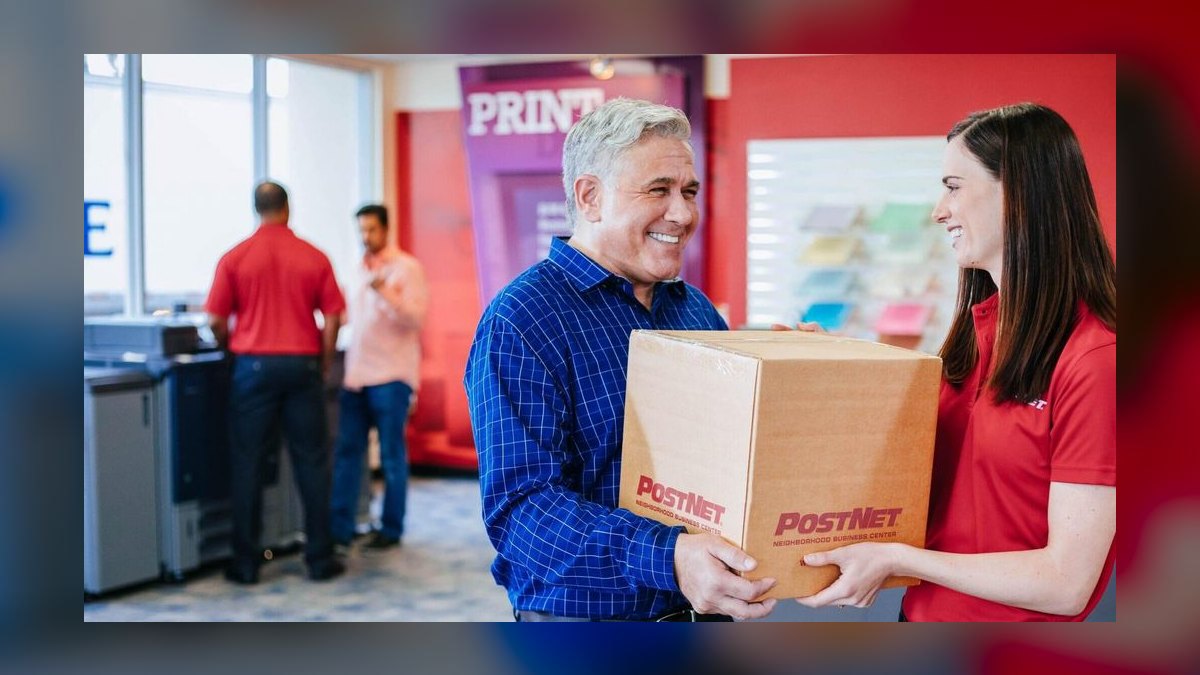
PostNet has franchised neighborhood business centers since 1993, and the single most expensive misunderstanding a candidate can carry into the process is that the brand is a shipping counter with a different logo on the awning. It is not. A PostNet center is a small-format B2B print and design shop that uses pack-and-ship traffic as a walk-in acquisition channel. The shipping counter is the front door. The revenue that pays your mortgage comes from what happens after a local business owner walks through it holding a return label and notices you also do banners, business cards, signage, and brochures.
That distinction is not branding semantics — it changes the arithmetic of the entire business. A retail shipping transaction is a pass-through: you collect the carrier's rate, hand back a fraction as your margin, absorb the packaging cost, and pay a staff member for eight minutes of counter time. Gross margins on that transaction land in the low-to-mid range because most of the money you touch belongs to the carrier before you ever touch it. A print or design order behaves the opposite way. You buy paper and toner, you add machine time and layout labor, and you keep the majority of what you invoice. Two centers can post identical top-line revenue and produce wildly different owner incomes purely because one sold shipping and the other sold print.
The comparison people reach for is The UPS Store, and it is a fair one as long as you understand which direction each system leans. The UPS Store model tilts heavily toward shipping and mailbox rental — a high-traffic, high-transaction, thinner-margin design. PostNet's stated advantage is a more diversified mix: print, graphic design, marketing materials, signs, and pack-and-ship under one roof, entered at a lower capital point with a modest royalty. The trade-off attached to that advantage is that PostNet's better economics are conditional. You have to actually go get the print business. Nobody delivers it to your counter. The UPS Store's traffic-driven model is more self-executing; PostNet's mix-driven model rewards an owner who sells.
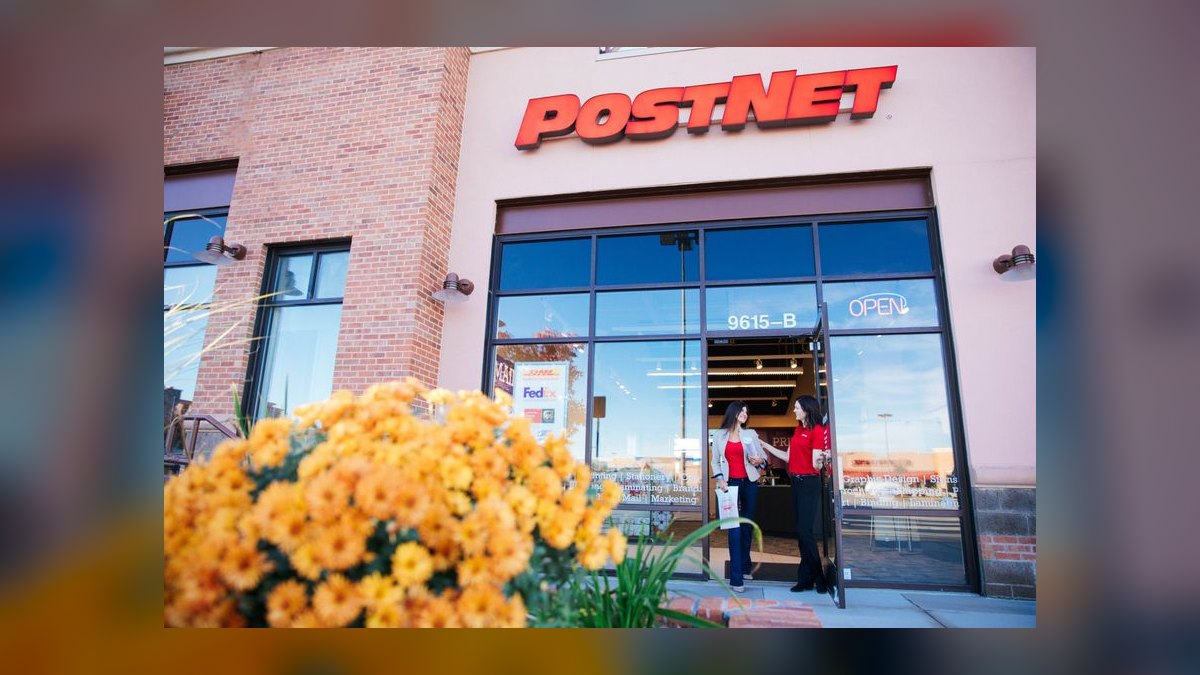
There is also a lifestyle dimension worth weighing honestly, because it is one of the genuine attractions here. This is a business-hours operation. B2B customers work Monday through Friday during daylight, which means you are not staffing a 10 p.m. close, you are not running weekend shifts to chase revenue, and you are not managing the labor churn that comes with food service or late-night retail. For an operator leaving a corporate career who wants ownership without a restaurant's schedule, that structure is a real, non-trivial benefit. It is also why the model attracts buyers who then discover that "business hours" does not mean "passive." You will be in the building.
Why does any of this matter in 2027 specifically? Because the demand picture is steady rather than explosive, and steady-demand categories punish operators who coast. Small businesses still need physical marketing collateral, signage, and short-run print with a local turnaround an online printer cannot match. E-commerce returns keep parcel volume flowing through the front counter. Neither trend is going to lift a passive owner's income on its own. Both create the conditions where an owner who prospects wins and an owner who waits at the register does not.
Working the process from first inquiry to open doors
The process is not complicated, but the order matters enormously, and most candidates run it backward — they fall in love with a site before they have validated the economics, then reverse-engineer optimism to justify a lease they already want to sign.
Start with the Franchise Disclosure Document, and read the whole thing, not the summary a broker emails you. Item 5 and Item 6 give you the franchise fee and the ongoing fees. Item 7 gives you the total investment range. Item 19 — the Financial Performance Representation, if the system provides one — is where you find out what centers actually gross. Item 20 lists outlet counts, openings, closures, and transfers, and it is the most underread page in the entire document. A system with heavy transfers and closures in a particular region is telling you something about that region that no development officer will say out loud. Give yourself two weeks with the document and mark every number you would need to defend to a lender.
Next, call owners. Not two owners, and not only the ones the franchisor hands you. The FDD contains a list of current and former franchisees with contact information — call at least eight, and make a point of reaching two or three who left the system. Ask them a specific question, not a general one. "How's business?" produces nothing. "What percentage of your revenue is print and design versus shipping, and what did that percentage look like in your first year?" produces the number your entire financial model depends on. Ask what their occupancy cost runs as a share of revenue. Ask how long it took to land their first recurring corporate account. Ask what equipment they bought in year two that they wish they had leased in year one.
Only then do you evaluate territory. You are looking for density of businesses, not just density of people. A residential neighborhood with heavy foot traffic gives you shipping volume and very little else. A trade corridor with law offices, medical practices, real estate brokerages, contractors, and small professional service firms gives you a prospect list you can work for a decade. The ideal site has both — consumer traffic for the counter, business density for the sales route. Drive the corridor at 9 a.m. on a Tuesday, not at noon on a Saturday, because Tuesday morning is when your actual customer base is at work.
Site and equipment come next, and they should be negotiated together because they compete for the same capital. Then training, then the part almost every new owner defers and should not: B2B outreach before opening day. The centers that ramp fastest walk into local businesses during the buildout, introduce themselves, and open with three or four accounts already committed. The centers that struggle open the doors and wait.
What it costs, what it takes, and what a mature center actually produces
Here is the honest capital picture, drawn from the current disclosure figures rather than from expo-floor optimism.
The franchise fee is $35,000 — a flat figure, not a range that flexes with your negotiating skill. Buildout and leasehold improvements for a retail or commercial storefront run roughly $60,000 to $150,000 depending on whether you inherit a shell or a space with existing infrastructure. Equipment and technology — production printers, design workstations, finishing gear, point of sale — is the largest single line at approximately $70,000 to $150,000. Signage and décor to brand standard runs $10,000 to $30,000. Initial inventory of print stock and shipping supplies runs $8,000 to $25,000. Launch and B2B marketing runs $12,000 to $35,000. Training and travel for you and your first hires runs $7,000 to $22,000. Working capital to carry the first three to six months runs $30,000 to $90,000.

Add it up and the total Item 7 investment lands at roughly $200,000 to $400,000. Plan on $70,000 to $140,000 of that being genuinely liquid — cash and cash equivalents a lender will count, not equity in a house. Ongoing, you pay a royalty of approximately 4% to 5% of gross sales plus a marketing fee near 2%. That combined burden is modest by franchise standards; many service and food systems take 8% to 12% before marketing.
Space requirements run 1,200 to 1,800 square feet of retail or commercial frontage with room for production equipment behind the counter. That is a meaningful constraint on site selection: you cannot squeeze a production print operation into a 700-square-foot kiosk, and you should not pay premium mall rent for 1,800 square feet you will use half of.
Now the revenue side. Mature centers gross approximately $450,000 to $1,000,000 annually. Owners at those centers clear roughly $70,000 to $190,000. That spread — a $120,000 gap in owner income — is the whole story of this franchise, and it correlates almost entirely with revenue mix rather than with gross sales. An owner grossing $700,000 with a strong print and design share can out-earn an owner grossing $850,000 who runs a shipping-dominant counter.

Work a representative $700,000 center. Materials and cost of goods around 32% takes $224,000. Labor around 25% takes $175,000. Occupancy around 9% takes $63,000. A 5% royalty takes $35,000. Marketing and remaining operating expenses around 13% take $91,000. What remains lands in the $80,000 to $160,000 range for the owner, and where inside that band you fall depends on whether your materials percentage reflects print work you marked up properly or shipping you passed through at carrier rates.
On timeline: budget nine to fifteen months from signed franchise agreement to open doors, with site selection and lease negotiation being the variable that stretches. Break-even on operations commonly arrives somewhere in the first one to two years, and owners who leaned on shipping revenue routinely take longer. Full recovery of invested capital is a multi-year proposition — treat anyone who suggests otherwise as a sales pitch rather than a projection.
One financing note: the SBA 7(a) program is the common path for franchise acquisition at this investment level, and PostNet's presence on the SBA Franchise Directory affects how smoothly a lender can process the loan. Confirm current directory status yourself rather than taking it on faith, and expect a lender to want 10% to 20% injection plus collateral.
Where buyers get this wrong
The dominant failure mode is the one already named, so treat it as the headline rather than an afterthought: buying a print business and operating a shipping counter. It happens gradually and it feels reasonable at every step. Shipping customers arrive without being asked. Print customers must be found. Under time pressure, an owner defaults to the revenue that walks in, staffs for counter coverage rather than production capacity, and eighteen months later has a business with respectable transaction counts and disappointing profit. Nothing dramatic went wrong. The mix just never moved.

The second failure is refusing to sell. A meaningful share of franchise buyers are career operators, engineers, or managers who are genuinely good at running things and genuinely uncomfortable prospecting. This model does not accommodate that. Growing the print and design side means calling on local businesses, quoting jobs, following up on quotes, and asking for the next order. If that description makes you tense, you have learned something important and you should either budget for a dedicated salesperson from month one or look at a brand whose revenue arrives without outbound effort.
Third is location error, and it is subtler than "bad corner." The mistake is optimizing exclusively for consumer visibility. A high-rent retail slot with heavy pedestrian traffic and no surrounding business density gives you exactly what you built for: shipping volume, thin margins, and a rent line you cannot service on those margins. Occupancy at roughly 9% of revenue is manageable on a print-heavy mix and suffocating on a shipping-heavy one, because the same rent dollar has to be covered by half as much gross profit. Run the rent-to-revenue test against a realistic mix before signing, not against your best case.
Fourth is underestimating competition. You are competing with The UPS Store and FedEx Office on shipping, with print franchises and independent shops on production, and with online printers on price for anything a customer is willing to wait three days for. Your defensible position is speed, local relationship, and design help on short-run work — not price on commodity output. Owners who try to win on price against an online printer lose, because the online printer's cost structure is built for it and yours is not.

Fifth is under-capitalization, which quietly causes several of the above. An owner who opens with thin working capital cannot afford the wide-format printer that opens up signage margins, cannot afford a part-time salesperson, and cannot afford to be patient while B2B relationships mature. That owner takes the shipping revenue because it is available now. Capital adequacy is not just a lending requirement; it is what buys you the runway to build the profitable half of the business.
Sixth, and easiest to fix: buying all equipment outright on day one. Leasing core production equipment for the first twelve months converts a large capital outlay into a monthly operating cost and preserves cash for marketing and sales headcount — the two expenses that actually generate revenue. Buy outright in year two once the revenue stream is proven and you know which machines you are actually running hard.
Choosing between PostNet, the alternatives, and no franchise at all
Work the decision against your own profile rather than against the brand's marketing.

Choose PostNet if three things are true simultaneously. You can fund $200,000 to $400,000 total with $70,000 to $140,000 liquid without leveraging yourself to the point that a slow first year becomes an emergency. You are genuinely willing to prospect local businesses — not "willing to try," but comfortable making the tenth call after nine went nowhere. And you have access to a territory with real business density, not just population. Meet all three and the diversified mix, the modest 4%–5% royalty, the business-hours schedule, and the comparatively accessible entry point make a coherent package.
Skip it if you intend to run it as a managed asset. This is an operator's business, especially in the first two to three years when the recurring account base is being built. You can hire a manager for counter operations; you cannot outsource the relationship-building that separates the $70,000 owner from the $190,000 owner.
If you like the B2B graphics thesis but want a system built entirely around it, look at sign and graphics franchises such as FASTSIGNS, Signarama, or Image360. Those brands skip the shipping counter and sell business-to-business exclusively, which means higher-margin work from day one and also no walk-in traffic to cushion a slow sales month. If you like the print thesis specifically, Minuteman Press, AlphaGraphics, and Sir Speedy occupy that lane. If you actively want the shipping-forward model — higher transaction volume, more self-generating traffic, less outbound selling — The UPS Store is the more honest fit, and you should choose it deliberately rather than choosing PostNet and then operating it as though it were The UPS Store.

If you want full control and no royalty, an independent print-and-ship center is possible. You keep the 4%–5% royalty and the 2% marketing fee, roughly seven points of gross that go straight to your bottom line. You give up brand recognition, carrier relationships negotiated at system scale, vendor pricing, training, and the site-selection support that keeps new owners out of bad leases. For a first-time owner without industry background, that trade usually favors the franchise. For an experienced print operator with existing carrier and vendor relationships, it can favor independence.
Building the print and design mix once you are open
Everything above points at one operating job, so it deserves specifics. Your first ninety days after opening determine your mix for years, because the habits you form under early pressure persist.
Block selling time on the calendar and defend it like a customer appointment. Two hours a day, four days a week, spent walking into businesses within a ten-minute radius. Bring physical samples — a banner, a business card set, a brochure — because you are selling a tangible product and a folder of price sheets does not demonstrate quality. Lead with the thing they buy repeatedly rather than the thing that impresses you most: business cards, letterhead, forms, and recurring marketing collateral produce reorders; a one-time trade-show banner does not.

Prioritize categories with built-in reorder cycles. Real estate brokerages need listing collateral continuously. Medical and dental practices need forms, appointment cards, and signage. Contractors need yard signs and vehicle graphics. Law firms need bound documents and exhibits. Restaurants need menus reprinted every time the price of anything changes. Each of these is a relationship that produces revenue every month rather than once.
Then invest ahead of demand, but only slightly ahead. A wide-format printer and a professional laminator open up banner, poster, and signage work — categories where local print shops frequently outsource and lose most of the margin. That equipment is a real capital decision, which is exactly why the lease-first approach in year one matters: it lets you add the capability when a customer conversation proves demand, rather than betting the working capital on it before you have a single signage account.
Track the mix monthly, as a percentage, and put the number somewhere you cannot avoid seeing it. Not gross sales — mix. If print and design as a share of revenue is not climbing quarter over quarter in your first two years, the business is drifting toward the commodity end regardless of how the top line looks, and the owner income at the end of the drift is the low end of that $70,000-to-$190,000 band.
Related questions
How does PostNet compare to The UPS Store for a first-time owner?
The UPS Store leans shipping and mailbox rental with more self-generating traffic and thinner margins. PostNet leans diversified print, design, and shipping with a modest 4%–5% royalty and lower entry capital, but its better margins require the owner to actively sell B2B work.
Can I buy an existing PostNet instead of opening a new one?
Often yes. Resales carry existing revenue, staff, equipment, and customer relationships, which shortens ramp-up considerably. Review the seller's revenue mix closely — a shipping-dominant center at a premium price is a harder turnaround than building from scratch in a better territory.
What does the 4%–5% royalty actually buy?
Brand recognition, carrier and vendor pricing negotiated at system scale, training, site-selection support, marketing systems, and operational playbooks. At roughly four to five points plus a 2% marketing fee, it sits below many franchise systems that charge 8% or more before marketing.
How long until a new center breaks even?
Operational break-even commonly arrives within the first year or two, with shipping-dependent centers taking longer. Full capital recovery on a $200,000–$400,000 investment is a multi-year horizon. Pre-opening B2B outreach is the single biggest lever on that timeline.
Do I need print industry experience?
No. The system trains on production and operations. What matters far more is comfort with outbound sales and local relationship-building — franchisees from sales, marketing, or management backgrounds tend to build the profitable print mix faster than those from technical backgrounds.
FAQ
What does it cost to open a PostNet franchise in 2027?
The franchise fee is $35,000, and total Item 7 investment runs roughly $200,000 to $400,000 covering buildout, equipment, signage, inventory, launch marketing, training, and working capital. Plan on $70,000 to $140,000 of that being liquid. Ongoing fees are a royalty of approximately 4% to 5% of gross sales plus a marketing fee near 2%.
What does a mature PostNet center gross, and what does the owner keep?
Mature centers gross approximately $450,000 to $1,000,000 annually, with owners clearing roughly $70,000 to $190,000. The variance tracks revenue mix more than top-line sales — a center with a strong B2B print and design share out-earns a higher-grossing shipping-dominant center after materials, labor, occupancy, royalty, and marketing.
How much space does a PostNet require?
Roughly 1,200 to 1,800 square feet of retail or commercial space with room for production print, design work, and pack-and-ship at the counter. Occupancy running around 9% of revenue is manageable on a print-heavy mix and punishing on a shipping-heavy one, so evaluate rent against a realistic mix.
Can I run a PostNet as a passive investment with a hired manager?
Not realistically, at least not in the early years. A manager can run counter operations, but the B2B print and design sales effort that produces the profitable revenue depends on the owner. This is a business-hours model, not a hands-off one — that schedule is the lifestyle benefit, not absence from the building.
What is the single biggest risk?
Operating it as a shipping counter. Shipping is largely a pass-through with thin margins after carrier costs, packaging, and labor. Centers that never grow the print and design side compete on price against The UPS Store, FedEx Office, and online printers from the weakest possible position and land at the bottom of the owner-income range.
How do I verify these numbers before signing anything?
Read the current Franchise Disclosure Document in full — Item 5 and 6 for fees, Item 7 for total investment, Item 19 for any financial performance representation, Item 20 for outlet openings, closures, and transfers. Then call at least eight current and former franchisees from the FDD list and ask specifically about print-versus-shipping revenue mix.
Sources
- https://www.postnet.com/
- https://www.ftc.gov/business-guidance/resources/franchise-rule-compliance-guide
- https://www.sba.gov/funding-programs/loans/7a-loans
- https://www.franchise.org/
- https://www.entrepreneur.com/franchises/franchise500
- https://franchisebusinessreview.com/
- https://www.sba.gov/document/support-sba-franchise-directory
- https://www.consumer.ftc.gov/articles/buying-franchise-consumer-guide
Related on PULSE
- Should I open or buy a Pak Mail franchise in 2027?
- Should I open or buy an Image360 franchise in 2027?
- Should I open or buy a Fish Window Cleaning franchise in 2027?
- Should I open or buy a Shine Window Care franchise in 2027?
- Should I open or buy a The Junkluggers franchise in 2027?
- Should I open or buy a JDog Junk Removal & Hauling franchise in 2027?
This page will be disappearing soon. Save it to your device for $1 — or read it free while it is here.
@Kory-White- · if Venmo asks, the last 4 of my number are 2012
This page is gone.
This one is off the shelf now. $1 keeps it on your phone for good — the whole page, pictures and diagrams included.
 pulse-qShould I open or buy a Jacuzzi Bath Remodel franchise in 2027?
 pulse-qShould I open or buy a Paul Davis Restoration franchise in 2027?
 pulse-qHow Many Stylists Should I Schedule Each Day at My Hair Salon in 2026?
 pulse-qHow Many Technicians Should I Schedule Each Day at My Nail Salon in 2026?
 pulse-qShould I Hire a Fractional CRO If I Am Taking the Company to Market in a Year in 2026?
 pulse-qHow Many Employees Should I Schedule Each Shift at My Language School in 2026?
 pulse-qShould I open or buy a Pinch A Penny franchise in 2027?
 pulse-qShould I open or buy a Deka Lash franchise in 2027?
 pulse-qHow Many Employees Should I Schedule Each Shift at My Shoe Repair Shop in 2027?
 pulse-qWhat Service Fees Should a Plumbing Company Charge in 2026?