
Should I open or buy a HealthSource Chiropractic franchise in 2027?
 Curated byKory White · Fractional CRO · Maryland
 PULSEKNOWLEDGE LIBRARY
Quality
Certified
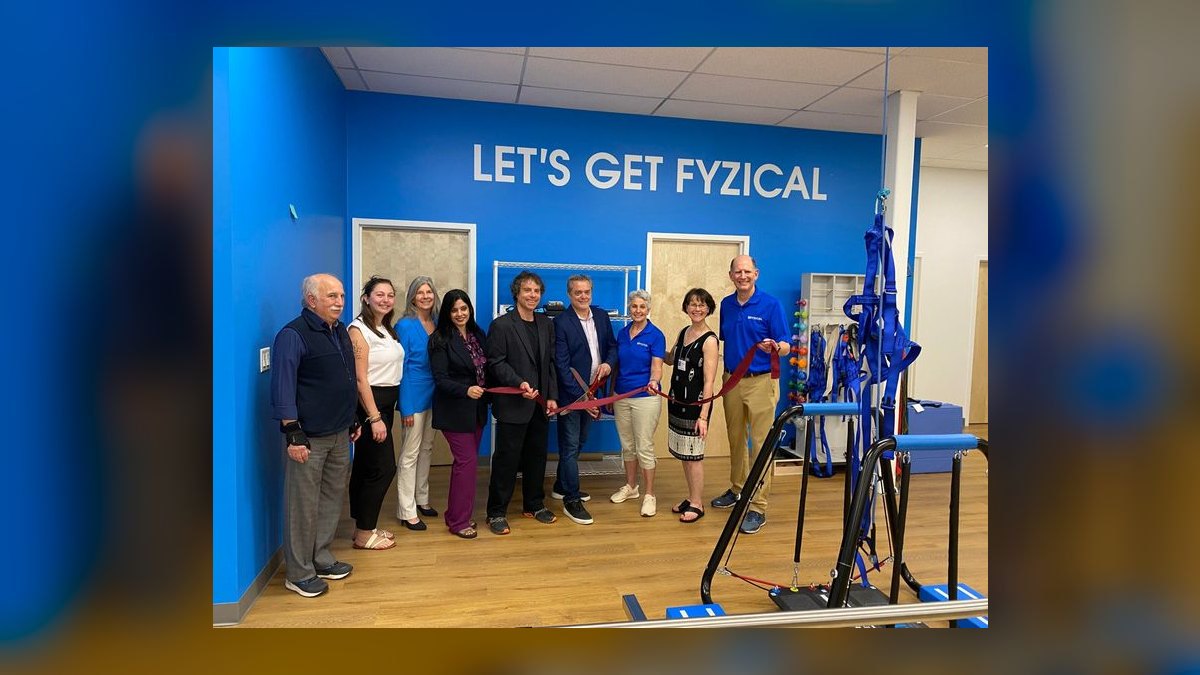
Only if you are a licensed chiropractor or partnered with one. HealthSource requires a DC to own and run the clinic, with a $30,000–$45,000 franchise fee and $150,000–$400,000 total Item 7 investment. Mature clinics gross $400,000–$1.2 million. It is a hands-on operating job, never a passive investment.
What a HealthSource franchise actually is and why the DC requirement decides everything
HealthSource Chiropractic, founded in 2006, is a franchised clinic model that blends chiropractic adjustment with progressive rehab, wellness programming, and weight-loss services. What you are buying is not a treatment method — you already have that if you went to chiropractic school. What you are buying is business infrastructure: patient-acquisition playbooks, marketing systems, billing support, staffing templates, clinical protocols, and a brand that a patient in an unfamiliar city might actually recognize. That distinction matters enormously, because it tells you exactly who this franchise serves and who it wastes money on.
The gating fact is licensure. Chiropractic is a licensed healthcare profession, and most states enforce corporate practice of medicine or corporate practice of chiropractic rules that restrict clinic ownership to licensed practitioners. That means a non-DC cannot simply write a check, hire a chiropractor, and collect distributions the way you might with a car wash or a sandwich shop. In states that permit it, a non-DC can partner with a licensed DC under a structure the franchisor and your healthcare attorney both approve — often a management services organization arrangement where the professional entity is DC-owned and the management entity handles non-clinical operations. Those structures are legal in some states, restricted in others, and outright prohibited in a few. This is the single most expensive thing to get wrong, because you can spend $40,000 on legal and site work before discovering your state does not allow the structure you assumed.
The practical consequence: your first phone call is not to HealthSource's franchise development team. It is to a healthcare attorney licensed in the state where you intend to operate, asking one narrow question — can the ownership structure I am contemplating legally hold a chiropractic clinic here? Everything downstream depends on that answer.
Why does the franchise matter at all if you are already a DC who could hang a shingle independently? Because the failure mode in chiropractic ownership is almost never clinical. Chiropractors who struggle rarely struggle at adjusting spines. They struggle at patient acquisition, at retention past visit six, at insurance billing and denial management, at hiring and keeping front-desk staff, at converting a new patient into a completed treatment plan, and at reading a P&L well enough to know which of those five things is actually bleeding. A franchise system is a purchased answer to those problems. Whether it is worth 6%–9% royalty plus roughly 2% marketing fee — call it 8%–11% of top-line revenue forever — depends entirely on whether you would have solved those problems yourself and how fast.
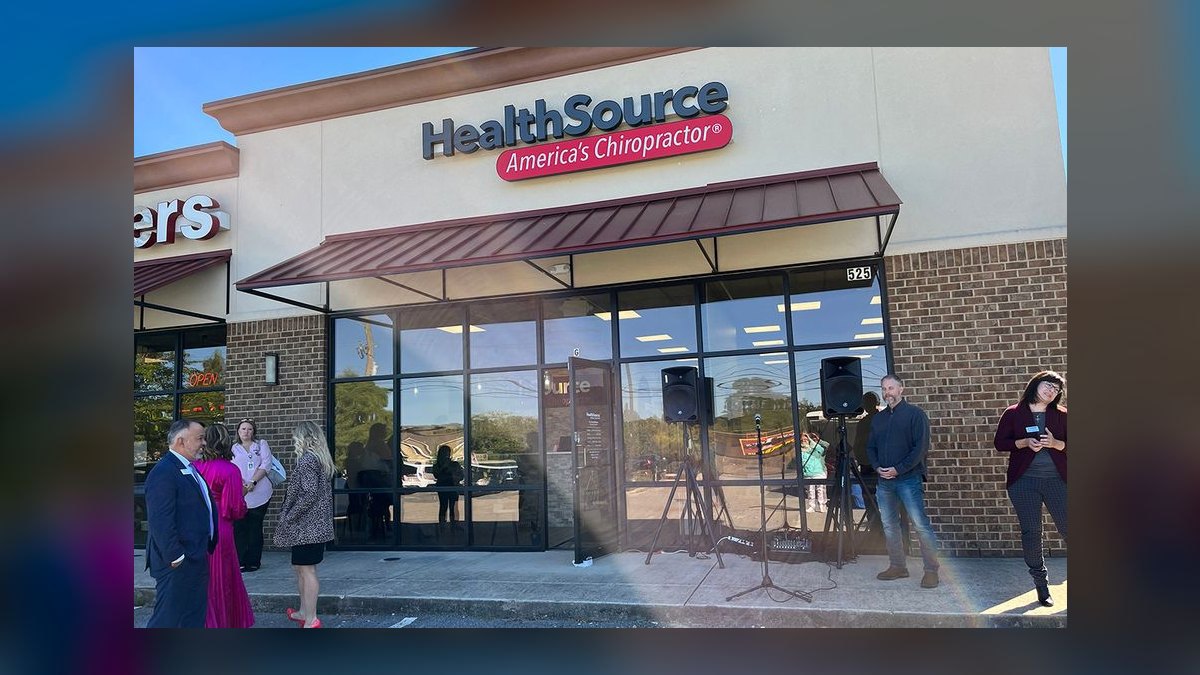
Run the arithmetic honestly. On an $800,000 clinic, 8%–11% is $64,000–$88,000 per year leaving the business. Over ten years, that is $640,000–$880,000. The franchise has to generate more than that in incremental revenue and avoided mistakes to be worth it. For a new graduate or a DC who has never owned a practice, it very often does — the ramp is faster and the first-year mistakes are cheaper. For an established DC with a full book, a referral network, and a front desk that already converts, the math gets much harder to justify.
The step-by-step process from first inquiry to open doors
The sequence below is the one that avoids the expensive reversals. Each step exists specifically to kill the deal cheaply before the next step costs more money.
Step one — confirm licensure and structure (weeks 1–3, $2,000–$6,000). Healthcare attorney reviews your state's corporate practice rules against your intended ownership structure. If you are a DC, this is quick. If you are a non-DC seeking a partner, this is where most deals should die or get restructured.
Step two — request and read the Franchise Disclosure Document (weeks 2–6). Federal law requires the franchisor to deliver the FDD at least 14 calendar days before you sign anything or pay any money. Read all 23 items, but live in four of them. Item 5 and Item 6 give you the initial fee and every recurring fee. Item 7 gives the estimated initial investment range — $150,000–$400,000 here. Item 19 is the financial performance representation, and it is optional for franchisors to include; if it exists, read the footnotes harder than the numbers, because averages hide whether the top decile is carrying the mean. Item 20 gives you unit counts and, critically, the list of franchisees who left the system in the past three years plus contact information for current franchisees. That list is the most valuable page in the document.

Step three — call franchisees, including the ones who left (weeks 4–8). Budget 12–20 calls. Ask current owners: what was your actual month-12 collections versus what you projected, how many new patients per month do you need to break even, what is your insurance-to-cash-pay mix, what does the franchisor do that you could not do yourself, and would you sign again. Then call three or four former franchisees from the Item 20 list. Departed owners tell you what the sales process omits. If nobody answers, that itself is data.
Step four — validate the market (weeks 6–10, $1,000–$5,000). Count competing chiropractors within a 3-mile and 5-mile radius. Look at population density, median household income, insurance coverage patterns, and employer mix — markets with large physical-labor employers behave differently than white-collar office parks. Check whether HealthSource already has clinics nearby and what territorial protection your agreement grants.
Step five — secure financing and sign (weeks 8–16). SBA 7(a) loans are the common path for franchise healthcare; expect to put down 10%–30% and personally guarantee the balance. Lenders will want a business plan, two to three years of personal tax returns, and a personal financial statement.
Step six — site selection, lease, and buildout (months 4–10). This is the longest and most delay-prone phase. Permitting and construction routinely add 30–90 days beyond schedule.

Step seven — training, hiring, pre-launch marketing, and open (months 8–12). Pre-launch marketing should start 45–60 days before doors open, not on opening day.
Costs, timelines, and the working capital nobody budgets for
Start with the disclosed numbers, then add the ones that live outside Item 7.
The franchise fee runs $30,000–$45,000. Total estimated initial investment per Item 7 is $150,000–$400,000. Ongoing royalty is tiered at 6%–9% of gross, with an additional marketing fee of roughly 2%. Inside the initial investment, the rough allocation looks like this: buildout and leasehold improvements $60,000–$170,000; clinical equipment including tables, rehab gear, and modalities $40,000–$110,000; signage and interior decor $12,000–$35,000; opening inventory and supplies $8,000–$22,000; initial marketing push $20,000–$50,000; training and travel $10,000–$28,000; and working capital $30,000–$80,000.
That working capital line is where the disclosed range and reality diverge, and it is the number I would stress-test hardest. Chiropractic revenue is substantially insurance-reimbursed, and insurance pays on its own schedule — commonly 30–90 days from date of service, longer when a claim gets denied and reworked. You deliver care in January and get paid in March, but payroll, rent, and your lease payment on the equipment all run monthly. On a clinic trending toward $800,000 in annual collections, the accounts-receivable float at any given moment can easily sit at $50,000–$70,000. If you capitalized at the bottom of the working capital range, you will discover this in month four or five, and you will fix it with a personal credit line at a much worse rate than the SBA money you could have borrowed at closing.
Local marketing is the second under-budgeted line. The ~2% franchise marketing fee funds brand-level and regional activity. Filling *your* schedule is your expense. Realistic local spend runs $1,500–$4,000 per month — local SEO, Google Ads on high-intent pain queries, community events, chamber memberships, employer wellness outreach, and referral programs with local physical therapists and primary care. That is $18,000–$48,000 annually, and in a saturated metro with a dozen competing clinics you may need $3,000–$6,000 monthly to be visible at all. Year one is the worst, because you are buying awareness from zero.
Labor is the third. A 35%-of-revenue clinical and staff cost is a reasonable planning baseline, but it assumes stable staffing. Add turnover, training time, temp coverage, overtime, and hiring bonuses and you should carry an extra $15,000–$25,000 annually for the unplanned. In high-cost metros where entry wages run $15–$18 per hour, total staff cost commonly lands closer to 40%–45% of revenue rather than 35%.
Time is a cost too, and it is the one people discount most. Expect 50–60 hours per week for roughly the first 18 months — five to six days in clinic, adjusting patients, running consultations, and doing administrative oversight the system provides templates for but does not perform. Owners who assumed the franchise systems would buy them freedom tend to hit a wall around month twelve. Realistically it takes two to three years to build a management layer that lets you step back to 40 hours.
Finally, equipment replacement. Tables, rehab equipment, and modalities have useful lives in the 8–12 year range, but heavy use shortens that. Budget $20,000–$40,000 every five to seven years for replacement and refresh. This matters doubly on a resale — seven-year-old tables are a liability disguised as an included asset.

Here is what a mature $800,000 clinic looks like on the P&L. Clinical and staff costs at 35% take $280,000. Rent and supplies at 16% take $128,000. Royalty and marketing fee at 11% take $88,000. Remaining operating expenses at 14% take $112,000. That leaves roughly $192,000 to the owner. Reported owner take across the system generally falls in the $100,000–$400,000 band, tracking gross revenue between $400,000 and $1.2 million-plus. Those are honest ranges, not projections, and the spread inside them is almost entirely explained by patient acquisition and retention, not by clinical skill.
Full timeline from signature to open doors: 6–12 months. Time to positive cash flow: commonly 9–18 months post-opening. Time to the mature economics described above: three years or more.
Buying an existing clinic instead: what the disclosure document will not tell you
The FDD describes building new. It says almost nothing useful about acquiring an existing HealthSource clinic, and that gap is where resale buyers lose money.
Valuation has no fixed formula. The franchisor does not set resale prices; the seller and buyer negotiate, subject to franchisor approval of the buyer. Typical small healthcare practice multiples land around 2–3x annual EBITDA or roughly 1–1.5x annual gross revenue, but those are starting points, not appraisals. A clinic grossing $800,000 with $192,000 in owner earnings might be listed anywhere from $384,000 to $576,000 on those multiples. Distressed clinics with declining revenue and a burned-out seller trade far lower. Multi-location, highly profitable operations trade far higher.

Patient attrition is the risk that actually shows up. Chiropractic is intensely relationship-driven. Patients bond to the hands that adjust them, not to the signage. When the founding DC leaves, meaningful attrition follows — plan for a substantial share of the active patient base to lapse or follow the departing doctor within the first six months, even with a clean transition. Model your first-year revenue conservatively below the trailing twelve months, and price your offer against the revenue you will actually retain, not the revenue the seller produced. Any deal structure that shifts part of the price into an earn-out tied to retained collections protects you here.
Structure the transition into the deal. A seller willing to stay 3–6 months and personally hand off patients is worth materially more than one who hands you keys and flies to Florida. Get that commitment in writing with a specific schedule of in-clinic days, and hold back a portion of the purchase price against it. Also get a non-compete with a defined radius and term — otherwise the seller opens two miles away and takes the book with them.
Audit the equipment and the lease independently. Bring in an equipment appraiser, not the seller's estimate. Aging tables and modalities are a real deferred liability and a legitimate price-reduction lever. On the lease, have a commercial broker who understands medical office space review remaining term, escalation clauses, assignment rights, and whether the rent is above or below current market. Chiropractic clinics need specific layouts — adjustment rooms, open rehab floor, front-desk sightlines — so a cheap lease in a badly shaped space is not a bargain.
Transfer costs are additive. Franchise systems charge a transfer fee on resale, and buyers typically must complete the full new-franchisee training program regardless of experience. Budget both the fee and the travel, lodging, and lost clinic time for training. Confirm the exact transfer fee in the current FDD rather than assuming.

Seller financing cuts both ways. Sellers frequently finance a portion of the price over three to five years, which lowers your cash at closing considerably. It also means a fixed monthly obligation that does not care whether your patient retention held. Only accept seller financing if you are holding six to twelve months of operating expenses in reserve, and negotiate a clause that adjusts the note if collections fall below a defined threshold during the transition.
The best resale profile: a clinic three to seven years old, revenue flat or growing across the last two years, a seller committed to a real transition, equipment with life left in it, and a lease at or below market with assignable term remaining. The best turnaround profile is the opposite — a declining clinic bought cheap — but that requires you to be genuinely good at patient acquisition, and it takes 12–18 months before it looks like a win.
Where operators get this wrong
Assuming the franchise replaces the work. It compresses the learning curve; it does not run the clinic. Owners who buy a system expecting autonomy are the ones who burn out at month twelve. The systems make your effort more productive — they do not substitute for it.
Undercapitalizing against the insurance float. This is the single most common cause of preventable distress. Capitalize toward the high end of working capital, not the low end, and arrange a line of credit at closing when you have leverage rather than in month five when you do not.

Treating Item 19 as a forecast. Financial performance representations describe what existing units did under their specific conditions. They are averages across markets, tenures, and operator skill levels. Your clinic is one unit in one market with one operator. Use Item 19 to sanity-check your own bottom-up model — new patients per month × conversion to care plan × average case value — never as a substitute for building it.
Skipping the former-franchisee calls. Current owners have a stake in the system looking good; some are also trying to sell. Departed owners have no incentive to spin. Item 20 gives you their names. Call them.
Ignoring insurance mix concentration. A clinic that is 70%+ insurance-reimbursed is exposed to reimbursement rate pressure and payer policy changes it cannot control. Chiropractic manipulation codes have seen flat-to-declining reimbursement in many states, and value-based care models continue reshaping how musculoskeletal care gets paid. HealthSource's wellness and weight-loss programs are largely cash-pay, which is precisely why they matter — they are the margin hedge. Build cash-pay share deliberately from month one rather than bolting it on after margins compress.
Underestimating associate DC hiring. If you are a non-DC partner or plan to scale beyond your own chair, you are dependent on hiring licensed chiropractors in a market where demand for non-surgical pain care is rising. Compensation expectations have moved up meaningfully in recent years, base plus production. Model that at current market rates, not at what associates cost five years ago, and assume recruiting takes longer than you planned.

Signing before reading the territory clause. Understand exactly what protection you have: radius, population, or none at all. Understand whether the franchisor can place a corporate or franchised unit adjacent to you, and what happens to your protection if you fail to hit development milestones.
Not comparing against the alternatives. Other chiropractic franchise systems exist with different models — some membership-and-cash-pay driven, some closer to traditional insurance-based practice, some in adjacent physical therapy and rehab categories. And independent practice remains a real option: no franchise fee, no royalty, full autonomy, in exchange for building every system yourself. Get comparative FDDs before you sign anything.
Decision framework: open new, buy existing, go independent, or walk
The decision reduces to four honest questions, answered in order.
Are you legally able to own the clinic? DC license, or an attorney-blessed partnership structure in a state that permits it. No is a full stop, not an obstacle to route around.

Do you have the capital with margin? The realistic all-in cash requirement for a new clinic is the Item 7 range plus $50,000–$100,000 of additional working capital and first-year marketing — call it $200,000–$500,000 of real cash and credit availability. You want $70,000–$130,000 genuinely liquid after closing, plus six months of personal living expenses outside the business. If those numbers are tight, wait a year and capitalize properly rather than opening thin.
Is patient acquisition something you can do or something you need bought? Be honest. If you have never filled a schedule from cold, the franchise system's marketing and acquisition playbooks are worth the royalty. If you have a full book, a referral network, and a proven front desk, you are paying 8%–11% forever for things you already own — go independent and keep the margin.
New build or resale? New build gives you site choice, current equipment, a clean lease, and no inherited reputation — at the cost of a 6–12 month pre-revenue period and a from-zero patient ramp. Resale gives you day-one revenue, trained staff, and existing patients — at the cost of attrition risk, aging equipment, an inherited lease, and a transfer fee. If you are strong at acquisition and weak on cash, buy a distressed clinic cheap and turn it. If you are cash-rich and want control over every variable, build new.
One more filter worth applying: the 2027 environment specifically. Demand for non-surgical, lower-cost musculoskeletal care is structurally durable and relatively recession-resilient — people in pain seek relief regardless of the business cycle. That is the tailwind. The headwinds are reimbursement pressure on manipulation codes, tighter labor markets for associate DCs, and financing costs that remain well above the levels borrowers enjoyed early in the decade. None of that argues against entering. It argues for entering with more cash-pay revenue in the model, more working capital in the bank, and a more conservative debt load than a 2019 pro forma would have carried.
Related questions
Can a non-chiropractor own a HealthSource franchise?
Generally no, not alone. Most states restrict clinic ownership to licensed DCs under corporate practice rules. Where permitted, a non-DC may partner with a licensed chiropractor through a structure your healthcare attorney approves. Verify state-specific rules before spending any money on site work or legal formation.
How long until a new HealthSource clinic reaches breakeven?
Positive cash flow commonly arrives 9–18 months after opening, with mature economics taking three years or more. The variable that moves this most is new patients per month and conversion into completed treatment plans — not clinical quality, which is roughly constant across owners.
Is it cheaper to open independently than to franchise?
Upfront, yes — you skip the $30,000–$45,000 franchise fee and the ongoing 8%–11% of gross. But you also build every acquisition, billing, and retention system yourself. For a first-time owner the franchise usually pays for itself in speed; for an experienced DC with a full book it usually does not.
What should I ask current franchisees before signing?
Actual month-12 collections versus projection, new patients needed monthly to break even, insurance-versus-cash-pay mix, what the franchisor delivers that they could not build themselves, and whether they would sign the agreement again knowing what they know now.
How much working capital do I really need beyond Item 7?
Plan for $50,000–$100,000 above the disclosed initial investment, covering insurance reimbursement float and first-year local marketing. Insurance pays 30–90 days out while payroll and rent run monthly, so undercapitalization here is the most common preventable failure.
FAQ
Do I need to be a chiropractor to own a HealthSource franchise?
You need to be a licensed Doctor of Chiropractic or partner with one. State corporate practice rules generally require a licensed DC to own and operate a chiropractic clinic. Where a non-DC partnership is legally permitted, the structure must be reviewed by a healthcare attorney licensed in that state before any money changes hands.
What is the total investment range for a HealthSource franchise?
The franchise fee runs $30,000–$45,000, and the total estimated initial investment per Item 7 is $150,000–$400,000. That covers buildout, equipment, signage, supplies, initial marketing, training, and a working capital allowance. Realistically, add $50,000–$100,000 more for insurance float and first-year local marketing.
How much can a HealthSource franchise owner expect to earn?
Mature clinics generally gross $400,000 to $1.2 million-plus annually, with owner take commonly landing between $100,000 and $400,000 depending on patient volume, insurance-versus-cash-pay mix, staffing costs, and local competition. These are observed ranges across a system, not a projection for any specific clinic.
What ongoing fees does the franchise charge?
Royalty is tiered at 6%–9% of gross revenue, with a marketing fee of approximately 2% of gross on top. Combined, expect roughly 8%–11% of top-line revenue leaving the business every month for as long as you hold the franchise agreement.
How long does it take to open a HealthSource clinic?
Six to twelve months from signing the franchise agreement to opening doors, covering site selection, lease negotiation, buildout, permitting, equipment procurement, staff hiring, and training. Permitting and construction delays are common — build float into your pro forma rather than assuming the fast end of that range.
Is buying an existing clinic safer than opening a new one?
It trades one risk set for another. You get day-one revenue and trained staff, but you inherit patient attrition risk when the founding DC leaves, aging equipment, and an existing lease. Audit equipment and lease independently, and structure the deal so the seller stays through a real transition period.
Sources
- https://www.ftc.gov/business-guidance/resources/franchise-rule-compliance-guide
- https://www.ftc.gov/business-guidance/small-businesses/franchise-rule
- https://www.sba.gov/funding-programs/loans/7a-loans
- https://www.bls.gov/ooh/healthcare/chiropractors.htm
- https://www.franchise.org/
- https://www.acatoday.org/
- https://www.fclb.org/
- https://www.cms.gov/medicare/payment/fee-schedules/physician
- https://www.healthsourcechiro.com/
Related on PULSE
- Should I open or buy a 100% Chiropractic franchise in 2027?
- Should I open or buy a The Junkluggers franchise in 2027?
- Should I open or buy a Pak Mail franchise in 2027?
- Should I open or buy a PostNet franchise in 2027?
- Should I open or buy a Fish Window Cleaning franchise in 2027?
- Should I open or buy a Shine Window Care franchise in 2027?
This page will be disappearing soon. Save it to your device for $1 — or read it free while it is here.
@Kory-White- · if Venmo asks, the last 4 of my number are 2012
This page is gone.
This one is off the shelf now. $1 keeps it on your phone for good — the whole page, pictures and diagrams included.
 pulse-qHow Many Employees Should I Schedule Each Shift at My Language School in 2026?
 pulse-qHow Do I Make a Service Fee Tangible So It Adds Real Value in 2026?
 pulse-qHow Do I Use Service Fees to Cover Back-Office Payroll in 2026?
 pulse-qShould I open or buy a FirstLight Home Care franchise in 2027?
 pulse-qWhat Service Fees Should a Painting Contractor Charge in 2026?
 pulse-qHow Many Stylists Should I Schedule Each Day at My Hair Salon in 2026?
 pulse-qShould I open or buy a CPR Cell Phone Repair franchise in 2027?
 pulse-qShould I open or buy a PDQ franchise in 2027?
 pulse-qShould I open or buy a Pinch A Penny franchise in 2027?
 pulse-qHow Many Baristas Should I Schedule Each Shift at My Coffee Drive-Thru in 2026?