
Should I open or buy a Cinnaholic franchise in 2027?
 Curated byKory White · Fractional CRO · Maryland
 PULSEKNOWLEDGE LIBRARY
Quality
Certified

Open a Cinnaholic franchise in 2027 only if you can fund the roughly $200,000–$460,000 Item 7 range, work the bakery full-time, and market craveable dessert rather than "vegan." Buying an existing unit costs more upfront but removes ramp risk. Either path fails without site quality, catering revenue, and disciplined food cost.
What a Cinnaholic unit actually is, and why the distinction matters
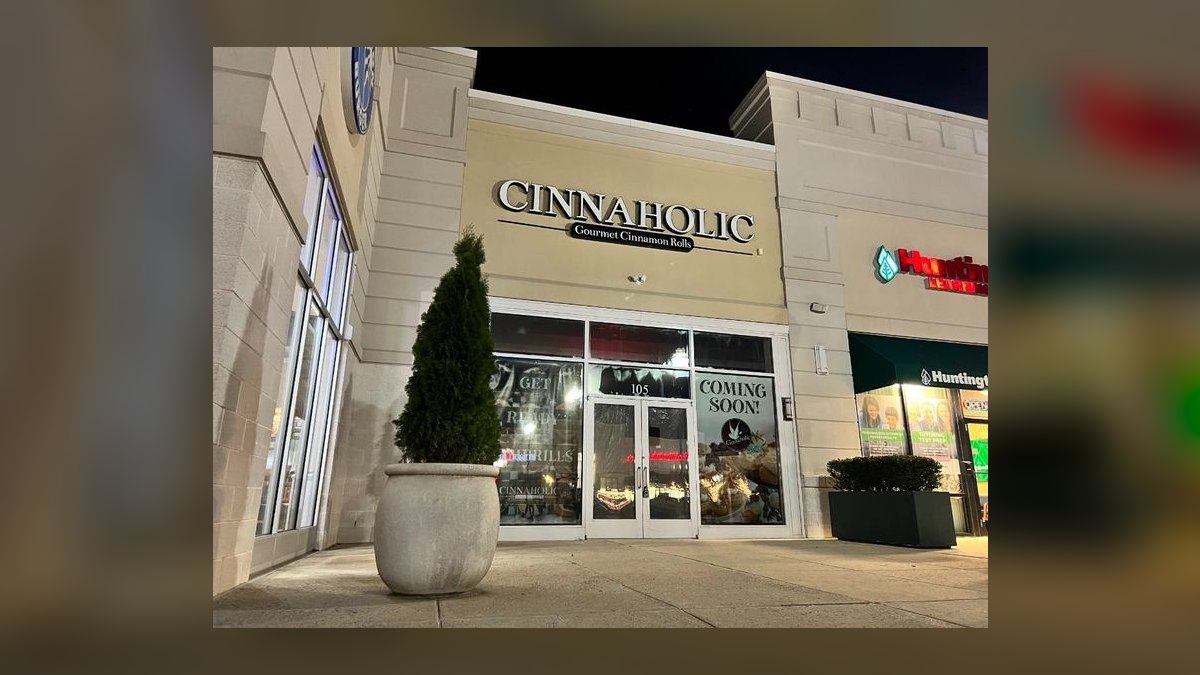
Cinnaholic is a gourmet cinnamon roll bakery built around a customizable frosting and topping bar. The rolls are baked in-house and are 100% vegan — dairy-free and egg-free — but the concept is not merchandised as a health-food store. That single framing decision drives almost everything about whether your unit works, because it determines the size of the addressable customer pool in your trade area.
If you position the store as "the vegan bakery," you are fishing in a pond that represents a low single-digit percentage of the population in most American markets. If you position it as "gourmet cinnamon rolls with a build-your-own topping bar that happen to be vegan," you are fishing in the dessert pond, which is essentially everyone with disposable income and a sweet tooth. Same product, same cost structure, radically different traffic ceiling. Operators who understand this write their menu boards, their signage, and their social media captions around flavor and customization, and let the vegan attribute be a footnote that captures the dietary-restriction customer as a bonus segment rather than the base.
The competitive set follows from that framing too. Your competition is not other vegan bakeries — in most markets there aren't any. Your competition is Cinnabon in the mall, Crumbl down the strip, Nothing Bundt Cakes across the parking lot, and every local cookie, donut, and ice cream shop within a ten-minute drive. That is a crowded, well-capitalized field. The differentiation you are buying is the customization ritual: the customer picks a base roll and then chooses from a rotating wall of frostings and toppings. It's an experience purchase as much as a food purchase, which is why the concept performs well in areas with foot traffic, students, and social-media-active demographics.

The other thing worth understanding before you sign anything: this is a scratch bakery, not an assembly kitchen. Dough gets mixed, proofed, rolled, baked, and cooled on-site every day. Frostings are prepped in batches, often a dozen-plus flavors at a time. That production reality is the source of most of the labor and shrink math later in this page, and it is the single biggest gap between how the concept looks on a discovery day and how it feels at 5:30 in the morning on a Saturday.
Buying an existing unit changes the risk profile but not the operating reality. A resale gives you a known revenue history, an existing customer base, a trained crew, and a buildout that is already paid for — which is why sellers price resales at a multiple of cash flow rather than at replacement cost. You are trading a lower probability of catastrophic failure for a higher entry price and, frequently, inherited problems: a tired buildout, aging equipment near replacement, a lease with only two years left, or a location that underperforms for structural reasons the seller is highly motivated not to explain. Every resale deserves the same site validation you would give a new build, plus a full equipment condition inspection and a lease assignment review.
The step-by-step evaluation and build process
The mistake most first-time franchise buyers make is compressing diligence to get to a signing date. The sequence below runs roughly four to five months from first document request to opening day for a new build, and the diligence phase up front is the part that is cheap to do well and ruinously expensive to skip.
Days 1–20: Read the FDD, especially Item 19. The Franchise Disclosure Document is the only legally standardized picture of the system you will get. Item 7 gives the estimated initial investment ranges. Item 19 is the Financial Performance Representation — if the franchisor publishes one, read the footnotes harder than the headline numbers, because the footnotes tell you which units are included, whether the figures are gross revenue or profit, and how many units actually hit the average. Item 20 gives you unit counts, openings, closures, and transfers over the prior three years. A system with rising transfers and closures is telling you something the brochure isn't. Item 3 covers litigation; Item 6 covers ongoing fees.
Days 21–40: Call at least five existing operators. The FDD gives you a contact list — use all of it, not just the names the franchise development rep suggests. Ask specific questions: annual gross revenue, what percentage comes from catering and large orders, food cost as a percentage of sales, labor as a percentage of sales, hours worked per week, and what they would do differently. Ask what their worst month looked like. Ask whether they would buy again. An operator who deflects on numbers is giving you an answer.

Days 41–60: Validate the site. This is where deals should die, not after the lease is signed. You want daytime population, evening dessert occasions, and a reason for people to be there that isn't your store. College towns, dense urban corridors, medical districts, and office parks with meaningful headcount all work. Walk the site at 8 AM, noon, 6 PM, and 9 PM on both a weekday and a Saturday and count people. Map the competing dessert concepts within a fifteen-minute drive.
Days 61–100: Build and staff. Buildout for a 1,000–1,600 square foot bakery typically runs four to six months from lease signing, with permitting and landlord work being the variables that blow up timelines. Hire your lead baker early and get them through training before the crew arrives.
Days 101–130: Open and stabilize. Grand opening should lead with the product and the topping bar, not the dietary claim. Build a catering pipeline from week one — offices, schools, churches, real estate agents, and event planners.

Beyond day 130: Control cost, then consider a second unit. Food cost and labor discipline are what convert revenue into owner income. Multi-unit only makes sense once unit one runs without you in the building daily.
Costs, timelines, and the ranges you should plan against
The 2026 FDD puts the total Item 7 initial investment in the range of roughly $200,000 to $460,000, with a franchise fee of $40,000 and liquidity requirements in the neighborhood of $90,000 to $155,000. That spread is wide for a reason: the low end assumes a modest second-generation space with usable infrastructure, and the high end assumes a raw shell in an expensive construction market.
Broken into components, the typical build looks something like this. Buildout and leasehold improvements run $110,000 to $280,000 — the largest single line and the one with the most variance, because a space with existing grease traps, three-phase power, and adequate ventilation saves you tens of thousands. Equipment runs $50,000 to $120,000, covering mixers, proofers, ovens, refrigeration, and display cases. Signage runs $14,000 to $40,000, and landlord or municipal sign codes can push you toward the high end without warning. Initial inventory is $8,000 to $20,000. Grand opening marketing is $12,000 to $32,000. Training and travel run $8,000 to $22,000. Working capital is budgeted at $22,000 to $60,000.

That working capital line is where inexperienced buyers underfund themselves. It has to cover payroll before revenue stabilizes, rent during the buildout period, loan payments that start before the doors open, and the inevitable surprise — a failed inspection requiring rework, an equipment delivery delay, a landlord who takes an extra sixty days to deliver the space. Carrying costs during a delayed buildout can consume $30,000 to $60,000 on their own if you are paying rent and debt service on an empty box for three to six months. Budget the top of the working capital range, not the bottom, and then add a personal reserve on top of it.
Ongoing fees are a 6% royalty on gross sales plus a marketing fee, with the marketing contribution typically in the low single digits — verify the exact figure in Item 6 of the current FDD rather than relying on any secondhand number. Combined, plan on roughly 8% of gross sales leaving before you pay for a single bag of flour.

On the revenue side, mature bakeries in the system gross in the range of $350,000 to $850,000 annually, with the stronger quartile clustering toward the upper end of that band. Owner discretionary earnings typically land somewhere between $60,000 and $180,000 depending on where you sit in that revenue distribution and how tightly you run costs. Work the P&L backward: at $500,000 in revenue, an 8% royalty-and-marketing load is $40,000, food cost at a 28% target is $140,000, labor at 28% is $140,000, rent at 10% is $50,000, and other operating expenses at 10–15% run $50,000 to $75,000. That leaves roughly $55,000 to $80,000 before debt service. Now run the same math at $700,000 in revenue and watch how much of the incremental $200,000 falls to the bottom line once your fixed costs are already covered. That leverage is the entire argument for site quality — the difference between a mediocre site and a strong one is not a 20% revenue difference, it's most of your income.
Timeline expectations: three to six months from signing to lease execution, four to six months of buildout, and twelve to twenty-four months to reach consistent positive cash flow. Slower units can take up to three years to recoup the initial investment. If your financial plan requires positive cash flow in month six, your plan is wrong.
Rent deserves its own note. In a prime mall or downtown corridor you may see $6,000 to $15,000 per month, which is $72,000 to $180,000 annually before you bake anything, plus common area maintenance charges that can add meaningfully to base rent. Secondary locations with strong daytime demographics — university-adjacent, medical district, office park — often run $3,000 to $7,000 per month with a more predictable customer base. Negotiate a five-year initial term with renewal options and cap annual escalations in the low single digits. At a $500,000 revenue run rate, every extra $1,000 per month in rent is $12,000 straight off your income, or a meaningful fraction of what you were planning to pay yourself.

Where owners get it wrong
They market the diet instead of the dessert. Covered above, but it bears repeating because it is the most common and most expensive error. The store that says "vegan bakery" on the awning converts a fraction of the traffic that the store saying "gourmet cinnamon rolls, your way" converts. You can serve the exact same product and lose half your addressable market on signage alone.
They underestimate labor by a wide margin. The staffing model on paper looks like two to three people per shift. Peak periods — Valentine's Day, Mother's Day, graduation weekends, holiday catering season — need substantially more bodies just to keep the line moving and the production schedule intact. Bakery-segment turnover is brutal, and every departure of a trained baker costs you two to four weeks of supervised ramp on the replacement, during which your product consistency and your waste numbers both suffer. Wages in most metro areas for quick-service roles have moved into the mid-to-high teens per hour, and skilled bakers command meaningfully more; high-cost coastal markets add a further premium on top. Model labor at 28% of sales and check it weekly, because it is the line that drifts fastest.
They treat it as passive income. First-year and second-year owners commonly report working 55 to 70 hours per week. You are the head baker, the closer, the social media manager, the HR department, and the person who calls the repair tech when a mixer seizes. The franchisees who succeed treat it as a craft business they personally operate. The ones who plan to hire a general manager on day one and check in weekly almost always find the unit economics don't support that manager's salary until revenue is well established.

They ignore catering. Retail walk-in traffic is lumpy and weather-dependent. Catering and large-order business is the incremental channel that fills weekday production capacity, smooths the revenue curve, and carries a better labor-to-revenue ratio because you're producing in batches rather than one custom order at a time. Offices, schools, real estate offices, hospitals, and event planners are all repeatable accounts. Operators who build a catering book in year one consistently outperform those who wait for it to happen.
They let food cost drift. Target roughly 28% of gross, and know that scratch baking gives you two leaks: portion drift on the topping bar and end-of-day waste on unsold product. Both are controllable with par-level discipline and a documented markdown procedure, and both quietly eat five points of margin if nobody watches them.
They gamble on a weak site to save rent. A cheap lease in a low-traffic center is not a savings, it's a permanent revenue cap. You cannot market your way out of a location that nobody drives past.

They underestimate the growth ceiling. There is no drive-through, and production throughput is bounded by oven capacity and hand-finishing time. Average ticket sits in the high single digits to low teens per person, which means you need transaction volume rather than ticket size to grow revenue — and transaction volume costs labor. Comparable dessert franchises with larger ticket sizes or faster throughput can generate meaningfully higher unit revenue on similar investment. If your goal is a ten-unit empire and an eventual private equity exit, look honestly at whether these unit economics support that. If your goal is owning a well-liked local dessert brand that produces $80,000 to $150,000 in owner income after two to three years of hard work, the concept can deliver that.
Decision framework: open new, buy existing, or walk away
Three viable outcomes exist, and the right one depends on your capital, your operating experience, and your risk tolerance.

Open a new unit if you have $200,000 to $460,000 in accessible capital plus a working capital reserve, you can commit full-time for at least two years, you have identified a genuinely strong site, and you are willing to absorb twelve to twenty-four months of ramp. New builds give you site choice, equipment under warranty, a full-length lease and franchise term, and no inherited reputation. You pay for that with ramp risk and construction risk.
Buy an existing unit if you value a known revenue history over a lower entry price, you can verify the financials with tax returns and POS exports rather than seller-prepared summaries, the remaining lease term is long enough to justify the price, and the equipment has real life left in it. Resales are priced on cash flow, so a strong unit costs more than a new build and a cheap resale is almost always cheap for a structural reason. Insist on the seller's reason for exiting and verify it independently. Check whether the franchisor requires a remodel on transfer — an unbudgeted refresh can add six figures to a deal you thought you'd priced.
Walk away if you'd be undercapitalized on working capital, if you plan to run it absentee, if your intended site fails traffic and daypart tests, if you cannot get straight answers from existing operators, or if your only enthusiasm for the concept is the plant-based angle. Those five conditions predict failure more reliably than anything in the FDD.
Related questions
How much liquid cash do I actually need, separate from total investment?
Plan on roughly $90,000 to $155,000 in liquid capital as the franchisor's stated requirement, plus a personal reserve beyond that. The liquidity figure covers your equity contribution and early operating needs — it is not a cushion for construction delays or a slow first year.
Does a resale skip the franchise fee?
Not usually. Transfers typically carry a transfer fee rather than the full initial franchise fee, and the franchisor may require you to complete the same training program. Confirm the transfer fee, training obligation, and any required remodel in the FDD and the transfer agreement before pricing the deal.
Can I run this while keeping my day job?
Realistically, no — not in the first eighteen months. Owners consistently report 55 to 70 hour weeks during ramp. Scratch production starts before dawn, and the unit economics rarely support a full-time general manager's salary until revenue is well established.
What percentage of revenue should catering represent?
There's no published system benchmark, so treat this as a question for existing operators. Ask each of the five you interview what share of their revenue comes from catering and large orders. Strong operators typically report it as a meaningful and growing channel rather than an afterthought.
How do I verify a seller's revenue claims on a resale?
Request three years of federal tax returns, monthly P&Ls, and raw POS exports — not summaries. Reconcile POS gross sales against the royalty payments reported to the franchisor. Any gap between what the seller shows you and what they reported to the franchisor is a stop sign.
FAQ
What's the total investment range for a Cinnaholic franchise?
The 2026 FDD puts Item 7 total initial investment at roughly $200,000 to $460,000. That includes the $40,000 franchise fee, buildout, equipment, signage, initial inventory, grand opening marketing, training, and working capital. Your actual number depends heavily on space condition, local construction costs, and lease terms — a second-generation food space can save you a significant portion of the buildout line.
How much can an owner realistically earn?
Mature bakeries gross roughly $350,000 to $850,000 annually. After royalty, marketing fee, food cost, labor, rent, and other operating expenses, owner discretionary earnings typically fall between $60,000 and $180,000. First-year earnings are usually well below that as you build the customer base and work through ramp inefficiencies. Where you land in that band is driven mostly by site quality and cost discipline.
Is the vegan positioning a risk or an advantage?
An advantage, if you market it correctly. The product is craveable to dessert customers regardless of diet, and the plant-based attribute captures an additional segment that competing bakeries can't serve. The risk is self-inflicted: operators who lead with "vegan" narrow their own addressable market. Lead with flavor and customization; let the dietary claim be a bonus.
What are the ongoing fees?
A 6% royalty on gross sales plus a marketing fee. Verify the exact marketing contribution percentage in Item 6 of the current FDD, since these can be adjusted between disclosure versions. Combined, expect roughly 8% of gross sales to leave before any operating expense. That load is within normal range for food franchising, but it means every point of food cost or labor drift comes directly out of your income.
How long does it take to break even?
Most franchisees report reaching consistent positive cash flow within twelve to twenty-four months. Slower-starting units can take up to three years to recoup the initial investment. Buildout alone typically runs four to six months, and landlord or permitting delays can extend that. Budget working capital and personal living expenses against the pessimistic end of that timeline, not the optimistic one.
What's the biggest mistake new owners make?
Underestimating both the local dessert competition and the personal labor commitment. You are competing for every sugar-craving customer in the trade area against well-capitalized national concepts, not for a small plant-based niche. And this is a scratch bakery — the owner is in the production line for the first year or two. Plan for both realities before you sign.
Sources
- https://www.ftc.gov/business-guidance/resources/franchise-rule-compliance-guide
- https://www.ftc.gov/business-guidance/resources/consumers-guide-buying-franchise
- https://www.sba.gov/funding-programs/loans/7a-loans
- https://www.franchise.org/
- https://www.entrepreneur.com/franchises/franchise500
- https://www.franchisebusinessreview.com/
- https://www.bls.gov/oes/current/oes513011.htm
- https://www.bls.gov/iag/tgs/iag722.htm
- https://cinnaholic.com/franchise/
Related on PULSE
- Should I open or buy a The Junkluggers franchise in 2027?
- Should I open or buy a Pak Mail franchise in 2027?
- Should I open or buy a PostNet franchise in 2027?
- Should I open or buy a Fish Window Cleaning franchise in 2027?
- Should I open or buy a Shine Window Care franchise in 2027?
- Should I open or buy an Image360 franchise in 2027?
This page will be disappearing soon. Save it to your device for $1 — or read it free while it is here.
@Kory-White- · if Venmo asks, the last 4 of my number are 2012
This page is gone.
This one is off the shelf now. $1 keeps it on your phone for good — the whole page, pictures and diagrams included.
 pulse-qHow Do I Calculate the Right Service Fee to Charge in 2026?
 pulse-qHow Many Employees Should I Schedule Each Shift at My Skate Park in 2026?
 pulse-qHow Many Sales Reps Do I Need to Hire for My Dental Equipment Company in 2026?
 pulse-qWhat Service Fees Should a Gym or Fitness Studio Charge in 2026?
 pulse-qHow Many Employees Should I Schedule Each Shift at My Language School in 2026?
 pulse-qHow Many Sales Reps Do I Need to Hire for My Smart Home Integration Company in 2027?
 pulse-qHow Do I Raise Contribution Margin Without Raising My Prices in 2026?
 pulse-qHow Many Sales Reps Do I Need to Hire for My Prefab Home Builder in 2026?
 pulse-qShould I open or buy a Celebree School franchise in 2027?
 pulse-qShould I open or buy a FirstLight Home Care franchise in 2027?