


Should I open or buy a The Coder School franchise in 2027?
Quality
Certified
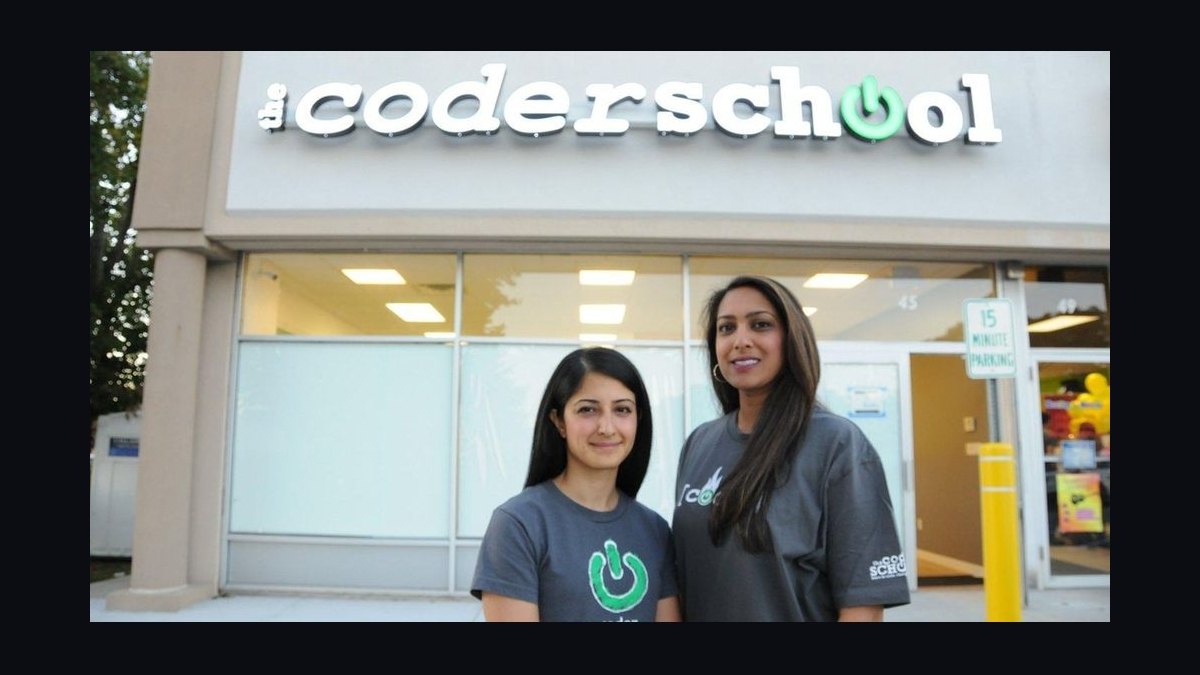
Open a new The Coder School franchise only if you can staff coding coaches and your market has affluent, tech-focused families; buy an existing unit if you want proven enrollment and will pay a premium for it. Total Item 7 investment runs roughly $80,000 to $200,000, with an 8%–10% royalty plus 2% marketing fee.
The two deals sitting on your desk in early 2027
Picture the decision the way it actually arrives, because it rarely arrives as an abstract "should I franchise?" question. It arrives as two specific pieces of paper.
The first is a territory map. Your development rep has flagged an unopened suburb — median household income comfortably above the metro average, three well-regarded elementary schools within a four-mile radius, a corporate campus down the road that employs engineers who bring home the exact anxiety that sells coding classes. You would pay the $50,000 franchise fee, sign a five-to-seven-year lease on 1,200 to 2,000 square feet of retail or flex space, build out the room, buy the laptops, and open with zero students. Everything in your Item 7 range — the $80,000 to $200,000 total — goes out the door before a single parent swipes a card. Your ramp is the entire question. If you reach 60 to 80 enrolled students by month twelve, you have a business. If you reach 30, you have a job that pays worse than the one you left.
The second piece of paper is a broker's teaser for an existing location two counties over. Ninety-something active students, four years of operating history, an owner who wants out because of a relocation or burnout or a partner buyout. The asking price is quoted as a multiple of seller's discretionary earnings — small service businesses in this category typically trade somewhere in the two-to-three-times SDE range, so a location genuinely throwing off $120,000 to the owner might be listed at $250,000 to $350,000 plus inventory and equipment, sometimes with a transfer fee owed to the franchisor on top. That is meaningfully more cash than opening cold. What you buy with the premium is the elimination of the ramp: revenue on day one, a coach roster that already exists, a parent community that already trusts the sign on the door.
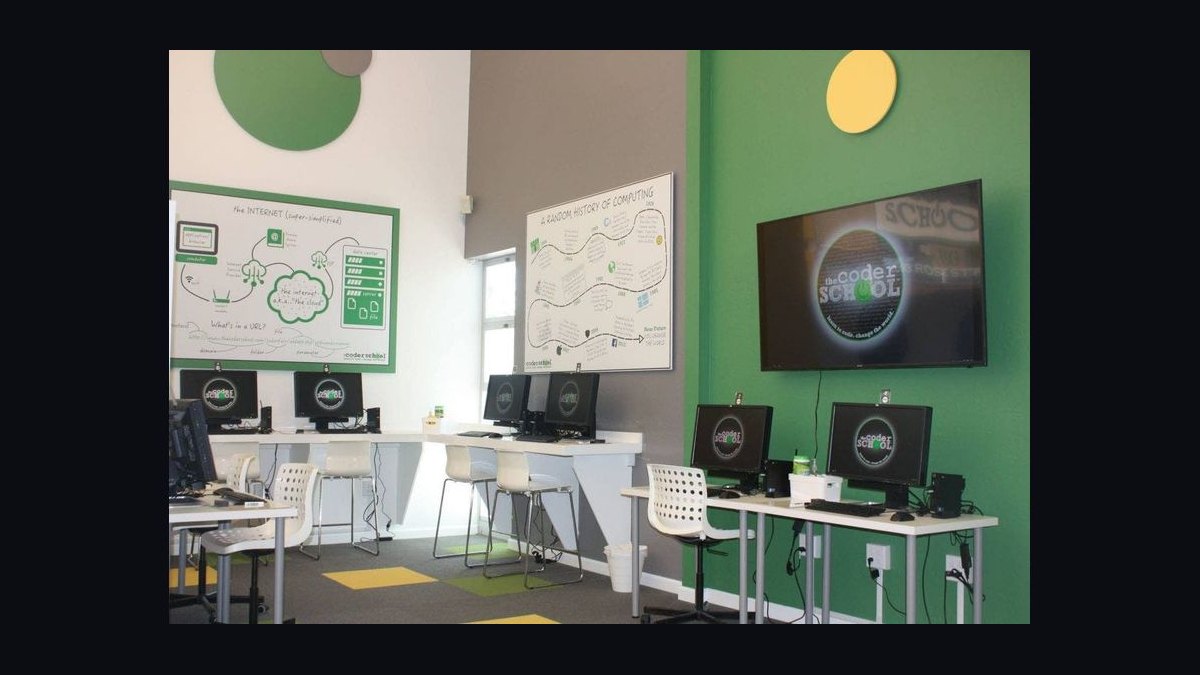
Both papers are lying to you in different directions. The territory map is lying about how fast enrollment builds. The teaser is lying about how much of that $120,000 SDE belongs to the departing owner personally rather than to the business — the owner who taught fifteen hours a week himself, the owner whose wife did the books unpaid, the owner whose lease renews in eight months at a rate nobody has negotiated yet. Your job over the next ninety days is to work out which lie is cheaper for you specifically.
That framing matters because The Coder School is not a passive asset in either version. The model is mentor-driven "Code Coaching" with low student-to-coach ratios, which is exactly what justifies premium per-session pricing and exactly what makes labor your dominant variable cost. You are not buying a vending machine. You are buying a small education staffing company with a curriculum license attached.
How the model actually converts a parent's anxiety into recurring revenue
Understand the machine before you price it. The Coder School's economics run on one loop, and every dollar you keep or lose depends on how tightly that loop turns.
A parent finds you through local search, a school partnership, a birthday-party word-of-mouth conversation, or a summer camp flyer. They book a trial or assessment session. A coach meets the child, gauges skill level, and slots them into an individualized track — Scratch for the seven-year-old, Python or JavaScript for the eleven-year-old, something closer to real project work for the high schooler. The family commits to a weekly recurring session, typically an hour, billed monthly. That recurring bill is the entire product. Everything else — camps, workshops, competitions, birthday events — is either an acquisition channel feeding the recurring bill or a seasonal revenue spike layered on top of it.
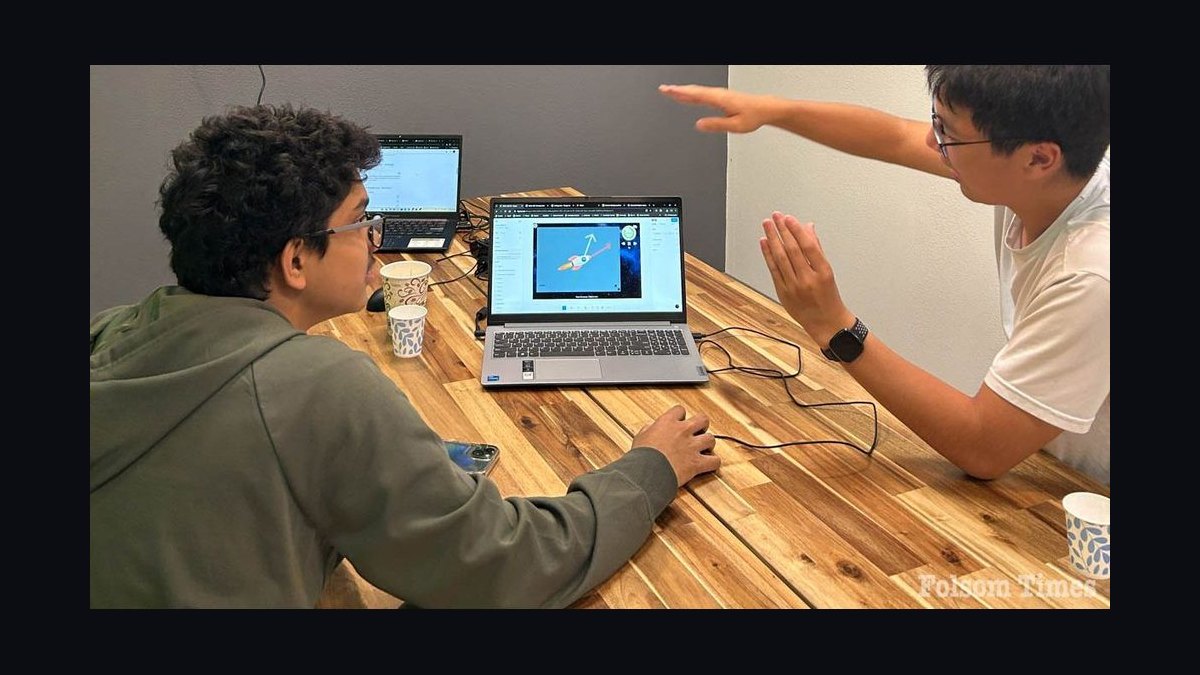
Here is why the low-ratio mentor model is both the moat and the trap. Because you are running one coach to a small handful of students rather than one instructor to twenty, you can charge a rate that a general after-school program cannot. But your capacity is now hard-capped by coach-hours, not by seats. In a classroom model, adding a student to a class of twelve costs you nearly nothing. In a coaching model, adding students eventually forces you to add a coach, and coach supply is your binding constraint. Growth does not fall to the bottom line the way it does in a lecture-format competitor. It falls to payroll first.
The second thing to understand about the loop is that it is a retention machine, not an acquisition machine. A student who stays twenty-four months at a typical weekly rate is worth several thousand dollars in lifetime revenue and costs you one acquisition. A student who stays four months barely pays back the cost of acquiring them. This is why the operators who win are obsessive about the third and fourth months — the point where novelty wears off and the child either identifies as "someone who codes" or drifts toward soccer.
Notice where the diagram loops back on itself. Coach turnover does not just cost you recruiting money; it feeds directly into the churn path, because a departing coach takes a slice of the families who bonded with that specific person. That is the single most under-modeled line in every pro forma I have seen for this category. People model rent carefully and model coach churn not at all.
The third structural feature worth internalizing: the school calendar owns you. September through November is your strongest enrollment window. December collapses on holiday travel. January and February rebound on New Year intent. March and April sag through spring break and standardized testing season. Then May and June ramp into summer camps, and July and August can carry a disproportionate share of annual revenue in an eight-to-ten-week sprint that requires a completely different staffing model than the rest of the year. Your rent, insurance, and base overhead are flat across all twelve months. Your revenue is not. A center that looks profitable on an annual average can still run out of cash in the December-to-February trough if the owner treated summer camp receipts as spendable profit rather than as working capital for the rest of the year.
The numbers you should actually be underwriting

Let me lay out the figures worth building your model around, separating what the franchisor discloses from what operators actually experience.
Disclosed and fixed. The initial franchise fee is $50,000. Total Item 7 investment — the all-in range covering the fee, buildout, equipment, initial marketing, and opening working capital — runs approximately $80,000 to $200,000 depending on your market's real estate costs and how much buildout the space needs. Ongoing royalty is 8% to 10% of gross revenue, and the marketing fee is another 2% of gross. Between those two, roughly ten to twelve cents of every dollar a parent pays you leaves before you have paid a single coach.
Revenue. Mature centers gross in the range of $300,000 to $800,000 annually. That spread is enormous, and where you land inside it is a function of three things: population density and affluence in your radius, how many years you have been open, and whether you run camps aggressively. Treat $300,000 as the realistic outcome for a modest suburban market with average execution and $800,000 as what a strong operator in a dense, high-income, tech-heavy market achieves after several years — not as an average you should plan around.
The cost stack on a $550,000 center. Work through it honestly:
- Coach labor: the franchisor-level benchmark sits around 33% of gross, which on $550,000 is roughly $181,500. Operators routinely land higher — 40% to 50% is common once you include paid training hours, weekly prep and staff meetings, premium pay for weekend workshops, and the constant cost of onboarding replacements. Budget 40% as your planning number and treat 33% as your stretch goal.
- Rent, utilities, and technology: roughly 18%, or about $99,000, covering the lease, internet, laptops on a replacement cycle, and software.
- Royalty plus marketing fee: 12% at the high end of the royalty band, about $66,000.
- Remaining operating expenses: roughly 17%, or $93,500 — insurance, admin labor, local marketing spend above the fee, supplies, merchant processing, accounting.
At the franchisor-benchmark labor rate, that leaves somewhere near $110,000 as owner take-home for a full-time working owner. Push coach labor to 45% of gross and that same center delivers closer to $45,000 to $55,000. The gap between those two outcomes is one line item, and it is the line item you control least once you have signed the lease. This is why the disclosed owner take-home range of roughly $70,000 to $200,000 is not a distribution you can average — it is a bimodal outcome driven mostly by staffing discipline and market density.

Coach wages, concretely. Entry-level coaches run about $18 to $28 an hour depending on your metro's cost of living. Senior or lead coaches run $28 to $40. Part-time instructors — often computer science students or recent graduates — sit at the low end, $15 to $22. A center grossing $550,000 needs on the order of 1,200 to 1,600 coach-hours a month depending on class mix. At a blended $22 an hour including payroll taxes, that is $26,400 to $35,200 monthly, or $316,800 to $422,400 annually — which is why the 33% benchmark is so hard to hit at the top of that hour range.
Be precise about the wage trade-off, because the arithmetic gets misquoted constantly. Moving your blended coach wage from $18 to $25 an hour is a 39% increase in your hourly labor cost, not a marginal bump. On a center spending $180,000 on coach labor at $18, that same hour volume costs roughly $250,000 at $25. You have to believe that the higher wage buys you materially lower turnover, materially better retention, and enough additional enrollment capacity to cover a six-figure swing. Sometimes it does. It is not free, and anyone who tells you a raise "pays for itself" without showing you the churn math is selling you something.
Turnover costs. Expect to lose a large share of your coaching staff every year — this is a part-time, entry-wage role competing against tech employers who can pay multiples for the same coding skill. Each departure costs roughly $1,500 to $3,000 in recruiting (postings, background checks, your interview time), $500 to $1,000 in training and shadowing before the new coach is billable, two to four weeks of constrained class capacity, and some enrollment loss from families attached to the departing coach.
Acquisition costs. Local search advertising typically runs $3 to $8 a click and lands enrolled students somewhere around $50 to $150 each. Social advertising targeting parents runs cheaper per click, $2 to $5, with cost per enrollment in the $40 to $100 band. Community events — booths, sponsorships, school science nights — cost $500 to $3,000 apiece and might yield five to twenty enrollments. Referral incentives at $25 to $50 per referral are far and away your cheapest channel, but they require an existing base, which a new open does not have. Budget $15,000 to $30,000 annually for marketing at a well-run center. A struggling center can burn $50,000 chasing seats that keep churning.
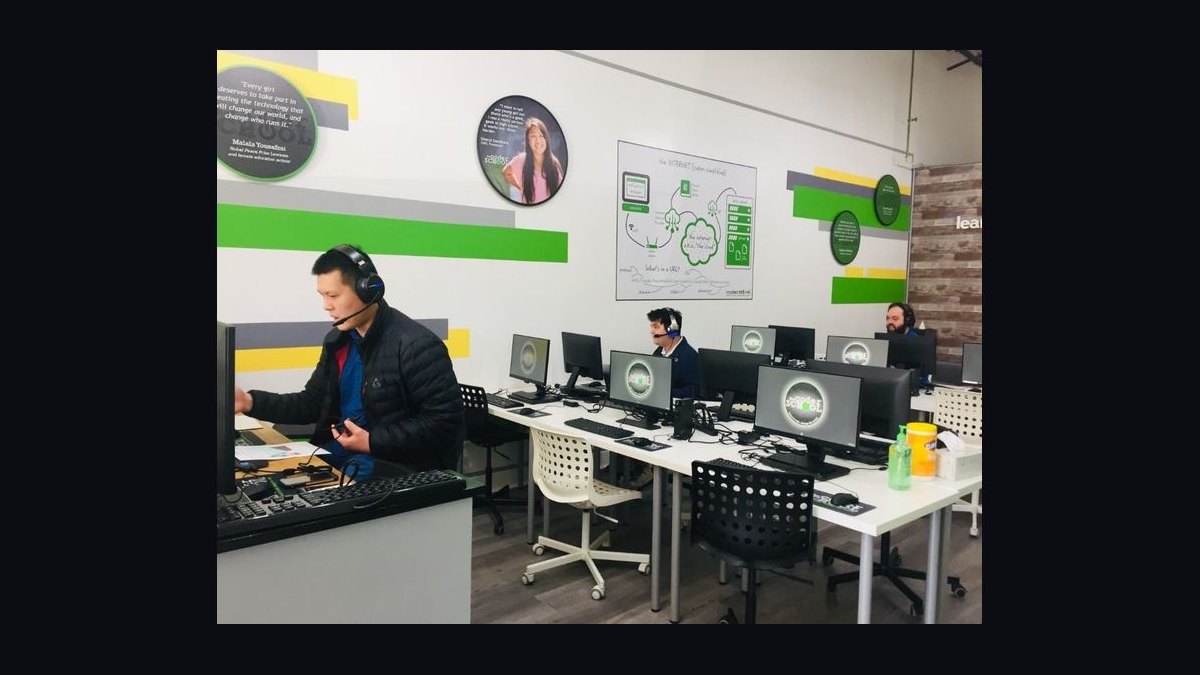
Churn. This is the number that determines everything else. Monthly student churn in the 8% to 12% range is common; good operators hold 5% to 7%; exceptional operators get to 3% to 4%. Run the arithmetic on 100 students at $200 a month. At 10% churn you lose ten students and $2,000 of monthly recurring revenue every month, and you must enroll ten new students just to stand still — at $80 a head that is $800 a month in acquisition spend purely to tread water. At 5% you replace five. At 3% you replace three and every additional enrollment above that is genuine growth. The difference between 10% and 3% churn is worth more to your take-home than any pricing change you will ever make.
Summer camps. Camps can add $50,000 to $150,000 in eight to ten weeks at typical weekly pricing of $300 to $500 per camper with twenty to forty campers a week. They also require roughly one coach per six to eight campers plus admin support, meaning five to ten temporary hires who need training and background checks for a ten-week engagement, most of whom will not stay past Labor Day. Run camps at 70% to 80% of theoretical capacity rather than maximizing every seat, and judge them on conversion: converting 30% of campers into school-year students is excellent, 10% means you ran a seasonal business that bought you nothing durable.
Open versus buy, and the third option nobody pitches you
Now put the two paths side by side with the numbers above loaded in.
Opening new. Cash out the door is lower — you are inside the $80,000 to $200,000 Item 7 range, and if you find reasonable space at the low end of your market you may be closer to $120,000 all-in with a working capital cushion. What you are buying is optionality: you pick the territory, you pick the location, you hire every coach yourself, you set the culture from day one with no inherited habits to unwind. What you are accepting is a ramp measured in quarters, not weeks. Plan for twelve to twenty-four months to reach a mature enrollment level, and plan to fund payroll and rent out of your own pocket for a meaningful chunk of that. The most common way new opens fail is not bad marketing — it is undercapitalization. The owner budgets the buildout precisely and the eighteen months of losses after it not at all. If your total liquid position is $80,000 and the buildout consumes $70,000, you are already finished; you just do not know it until month seven.

Buying existing. Cash out the door is higher, often materially so once you add the transfer fee, legal and accounting diligence, and the working capital you still need. What you are buying is a de-risked ramp: real revenue, a real coach roster, a real parent base, and — critically — real financials you can audit instead of a projection you have to believe. What you are accepting is inherited risk. The specific things to run down before you sign:
- Quality of earnings. Rebuild the seller's discretionary earnings from bank statements and tax returns, not from a spreadsheet the broker prepared. Add back only genuinely non-recurring, non-essential owner expenses. If the owner personally taught fifteen hours a week, the replacement cost of those hours is a real expense you must subtract.
- Enrollment cohort curve. Ask for a student-by-student list with start dates and monthly rate. If half the roster started within the last four months, you are buying a churn problem dressed as growth. If the median tenure is eighteen months, you are buying something real.
- Coach roster stability. Which coaches are staying post-close? Get that in writing where you can. A location whose two lead coaches leave at close is worth far less than the same location with them under retention agreements.
- Lease term and renewal economics. A great location with fourteen months left on a below-market lease is a landlord negotiation you are inheriting, not an asset.
- Franchise agreement remaining term and renewal fee. You may be buying four years of a ten-year agreement, with a renewal fee and a mandated remodel at the end.
- Deferred maintenance and equipment age. Laptops have a replacement cycle. Twenty aging machines is a five-figure capital call in your first year.
The third option. Ask the development team whether an existing franchisee in an adjacent market wants a partner or a successor. Semi-absentee owners who have hit their operational ceiling sometimes prefer selling 50% to an operating partner over selling outright, which gets you in with less cash, a built-in mentor, and a defined path to full ownership. It is rarely advertised. It exists more often than people assume.
There is also the honest fourth option: neither. If your market lacks a concentration of affluent, education-prioritizing, tech-adjacent families, the mentor-driven premium-price model does not work at any level of execution. Competition in kids' coding and STEM education is dense — Code Ninjas, Code Wiz, Snapology, Engineering For Kids, Bricks 4 Kidz, plus independent operators and school-district enrichment programs all pursuing the same households. The Coder School's differentiator is genuinely the low-ratio mentor model, but that only functions as a moat if you actually staff coaches who can teach. Staffed badly, you are an expensive coding center with no advantage and a royalty a local independent does not pay.
Where operators get hurt, and what to do instead
The failure modes in this business are boringly consistent. Here is the list, and the countermeasure for each.
Underestimating coach labor and hiring backwards. The default instinct is to hire the strongest coder and hope they can handle children. That is the wrong direction. You can teach a patient, organized educator enough Scratch, Python, and beginner JavaScript to coach elementary and middle-school students within a few weeks of structured training. You cannot teach patience, classroom presence, or genuine interest in an eleven-year-old's Minecraft mod to a brilliant developer who resents being there. Screen for teaching temperament first and technical ability second, then invest in bringing the technical ability up. Your interview should include a live mock session with an actual child, not just a coding exercise.
Treating the wage decision as small. Paying above local market genuinely does reduce turnover and improve retention, but it is a real cost — a jump from $18 to $25 an hour is a 39% increase in that line. Make the decision with an explicit model: estimate current annual turnover cost (departures times $2,000 to $4,000 in recruiting plus training plus the enrollment loss attached to each departure), estimate the churn improvement you expect from a more stable roster, and see whether the two together cover the wage increase. Often the right answer is a targeted raise for lead coaches you cannot afford to lose rather than an across-the-board increase.
Building the schedule instead of the culture. Coaches at this wage level stay for reasons other than money once pay is competitive. Regular team meetings, real professional development, a path from coach to lead coach to curriculum lead to assistant manager with pay attached to each step, and simple visible appreciation cost little and move retention. Some operators run periodic evenings where coaches work on their own projects together — it functions as both development and retention.
Modeling enrollment as a flat line. Build your cash flow month by month against the actual seasonality: strong autumn, December collapse, winter rebound, spring sag, summer camp spike. Hold a cash reserve sized to carry rent and base payroll through the December-to-February trough without touching camp receipts. Owners who spend summer money in September are the ones borrowing in January.
Ignoring the month-three cliff. Most churn is a child losing interest, followed by coach changes, then scheduling conflicts, then the program not being challenging enough. Three of those four are yours to control. Build an explicit month-three checkpoint: coach reviews the student's progression with the parent, shows concrete work the child produced, and moves them to a harder track if they are coasting. A parent who can see what their kid built does not cancel. A parent who has seen nothing for twelve weeks does.
Signing a lease before you have coaches. Sequence the open in this order: read the current Franchise Disclosure Document cover to cover including Item 19 and the Item 20 turnover tables; interview a dozen current and former franchisees and ask specifically about enrollment ramp, coach retention, and net profit rather than gross revenue; validate that your radius genuinely contains the household income and family density the model needs; recruit and provisionally commit your first coaches; then sign the lease, build out, and open into a marketing push you started sixty days before the doors opened. Rent with no students is the most expensive thing you will ever buy.
Confusing low capital with low effort. An $80,000 to $200,000 entry is modest as franchises go, and that is exactly what draws people who want a semi-absentee asset. This is not one. It is a full-time operating role in a business whose product is delivered by hourly employees to demanding customers on a seasonal calendar. If you want passive income, buy something else. If you want to open a The Coder School and run it as your job for the next seven years, the model rewards that.
Related questions
Is buying an existing The Coder School location safer than opening new?
Safer on ramp risk, not on total risk. You inherit real revenue and a coach roster but also lease terms, remaining franchise-agreement years, aging equipment, and whatever churn the seller was masking. It is safer only if your diligence is genuinely rigorous.
How long until a new location breaks even?
Plan for twelve to twenty-four months to reach mature enrollment, with break-even somewhere inside that window depending on rent and ramp speed. Capitalize for the pessimistic end. Undercapitalization, not marketing failure, is what kills most new opens.
What credit and cash do I need to qualify?
Expect the franchisor to want meaningful liquid capital beyond the buildout — enough to fund operating losses through the ramp — plus solid credit if you are using an SBA 7(a) loan. Lenders typically want a real down payment and personal guarantees.
Do I need to know how to code?
No, but you need enough literacy to evaluate coaches, understand the curriculum progression, and speak credibly to parents. Your actual job is recruiting, retention, scheduling, and local marketing — not teaching.
Which markets does this model fail in?
Markets without a concentration of affluent, education-prioritizing households. The low-ratio mentor model requires premium pricing. Where families will not pay it, no amount of operating skill fixes the unit economics.
FAQ
What does it cost to open a The Coder School franchise?
The initial franchise fee is $50,000, and the total Item 7 investment range is approximately $80,000 to $200,000, covering the fee, buildout, equipment, initial marketing, and opening working capital. Where you land in that range depends heavily on your local real estate costs and how much construction the space requires. Always verify the figures against the most current Franchise Disclosure Document rather than any secondhand summary.
What are the ongoing fees?
Royalty runs 8% to 10% of gross revenue and the marketing fee is an additional 2% of gross. Combined, roughly ten to twelve percent of every dollar collected leaves before you pay coaches, rent, or yourself. These rates are in line with service-franchise norms, but they compress margins meaningfully at the lower end of the revenue range.
How much revenue and owner income should I expect?
Mature centers gross roughly $300,000 to $800,000 annually, with owner take-home in the range of $70,000 to $200,000. That is a bimodal outcome, not an average — the deciding variables are market density and affluence, enrollment ramp, and above all your coach labor percentage. A center holding labor near the 33% benchmark keeps far more than one running at 45% to 50%.
Why is coach staffing described as the make-or-break variable?
Because it is your largest controllable cost and it feeds directly into churn. Your ideal hire can code competently and enjoys teaching children, which is a scarce combination competing against tech employers paying far more for the coding skill alone. High turnover costs you recruiting money, training time, class capacity, and the families who were attached to the departing coach.
How important are summer camps?
They can add $50,000 to $150,000 over eight to ten weeks and are a strong acquisition channel, but they demand heavy temporary staffing at roughly one coach per six to eight campers. Judge them on school-year conversion — around 30% is excellent — and treat camp cash as working capital for the winter trough rather than as profit.
Is this a semi-absentee opportunity?
No. The comparatively modest capital requirement attracts investors looking for passive income, but the model is a full-time operating role. Recruiting coaches, managing retention, running the seasonal schedule, and driving local enrollment all require an owner present in the business.
Sources
- https://www.franchise.org — International Franchise Association, franchise industry standards and disclosure guidance
- https://www.sba.gov/funding-programs/loans/7a-loans — U.S. Small Business Administration, 7(a) loan program terms and eligibility
- https://www.ftc.gov/business-guidance/resources/consumers-guide-buying-franchise — Federal Trade Commission, guide to evaluating a Franchise Disclosure Document
- https://www.thecoderschool.com — The Coder School, program model and franchising information
- https://www.entrepreneur.com/franchises — Entrepreneur, franchise rankings and category comparisons
- https://franchisebusinessreview.com — Franchise Business Review, independent franchisee satisfaction research
- https://www.bls.gov/ooh/computer-and-information-technology/ — U.S. Bureau of Labor Statistics, employment and wage data for computing occupations
- https://www.bizbuysell.com — BizBuySell, small business listing and valuation multiple data
- https://nces.ed.gov — National Center for Education Statistics, school enrollment and demographic data
Related on PULSE
- Should I open or buy a Celebree School franchise in 2027?
- How Many Employees Should I Schedule Each Shift at My Cooking School?
- How Many Employees Should I Schedule Each Shift at My Music School?
- How Many Employees Should I Schedule Each Shift at My Language School?
- How Many Employees Should I Schedule Each Shift at My Swim School?
This page will be disappearing soon. Save it to your device for $1 — or read it free while it is here.
@Kory-White- · if Venmo asks, the last 4 of my number are 2012
This page is gone.
This one is off the shelf now. $1 keeps it on your phone for good — the whole page, pictures and diagrams included.
 pulse-qDo I Need a Fractional CRO for My Manufacturing Company in 2027?
 pulse-qHow Do I Scale Revenue Without Hiring a Full-Time CRO in 2026?
 pulse-qShould I Hire a Fractional CRO If My Comp Plan Is Driving the Wrong Behavior in 2026?
 pulse-qHow Many Employees Should I Schedule Each Shift at My Gastropub in 2027?
 pulse-qShould I open or buy a Medi-Weightloss franchise in 2027?
 pulse-qHow Many Sales Reps Do I Need to Hire for My Sign Company in 2027?
 pulse-qHow Many Sales Reps Do I Need to Hire for My Window Replacement Company in 2027?
 pulse-qShould I open or buy a Rhino Linings franchise in 2027?
 pulse-qShould I open or buy a Tutoring Club franchise in 2027?
 pulse-qHow Do I Build a Rep Performance Dashboard in 2026?