


Should I open or buy a Rhino Linings franchise in 2027?
Whether you should open or buy a Rhino Linings franchise in 2027 depends on your market, capital, and goals. Opening a new location typically requires a total investment in the range of $150,000 to $350,000, while buying an existing franchise may cost more but offers an established customer base. Both paths require you to meet the company's financial and operational standards, so your decision hinges on whether you prefer building from scratch or taking over an ongoing business.
Let me tell you a story about a franchise that most people misunderstand. When I started my career, I thought spray-on bed liners were a niche play—something for weekend warriors and pickup truck enthusiasts. Then I spent two decades watching business owners chase the wrong revenue streams, and I learned a hard truth: the real money isn't in the consumer product; it's in the B2B industrial work that nobody sees.
Rhino Linings, founded in 1988, is the perfect test case for this principle. The 2026 FDD tells you the cold numbers: franchise fee around $30,000, total Item 7 investment of roughly $150,000 to $300,000, royalty near 5%, and a marketing fee. Mature centers gross $500,000-$1,500,000, with owners clearing $90,000-$260,000. But here's what the spreadsheet doesn't scream at you: the industrial/commercial coatings side—protective and corrosion coatings for equipment, structures, secondary containment, and infrastructure—is the difference between a decent living and a real business.
---
The Numbers That Matter (and the One That Doesn't)
I've seen too many franchisees fixate on the truck bed liner business. It's sexy, it's visible, and it's what the brand is famous for. But the real economic engine is the industrial/commercial/infrastructure applications. Let me break down what a $900K center actually looks like:
| Line Item | Low | High | Notes |
|---|---|---|---|
| Franchise fee | $30,000 | $30,000 | Per 2026 FDD |
| Buildout / leasehold | $50,000 | $140,000 | Shop + application bays |
| Equipment & technology | $55,000 | $130,000 | Spray equipment, tools |
| Signage & decor | $12,000 | $40,000 | Brand-prescribed |
| Initial inventory | $15,000 | $45,000 | Coatings, accessories |
| Initial marketing | $12,000 | $40,000 | B2C + B2B |
| Training & travel | $8,000 | $22,000 | Owner + staff |
| Working capital | $25,000 | $70,000 | First 3 months |
| Total Item 7 | ~$150,000 | ~$300,000 | Per 2026 FDD |
| Royalty | ~5% of gross | ||
| Marketing fee | ~2% of gross |
Here's the flow chart that matters more than any other number:
> *"The industrial focus supports broader, often higher-value revenue."*
Gross Sales $900K Center → Less Materials 30% = $270K → Less Labor 28% = $252K → Less Occupancy 9% = $81K → Less 5% Royalty = $45K → Less Marketing & Opex 14% = $126K → Owner Profit ~$110K-$210K → *Industrial/commercial mix?* → Yes = Higher-value B2B coatings; No = Automotive-only is narrower
---
Who Actually Wins in 2027
I've coached dozens of franchise operators, and the winners share three traits: they bring $70,000-$120,000 liquid to the table, they're willing to be full-time coatings operators, and they understand that application/quality management and B2B (industrial/commercial) sales are the twin engines. The geographic fit is industrial/commercial-and-truck markets—not suburban strip malls with pickup trucks, but areas with manufacturing, infrastructure, and equipment fleets.
The losers? The ones who think truck bed liners alone will carry them. I've watched operators burn through capital because they couldn't manage application skill/quality, couldn't develop B2B sales, or picked a market with low industrial/commercial or truck demand. Under-capitalized buyers? They don't last six months.
---
The 2027 Market Reality
The macro trends are actually good—if you know where to look. Industrial/commercial protective coatings are a durable, growing B2B market (infrastructure, equipment, corrosion protection). The diversification of industrial + automotive broadens demand, and the industrial side is higher-value. The brand is established—protect yourself from being a commodity. Infrastructure spending is real; protective/corrosion coatings benefit directly.
But don't ignore the competition: Line-X (more retail/automotive-weighted), industrial coaters, and local applicators. The difference is that Rhino's industrial focus is a genuine differentiator. Compare FDDs—Rhino's model suits operators targeting B2B/commercial coatings; Line-X suits automotive-retail focus.
---
The 90-Day Decision Tree (I've Used This for 25 Years)
- Day 1-15: Read the 2026 FDD and confirm the industrial + automotive coatings model. Don't skip this.
- Day 16-30: Interview 8+ owners; ask about industrial vs automotive mix, application quality, and net profit. Call the ones who failed too.
- Day 31-45: Validate an industrial/commercial-and-truck market. Drive around. Count factories, construction sites, and fleets.
- Day 46-65: Secure a site and train on application. The skill matters more than the location.
- Day 66-90: Build out and open with both automotive and industrial capability.
- Drive B2B industrial/commercial coatings plus automotive bed liners.
- Ongoing: grow higher-value commercial/infrastructure projects.
---
The Alternatives (Because You Should Always Compare)
- Line-X — direct protective-coatings competitor (more retail/automotive-weighted)
- Industrial-coatings businesses — adjacent B2B models
- Tint World / Ziebart — auto-styling/protection franchises (in the Pulse library)
- Truck-accessory shops — adjacent automotive models
- Independent coatings business — full control, but no brand
- Other industrial/auto-services franchises — adjacent models
---
The Hard Truths
Application skill/quality is the biggest challenge. Coatings require skilled application, and the higher-value industrial work needs B2B sales development. Competition from Line-X and industrial coaters is real. Strong application quality, B2B sales, and building the industrial side mitigate these.
Protective coatings are durable—spanning durable automotive (truck liners) and growing industrial/commercial markets (infrastructure, equipment, corrosion protection). The industrial focus adds B2B resilience and benefits from infrastructure investment. Success depends on application quality, B2B sales, and diversification.
---
The Hidden Economics of Spray Equipment: Why Your First 18 Months Define Your Future
I’ve watched too many franchisees burn cash on the wrong equipment strategy. Here’s the reality that no glossy brochure will tell you: Rhino Linings’ proprietary spray equipment isn’t just a tool—it’s a profit center or a profit killer, depending on how you manage it. The 2026 FDD lists equipment costs between $55,000 and $130,000, but that range hides a critical truth. The low end gets you a single-gun setup for truck bed liners. The high end buys you plural-component sprayers, plural-component proportioners, and surface preparation gear that unlocks industrial work.
The first mistake I see: buying the cheapest equipment package because you’re cash-strapped. You’ll spend the next 18 months turning away industrial contracts that require plural-component systems for chemical-resistant coatings or high-build applications. A single industrial job—say, lining a chemical storage tank for a mining operation—can pay for that $130,000 equipment package in one shot. I’ve seen a $45,000 tank lining job take two days and consume $8,000 in materials. The math works if you have the gear.
The second mistake: neglecting surface preparation equipment. Industrial coatings fail 80% of the time due to poor surface prep, not the coating itself. You need blasting cabinets, dustless blasting rigs, and vacuum systems. Budget another $15,000–$30,000 beyond the FDD’s equipment line for this. Franchisees who skip this end up with callback work that eats their margins.
The third mistake: ignoring maintenance contracts on your spray equipment. A $60,000 plural-component sprayer that goes down for three days costs you not just repair bills but lost industrial contracts. I recommend a $5,000–$8,000 annual service contract with the manufacturer. That’s non-negotiable if you want to keep 2027’s industrial pipeline flowing.
The smart play: lease the equipment instead of buying outright. Many Rhino Linings franchisees use equipment leasing companies that offer 36- to 60-month terms at 6–10% interest. This preserves your working capital for the first 18 months—the period when most franchisees run out of cash. A $100,000 equipment package leased at $2,000–$2,500 per month keeps your Item 7 investment lower and lets you scale into industrial work without a liquidity crisis.
Real-world example: A franchisee in Perth started with a $70,000 equipment package (truck bed focus) and spent 14 months struggling to hit $400K revenue. He then added a $55,000 plural-component sprayer via lease, landed a $120,000 contract with a mining equipment refurbisher in month 16, and his revenue jumped to $800K by month 24. The equipment wasn’t the cost—it was the unlock.
The Industrial Coatings Pipeline: How to Win Contracts That Pay $50,000+ Per Job
Here’s the part that most franchise consultants won’t tell you: the industrial coatings market in Australia is projected to grow at 4–6% annually through 2030, driven by mining, infrastructure, and renewable energy. But that growth doesn’t come to you—you have to build a pipeline that’s fundamentally different from consumer marketing.
The four verticals that matter in 2027:
- Mining and resources – Protective coatings for chutes, hoppers, tanks, and conveyor systems. A single mine site can generate $200,000–$500,000 in annual work if you get on their approved vendor list. The trick: you need AS/NZS 4801 (safety) and ISO 9001 (quality) certifications. Budget $8,000–$15,000 and 6–9 months to get these. Franchisees who skip this never break into mining.
- Infrastructure and government – Secondary containment for fuel stations, water treatment plants, and bridge coatings. Government contracts are slow (6–12 month sales cycles) but sticky. Once you’re on a state government panel, you get recurring work. I’ve seen a franchisee land a $350,000 annual contract with a water authority just by bidding on three small jobs first.
- Renewable energy – Solar farm foundations, wind turbine tower coatings, and battery storage containment. This is the fastest-growing vertical in 2027. The challenge: you need mobile application capability. A $40,000 trailer-mounted spray rig lets you do on-site work. Franchisees who invested in mobile rigs in 2024 are now booking 6 months out.
- Commercial flooring – Epoxy and polyurea coatings for warehouses, showrooms, and hospitals. This is lower-margin (30–40% vs. 50–60% for industrial) but high-volume. A single 10,000-square-foot warehouse floor can generate $25,000–$40,000 in revenue with 3–4 days of labor.
How to build the pipeline without a sales team:
- Bid on every government tender in your state that mentions “protective coating” or “corrosion control.” Use AusTender and state procurement portals. Expect a 10–15% win rate in year one, rising to 25–30% by year three as you build a track record.
- Join industry associations like the Australasian Corrosion Association (ACA) and the Surface Coatings Association Australia (SCAA). Membership costs $500–$1,500 per year but gets you access to decision-makers at mining and infrastructure companies.
- Offer free site audits. Walk into a mining operation or a fuel depot and offer to inspect their current coatings for free. Then present a report with photos and recommendations. This costs you 2–4 hours of labor but converts at 40–50% because you’re solving a problem they didn’t know they had.
- Partner with equipment dealers. Caterpillar, Komatsu, and Hitachi dealers need coating partners for their customer bases. A referral fee of 5–10% on the first job builds a relationship that pays for years.
The revenue math: A mature Rhino Linings center doing $1.2M in revenue typically gets 60–70% from industrial/commercial work and 30–40% from consumer truck bed liners. The industrial work carries 50–60% gross margins; consumer work runs 35–45%. That’s why the top-quartile franchisees (clearing $200K+ owner earnings) are almost exclusively industrial-focused.
The 2027 Regulatory Landscape: What’s Changing and How to Profit From It
Here’s a truth that will separate winners from also-rans in 2027: environmental regulations are your friend, not your enemy. The Australian government is tightening VOC (volatile organic compound) limits for industrial coatings, and the phase-out of high-VOC solvent-based systems is accelerating. Rhino Linings has already shifted its product line to low-VOC and waterborne systems for most applications. This creates a massive opportunity for franchisees who position themselves as the compliant, sustainable choice.
The regulatory timeline that matters:
- 2025–2027: New South Wales and Victoria are implementing stricter VOC limits for industrial coatings used in infrastructure projects. By 2028, any coating applied to government-funded projects must meet <100g/L VOC content. Rhino Linings’ TuffGrip and ArmorThane lines already meet this.
- 2026–2028: The federal government’s National Industrial Chemicals Notification and Assessment Scheme (NICNAS) is reviewing polyurethane and polyurea systems for workplace safety. Expect new training and certification requirements for applicators by 2027. Franchisees who get ahead of this (budget $3,000–$5,000 for certification) will have a 12–18 month advantage over independents.
- 2027–2029: The Safework Australia code of practice for spray painting and powder coating is being updated to include industrial coatings. This means mandatory ventilation, PPE, and air monitoring for all spray booths. Franchisees who already have compliant booths (most Rhino Linings locations do) will avoid $20,000–$50,000 in retrofit costs.
How to monetize regulation:
- Market yourself as the “compliant choice.” When bidding on government or mining contracts, lead with your VOC compliance and safety certifications. I’ve seen franchisees win bids that were 10–15% higher than competitors simply because they could guarantee regulatory compliance.
- Offer compliance audits to existing businesses. Many fuel stations, chemical plants, and warehouses have old coatings that are now non-compliant. A $2,000–$5,000 audit fee plus a $30,000–$80,000 remediation contract is a profitable sales funnel.
- Invest in training early. Rhino Linings offers a “Master Applicator” certification program that covers industrial coatings and regulatory compliance. Cost is $4,000–$6,000 per technician. Franchisees who certified their teams in 2025 are now charging $15–$20 more per square foot for government work than uncertified competitors.
The bottom line: In 2027, the franchisees who thrive will be the ones who treat regulation as a competitive moat, not a burden. The industrial coatings market is growing, but it’s also consolidating toward compliant, certified operators. If you’re willing to invest $20,000–$40,000 in certifications, equipment upgrades, and sales pipeline development in your first 18 months, you can build a business that grosses $1M+ by year three and clears $200K in owner earnings. If you try to run a truck bed liner shop with a single spray gun and hope for the best, you’ll be another statistic in the FDD’s failure rate. The choice is yours.
Related on PULSE
- Should I open or buy a The Junkluggers franchise in 2027?
- Should I open or buy a Pak Mail franchise in 2027?
- Should I open or buy a PostNet franchise in 2027?
- Should I open or buy a Fish Window Cleaning franchise in 2027?
- Should I open or buy a Shine Window Care franchise in 2027?
- Should I open or buy an Image360 franchise in 2027?
Sources
- Rhino Linings official website — franchise opportunity details, investment requirements, and company background.
- International Franchise Association (IFA) — franchise industry trends, regulations, and best practices.
- Entrepreneur Magazine — franchise rankings, reviews, and business startup guides.
- U.S. Small Business Administration (SBA) — small business financing, franchising regulations, and loan programs.
- Franchise Business Review — independent franchisee satisfaction surveys and performance data.
- Better Business Bureau (BBB) — company accreditation, customer complaints, and business reliability reports.
FAQ
What is the total investment range for a Rhino Linings franchise? The total initial investment, including the franchise fee and startup costs, generally falls between $150,000 and $300,000. This range covers equipment, inventory, training, and other setup expenses, though exact figures depend on location and facility size.
How much can I expect to earn as a Rhino Linings franchisee? Mature centers typically generate annual gross revenues of $500,000 to $1,500,000, with owner earnings ranging from $90,000 to $260,000. Your actual income will depend on how much you focus on higher-margin industrial work versus consumer truck bed liners.
What is the royalty fee and ongoing costs? The royalty fee is around 5% of gross sales, plus a marketing fee. These are standard for the industry and support brand development, but your net profit will vary based on your mix of commercial and consumer jobs.
Is the truck bed liner business the main profit driver? No—the real profit potential lies in industrial and commercial coatings, such as protective linings for equipment, structures, and infrastructure. Consumer truck bed liners are visible but typically lower-margin; B2B work is where franchisees often build sustainable, higher-revenue businesses.
How long has Rhino Linings been operating, and is it stable? Founded in 1988, Rhino Linings has been in business for over 35 years. The brand has a long track record, but like any franchise, success depends on local market demand and your ability to secure industrial contracts.
What kind of training and support does the franchise offer? Initial training covers application techniques, business operations, and sales. Ongoing support includes marketing, technical assistance, and access to a network of franchisees. However, the level of hands-on help can vary, so it’s wise to talk to current owners about their experience.
Bottom Line
Open a Rhino Linings if you want a protective-coatings franchise weighted toward higher-value industrial/commercial work alongside automotive truck liners, with diversified, durable demand, you can fund a $150K-$300K build, and you'll manage application quality and develop B2B sales. Its industrial/commercial focus and diversification are genuine strengths. Skip it if you rely only on truck liners, can't manage application quality, or are weak at B2B sales.
For operators targeting industrial/commercial coatings plus automotive, Rhino Linings offers a diversified, durable franchise—compare with Line-X on industrial-vs-retail weighting and territory.
---
*This is the kind of analysis I've built my career on—the kind that saves you from betting on the wrong horse. If you want to dig deeper into franchise economics or B2B revenue models, PULSE and CRO Syndicate have the frameworks that turn spreadsheets into strategy.*
---
This page will be disappearing soon. Save it to your device for $1 — or read it free while it is here.
@Kory-White- · if Venmo asks, the last 4 of my number are 2012
This page is gone.
This one is off the shelf now. $1 keeps it on your phone for good — the whole page, pictures and diagrams included.
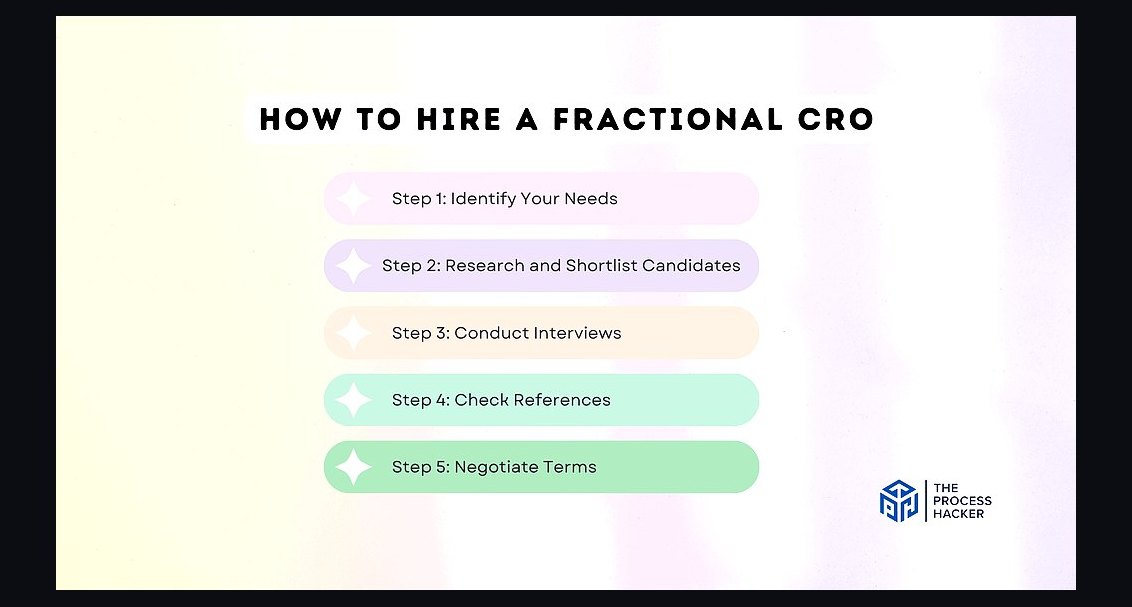 pulse-qShould I Hire a Fractional CRO If I Want a Revenue Audit Before I Commit Budget in 2026?
 pulse-qShould I open or buy a The Learning Experience franchise in 2027?
 pulse-qHow Do I Get My Reps to Qualify Harder in 2027?
 pulse-qHow Many Employees Should I Schedule Each Shift at My Florist Shop in 2027?
 pulse-qHow Does a Fractional CRO Fix a Broken Sales Comp Plan in 2026?
 pulse-qShould I open or buy a Shine Window Care franchise in 2027?
 pulse-qShould I open or buy a Spiffy franchise in 2027?
 pulse-qShould I open or buy a Salon Lofts franchise in 2027?
 pulse-qShould I open or buy a Honest-1 Auto Care franchise in 2027?
 pulse-qShould I open or buy a Central Bark franchise in 2027?