
Should I open or buy a Spiffy franchise in 2027?
 Curated byKory White · Fractional CRO · Maryland
 PULSEKNOWLEDGE LIBRARY
Quality
Certified

Spiffy does not operate a traditional consumer franchise program — it runs company-owned mobile car-care operations built around fleet contracts and its own technology. So in 2027 you most likely cannot open or buy a Spiffy franchise at all. Verify availability directly, then pivot to an actively-franchising mobile detailing brand or an independent van-based operation.
What it is and why it matters
Spiffy launched in 2014 as an on-demand mobile car-care company: technicians drive branded vans to a customer's home, office, or fleet yard and perform washing, detailing, oil changes, and light maintenance on site. The pitch is obvious and seductive to anyone shopping for a business — no real estate, no lease, no buildout, no five-year triple-net obligation hanging over your head. The whole operation fits inside a vehicle, which means your largest fixed cost is a depreciating asset you can sell rather than a location you're stuck with.
That structure is exactly why the "Spiffy franchise" question comes up so often, and exactly why it usually ends in disappointment. Spiffy has operated primarily as a company-run business, not a franchisor. Its emphasis has been on B2B and fleet services — dealerships, rental fleets, corporate campuses, property managers — plus a technology platform for booking, routing, and service tracking. That combination is best controlled through direct operations. When your competitive edge is proprietary software and enterprise contracts negotiated at the national level, handing territories to independent owners dilutes both. Franchisors franchise when the unit economics are simple, repeatable, and locally sourced. Fleet-and-tech businesses tend to stay company-owned because the revenue is centralized and the software is the moat.
Why this matters practically: if you spend three months building a business plan, lining up SBA pre-qualification, and scouting territory around a brand that does not sell franchises, you have burned your best planning quarter on a phantom. Worse, "Spiffy franchise" searches surface third-party brokers, lead-gen sites, and franchise directories that list brands whether or not those brands are actually awarding units. A directory listing is not an offering. In the United States, a genuine franchise offer requires a Franchise Disclosure Document delivered at least 14 days before you sign anything or pay any money. If nobody will hand you an FDD with Spiffy's name on the cover page, there is no franchise to buy. That single test settles the question faster than any amount of research.
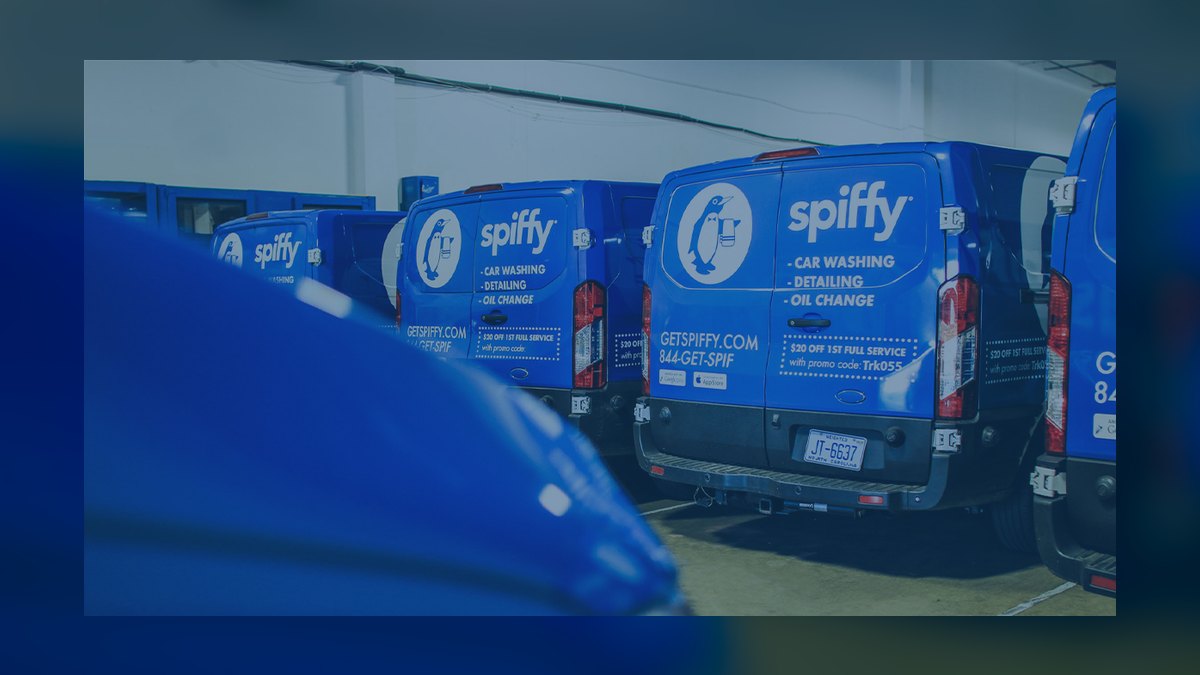
The second reason this matters: the underlying business is real even when the brand isn't available. Mobile car care is a legitimate, growing, low-capital service category. Convenience-driven consumer demand is up, and the fleet channel — where somebody else's twenty vehicles need washing on a schedule — is the sturdier half of the market. So the honest framing of this question is not "should I buy Spiffy" but "should I enter mobile car care in 2027, and if so, through which vehicle: a franchise that actually franchises, or an independent operation I build and own outright?" That's a real decision with real numbers behind it, and it deserves a real answer.
There's a third consideration most buyers skip. If Spiffy already operates in your metro, you are not just entering a category — you are entering a category where a well-capitalized, tech-enabled operator already holds the fleet accounts you'd want. They can price fleet work below what a single-van startup can sustain, because their cost per stop drops with route density they already have. That doesn't make the market unwinnable. It does mean your first ten accounts should probably be the ones a national operator finds too small or too scattered to chase.
The step-by-step process
Here is the sequence that avoids the trap, in the order the work actually has to happen.

Step one: confirm franchise availability in writing. Contact Spiffy directly through their corporate site and ask one specific question — "Do you currently award franchises in [your state], and can you send the Franchise Disclosure Document?" Do not ask a broker; brokers are paid on placement and will happily redirect you to whatever brand pays a commission. Give this step two weeks maximum. No FDD, no franchise. Move on without regret.
Step two: define your market before you define your brand. Drive your target territory on a Tuesday morning. Count the office parks, the multi-tenant commercial buildings, the car dealerships, the apartment complexes with surface parking, the equipment-rental yards, the pest-control and plumbing companies with visible vehicle fleets. Those last ones are your bread and butter — a plumbing company with eight trucks that wants them washed twice monthly is worth more than forty one-time consumer details, because it is scheduled, predictable, and route-efficient. Write down actual business names and vehicle counts. If you cannot fill a page, your territory is thin.
Step three: pre-sell before you spend. Call or walk into fifteen of those fleet operators and ask what they pay now, who does it, and what annoys them about it. This is free market research and it doubles as a warm pipeline. Operators who skip this step buy a van and then discover the local market is already locked up by a guy who has been washing those trucks for nine years at a price you can't beat.

Step four: choose your structure — franchise or independent. A franchise gives you an operating system, training, supplier relationships, brand recognition, and sometimes national account access, in exchange for an initial fee and an ongoing royalty typically in the 6%–8% range of gross sales. Independent means no fee, no royalty, total control, and a blank page where the playbook should be. First-time owners without service-business experience generally benefit from the franchise structure; experienced operators usually keep the royalty.
Step five: acquire equipment. A used cargo van, water tank, pressure washer, generator or inverter, hot water capability if you're in a cold market, vacuum, extractor, polishers, chemicals, and a wrap. Buy the van first and the fancy chemicals last.
Step six: launch narrow. One service package, one route, one neighborhood or one business park. Do not offer ceramic coating, headlight restoration, oil changes, and paint correction in month one. Master a two-hour full detail and a thirty-minute maintenance wash, then expand.

Step seven: add capacity only when you're turning away work. The second van is the hardest step in this business, harder than the first.
Costs, timelines, and typical ranges
Mobile car care is genuinely low-capital, which is both its appeal and its risk — low barriers mean easy entry for competitors too. Total investment for a single-van mobile car-care operation typically lands between roughly $30,000 and $150,000, with the spread driven almost entirely by whether you're paying a franchise fee, whether the van is new or used, and how much working capital you hold back.
Broken down: a franchise fee, if you go that route with a brand that actually franchises, commonly runs $20,000–$45,000. The vehicle and mobile equipment package is the biggest hard cost at $20,000–$70,000 — a used cargo van in the 2018–2022 range typically runs $18,000–$35,000 on its own, and a new one pushes well past that. Service equipment (pressure washer, tanks, generator, extractor, polishers, initial chemical inventory) adds $8,000–$30,000 depending on whether you buy commercial-grade or consumer-grade gear. A full vehicle wrap runs $3,000–$12,000. Initial marketing budgets at $5,000–$20,000. Training and travel, if franchised, $3,000–$12,000. Working capital — the money that keeps you alive through the ramp — should be $5,000–$25,000, and the high end of that range is the correct end.

Monthly operating costs for one van generally run $4,000–$7,000 before owner compensation. Fuel is $600–$1,200 depending on route density and metro sprawl. Vehicle maintenance $300–$600. Chemicals and consumables $500–$1,000. Software, scheduling, and payment processing $200–$500 — white-label field-service platforms in this category typically price in the low hundreds per month, which is dramatically cheaper than the $50,000+ you'd spend building a custom booking app. Marketing $300–$800 ongoing. Insurance $250–$700 monthly, or roughly $3,000–$8,000 annually for general liability, commercial auto, and workers' comp on a single vehicle. If you hire a technician rather than doing the work yourself, add $3,000–$5,000 monthly plus payroll taxes and the administrative overhead of actually being an employer.
Revenue per van depends heavily on service mix. A basic exterior wash-and-dry averages $40–$80 per vehicle. A full interior-and-exterior detail runs $150–$350. Mobile oil changes add $60–$120. Fleet contracts — five or more vehicles serviced on a schedule — typically pay less per vehicle, in the $30–$60 range per wash, but the volume and route efficiency more than compensate. Strong operators report $8,000–$15,000 in monthly revenue per van after six to twelve months of ramp. Many first-year operators never break $5,000 a month.
Margins: mature mobile detailing operations commonly run 20%–40% net after all expenses, but that figure is entirely contingent on utilization. Your van needs to be booked roughly 70% of available service hours to hit those numbers. At 50% utilization the margin collapses, because fuel, insurance, and depreciation don't care whether the van is working. First-year operators more realistically land at 10%–20% net. A single-van owner-operator typically takes home $40,000–$80,000 annually after everything — respectable, but comparable to a solid W-2 job, minus benefits, minus paid time off, plus sixty-hour weeks.
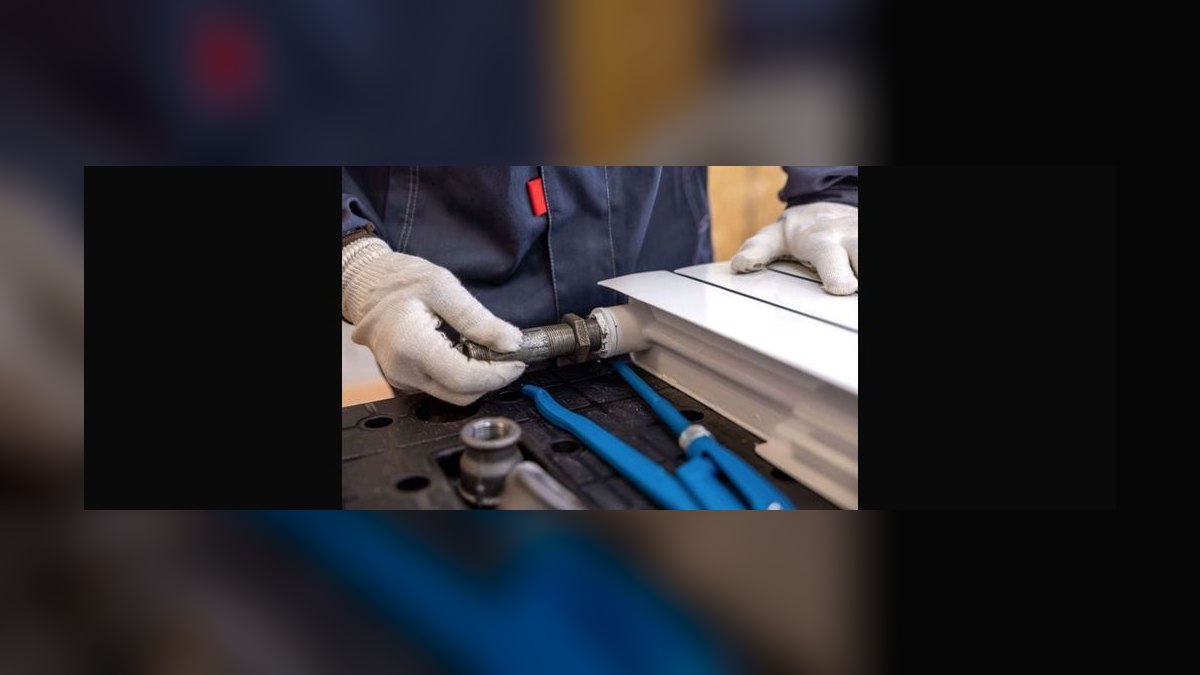
Timelines: two to six weeks from decision to first paying customer if you're independent and the van is available; longer if a franchise training calendar or vehicle build-out is involved. Six to twelve months to a stable route. Twelve to thirty months to genuine break-even including your initial capital, with franchised operations typically on the longer end because of the fee and royalty drag. The second van generally needs six to twelve months of its own to become profitable, which surprises people who assume the model scales linearly.
Where teams get it wrong
Assuming the brand is buyable. This is the headline mistake and the reason this page exists. People fall in love with the Spiffy model — the app, the vans, the fleet contracts — and spend a quarter planning around a franchise that isn't offered. Confirm first, plan second.
Seasonality denial. In genuine winter markets — Northeast, Midwest, Mountain West — mobile detailing revenue can drop 40%–60% from November through March. Water freezes. Customers don't want their car washed at 28 degrees. Your options are narrow: offer salt-and-undercarriage services (lower demand, lower ticket), pivot hard to fleet contracts with heated indoor bays, or budget for four to five months of thin or negative cash flow. Operators who model twelve months of summer revenue and then meet January are the ones who close. If you're in a cold market, your business plan needs a winter plan on page one, not page nine.

The app trap. A booking app is a tool, not a customer acquisition channel. Spiffy invested heavily in technology *and* in the marketing and enterprise partnerships needed to drive usage of it. An independent operator who spends $5,000–$15,000 on a basic booking app typically discovers that getting anyone to download it costs multiples more. In practice, most successful mobile detailers get the majority of their business from phone calls, texts, and repeat relationships for the first several years. Buy a $200/month scheduling platform, not a $50,000 custom build.
Underpricing fleet work to win it. New operators land a twelve-vehicle fleet at $25 per wash because it feels like validation. Then they discover it consumes a full day, generates $300, and blocks two $200 consumer details. Fleet work is good when route density makes it efficient and the contract has enough volume to justify the rate. It's a trap when you've priced it below your true cost per stop just to feel busy. Know your hourly cost including drive time before you quote anything.
Ignoring the regulatory layer. Mobile businesses frequently need special permits, local business licenses, and — critically — compliance with stormwater runoff rules. Several states and municipalities require mobile washers to capture and contain wastewater rather than letting it enter storm drains. Some HOAs and commercial property managers ban mobile service vehicles outright or require certificates of insurance naming them as additional insured. These vary block by block and can add meaningfully to your operating budget. Call the city before you buy the van, not after a code officer finds you.

The one-van ceiling, misunderstood. A single van realistically services four to eight vehicles per day depending on service type and drive time. That's a hard mathematical ceiling on revenue, and no amount of hustle moves it. Growth requires a second van, which requires hiring a technician who will do the work to your standard when you're not watching — consistently cited as the hardest problem in this industry. The jump from owner-operator to employer is where most mobile service businesses stall permanently.
Skipping Item 19. If you do end up evaluating a franchise that actually franchises, the FDD's Item 19 financial performance representation is the only place the brand makes disclosed claims about unit results — and brands are not required to include one at all. No Item 19 is itself information. Item 20 lists franchisees who left the system; call them, not just the reference list the franchisor hands you.
Decision framework: when to choose what
Work through this in order and the answer usually resolves itself.

If Spiffy will not provide an FDD — which is the likely outcome — a Spiffy franchise is off the table. Do not chase a broker's workaround, an "area developer" arrangement of unclear standing, or a resale of something that was never franchised. Move to the next branch.
If you have no service-business or trades background and want a playbook, an actively-franchising mobile detailing or car-care brand is the reasonable choice. You are paying a 6%–8% royalty in perpetuity for training, systems, purchasing power, and a lower probability of a first-year unforced error. That's a defensible trade for a first-time owner. Vet it properly: read the full FDD, and call at least ten current franchisees and every departed one you can reach from Item 20. Ask them what their revenue was in year one and year three, how long to break even, and whether they'd sign again.
If you have operations, sales, or trades experience and can build your own systems, go independent. You keep the 6%–8%, you set your own pricing, you can add services the moment your market asks for them, and you own a business rather than a license to run one. The trade is that everything — pricing, marketing, hiring, SOPs, quality control — is on you from day one.

If your territory is fleet-dense, weight your entire plan toward B2B. Fleet revenue is contracted, recurring, weather-resilient, and route-efficient. It is a worse hourly rate and a better business.
If your territory is consumer-dense but fleet-thin, expect higher tickets, higher acquisition costs, sharper seasonality, and more volatility. Viable in affluent, car-heavy, warm-weather metros. Rough elsewhere.
If you want passive or semi-absentee income, this is not the category. Mobile car care is a logistics and labor-management business wearing a car-care costume. If you're not prepared to be in the van for the first year and to manage technicians and routes after that, look at fixed-location automotive services — express car wash, auto reconditioning, tint and accessories — where the asset does more of the work and the labor model is different.
Related questions
Does Spiffy franchise at all?
Spiffy has operated primarily as a company-run business focused on B2B fleet services and its own technology platform rather than a consumer franchise network. Confirm current status directly with the company — the definitive test is whether they will send you a Franchise Disclosure Document.
What's the minimum realistic capital to start independently?
Roughly $30,000 gets a used van, functional service equipment, a basic wrap, and thin working capital. Comfortable is closer to $60,000–$80,000, because the difference is survival runway through the first twelve to eighteen months of ramp.
Is fleet work better than consumer work?
Fleet pays less per vehicle — often $30–$60 per wash versus $150–$350 for a consumer detail — but it's contracted, recurring, route-efficient, and far less weather-sensitive. Most durable mobile operations are fleet-anchored with consumer work filling gaps.
How long until a single van is profitable?
Expect six to twelve months to a stable route and twelve to thirty months to recover initial capital. Franchised units generally take longer because of the initial fee and ongoing royalty. Utilization above 70% is the single strongest predictor.
Should I build a booking app like Spiffy's?
No. A custom platform is a five- or six-figure project with ongoing maintenance. License a field-service scheduling platform for a few hundred dollars monthly. Most mobile detailing revenue arrives by phone and text for years regardless.
FAQ
Can I open a Spiffy franchise in 2027?
Almost certainly not. Spiffy has operated as a company-run mobile car-care business centered on fleet contracts and proprietary technology rather than as a franchisor selling territories to independent owners. Verify directly with the company, and treat the delivery of a Franchise Disclosure Document as the only proof that a franchise offering exists. Anything short of that — a directory listing, a broker's assurance, a "territory availability" webform — is not an offer.
What should I do if Spiffy isn't franchising?
Two workable paths. Evaluate mobile detailing and car-care brands that genuinely award franchises, comparing their FDDs on initial fee, royalty rate, territory protection, and Item 19 performance data. Or build an independent operation, which costs less up front and carries no royalty but requires you to create the entire operating system yourself. First-time owners typically do better with the franchise structure; experienced operators typically keep the margin.
What does a mobile car-care business actually cost to start?
Total investment generally falls between about $30,000 and $150,000. The low end assumes an independent operation with a used van and modest equipment. The high end assumes a franchise fee of $20,000–$45,000, a newer vehicle, commercial-grade equipment, a full wrap, and healthy working capital. Monthly operating costs for one van run roughly $4,000–$7,000 before you pay yourself, with labor as the largest swing factor if you hire.
How much revenue can one van generate?
Strong operators reach $8,000–$15,000 monthly per van after six to twelve months of ramp, which annualizes to roughly $100,000–$180,000. Many first-year operators never exceed $5,000 monthly. Net margin runs 20%–40% at healthy utilization and collapses below that when the van sits idle. A single-van owner-operator typically takes home $40,000–$80,000 after all expenses.
Is winter a real problem for this business?
Yes, in any market with a genuine cold season. Revenue commonly drops 40%–60% from November through March as water-based services become impractical and consumer demand disappears. The mitigations are fleet contracts serviced in heated indoor bays, winter-specific services like salt and undercarriage removal, or simply funding four to five months of runway. Warm-weather markets carry a structural advantage here that no amount of marketing overcomes.
What's the biggest reason mobile car-care operations fail?
Utilization and hiring. A van booked below roughly 70% of available hours cannot cover its fixed costs, and most failures trace back to insufficient recurring demand rather than poor service quality. The second failure mode arrives at the growth stage: finding and keeping technicians who deliver consistent quality unsupervised. Treat this as a logistics and labor business first and a car-care business second.
Sources
- https://www.ftc.gov/business-guidance/resources/franchise-rule-compliance-guide
- https://www.franchise.org/
- https://www.sba.gov/business-guide/plan-your-business/buy-existing-business-or-franchise
- https://www.franchisebusinessreview.com/
- https://www.entrepreneur.com/franchises
- https://www.epa.gov/npdes/stormwater-discharges-municipal-sources
- https://www.bls.gov/ooh/installation-maintenance-and-repair/home.htm
- https://www.getspiffy.com/
- https://www.bbb.org/
Related on PULSE
- [Should I open or buy a The Junkluggers franchise in 2027?](/knowledge/ed0978)
- [Should I open or buy a Pak Mail franchise in 2027?](/knowledge/ed0988)
- [Should I open or buy a PostNet franchise in 2027?](/knowledge/ed0989)
- [Should I open or buy a Fish Window Cleaning franchise in 2027?](/knowledge/ed0982)
- [Should I open or buy a Shine Window Care franchise in 2027?](/knowledge/ed0981)
- [Should I open or buy an Image360 franchise in 2027?](/knowledge/ed0990)
This page will be disappearing soon. Save it to your device for $1 — or read it free while it is here.
@Kory-White- · if Venmo asks, the last 4 of my number are 2012
This page is gone.
This one is off the shelf now. $1 keeps it on your phone for good — the whole page, pictures and diagrams included.
 pulse-qShould I open or buy a Pinch A Penny franchise in 2027?
 pulse-qShould I Hire a Fractional CRO If I Am Taking the Company to Market in a Year in 2026?
 pulse-qShould I open or buy a PDQ franchise in 2027?
 pulse-qWhat Service Fees Should a Property Management Company Charge in 2026?
 pulse-qWhat Service Fees Should a Junk Removal Company Charge in 2026?
 pulse-qShould I open or buy an Image Studios franchise in 2027?
 pulse-qShould I open or buy a Paul Davis Restoration franchise in 2027?
 pulse-qHow Many Employees Should I Schedule Each Shift at My Skate Park in 2026?
 pulse-qHow Many Employees Should I Schedule Each Shift at My Wine Bar in 2026?
 pulse-qHow Many Crew Members Should I Schedule Each Shift at My Hamburger Franchise in 2026?