


Should I open or buy a RNR Tire Express franchise in 2027?
Quality
Certified

Whether you should open or buy a RNR Tire Express franchise in 2027 depends on your capital and goals. Opening a new location typically requires a total investment in the range of $500,000 to $1,000,000, while buying an existing franchise may cost more but offers immediate revenue. Both options require approval from RNR's corporate team, and 2027 market conditions—such as interest rates and tire demand—will affect profitability. Consult current franchise disclosure documents and a franchise attorney for the most accurate, up-to-date figures.
Look, I’ve been in revenue leadership for 25 years, and I’ve seen more “sure thing” franchise pitches than I’ve had hot dinners. So when someone tells you RNR Tire Express is just another tire shop, I want to laugh. Actually, I want to take them to the mat.
Claim #1: “Tire franchises are all the same — you sell rubber, you make money.”
Truth: That’s like saying a Ferrari and a Ford Fiesta are the same because they both have wheels. RNR Tire Express, founded in 2000 in Tampa, isn’t your daddy’s tire store. It’s a tire-and-custom-wheel retail franchise that sells tires and wheels with flexible weekly/monthly payment plans (lease-to-own). The core differentiator? Serving credit-challenged and cash-strapped customers who can’t pay for tires upfront. Most tire shops — Discount Tire, Big O, whoever — require full upfront payment. RNR captures that large underserved segment everyone else turns away. The 2026 FDD lists a franchise fee around $35,000-$45,000, total Item 7 investment of roughly $700,000 to $1,600,000, with royalty near 5%-6% and a marketing fee. Mature stores gross $1,500,000-$4,000,000+, with owners clearing $150,000-$500,000. The appeal is differentiated payment-plan model, large addressable demand, recurring payment revenue, and recession-resilient tire demand. The challenges are higher capital, payment/collections management, inventory, and the finance-driven model’s complexity.
Claim #2: “You need to be a tire expert to win.”
Truth: Nope. You need to be a retail-and-finance-minded operator. Here’s the real breakdown from the 2026 FDD:
| Line Item | Low | High | Notes |
|---|---|---|---|
| Franchise fee | $35,000 | $45,000 | Per 2026 FDD |
| Buildout / leasehold | $200,000 | $550,000 | Showroom + service bays |
| Equipment & lifts | $120,000 | $300,000 | Tire/wheel equipment |
| Initial inventory | $150,000 | $400,000 | Tires + custom wheels |
| Signage & decor | $25,000 | $70,000 | Brand image |
| Initial marketing | $25,000 | $70,000 | Grand opening |
| Training & travel | $12,000 | $35,000 | Operator + staff |
| Working capital | $80,000 | $250,000 | Payment-plan float |
| Total Item 7 | ~$700,000 | ~$1,600,000 | Per 2026 FDD |
| Royalty | ~5%-6% of gross | ||
| Marketing fee | ~2%-5% of gross |
The winners are operators who manage the payment/collections model and inventory while serving the underserved market. The losers? Under-capitalized buyers, those uncomfortable with payment/collections, owners who can’t manage tire/wheel inventory, buyers who underestimate the finance-model complexity, and those in markets without the underserved-customer base.
Claim #3: “Tires are a commodity — you can’t differentiate.”
Truth: That’s what everyone said about coffee until Starbucks. RNR’s payment-plan model generates recurring payment revenue, and custom wheels add higher-margin sales. Here’s how the math works:
Gross Revenue $2.5M Tire+Wheel → Less COGS 45% = $1.125M → Less Labor 18% = $450K → Less Occupancy 8% = $200K → Less Royalty/Marketing/Opex 17% = $425K → Owner Earnings ~$300K → Payment model + collections? → Managed = Underserved-market returns → Weak = Collections + inventory risk
Capital required: $700K-$1.6M, with $200,000-$350,000 liquid. Time commitment: full-time retail-and-finance operation. Skills: retail, payment/collections management, and inventory. Geographic fit: markets with underserved/credit-challenged customers. Lifestyle fit: retail-and-finance-minded operator.
Claim #4: “Franchises are safe — just follow the playbook.”
Truth: Only if you execute. The 2027 market conditions are ripe: tires are a recession-resilient safety necessity, credit-challenged customers can’t pay upfront — RNR serves them, lease-to-own generates recurring payment revenue, custom wheels add higher-margin sales, and competition from traditional tire shops like Discount Tire is strong, but few have payment-plan models. The 90-Day Decision Tree is straightforward:
- Day 1-25: Read the 2026 FDD and Item 19 payment-model economics.
- Day 26-50: Interview 8+ operators; ask about payment/collections, inventory, margins, and net profit.
- Day 51-70: Validate a market with underserved/credit-challenged customers.
- Day 71-130: Build and stock inventory (tires + custom wheels).
- Day 131-160: Open and manage payment plans.
- Manage collections and inventory (the model’s key operational factors).
- Scale as the customer base grows.
Claim #5: “There’s no alternative — RNR is the only play.”
Truth: That’s intellectually lazy. Alternative plays include Big O Tires / Tire Discounters for tire retail, RNR Tire Express itself for the payment-plan/underserved-market model, Honest-1 / Meineke / auto repair for auto services (see fr0906, fr0908), other lease-to-own retail for rent-to-own models, independent tire shop for full control without payment-plan systems, and other auto-service franchises for adjacent models.
---
The bottom line: RNR Tire Express isn’t a tire franchise — it’s a finance-driven retail business that happens to sell tires. If you can manage payment/collections, inventory, and the underserved market, you’ll win. If you think it’s just another tire shop, you’ll lose.
*This is the kind of nuance we dig into at PULSE / CRO Syndicate — where revenue leaders stop pretending and start executing.*
---
The Real Economics of Lease-to-Own Tires: Why Your P&L Looks Different Than a Traditional Tire Shop
When you’re evaluating RNR Tire Express, the first thing to understand is that your financial model will operate on a fundamentally different axis than a traditional tire retailer. You’re not just selling rubber—you’re selling a financing product wrapped around rubber. That changes everything about your cost structure, your cash flow timing, and your profit margins.
The Gross Margin Reality Check
A standard tire shop like Discount Tire operates on roughly 25-35% gross margins on tire sales, with most of that coming from the tires themselves and a smaller slice from installation fees. RNR’s model, however, has two distinct revenue streams: the tire and wheel sale itself, and the finance income from the lease-to-own contracts.
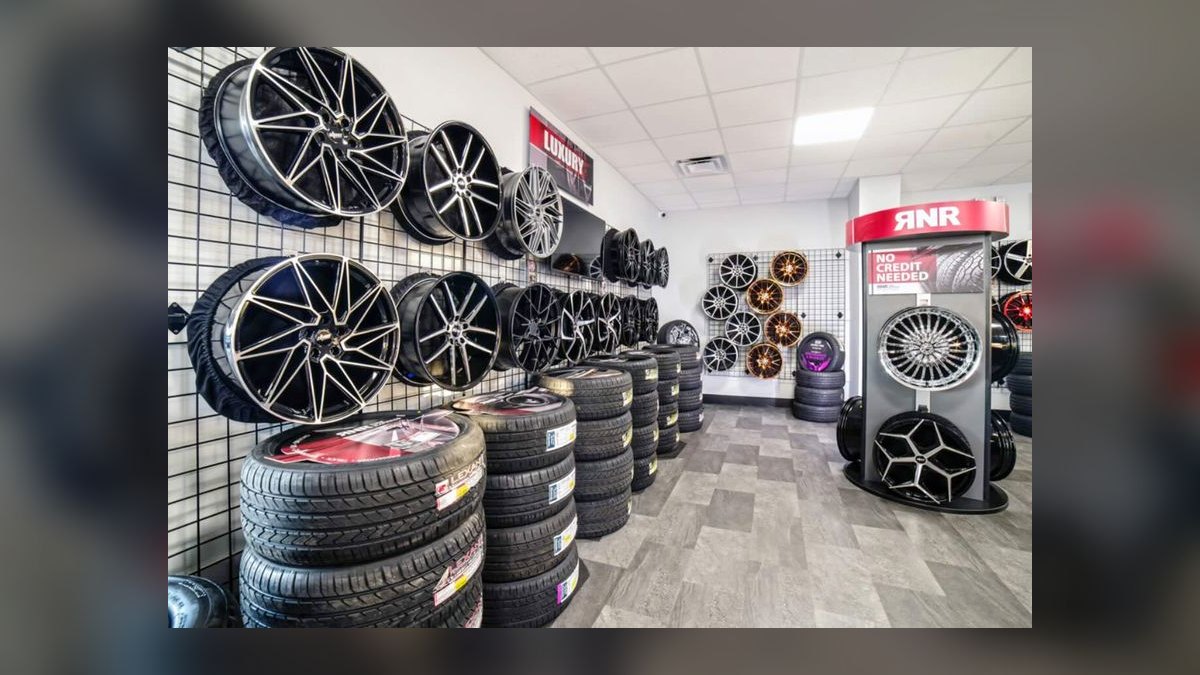
On the tire side, you’re paying wholesale prices that vary wildly by brand and size. A set of four mid-range passenger tires (say, a 225/65R17) might cost you $200-$350 wholesale and retail for $600-$900. That’s a 50-60% gross margin on the tire alone—significantly higher than a traditional shop because you’re not competing with Costco or Walmart on price. Your customers aren’t price-shopping; they’re payment-shopping.
But here’s where it gets interesting: the finance income. RNR’s lease-to-own contracts typically run 12-18 months, with weekly or monthly payments that include a finance charge. Depending on your state regulations and your specific lease terms, that finance charge can add 10-25% to the total revenue from each sale. A customer who pays $1,200 for tires and wheels over 18 months might actually generate $1,400-$1,500 in total revenue for you. That extra $200-$300 is pure profit after you account for the cost of capital and bad debt.
The Bad Debt Reality
Let’s talk about the elephant in the room: not everyone pays. RNR’s customer base is by definition credit-challenged. Industry data from similar lease-to-own models (Rent-A-Center, Aaron’s, etc.) shows write-off rates of 8-15% annually. For RNR, the actual number depends heavily on your market, your collections process, and how well you screen customers.
A mature RNR franchise with good management might see 5-8% bad debt. A poorly run store could hit 15-20%. That’s the difference between a $200,000 profit and a $50,000 loss. You need to build a collections infrastructure—either in-house or through a third-party service—that costs $2,000-$5,000 per month for a single location. That eats into your margin.

The Inventory Carrying Cost Trap
Tire inventory is expensive and slow-moving compared to most retail products. A typical RNR store carries $150,000-$300,000 in inventory at wholesale cost. Tires have a shelf life—they degrade over time, and you can’t return them to the manufacturer after 90 days. If you over-order on a specific size that doesn’t move, you’re sitting on dead capital.
Wheel inventory is even trickier. Custom wheels are fashion items. Last year’s hot 20-inch chrome rims might be this year’s clearance item. You’ll eat 20-40% losses on slow-moving wheel inventory if you don’t manage it aggressively. Smart franchisees use a “just-in-time” ordering model with their distributors, but that requires discipline and accurate sales forecasting.
The Labor Cost Structure

Your biggest operating expense after inventory will be labor. A typical RNR store needs 4-6 employees: a store manager ($50,000-$70,000 salary plus bonuses), 2-3 tire technicians ($35,000-$50,000 each, plus commission), and 1-2 sales/customer service reps ($30,000-$45,000 each, plus commission on payment plan sign-ups). Total annual labor cost: $200,000-$350,000 per location.
The commission structure matters enormously. Smart franchisees pay a small base salary and heavy commission on both tire sales and payment plan enrollments. A good sales rep can earn $60,000-$80,000 annually, but they’ll generate $400,000-$600,000 in revenue. The key metric is “revenue per employee”—you want at least $250,000 per employee annually to hit your profit targets.
The Real Profit Range
After all expenses—rent ($4,000-$8,000/month for a 3,000-5,000 sq ft location), utilities ($1,000-$2,500/month), insurance ($500-$1,500/month), marketing ($2,000-$5,000/month), and franchise fees—a well-run RNR store with $2 million in annual revenue might net $150,000-$250,000 in owner profit. A top-performing store at $3.5 million could net $400,000-$600,000. But a store that struggles with bad debt or poor inventory management could easily lose $50,000-$100,000 in its first two years.
The 2027 Regulatory Landscape: Why Your State Matters More Than Your Business Plan

If you’re serious about opening an RNR franchise in 2027, you need to understand that the regulatory environment for lease-to-own products is changing fast. This isn’t a business where you can just open anywhere and expect the same results. Your state’s laws will determine whether you make money or get crushed by compliance costs.

The CFPB and Federal Oversight
The Consumer Financial Protection Bureau (CFPB) has been circling lease-to-own products for years. In 2024, they issued a proposed rule that would reclassify many lease-to-own arrangements as “credit” under the Truth in Lending Act (TILA). If that rule takes effect in 2027, it would require you to disclose APR, total finance charges, and payment schedules in a standardized format—exactly like a credit card or auto loan.
The impact? Your current lease-to-own contracts might need to be rewritten. You’d need compliance software that costs $5,000-$15,000 annually. You’d need a compliance officer or outside legal counsel at $2,000-$5,000 per month. And you’d face potential class-action lawsuits if your contracts aren’t compliant. Several large lease-to-own operators have already settled CFPB actions for millions of dollars.

State-Level Usury Laws and Licensing
Here’s where it gets really granular. Some states have strict usury caps that limit the effective interest rate you can charge. California, for example, has a general usury limit of 10% per year for personal loans, though lease-to-own products often fall under different statutes. New York has a 16% usury cap. Texas is more lenient, with no general usury cap but specific regulations for credit services organizations.
If you’re in a state with a 10% usury cap, your lease-to-own model might be illegal or require significant restructuring. You’d need to charge lower finance charges, which means lower margins. In contrast, states like Florida, Georgia, and Alabama have more favorable regulatory environments for lease-to-own businesses. That’s why RNR’s strongest markets are in the Southeast and Midwest.
Licensing Requirements

Most states require a “credit services organization” (CSO) license or a “small loan” license to operate a lease-to-own business. The application process takes 3-6 months and costs $5,000-$20,000 in legal fees and filing fees. You’ll also need to post a surety bond—typically $25,000-$100,000 depending on your state. If you’re opening multiple locations, you’ll need a license for each state, and some states require separate licenses for each location.
The 2027 Wild Card: State-Level Consumer Protection Laws
Several states are considering legislation that would regulate lease-to-own products more strictly. In 2025, Illinois passed a law requiring lease-to-own companies to disclose the total cost of ownership in a one-page, plain-language summary. Colorado is considering a law that would cap lease-to-own finance charges at 15% of the retail price. If these laws spread, your profit margins could shrink by 30-50% in affected states.

What This Means for Your Decision
If you’re in a state with favorable lease-to-own laws (Florida, Texas, Georgia, Alabama, Tennessee, South Carolina), the regulatory risk is manageable. If you’re in California, New York, Illinois, or Colorado, you should either reconsider or budget an extra $50,000-$100,000 in legal and compliance costs for the first two years.
The Hidden Costs of Multi-Unit Expansion: Why One Store Is Different Than Five
Most franchisees who succeed with RNR eventually want to open multiple locations. The economics of multi-unit ownership are dramatically different—and not always better—than running a single store. Here’s what the FDD doesn’t tell you about scaling.
The Area Development Agreement Trap

RNR offers area development agreements (ADAs) that give you the right to open 3-5 stores in a defined territory over a set period (usually 3-5 years). The ADA fee is typically $20,000-$50,000 per store, and you must open them on a schedule—usually one per year. If you fall behind, you lose the rights to the remaining stores and forfeit your ADA fees.
The problem? If your first store doesn’t hit its numbers in year one, you’re still on the hook to open store two. You can’t just pause. You’ll need additional capital—$700,000-$1.6 million per store—and you’ll need to find and train new managers. Most multi-unit franchisees fail because they underestimate the management bandwidth required.
The Management Multiplier
A single store can be owner-operated. You’re the manager, you handle collections, you manage inventory. But with three stores, you need a district manager ($80,000-$120,000 salary plus bonus), a regional collections manager ($60,000-$80,000), and a centralized inventory manager ($50,000-$70,000). That’s $
Related on PULSE
- Should I open or buy an Express Oil Change & Tire franchise in 2027?
- How Do I Get My Tire Shop Staff to Sell Alignments and Road Hazard?
- How Many Employees Should I Schedule Each Shift at My Tire Shop?
- Should I open or buy a The Junkluggers franchise in 2027?
- Should I open or buy a Pak Mail franchise in 2027?
- Should I open or buy a PostNet franchise in 2027?
Sources
- RNR Tire Express official corporate website — franchise disclosure document, investment requirements, and brand standards
- International Franchise Association (IFA) — franchise industry trends, legal considerations, and market data
- Franchise Business Review — franchisee satisfaction surveys and performance benchmarks
- U.S. Small Business Administration (SBA) — small business financing, loan programs, and franchise ownership guidance
- Tire Business magazine — tire industry market analysis, retail trends, and competitor insights
- Better Business Bureau (BBB) — company accreditation, customer complaint history, and business reliability reports
FAQ
What is the total investment range for a RNR Tire Express franchise in 2027? The total initial investment typically falls between $700,000 and $1,600,000, which includes the franchise fee of $35,000 to $45,000. This range covers leasehold improvements, equipment, inventory, and working capital. Actual costs vary by location size and market conditions.
How much can a franchise owner expect to earn annually? Mature RNR Tire Express stores generally generate gross revenues of $1,500,000 to $4,000,000 or more. Owner net profit after expenses, royalties, and taxes often ranges from $150,000 to $500,000 per year, depending on store performance and local demand.
What makes RNR different from other tire shops like Discount Tire or Big O? RNR’s core differentiator is its lease-to-own payment model, serving credit-challenged and cash-strapped customers who cannot pay upfront. Most traditional tire shops require full payment at purchase, while RNR captures this large underserved segment with flexible weekly or monthly plans.
What are the ongoing fees for a RNR franchise? The royalty fee is approximately 5% to 6% of gross sales, plus a marketing fee. These fees support brand advertising, operational support, and technology systems. Exact percentages are detailed in the Franchise Disclosure Document (FDD).
Is the tire business recession-resistant? Tire demand is generally stable because vehicles require tires regardless of economic conditions. RNR’s payment plans also appeal to budget-conscious customers during downturns, which can help maintain revenue. However, no business is entirely immune to economic shifts.
How long does it take to open a RNR franchise? The timeline from signing the franchise agreement to opening typically ranges from 6 to 12 months. This includes site selection, lease negotiation, build-out, training, and inventory setup. The exact duration depends on local permitting and construction factors.
This page will be disappearing soon. Save it to your device for $1 — or read it free while it is here.
@Kory-White- · if Venmo asks, the last 4 of my number are 2012
This page is gone.
This one is off the shelf now. $1 keeps it on your phone for good — the whole page, pictures and diagrams included.
 pulse-qHow Do I Build a Rep Performance Dashboard in 2026?
 pulse-qHow Do I Get My Pharmacy Staff to Drive Immunizations and Paid Services in 2026?
 pulse-qShould I open or buy a Grease Monkey franchise in 2027?
 pulse-qShould I open or buy a Your CBD Store franchise in 2027?
 pulse-qHow Many Sales Reps Do I Need to Hire for My Sign Company in 2027?
 pulse-qHow Many Employees Should I Schedule Each Shift at My Coworking Space in 2027?
 pulse-qHow Do I Get My Freight Brokers to Grow Margin Per Load in 2026?
 pulse-qHow Many Cashiers Should I Schedule Each Shift at My Convenience Store Chain in 2027?
 pulse-qHow Many Sales Reps Do I Need to Hire for My Window Replacement Company in 2027?
 pulse-qHow Do I Get My Distributors to Push the Full Catalog in 2027?