

Should I open or buy a Pizza Ranch franchise in 2027?
 Curated byKory White · Fractional CRO · Maryland
Quality
Certified
Open a Pizza Ranch franchise only if you have $1.5M–$3M in capital, sit inside the Midwest community footprint, and can personally run a labor-heavy buffet. Buying an existing unit cuts build risk and starts cash flow sooner, but demands harder diligence on deferred maintenance and local sales trends before you sign.
What a Pizza Ranch actually is, and why the format drives every number
Most people who ask this question picture a pizza shop. That mental model is the single biggest source of bad underwriting on this brand, and correcting it changes almost every assumption you will make about capital, staffing, and site selection.
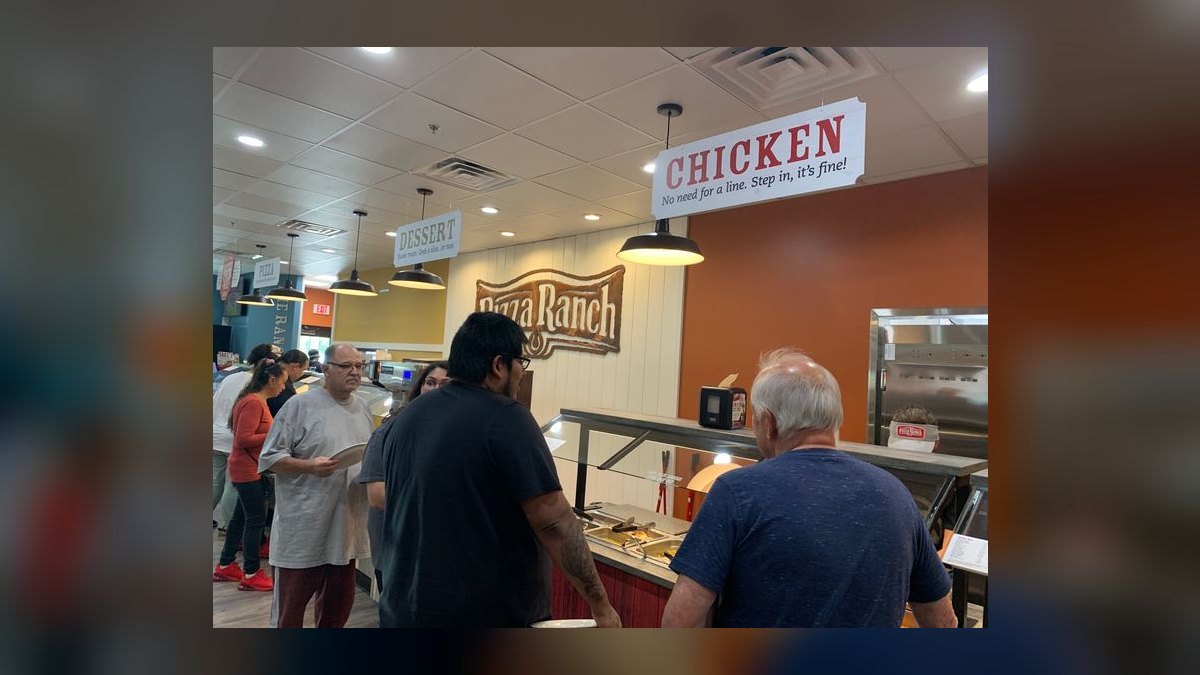
Pizza Ranch was founded in Iowa in 1981 and grew into a country-themed, family-focused buffet restaurant that serves both made-fresh pizza and fried chicken, frequently paired with a FunZone arcade. It is not a delivery-and-carryout pizzeria with a small dining room bolted on. It is a full-service, high-footprint family buffet with two distinct production lines running simultaneously. The pizza side needs conveyor or deck ovens, a dough prep area, walk-in refrigeration, and a make table. The chicken side needs commercial fryers, a breading station, hood and fire suppression capacity sized for open-fry cooking, and oil handling infrastructure. You are effectively building and staffing two kitchens under one roof, then feeding a buffet line that must stay full and fresh from open to close.
That structure is why a typical unit runs roughly 5,000 to 8,000 square feet while a delivery-focused pizza franchise might occupy 1,200 to 1,800. It is why the Item 7 investment range lands around $1.5 million to $3 million rather than the $300,000 to $600,000 many prospects expect from the pizza category. And it is why the revenue side is correspondingly large: mature units commonly gross in the $2 million to $3.8 million range, with owner earnings frequently cited in the $200,000 to $450,000 band per unit. High capital, high volume, high operating intensity — all three move together, and you cannot opt into one without the others.

The revenue itself arrives through several channels rather than one. The buffet is the anchor and the traffic driver. Takeout and delivery of pizza and chicken layer on top. The FunZone arcade contributes incremental spend per family visit and, more importantly, lengthens dwell time and raises the odds a family chooses you over a competitor 25 miles away. That multi-stream mix is a genuine structural advantage over single-channel pizza concepts, because a slow dine-in Tuesday can still be rescued by call-in orders and a church group booking the back room.
The brand's other real asset is community position. In towns of 5,000 to 25,000 people across the Midwest and Plains, a Pizza Ranch is often the default venue for a post-game team dinner, a Sunday after-church lunch, a fundraiser night, or a birthday party. That kind of institutional standing produces repeat traffic that no amount of paid advertising buys quickly. It is also geographically bounded. Outside that footprint, you are opening a large, expensive, unfamiliar buffet concept against national competitors, and the community-loyalty tailwind that makes the economics work simply is not there yet.
The counterweight is that the buffet format faces well-documented structural pressures across the industry: food cost inflation hits harder when portions are unlimited, labor requirements per revenue dollar exceed those of counter-service formats, and consumer dining habits have shifted toward delivery and convenience. Pizza Ranch's dual product and community loyalty offset a meaningful share of that pressure. They do not eliminate it. Anyone who believes the brand's regional strength makes them immune to buffet economics will learn otherwise in their first quarter.
Working the decision in sequence, from FDD to opening day
Prospective franchisees lose money by doing these steps out of order — falling in love with a building before validating unit economics, or signing an agreement before talking to operators. Run it as a sequence, and let each stage produce a genuine kill decision.

Stage one — document review (roughly weeks 1 to 4). Read the current Franchise Disclosure Document cover to cover, with an attorney who does franchise work specifically, not your general business lawyer. Item 5 and Item 6 give you the franchise fee (in the $35,000 to $45,000 area) and the ongoing royalty of roughly 4% to 5% of gross plus an advertising contribution of roughly 2% to 3%. Item 7 gives the total investment range. Item 19, the financial performance representation, is where you learn what units actually produce — read exactly which subset of stores it covers, whether it separates newer units from mature ones, and whether it reports revenue only or steps down to unit-level profit. Item 20 lists openings, closures, transfers, and terminations over recent years; a rising transfer or closure count in a specific region is a signal worth chasing. Get the list of current and former franchisees from Item 20 before you go further.
Stage two — operator validation (weeks 4 to 8). Call at least eight to ten current franchisees and, critically, two or three former ones. Former operators tell you what the exit looked like. Ask specific questions: what did your unit gross last year, what did you take home after paying yourself a manager's wage, what is your food cost as a percentage of sales, what is your buffet waste running, how many hourly staff do you carry, what is your turnover, how long did buildout actually take versus the estimate, and what surprised you most in year one. Vague answers are answers. If four operators independently name the same problem, that is your real risk register.
Stage three — market and site validation (weeks 8 to 12). Confirm the trade area supports the volume you need. Look at the drive-time population, competing family dining within 20 to 30 minutes, the presence of schools and churches that generate group business, and highway or main-street visibility. Then evaluate specific sites for infrastructure, not aesthetics — three-phase electrical capacity, sewer versus septic, grease handling, parking count, and roof and HVAC condition.
Stage four — financing and agreement (weeks 12 to 20). Assemble the capital stack. SBA 7(a) lending is common in franchise restaurant deals and the brand's presence on the SBA franchise directory affects processing. Expect lenders to want meaningful equity injection and to underwrite you personally.
Stage five — build and staff (months 5 to 12 or longer). Construction, equipment installation, franchisor training, hiring, and pre-opening drills.
Stage six — open and stabilize (months 12 to 18). Grand opening, community integration, and then the real work: getting waste and labor under control before your working capital runs out.
Costs, timelines, and the ranges that actually apply
Here is how the $1.5 million to $3 million typically distributes, and where each line can run over.
Franchise fee: $35,000 to $45,000. Paid at signing, non-refundable in practice.
Buildout and construction: $700,000 to $1.7 million. The dominant line item. A 5,000 to 8,000 square foot restaurant with two production lines, a dining room, restrooms sized for family volume, and an arcade area is a substantial construction project. Ground-up costs more than conversion; conversion of an obsolete building can cost more than either if the bones are bad.
Equipment: $350,000 to $700,000. Ovens, fryers, hoods and fire suppression, walk-in cooler and freezer, prep tables, buffet units with heated and refrigerated wells, dish machine, POS system, and back-office hardware.
Signage and country-themed decor: $45,000 to $130,000. Brand standards specify this; it is not an area to value-engineer.
FunZone arcade: $30,000 to $120,000. Varies with how many machines and whether you buy or lease.
Opening inventory: $18,000 to $45,000. Food, paper, chemicals, smallwares.
Grand opening marketing: $25,000 to $60,000.
Working capital: $100,000 to $250,000 covering roughly the first three to four months.
Beyond Item 7, budget realistically for real-estate contingencies in rural markets. Small-town commercial inventory is often functionally obsolete — former grocery stores, closed dealerships, aging retail boxes — and lacks the electrical service that walk-ins and conveyor ovens require, or the waste handling a buffet's grease load demands. Electrical service upgrades, grease interceptor installation, septic work where there is no municipal sewer, repaving, roof replacement, and HVAC replacement can each run into the tens of thousands. Environmental Phase I and Phase II assessments matter if a prior tenant was a dry cleaner or auto shop, because remediation liability is not a line item you want to discover after closing. A contingency reserve of $200,000 to $350,000 above the Item 7 midpoint is prudent rather than pessimistic.
Permitting timelines deserve their own reserve. Rural planning and zoning boards frequently meet monthly. Miss a submission deadline and you lose 30 days. Need a variance for signage height or a drive-through and you may spend six to twelve months in hearings and legal fees. Every month of delay carries rent or debt service on an asset producing nothing, and those carrying costs compound.
Liquidity. Plan on $400,000 to $600,000 in liquid capital alongside the total investment. Lenders will want it, and you will need it when opening slips a quarter.
Timeline. From signed agreement to opening day, twelve to eighteen months is the realistic band for a new build: site control and permitting consume three to six months, construction six to nine, training and hiring overlap the final two. Buying an existing unit compresses this dramatically — a transfer can close in sixty to one hundred twenty days including franchisor approval — which is much of its appeal.
Ongoing economics. Royalty of about 4% to 5% and advertising of about 2% to 3% mean roughly 6% to 8% of every gross dollar leaves before you pay food, labor, rent, or debt. On a $2.8 million unit that is roughly $170,000 to $225,000 annually. Model it explicitly; do not treat it as rounding.
Where operators lose the money they expected to keep
The gap between a unit grossing $2.8 million and an owner taking home $350,000 versus $120,000 is almost never the top line. It is execution on four specific fronts.

Buffet waste. Unsold buffet food is a total loss, and a buffet's whole promise is that the line looks full and fresh. Those two facts fight each other every hour you are open. Operators who do not track production against actual traffic by daypart overproduce steadily and never see it clearly, because waste hides inside food cost percentage rather than appearing as its own line. Build a daily production sheet keyed to prior-year traffic for that day of week, weigh and log what gets discarded per shift, and review it weekly. Chicken is the expensive half of this: fry in small batches — roughly eight to twelve pieces per cycle — rather than large ones, because product held under a heat lamp for forty-five minutes gets discarded or, worse, gets served and costs you a repeat visit. Operators who batch carelessly can throw away hundreds of dollars a week, which annualizes into tens of thousands straight off net profit.
Labor. A buffet needs coverage on the pizza station, the fryer, buffet replenishment, bussing, arcade and dining room cleaning, and the register. That is five to seven bodies on a slow weeknight and ten to twelve on a Friday, with total headcount per unit in the twenty-five to forty range. In a town of eight thousand, you compete for those people against the hospital, the school district, the co-op, and a regional big-box store — all offering daytime hours and benefits. Restaurant hourly turnover industry-wide runs extremely high, and each replacement costs real money in recruiting and training time that never shows up as its own P&L line. The operators who solve it use retention levers rather than wage wars alone: scheduling built around school sports and activities, shift meals, retention bonuses paid at ninety days, and daytime buffet coverage staffed with retirees who are reliable and want morning hours.
Oil and equipment discipline. Fryers running eight to twelve hours daily need consistent filtering and scheduled oil changes. Skip it and two things happen at once: product quality drops and food cost rises, because degraded oil forces you to discard more. Put oil management on a written schedule with a named owner per shift, exactly as you would a food safety log.

Absentee ownership. This concept punishes it. If you are not on the floor, you need a general manager capable of running a two-line kitchen, a buffet, a dining room, and a hiring pipeline — and that person costs a real salary that comes directly out of the owner earnings figure you underwrote. Prospects routinely model $200,000 to $450,000 in owner profit while also planning to hire someone to do the owner's job. You can do one or the other.
Underestimating the chicken side. Fried chicken is a differentiator and a margin contributor, and the operators who treat it as an afterthought to pizza leave money on the table. Track chicken as its own category, watch its share of buffet sales, and use chicken-forward promotions on slow nights rather than discounting the buffet broadly.
Choosing between opening new, buying existing, and walking away
The three paths suit genuinely different buyers, and the honest answer for many prospects is the third one.
Open a new unit if you have the full capital stack plus contingency, you have identified an underserved community market inside the Midwest and Plains footprint, and you want to control site, layout, and equipment from day one. New builds carry the highest execution risk and the longest cash-negative runway, but they avoid inheriting someone else's deferred maintenance, staffing culture, or damaged local reputation. Choose this if your edge is capital and patience.
Buy an existing unit if you want revenue on day one and a shorter runway to positive cash flow. The trade is that you must diligence what you are buying rather than what you are building. Demand three years of P&Ls, tax returns, and POS-level sales data — not a summary. Look at the sales trend line, not just the current year: a unit declining 6% annually is priced on trailing revenue you will never see again. Get equipment inspected independently, especially fryers, hoods, refrigeration, and HVAC, because deferred maintenance in a restaurant is a five- or six-figure surprise. Ask why the seller is selling and verify it against what the franchisor and neighboring operators say. Confirm the remaining franchise agreement term and any mandated remodel obligation — inheriting a unit due for a $300,000 refresh in eighteen months changes the price you should pay. Confirm the transfer fee and the franchisor's approval standards before you spend money on diligence. Choose this if your edge is operating skill and you would rather fix a business than build one.
Walk away if any of these are true: you are stretching to reach the capital requirement and have no contingency reserve; you plan to be absentee; you have no restaurant operating background and no partner who does; you are outside the Midwest and Plains footprint without a concrete plan for building awareness from zero; or you are fundamentally skeptical of the buffet format's future. That last one matters more than people admit. If you do not believe unlimited-portion family dining has a durable place in your market, do not sign a ten-to-twenty-year agreement betting that it does.
A fair comparison set helps you price the decision. Within pizza buffet, Cicis and Gatti's Pizza occupy adjacent ground with games and buffet. In broader buffet, Golden Corral is the scale player. If the appeal was really "pizza franchise" rather than "family buffet," delivery and carryout brands like Marco's Pizza or Hungry Howie's require dramatically less capital and far less labor complexity. And an independent pizza-and-buffet concept gives you full menu and pricing control with no royalty, at the cost of the brand recognition that fills a Pizza Ranch dining room on a Friday night.
Related questions
How much liquid capital do I need beyond the total investment?
Plan on $400,000 to $600,000 liquid alongside the $1.5M–$3M total. Lenders require meaningful equity injection, and you need reserves for permitting delays, construction overruns, and a slower-than-modeled first quarter. Contingency is not optional in rural buildouts.
Is buying an existing unit cheaper than building new?
Usually, and it starts cash flow immediately — but price depends on trailing performance. A declining unit priced on last year's revenue is expensive at any number. Verify the sales trend, equipment condition, remaining agreement term, and any upcoming mandated remodel before valuing it.
Can I run a Pizza Ranch as a passive investment?
Realistically, no. The buffet format demands daily waste control, labor scheduling, and floor presence. A capable general manager can substitute, but that salary comes directly out of the owner earnings you underwrote, and finding one in a small labor market is itself difficult.
Does the brand work outside the Midwest?
Its strength is concentrated in Midwest and Plains community markets where it functions as a local institution. Outside that footprint you build awareness from zero for a large, capital-intensive buffet against national competitors. Validate local demand and franchisor support carefully before committing.
What is the realistic timeline from signing to opening?
Twelve to eighteen months for a new build: three to six months for site control and permitting, six to nine for construction, with training and hiring overlapping the final stretch. Acquiring an existing unit typically closes in sixty to one hundred twenty days including franchisor approval.
FAQ
What does it cost in total to open a Pizza Ranch franchise?
The total initial investment generally runs $1.5 million to $3 million. That includes a franchise fee around $35,000 to $45,000, buildout of $700,000 to $1.7 million, equipment of $350,000 to $700,000, signage and country-themed decor of $45,000 to $130,000, a FunZone arcade at $30,000 to $120,000, opening inventory of $18,000 to $45,000, grand opening marketing of $25,000 to $60,000, and $100,000 to $250,000 in working capital. Confirm current figures in Item 7 of the active FDD.
What do mature units gross, and what does an owner keep?
Mature units commonly gross $2 million to $3.8 million, with owner earnings frequently cited in the $200,000 to $450,000 range per unit. Those are ranges, not promises — the spread is driven almost entirely by buffet waste control, labor management, and whether the owner is on the floor or paying someone else to be. Read Item 19 to see exactly which units the disclosed figures represent.
What are the ongoing fees?
Royalty runs approximately 4% to 5% of gross sales and the advertising contribution approximately 2% to 3%. Combined, roughly 6% to 8% of every dollar of revenue leaves before food, labor, occupancy, or debt service. On a $2.8 million unit that is roughly $170,000 to $225,000 per year, so model it as a fixed percentage line in your pro forma rather than treating it as noise.
Why does it cost so much more than other pizza franchises?
Because it is a family buffet restaurant, not a carryout pizzeria. A 5,000 to 8,000 square foot building housing two full production lines — pizza ovens and dough prep on one side, commercial fryers and breading on the other — plus a buffet line, a full dining room, and a FunZone arcade simply costs far more to build and equip than a 1,400 square foot delivery store. The high capital is what supports the correspondingly high average unit volumes.
How long does the whole process take?
Twelve to eighteen months from signed agreement to opening for a new build, assuming permitting cooperates. Site control and entitlements typically take three to six months, construction six to nine, and franchisor training plus hiring overlap the final phase. Rural permitting boards that meet monthly are a common source of thirty-day slips, so build schedule contingency and carry the debt service assumption for it.
Should I be worried about the buffet format long-term?
Take it seriously. Unlimited-portion formats absorb food cost inflation harder than portion-controlled ones, require more labor per revenue dollar, and face consumer shift toward delivery and convenience. Pizza Ranch's dual pizza-and-chicken product, multiple revenue streams, and genuine community standing in small Midwest towns offset a meaningful share of that pressure. They do not remove it, and you are signing a long-term agreement.
Sources
- https://www.pizzaranch.com/franchising
- https://www.sba.gov/funding-programs/loans/7a-loans
- https://www.ftc.gov/business-guidance/resources/consumers-guide-buying-franchise
- https://www.franchise.org/
- https://www.entrepreneur.com/franchises
- https://www.franchisebusinessreview.com/
- https://www.qsrmagazine.com/
- https://www.restaurant.org/research-and-media/research/
- https://www.bls.gov/iag/tgs/iag722.htm
- https://www.nrn.com/
Related on PULSE
- Should I open or buy an East of Chicago Pizza franchise in 2027?
- Should I open or buy a Gatti's Pizza franchise in 2027?
- Should I open or buy a Snappy Tomato Pizza franchise in 2027?
- Should I open or buy a Hunt Brothers Pizza franchise in 2027?
- How Do I Know How Many Cooks and Servers to Schedule Each Shift at My Pizza Restaurant?
- Should I open or buy a The Junkluggers franchise in 2027?
This page will be disappearing soon. Save it to your device for $1 — or read it free while it is here.
@Kory-White- · if Venmo asks, the last 4 of my number are 2012
This page is gone.
This one is off the shelf now. $1 keeps it on your phone for good — the whole page, pictures and diagrams included.
 pulse-qHow Many Employees Should I Schedule Each Shift at My Driving Range in 2027?
 pulse-qShould I Hire a Fractional CRO If I Am Moving From SMB to Enterprise in 2026?
 pulse-qShould I Hire a Fractional CRO If I Am Preparing for a Series B in Six Months in 2026?
 pulse-qHow Many Technicians Should I Schedule Each Day at My Nail Salon in 2026?
 pulse-qShould I open or buy a Honor Yoga franchise in 2027?
 pulse-qShould I open or buy a Pinch A Penny franchise in 2027?
 pulse-qShould I Hire a Fractional CRO If My CAC Payback Exceeds 24 Months in 2026?
 pulse-qFractional CRO vs VP of Sales: Which Do I Need?
 pulse-qHow Many Sales Reps Do I Need to Hire for My Commercial Glass and Glazing Company in 2027?
 pulse-qHow Many Sales Reps Do I Need to Hire for My Garage Door Company in 2027?