
Should I open or buy a Swig franchise in 2027?
 Curated byKory White · Fractional CRO · Maryland
 PULSEKNOWLEDGE LIBRARY
Quality
Certified

Open a Swig franchise in 2027 only if you can commit roughly $500,000 to $1.3 million, secure a high-traffic drive-thru pad site, and operate in a market where dirty soda already has demand. It is a low-COGS, high-throughput beverage model with real margins — but site quality and trend durability carry the risk.
The corner lot that decides everything
Picture two prospective franchisees signing Swig agreements the same month in 2027. Both pay the same franchise fee. Both complete the same corporate training. Both open within six weeks of each other. Three years later, one is clearing solid six-figure owner earnings and negotiating a second unit; the other is barely covering debt service and quietly asking the franchisor about transfer terms. The difference almost never comes down to hustle, drink quality, or marketing spend. It comes down to the piece of asphalt each one signed a lease on.
That is the honest frame for this decision. A drive-thru beverage business is a real estate business wearing a beverage apron. The product is cheap to make, fast to serve, and difficult to differentiate on taste alone once a customer is standing in front of two similar menus. What you are actually buying with a franchise fee is a brand that pulls cars into a specific lane at a specific intersection, plus a system that lets a teenage crew push those cars through in under two minutes.
Consider the practical shape of the scenario. Franchisee A finds a hard-corner pad site on a six-lane commuter artery, right-in/right-out access on the morning-inbound side, a full traffic signal at the corner, and neighbors that generate their own trips — a grocery anchor, a gym, a high school two blocks away. The lease is expensive. The buildout costs more than the low end of the range because the site needs utility work and a stacking lane that holds a dozen cars. Franchisee A almost walks away from the number twice.
Franchisee B finds a cheaper site: a second-generation drive-thru in an aging strip center, set back from the road behind a shared parking field, accessible only by a single curb cut off a secondary street. The rent is meaningfully lower. The buildout is cheaper because the drive-thru lane already exists. On a spreadsheet, Franchisee B's pro forma looks better on day one — lower occupancy cost, lower capital at risk, faster path to opening.
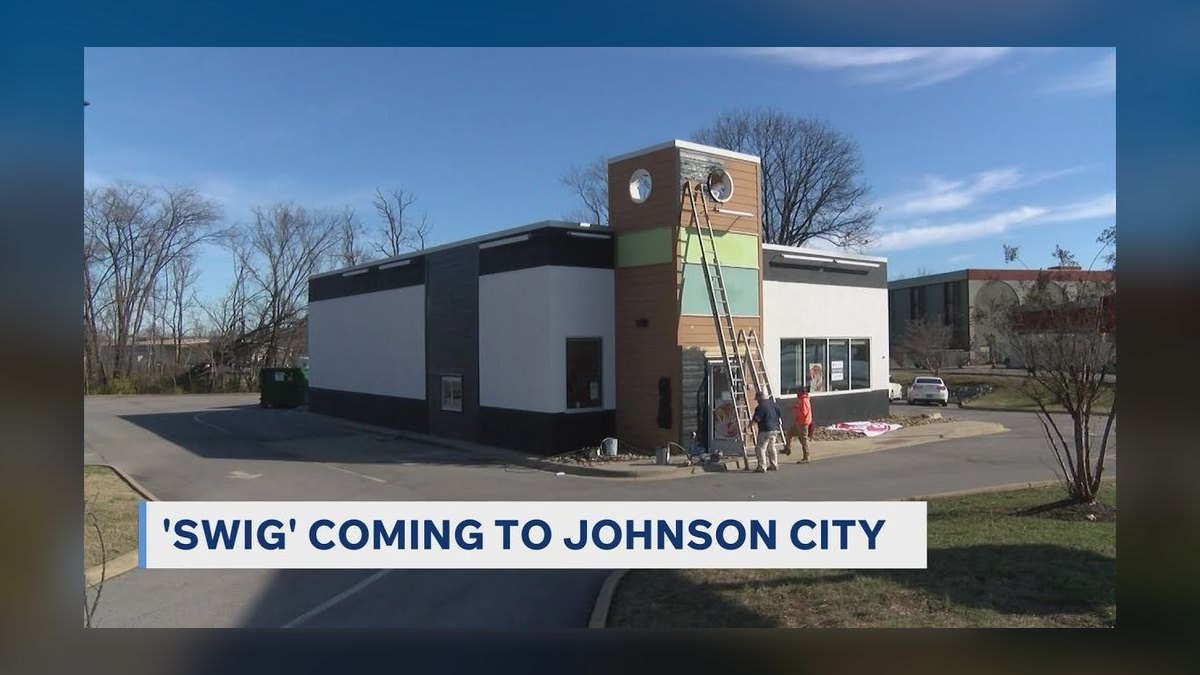
The spreadsheet lies, because it treats revenue as an input you control rather than an output of the site. Franchisee A's location gets found without effort — the sign is visible from a quarter mile out, the turn is easy in the direction traffic actually flows in the morning, and the stacking lane can absorb a rush without cars balking and driving on. Franchisee B's location requires the customer to make a decision, execute a turn, cross a parking lot, and hope the lane is not blocked. Every one of those steps sheds a percentage of the people who would otherwise have bought a drink. Stack four or five friction points and you lose a large share of your addressable traffic permanently — not for a season, but for the entire term of a fifteen-year lease.
This matters more in a beverage drive-thru than in almost any other category, because the purchase is impulsive and habitual at the same time. Nobody plans their commute around a soda the way they plan around a dinner reservation. The visit happens because it is easy. Remove the ease and you remove the visit. Franchisee A's customer stops four mornings a week and never thinks about it. Franchisee B's customer stops when they happen to remember, which turns out to be once every ten days.
That is the scenario to hold in your head through the rest of this page. Every number that follows — investment ranges, margins, payback, resale multiples — is downstream of whether you can secure a site like A's at a rent you can actually carry. If you cannot, the correct answer to "should I open a Swig in 2027" is almost certainly no, or at minimum not yet, in this market, at this site.
How the unit economics actually work
The dirty soda model earns its margin from an unusual combination: extremely cheap inputs, high ticket relative to those inputs, and throughput that turns a small footprint into meaningful volume. Understanding how those three pieces interact is what lets you evaluate a real site instead of a brochure.
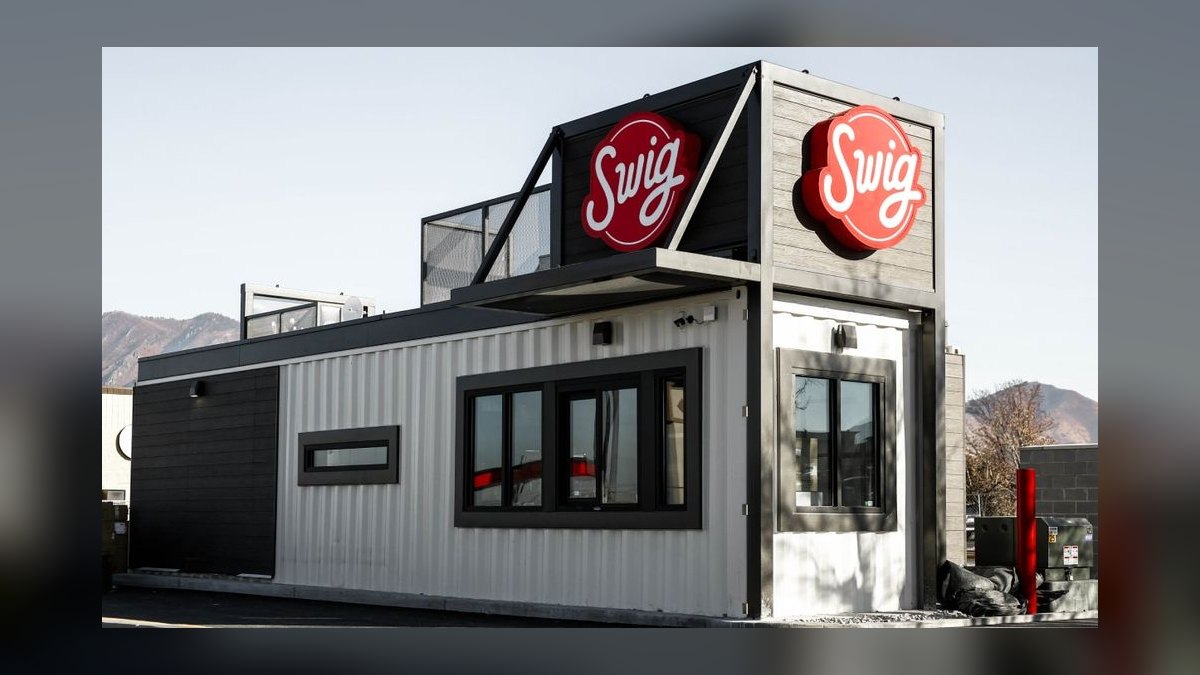
Start with cost of goods. A fountain drink built from syrup, carbonated water, and ice costs a fraction of what an espresso-based beverage costs, and a small fraction of what any prepared-food item costs. Add flavor shots, cream, and a fruit puree and the ingredient cost rises modestly while the menu price rises substantially. This is the structural reason the category attracted operators in the first place. Blended across a menu that also includes baked goods and packaged add-ons, food cost typically lands in the twenties as a percentage of sales — comfortably better than most quick-service food concepts, where the low thirties is a good outcome.
Now look at labor, which is where the margin advantage gets partially handed back. Every drink is customized. Flavor combinations, cream or no cream, ice level, add-ons, size. A crew member cannot batch that work the way a pizza line batches dough. Peak throughput requires bodies: someone taking orders, two or more building drinks, someone handling the window, someone managing baked goods and restock. Labor as a share of sales commonly runs in the mid-to-high twenties, and it climbs fast if your volume is not high enough to keep the crew productive between rushes. A store doing modest volume still needs a minimum viable crew to serve a rush at all, which is exactly why low-volume units get crushed — labor does not scale down proportionally.
Occupancy is the third structural cost and the one you lock in permanently. As a rule of thumb, keep total occupancy — base rent, common area charges, taxes, insurance — under roughly ten percent of realistic sales, and be skeptical of any deal that pushes past twelve. The trap is that the best sites command the highest rents, so operators talk themselves into a high-rent site by assuming a high-volume outcome. Run the arithmetic backward instead: take the rent the landlord is asking, divide by 0.10, and ask honestly whether this specific corner produces that much revenue. If the answer requires heroic assumptions, the site is too expensive regardless of how good it looks.
Royalties and the brand marketing contribution come off the top of gross sales, not off profit. Combined, they represent a meaningful slice — high single digits as a share of revenue is a reasonable planning assumption for this segment, and you should confirm the exact figures in the current franchise disclosure document rather than trusting any secondhand number, including this one. That contribution is not optional and does not flex when you have a bad quarter, which is why undercapitalized operators fail even when their store is nominally busy.
The remaining operating expenses — utilities, repairs, supplies, insurance, credit card fees, local marketing above the brand contribution, accounting — cluster into a bucket that is easy to underestimate. Ice production and refrigeration make a beverage drive-thru electricity-hungry. Card processing on a high-transaction-count, low-ticket business takes a real bite. Budget generously here; operators who model this bucket at five percent of sales are usually wrong by half.
Here is the flow of a dollar through a healthy unit:
Two levers move this diagram more than any others. The first is transaction count, which is set by the site and the brand's local pull, and which you largely cannot fix after signing a lease. The second is ticket average, which you can influence through attachment — baked goods, larger sizes, add-on flavor shots — and which is the single most controllable profit lever in the store. Moving average ticket up even modestly flows almost entirely to the bottom line, because the incremental cost of another flavor pump is close to nothing and the labor to add it is already paid for.
Real numbers, ranges, and how to verify them
The honest version of the investment picture is a range, not a number, and the range is wide because real estate is wide. Plan for a total initial investment somewhere between roughly half a million and well over a million dollars for a purpose-built drive-thru unit, before land if you are buying rather than leasing the pad. The franchise disclosure document's Item 7 is the only authoritative source for the current figures — get the current year's document directly from the franchisor and treat every number in this section as a planning frame to check against it, not as a substitute.

The components break down predictably. The initial franchise fee is a fixed, comparatively small piece of the total. Buildout and leasehold improvements are the largest and most variable line — a second-generation conversion of an existing drive-thru can come in dramatically cheaper than ground-up construction on a raw pad, and construction costs vary enormously by metro. Equipment is the next largest block: fountain and dispensing systems, ice production, refrigeration, baking equipment, point-of-sale hardware, and the drive-thru order and payment technology. Then signage and decor to brand standard, opening inventory, grand-opening marketing, training and travel for you and your opening management, and working capital.
Working capital is the line people shortchange, and it is the one that kills stores. A new unit does not open at its mature volume. It opens with a novelty spike, settles into a trough that can be alarming, and then builds as habit forms. That build takes months, not weeks. You need enough cash to fund payroll, rent, royalties, and debt service through the trough without touching your personal reserves. If your capital plan has you opening with a thin working capital cushion, you have not budgeted for the business — you have budgeted for the construction project.
On the revenue side, resist the urge to anchor on a single average unit volume figure. What matters is the distribution, and specifically where in the distribution a site like yours would land. The franchisor's Item 19 financial performance representation, if the brand publishes one, is the disclosed data — read it carefully, note exactly which subset of units it covers, whether it separates by market maturity or unit type, and whether it reports revenue only or drops down to store-level profit. A system average that blends flagship home-market units with new expansion-market units tells you very little about your specific opportunity.
The way to get real numbers is franchisee validation calls, and Item 20 of the disclosure document gives you the contact list, including operators who have left the system. Work that list systematically. Call at least ten current franchisees and every departed one who will speak with you. Ask specific, answerable questions:

What did your unit gross in year one, year two, and year three? What is your food cost and labor cost as a percentage of sales? What is your base rent and total occupancy as a percentage of sales? How many months until you were cash-flow positive at the store level? How long until you recovered your initial investment? What did your buildout actually cost versus the disclosure document estimate? What surprised you about operating costs? Would you sign again at today's terms? What would you tell your past self about site selection?
The pattern across ten calls is worth more than any published average. Look for the spread between best and worst answers and ask what separates them — you will usually hear the same handful of variables named repeatedly, and those are the variables you need to control for at your site.
For the site itself, gather hard data before you commit. Traffic counts on the adjacent roads, available from state or municipal transportation departments. Directional split — morning inbound versus evening outbound — because a beverage drive-thru skews heavily toward one daypart and a site on the wrong side of a divided road loses the important half. Speed limits and whether a driver can realistically decelerate and turn. Curb cut position and whether a median blocks the turn you need. Signal presence at the corner. Stacking capacity for the lane, counted in cars, because a lane that holds four cars will physically cap your peak-hour revenue no matter how much demand exists. Sightline distance to the sign. Daytime population and workplace density within a short drive. Nearby generators that produce repeat trips at the hours you need.

On financing, an SBA 7(a) loan is the common path for franchise buildouts, typically requiring meaningful equity injection from the borrower and a personal guarantee, secured against business assets and often personal real estate. Understand precisely what you are pledging. The equipment portion is sometimes financeable separately. Whatever structure you use, model debt service explicitly in your pro forma — store-level cash flow that looks healthy can vanish entirely once a loan payment sits on top of it, and lenders underwrite to a coverage ratio that assumes you clear the payment with room to spare.
Finally, model three scenarios rather than one: a downside where your unit lands in the bottom quartile of the system, a base case at the median, and an upside in the top quartile. If the downside case does not survive — if it cannot cover debt service and leave you solvent — the deal is too tight, no matter how attractive the base case looks.
Buying an existing unit versus building new, and the alternatives
The question is framed as "open or buy," and those are genuinely different transactions with different risk profiles.
Building new means you choose the site, control the buildout, and start with a clean operational slate and new equipment under warranty. You also absorb every construction risk — permitting delays, cost overruns, utility surprises, a contractor who falls behind — and you fund a ramp period with no revenue history to borrow against. Your timeline from signature to opening realistically runs several quarters to well over a year, dominated by site control and entitlement rather than by construction itself.

Buying an existing unit means you inherit a revenue history, a trained crew, an established customer habit, and immediate cash flow. You pay for that certainty in the purchase price, typically expressed as a multiple of earnings, and you inherit whatever is wrong with the store — a bad location, deferred maintenance, a reputation problem, a lease with too few years remaining, or a crew culture you will spend a year fixing. The franchisor must approve the transfer, and there is normally a transfer fee plus a requirement that you complete full training as if you were new.
When you evaluate an existing unit, verify the seller's numbers against primary sources rather than a broker's summary. Get several years of tax returns and match them to point-of-sale reports. Reconcile the point-of-sale data to bank deposits. Pull the royalty statements the seller filed with the franchisor — those are hard to fudge, because the seller was paying on them. Review the lease in full: remaining term, renewal options, rent escalations, assignment provisions, and any personal guarantee that survives transfer. Inspect equipment and age every major unit — fountain systems, ice machines, refrigeration, HVAC all have finite lives and replacing several at once is a five-figure event. Check the remaining term on the franchise agreement itself and what renewal will cost.
Price discipline matters. A mature, stable unit with a long lease and recent equipment commands a real multiple of its earnings. A newer unit still ramping, or one with a short lease, deserves a materially lower one. Never pay a mature multiple for an immature or impaired store, and never pay for revenue you cannot verify from three independent sources.
The trade-off space also includes not doing this at all, and an honest evaluation compares against real alternatives:

The adjacent concepts worth comparing are other drive-thru beverage formats — coffee, iced tea, energy drinks, bubble tea — plus independent operation without a franchise agreement. Franchising buys you a brand that pulls cars, a supply chain, a proven build package, and an operating playbook, in exchange for a fee, ongoing royalties, and a real loss of control over your menu, your pricing latitude, and your ability to sell to whomever you want. Going independent keeps every dollar of royalty and every decision, and costs you the brand pull that is doing the heaviest lifting in a category where the product itself is easy to replicate. In a market where the concept is already familiar, an independent can work. In a market where nobody has heard of dirty soda, the brand is most of what you are buying and going independent means paying for market education yourself.
There is also a scale argument. Single-unit ownership in this category is a job you own, and the economics of one store rarely justify a general manager's salary on top of your own. The operators who build real wealth here run several units, spreading a district manager, a bookkeeper, and marketing effort across a base large enough to absorb them. If you have no intention or capacity to go beyond one store, price the deal as a job with an equity kicker, not as a passive investment — because it will not be passive.
Pitfalls that show up repeatedly, and how to avoid each
Signing a lease before validating the site with real data. The most expensive mistake in this business is committing to fifteen years of rent on a corner you liked the feel of. Do the traffic counts, the directional split, the stacking capacity, and the sightline analysis first. Have your franchisor's development team review it, and independently pressure-test their enthusiasm — their incentive is unit growth, yours is unit profitability, and those are correlated but not identical. Build a lease contingency that lets you exit if you cannot obtain the permits and approvals you need.
Modeling one optimistic scenario. If your pro forma has a single revenue line and it happens to be a number that makes the deal work, you have not modeled anything. Build the bottom-quartile case explicitly. Ask what happens if you open at seventy percent of your base assumption and stay there for eighteen months. If that scenario bankrupts you, the deal is too tight.

Underfunding working capital. Opening with just enough to build the store is the classic path to failure. You need a cushion sized to the ramp, plus a reserve for the equipment failures that are certain to happen. An ice machine going down on a summer Saturday is not a hypothetical; it is a scheduled event you do not yet have a date for. Carry a service contract with a fast response commitment and a plan for backup ice.
Ignoring the second-lease-term math. Rent escalations compound. A rent that is nine percent of sales at opening can be thirteen percent by year eight if your escalator outruns your sales growth. Negotiate escalations, ask for options rather than a single long term, and model occupancy across the entire term rather than at opening.
Treating labor as a variable you can squeeze. Custom drinks require hands. Cutting crew to protect margin lengthens your service times, and service time is the entire value proposition of a drive-thru. Slow lanes lose the impulse customer permanently. The correct response to a labor problem is usually better scheduling against your actual demand curve, better training so each person is faster, and layout changes that reduce steps — not fewer bodies at peak.
Skipping the franchisee validation calls. Every prospective franchisee says they will make the calls. Many make two, hear something encouraging, and stop. Make ten, including the departed operators listed in Item 20. The departed operators will tell you things nobody else will, and they are the highest-value calls on the list precisely because they have no reason to protect the brand.

Not hiring a franchise attorney. The franchise agreement is not negotiable in most of its substance, but you still need to understand exactly what you are signing: the term length and renewal conditions, territorial protection or the absence of it, transfer restrictions, post-termination non-compete scope and duration, required remodels during the term, personal guarantee exposure, and dispute resolution venue. A few thousand dollars of specialized legal review against a seven-figure commitment is not an expense to economize on.
Assuming territorial protection you were never granted. Read the territory provision precisely. Some agreements grant a protected radius; some grant only a right of first refusal on nearby sites; some grant nothing at all. Know which one you have before you assume a competitor from your own brand cannot open two miles away.
Ignoring category durability. Dirty soda grew fast, and fast-growing categories attract imitators and eventually normalize. That does not make it a fad, but it does mean you should not underwrite a fifteen-year lease on the assumption that growth continues at its recent rate. Underwrite on today's demand at your specific site, treat future category growth as upside rather than as a requirement, and watch system same-store sales trends over time as your early warning.
Planning no exit. Think about the sale before you buy. Lease term remaining, equipment age, and clean, verifiable books are what a buyer pays for. Keep meticulous records from day one, negotiate a lease long enough that a buyer inherits real runway, and understand the franchisor's transfer approval process and fee before you need it. The worst time to discover your lease has four years left is when you are trying to sell.
Related questions
How long does it take to open a Swig franchise from signing?
Plan on roughly nine to eighteen months. Site identification and lease negotiation consume the largest share, followed by permitting and entitlement, which vary enormously by municipality. Actual construction is usually the shortest phase. Second-generation conversions of existing drive-thrus open meaningfully faster than ground-up builds.
Do I need restaurant experience to be approved?
Not necessarily. Franchisors in this segment generally weight financial qualification, local market knowledge, and willingness to operate hands-on above prior restaurant experience. Multi-unit retail or service management experience translates well. Every franchisee completes the required training program regardless of background.
Can I own a Swig franchise semi-absentee?
Treat it as an owner-operator business, particularly in the first year. Franchisors typically require an approved operating partner on site during opening and ramp. Owner-operated units generally outperform absentee ones because service speed and crew consistency depend on daily presence.
Is it better to open in a saturated home market or a new one?
Neither is automatically better. Established markets bring built-in demand but tighter competition for both customers and sites. New markets offer open territory but require you to fund awareness building yourself. Judge the specific trade area, not the state.
What single factor most predicts a profitable unit?
Site quality — measured by traffic volume, directional flow, ease of access, sightlines, and stacking capacity. Nearly every other variable is fixable after opening. The site is locked in for the lease term and effectively caps your revenue ceiling.
FAQ
What is the total investment range to open a Swig franchise?
The realistic range for a purpose-built drive-thru unit runs from roughly half a million dollars to well over a million, driven primarily by real estate and construction costs in your market. The franchise disclosure document's Item 7 is the authoritative source for current figures — request the current version directly from the franchisor and build your model from those numbers rather than any secondhand estimate.
How much liquid capital do I need beyond the total investment?
Franchisors set minimum liquidity and net worth thresholds as part of qualification, and lenders impose their own equity injection requirements on top. Beyond both, budget a working capital reserve sized to carry payroll, rent, royalties, and debt service through the ramp period plus a separate cushion for equipment replacement. Undercapitalization is the most common cause of failure in this segment.
What are the ongoing fees?
Expect a royalty on gross sales plus a contribution to the brand marketing fund, both calculated on revenue rather than profit. Confirm the exact percentages in the current franchise disclosure document. Plan for local marketing spending above the brand fund contribution, particularly in your first year and in markets where the concept is not yet established.
Is buying an existing location safer than opening a new one?
It reduces some risks and introduces others. You get proven revenue, an existing customer base, and immediate cash flow, which removes the ramp-period gamble. You also inherit the site, the lease, the equipment age, and any operational or reputational problems. Verify the seller's numbers against tax returns, point-of-sale data, bank deposits, and royalty statements before agreeing to a price.
How do I evaluate whether my market has real dirty soda demand?
Look for concrete signals rather than intuition: existing competitors in the format and how busy their lanes actually are at peak, the presence of similar drive-thru beverage concepts and their performance, local demographics that match the customer profile, and the trade area's daytime population. Sit in a competitor's parking lot and count cars during morning peak for a week. That data costs you nothing and beats any assumption.
What should I ask existing franchisees during validation?
Ask for year-by-year revenue, food and labor cost percentages, base rent and total occupancy as a share of sales, months to store-level positive cash flow, actual buildout cost versus the disclosure estimate, and whether they would sign again today. Call at least ten operators, including former franchisees listed in Item 20 — departed operators give you the most candid picture available.
Sources
- https://www.ftc.gov/business-guidance/resources/consumers-guide-buying-franchise
- https://www.sba.gov/funding-programs/loans/7a-loans
- https://www.franchise.org/
- https://www.franchisebusinessreview.com/
- https://www.restaurant.org/research-and-media/research/
- https://www.entrepreneur.com/franchises
- https://www.qsrmagazine.com/
- https://www.nrn.com/
- https://www.sba.gov/business-guide/plan-your-business/calculate-your-startup-costs
Related on PULSE
- Should I open or buy a The Junkluggers franchise in 2027?
- Should I open or buy a Pak Mail franchise in 2027?
- Should I open or buy a PostNet franchise in 2027?
- Should I open or buy a Fish Window Cleaning franchise in 2027?
- Should I open or buy a Shine Window Care franchise in 2027?
- Should I open or buy an Image360 franchise in 2027?
This page will be disappearing soon. Save it to your device for $1 — or read it free while it is here.
@Kory-White- · if Venmo asks, the last 4 of my number are 2012
This page is gone.
This one is off the shelf now. $1 keeps it on your phone for good — the whole page, pictures and diagrams included.
 pulse-qShould I open or buy a Champs Chicken franchise in 2027?
 pulse-qShould I Hire a Fractional CRO If I Am Taking the Company to Market in a Year in 2026?
 pulse-qShould I open or buy a Tint World franchise in 2027?
 pulse-qShould I open or buy a Deka Lash franchise in 2027?
 pulse-qShould I open or buy Domino's franchise or open an independent sandwich shop in 2027?
 pulse-qHow Do I Make My Sales Goals Visible to the Whole Team in 2026?
 pulse-qWhat Service Fees Should a Plumbing Company Charge in 2026?
 pulse-qShould I open or buy a Bark Busters franchise in 2027?
 pulse-qShould I open or buy a Jacuzzi Bath Remodel franchise in 2027?
 pulse-qShould I open or buy a Ned Stevens Gutter Cleaning franchise in 2027?