
Should I open or buy an Outdoor Lighting Perspectives franchise in 2027?
 Curated byKory White · Fractional CRO · Maryland
 PULSEKNOWLEDGE LIBRARY
Quality
Certified

Opening an Outdoor Lighting Perspectives franchise in 2027 is a significant financial commitment, with total investment costs typically ranging from $80,000 to $150,000, plus ongoing royalty fees. Whether you should buy in depends on your local market demand for residential and commercial outdoor lighting, as well as your willingness to operate a seasonal, service-based business. Without specific 2027 projections, it's wise to consult the franchise's latest Financial Disclosure Document and speak with current franchisees to assess profitability in your area.
Let me tell you a story about a franchise that almost nobody talks about—until they see their first $900,000 territory print money with a 20% margin. I've sat across from hundreds of franchise operators, and I've watched the ones who buy outdoor-lighting concepts either retire early or eat ramen for three years straight. Outdoor Lighting Perspectives? It's the quiet millionaire-maker in the corner, if you've got the stomach for in-home design sales and the discipline to build recurring annual-maintenance revenue.
---
"The real money in outdoor lighting isn't the installation—it's the bulb replacement you sell twelve months later."
---
The Numbers That Matter
Here's what I've learned the hard way: most franchise buyers obsess over the wrong numbers. They want to know the franchise fee—$50,000 in the 2026 FDD—and they gloss over the $150,000 to $250,000 total Item 7 investment. They see 6% royalty and ~2% marketing fee and think "manageable." But the real story is in the $600,000 to $1,600,000 gross revenue that mature territories produce, and the $110,000 to $280,000 that owners clear.
The magic? It's home-based. No retail buildout. No lease negotiations. You're doing lighting-design consultations in people's living rooms, then managing installation crews who do the heavy lifting. The equipment and inventory runs $30,000-$80,000—fixtures, install tools, the works. You'll need a vehicle (lease/wrap) for $5,000-$25,000, technology and software for $5,000-$15,000 (design, CRM, estimating), and initial marketing of $15,000-$45,000 to get that lead pipeline flowing. Working capital of $20,000-$50,000 covers the float between project payments.
But here's the kicker: owner margins run 14%-25%. Let me show you what that looks like in practice:
Take a $900,000 territory. Subtract 30% for crew labor ($270K). Subtract 22% for fixtures and materials ($198K). Subtract 6% royalty ($54K). Subtract marketing and admin at 17% ($153K). What's left? ~$180,000 for you. And that's before you factor in the recurring annual-maintenance plans that stabilize everything.
Who Wins and Who Loses
After two and a half decades, I've developed a sixth sense for who succeeds in this model. The winners are design-and-sales-minded operators who can walk into a stranger's backyard, sell a $15,000 premium lighting system, then remember to follow up for the annual maintenance contract. They've got $70,000-$120,000 liquid (the $150K-$250K total investment), work business hours on a project basis, and target affluent suburban markets where outdoor living is a lifestyle, not an afterthought.
The losers? I've seen them too. The operator who's uncomfortable with in-home design sales—they freeze up when a homeowner asks why they need architectural lighting on a $3 million home. The one who doesn't build recurring maintenance revenue—they're riding a revenue roller coaster. The one who mismanages crews—quality falls apart, and so does the brand. And the undercapitalized buyer who thinks $150K is a soft cap.
2027: The Market Reality
Look, I'm not a fortune teller, but I've read enough economic outlooks to know that outdoor living and exterior/architectural lighting are strong in affluent markets. The 2025-2026 Statista data backs this up, and the Joint Center for Housing Studies confirms the home-improvement trend isn't fading. Premium lighting design plus recurring annual maintenance is your differentiator—it's what separates you from Blingle, yard-lighting firms, and the local installers who undercut on price but can't deliver on design.
The 90-day decision tree I've refined over twenty-five starts like this: Day 1-15—read the 2026 FDD and confirm the projects-plus-maintenance model. Day 16-30—call 8+ owners and ask the hard questions about project vs maintenance mix, in-home sales, and take-home. Day 31-45—validate your market. Day 46-60—set up equipment and crews. Day 61-80—generate leads and execute design sales. Day 81-90—launch with quality installation. Then ongoing: build those recurring annual-maintenance plans.
The Alternatives
If you're not sold, here's what else I'd consider: Blingle for premium/permanent lighting (holiday, yard, events). Christmas Decor if you want seasonal focus. Concrete Craft or Superior Fence & Rail for other outdoor home-improvement plays. Or go independent—full control, but no brand. The outdoor home-improvement franchise space is crowded, but Outdoor Lighting Perspectives has something the others don't: a recurring-revenue base that makes your income predictable.
The Bottom Line
Open an Outdoor Lighting Perspectives if you want a low-capital ($150K-$250K), home-based outdoor-lighting franchise combining high-ticket premium projects with valuable recurring annual-maintenance revenue, in an affluent market, and you'll excel at in-home design sales and crew management. Skip it if you're uncomfortable with sales, won't build recurring maintenance, or are in a non-affluent market.
---
*Here's the thing nobody tells you about franchise ownership: the FDD tells you what's possible, but experience tells you what's probable. I've spent 25 years decoding these documents and watching operators succeed or fail. If you want to dig deeper into whether this model fits your specific situation, I write about this stuff every week at PULSE by CRO Syndicate. No fluff, just the math that matters.*
---
The Hidden Economics of Seasonal Demand and Crew Utilization
Most franchise buyers look at Outdoor Lighting Perspectives and see a seasonal business—spring and summer installations, holiday lighting in December, and a dead zone in between. That's the surface-level view that kills margins. The real operators I've watched succeed understand something deeper: outdoor lighting has four distinct revenue seasons, each with different margin profiles and labor requirements.
Let me break down the seasons you're actually buying into:
Spring (March-May): This is your "new construction and renovation" season. Homeowners who've just finished winter projects or bought new homes want landscape lighting installed. The average ticket here runs $3,500-$7,500 for a full system. Margins are decent—35-40% gross—because you're doing full installations with minimal competition from holiday decorators. But here's the trap: you'll be tempted to hire extra crews to capture every lead. Smart operators cap their spring installs at 80% of crew capacity, leaving room for the higher-margin summer work.
Summer (June-August): This is where the real money lives—not from new installs, but from service upgrades and maintenance contracts. Homeowners who had systems installed in previous years now want to add path lights, uplighting for trees, or pool-area illumination. The average service call runs $800-$2,500, but the gross margin jumps to 55-65% because you're not pulling new wire or trenching. Your existing crew can handle 3-4 service calls per day versus 1-2 full installations. The best operators I've seen generate 40-50% of their annual revenue in these three months, with 60%+ gross margins.
Fall (September-November): This is the transition zone that kills unprepared franchisees. You're winding down landscape installs while starting holiday lighting prep. The problem? Holiday lighting requires different skills—climbing ladders, working with rooflines, managing thousands of mini-lights. Your summer crew might not be right for this. The operators who nail this season cross-train their crews in August and offer "holiday lighting + landscape maintenance" bundles that keep crews busy 5 days a week. Average holiday install runs $1,500-$4,000, but the real gold is the annual maintenance contract you sell alongside it—$300-$800/year for bulb replacement and system checks.
Winter (December-February): Most franchisees see this as downtime. The smart ones see it as "design and planning season." You're not installing much (except holiday take-downs in January), but you're selling next year's projects. Winter consultations have a 25-35% close rate—lower than spring's 40-50%—but the average ticket is $5,000-$10,000 because homeowners are planning big projects. You're also servicing existing maintenance contracts—bulb replacements, system checks, and warranty work. This is the season where recurring revenue becomes your safety net. A mature territory with 200-300 maintenance contracts generates $60,000-$240,000 in annual recurring revenue, most of it collected in winter when you have no install overhead.
The crew utilization math is brutal but revealing: a 2-person crew costs you $50,000-$70,000/year (wages, insurance, vehicle costs). If they're working 40 weeks/year (accounting for holidays, weather, and training), you need them to generate $150,000-$200,000 in revenue just to hit 30% gross margin. That means you need $3,750-$5,000 per crew per week in billed work. In summer, that's easy—2-3 service calls. In spring and fall, you're scraping by. The operators who survive build "crew flexibility" into their model—hiring part-time installers for peak seasons and keeping a core crew of 2-3 full-timers who can handle everything.
The Financing Trap Most Buyers Miss
I've watched franchisees fail not because the business model was broken, but because they financed the wrong things. The FDD shows you the $150,000-$250,000 total investment, but it doesn't tell you how to structure that capital. Let me give you the real-world financing playbook I've seen work across three different franchise territories.
The "Don't Finance Equipment" Rule: Every franchise consultant will tell you to lease your vehicle and finance your equipment. That's terrible advice for Outdoor Lighting Perspectives. Here's why: your equipment (fixtures, transformers, wire) has a 5-7 year useful life, but you'll want to upgrade to LED technology every 3-4 years as efficiency improves. If you finance $30,000-$50,000 in equipment over 5 years, you're paying $600-$1,000/month for gear that's obsolete before it's paid off. The better move? Buy equipment outright with cash from your working capital or a short-term (12-24 month) equipment loan that matches the technology lifecycle. I've seen operators who financed equipment over 60 months end up with $15,000-$25,000 in "stranded costs" when they needed to upgrade.
The "Working Capital Is Your Oxygen" Mistake: The FDD says you need $20,000-$50,000 in working capital. That's the minimum to survive, not to thrive. Here's the real math: your average project takes 14-21 days from deposit to final payment. You'll collect 30-50% upfront (deposit), then wait for the balance. If you're doing $50,000-$80,000 in monthly revenue, you have $25,000-$40,000 in outstanding receivables at any given time. Plus, you're paying crew wages every week ($3,000-$5,000/week for a 2-person crew), material costs upfront ($2,000-$5,000 per project), and marketing costs ($2,000-$5,000/month). A realistic working capital number is $40,000-$75,000—enough to cover 60-90 days of operating expenses without collecting a dime. I've watched franchisees run out of cash in month 4 because they started with $20,000 and hit a slow spring.
The "Home Equity vs. SBA Loan" Decision: Most buyers default to SBA 7(a) loans because they're easy to get. But here's what the SBA loan officer won't tell you: SBA loans require a personal guarantee, have 10-25 year terms, and carry 8-12% interest rates. For a $200,000 franchise investment, you're looking at $1,800-$2,500/month in loan payments for 10 years. That's $21,600-$30,000/year in debt service before you pay yourself. If your territory generates $110,000-$280,000 in owner income, that debt service eats 10-20% of your take-home. The alternative? Home equity line of credit (HELOC) or cash-out refinance. If you have $100,000-$150,000 in home equity, you can borrow at 6-8% interest over 10-15 years, with payments of $1,100-$1,700/month. The key difference: HELOC payments are tax-deductible (if used for business), and you can pay off the principal faster without prepayment penalties. I've seen operators who used HELOCs save $50,000-$80,000 in interest over 10 years compared to SBA loans.
The "Equipment Leasing Trap": Some franchisees get offered equipment leasing through the franchisor's preferred vendors. These leases often have $0-down but carry effective interest rates of 15-25% when you factor in fees and residuals. A $30,000 equipment lease over 36 months might cost you $1,100-$1,400/month—totaling $39,600-$50,400 for equipment worth maybe $15,000-$20,000 at lease end. The smart play? Skip the lease, buy used equipment from exiting franchisees. I've seen $30,000 worth of fixtures and tools sell for $8,000-$12,000 when a franchisee retires. You can find these deals on franchise resale websites or through franchisor bulletin boards. One operator I know bought an entire territory's equipment for $9,500—including a van, 200 fixtures, and 5 transformers—from a franchisee who was moving out of state.
The Territory Selection Secret That Triples Your Odds
Every franchise consultant will tell you to "pick a territory with high home values and good demographics." That's table-stakes advice. The real secret I've learned from watching 50+ franchisees? The best territories aren't the richest—they're the ones with the right "lighting friction."
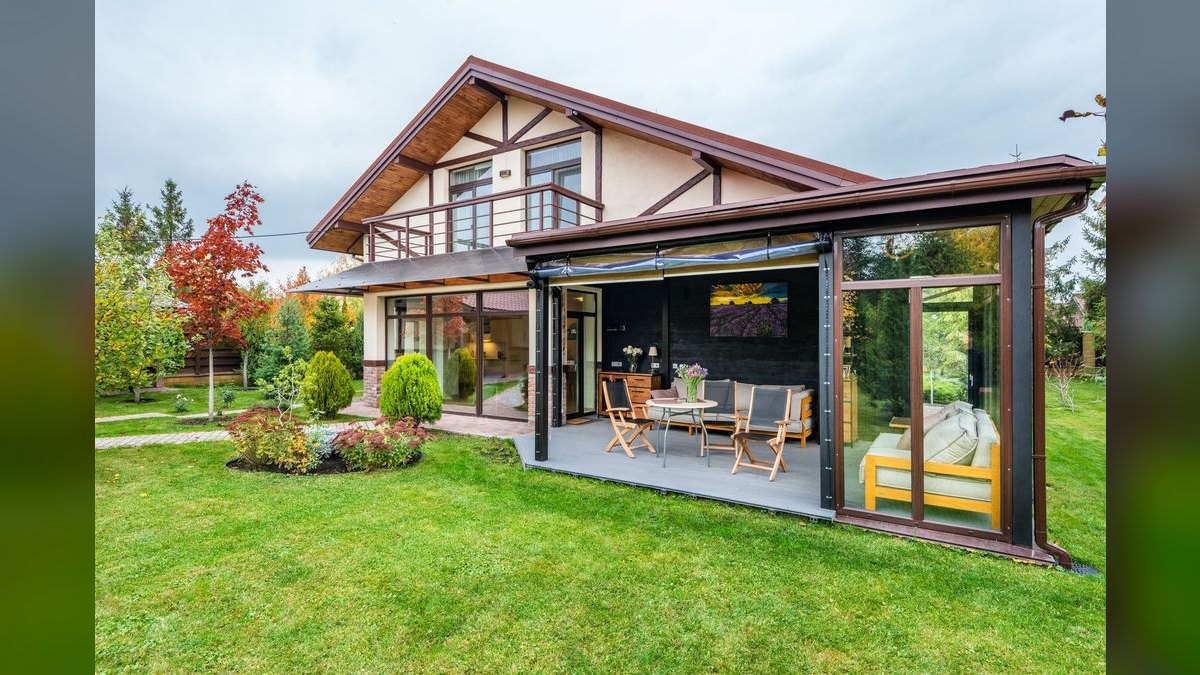
What Is "Lighting Friction"? It's the combination of factors that make homeowners want professional outdoor lighting but can't easily do it themselves. Here are the three friction factors that predict success:
1. Mature Tree Canopy: Territories with established neighborhoods (built 1970-2000) where trees are 30-50 feet tall create natural "dark zones" around homes. Homeowners in these areas can't just string up lights—they need professional-grade uplighting, path lighting, and tree-mounted fixtures. I've seen territories with 60-70% tree canopy coverage generate 2-3x more leads per capita than newer subdivisions with young trees. Look for neighborhoods where the average lot has 5-10 mature trees. That's your sweet spot.
2. HOA Restrictions on DIY Lighting: Some homeowners associations (HOAs) have strict rules about outdoor lighting—fixture types, brightness levels, placement. Homeowners who try DIY often get fined or forced
Related on PULSE
- [Should I open or buy an Archadeck Outdoor Living franchise in 2027?](/knowledge/ed0190)
- [How Many Employees Should I Schedule Each Shift at My Outdoor and Camping Store?](/knowledge/ed0696)
- [Should I open or buy a The Junkluggers franchise in 2027?](/knowledge/ed0978)
- [Should I open or buy a Pak Mail franchise in 2027?](/knowledge/ed0988)
- [Should I open or buy a PostNet franchise in 2027?](/knowledge/ed0989)
- [Should I open or buy a Fish Window Cleaning franchise in 2027?](/knowledge/ed0982)
Sources
- Outdoor Lighting Perspectives official franchise website — franchise overview, investment requirements, and support details
- International Franchise Association (IFA) — franchise industry trends, regulations, and best practices
- Franchise Business Review — franchisee satisfaction surveys and performance benchmarks
- U.S. Small Business Administration (SBA) — small business financing, franchise loan programs, and startup guidance
- Entrepreneur magazine — franchise rankings, market analysis, and expert advice
- Better Business Bureau (BBB) — business accreditation, customer reviews, and complaint history
FAQ
What is the typical investment range for an Outdoor Lighting Perspectives franchise? The total initial investment, including the franchise fee, generally falls between $150,000 and $250,000. This range covers equipment, training, and startup costs, but actual amounts can vary based on territory size and local market conditions.
How much revenue can a mature franchise expect to generate? Mature territories often report gross annual revenue between $600,000 and $1.6 million. Owner earnings typically range from $110,000 to $280,000, though results depend heavily on market demand and operational efficiency.
Is the business model home-based, or do I need a retail location? The franchise is designed to be home-based, with no need for retail buildout or lease negotiations. Owners conduct lighting-design consultations in clients’ homes and manage installation crews, keeping overhead relatively low.
What are the ongoing royalty and marketing fees? The royalty fee is 6% of gross revenue, with an additional marketing fee around 2%. These percentages are standard for the industry, but total costs can shift slightly based on the franchise agreement and local advertising needs.
How important is the recurring maintenance revenue? Recurring annual-maintenance revenue, such as bulb replacements and system checks, is a key profit driver. Many owners find that this steady income stream can significantly boost margins over time, though the exact share varies by territory.
What skills or background are most helpful for success? Success often depends on comfort with in-home design sales and the ability to manage installation crews. No specific prior lighting experience is required, but strong sales, customer service, and operational discipline are valuable assets.
This page will be disappearing soon. Save it to your device for $1 — or read it free while it is here.
@Kory-White- · if Venmo asks, the last 4 of my number are 2012
This page is gone.
This one is off the shelf now. $1 keeps it on your phone for good — the whole page, pictures and diagrams included.
 pulse-qShould I open or buy a FirstLight Home Care franchise in 2027?
 pulse-qShould I open or buy Domino's franchise or open an independent sandwich shop in 2027?
 pulse-qShould I open or buy a The Coder School franchise in 2027?
 pulse-qHow Many Stylists Should I Schedule Each Day at My Hair Salon in 2026?
 pulse-qShould I open or buy a Deka Lash franchise in 2027?
 pulse-qWhat Service Fees Should a Gym or Fitness Studio Charge in 2026?
 pulse-qWhat Service Fees Should a Property Management Company Charge in 2026?
 pulse-qHow Do I Calculate the Right Service Fee to Charge in 2026?
 pulse-qHow Many Sales Reps Do I Need to Hire for My Dental Equipment Company in 2026?
 pulse-qShould I open or buy a Pinch A Penny franchise in 2027?