

Should I open or buy a Cabinet IQ franchise in 2027?
 Curated byKory White · Fractional CRO · Maryland
Quality
Certified

Whether you should open or buy a Cabinet IQ franchise in 2027 depends on your local market demand for cabinet refacing and your comfort with a semi-absentee model. Typical initial investments range from roughly $100,000 to $200,000, with ongoing royalties around 6% of gross sales. While the brand offers established systems and support, success still hinges on your ability to manage a service-based business and generate leads in your area.
The honest answer: Cabinet IQ is a real franchise opportunity in the kitchen and bath remodeling space. Founded in 2018, it operates a showroom-and-design model for cabinets and countertops. If you're a sales-and-design-minded operator with $200,000-$400,000 in capital and comfort with a young, scaling brand, it could work. If you're risk-averse or lack construction management skills, it's likely not for you.
---
The 2027 Timing Advantage: Why Cabinet IQ's Growth Curve Favors Early-Stage Franchisees
Cabinet IQ was founded in 2018, so by 2027 it will have roughly nine years of operating history. That's enough time for core systems to be tested, but not so long that the best territories are gone. Most franchise systems that survive their first five years see a "second wave" of growth between years 7 and 12, where the brand has enough proof points to attract serious capital but hasn't yet saturated the market.
The 2026 FDD shows a relatively small number of units — likely under 100 — which means the brand is still in its expansion phase. In 2027, you're not buying into a mature system with 500+ locations where you're competing with existing franchisees for the same customer base. Your territory will likely be larger and competition from other Cabinet IQ owners will be minimal.

The realistic timeline for a 2027 opening: 12 to 18 months from signing the franchise agreement to your first paying customer. That includes site selection, build-out, hiring, training, and marketing ramp-up. If you're buying an existing location — rare for a young brand but possible — you might cut that to 3 to 6 months, but you'll pay a premium for the established revenue stream.
---
The Hidden Cost of Installation: Why Your Profit Margin Depends on Crew Management
Most franchisees focus on the showroom and design fees when they model Cabinet IQ's economics. The real profit driver — and the biggest risk — is installation. Cabinet IQ's model is built on selling cabinets and countertops, but the installation is where you either make or lose your margin.

How the math works in practice: A typical kitchen project might have a total ticket of $25,000 to $45,000. The cabinets themselves might cost you $8,000 to $12,000 wholesale, and you'll sell them for $15,000 to $20,000. Countertops add another $3,000 to $6,000 in cost and sell for $6,000 to $10,000. Design fees might be $500 to $1,500. Your gross margin on materials is roughly 40% to 50%.
Installation is where the margin gets eaten. If you sub out installation to a third-party crew, you're paying $3,000 to $6,000 per kitchen, which eats 10% to 15% of your revenue. If you manage your own crew — hiring, training, and scheduling installers — you can keep that cost at $2,000 to $4,000, but you take on the headache of payroll, liability, and quality control. The difference between a well-managed in-house crew and a subcontracted one can be 5% to 10% of your net profit.
In 2027, labor markets for skilled trades are tight. Cabinet installers and countertop fabricators are in high demand, and wages are rising. You'll need to pay $25 to $40 per hour for experienced installers, plus benefits if you want to retain them. If you're in a market with a strong construction economy, you might struggle to find reliable crews at any price.
My advice: Budget for installation as a separate P&L line item, not an afterthought. Plan to either hire a dedicated installation manager who can handle scheduling and quality control, or build relationships with two or three independent crews so you're not dependent on one. If you can keep installation costs at or below 12% of revenue, you're in good shape. If they creep above 18%, your owner's take-home will shrink fast.
---
The 2027 Competitive Landscape: How Cabinet IQ Stacks Up
You're not just competing against other Cabinet IQ franchisees. In 2027, your real competitors are the big-box home improvement stores and local independent kitchen and bath showrooms.
Home Depot and Lowe's have massive advantages: brand recognition, purchasing power, and financing options. But their kitchen design services are often generic, their installation crews are subcontracted and inconsistent, and the customer experience is transactional. Cabinet IQ's edge is the showroom-and-design model — you can offer a more personalized, higher-touch experience. A customer who walks into a Cabinet IQ showroom is getting a dedicated designer who spends an hour or more with them, not a 15-minute consultation with a store associate.

Local independent showrooms are your other main competitor. They've been in the market for years, have relationships with local contractors, and often have established reputations. But many are small, undercapitalized, and slow to adopt technology. Cabinet IQ gives you a national brand name, a proven marketing system, and a consistent product line. You can compete on speed of design, accuracy of quotes, and the ability to offer a full-service experience from design to installation.
The wild card in 2027 is the economy. If interest rates are still high, home sales will be slow, but renovation spending tends to hold up because people stay in their homes and upgrade. If the economy is in a recession, you'll see more customers looking for value — and Cabinet IQ's mid-range pricing positions you well. You'll need to be aggressive on marketing, especially local SEO and social media, because big boxes will be spending millions on national ads.
One practical tip: Invest in a strong online presence with before-and-after photos of your projects. That's the single best way to differentiate from Home Depot and Lowe's, who can't show you a specific kitchen they installed in your neighborhood. Your showroom is your storefront, but your website is your sales engine.
---
FAQ
What is the total investment range for a Cabinet IQ franchise in 2027? The total investment, per the 2026 FDD, runs roughly $200,000 to $400,000. That includes the franchise fee of around $50,000, plus costs for showroom build-out, inventory, equipment, and initial working capital. Actual numbers vary based on location and showroom size.
How much can I expect to earn as a Cabinet IQ franchise owner? Mature locations typically gross between $800,000 and $2,200,000 annually, with owner earnings in the $120,000 to $320,000 range. These are ranges from the FDD, not guarantees — your actual results depend on your sales skills, market, and operational efficiency.
What is the royalty fee and marketing fee structure? The royalty is around 6% of gross sales, and there's a separate marketing fee typically in the 1% to 2% range. Both are standard for a young, scaling franchise.
How long has Cabinet IQ been in business, and is it a stable brand? Cabinet IQ was founded in 2018, so it's a relatively young brand — about 9 years old by 2027. It's scaling fast, but it's not a 30-year-old system. Stability comes from its showroom-and-design model, but you're betting on a brand still proving its long-term track record.
Do I need experience in cabinets or construction to open a franchise? No, but you need strong sales-and-design skills. The model relies on in-home or showroom consultations, design proposals, and managing installation crews. If you're comfortable with client-facing sales and coordinating contractors, you can succeed. Prior cabinet experience helps but isn't required.
What is the biggest risk of buying a Cabinet IQ franchise in 2027? The biggest risk is that you're validating a fast-scaling young brand. If you're sloppy with sales processes, installation quality, or showroom management, the system won't carry you. The brand's growth means you'll face less support than a mature franchise, so you must be a disciplined operator.
---
Sources
- Cabinet IQ Official Franchise Website — Franchise disclosure information, investment details, and brand background
- International Franchise Association (IFA) — Franchise industry data, trends, and best practices
- U.S. Small Business Administration (SBA) - Franchise Directory — Franchise financing and business planning guides
- Franchise Business Review — Independent franchisee satisfaction surveys and performance reports
- Entrepreneur Magazine - Franchise Rankings — Franchise startup costs and industry analysis
- Better Business Bureau (BBB) — Business accreditation and customer reviews
---
Related on PULSE
- How Many Sales Reps Do I Need to Hire for My Cabinet Refacing Company?
- Should I open or buy a The Junkluggers franchise in 2027?
- Should I open or buy a Pak Mail franchise in 2027?
- Should I open or buy a PostNet franchise in 2027?
- Should I open or buy a Fish Window Cleaning franchise in 2027?
- Should I open or buy a Shine Window Care franchise in 2027?
This page will be disappearing soon. Save it to your device for $1 — or read it free while it is here.
@Kory-White- · if Venmo asks, the last 4 of my number are 2012
This page is gone.
This one is off the shelf now. $1 keeps it on your phone for good — the whole page, pictures and diagrams included.
 pulse-qHow Many Employees Should I Schedule Each Shift at My Smoothie Bar in 2026?
 pulse-qHow Do I Get My Optical Staff to Sell Premium Lenses and Coatings in 2026?
 pulse-qHow Many Sales Reps Do I Need to Hire for My Uniform Rental Company in 2027?
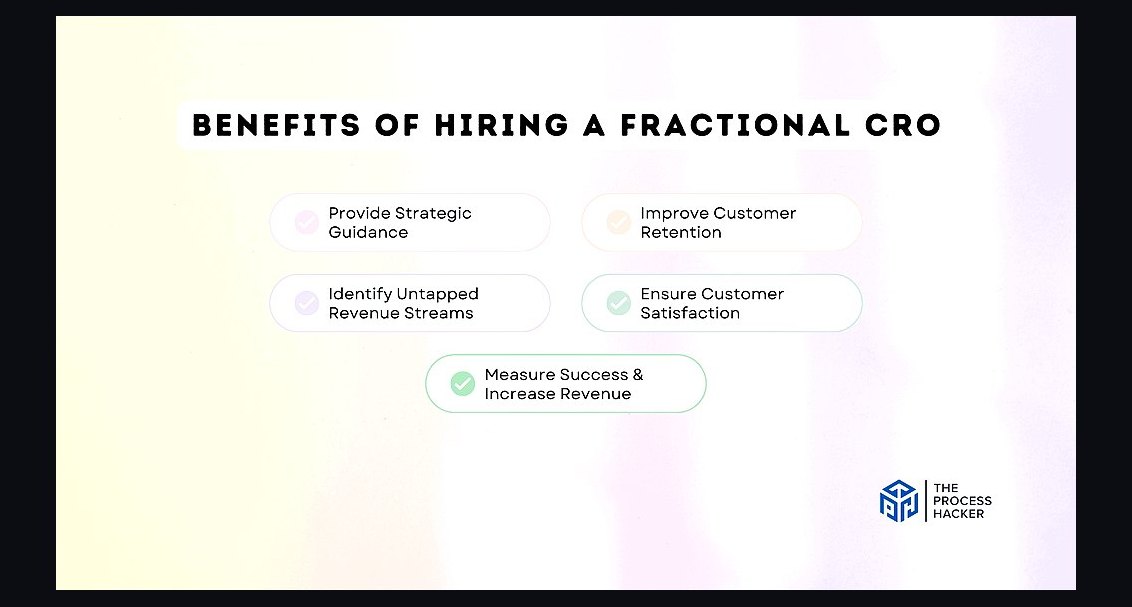 pulse-qShould I Hire a Fractional CRO If I Need a 30-60-90 Plan Before a Board Meeting in 2026?
 pulse-qHow Many Sales Reps Do I Need to Hire for My Solar Company to Hit Its Install Goal in 2026?
 pulse-qHow Do I Get My Staffing Recruiters to Sell Direct-Hire Placements in 2026?
 pulse-qHow Many Employees Should I Schedule Each Shift at My Ice Rink in 2026?
 pulse-qHow Many Sales Reps Do I Need to Hire for My Learning Management Software Company in 2027?
 pulse-qShould I open or buy a GradePower Learning franchise in 2027?
 pulse-qHow Many Sales Reps Do I Need to Hire for My Medical Billing Company in 2027?