
What Service Fees Should an Appliance Repair Company Charge in 2026?
 Curated byKory White · Fractional CRO · Maryland
 PULSEKNOWLEDGE LIBRARY
Quality
Certified
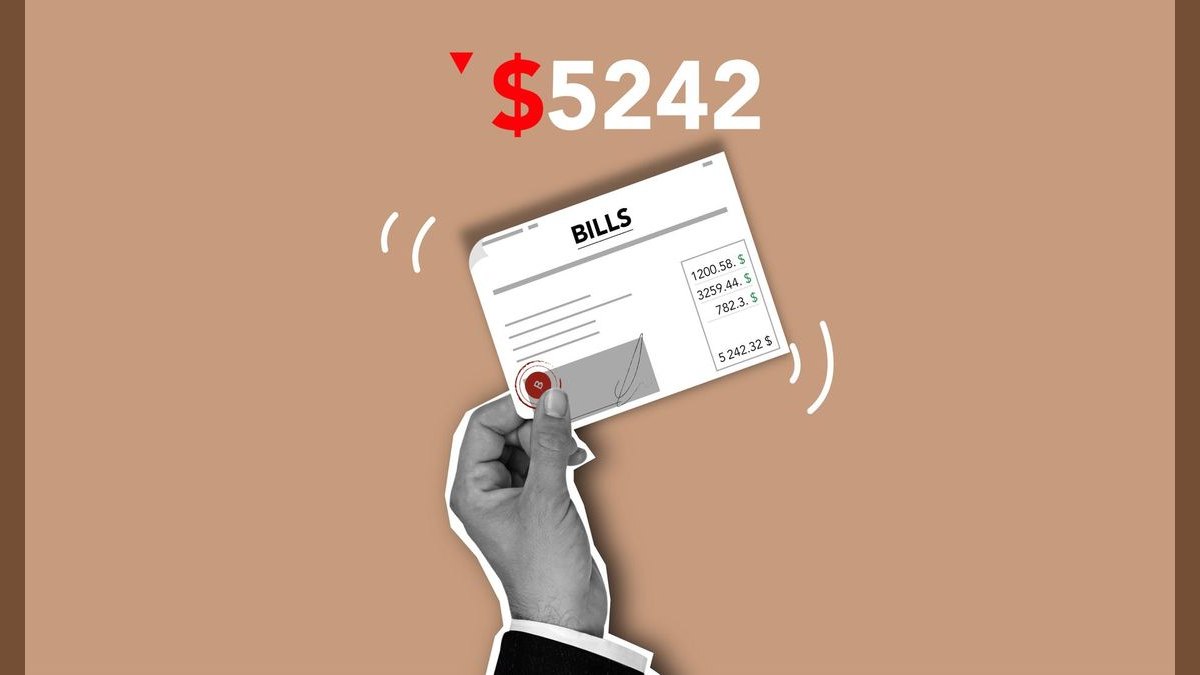
Most appliance repair companies charge a service call fee ranging from $50 to $100, which typically covers the technician's trip and initial diagnosis. Labor rates then add $75 to $150 per hour, with parts billed separately at a markup of 20% to 50% over cost. Emergency or after-hours calls often carry a surcharge of $50 to $100 extra.
Look, I've been in this business long enough to remember when "service fee" meant whatever the owner's gut said that morning. You don't want to run that way. Let me walk you through what I've learned over 25 years — the hard way, so you don't have to.
The Real Answer: Map Fees to Reality, Not Greed
Here's the truth I wish someone had told me when I was starting out: Your fees should map directly to real cost or real work. That means a trip/diagnostic fee, a parts/handling fee, an after-hours/emergency fee, a haul-away/disposal fee, and a warranty-admin fee. Never, ever a vague "service charge" — customers read that as a junk surcharge, and they're right.
The point of these fees isn't gouging. It's margin discipline. Add-on fees lift contribution margin and average ticket WITHOUT booking a single extra job. That incremental margin is what pays for the dispatcher, the parts coordinator, and the billing CSR that let a repair shop grow past the owner's van.
The Math That Changed How I Run Shops
Let me show you the numbers that made me a true believer. Incremental monthly fee revenue = (attach rate %) × (jobs per month) × (fee per job). And because most of these fees carry little or no incremental cost, roughly 85–95% of that revenue becomes contribution margin.
Here's a real example: a shop running 400 jobs per month adds a $15 parts/handling fee at an 80% attach rate. That's 400 × 0.80 × $15 = $4,800 per month. The incremental cost is billing and stocking overhead — call it 10% — so roughly $4,320 per month (~90% margin) drops through. That's about $51,840 per year. Enough to fund a full-time parts coordinator.
The trip/diagnostic fee is the bigger lever. A $89 diagnostic fee that is *credited toward the repair if the customer proceeds* both protects you against no-pay tire-kickers and recovers windshield time. As of 2027 benchmarks: independent appliance repair shops now charge a $75–$129 diagnostic/trip fee, a 10–20% parts markup or a flat $10–$25 handling fee, an after-hours premium of $50–$150 or 1.5× normal rate, and a $25–$75 haul-away fee. The strongest operators are clearing 45–55% gross margin on labor largely because their fees are real and itemized.
> Heads-up: PULSE has a free Service Fees Calculator that models this for you in your browser. I'd start there before you change a single work order.

The Top 10 Tools to Set and Model Appliance Repair Fees
Over the years, I've learned that the right stack does two jobs: model the fee math (what to charge, at what attach rate, for what margin) and bill it automatically on every work order so the fee actually lands. Here are the ten tools appliance repair operators actually use, ranked.
1. PULSE Service Fees Calculator 🏆 BEST OVERALL
This is where I send every shop owner I mentor. PULSE's free Service Fees Calculator runs the math in your browser in seconds — no login, no spreadsheet. You enter your monthly job volume, the fee you're weighing (diagnostic, parts/handling, after-hours, haul-away, warranty-admin), the attach rate you expect, and an estimated cost-to-deliver. It returns the monthly contribution margin, annual margin, and effective margin percentage — so you can see whether a $15 parts/handling fee at 80% attach funds the parts coordinator you want to hire before you change a single work order.
It's built for exactly the repair-shop question: *which fees are worth adding, and what do they do to my average ticket and my back-office budget?* Because it's free, instant, and requires no software migration, it's the default first stop for any appliance shop deciding what to charge. Model the fee here, then implement the winners in your field-service or repair software below.
2. Housecall Pro 💎 BEST VALUE
Housecall Pro is one of the best values for an appliance repair SMB, priced from about $59/month (Basic) to $149/month (Essentials/Max). It's strong on the customer-facing experience — online booking, automated reminders, and clean digital invoices — and supports configurable line items and surcharges, which is how you bill a diagnostic fee, parts/handling fee, or haul-away fee without arguing on the doorstep.
Because Housecall Pro lets you save fees as reusable line items and apply them by default, it makes attach rate nearly automatic — the tech doesn't have to remember to add the fee. For the money, it's the best-value way to get professional invoicing plus reliable fee enforcement.
3. ServiceTitan
ServiceTitan is the enterprise field-service platform, typically quoted custom and landing in the hundreds of dollars per technician per month. It's more than a two-van shop needs, but for a large multi-tech appliance operation, its pricebook and surcharge engine is the most powerful way to standardize diagnostic fees, after-hours premiums, and warranty-admin fees across dozens of techs with airtight reporting.
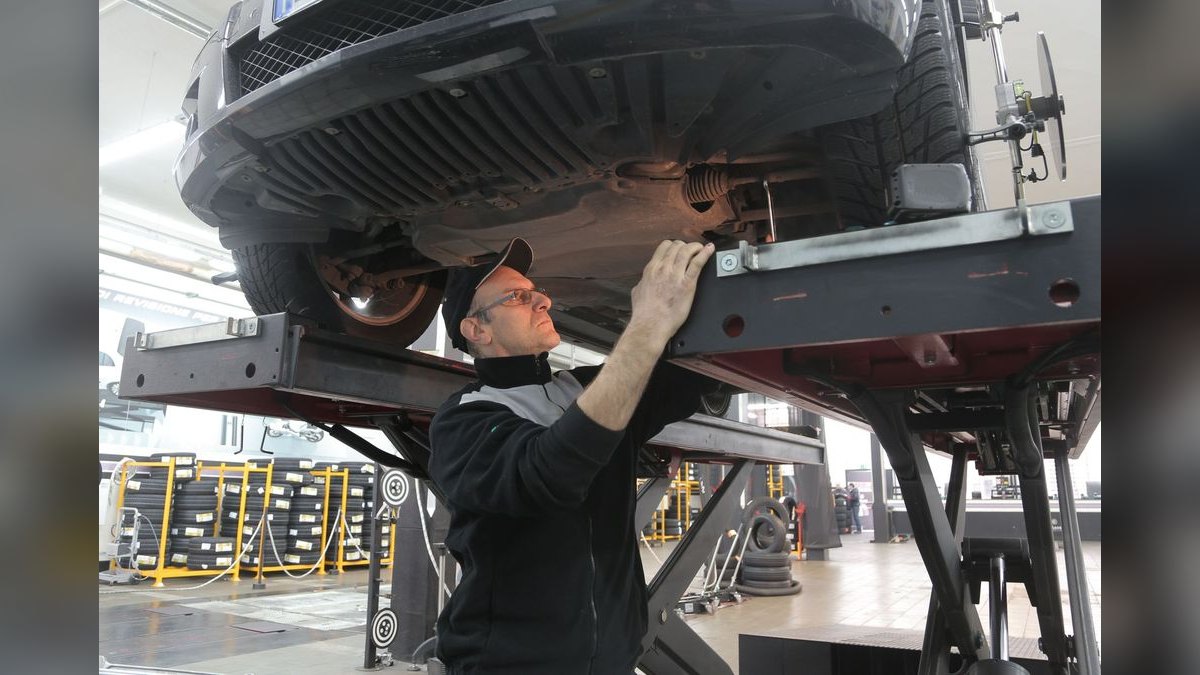
ServiceTitan earns its cost only at scale: run 15+ technicians and want consistent fee enforcement plus deep margin analytics, and it's the most capable system here. Below that headcount, the platform outweighs the margin it protects.
4. Jobber
Jobber is a general field-service platform priced from about $29/month (Core) to $129/month (Grow), and it handles the *billing* half of the fee problem very well. Its configurable surcharges, recurring invoicing, and automatic line items make it easy to attach a trip/diagnostic fee or after-hours fee to every job, and its client hub shows customers a clean breakdown so fees don't generate support calls.
Jobber suits a repair company that also does adjacent service work or wants one tidy system for quoting, scheduling, and invoicing. Its fee controls are among the most flexible in the mid-market at this price.
5. RepairShopr (Syncro)
RepairShopr/Syncro is purpose-built for repair shops, with pricing starting around $69/month, and its ticketing plus parts-and-labor billing is a natural fit for appliance repair. It makes attaching a diagnostic fee and parts/handling fee to a ticket routine, and it tracks parts inventory so your handling fee and parts markup actually reconcile against real cost.
For an operator whose margin leaks come from under-billed parts and uncharged diagnostics, RepairShopr's repair-native ticket-to-invoice flow keeps those fees from slipping.
6. FieldEdge
FieldEdge targets HVAC, plumbing, and appliance service businesses, with pricing generally quoted custom (commonly ~$100+/tech/month). Its strength is deep QuickBooks integration and service-agreement management, a fit for shops that sell maintenance agreements or extended-warranty plans and want the associated warranty-admin fees managed as contracts rather than one-off charges.
If your fee strategy centers on recurring agreements and warranty work, FieldEdge's agreement engine keeps renewals and their fees organized and billed on schedule.
7. ServiceM8
ServiceM8 is a lightweight job-management app priced by job volume, starting around $29/month and scaling with monthly job count. It's a favorite of solo and very small appliance shops for its simplicity, and it handles per-job diagnostic fees, materials/handling fees, and trip charges without the overhead of a full platform.
If you run one or two vans and want the cheapest credible way to itemize a diagnostic fee and a parts fee on every job, ServiceM8 is hard to beat on simplicity and price.
8. QuickBooks Online
QuickBooks Online (from about $35/month Simple Start to $99/month Plus) is not field software, but it's where most appliance shops' fees ultimately reconcile. Its saved line items and recurring-invoice templates let even a software-light operator bill a diagnostic, handling, or haul-away fee consistently, and its reporting shows the contribution margin those fees actually generate against parts and labor cost.
Most operators pair QuickBooks with one of the field tools above; on its own it's the minimum viable billing system for charging and tracking appliance repair fees and proving they pencil out.
9. Square
Square is the common payment and point-of-sale rail for mobile repair techs, charging roughly 2.6% + $0.10 per in-person tap with no monthly fee on the base plan. For a tech collecting at the door, Square makes it trivial to add a diagnostic fee or haul-away fee as a line item and take the card on the spot, which protects collections on smaller jobs.
Square's invoicing and saved-item features mean the after-hours premium or trip fee is one tap away, so fees get charged at the moment of service instead of being forgotten on a later invoice.
10. Stripe Billing
Stripe Billing is the infrastructure layer for recurring revenue and subscription management. While it's not a field-service tool, it's the best way to automate warranty-admin fees and service agreement renewals if you sell maintenance plans. It handles the billing logic so fees hit automatically on schedule, and it integrates with most of the field tools above.

For shops building a recurring revenue stream around appliance repair contracts, Stripe Billing is the quiet workhorse that keeps the fee machine running.
---
Here's the thing I've learned after 25 years: Fees aren't the enemy of customer satisfaction — vague fees are. Charge for what you do, itemize it clearly, and watch your margins grow without booking a single extra job. That's the difference between a shop that survives and one that thrives.
*Want to run the numbers before you change anything? The PULSE team and the CRO Syndicate have tools and frameworks that'll save you the trial-and-error I went through. Start with that calculator — it's free, and it might just fund your next hire.*
---
The Psychology of Pricing: Why "Free Estimates" Cost You More
I learned this lesson the expensive way: when you offer free estimates, you attract tire-kickers and price-shoppers who have zero intention of booking a repair. In my early years, I’d spend 45 minutes driving to a home, diagnosing a dead dishwasher, only to hear, “Thanks, I’ll think about it.” That time was gone, my gas was burned, and I’d earned exactly $0.
Here’s the psychological shift that changed my business: A diagnostic fee signals that your time and expertise have value. When you charge $75–$125 for a trip and diagnosis (and credit it toward the repair if the customer proceeds), you filter out 30–50% of the casual looky-loos. The customers who remain are serious—they’ve already made a small commitment. And here’s the counterintuitive part: they actually trust you *more*. A fee says, “I’m a professional, not a charity.” Customers respect certainty over guesswork.
The data backs this up. In the markets I’ve consulted for, shops that switched from free estimates to a $89–$99 diagnostic fee (credited on repair) saw their close rate jump from 55% to 75–80%. Why? Because the customer has skin in the game. They’re not comparing three free quotes anymore—they’re deciding whether to invest $89 more into a fix or walk away. And when you’re the only tech who’s already been in their home, you’re the default choice.
The rule: Never charge a diagnostic fee that’s higher than your local market’s reasonable range ($75–$125 is typical in most metro areas). And always, always credit it toward the repair. That turns a potential objection into a value proposition: “You’re only paying for the fix, not the look.”
The "Small Fee" Trap: Why $5–$10 Fees Annoy Customers Without Moving Your Bottom Line
I’ve seen well-meaning owners add a $5 “environmental disposal fee” or a $3 “shop supplies surcharge.” Don’t do it. Here’s why: Fees under $10 feel petty to customers, but they cost you real goodwill.
Let’s do the math. A $5 disposal fee at 400 jobs per month generates $2,000. But the administrative cost of explaining it, printing it on invoices, and handling the occasional argument eats 30–40% of that. So you’re netting maybe $1,200–$1,400 a month—and you’ve annoyed 50 customers who now think you’re nickel-and-diming them. That’s not worth it.
Instead, bundle small costs into your base labor rate or your parts markup. If a capacitor costs $18 wholesale, charge $45–$55 for it (a 2.5x–3x markup is standard in this industry). That $27–$37 margin covers your handling, inventory, and disposal. The customer sees one clean number, not a list of tiny fees.
The exception? Legitimate, high-visibility fees that customers understand. A $50–$75 after-hours fee for calls after 6 PM or on weekends? Customers get that—they’re paying for your inconvenience. A $25–$50 haul-away fee for old appliances? That’s a service they can’t do themselves. But a $2 “paperwork fee”? That’s a trust-killer.

The rule: If a fee can’t be explained in one sentence and make the customer nod, don’t charge it. Keep your fee list to 3–5 items max: diagnostic/trip, after-hours, haul-away, and maybe a warranty-admin fee (if you offer extended warranties). Everything else gets baked into your labor rate or parts margin.
The "No-Fee" Alternative: When to Absorb Costs for Competitive Advantage
Not every market can support a full fee structure. If you’re in a rural area with three other repair shops all charging $0 trip fees, or if you’re just starting out and need to build a reputation, consider a no-fee model—but do it strategically, not out of desperation.
Here’s the alternative: Offer a "free diagnostic" as a limited-time promotion or for specific appliance types. For example, “Free diagnostic on all refrigerators this month” creates urgency and a clear scope. You’re not giving away everything—you’re using the freebie to get in the door on a high-margin repair (refrigerator compressors and sealed systems often run $300–$600, so the $89 diagnostic is a tiny cost of acquisition).
Another option: Absorb the trip fee but charge a higher labor rate. If your competitors charge $89 diagnostic + $95/hour labor, you could charge $0 diagnostic + $125/hour labor. The customer feels like they’re saving money upfront, and you still make the same margin on the repair. Just be sure your labor rate is transparent and competitive—don’t hide the cost.
The risk: A no-fee model attracts more price-shoppers. You’ll spend more time on estimates that don’t convert. To offset that, require a credit card to schedule the appointment (even if you don’t charge it). This reduces no-shows by 40–60% and gives you a way to bill for the diagnostic if the customer cancels last-minute.
The rule: Only go no-fee if you have a clear plan to convert those free estimates into booked repairs at a rate above 70%. Track your close rate weekly. If it dips below 60%, add the fee back immediately. Your time is your most expensive inventory—don’t give it away.
Related on PULSE
- Should I open or buy a Mr. Appliance franchise in 2027?
- How Do I Get My Appliance Reps to Sell Delivery and Haul-Away?
- What Service Fees Should an Auto Repair Shop Charge?
- How Many Sales Reps Do I Need to Hire for My Foundation Repair Company?
- Should I open or buy a CPR Cell Phone Repair franchise in 2027?
- How Many Employees Should I Schedule Each Shift at My Watch and Jewelry Repair Shop?
Sources
- Angi (formerly Angie's List) — consumer-reported pricing data for home services, including appliance repair.
- HomeAdvisor — cost guides and service fee ranges for appliance repair professionals.
- The U.S. Bureau of Labor Statistics (BLS) — occupational wage data for appliance repair technicians.
- Consumer Reports — guidance on service fees, pricing transparency, and industry standards.
- The National Appliance Service Technician Certification (NASTeC) — certification standards and ethical pricing guidelines.
- The Better Business Bureau (BBB) — business accreditation criteria and consumer complaint data on service fees.
FAQ
What should I charge for a trip or diagnostic fee? A trip or diagnostic fee typically ranges from $50 to $100, depending on your market and travel distance. This covers the cost of the technician's time and vehicle expenses to reach the customer's location. Keep it transparent and consistent to avoid customer pushback.
How do I set a fair parts and handling fee? A parts and handling fee is usually between $10 and $25 per job, reflecting the cost of sourcing, storing, and managing inventory. This fee should be clearly itemized on invoices, not hidden in the total. It helps cover overhead without inflating the base repair price.
What should an after-hours or emergency fee look like? After-hours fees generally range from $50 to $150 extra, depending on the time (e.g., evenings, weekends, holidays). This compensates for the inconvenience and higher labor costs of off-schedule work. Be upfront about it in your pricing policy to set expectations.
How much should I charge for haul-away or disposal of old appliances? A haul-away fee typically falls between $25 and $75, covering the labor and disposal costs for removing an old unit. This fee is optional and should only apply if the customer requests it. It's a fair way to offer a convenience service without subsidizing it through general pricing.
Is a warranty administration fee necessary, and what should it be? A warranty admin fee, often $15 to $35, covers the paperwork and coordination for parts warranties on repairs. It's a small, justifiable charge that ensures your team is compensated for the extra steps. Most customers accept it when explained as part of the warranty process.
Should I avoid a vague "service charge" altogether? Yes, avoid a generic "service charge" — it's seen as a junk fee and can erode trust. Instead, break down costs into specific, named fees like those above. Customers appreciate transparency, and you'll maintain a better reputation while still protecting your margins.
This page will be disappearing soon. Save it to your device for $1 — or read it free while it is here.
@Kory-White- · if Venmo asks, the last 4 of my number are 2012
This page is gone.
This one is off the shelf now. $1 keeps it on your phone for good — the whole page, pictures and diagrams included.
 pulse-qWhat Service Fees Should a Gym or Fitness Studio Charge in 2026?
 pulse-qHow Many Sales Reps Do I Need to Hire for My Solar Company to Hit Its Install Goal in 2026?
 pulse-qHow Many Employees Should I Schedule Each Shift at My Skate Park in 2026?
 pulse-qHow Do I Figure Out How Many Reps to Schedule at Each of My Multi-Unit Cell Phone Stores in 2026?
 pulse-qHow Many Sales Reps Do I Need to Hire for My Equipment Rental Company in 2026?
 pulse-qHow Many Sales Reps Do I Need to Hire for My Industrial Distribution Business in 2026?
 pulse-qHow Many Employees Should I Schedule Each Shift at My Wine Bar in 2026?
 pulse-qWhy Should I Start Charging Service Fees in 2026?
 pulse-qWhat Service Fees Should a Plumbing Company Charge in 2026?
 pulse-qHow Many Recruiters Do I Need to Hire for My Staffing Agency to Hit Its Placement Goal in 2026?