
How Do I Get My Route Drivers to Upsell on Every Stop in 2026?
 Curated byKory White · Fractional CRO · Maryland
 PULSEKNOWLEDGE LIBRARY
Quality
Certified

Route drivers upsell consistently when the scorecard, the truck, and the script all change together. Score the whole route — on-time percentage, lines per stop, new-item placement, retention — not stops completed alone. Stock three to five high-margin add-ons within arm's reach, teach three trigger moments instead of a pitch, and reward the attempt, not just the sale.
The Tuesday the route report said everything was fine
The report showed 98% on-time delivery, 35 stops before lunch on the heaviest run, and a 12% upsell rate. Operations was celebrating. Sales was drafting resignation letters. Both reactions were correct, because the two teams were reading two different halves of the same number and nobody had built a number that contained both.
The driver everyone pointed to — the fastest one on the board — could hit a stop like a pit crew and had not suggested an add-on in months. He was not lazy and he was not anti-sales. He was doing exactly what the measurement told him to do. Dispatch graded him on stops completed and on-time percentage, full stop. Every second spent asking a customer whether they wanted the upgraded fitting was a second borrowed against a metric that was actually scored. He was optimizing correctly against a badly designed target.
That is the shape of this problem almost everywhere it appears. Owners describe it as a personality issue — "my drivers aren't salespeople" — when it is nearly always a measurement issue wearing a personality costume. A driver who skips a $200 add-on because it costs ninety seconds is not making a mistake. He is making a rational trade under the incentive you built. Watch a route long enough and you can predict the skipped upsell before it happens: it comes on the stop right after a traffic delay, because that is when the clock feels most expensive.
There is a second layer underneath the metric problem, and it shows up the moment you fix the scorecard. You tell the fleet that upselling counts now, and about a third of them try, and about half of those give up inside two weeks. The reason is almost never motivation. It is that the product was not in the truck, or the driver could not remember which customer wanted what, or the pitch felt like a telemarketing script coming out of a person the customer has known for four years. Fix the scorecard alone and you get a brief spike and a slow decay back to baseline. The behavior only sticks when the measurement, the inventory, and the language all change in the same quarter.
The rest of this page is that three-part fix, in the order it actually has to happen: rebuild the scorecard so the missed sale is visible, stock the truck so the offer is physically possible, and give drivers trigger moments instead of a script so the offer sounds like them.
How the weighted scorecard actually changes behavior
The mechanism is a weighted multi-KPI composite. You list every line that defines a good driver-and-seller — on-time delivery, stops per route, order accuracy, upsell offers made, lines per stop, new-item placement, customer retention — assign each a weight, score each driver 1 to 5 on every line, and sum weight × level into one composite number.
The arithmetic does the persuading. A driver at level 5 on stops and level 1 on lines per stop lands in the same composite range as the chatty driver at level 2 on stops and level 5 on conversation. Neither can hide behind their strong number, because the strong number is only one weighted term in a sum. When you show a fast driver his composite and he sees that his best metric is worth a quarter of the total, the argument about whether selling is "his job" ends without you having to make it.
Weights are where you encode strategy, and they should be uncomfortable to set. If on-time delivery carries 30% of the composite and lines per stop carries 5%, you have not built a sales scorecard — you have built the old scorecard with decoration. A workable starting split for a route that genuinely needs to sell puts service reliability around 35-40% combined across on-time and order accuracy, selling behavior around 35-40% across offers made, lines per stop, and placement, and retention around 20-25%. Retention is the brake: it stops a driver from strip-mining accounts for one good month.
Score levels need written definitions or they drift into a popularity contest. Level 3 on "upsell offers made" should mean something specific — an offer at five to seven of ten stops — not "seems to be trying." Write the 1-to-5 ladder for each KPI once, publish it, and let drivers self-assess before their review. The self-assessment is the coaching tool; the gap between what a driver scores himself and what the data scores him is the whole conversation.
Publishing the matrix matters more than the math. Every driver should be able to see where they stand on every line and what the fleet distribution looks like. Hidden scorecards get treated as management opinion. Visible ones get treated as a game, and drivers will grind a visible game.

The loop is what makes it durable. Re-score on a fixed cadence — monthly is the usual landing spot, weekly for the first two months while habits form — and always coach to the weakest *weighted* line, not the weakest raw line. A driver two points down on a 5%-weight KPI is not your problem. A driver one point down on a 30%-weight KPI is.
The other payoff is speed of redirection. When a new SKU launches or a promotion changes overnight, you re-weight the matrix and the whole fleet re-aims at load-out the next morning. No memo, no meeting, no "I didn't hear about that." The target moved and everyone can see where it moved to.
The numbers that tell you whether it is working
Set the baseline before you change anything, because the early wins are large and you will want proof they were real. Measure four things for two full weeks: upsell attempts per ten stops, upsell conversions per ten stops, average add-on value, and stop duration. That last one is the honest one — if stop duration goes up 30% you have traded delivery capacity for revenue and you need to know the exchange rate.

Typical starting points on an untrained route run 5-20% conversion on stops where an offer is made, with top performers reaching around 30% once they have been coached for a few months. Attempt rates are the leading indicator and they move first: a driver going from roughly one upsell per twenty stops to one per five over about a month is a normal, achievable trajectory when the triggers and the truck stock are both in place.
Track attempts, not just conversions, and pay on attempts early. A driver offering at eight of ten stops with only two buyers is building the habit that produces the eventual 30% closer. If you only score conversions in month one, drivers cherry-pick the customers they already know will say yes, and the habit never generalizes. Shift the weighting toward conversions in month three, once the attempt rate is stable above roughly six of ten stops.
Per-stop upside depends entirely on what the truck carries. A route where the add-ons are drinks, snacks, or small accessories realistically supports one to three extra items per stop with a pitch under fifteen seconds. A route selling premium filters, upgraded fittings, or extended coverage supports fewer offers but a far higher average ticket. Do the arithmetic before you set targets: fifteen extra items a day at $4 margin is a different business than two extra items a day at $60 margin, and the second one deserves a slower, more consultative stop.

On the pay side, 5-15% of upsell value is the common commission band, settled weekly or monthly. For low-margin items a flat $0.50-$2 per upsell usually motivates better than a percentage, because a percentage of a small ticket rounds to nothing in the driver's head and stops registering as a reward. A small immediate reward for the *attempt* — a $5 spot bonus, a badge on the board — works alongside the commission rather than replacing it; it is what carries drivers through the first weeks when conversions are still thin.
Expect a real lag. Attempt rates move in two to three weeks. Conversion rates take six to eight weeks to show a durable lift, because the customer side has to adjust too — regulars need a few visits to learn that this driver now brings things. Judge the program at the ninety-day mark, not the thirty-day mark, and hold the on-time floor at 95% the entire time as a non-bonused baseline requirement so you can prove you did not buy revenue with service.
Trade-offs, and the alternatives to a full scorecard
A weighted composite is not free. It requires clean data on lines per stop and placement, someone to maintain weights, and a manager willing to run monthly one-on-ones against it. On a six-truck operation that overhead can exceed the benefit, and there are lighter options that capture most of the value.
The lightest is the hot-list-plus-spot-bonus approach: no scorecard at all, just three to five stocked add-ons, a fifteen-second pitch, and a small cash bonus per sale. It works, it installs in a week, and its ceiling is low — it drives volume on the easy items and nothing else, and it decays when the novelty wears off. Reach for it when you want to prove the concept before investing in measurement.

One rung up is a two-metric split: keep on-time as a pass/fail gate at 95%, then rank drivers on a single "stop value" number. Simple enough to run in a spreadsheet, visible enough to be competitive, and it avoids the main failure of the full matrix — too many KPIs diluting each other until no single line is worth chasing. If your matrix has more than seven lines, you have this problem already.
The tooling question follows the same logic. Six categories of tool are worth knowing, and the differentiator is whether the tool scores the *whole* route on a weighted matrix or just reports one dimension well.
The PULSE Pulse Check Matrix ([/tools/pulse-check](/tools/pulse-check)) runs the method in the browser — define KPIs, set weights, score each driver 1 to 5, get one composite per driver. Free, no spreadsheet to rebuild, and the fastest way to test whether the weighting scheme you have in mind actually separates your fleet.

Salesforce can host a weighted driver scorecard through custom dashboards built on route and order data, starting around $25 per user per month at the entry tier. You build the scorecard yourself, but every input the composite needs — deliveries, lines per stop, upsell, retention — is already in the system. Best for distributors already standardized on it.
Spinify gamifies performance with leaderboards, competitions, and scorecards, in the neighborhood of $10-$20 per user per month. It scores several metrics at once and pushes recognition in real time, but it leans toward motivation over rigorous weighting — pair it with a matrix you define elsewhere.
Repsly is a field-execution platform for retail and route reps, tracking visits, orders, placements, and performance on custom pricing. It is more execution engine than weighted matrix, but it captures the placement and upsell lines the composite depends on, which makes it a strong data source for DSD and merchandising routes.

QuotaPath ties the scorecard to pay, with a free tier and paid plans starting around $15 per user per month. It tracks attainment across multiple plan components, so drivers can be paid on lines per stop, new placements, and retention simultaneously — and its real-time earnings view lets a driver see what one more placement is worth before walking back to the truck.
Ambition builds weighted scorecards across multiple metrics and ties them to coaching cadences, priced by custom quote. It is the closest paid equivalent to running the matrix method automatically off your data, and it earns its keep once the fleet is large enough that manual scoring becomes the bottleneck.
The escalation path matters more than the initial choice. Start at the lightest rung that fits, review at ninety days, and move up only when you hit the ceiling of what you have — a fleet that plateaus at a 12% conversion rate under a spot bonus is telling you it needs the matrix, and a fleet still climbing does not need more machinery yet.

Where this breaks, and how to keep it from breaking
The empty truck is the single most common failure. Audit route trucks and a large share of missed upsells trace to a product that was not on board — the driver would have had to go back to the warehouse or place a special order, which is a dead end at the moment of the conversation. Fix it with a hot list of three to five high-margin, fast-moving items that every truck carries at all times, in a dedicated bin near the driver's seat, visible and reachable without climbing into the back. If retrieving the add-on requires unstacking pallets, it will not be offered.
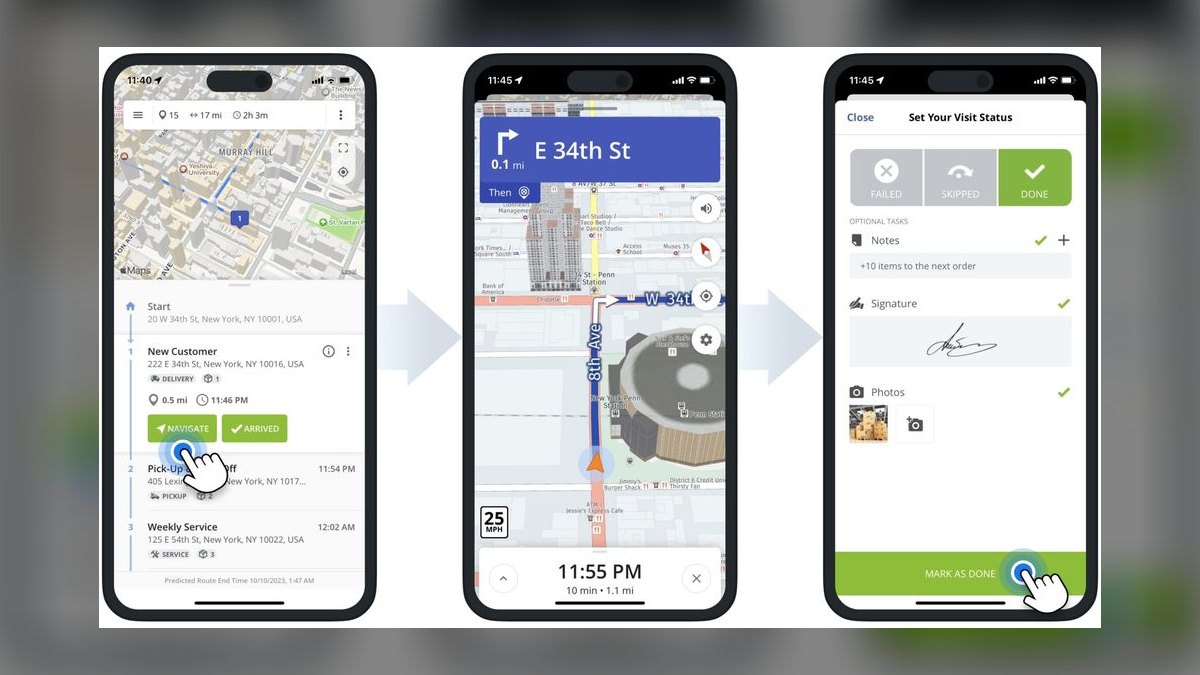
The second failure is the memory problem, and it survives a fully stocked truck. A driver pulling up to the fourteenth stop of the day cannot recall what that customer bought last month or which two items pair with it. The fix is a thirty-second pre-stop ritual: as the truck pulls up, the driver glances at a card or a note in the route app showing the last purchase and the top two recommended add-ons. That converts the upsell from mental math into a checklist, and it costs a printed card plus thirty seconds of training.
The third failure is the script itself. Hand drivers a rigid pitch and customers hear it from the parking lot — these are people the customer has known for years, and the sudden switch into sales language reads as a betrayal of that relationship. Replace the script with three trigger moments. The unboxing moment: the customer opens the delivery and the driver says he noticed they are running low on something and has a case in the truck if they want to skip next week's reorder call. The problem moment: the customer mentions a leaky fitting or a worn part and the driver mentions the upgraded version that fixes it and offers to swap it in. The compliment moment: the customer praises a product and the driver mentions the new variant that pairs with it. Contextual, low-pressure, and in the driver's own words.
Train the triggers by role-play, not by laminated card. Ten to fifteen minutes at the weekly stand-up beats a one-time seminar by a wide margin, because the skill being built is *hearing* the trigger, not reciting the response. With permission, record a few real customer interactions and play them back to spot the misses — drivers routinely discover they are walking past four to six trigger moments a day without registering them.

The fourth failure is mandating an offer at literally every stop. Forcing a pitch into a hostile or rushed interaction damages accounts, and the retention line on the scorecard exists precisely to catch that. Score the *rate* of offers, not universal compliance — a driver offering at eight of ten stops and reading the room on the other two is the target behavior, and the two skipped stops are judgment, not failure.
The fifth is tracking that adds paperwork. Paper logs slow the stop, get lost, and quietly train drivers to stop reporting. Use a checkbox or button in the route software the driver already has open — one tap after the offer, one tap after the sale, syncing automatically. If capturing the data costs more than fifteen seconds a stop, the data will be wrong within a month.
The last failure is management drift. Weights get set once and never revisited, the monthly review slips to quarterly, and the composite becomes wallpaper. Put the re-weighting on a calendar tied to your promotional cycle, and treat a missed coaching one-on-one the same way you would treat a missed delivery.
Related questions
How long before route drivers upsell without being reminded?
Attempt rates typically move within two to three weeks of changing the scorecard and stocking the truck. Durable, unprompted behavior takes six to eight weeks, and full habit formation closer to ninety days. Weekly role-play during the first two months roughly halves that ramp.
Should upsell pay be a percentage or a flat amount?
Percentage works when the add-on carries real value — 5-15% of upsell value is the common band. For low-margin items, a flat $0.50-$2 per sale motivates better, because a small percentage rounds to nothing in the driver's head and stops registering as a reward at all.
What if upselling wrecks the delivery schedule?
Hold on-time delivery at a 95% floor as a non-bonused baseline requirement and measure stop duration before and after. A fifteen-second trigger-based offer costs almost nothing. If stop duration jumps sharply, the problem is usually retrieval time from a badly organized truck, not conversation.
Do drivers need CRM access to upsell effectively?
No. A card with the customer's last purchase and two recommended add-ons covers most of the value. CRM access helps at scale, but the binding constraint on a route is almost always whether the product is within arm's reach, not whether the driver can see account history.
How many add-on items should a truck carry?
Three to five. Fewer and drivers run out of relevant offers; more and the bin stops being scannable at a glance and retrieval time climbs. Rotate the list with promotions rather than expanding it, and drop any item that has not sold in six weeks.
FAQ
What's the biggest mistake owners make when trying to get drivers to upsell?
Rewarding speed and nothing else. When on-time percentage and stops completed are the only scored metrics, drivers correctly conclude that a conversation is a liability. The fix is structural, not motivational: build a composite that contains both the delivery lines and the selling lines, weight it so neither can be ignored, and publish it so every driver can see exactly where they stand.
How much can a route driver realistically upsell per stop?
It depends entirely on what the truck carries. Where add-ons are small and cheap — a drink, a snack, an accessory — one to three extra items per stop is achievable with a pitch under fifteen seconds. Where the add-on is a premium part or an upgrade, expect fewer offers and a much larger ticket. Conversion typically starts in the 5-20% range and reaches around 30% for coached top performers.
Should drivers upsell on every single stop, even when it's awkward?
No. Forcing a pitch into a rushed or hostile interaction costs you accounts, and account retention should be a weighted line on the scorecard specifically to catch that. Score the offer *rate* instead — eight offers in ten stops with two judgment-call skips is the target. Teach drivers to read the room and treat the skip as a decision they can defend.
What training actually works for drivers who aren't natural salespeople?
Ten to fifteen minutes of role-play at the weekly stand-up, focused on three trigger moments rather than a memorized pitch. The skill you are building is recognition — hearing the customer say something that opens a door — not recitation. Recorded real interactions, played back with permission, surface the misses faster than any classroom session.
How do I track upsells without adding paperwork?
Use a checkbox or button in the route software drivers already have open: one tap for the offer, one for the sale, syncing automatically. Skip paper logs entirely — they slow the stop, get lost, and quietly train drivers out of reporting. If data capture costs more than about fifteen seconds per stop, the numbers will be unreliable within a month.
What's a fair commission rate for driver upsells?
Between 5% and 15% of upsell value, paid weekly or monthly, is the standard band. Flat bonuses of $0.50-$2 per sale work better on low-margin items. Layer a small immediate reward for the *attempt* on top during the first six to eight weeks, because attempt rate is the leading indicator and it needs reinforcement before conversions arrive.
Sources
- https://hbr.org/topic/subject/sales — Harvard Business Review research on sales incentives, compensation design, and behavior change.
- https://www.shrm.org/topics-tools/topics/performance-management — SHRM guidance on performance management, scorecards, and coaching cadences.
- https://www.sba.gov/business-guide/manage-your-business/hire-manage-employees — U.S. Small Business Administration guidance on training and managing employees for growth.
- https://www.trucking.org/ — American Trucking Associations resources on driver performance and route operations.
- https://www.bls.gov/ooh/transportation-and-material-moving/delivery-truck-drivers-and-driver-sales-workers.htm — Bureau of Labor Statistics occupational profile for driver/sales workers.
- https://www.osha.gov/warehousing — OSHA warehousing and material-handling guidance relevant to in-truck stocking and retrieval.
- https://www.restaurant.org/ — National Restaurant Association resources on frontline service and upselling practices.
- https://www.forbes.com/sales/ — Forbes coverage of upselling strategy, team culture, and frontline sales tactics.
Related on PULSE
- [How Do I Stop My Reps From Only Selling the Easy Product?](/knowledge/ed0822)
- [How Do I Get My Parts Counter to Upsell Premium Parts?](/knowledge/ed0654)
- [How Do I Get My Hotel Front Desk to Upsell Room Upgrades?](/knowledge/ed0675)
- [How Do I Get My Hotel Front Desk to Upsell Rooms and Amenities?](/knowledge/ed0778)
- [How Do I Get My Showroom Reps to Log Every Up?](/knowledge/ed0458)
- [Should I Hire a Fractional CRO If My CAC Is Rising Every Quarter?](/knowledge/ed0417)
This page will be disappearing soon. Save it to your device for $1 — or read it free while it is here.
@Kory-White- · if Venmo asks, the last 4 of my number are 2012
This page is gone.
This one is off the shelf now. $1 keeps it on your phone for good — the whole page, pictures and diagrams included.
 pulse-qHow Do I Know How Many Cooks and Servers to Schedule Each Shift at My Pizza Restaurant in 2026?
 pulse-qHow Many Sales Reps Do I Need to Hire for My VoIP Company in 2026?
 pulse-qWhat Service Fees Should a Veterinary Clinic Charge in 2026?
 pulse-qHow Many Sales Reps Do I Need to Hire for My Dental Equipment Company in 2026?
 pulse-qHow Do I Get My Jewelry Staff to Offer Financing on Every Sale in 2026?
 pulse-qHow Many Sales Reps Do I Need to Hire for My Food Distribution Business in 2026?
 pulse-qWhat Service Fees Should a Mobile Mechanic Charge in 2026?
 pulse-qHow Do I Figure Out How Many Reps to Schedule at Each of My Multi-Unit Cell Phone Stores in 2026?
 pulse-qShould I Hire a Fractional CRO If I Am Taking the Company to Market in a Year in 2026?
 pulse-qHow Many Staff Should I Schedule Each Shift at My Gym in 2026?