
What Service Fees Should a Mobile Mechanic Charge in 2026?
 Curated byKory White · Fractional CRO · Maryland
 PULSEKNOWLEDGE LIBRARY
Quality
Certified

A mobile mechanic should charge a trip/mobile-service fee of $35–$65, a diagnostic fee of $50–$100, a shop-supplies fee of 5–10% (or a flat $10–$25), and situational add-ons — after-hours ($25–$75), emergency dispatch ($50–$100), and specialty-vehicle surcharges ($25–$80) — layered on top of a $75–$150 hourly labor rate. Charging named, itemized fees rather than one inflated rate protects margin and builds customer trust.
The Two Fee Models Compared: Bundled Rate vs. Itemized Fee Menu
Every mobile mechanic ends up choosing between two fundamentally different pricing architectures, whether they realize it or not. The first is the bundled rate model: you fold your travel time, diagnostic work, shop supplies, and overhead into a single higher hourly labor rate — say $140/hour instead of $95/hour — and never show the customer a separate line item beyond "labor." The second is the itemized fee menu: you charge a market-rate labor number and then list trip, diagnostic, supplies, and situational charges as their own named entries on the estimate and invoice.
The bundled model looks simpler on paper. One number, one conversation, no explaining. But it creates three real problems for a mobile mechanic specifically. First, a mobile operation has genuinely variable costs that a flat rate can't reflect — a job three miles from your last stop costs you almost nothing extra in windshield time, while a job forty-five minutes away with a scheduling gap on either side costs you real fuel and real hours you can't bill anyone else for. A single bundled rate either overcharges the easy jobs or undercharges the hard ones. Second, when a customer calls three shops for a quote, your one big number gets compared apples-to-oranges against a shop's labor rate that doesn't include travel, and you look expensive without being able to explain why. Third, and most costly long-term, a bundled rate hides your own cost structure from you. You can't tell whether your travel costs are eating your margin because travel isn't broken out anywhere in your books.
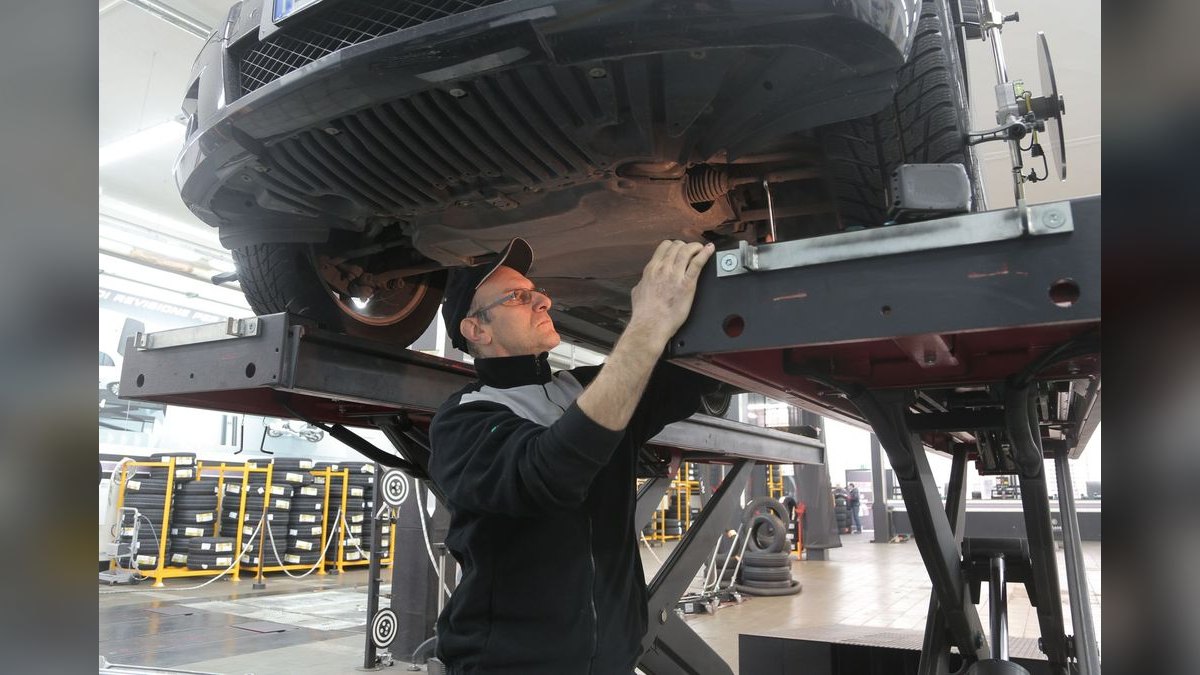
The itemized fee menu solves all three problems, but it requires more discipline. You need a written, consistent fee schedule — not "whatever feels right today" — and you need to present it the same way every time so customers don't feel like fees are being invented on the spot. The payoff is that each fee becomes its own profit center with its own attach rate and its own contribution margin, typically 85–95% because your labor rate already covers your baseline overhead. A trip fee, a diagnostic fee, and a supplies fee stacked correctly on a $75/hour labor rate can add $80–$150 of near-pure profit to an average job without touching the labor number at all.
There's a hybrid worth naming too: partial bundling, where you fold shop supplies into labor (since it's small and hard to itemize cleanly) but keep the trip fee and diagnostic fee separate because those are large enough and variable enough to matter. Most established mobile mechanics converge here after a year or two of trial and error — full itemization for the fees that move the needle, quiet bundling for the ones too small to justify a line item. The decision isn't philosophical; it's about which costs are large enough and variable enough to deserve their own name on the invoice.

How to Decide Between a Bundled Rate and an Itemized Fee Menu
The decision comes down to three questions you can answer about your own business right now: how far do your jobs typically range, how price-sensitive is your customer base, and do you already have (or want) the administrative habit of tracking costs separately. A mechanic running a tight 10-mile service radius with mostly repeat residential customers has a weaker case for itemization than one running a 30-mile radius that includes both budget-conscious daily drivers and premium European-car owners, because the second mechanic's costs vary far more between jobs.
If you answered "yes" to any of the three questions, the itemized menu almost always wins on both revenue and defensibility. The one scenario where bundling still makes sense is a brand-new mobile mechanic in the first three to six months of operation, still learning true job costs and not yet ready to defend five separate line items to a skeptical customer. In that window, a slightly-padded bundled rate buys you time to collect data — track your actual mileage, actual diagnostic time, and actual supply costs per job even while you're charging one number — so that when you do split into an itemized menu, the fees you set are grounded in your real numbers rather than a guess copied from a forum post.

Another deciding factor is your growth plan. If you intend to stay a solo operator indefinitely, the administrative overhead of an itemized menu is a smaller relative burden. If you intend to hire a second technician or a dispatcher within the next year, itemization is close to mandatory — you cannot delegate scheduling or invoicing decisions to an employee if "the price" lives entirely in your head as a feel-based bundled number. A written fee schedule is what makes a mobile mechanic operation scalable past one person, because it turns pricing into a policy anyone on the team can apply consistently instead of a judgment call only the owner can make.
Concrete Numbers Behind Each Fee Model
Run the bundled model first. A mechanic charging a flat $140/hour with no separate fees, doing 100 billable hours a month, brings in $14,000/month in labor revenue. That number looks clean, but strip out true costs: fuel and vehicle wear across a typical mobile radius runs $600–$1,200/month, consumable shop supplies run $300–$600/month, and the time spent on unbillable diagnostic work (the calls where you determine the problem but the customer declines the repair) can eat 8–12 hours a month at zero revenue. Net, the bundled mechanic is often clearing $11,500–$12,500/month after true costs, and — critically — has no way to see which of those costs is growing over time because none of them are tracked as separate revenue lines.
Now run the itemized model on a comparable job volume. A mechanic doing 120 jobs/month charges a $45 trip fee at 100% attach rate ($5,400/month), a $60 diagnostic fee at roughly 40% attach rate ($2,880/month), and an 8% shop-supplies fee averaging $14/job at 90% attach ($1,512/month). That's $9,792/month in fee revenue layered on top of labor billed separately at $95–$110/hour. Because fees carry an 85–95% contribution margin, roughly $8,800/month of that fee revenue is gross profit — enough, on its own, to cover a part-time dispatcher or a parts runner without selling a single additional job. The average ticket rises by roughly $70–$85 per job purely from fees, with no change in labor pricing at all.
Layer in situational fees and the gap widens further. After-hours fees ($25–$75) typically attach to 10–20% of monthly jobs for a mechanic who takes evening or weekend calls; at a $45 average and 15% attach rate on 120 jobs, that's another $810/month. Emergency dispatch fees ($50–$100) attach far less often — often just 5–10% of jobs — but at essentially 100% margin, even an 8% attach rate at $75 average adds $720/month. Specialty-vehicle surcharges ($25–$80) depend heavily on your customer mix; a mechanic who serves a meaningful share of European, diesel, or hybrid vehicles can see 15–25% attach rates, while a mechanic serving mostly economy sedans will see closer to 5%.

Stack the full itemized menu — trip, diagnostic, supplies, after-hours, emergency, specialty — against 120 jobs/month and total fee revenue commonly lands between $9,500 and $13,000/month, with $8,500–$11,500 of that as gross profit. Compare that to the bundled model's $11,500–$12,500 in total net revenue and the itemized mechanic, even before accounting for a comparable or lower labor rate, is often ahead by several thousand dollars a month once true costs are subtracted from the bundled number — and has full visibility into exactly which fee is driving the gain, which the bundled mechanic never gets.
Implementation and Sequencing: Rolling Out Your Fee Menu
Don't roll out five new fees on the same day to your entire existing customer base — that's the single fastest way to trigger a wave of confused calls and negative reviews. Sequence the rollout instead. Start with the trip fee alone, since it's the easiest for customers to understand (everyone gets that driving to them costs something) and it has the highest attach rate, so it's the fastest way to validate that your customers will accept itemized pricing at all. Announce it two to three weeks in advance by text and email to existing customers, explain it in one sentence ("Starting [date], estimates will include a $45 trip fee to cover travel time and fuel"), and hold the line on new customers immediately.

Once the trip fee is running cleanly for three to four weeks with no unusual pushback, add the diagnostic fee. This one needs a slightly more careful script because customers sometimes conflate "you're charging me to tell me what's wrong" with "you're charging me twice." The fix is to explicitly state the credit: "The $60 diagnostic fee is waived and credited toward the repair if you approve the work today." That single sentence converts a fee that feels punitive into one that feels like a deposit, and it's the difference between a 60% acceptance rate and a 90%+ acceptance rate on the same dollar amount.
Add the shop-supplies fee next, usually in month two or three, since it's the smallest dollar amount and generates the least resistance — but only if you itemize what it covers (gloves, rags, brake cleaner, disposal fees) rather than leaving it as a vague "misc." line. Itemizing this fee, even briefly, cuts customer questions dramatically compared to an unexplained percentage charge.

Situational fees — after-hours, emergency, specialty — should come last, once your base fee menu is established and customers already understand that you charge for defined categories of value. Build these into your phone and text intake script so they're disclosed before you're dispatched, never discovered after the job is done. A simple script covers all three: "Standard service during business hours includes the $45 trip fee and $60 diagnostic fee. After 5 PM or on weekends, there's an additional $45 after-hours fee. If you need me there within the hour, that's a $75 emergency dispatch fee instead of the standard trip fee." Customers who hear the full menu upfront rarely dispute it later, because there's no moment where a fee appears that they weren't told about.
Track attach rate and revenue per fee monthly from day one — a simple spreadsheet with job count, fee applied, and dollar amount is enough. This is what lets you spot when a fee is underperforming (low attach rate might mean the fee is priced too high or explained poorly) versus when it's simply a low-frequency situation (emergency fees will always have low attach rates by nature). Revisit your fee amounts every six to twelve months against your local market and your own cost data, rather than setting them once and never adjusting — fuel costs, part costs, and local competition all shift, and a fee schedule that was right last year can quietly erode your margin if left unexamined.

Related questions
How much should a mobile mechanic charge per hour for labor?
Most mobile mechanics charge $75–$150/hour depending on region, specialization, and vehicle type, often with a one-hour minimum. Specialty work on diesel, hybrid, or luxury vehicles commands the higher end of that range, sometimes $120–$180/hour.
Should shop-supplies fees be a flat rate or a percentage?
Either works; percentage (5–10% of labor or parts) scales naturally with job size, while a flat $10–$25 is simpler to communicate. Most mobile mechanics pick one method and apply it consistently rather than switching per job.
Can a mobile mechanic charge a cancellation or no-show fee?
Yes — a $25–$50 no-show or late-cancellation fee (typically triggered inside a 2–4 hour window) is common and compensates for a blocked schedule slot. Disclose it at booking, not after the fact.
Is it legal to charge a diagnostic fee if the customer doesn't proceed with the repair?
Generally yes, as long as it's disclosed before the visit — diagnostic time has real cost regardless of outcome. Some states require written disclosure on the estimate; check local consumer-protection rules for exact requirements.
How do mobile mechanics compare their fees to traditional repair shops?
Mobile mechanics often price 10–30% below dealership rates even after fees, since they avoid brick-and-mortar overhead. Framing fees against that comparison ("still less than the dealer") helps customers see itemized pricing as reasonable rather than excessive.
FAQ
What is a mobile-service (trip) fee and how much should I charge? A trip fee covers the cost of driving to the customer's location, including fuel, vehicle wear, and travel time. Most mobile mechanics charge between $35 and $65 per trip, depending on distance and local market rates. It should be a flat, upfront fee that customers see as fair compensation for travel, not a hidden markup.
How do I set a diagnostic fee without scaring customers away? A diagnostic fee covers your time to identify the problem, typically $50–$100 per visit, applied on the 30–50% of jobs where diagnosis is needed. Explain that the fee is credited toward the repair if the customer approves the work — that framing turns resistance into acceptance.
What is a shop-supplies fee and what does it cover? A shop-supplies fee covers consumables like gloves, rags, lubricants, and small hardware that aren't billed as individual parts. Most mechanics charge 5–10% of labor or parts, or a flat $10–$25 per job, and itemizing what it covers keeps customers from questioning it.
Should I charge an after-hours fee, and how much is reasonable? Yes, for work done outside normal business hours — evenings, weekends, holidays. Typical after-hours fees run $25–$75 as a flat surcharge on top of the standard trip fee. Customers generally accept it when your standard hours and the off-hours premium are stated clearly in advance.
How do I set a parts-handling fee without seeming greedy? A parts-handling fee covers sourcing, ordering, and managing parts, usually 5–15% of parts cost or a flat $10–$30 per job. Itemize it separately on the invoice and frame it as saving the customer the time and hassle of sourcing parts themselves.
What's a realistic attach rate for these fees, and how do I calculate profit? Trip fees can hit 90–100% attach on every job, diagnostic fees around 30–50%, and shop-supplies fees 80–95%. Multiply each fee by its attach rate and monthly job count to estimate revenue; most fees carry an 85–95% contribution margin, so nearly all of that revenue becomes gross profit.
Sources
- https://www.bls.gov/ooh/installation-maintenance-and-repair/automotive-service-technicians-and-mechanics.htm
- https://www.angi.com/articles/how-much-does-mobile-mechanic-cost.htm
- https://www.yourmechanic.com/services
- https://www.ase.com/
- https://www.sba.gov/business-guide/manage-your-business/price-your-products-services
- https://repairpal.com/estimator
Related on PULSE
- What Service Fees Should a Home Inspection Business Charge?
- What Service Fees Should a Childcare or Daycare Center Charge?
- What Service Fees Should a Tutoring Business Charge?
- What Service Fees Should a Car Detailing Business Charge?
- What Service Fees Should an Event Planning Business Charge?
- What Service Fees Should a Food Truck Business Charge?
This page will be disappearing soon. Save it to your device for $1 — or read it free while it is here.
@Kory-White- · if Venmo asks, the last 4 of my number are 2012
This page is gone.
This one is off the shelf now. $1 keeps it on your phone for good — the whole page, pictures and diagrams included.
 pulse-qShould I Hire a Fractional CRO If I Just Raised a Series A in 2026?
 pulse-qWhat Service Fees Should a Junk Removal Company Charge in 2026?
 pulse-qHow Do I Get My Staffing Recruiters to Sell Direct-Hire Placements in 2026?
 pulse-qHow Many Stylists Should I Schedule Each Day at My Hair Salon in 2026?
 pulse-qWhat Add-On Fees Should I Be Charging That I'm Not in 2026?
 pulse-qHow Many Baristas Should I Schedule Each Shift at My Coffee Drive-Thru in 2026?
 pulse-qShould I Hire a Fractional CRO If My Reps Are Sandbagging the Forecast in 2026?
 pulse-qHow Many Sales Reps Do I Need to Hire for My Dental Equipment Company in 2026?
 pulse-qHow Do I Set Attach Rates for My Service Fees in 2026?
 pulse-qHow Do I Make a Service Fee Tangible So It Adds Real Value in 2026?