
How Do I Score My AEs on More Than Just Closed-Won in 2026?
 Curated byKory White · Fractional CRO · Maryland
 PULSEKNOWLEDGE LIBRARY
Quality
Certified

Score Account Executives with a weighted multi-KPI scorecard instead of a single bookings number. Rate each rep 1–5 on eight or nine lines — closed-won, self-sourced pipeline, pipeline quality, win rate, average deal size, cycle discipline, forecast accuracy, multithreading, handoff — multiply by weights, and sum. The composite, not one lucky quarter, drives pay and coaching.
What a multi-KPI AE scorecard actually is and why it matters
A single closed-won number tells you one thing: what landed in a specific 90-day window. It tells you nothing about whether it will land again. An AE who inherits three renewals, wins one competitive displacement, and coasts on inbound can post a number identical to the AE who self-sourced eleven opportunities, multithreaded five stakeholders on each, and closed six clean deals with accurate forecasts. Both show up green on the leaderboard. Only one of them is a repeatable revenue asset, and by the time the difference shows up in your quarterly results, you have already made hiring, comp, and territory decisions on bad information.
The multi-KPI scorecard fixes that by making the whole job visible in one number. The mechanic is deliberately simple so nobody can hide behind it: you enumerate the outcomes and behaviors that define a complete AE, assign each a weight that sums to 100%, score each rep 1 to 5 on every line, and compute the composite as the sum of weight × level. A rep at level 5 on Closed-won but level 1 on pipeline creation and forecast accuracy lands in the middle of the pack, not the top. That single arithmetic fact is what changes behavior — the big paycheck is wired to the matrix, not to one outcome.
A workable starting set of lines for a B2B AE looks like this. Closed-won attainment against quota. Self-sourced pipeline created, measured in qualified opportunity dollars the rep originated rather than received. Pipeline quality, scored on fit, engagement depth, and timeline realism rather than raw dollars. Win rate on qualified opportunities. Average deal size or ACV relative to team median. Sales-cycle discipline, meaning stage-to-stage velocity and the absence of deals rotting past 2× the average cycle. Forecast accuracy, measured as absolute percentage error against commit. Multithreading, measured as distinct engaged contacts per open opportunity. And post-sale handoff quality, which most teams skip and most teams should not.
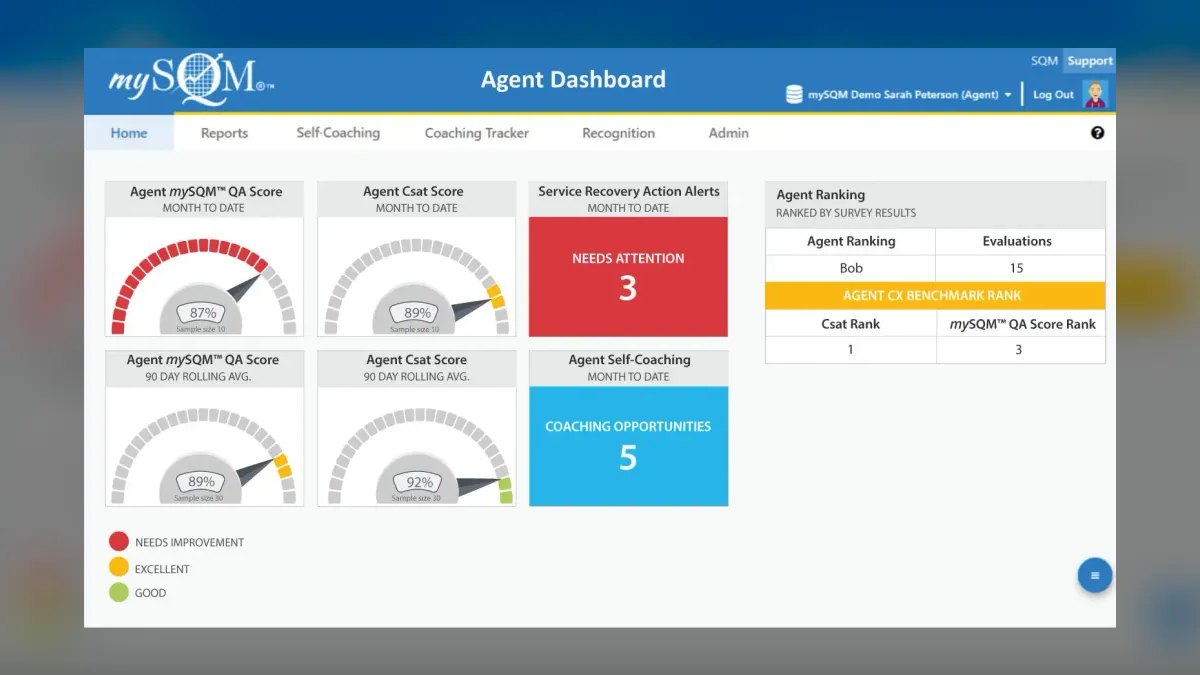
Nine lines is roughly the ceiling. Past that, the weights get so thin that individual KPIs stop moving the composite and reps stop paying attention to them. Below five or six lines, you have not really escaped the single-metric trap — you have just built a slightly wider one. The point of the range is that every line must carry enough weight to change someone's behavior when they see it published.
The second-order effect matters more than the score itself. When the matrix is published — every rep sees every line, their own levels, and the weights — the conversation in one-on-ones changes from "how's the quarter looking" to "your multithreading is a 2 and it's costing you 6 points; here's what a 4 looks like." That is a coachable conversation. A closed-won number is not coachable; it is a verdict delivered after the fact. And when strategy shifts — a new product, a push into enterprise, a retention year — you change the weights overnight and the team re-aims the following morning, without renegotiating comp plans or rewriting job descriptions.
The trade-off is honest to name: a weighted matrix costs you administrative time and creates arguments about levels. Some of your best pure closers will resent it, and a few will leave. The counter-argument is that the rep who closes one large deal while letting pipeline, forecast, and handoffs rot is a liability you were paying as a hero, and the durable-book builder was quietly subsidizing them.
The step-by-step process for building and running the scorecard
Building this is a four-to-six week project for a team of any size, and most of the work happens before anyone gets a score. Rushing to publish numbers you cannot defend is the fastest way to kill the whole initiative, because the first rep who successfully argues that their level 2 should have been a 4 has just proven the matrix is opinion, not measurement.

Week one: pick the lines and define the levels. Sit with sales leadership and RevOps and write down every outcome and behavior a complete AE owns. Cut to eight or nine. Then — and this is the step teams skip — write an explicit rubric for what levels 1 through 5 mean on each line. "Multithreading: level 1 = single contact on most open deals; level 3 = two to three engaged contacts on deals over median ACV; level 5 = three-plus engaged contacts including at least one economic buyer on every deal above median." A level definition a rep can read and self-assess against is the difference between a scorecard and a popularity contest.
Week two: set the weights against current strategy. Weights are a statement of what the company needs this year, not a permanent truth. A team that is pipeline-starved might run closed-won at 30%, self-sourced pipeline at 20%, pipeline quality at 15%, forecast accuracy at 15%, and split the remaining 20% across win rate, cycle discipline, multithreading, and handoff. A team drowning in pipeline but leaking at the close might invert that — closed-won at 35%, win rate at 20%, cycle discipline at 15%. Closed-won should almost never fall below 25% or exceed 40%. Below 25%, reps correctly perceive that revenue no longer matters. Above 40%, the composite is a closed-won number wearing a costume.
Week three: pull a backtest on last quarter. Before you publish anything, score the last completed quarter retroactively and look at the ranking. If your ranking is identical to the closed-won ranking, your weights are too concentrated and the matrix is theater. If the ranking is completely scrambled and your best-regarded reps are at the bottom, something in the level definitions is broken. The healthy outcome is a partially reordered list — usually three to five positions of movement in a team of ten — where the movement is explainable in one sentence per rep.

Week four: publish the matrix, not the ranking. Show every rep the lines, the level rubrics, and the weights before you show anyone a score. Give them two to four weeks to ask questions and challenge definitions. Genuine ambiguity in a level definition should be fixed now; it will be weaponized later. Then run the first scored cycle.
Ongoing: score monthly, review quarterly, pay on the composite. Monthly scoring keeps the data fresh and the coaching current. Quarterly is when the composite drives real consequences — comp accelerators, territory decisions, promotion tracks, performance plans. Do not let a single bad month trigger a consequence; a rolling two-quarter composite smooths out the noise that any territory produces.
The one non-negotiable in that loop is the challenge window. A matrix imposed without a chance to argue about the rubric gets treated as management noise. A matrix the team helped sharpen gets treated as the rules of the game, and reps compete on rules they helped write.

Costs, timelines, and the tooling ranges to expect
The scoring method is free. What costs money is automating the inputs and wiring the output to pay. Budget in three buckets: the scorecard surface, the data plumbing, and the compensation engine.
The scorecard surface. At the low end, this is a spreadsheet — genuinely adequate for teams under about ten AEs, and I would rather see a team run a disciplined spreadsheet for two quarters than buy software before they know their own weights. The PULSE Pulse Check Matrix is a free, browser-only tool built for exactly this shape: define the KPI lines, weight them, score each AE 1 to 5, get one composite per rep. It costs nothing and it removes the spreadsheet-maintenance tax, which is the usual reason manual scorecards die in month four.
Above roughly fifteen to twenty reps, manual scoring becomes the bottleneck and dedicated platforms earn their keep. Ambition is the closest paid cousin to the weighted-matrix method — it builds genuinely multi-KPI scorecards off CRM data, pipes them to TVs and Slack, and ties them to coaching cadences; it is sold by custom quote and lands in the mid-tens of dollars per user per month at scale. Spinify sits in roughly the $10–20 per user per month band and leans harder toward gamification — leaderboards, competitions, real-time recognition across several metrics at once. It is better at keeping full-role behaviors top of mind than at rigorous weighting, so it pairs well with a matrix you define elsewhere.

The data plumbing. If you are already standardized on Salesforce — from about $25 per user per month at the entry tier up through enterprise pricing — you have every input the composite needs: bookings, pipeline, win rate, cycle time, forecast submissions, contact-role records for multithreading. What you do not get is the matrix itself; you build it in custom reports and dashboards. Expect somewhere between 20 and 60 hours of admin or RevOps time to build the first version, and a few hours a month to maintain it. The single most common blocker is not reporting — it is that contact roles and stage-exit criteria were never enforced, so multithreading and cycle discipline have no clean data to read. Fixing that hygiene gap is usually a bigger project than the scorecard.
The compensation engine. The matrix only grows teeth when money follows it. QuotaPath is the best value here: a free tier plus paid plans starting around $15 per user per month, tracking attainment across multiple plan components so you can weight closed-won, pipeline created, and expansion separately and show each rep exactly how the mix drives their commission. Pair it with a free matrix for the scoring view and you have most of the system for very little money. CaptivateIQ (custom pricing) is a purpose-built incentive-compensation platform for running genuinely multi-component plans — different rates on new logo, expansion, retention, accuracy — and it models and pays those plans accurately at scale. Xactly (custom pricing) covers the same ground for large enterprises that need deep plan modeling and analytics wired into sales performance management.
Timeline to visible behavior change. Four to six weeks to build and publish. One full quarter before reps genuinely believe the composite matters — they will test whether you actually act on it. Two quarters before the low-scoring lines start moving, because multithreading and pipeline quality are habits, not switches. Do not expect forecast accuracy to improve inside a single quarter; the feedback loop is a quarter long by definition, so it takes two cycles before a rep can even see whether their adjustment worked.
What to spend versus what to skip. For a team under ten reps: free matrix, existing CRM, existing comp process. Total incremental spend, zero, plus maybe 20 hours of setup. Ten to thirty reps: free or low-cost matrix plus a comp tool in the $15/user range, plus CRM dashboard work. Thirty-plus: a scorecard platform that automates off the CRM and a real incentive-comp engine, because manual scoring across thirty reps on nine lines is 270 judgments a month and it will not happen consistently.

Where teams get this wrong
They replace one vanity metric with another. The most common failure: a leader decides to score beyond bookings, adds "meetings held" and "pipeline created," and within a quarter the CRM is full of junk. I have seen an AE book 40 meetings, convert exactly two, and outrank the rep who booked 12 high-intent meetings and closed eight. That is not scoring, it is gaming. Raw activity counts and raw pipeline dollars are both trivially inflatable, and reps will inflate them because you asked them to.
The fix is a pipeline-quality score rather than a pipeline-volume score. Score each opportunity on three dimensions. *Fit*: does the account match your ICP on firmographics, tech stack, and decision-maker access? *Engagement depth*: has the AE spoken to at least three stakeholders, delivered a tailored demo, and secured a verbal commitment to evaluate? *Timeline realism*: does the expected close date fall inside your actual average cycle for that deal size, rather than a fantasy "next month" that gets pushed twelve times? Roll those into a 1-to-5 pipeline-quality level and give it 15–20% weight, sitting right alongside closed-won.
Here is the test that makes this concrete. Take last quarter's pipeline, pull every deal that sat in "committed" 30 days before month-end, and score each on those three dimensions. On most teams, a large share of those committed deals score 2 or below — those are the deals that slip, die, or get discounted into uselessness. Scoring pipeline quality forces reps to surface those problems while there is still time to fix or replace them.

They treat forecast misses as free. Forecast accuracy is the most expensive AE behavior most teams do not score. A rep blows the number by 40% one quarter, hits within 10% the next, and leadership calls it a good year. It was not. The 40% miss caused real damage — resources allocated against revenue that never arrived, hiring plans built on it, board commitments made on it. But because something eventually closed, everyone pretends it netted out.
Score forecast accuracy on a 1-to-5 scale with asymmetric consequences. Inside 10% absolute error is a level 5. Beyond 30% error is a level 1, and a level 1 on this line should carry a doubled penalty in the composite — set the line at 15% weight and let a level 1 bite like 30%. It is designed to hurt, because forecast accuracy is the only KPI that measures whether the rep understands reality. A rep who cannot forecast does not know their deals, does not have real relationships with the people who sign, and is usually lying to themselves before they lie to you.
Sandbagging gets scored down too, just less harshly. A rep who commits $800K and closes $1M earns a level 3, not a 5. They are still distorting the picture of the business and still causing bad resourcing decisions, just in the direction that feels pleasant. The goal is truth, not a game where under-promising is free. Any rep who misses by more than 30% two quarters running gets a coaching flag, not just a low number.

They stop scoring at the signature. This is the line that draws the most resistance and saves the most revenue. I have seen teams where the top closer by bookings has a brutal churn rate on their own accounts inside six months. They close, hand a mess to customer success, and move to the next victim. The company celebrates the bookings, then wonders why net revenue retention is sinking.
A post-sale handoff score measures what happens after signature across three sub-lines. *Handoff completeness*: a full account summary — stakeholder map, decision criteria, features promised, competitive threats still live. *Onboarding participation*: the AE attends the first two onboarding calls alongside CS, answering questions and bridging relationships instead of vanishing. *90-day health*: the account is active, using the product, with at least one expansion path identified. Average the three into one level and give it 10–15% weight.
The behavior change here is the most dramatic of any line. When reps know handoff is scored, they stop promising features that do not exist, stop hiding competitive threats, and start treating CS as a partner rather than a landfill. The good ones figure out quickly that clean handoffs make their next deals easier — happy customers give referrals, and a CS team not firefighting can chase expansion. The reps who fight this line hardest are almost always the ones with something to hide.

They set weights once and never touch them. Weights are a strategy statement with a shelf life. If you launched a second product this quarter and the weights still reflect last year's single-product motion, you are paying people to ignore your strategy. Revisit weights at least quarterly and any time the strategy or product mix moves.
They score in private. An unpublished matrix is just a manager's opinion with arithmetic on top. Publish the lines, the rubrics, the weights, and every rep's levels. The visibility is the mechanism — reps cannot fix a gap they cannot see, and they will not trust a number they cannot audit.
They wire the score to shame instead of money. Composite scores posted on a wall with no comp consequence produce resentment and nothing else. Composite scores that drive accelerators, territory quality, and promotion produce behavior change. If you are not prepared to let the composite move real money within two quarters, do not launch it.
Decision framework: choosing weights and tooling for your situation
There is no universal weight set, and any consultant handing you one has not looked at your business. The right configuration falls out of two questions: what is actually broken in your revenue engine right now, and how many reps do you have to score?

Diagnose the bottleneck first. If deals are plentiful but you lose too many, the problem is at the close — weight closed-won at 35%, win rate at 20%, cycle discipline at 15%, multithreading at 10%, and split the rest. If pipeline is thin and reps live on inbound, weight self-sourced pipeline at 20% and pipeline quality at 15%, and pull closed-won down to 25–30% so building pipeline is not a pay cut. If bookings look fine but net retention is bleeding, put handoff at 15% and add a 90-day-health component, because you are not selling badly, you are selling to the wrong people or over-promising to the right ones. If the board has lost faith in your numbers, forecast accuracy goes to 20% with the doubled level-1 penalty and stays there until credibility is rebuilt.
Then size the tooling to headcount. Under ten AEs, run the free matrix and your existing CRM; software will not fix a method you have not settled yet. Ten to thirty, add a comp tool that can pay multi-component plans and start automating the CRM-derived lines. Thirty-plus, buy a scorecard platform that computes off the CRM automatically, because manual scoring at that scale silently degrades — managers start copying last month's levels, and a stale scorecard is worse than no scorecard because it launders inattention as measurement.
A few standing rules for the framework. Never let closed-won drop below 25% — reps will correctly read it as revenue not mattering, and you will get a team optimizing for behaviors instead of outcomes. Never let it exceed 40% — above that, the composite is arithmetically dominated by bookings and you have rebuilt the problem you set out to solve. Cap any single behavioral line at 20%, because a heavily-weighted behavior metric gets gamed hardest. And change weights on a published schedule with published reasoning; weights that move without explanation read as moving goalposts, and reps stop chasing a target they think you will move again.
Related questions
Should the composite score drive commission directly or just coaching?
Both, in sequence. Run it as a coaching instrument for one full quarter so reps trust the levels, then wire it to accelerators and territory decisions the following quarter. Composite-driven pay with untested level definitions produces disputes that discredit the whole matrix before it can work.
How do I score a brand-new AE against a tenured one?
Score the same lines, but compare each rep against a ramp-adjusted expectation rather than the team median. A rep 90 days in should be judged on pipeline creation, multithreading, and activity discipline; weight closed-won lower during ramp and restore the standard weights at the end of it.
What if my CRM data is too dirty to score multithreading or cycle time?
Fix hygiene before you score those lines, and launch with the lines you can measure honestly. Scoring a rep on a metric your system computes badly is worse than omitting it — one wrong level destroys trust in every other number on the card.
How many KPI lines is too many?
Past nine, individual weights get thin enough that no single line changes behavior, and reps disengage. Under five or six, you have not escaped single-metric thinking. Eight or nine lines with meaningful weights is the practical range for a full AE role.
Does this work for teams with very different sales cycles?
Yes — adjust the lines and the level rubrics to your cycle. A team with 18-month enterprise cycles weights pipeline quality and multithreading far more heavily than closed-won in any single quarter, and evaluates the composite on a rolling four-quarter basis rather than a single one.
FAQ
What is a weighted multi-KPI scorecard?
It is a scoring system where each AE is rated 1 to 5 on eight or nine outcomes and behaviors — closed-won, self-sourced pipeline, pipeline quality, win rate, average deal size, cycle discipline, forecast accuracy, multithreading, and post-sale handoff — with each line carrying a weight. The composite equals the sum of weight × level, so it reflects the full role rather than one quarter's bookings.
How do I set the weights for each KPI?
Set them with leadership against your current bottleneck, then publish the matrix so every rep can see exactly where they stand and why. Keep closed-won between 25% and 40%, cap any single behavioral line at 20%, and revisit the whole set quarterly or whenever strategy or product mix shifts. Weights are a statement of what the company needs this year, not a permanent truth.
Will this punish my top closers?
Only if their closing is the only thing they do well. A rep strong on bookings and strong on pipeline, forecast, and handoff scores at the top of the composite and earns more. The matrix does remove the option of coasting on one strong quarter while pipeline, forecast accuracy, and handoffs rot — and a few pure closers will resent that. The rep building a durable, predictable book stops subsidizing them.
How often should I score and update?
Score monthly so coaching stays current, but attach real consequences quarterly and on a rolling two-quarter composite so a single noisy month does not trigger a comp or territory decision. The KPI lines themselves can stay stable for a year or more; the weights should move whenever your strategy does.
What happens to an AE who scores high on closed-won but low on everything else?
Their composite lands mid-pack or lower, and the published matrix shows them exactly which lines cost them points and what the next level looks like. That is the entire mechanism — a visible, specific gap with a rubric attached is coachable, whereas a strong bookings number with a vague sense that something is wrong is not.
Can a small team run this without buying software?
Yes. Under about ten reps, a disciplined spreadsheet or a free browser-based matrix plus your existing CRM covers it, with roughly 20 hours of setup. Software becomes necessary somewhere between fifteen and thirty reps, when 200-plus monthly judgments stop happening consistently and managers start copying last month's levels forward.
Sources
- https://www.salesforce.com/resources/articles/sales-metrics/
- https://hbr.org/topic/subject/sales-management
- https://www.gartner.com/en/sales/topics/sales-performance-management
- https://www.forrester.com/blogs/category/sales-operations/
- https://business.linkedin.com/sales-solutions/resources
- https://www.mckinsey.com/capabilities/growth-marketing-and-sales/our-insights
- https://hbr.org/2017/12/what-salespeople-need-to-know-about-the-new-b2b-landscape
- https://www.ama.org/marketing-news/
Related on PULSE
This page will be disappearing soon. Save it to your device for $1 — or read it free while it is here.
@Kory-White- · if Venmo asks, the last 4 of my number are 2012
This page is gone.
This one is off the shelf now. $1 keeps it on your phone for good — the whole page, pictures and diagrams included.
 pulse-qHow Do I Figure Out How Many People to Schedule Each Day and at What Times for My Single Store in 2026?
 pulse-qHow Many Staff Should I Schedule Each Shift at My Gym in 2026?
 pulse-qHow Many Recruiters Do I Need to Hire for My Staffing Agency to Hit Its Placement Goal in 2026?
 pulse-qHow Many Employees Should I Schedule Each Shift at My Tutoring Center in 2026?
 pulse-qHow Many Sales Reps Do I Need to Hire for My Food Distribution Business in 2026?
 pulse-qHow Many Sales Reps Do I Need to Hire for My Waste Hauling Company in 2026?
 pulse-qWhy Should I Start Charging Service Fees in 2026?
 pulse-qHow Many Employees Should I Schedule Each Shift at My Skate Park in 2026?
 pulse-qHow Many Salespeople Do I Need to Hire for My Car Dealership in 2026?
 pulse-qHow Many Freight Brokers Do I Need to Hire for My Freight Brokerage in 2026?