
Should I Hire a Fractional CRO If My Nonprofit Is Building an Earned-Revenue Arm in 2026?
 Curated byKory White · Fractional CRO · Maryland
 PULSEKNOWLEDGE LIBRARY
Quality
Certified
Yes — hire a fractional CRO if your nonprofit is building an earned-revenue arm, but scope it as a separate commercial function with its own pricing, contracts, and margin targets. Expect $5,000–$15,000 per month for 10–20 hours weekly across 6–12 months, a 90–120 day ramp, and board-approved pricing before any selling starts.
The outcome you should expect
The realistic outcome of a well-run fractional CRO engagement inside a nonprofit earned-revenue arm is not a revenue explosion. It is the construction of commercial infrastructure that did not previously exist, plus a first cohort of paying customers who prove the model. If you are budgeting on the assumption that a fractional revenue leader will add six figures of unrestricted revenue in the first two quarters, you will be disappointed and you will fire a person who was doing the right work.
Concretely, by the end of a 6-month engagement at 10–20 hours per week, you should have: a board-approved pricing and packaging document covering every earned-revenue offer; a standard contract template and a payment-collection process that does not depend on a program director emailing a PDF invoice; a lightweight CRM with 15–25 active opportunities loaded and staged; a defined handoff protocol between program staff and the commercial function; and somewhere between $40,000 and $120,000 in closed revenue depending on deal size and how much warm relationship equity the organization brought into the engagement.
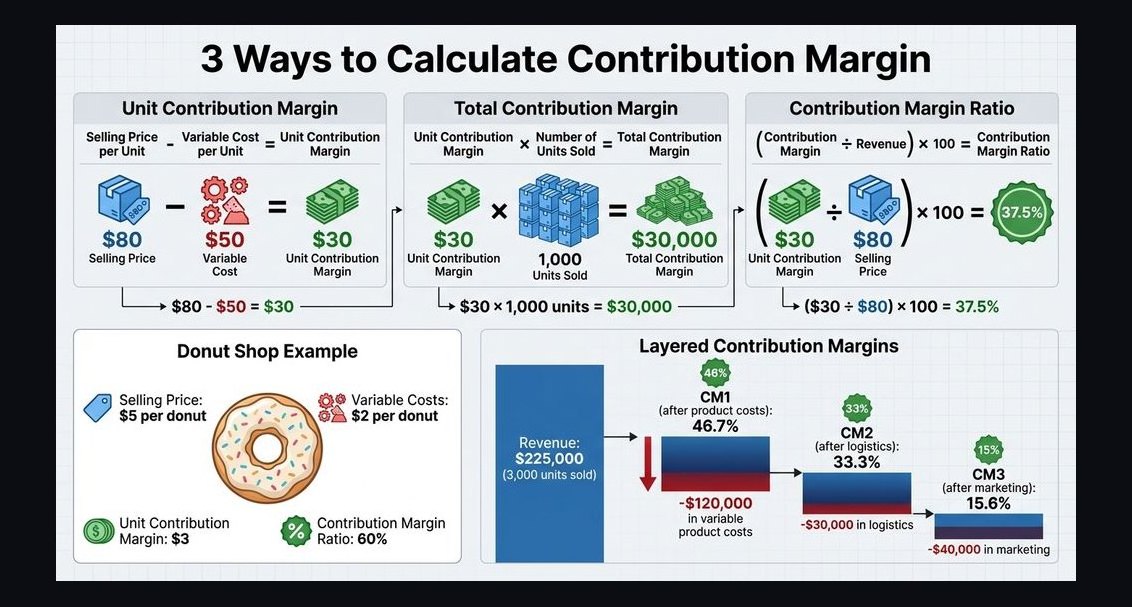
The financial outcome that matters more than gross revenue is contribution margin — revenue minus the direct cost of delivering the service. A nonprofit that sells a $6,000 training but spends $5,200 in staff time and materials to deliver it has built a job, not a revenue arm. The target to hold is 30% contribution margin minimum, with 40–50% as the healthy band for services that leverage existing intellectual property (curriculum, data, certification frameworks) rather than net-new staff labor. A fractional CRO who raises your price from $3,000 to $6,000 and loses a third of your prospects has almost certainly improved the outcome, even though the pipeline count looks worse.

The second-order outcome is organizational: the program team and the development team learn what a commercial conversation sounds like. That capability transfer is the quiet reason the fractional model fits here better than a full-time hire. A full-time CRO absorbs the sales function and the rest of the organization stays illiterate. A fractional CRO with 10–20 hours a week is structurally forced to teach, because they physically cannot run every conversation themselves. By month six, your program director should be able to walk a school district through scope and price without you in the room.
Finally, expect an honest go/no-go signal. If the arm has produced under $50,000 by the end of the third quarter, that is real information about market demand, not a reason to extend the engagement and hope. The engagement's most valuable deliverable is sometimes a defensible recommendation to shut the arm down or pivot the model before the organization sinks another year of unrestricted reserves into it.

What drives that outcome
Four forces determine whether this engagement produces revenue or produces friction, and none of them are the CRO's selling ability.
The funding path for the fee itself. The fractional CRO fee is not a program expense, so it cannot be charged to restricted grants. It has to come from unrestricted reserves, a board-designated innovation fund, or the earned-revenue arm's own projected budget before that revenue exists. This creates the chicken-and-egg problem that kills most of these engagements before they start: the organization needs the CRO to generate revenue and cannot fund the CRO without revenue. Organizations that solve this cleanly — a board resolution carving $90,000 out of reserves as a two-year capacity investment, with explicit permission to lose it — run far better engagements than organizations that fund month-to-month out of whatever is left over.
The buying committee's internal skepticism. The committee here includes the Executive Director, the Director of Development, the Board Treasurer or Finance Committee chair, and the program director whose team will actually deliver. The Development Director is usually the most resistant, because earned revenue reads as a threat to the donor narrative: if we charge for this, do major donors conclude we no longer need them? The Board Treasurer wants unrestricted revenue but is risk-averse about upfront investment with no guaranteed return. The program director worries about capacity — that the arm will pull staff off mission delivery. A fractional CRO who does not surface and address all three objections in the first 30 days will find every subsequent decision blocked by an unnamed veto.

Whether the offer has ever been priced. Most nonprofits building an earned-revenue arm are trying to charge for something they have historically given away free, often to the same audience. That is a fundamentally different motion from launching a new product. The warm leads in the pipeline came from programmatic activity — a district that attended a free workshop, a corporation that donated and might now buy consulting. These are relationships with zero commercial intent. Converting them requires repricing an existing free good, which is the hardest pricing problem in commerce.
Delivery capacity. Every closed deal consumes program staff time. If the program team is already at capacity delivering grant-funded work, the revenue arm cannot scale past the first few contracts, and the CRO's pipeline becomes theater. The capacity constraint must be modeled before the first proposal goes out.
Benchmarks and realistic ranges
Fees. A fractional CRO engagement in a nonprofit earned-revenue context typically runs $5,000–$15,000 per month for 10–20 hours per week, on a 6–12 month term, for a total contract value of $60,000–$180,000. That is meaningfully below the for-profit fractional CRO market, where engagements commonly start around $15,000 per month. The discount is real and defensible: revenue potential is smaller, deal sizes are smaller, and there is no equity component — nonprofits cannot issue equity, so the revenue-share and equity structures common in startup fractional deals are largely unavailable. Some organizations negotiate a modest revenue share on closed earned revenue, but treat that carefully; it can create exactly the extractive incentive your Development Director is worried about.

Ramp. Budget 90–120 days to first meaningful revenue, not the 60 days typical in a for-profit startup. The extra 30–60 days goes into pricing governance and internal education, both of which are unavoidable.
Deal sizes and cycle lengths. A fee-based training contract commonly lands at $5,000–$15,000 with a 4–6 month sales cycle tied to the buyer's fiscal calendar. A consulting or technical-assistance engagement with a foundation or government agency runs $50,000–$150,000 with a 9–12 month cycle and usually an RFP response. Data licensing and certification programs sit in between, often $10,000–$40,000 annually with renewal behavior that looks more like subscription revenue. Note the bimodality: your pipeline will not have a clean average deal size.
Pipeline shape at month six. A realistic picture after two quarters of engagement: roughly 20 active opportunities totaling $350,000–$450,000 in unweighted pipeline value. Apply conservative stage weightings — 30% early, 50% mid, 70% late — and the weighted forecast lands near $150,000. Actual closed revenue in that quarter will often be $50,000–$70,000, because deals slip against buyer budget cycles rather than dying. Expect about 80% of opportunities under $10,000 and 20% over $50,000, with the large ones concentrated in government and foundation work.

Margin. Hold a 30% contribution margin floor. Below that, the CRO's mandate is to raise price or cut delivery cost, not to sell more volume. Selling more units of a negative-margin service accelerates the organization toward a cash crisis.
Conversion thresholds. $250,000 in annual recurring earned revenue, or $500,000 in total annual earned revenue, is the practical line where fractional stops working and full-time becomes the better economics. Under $100,000 after 12–18 months is the line where the honest answer is that the model needs to change.

Cash timing. This is the benchmark nonprofits most often miss. A $50,000 consulting deal that invoices on completion, with 90-day payment terms, means the organization funds six months of delivery before a dollar arrives. If your unrestricted reserves cover three months of operating expense — common in the sector — that single deal can create a liquidity crunch that no amount of revenue growth solves. Negotiate 40–50% upfront on any engagement over $25,000, and treat that as a pricing term, not a nice-to-have.
Risks, edge cases, and failure modes
Cultural mismatch is the number-one killer. A fractional CRO who arrives with a for-profit playbook — aggressive closing, activity metrics, commission-driven urgency — will be quietly rejected by a mission-motivated staff who have no financial incentive to comply. The adaptation has to run one direction: the CRO adapts to the culture, not the reverse. Consultative selling, mission-impact framing, and patience with consensus decision-making are non-negotiable. Screen for this with a paid trial project where the candidate actually works with your program team for two weeks before you sign a 12-month agreement.
Discount drift. Every program director on earth wants to discount to serve more people, and in a nonprofit that impulse carries genuine moral weight. Without a deal desk — a documented rule about who can approve what discount and what floor is absolute — pricing erodes within a quarter and never recovers, because your early customers become reference prices for later ones. The rule that works: the program director can approve up to 10% off list; anything deeper requires the CRO and the Executive Director jointly, and nothing goes below the margin floor without board sign-off. Sliding-scale pricing for genuinely under-resourced buyers is fine, but it must be an explicit published tier with eligibility criteria, not an ad-hoc concession.

Board approval latency. Many nonprofit boards must approve contracts above a threshold — $25,000 is a common line — and many boards meet quarterly. A deal that clears sales in February can sit until the May board meeting. Fix this structurally in month one: ask the board to delegate contract authority up to a defined ceiling to the Executive Director, with quarterly reporting. If the board will not delegate, the CRO must build the board calendar directly into the forecast, and your close dates cluster around four dates a year.
Over-promising on scope. Program staff close deals by expanding scope, because saying yes feels like service. The result is a delivered engagement that loses money, a burned-out delivery team, and negative word of mouth in a small, tightly networked buyer community. Scope must be written into the contract template with explicit inclusions and an hourly rate for anything beyond.
Donor confusion. Handle this proactively, not reactively. Brief your top 20 donors before launch with a clear framing: earned revenue funds the unrestricted overhead that grants will not cover, which increases the impact of their gift rather than replacing it. Silence on this point invites the worst interpretation.

UBIT and legal exposure. Earned-revenue activity that is not substantially related to your exempt purpose may generate unrelated business income tax, and activity at sufficient scale can raise questions about exempt status. This is a real constraint that shapes what you can sell and how. It is a question for your tax counsel and your auditor before the first contract, not something a fractional CRO should be improvising. Do not let a revenue leader — however good — make this call.
The mission-drift edge case. If the highest-margin buyer segment is systematically different from your mission population — you built a curriculum for under-resourced schools and the only buyers with budget are wealthy districts — that is a governance question, not a sales question. The CRO's job is to surface the tension with numbers attached and let the board decide. A CRO who resolves it unilaterally toward margin has failed, regardless of the revenue.
The failure mode that looks like success: a CRO who spends 80% of their hours on internal education and conflict resolution and 20% on revenue. That ratio is correct for months one and two and a serious problem by month five. If the program and development teams are still actively resisting at month five, converting to a full-time hire will not fix it — you will buy the same resistance at three times the cost.

A practical rollout plan
Days 1–30 — economics and governance, zero selling. The CRO touches no deals. They run discovery with the program team, Development Director, Finance Director, and Board Treasurer to establish unit economics: what does it actually cost in loaded staff hours and materials to deliver one unit of this service? What has anyone paid for it before, and what did they pay? They audit the infrastructure — standard contract, payment gateway, refund policy, revenue recognition treatment — and in most nonprofits find none of the four. First deliverable is a pricing and packaging document that goes to the board. Pricing a mission-aligned service is a governance decision, not a sales decision, and treating it as one buys the CRO the authority to enforce it later.
Days 31–60 — build the machine. Implement a lightweight CRM (HubSpot's nonprofit program and Airtable are both common choices at this scale). Define a lead-scoring model that distinguishes a warm program referral from a commercial prospect — the distinction most nonprofits collapse, which is why their forecasts are fiction. Write the contract template with explicit scope inclusions and out-of-scope hourly rates. Stand up the deal desk and its discount rules. Train the program director on lead handoff: how to say "let me connect you with the person who handles pricing" without damaging a relationship built over years. Set the payment terms policy, including upfront percentages.

Days 61–90 — first real selling. Work the top 10 prospects from programmatic activity, consultatively, leading with outcome and mission impact rather than feature lists. Stand up the weekly revenue review with the Executive Director and Development Director covering pipeline value, weighted forecast, and cash collection timing — three numbers, thirty minutes. Expect low conversion in this window and do not panic; you are pricing a previously free good for the first time.
The ongoing cadence. Weekly: a 30-minute Monday pipeline review, a 30-minute Wednesday alignment call with the program director on delivery capacity, and a 15-minute Friday check with the ED asking one question — what could stop us hitting this month's number? Monthly: a forecast reconciliation with Development and Finance against cash-flow projections, plus a contribution-margin review against budget. Quarterly: a board presentation on pipeline health, customer acquisition cost, average deal size, and a rolling 12-month forecast that accounts for seasonality — a training business selling to school districts books nothing in July and August and spikes in September and October.
Ownership boundaries. The CRO owns the revenue number and advises on pricing, packaging, and partnership strategy. They do not own program delivery, customer success, or donor relations. Blur that line and you have created a shadow Executive Director.
Related questions
Can we pay a fractional CRO out of a restricted grant?
Almost never. Restricted grants fund specific program activities, and commercial revenue leadership is not one. Fund the fee from unrestricted reserves, a board-designated innovation fund, or a capacity-building grant explicitly written to cover business-model development — some funders do fund exactly this.
Should the fractional CRO report to the Executive Director or the board?
The Executive Director. Board-reporting arrangements create a parallel authority structure that undermines the ED and stalls decisions. The CRO presents to the board quarterly, but reports to the ED weekly and takes direction from them.
What if our program staff refuse to sell?
That is expected and mostly fine. Program staff should not carry a quota. Their job is to recognize a commercial signal and hand it off cleanly. If they refuse even that, the arm needs a dedicated business development hire before it needs more CRO hours.
Do we need a separate legal entity for the earned-revenue arm?
Sometimes, and it is a tax-counsel question, not a revenue question. Separate entities can address unrelated business income and liability concerns, but they add administrative cost and governance complexity. Decide it with your auditor before scale, not after.
How do we price something we have always given away free?
Anchor on cost to deliver plus target margin, not on what the market "feels" like paying. Publish a sliding-scale tier with written eligibility criteria so mission-aligned buyers still have access, and hold the list price for everyone else.
FAQ
What is the typical monthly fee for a fractional CRO in a nonprofit earned-revenue context?
Expect $5,000–$15,000 per month for 10–20 hours per week, totaling $60,000–$180,000 over a 6–12 month engagement. That sits below the for-profit fractional market, which commonly starts near $15,000 monthly, because deal sizes and total revenue potential are smaller. Equity-based compensation is unavailable since nonprofits cannot issue equity, so the structure is nearly always straight monthly retainer. Fund it from unrestricted reserves or a board-designated innovation fund — restricted grant dollars will not cover it.
How do we measure whether the fractional CRO is working?
Four metrics: total earned revenue closed, contribution margin against a 30% floor, customer acquisition cost, and pipeline health measured as qualified opportunity count, average deal size, and stage conversion rate. Add one qualitative metric that predicts durability better than the others — internal adoption. By month six, can your program director and Development Director articulate the value proposition and walk a prospect through pricing without the CRO in the room? If not, you have rented revenue rather than building a capability.
How long before we see actual revenue?
Plan on 90–120 days to first meaningful closed revenue, versus roughly 60 days in a for-profit startup. The first 30 days go entirely to unit economics and board-approved pricing, the second 30 to CRM, contracts, and internal training, and the third 30 to first outreach. Longer deal cycles push actual cash later still — a training contract runs 4–6 months from first conversation, and a foundation or government consulting engagement runs 9–12 months with an RFP in the middle.
What happens if the CRO's sales approach clashes with our mission-driven culture?
This is the most common failure mode, and the adaptation must run toward the culture. Consultative selling, mission-impact framing, and tolerance for consensus decision-making are requirements, not preferences. A CRO who cannot adapt will fail regardless of pipeline results, because a staff with no commission incentive simply will not comply. Screen for it with a paid two-week trial project where the candidate works directly with your program team before you sign a long-term agreement.
When should we convert to a full-time CRO?
When the arm reaches roughly $250,000 in annual recurring earned revenue or $500,000 total, when the CRO is consistently working over 25 hours per week, when two or more full-time business development staff report to the role, or when the board is ready to treat the arm as a business unit with its own P&L. Under $100,000 after 18 months, do not convert — reassess whether the model itself works, and consider pivoting from fee-for-service to subscription or partnership distribution.
What tax or compliance issues should we handle before selling?
Unrelated business income tax is the main one: revenue from activity not substantially related to your exempt purpose is generally taxable, and sufficient scale can raise exempt-status questions. You also need revenue recognition treatment for multi-year contracts, sales tax analysis depending on jurisdiction and service type, and a liability review of your contract template. Settle all of it with tax counsel and your auditor before the first signed contract, not after.
Sources
- IRS — Unrelated Business Income Tax
- IRS — Exemption Requirements, 501(c)(3) Organizations
- National Council of Nonprofits — Earned Income
- Stanford Social Innovation Review
- BoardSource — Board Roles and Responsibilities
- Harvard Business Review
- Candid / GuideStar
- Nonprofit Finance Fund
- SCORE — Business Mentoring and Resources
Related on PULSE
- Should I Hire a Fractional CRO If My Revenue Is Seasonal and Unpredictable?
- Should I Hire a Fractional CRO If I Am Shifting From Services to Product Revenue?
- Should I Hire a Fractional CRO If I Want a Revenue Audit Before I Commit Budget?
- Should I Hire a Fractional CRO If My Revenue Depends on a Single Channel?
- Should I Hire a Fractional CRO If My Board Added a New Revenue Target Mid-Year?
- Should I Hire a Fractional CRO If My Net Revenue Retention Is Below 100 Percent?
This page will be disappearing soon. Save it to your device for $1 — or read it free while it is here.
@Kory-White- · if Venmo asks, the last 4 of my number are 2012
This page is gone.
This one is off the shelf now. $1 keeps it on your phone for good — the whole page, pictures and diagrams included.
 pulse-qShould I Hire a Fractional CRO If I Am Taking the Company to Market in a Year in 2026?
 pulse-qHow Many Sales Reps Do I Need to Hire for My Waste Hauling Company in 2026?
 pulse-qHow Do I Use Service Fees to Cover Back-Office Payroll in 2026?
 pulse-qWhat Service Fees Should a Painting Contractor Charge in 2026?
 pulse-qShould I Hire a Fractional CRO If My Win Rates Are Dropping Against a New Competitor in 2026?
 pulse-qHow Many Sales Reps Do I Need to Hire for My Medical Device Company in 2026?
 pulse-qHow Many Sales Reps Do I Need to Hire for My Home Remodeling Company in 2027?
 pulse-qHow Many Employees Should I Schedule Each Shift at My Skate Park in 2026?
 pulse-qHow Many Salespeople Should I Schedule Each Day on My Furniture Store Floor in 2026?
 pulse-qHow Do I Raise Contribution Margin Without Raising My Prices in 2026?