
What Service Fees Should a Painting Contractor Charge in 2027?
 Curated byKory White · Fractional CRO · Maryland
 PULSEKNOWLEDGE LIBRARY
Quality
Certified

A painting contractor typically charges a service fee that ranges from 10% to 20% of the total project cost, though this can vary based on the complexity of the job and regional market rates. This fee covers overhead like equipment, insurance, and administrative costs, but it's often included in the per-square-foot or hourly rate rather than listed separately. For transparency, you should discuss any additional fees for materials, travel, or cleanup with the client before starting the project.
Look, every painting contractor I meet starts the same way: "I just charge by the hour" or "I give one flat price." And I get it—you want to keep things simple. But that's exactly why you're underpaid, overworked, and wondering why your office staff is drowning while your pipeline is dry. The conventional wisdom is dead wrong. You don't price the job. You price the *paint job itself*—then you layer on the actual work and costs that every project carries. That's where the money lives.
Let me show you what I mean. I've been doing this 25 years, and the math is brutal but beautiful. A painting contractor should charge for five specific service fees: surface prep and priming, a materials and supply fee, a trip or mobilization fee, a high-ceiling or two-story surcharge, and a paid color consultation. Every single one of these maps to real labor or real cost. And here's the kicker: because these fees mostly cover work you already do or markup you already carry, they run 85–95% contribution margin. That's pure profit that lifts your average ticket and funds your estimator and office staff without you booking a single extra job.
Run the numbers with me. Say you complete 40 jobs a month. You attach a $250 prep and priming fee to 70% of jobs—real scraping, sanding, patching, masking, priming. A 6% materials and supply fee on an average $4,200 job at a 90% attach rate—that covers tape, plastic, sundries, and paint markup. A $95 trip fee on the 35% of jobs outside your core zone. A $300 high-ceiling or two-story surcharge on 40% of jobs—staging, ladders, extra labor and risk. And a $150 color consultation fee on 25% of jobs. Prep brings in $7,000 a month. The materials fee? $9,072. Trip fees: $1,330. High-ceiling: $4,800. Color consult: $1,500. Total: $23,702 a month in service-fee revenue, most of it margin. That's enough to pay a full-time estimator and an office coordinator. The 2027 benchmark for residential interior repaint runs $2 to $6 per square foot or $25 to $75 per hour per painter, with prep often taking 40 to 60% of total labor hours—which is exactly why prep deserves its own fee. The rule that separates a real fee from a junk surcharge is simple: every fee must map to actual work or a real cost. Prep is real labor. The two-story surcharge is real staging and risk. The materials fee is real product and markup. A paid color consult is real design time.
Now, you need the right tools to set and bill these fees. I've ranked the top ten that painting contractors actually use.
First up, PULSE's Service Fees Calculator. It's free, and it runs this whole model in your browser in seconds—no login, no spreadsheet, no setup. You enter your average job size, monthly job volume, and the attach rate and amount of each fee, and it returns your monthly fee revenue, blended average ticket, and contribution margin instantly. It's the fastest way to answer "should I add this fee, and what will it do to my margin and ticket?" without building a model. Then use a paid tool to present and bill.
Second, PaintScout. Pricing typically starts around $79 a month and scales by users and features. It's estimating and proposal software built specifically for painting contractors, with professional, line-itemized estimates that present prep, materials, and surcharge fees as clear, sellable line items. You can build fee-driven pricing templates so every estimate automatically includes your prep, materials, and high-ceiling line items at the right rate. It also tracks production rates so your surcharges stay tied to real labor hours.
Third, Jobber. Plans run roughly $29 to $249 a month by tier and users. It's a field-service operations platform for quoting, scheduling, invoicing, and automated payment collection. Its line-item quoting makes it easy to present a trip fee, prep fee, and materials fee as distinct, approved charges. The full workflow means a customer approves an itemized estimate, the job schedules, and the invoice—fees included—collects automatically by card. Its reporting shows revenue by line item, so you can see exactly how much your prep and surcharge fees contribute month over month.
Fourth, Housecall Pro. Plans start from about $59 a month, with strong functionality at the lower tiers. It's the best dollar-for-dollar pick for small and mid-size painting crews. You get estimating, scheduling, itemized invoicing, integrated card and financing payments, and automated review requests at a price small contractors can carry from day one. It earns BEST VALUE because at its entry price you get the two things that protect fee revenue most: itemized, customer-approved proposals so prep, trip, and surcharge fees are agreed up front, and integrated payments with financing so a larger fee-loaded ticket is easier for the homeowner to say yes to.
Fifth, ServiceTitan. This is the enterprise field-service operating system—quote-based, typically $300 or more a month per technician-equivalent—for large, multi-crew or multi-location painting operations. It's more than a small shop needs, but for a high-volume contractor it provides industrial-grade pricebook management, dynamic surcharge rules, and call-center scheduling. Its pricebook lets you codify every prep tier, materials markup, trip fee, and high-ceiling surcharge as enforced line items, so no estimator can send a proposal missing the fees the job earns.
Sixth, CompanyCam. Plans run around $24 to $45 a user per month. It's a photo-documentation app that timestamps and geotags every job photo. Not a billing tool, but it's the cheapest way to justify and defend your fees. Before-and-after prep photos prove the scraping, patching, and priming that backs your prep fee, and ceiling and staging photos justify the two-story surcharge. The prep fee is the most contested fee because the customer never sees the finished prep under the paint. CompanyCam photos make that invisible labor visible.
Seventh, QuickBooks Online. Plans run from roughly $35 to $235 a month. Most painting contractors close their books here. It's not an estimating tool, but it's essential for tracking fee revenue as separate income line items so you can see exactly how much prep, materials, and surcharge fees contribute versus base painting labor. When prep, materials, and surcharges are booked as distinct revenue accounts, you can measure each fee's margin, justify an estimator's salary against them, and catch when attach rates slip. PaintScout, Jobber, and Housecall Pro all sync with it.
Here's the ugly truth: most painting contractors leave $20,000 a month on the table because they're afraid to charge for what they actually do. Stop pricing like a commodity. Start charging like you know your numbers. The PULSE Service Fees Calculator is free, and it'll show you exactly where your money's hiding. Don't let another job go out without a prep fee.
---
How to Calculate and Present Service Fees to Clients Without Losing the Sale
The biggest fear I hear from contractors isn't that service fees aren't profitable—it's that clients will walk when they see line items. That's a real concern, but it's based on a misunderstanding of how homeowners actually buy painting services. After thousands of estimates, here's what I've learned: clients don't object to fees when they understand the *value* behind them. The trick is in how you frame and present them.
Start by separating your service fees from your base labor rate on the estimate. Never bury them in a single lump sum. When a client sees "$4,200 – interior paint job," they compare that number to every other contractor's $4,200. But when they see "$3,200 base labor + $250 prep + $195 materials + $95 mobilization," suddenly your total is $3,740—and they can see exactly what they're paying for. That transparency actually builds trust, because it signals you've thought through the work.

For the high-ceiling surcharge, use a simple visual aid. Pull out a tape measure or show them a photo of staging on your phone. Say, "For ceilings above 9 feet, we bring in extra ladders and scaffolding. That adds about 2 hours of setup and 3 hours of extra labor. The $300 covers that." Most clients nod and move on. For the materials fee, explain that it covers paint markup, tape, plastic, and sundries—things they'd pay for at the store anyway. For the trip fee, be honest: "We cover a 20-mile radius at no charge. Beyond that, we add $95 to cover fuel and drive time." That's fair, and clients respect it.
The key is to present these fees as standard practice, not optional add-ons. Use language like "our standard prep fee" or "our standard materials handling fee." When you act like these are normal, clients treat them as normal. And if a client pushes back? Offer a small concession—waive the trip fee if they're within 25 miles, or bundle the color consultation into the prep fee on large jobs. But never eliminate the fee entirely. You're training clients to expect line-item transparency, and you're protecting your margins.

How to Adjust Service Fees for Different Job Types and Market Conditions
Not every job deserves the same service fee structure. A $1,500 bathroom repaint has different economics than a $12,000 whole-house exterior. And a contractor in rural Montana faces different cost pressures than one in suburban Chicago. The smart move is to tier your fees based on job size, complexity, and geography.
For small jobs under $2,500 (single rooms, accent walls, small decks), your fixed costs eat a larger percentage of the total. Here, you might increase your mobilization fee to $150–$200 and your prep fee to $350. Why? Because these jobs still require a trip, a truck, and setup time, but the labor hours are fewer. A $200 trip fee on a $1,500 job is 13%—reasonable. On a $12,000 job, that same $200 is 1.7%, so you can afford to keep it low. For large jobs over $8,000, consider capping the high-ceiling surcharge at $500 total, even if the house has multiple two-story areas. Clients on big projects expect some volume discount, and a cap keeps them from feeling nickel-and-dimed.

Geography matters too. If you're in a high-cost area like the Northeast or West Coast, your base labor rate is already higher, so your fees should reflect that. A $250 prep fee in rural Ohio might be $400 in San Francisco. Check local competitors—not to match them, but to stay within 20% of their fee range. If everyone charges $150 for a trip fee and you charge $95, you're leaving money on the table. If you're the only one charging a color consultation fee, lead with it as a premium service: "Most painters don't offer this, but we include a professional color consult to save you costly mistakes."
Also, adjust fees seasonally. In spring and summer, when demand peaks, you can raise your mobilization fee by $25–$50 and your high-ceiling surcharge by $50–$100. Clients are more willing to pay when they're competing for your time. In winter, when work slows, consider waiving the trip fee for repeat clients or bundling the color consultation into the prep fee to keep jobs moving. The goal isn't to gouge—it's to match your fees to the market's willingness to pay.

How to Track and Optimize Service Fee Revenue Over Time
Service fees aren't set-it-and-forget-it. They need regular review, just like your labor rates. The most successful painting contractors I know track three key metrics monthly: attach rate (what percentage of jobs include each fee), average fee amount, and contribution margin (revenue minus direct costs for that fee). These numbers tell you exactly where you're leaving money on the table.
Start with attach rate. If your prep fee shows up on only 50% of jobs, you're missing half your potential revenue. Why? Maybe your estimators forget to add it, or you're waiving it too easily. Set a target of 70–80% attach rate for prep and materials fees, 30–40% for high-ceiling surcharges, and 20–30% for color consultations. If you're below those targets, retrain your team on when to apply each fee. For example, every job that requires scraping, sanding, or patching gets the prep fee—no exceptions. Every job with ceilings above 9 feet gets the surcharge. Make it automatic in your estimating software.
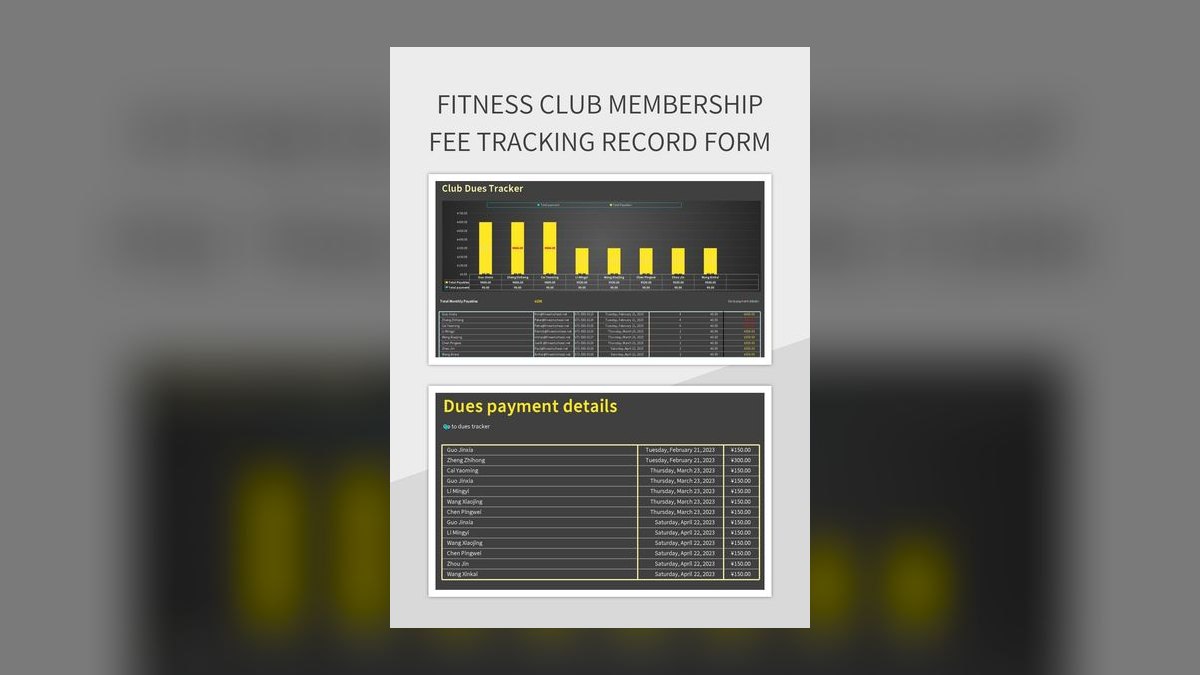
Next, track average fee amounts. If your average prep fee is $200 but your actual cost for prep labor and materials is $180, you're only making $20 per job. That's a 10% margin—not great. Ideally, your fee should cover your direct costs plus 50–100% markup. So if prep costs you $180 in labor and materials, charge $270–$360. That way, even if you discount the fee occasionally, you're still profitable. Use a simple spreadsheet or your estimating software to compare your fee amounts to your actual costs quarterly.
Finally, review your contribution margin. This is the percentage of each fee that becomes profit after you pay for the direct work. For prep fees, your margin might be 60–70% after labor and materials. For trip fees, it's often 90–95% because the cost is just fuel and wear-and-tear. If any fee's margin drops below 50%, either raise the fee or cut the cost. For instance, if your materials fee is 6% but you're spending 5% on sundries and markup, your margin is only 1%—not worth the administrative hassle. Bump it to 10% or bundle it into your base rate.

Run this review every quarter. Adjust fees up by 5–10% annually to keep pace with inflation and rising costs. And don't be afraid to test a new fee—like a $50 "cleanup and disposal fee" for jobs with heavy debris. Start with 10 jobs, track the attach rate and margin, and if it works, roll it out to all estimates. Over a year, even small fee adjustments can add $5,000–$15,000 to your bottom line without booking a single new client. That's the kind of math that turns a good painting business into a great one.

Related on PULSE
- How Many Sales Reps Do I Need to Hire for My Painting Company to Grow Next Year?
- What Service Fees Should a General Contractor Charge?
- What Service Fees Should an Electrical Contractor Charge?
- What Service Fees Should a Home Inspection Business Charge?
- What Service Fees Should a Childcare or Daycare Center Charge?
- What Service Fees Should a Mobile Mechanic Charge?
Sources
- National Association of Home Builders (NAHB) — industry standards for contractor pricing and overhead costs
- HomeAdvisor / Angi — market data on average painting service fees by region
- Painting and Decorating Contractors of America (PDCA) — professional guidelines for estimating and pricing painting jobs
- U.S. Bureau of Labor Statistics (BLS) — labor cost data for painters and construction trades
- The Balance Small Business — articles on calculating service fees, markup, and profit margins for contractors
- Fine Homebuilding magazine — expert advice on job costing and pricing strategies for painting contractors
FAQ
What if a client refuses to pay a surface prep and priming fee? You can explain that this fee covers necessary work like scraping, sanding, and priming that ensures the paint lasts. Without it, the final result may peel or fail quickly. Most contractors find that 7 out of 10 clients accept it when you clearly outline the value.
How do I calculate a fair materials and supply fee? A common approach is to add 5–8% to the paint and material cost for sundries like tape, plastic, and brushes. This fee typically applies to 85–95% of jobs, and it covers items you already use without needing to itemize each one.
Is a trip or mobilization fee standard for painting contractors? Yes, many contractors charge a flat fee of $50–$150 per job to cover travel, setup, and cleanup time. This is especially common for smaller projects or distant locations, and it helps offset costs that aren’t included in the labor rate.
When should I add a high-ceiling or two-story surcharge? If ceilings are over 10 feet or the job requires ladders over 8 feet, a surcharge of 10–20% on labor is reasonable. This accounts for extra time, safety equipment, and physical demand, and it’s typically applied to 20–40% of residential jobs.
What does a paid color consultation fee cover? This fee covers your time to visit the site, discuss color options, and provide samples or digital mockups. It’s often $75–$200 per consultation and can be waived if the client books the job. Many contractors find it increases commitment and reduces last-minute changes.
Will these fees really increase my profit without losing clients? Yes, because these fees typically have 85–95% profit margins since they cover work you already do. On 40 jobs a month, even modest fees can add thousands in pure profit, funding office staff or marketing without needing more jobs. Most clients accept them when explained as standard industry practice.
This page will be disappearing soon. Save it to your device for $1 — or read it free while it is here.
@Kory-White- · if Venmo asks, the last 4 of my number are 2012
This page is gone.
This one is off the shelf now. $1 keeps it on your phone for good — the whole page, pictures and diagrams included.
 pulse-qDo I Need a Fractional CRO for My Multi-Unit Retail Business in 2026?
 pulse-qHow Many Sales Reps Do I Need to Hire for My Prefab Home Builder in 2026?
 pulse-qHow Do I Know How Many Cooks and Servers to Schedule Each Shift at My Pizza Restaurant in 2026?
 pulse-qHow Many Sales Reps Do I Need to Hire for My Hot Tub and Spa Retailer in 2026?
 pulse-qWhat Add-On Fees Should I Be Charging That I'm Not in 2026?
 pulse-qWhat Service Fees Should a Gym or Fitness Studio Charge in 2026?
 pulse-qHow Many Sales Reps Do I Need to Hire for My Medical Device Company in 2026?
 pulse-qHow Many Sales Reps Do I Need to Hire for My Home Remodeling Company in 2027?
 pulse-qHow Do I Figure Out How Many Reps to Schedule at Each of My Multi-Unit Cell Phone Stores in 2026?
 pulse-qWhy Should I Start Charging Service Fees in 2026?