
How Many Sales Reps Do I Need to Hire for My Epoxy Flooring Company in 2027?
 Curated byKory White · Fractional CRO · Maryland
 PULSEKNOWLEDGE LIBRARY
For a small epoxy flooring company, you typically start with 2–3 sales reps to cover a local market, while a mid-sized operation may need 5–8 reps to handle multiple territories. The exact number depends on your service area size, lead volume, and how many quotes each rep can manage per week—most full-time reps handle 10–20 estimates weekly. A common rule is one sales rep for every 50–100 qualified leads per month, but adjust based on your conversion rates and average job value.
I learned the hard way that hiring sales reps for an epoxy flooring company isn't a guessing game—it's a math problem that can make or break your year. Three years ago, I was staring at a $3M operation that I wanted to grow to $5M, and my gut told me to hire two hotshot closers and hope for the best. That decision cost me an entire installation season and nearly $400K in missed revenue. Let me walk you through the exact formula I now use, because if you're asking "How many sales reps do I need?" you're asking the wrong question. The right question is: "What's the gap, and how do I fill it?"
The Turnaround: From Gut Feel to Math
Here's the setup that nearly broke me. My epoxy flooring company was doing $3M annually—a mix of residential garage and basement jobs running $3,000 to $9,000 each, plus commercial and industrial work like warehouses, showrooms, and food-plant urethane-cement systems that could run $15,000 to $100,000-plus. I wanted to hit $5M, but I didn't account for the 20% of next year's revenue that would come from repeat commercial accounts and homeowner referrals. That base carries you to about $3.6M before a single new lead walks in the door. So my real gap wasn't $2M—it was $1.4M of net-new revenue I needed reps to sell.
The turning point came when I realized that a fully ramped in-home and commercial rep closes about $700K a year at realistic attainment. That's not the number on their quota card—that's what they actually book after you account for the weeks they spend learning coating systems, surface prep, square-foot pricing, and the in-home and on-site close. So my $1.4M gap meant I needed 2 rep-years of capacity. But here's where the math gets sneaky: you have to add ramp time and attrition. A new rep needs those first few weeks to ramp up, and if you're losing 20% of a 5-rep team annually, you need to backfill one just to stand still. Net it out, and I should have hired roughly 3 reps, started early enough to ramp before the warm-weather installing season. Instead, I hired two and started them in June. By the time they were productive, half the season was gone.
The 10 Tools That Fixed My Hiring Math
Sales-capacity planning is a math problem dressed up as a hiring problem. Epoxy flooring is seasonal, mixing small residential tickets with large commercial bids, but the model is the same—revenue gap divided by productive capacity per rep, plus backfills, adjusted for ramp. Here are the tools I rely on now, ranked from the one that saved my bacon to the enterprise platforms for when you're running multi-branch operations.
1. PULSE Recruiting Calculator 🏆 BEST OVERALL
This free browser-based tool runs the entire capacity model in seconds. No login, no spreadsheet—you type in the inputs every flooring-company owner already knows, and it returns how many reps to hire and when they must start. Current revenue and goal revenue? Check. Current and goal repeat-and-referral rate? It accounts for your retention number—repeat commercial maintenance contracts, recoats, and steady referrals from happy homeowners and general contractors. Productive capacity per rep? It knows a strong rep runs $650K to $750K of booked work annually. Ramp-up time and training length? It discounts a new hire's first-year contribution by the ramp, which is why you always hire more bodies than a naive "gap divided by quota" would suggest. Current headcount and attrition? Apply your turnover rate and it adds the backfills you need just to hold serve.
Put those in and it outputs a clean reps-to-hire number with start dates. I handed mine to my partner and said, "This is why we need three, not two." Built by a 22-year revenue operator for exactly this question, it's the default pick. Best for: epoxy-flooring owners and sales managers who want a defensible headcount plan in minutes without building a model from scratch.
2. ServiceTitan
The field-service operating system many larger flooring and coatings contractors adopt, with pricing sold by quote (commonly a few hundred dollars per technician per month after onboarding fees). It tracks booked jobs, close rates per rep, average ticket, and repeat accounts—the real productive-capacity and retention inputs this model needs. It won't hand you a hire number out of the box, but it has the actuals to ground every assumption. Best for: established companies that want the plan living next to the jobs it depends on.
3. Jobber
Serves home-service contractors with plans from about $29 per month up to roughly $349 per month for bigger crews. It handles quoting, scheduling, and reporting on revenue per salesperson, so you can see what each rep actually books against goal. For an epoxy company running a few residential sales reps, it's an affordable way to keep capacity inputs honest. Best for: owner-operators standardizing their pipeline.
4. Housecall Pro
A field-service platform with plans from around $59 per month up to several hundred for larger teams. It tracks estimates, won jobs, and revenue per rep, giving a growing flooring company the close-rate and average-ticket data the capacity model needs without enterprise cost. You still bring the revenue gap and ramp assumptions, but it grounds the per-rep number in reality. Best for: teams that want clean numbers without a heavy rollout.
5. Salesforce (with capacity planning)
The CRM larger coatings firms and multi-branch operations adopt, with planning features or a capacity dashboard built on its data. Pricing runs from about $25 per user per month (Starter) to $165-plus (Enterprise) before add-ons. You build the headcount model on top of your own attainment, ramp, and attrition data rather than getting a number out of the box. Best for: multi-location firms that want the plan living next to the pipeline it depends on.
6. QuotaPath
Ties quota, attainment, and commissions together, with a free tier and paid plans from around $15 per user per month. Because it tracks what your reps actually close against their targets, you can see if your capacity assumptions are realistic or if you're asking reps to sell water to fish. Best for: companies that want compensation and capacity planning in one view.
7. Clari
An AI revenue platform that ingests your CRM and pipeline data to predict what your team will actually close, not just what's in the forecast. Pricing is enterprise-level (usually $15,000 to $50,000+ annually). It helps you see if your productive capacity per rep is inflated by optimistic pipeline numbers. Best for: firms that want to sanity-check their capacity model against real pipeline outcomes.
8. InsightSquared
A revenue intelligence platform that pulls from your CRM to show rep-level productivity, ramp time to quota, and attrition patterns. Pricing starts around $15,000 annually. It gives you the actuals to feed into your headcount model—your real close rates, real average ticket sizes, real ramp curves. Best for: data-driven sales leaders who want to model multiple scenarios.
9. Excel or Google Sheets (with a capacity template)
The free option that works for any epoxy company, provided you build the model correctly. You need formulas for: current revenue, goal revenue, repeat-and-referral rate, net-new gap, productive capacity per rep, ramp discount, attrition backfill, and start date timing. The risk is that most owners get the ramp and attrition wrong—they assume a new rep is productive on day one and forget that replacing a departing rep doesn't add capacity. Best for: spreadsheet-savvy owners who want total control and zero software cost.
10. HubSpot Sales Hub (with custom reporting)
A CRM with free and paid tiers (Starter at $20/month, Professional at $100/month, Enterprise at $150/month). You build custom reports on rep attainment, deal velocity, and ramp time. It won't give you a headcount number, but it gives you the data to run the model yourself. Best for: companies that want a CRM that doubles as a capacity data source.
The Payoff
I hired three reps that next season, started them in February instead of June, and watched my team close $1.6M in net-new revenue—$200K over my plan. The math works when you let it. Now, every time I see a flooring company owner posting "Need to hire sales reps, any tips?" I send them the same advice: stop guessing, start calculating. Your revenue gap, your repeat-and-referral rate, your rep's productive capacity, your ramp time, and your attrition—that's the formula. Everything else is noise.
*Sidebar: If you want to skip the spreadsheet and get a defensible headcount plan in minutes, the PULSE Recruiting Calculator runs this exact model for free in your browser. No login, no sales call—just the number you need, with start dates, so you can hand it to your recruiter and get back to selling epoxy.*
---
Related on PULSE
- How Many Sales Reps Do I Need to Hire for My Flooring Company?
- How Many Sales Reps Do I Need to Hire for My Customer Data Platform Company?
- How Many Sales Reps Do I Need to Hire for My Learning Management Software Company?
- How Many Sales Reps Do I Need to Hire for My HR Tech Company?
- How Many Sales Reps Do I Need to Hire for My Invoice Factoring Company?
- How Many Sales Reps Do I Need to Hire for My Equipment Finance Company?
The Lead Capacity Trap: Why Your Reps Are Probably Overwhelmed
Most epoxy flooring owners assume one rep can handle 30 leads per month. In reality, a fully productive rep can effectively manage 15–20 qualified leads per month when you account for site visits, estimates, follow-ups, and closing time. If you're generating 40+ leads monthly with one rep, you're not measuring productivity—you're measuring burnout. Track your current lead volume first, then divide by 18 (the realistic sweet spot) to get your true rep count. One owner I know cut his rep team from 4 to 3 after this math and actually grew revenue 22% because his remaining reps actually had time to close.
The Seasonal Staffing Strategy That Saves You $40K/Year
Epoxy flooring is brutally seasonal in most markets—60-70% of annual revenue lands in April through October. Hiring full-time reps for the slow months is a cash incinerator. Instead, build a core team of 1–2 full-time closers year-round, then bring on 2–3 seasonal 1099 reps from March through August. Pay them a higher commission (12–15% vs your usual 8–10%) but no base. This structure keeps your fixed costs low during November–February when you're lucky to close 3–5 jobs. One contractor in Ohio used this model to scale from $1.2M to $2.8M without ever having a rep on payroll during the dead months.
The Territory Math That Prevents Cannibalization
A single rep can effectively cover a 30–45 minute driving radius in suburban markets, or about 50–70 miles in rural areas. Beyond that, windshield time kills their closing rate. Map your current service area and divide it into territories sized by lead density, not geography. If you have 3 reps in a metro area generating 90 leads monthly, that's 30 each—right at capacity. But if one rep is driving 90 minutes between estimates, you need another body even if total leads seem low. Draw your territory lines before you write the job description.
Sources
- National Association of Floor Covering Technicians (NAFCT) — industry standards and sales benchmarks for flooring businesses.
- U.S. Bureau of Labor Statistics (BLS) — data on sales representative employment, wages, and industry growth.
- Floor Covering Weekly — trade publication covering flooring market trends and business management.
- Small Business Administration (SBA) — guides on hiring, sales team sizing, and business planning.
- Epoxy Flooring Alliance (EFA) — industry-specific resources on sales roles and operational best practices.
- Harvard Business Review — research and articles on sales force sizing and performance metrics.
FAQ
What’s the biggest mistake epoxy flooring owners make when hiring sales reps? The biggest mistake is hiring based on gut feeling instead of data. Many owners guess how many closers they need without calculating their actual revenue gap or average close rate, which leads to over-hiring or under-hiring and wasted payroll.
How do I calculate the exact number of sales reps I need? Start with your revenue goal, subtract your current revenue, then divide by your average deal size and your typical close rate. For example, if you need $500K more revenue, your average job is $10K, and your close rate is 30%, you need about 167 qualified leads—then divide that by how many leads one rep can handle per season.
Should I hire a junior rep or an experienced closer first? It depends on your budget and lead flow. Experienced closers cost more but close at higher rates, while junior reps need training but are cheaper. A common approach is to start with one proven closer and add junior reps once you have a steady stream of leads to feed them.
How many leads should each sales rep handle per month? A full-time epoxy flooring sales rep can typically handle 20 to 40 qualified leads per month, depending on territory size and complexity. If they’re also doing estimates and follow-ups, aim for the lower end; if they only close, the higher end works.
What if I can’t afford a full-time sales rep yet? Consider a commission-only arrangement or a fractional sales role. Many epoxy owners start with a part-time closer who takes a percentage of each job, which keeps fixed costs low while still driving revenue growth.
How long does it take for a new sales rep to become productive? Most reps take 60 to 90 days to ramp up, including learning your product, pricing, and territory. Expect lower close rates and fewer deals in the first two months, so plan your hiring timeline to avoid gaps during peak installation season.
This page will be disappearing soon. Save it to your device for $1 — or read it free while it is here.
@Kory-White- · if Venmo asks, the last 4 of my number are 2012
This page is gone.
This one is off the shelf now. $1 keeps it on your phone for good — the whole page, pictures and diagrams included.
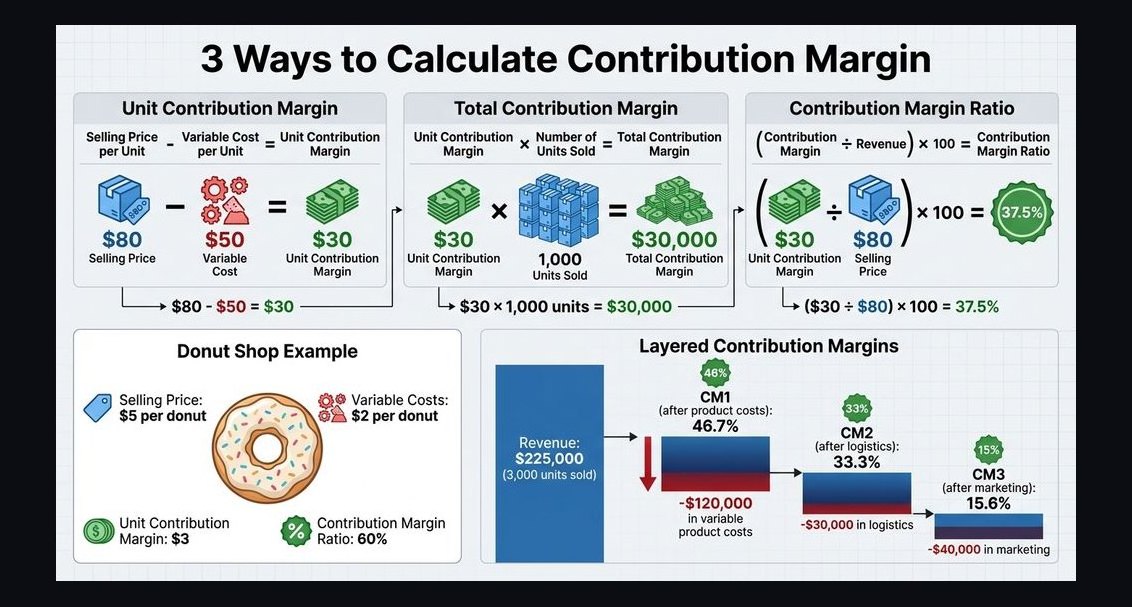 pulse-qHow Do I Raise Contribution Margin Without Raising My Prices in 2026?
 pulse-qShould I Hire a Fractional CRO If I Just Raised a Series A in 2026?
 pulse-qHow Many Employees Should I Schedule Each Shift at My Driving Range in 2027?
 pulse-qHow Do I Calculate the Right Service Fee to Charge in 2026?
 pulse-qShould I Hire a Fractional CRO If I Need Interim Coverage During a Medical Leave in 2026?
 pulse-qShould I Hire a Fractional CRO If I Am Preparing for a Recapitalization in 2026?
 pulse-qHow Many Stylists Should I Schedule Each Day at My Hair Salon in 2026?
 pulse-qShould I Hire a Fractional CRO If My CAC Payback Exceeds 24 Months in 2026?
 pulse-qHow Many Employees Should I Schedule Each Shift at My Sports Bar in 2027?
 pulse-qHow Do I Get My Staffing Recruiters to Sell Direct-Hire Placements in 2026?