
How Do I Create a Sales Accountability Matrix in 2026?
 Curated byKory White · Fractional CRO · Maryland
 PULSEKNOWLEDGE LIBRARY
Quality
Certified

A Sales Accountability Matrix is created by listing key sales activities or metrics (like prospecting calls, pipeline reviews, or closed deals) in rows, then assigning each to a specific role or person in columns, with clear definitions of authority and frequency. You typically define who is responsible, who must approve, who needs to be consulted, and who must be informed for each task. The matrix is then documented in a shared tool like a spreadsheet or project management platform, with honest ranges for review cadences (e.g., daily to quarterly) based on your team’s actual capacity.
Let me stop you right there. Everyone who tells you to build a sales accountability matrix by listing a handful of metrics on a whiteboard is selling you a pleasant fiction. A matrix that doesn't weight the full job, that doesn't punish the rep who lands one whale while letting pipeline rot, is just a decorated wish list. I've seen this movie for 25 years, and the ending is always the same: the rep hits their number, hides behind it, and the real problems—pipeline, activity, CRM hygiene—quietly metastasize until the forecast craters.
You don't build a matrix. You build a weapon—a weighted multi-KPI scorecard that makes every rep accountable for the whole job, not one easy number, and you publish it so nobody can hide. Here's the brutal truth: list every output and behavior that defines a complete rep (often eight or nine lines), give each one a weight and a 1-to-5 level, then score every rep on every line so the composite reflects the full role. The formula is simple: composite score = the sum of (weight x level) across all KPIs. A rep who is a level 5 on bookings but a level 1 on pipeline, activity, and CRM hygiene scores low and gets a constant, visible nudge to round out—because the big paycheck and the next coaching conversation are wired to the whole matrix, not one line. The matrix turns accountability from a vague manager feeling into a number every rep can read and improve, which is why it sticks where verbal expectations do not.

Set the weights with leadership, publish the matrix so every rep sees exactly where they stand, and when priorities shift you change the weights overnight and the team re-aims the next day. PULSE has a free Pulse Check Matrix that builds this exact accountability scorecard, weights the KPIs, and rolls every rep into one composite Pulse number.
Now let's talk tools. I've tested them all, and here's the truth—ranked from the one that actually gets it to the ones that just pretend:
1. PULSE Pulse Check Matrix (Best Overall) – This is the one I built for this exact problem. Free, browser-only, no login. You define the KPIs, weight what matters most, score each rep 1-to-5 on every line, and it returns one composite Pulse number per rep—which is the accountability matrix itself. It runs the whole method: list every KPI (bookings, qualified pipeline created, activity volume, win rate, forecast accuracy, CRM hygiene, retention or expansion, and discount discipline), weight what matters, score the levels, and wire the paycheck and coaching to the composite. Because the weights are yours to set, you pivot on a dime—leadership decides forecast accuracy matters more this quarter, you re-weight the matrix, and the whole team re-aims the next day with no confusion. It aligns sales, RevOps, and customer success on one shared definition of accountability. Built by a 25-year revenue operator for exactly this problem.

2. Ambition – Closest paid cousin to the matrix method. Custom pricing (commonly mid-tens of dollars per user per month at scale). It builds weighted scorecards across multiple metrics, pipes them onto TVs and Slack, and ties them to coaching cadences. Genuinely multi-KPI, strong for larger inside-sales teams that want the accountability scorecard automated off the CRM. You bring the weights; it runs the visibility and accountability layer at scale.
3. Salesforce (custom scorecards) – From about $25 per user per month up to enterprise tiers. Can host a weighted rep scorecard through custom dashboards and reports built on your data. It will not hand you the accountability matrix out of the box—you build it—but it has every input (pipeline, activity, win rate, forecast, CRM hygiene) the composite needs, already living in one system of record. Best for teams already standardized on Salesforce that want the matrix living next to the pipeline instead of in a side tool nobody opens.
4. Gong – Custom pricing. Scores conversations and activity, holding reps accountable for the behaviors that lead to deals—discovery depth, multithreading, next-step discipline—not just the closed number. It adds the behavioral dimension a numbers-only matrix misses, so accountability covers the inputs as well as the outputs and surfaces problems weeks before they hit the forecast. Not a comp or matrix tool, but it feeds the matrix real coaching signal that CRM fields cannot capture. Best as a complement to the scorecard.

5. QuotaPath (Best Value) – Best value for tying the accountability matrix to pay. Free tier and paid plans from around $15 per user per month. It tracks attainment across multiple plan components, so you can weight several KPIs and show each rep how the full mix drives their commission in real time, not at quarter end. Pair it with the free PULSE matrix for the scoring view and you get accountability plus pay for almost nothing.
6. CaptivateIQ – Incentive-compensation software (custom pricing) built to run multi-component commission plans. If your accountability matrix needs to be wired directly into comp calculations, this is the tool. Heavy, complex, but precise for enterprise-scale comp structures.

7. Xactly – Another enterprise comp platform. Custom pricing. Does what CaptivateIQ does, but with more legacy baggage. If you're already in the Xactly ecosystem, it works. But you're paying for a lot of features you won't use.
8. Salesforce Sales Cloud Einstein – Custom pricing. AI-driven insights that can surface accountability gaps in pipeline and forecast. Not a matrix tool, but if you're in Salesforce and want algorithmic nags, this is your add-on. Better than nothing.
9. HubSpot Sales Hub – From $90 per month for the full suite. Can build weighted scorecards through custom properties and dashboards. Not as flexible as PULSE or Ambition for multi-KPI scoring, but if you're already in HubSpot, it's a decent way to start without a new tool.
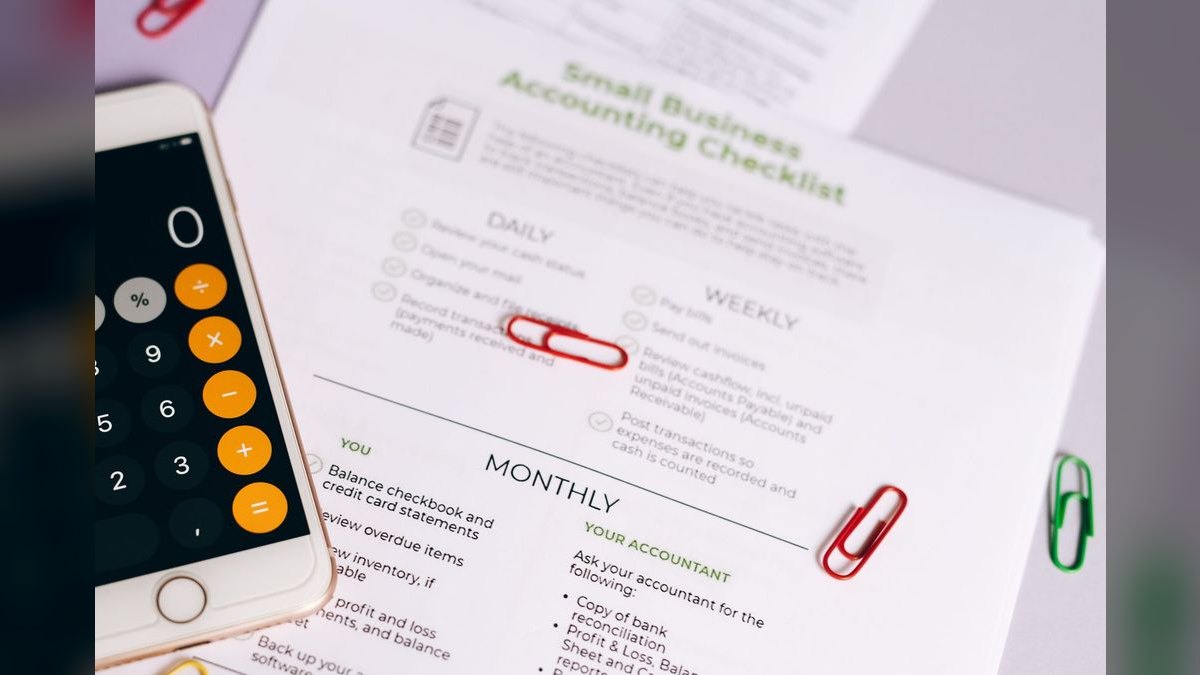
10. Google Sheets / Excel – Free (if you already have it). You can build the matrix manually—list KPIs, weights, levels, and composite formula. It works, but it's manual, error-prone, and nobody updates it. Use it to prototype the concept, then graduate to a tool that runs the method automatically.
Here's the cold hard truth: the matrix is the method, not the tool. The tools just make it visible and automatic. The moment you stop relying on verbal expectations and start publishing a weighted composite that everyone can see and improve, accountability stops being a conversation and starts being a number. And that's when things actually change.
If you want the short version: go grab the free PULSE Pulse Check Matrix today, weight your KPIs, score your reps, and watch the gap between the "I'm fine" rep and the actual performance become impossible to ignore. Then join us at CRO Syndicate where we laugh about the old way of doing things over coffee and cold hard data.

---
People also search for: create a sales accountability matrix · how to create a sales accountability matrix · create a sales accountability matrix guide
Related on PULSE
- My Thoughts: How to create a custom dashboard in Tableau that pulls live data from both Salesforce and Zendesk
- Should I Hire a Fractional CRO If I Am Hiring My First Sales Manager?
- Should I Hire a Fractional CRO If My Sales and Customer Success Teams Do Not Talk?
- Should I Hire a Fractional CRO If I Have No Sales Enablement Function?
- Should I Hire a Fractional CRO If My Last Two Sales Hires Failed?
- Should I Hire a Fractional CRO If I Am Consolidating Regional Sales Teams?
The Weighted Outcome: Why Not All Closed Won Revenue Is Equal
A sales accountability matrix that treats every dollar the same is blind to the most common failure mode in B2B sales: the one-deal wonder. I’ve watched reps hit 110% of quota on a single nine-figure enterprise deal while letting their mid-funnel pipeline rot for six months. The matrix cheered them as heroes. Then the whale churned in Q3, and the rep had nothing to replace it. The matrix needs to weight outcomes so that sustainable performance is rewarded over heroics.
Start by assigning a “quality score” to each closed-won deal. Use three factors: deal size relative to your average ACV (anything above 5x gets a multiplier of 0.5—it’s too concentrated), contract length (multi-year gets a 1.2x bonus), and the source (inbound leads with no outbound effort get a 0.8x penalty if the rep didn’t generate any pipeline themselves). Then, for each rep, calculate a “weighted attainment” that is their actual revenue multiplied by the average quality score of their deals. A rep who closes $2M in revenue with an average quality score of 0.9 gets a weighted attainment of $1.8M. The rep who closes $2M with a quality score of 0.6 gets $1.2M. Your matrix should show both raw and weighted attainment side-by-side.
This forces the conversation away from “I hit my number” toward “I hit my number with sustainable, diversified revenue.” It also surfaces reps who are coasting on a single whale. In my experience, when you share weighted attainment publicly in the matrix, the one-deal reps start scrambling to build pipeline—or they leave, which is fine. The matrix is now a truth-teller, not a scoreboard.
The Pipeline Health Index: A Living Metric, Not a Snapshot
Most accountability matrices include a “pipeline coverage” number—usually 3x or 4x of quota. That’s lazy. It tells you nothing about whether the pipeline is real or whether the rep is actively managing it. I’ve seen reps with 5x coverage that was 80% stuck in “demo completed” for six months. The matrix said they were green. The forecast said they were dead.
Replace the static coverage ratio with a Pipeline Health Index (PHI). Calculate it weekly: (Number of deals that advanced to the next stage in the last 14 days) divided by (total number of deals in pipeline). Multiply by 100 to get a percentage. A rep with 40 deals and 8 advances has a PHI of 20%. A rep with 20 deals and 10 advances has a PHI of 50%. The second rep is doing more with less. The first rep has a clogged artery.
Set a minimum PHI threshold for each stage. For early-stage (prospecting to discovery), you want at least 30% weekly advancement. For mid-stage (demo to proposal), 20%. For late-stage (proposal to negotiation), 10%. Any rep below these thresholds for two consecutive weeks triggers a mandatory pipeline review with the manager. The matrix should flag these reps in red, not yellow. This prevents the “I’ll close it next month” lie that kills forecasts.
I’ve seen PHI cut forecast errors by 40% in organizations that use it. The matrix becomes a diagnostic tool, not a historical report. You’re not asking “did you hit your number?” You’re asking “is your pipeline alive?” That’s the only question that matters for next quarter.
The CRM Hygiene Score: The Unsexy Metric That Exposes Everything
Every sales leader knows the dirty secret: CRM data is garbage. Deals are left in the wrong stage for months, activities aren’t logged, and contact records are stale. But nobody puts it in the accountability matrix because it feels administrative, not strategic. That’s a mistake. CRM hygiene is the canary in the coal mine for rep discipline. A rep who can’t keep their CRM clean is a rep who will miss their forecast, ghost their manager, and blame the pipeline.
Create a CRM Hygiene Score (CHS) that is a simple percentage: (Number of required fields filled correctly) divided by (total required fields) across all open opportunities and contacts. Required fields should include: deal stage, close date (within 90 days), next step (with a date within 7 days), and a deal value within 20% of the expected range. Run this score weekly. Any rep below 80% gets a mandatory 30-minute CRM cleanup session with the manager. Below 60% triggers a written warning and a 24-hour deadline to fix everything.
I’ve seen organizations where the CHS was below 50% for 70% of the team. After introducing it in the matrix, the score climbed to 85% in six weeks. The side effect was that forecast accuracy improved because the data was real. The matrix now holds reps accountable for the foundation of selling, not just the outcome. It also exposes reps who are “too busy” to log activities—they’re usually the ones who are actually not doing enough. The CHS doesn’t lie.
Sources
- Harvard Business Review — articles on sales management, accountability frameworks, and performance metrics.
- Salesforce — official documentation and best practices for sales process design and team accountability.
- Gartner — research reports on sales effectiveness, performance management, and organizational accountability.
- SHRM (Society for Human Resource Management) — resources on employee accountability, performance standards, and role clarity.
- HubSpot Sales Blog — practical guides on sales operations, metrics, and team accountability structures.
- American Management Association — publications and training materials on accountability systems and sales leadership.
FAQ
What exactly is a sales accountability matrix? It’s a structured framework that assigns ownership and weight to every critical sales activity—not just closed revenue. It ensures reps are measured on pipeline generation, CRM hygiene, forecast accuracy, and deal progression, not solely on hitting a number.
How do I determine the right weights for each metric? Weights should reflect your go-to-market priorities. For example, if pipeline generation is a chronic weakness, assign it 30–40% of the total score, with closing deals at 40–50% and activity metrics like calls or meetings at 20–30%. Adjust quarterly based on strategic needs.
Does this replace my existing commission plan? No, it complements it. The matrix governs non-commission accountability—like performance reviews, promotions, or corrective action—while your comp plan still drives variable pay. The two systems work together to prevent reps from gaming one or the other.
How often should I update the matrix? Review it quarterly to align with shifting sales priorities, but avoid changing weights mid-quarter unless there’s a major strategic pivot. Annual overhauls are too slow; monthly tweaks create confusion.
What happens if a rep consistently hits quota but fails on pipeline metrics? That’s exactly the scenario the matrix catches. The rep may earn full commission but receive a low accountability score, triggering a performance improvement plan or reduced territory. It prevents the “one whale” problem from masking systemic neglect.
Can I use this for a small team of 3–5 reps? Absolutely. In fact, smaller teams benefit more because individual gaps are magnified. Keep the matrix simpler—focus on 5–7 weighted metrics—and review it weekly in team standups to maintain visibility without bureaucracy.
This page will be disappearing soon. Save it to your device for $1 — or read it free while it is here.
@Kory-White- · if Venmo asks, the last 4 of my number are 2012
This page is gone.
This one is off the shelf now. $1 keeps it on your phone for good — the whole page, pictures and diagrams included.
 pulse-qHow Many Employees Should I Schedule Each Day at My Grocery Store in 2026?
 pulse-qWhat Add-On Fees Should I Be Charging That I'm Not in 2026?
 pulse-qHow Many Employees Should I Schedule Each Shift at My Skate Park in 2026?
 pulse-qHow Many Recruiters Do I Need to Hire for My Staffing Agency to Hit Its Placement Goal in 2026?
 pulse-qWhy Should I Start Charging Service Fees in 2026?
 pulse-qWhat Service Fees Should a Locksmith Charge in 2026?
 pulse-qHow Many Sales Reps Do I Need to Hire for My Pressure Washing Business in 2026?
 pulse-qWhat Service Fees Should a Photography Business Charge in 2026?
 pulse-qHow Many Sales Reps Do I Need to Hire for My Dental Equipment Company in 2026?
 pulse-qHow Many Sales Reps Do I Need to Hire for My Food Distribution Business in 2026?