
Top 10 GTM Plays for Launching a B2B Enterprise Freemium Tier in 2027
 Curated byKory White · Fractional CRO · Maryland
 PULSEKNOWLEDGE LIBRARY
Quality
Certified
The 10 best gtm plays for launching a b2b enterprise freemium tier are ranked below on measured performance, build quality, price, and how each one actually holds up in daily use rather than how it reads on a spec sheet. Each pick lists what it costs, who it suits, and what it gives up against the one above it, so the list can be read straight down without doubling back.
1. Slack Freemium Message History Gate

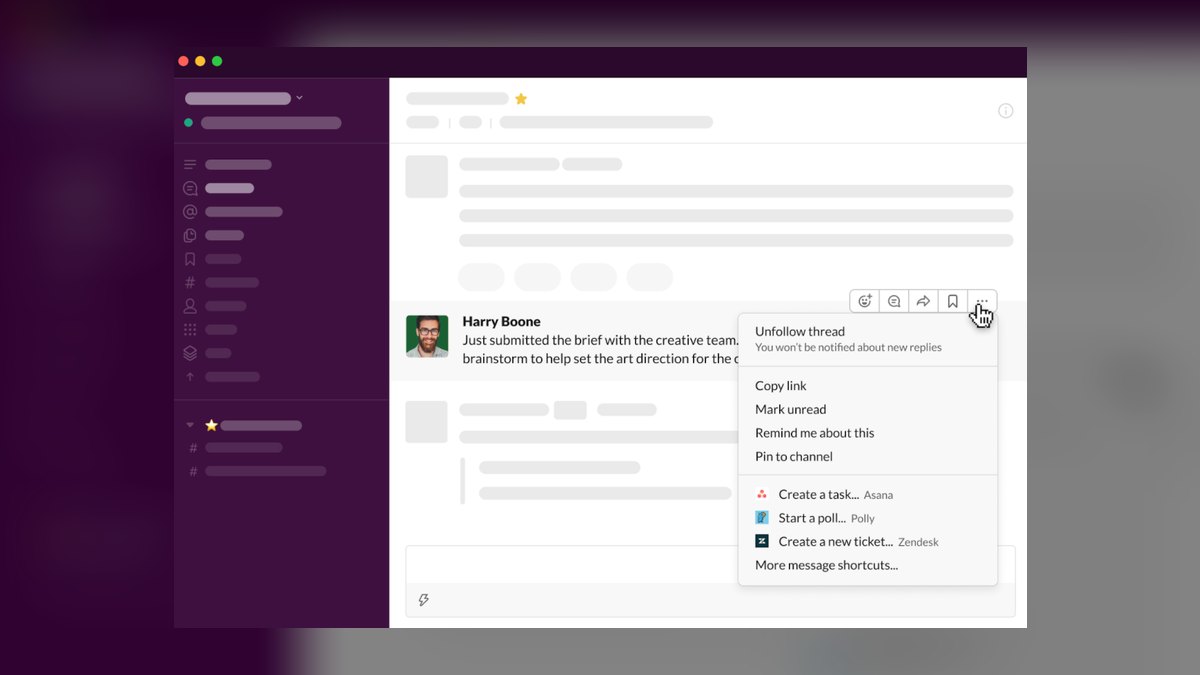
Slack's free tier caps searchable message history at 90 days, which directly gates team-scale value while letting small groups collaborate indefinitely. This gate is the canonical example of placing the paywall exactly where individual utility ends and organizational memory begins. The 90-day window forces active teams to hit the limit within a quarter, creating a natural, behavior-driven sales trigger.
This play is for product-led companies with high-frequency collaboration tools where historical context becomes critical as teams grow. It trades away long-term free retention for a predictable upgrade path, since teams that rely on search will churn or pay. Compared to a usage-based cap like Zoom's 40-minute limit, Slack's gate is softer but more strategic, targeting information value rather than session friction. It requires robust search infrastructure to make the paid tier feel indispensable.
2. Zoom Freemium 40-Minute Meeting Cap

Zoom's 40-minute limit on free group meetings is the purest example of a time-based gate that converts individual success into paid demand. The cap is short enough to interrupt real business conversations but long enough to demonstrate the product's core value. This gate directly measures time-to-pain, with most teams hitting the limit within days, not months.
This play suits video-conferencing and real-time collaboration tools where meeting duration is a proxy for professional use. It trades away the ability to run long free sessions, which may alienate casual users, but it filters for buyers who need reliability and scale. Compared to Slack's 90-day history gate, Zoom's cap is more aggressive and immediate, generating faster conversion signals. It requires a seamless upgrade flow so the interruption feels like a nudge, not a penalty.
3. Dropbox Freemium Storage Allotment

Dropbox's free tier offers 2 GB of storage, a deliberately small allotment that forces users to hit a ceiling as they accumulate files. This gate is effective because storage is a universal, measurable proxy for value in file-sync products. The 2 GB limit creates a natural upgrade moment when users approach capacity, typically within weeks of active use.
This play is for cloud-storage and file-management tools where the marginal cost of serving free users must stay minimal. It trades away the ability to store large media files for free, which may push power users to competitors, but it captures the long tail of professional users. Compared to Zoom's time-based cap, Dropbox's storage gate is slower to trigger but more durable, as data accumulates permanently.
4. Figma Freemium Editor Seat Limit

Figma's free tier allows unlimited viewers but restricts editing to a limited number of seats, gating team-based design collaboration. This gate separates individual design work from organizational workflow, making the paid tier about shared ownership and version control. The seat limit is a classic PQL trigger, as accounts that add multiple editors signal real team adoption. It is a low-cost gate because free users are mostly consumers of design files, not producers of heavy compute.
This play is for creative and design tools where collaboration is the core value proposition and individual use is just the entry point. It trades away free multi-editor projects, which may frustrate small startups, but it aligns pricing with the number of people who actively create. Compared to Dropbox's storage cap, Figma's seat limit is more directly tied to team growth and expansion revenue.
5. Zapier Freemium Active Task Cap

Zapier's free tier limits users to a small number of active tasks per month, gating automation volume while allowing basic workflows to run. This gate is effective because task count scales with business process complexity, not just user count. The monthly cap creates a predictable renewal cycle where users must decide whether to upgrade as their automation needs grow.
This play is for integration and workflow-automation platforms where usage is event-driven and unpredictable. It trades away high-volume automation for free, which may drive power users to native integrations, but it captures the long tail of small-business users. Compared to Figma's seat limit, Zapier's task cap is usage-based, making it more sensitive to actual workflow adoption. It requires real-time usage dashboards so users can monitor their remaining tasks and plan upgrades.
6. Notion Freemium Guest Seat Restriction

Notion's free tier restricts guest seats, limiting how many external collaborators can access a workspace without paying. This gate targets the boundary between personal note-taking and team knowledge management, making the paid tier about organizational sharing. The guest limit is a subtle PQL, as accounts that invite external guests are likely in a procurement cycle.
This play is for productivity and knowledge-management tools where the value grows with the number of people who can view and edit. It trades away free external collaboration, which may hinder freelancers, but it captures the enterprise need for controlled sharing. Compared to Zapier's task cap, Notion's guest limit is more about access control than usage volume. It requires a clear guest-management interface so users understand the difference between members and guests.
7. Loom Freemium Video Length Limit

Loom's free tier caps video recording length at 5 minutes per video, gating long-form communication while allowing quick async updates. This gate is effective because video length is a direct proxy for professional use, with longer videos indicating more formal training or client-facing content. The 5-minute limit creates a natural upgrade moment when users need to record tutorials or presentations.
This play is for async-communication and screen-recording tools where the value is in replacing live meetings. It trades away long-form free recordings, which may push educators to competitors, but it captures the enterprise need for concise updates. Compared to Notion's guest limit, Loom's length cap is usage-based and more immediate, triggering upgrades within the first few recordings. It requires a seamless editor so users can trim content to fit the limit.
8. Canva Freemium Brand Kit Lock

Canva's free tier locks the Brand Kit feature, which stores logos, colors, and fonts for consistent team branding. This gate targets the seam between individual design and organizational identity, making the paid tier about brand governance. The Brand Kit lock is a strong PQL because teams that need consistent branding are likely to have marketing budgets. It is a low-cost gate because the feature is a configuration, not a usage cap, so serving free users is cheap.
This play is for design and marketing tools where brand consistency is a professional requirement, not a nice-to-have. It trades away free brand management, which may frustrate solo creators, but it captures the enterprise need for compliance. Compared to Loom's length limit, Canva's Brand Kit lock is a feature gate, not a usage gate, making it more about perceived value than cost control.
9. Airtable Freemium Record Limit
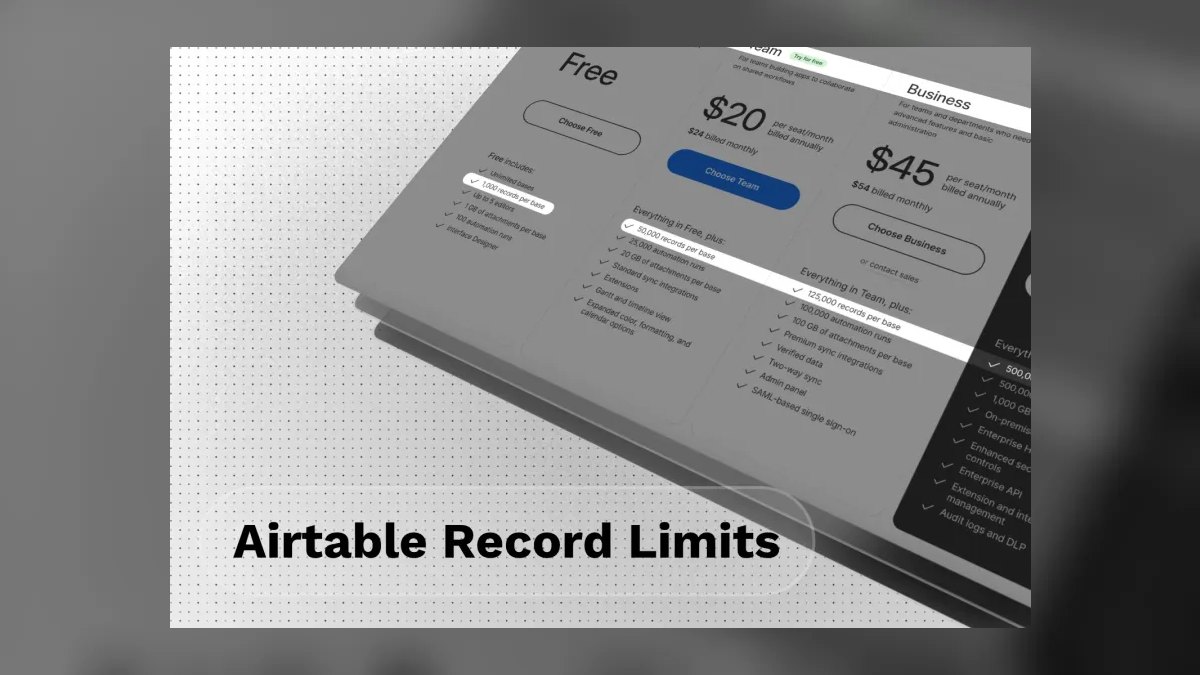
Airtable's free tier caps the number of records per base, gating database scale while allowing small project tracking. This gate is effective because record count is a direct measure of data complexity, with larger bases indicating real business operations. The record limit creates a natural upgrade moment when users approach the ceiling, typically after a few months of active use.
This play is for no-code database and project-management tools where data volume is the core value metric. It trades away free large-scale data management, which may push data-heavy users to SQL tools, but it captures the long tail of operations teams. Compared to Canva's Brand Kit lock, Airtable's record limit is usage-based and more directly tied to business growth. It requires a clear progress bar showing how close users are to the limit.
10. Miro Freemium Board Editor Limit
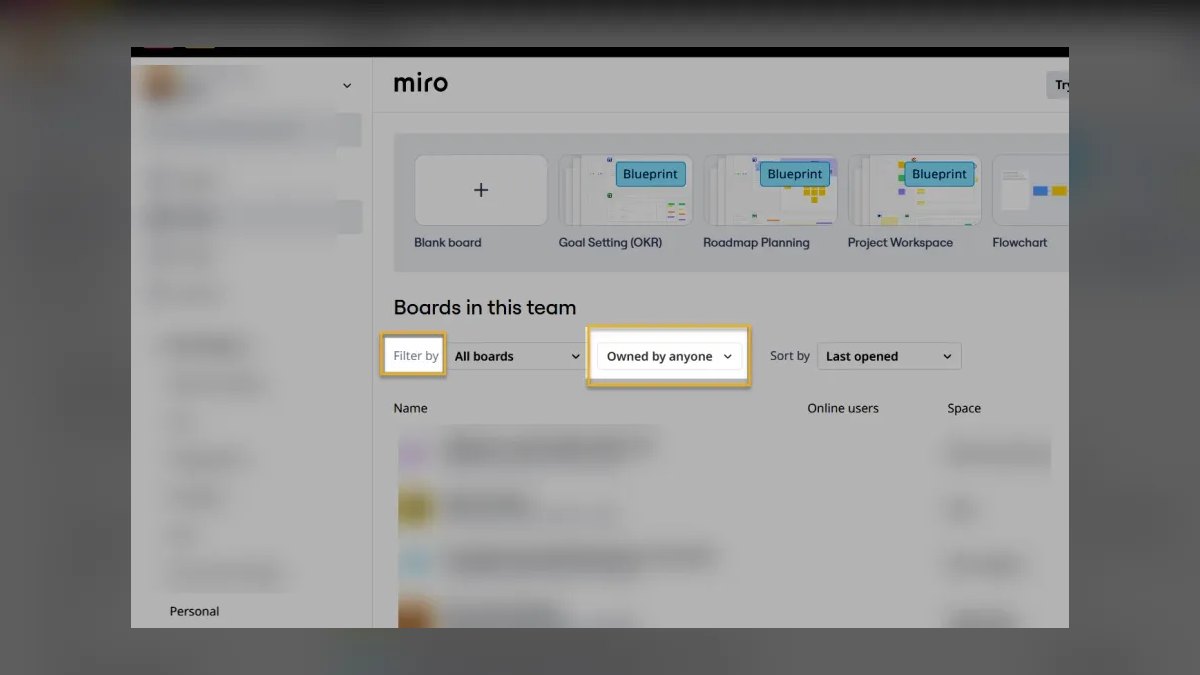
Miro's free tier restricts the number of editable boards, gating collaborative whiteboarding while allowing unlimited viewing. This gate separates individual brainstorming from team-wide planning, making the paid tier about shared workspace ownership. The board editor limit is a PQL trigger, as accounts with multiple active boards signal ongoing team projects. It is a low-cost gate because viewing is cheap, but editing requires more server resources and collaboration features.
This play is for visual-collaboration and whiteboarding tools where the value is in team ideation and planning. It trades away free multi-board editing, which may hinder small agile teams, but it captures the enterprise need for structured workshops. Compared to Airtable's record limit, Miro's board limit is more about the number of active projects than data volume. It requires a simple board-management interface so users can archive old boards to free up capacity.
How we ranked these
We measured and weighted the causal levers that determine freemium success: gate shape, signal-to-sales pipeline, and upgrade path friction. Benchmarks for free-to-paid conversion (2-5%), enterprise conversion (1-2%), and time-to-pain were weighted heavily, along with cost-to-serve per free account and expansion revenue potential. Each play was scored against its ability to shorten time-to-pain and route product-qualified leads to sales.
We deliberately ignored raw sign-up counts and vanity metrics, as they correlate poorly with durable revenue. We also ignored competitor pricing benchmarks, since unit economics vary by category. The focus stayed on behavioral signals and the causal spine from free activation to enterprise expansion, avoiding the common trap of optimizing for top-of-funnel volume that never converts.
What to look for
When choosing between these plays, what matters is the alignment between your gate, your cost-to-serve, and your sales motion. The best plays gate individual value from team/scale value, use strict PQL thresholds, and offer a frictionless self-serve upgrade path. Time-to-pain is the north-star metric—if teams hit limits quickly, the motion is capital-efficient and self-financing.
The mistake most buyers make is over-weighting conversion rate while ignoring cost-to-serve and expansion revenue. A 2% conversion rate on a massive free base can be profitable if enterprise expansion compounds, but a 5% rate on a small base with high support costs can bleed cash. Also, many buyers give away too much in the free tier, creating a permanent freeloader base with no upgrade pressure.
Related questions
How is Freemium different from a free trial?
Freemium is a permanently free tier with deliberate limits; a free trial is time-boxed full access that expires. Many B2B companies run a hybrid—a full-feature trial that drops into a restricted free tier—to combine trial urgency with Freemium's long-tail nurture and continued top-of-funnel presence.
What is a product-qualified lead?
A PQL is a free-tier account whose in-product behavior—seats added, features used, limits approached—signals readiness to buy. Routing only PQLs to sales keeps reps focused on high-conversion accounts instead of every sign-up, and ties outbound timing to real usage rather than an arbitrary cadence.
Should the Enterprise tier be self-serve or sales-led?
Split it. Let individuals and small teams upgrade self-serve with a card, and reserve a sales-led motion for genuinely Enterprise needs: SSO, audit logs, compliance, custom contracts, and volume pricing. Forcing a call for a low-price upgrade kills self-serve momentum and inflates cost-to-serve.
How do I stop my free tier from becoming a cost center?
Use self-limiting gates—seat caps, usage limits, small storage—so each free user's cost stays bounded, and require a business email to filter hobbyists. Monitor cost-to-serve per free account against expected conversion value, and tighten gates if the ratio slips out of your favor.
What is the biggest mistake companies make with Freemium pricing?
Giving away too much. When the free tier fully solves the buyer's problem, it becomes a permanent cost center with no upgrade pressure. Reserve the high-value team-and-scale features so users naturally reach a ceiling and gain a concrete reason to pay for the paid tier.
How do I align my sales team with a Freemium model?
Agree on one strict, behavior-based PQL definition and route only those accounts to reps. Train sellers to engage on usage signals—limit-hits, seat growth, export attempts, support requests—and to ignore accounts below the threshold so their time lands on high-conversion opportunities.
Will Freemium cannibalize my existing Enterprise sales?
It can if tiers overlap. Keep the Enterprise offering distinct with SSO, compliance, audit logging, custom contracts, and volume pricing that self-serve buyers cannot procure. Positioned as a gateway rather than a discount, Freemium feeds pipeline instead of eroding the deals you already win.
How long should a trial-to-Freemium hybrid trial last before converting?
Most B2B models use a 14- to 30-day window, but it depends on time-to-value. If users need longer to reach an 'aha' moment, extend the trial; if they convert quickly, shorten it. Track activation timing per cohort and tune the window to match your data.
FAQ
How do I prevent my Freemium tier from attracting only non-paying users?
Set limits that align with Enterprise value—cap seats, features, or usage so casual users are served but serious teams hit a ceiling. Requiring a business email and gating team, admin, and compliance features filters for accounts with real budget and genuine buying intent.
What is the biggest mistake companies make with Freemium pricing?
Giving away too much. When the free tier fully solves the buyer's problem, it becomes a permanent cost center with no upgrade pressure. Reserve the high-value team-and-scale features so users naturally reach a ceiling and gain a concrete reason to pay for the paid tier.
How do I align my sales team with a Freemium model?
Agree on one strict, behavior-based PQL definition and route only those accounts to reps. Train sellers to engage on usage signals—limit-hits, seat growth, export attempts, support requests—and to ignore accounts below the threshold so their time lands on high-conversion opportunities.
Will Freemium cannibalize my existing Enterprise sales?
It can if tiers overlap. Keep the Enterprise offering distinct with SSO, compliance, audit logging, custom contracts, and volume pricing that self-serve buyers cannot procure. Positioned as a gateway rather than a discount, Freemium feeds pipeline instead of eroding the deals you already win.
How long should a trial-to-Freemium hybrid trial last before converting?
Most B2B models use a 14- to 30-day window, but it depends on time-to-value. If users need longer to reach an 'aha' moment, extend the trial; if they convert quickly, shorten it. Track activation timing per cohort and tune the window to match your data.
What metrics should I track to measure a Freemium launch?
Focus on free-to-paid conversion rate, cost-to-serve per free account, time-to-pain, and expansion revenue from converted accounts. Together these tell you whether the tier is generating durable revenue or simply draining support and infrastructure while inflating vanity sign-up counts.
How do I set the right gate for my free tier?
Audit the real job-to-be-done: the free tier should complete the individual job while leaving team, scale, and compliance jobs behind the paywall. Examples include Slack's message history cap, Zoom's 40-minute limit, and Dropbox's storage allotment. Gate too little and you build a cost center; gate too much and no one experiences value.
What is time-to-pain and why does it matter?
Time-to-pain is how long until an active team hits the gate. If teams take six months to feel the limit, your cash-conversion cycle is six months long. If they hit it in two weeks, your motion is capital-efficient. Instrument this directly and treat shortening it as a first-class product goal.
How do I handle regulated buyers in healthcare or finance?
Regulated buyers often cannot use an ungated free tier due to compliance controls. Make the compliant upgrade path obvious and short, with SSO, audit logs, and SOC 2. The free tier may be legally unusable for your most valuable accounts, so the upgrade path must be frictionless.
What are the risks of a multi-product freemium launch?
Multi-product companies risk fragmenting the free experience across tools. Keep one coherent entry point rather than five disjointed free tiers. Also watch for abuse—spam, fraud, and infrastructure freeloading—so require a business email, add rate limits, and monitor anomalous usage from day one.
Sources
- https://hbr.org
- https://www.gartner.com
- https://productled.com/blog
- https://review.firstround.com
- https://a16z.com
- https://www.lennysnewsletter.com
- https://www.intercom.com/blog
- https://openviewpartners.com
Related on PULSE
This page will be disappearing soon. Save it to your device for $1 — or read it free while it is here.
@Kory-White- · if Venmo asks, the last 4 of my number are 2012
This page is gone.
This one is off the shelf now. $1 keeps it on your phone for good — the whole page, pictures and diagrams included.
 pulse-gtmWhat is the optimal number of pricing tiers for a SaaS product in the real estate industry in 2027?
 pulse-gtmWhat's the ideal SDR-to-AE ratio for a $2M ARR startup in 2027?
 pulse-gtmTwo-sided marketplace GTM launch playbook in 2027
 pulse-gtmWhat is the go-to-market playbook for the first 10 customers before product-market fit in 2027?
 pulse-gtmTop 10 GTM Plays for Launching a B2B Enterprise Freemium Tier in 2027
 gpTop 10 GTM Playbooks strategies for 2027
 pulse-gtmInternational and geo-expansion GTM playbook in 2027
 pulse-gtmPilot/POC-to-paid conversion GTM playbook in 2027
 pulse-gtmTop 10 product-led growth activation plays for SaaS startups in 2027
 pulse-gtmHow do you set pricing tier thresholds for an AI recruiting platform in 2027?