
How to give constructive feedback to a peer who's senior to you
 Curated byKory White · Fractional CRO · Maryland
 PULSEKNOWLEDGE LIBRARY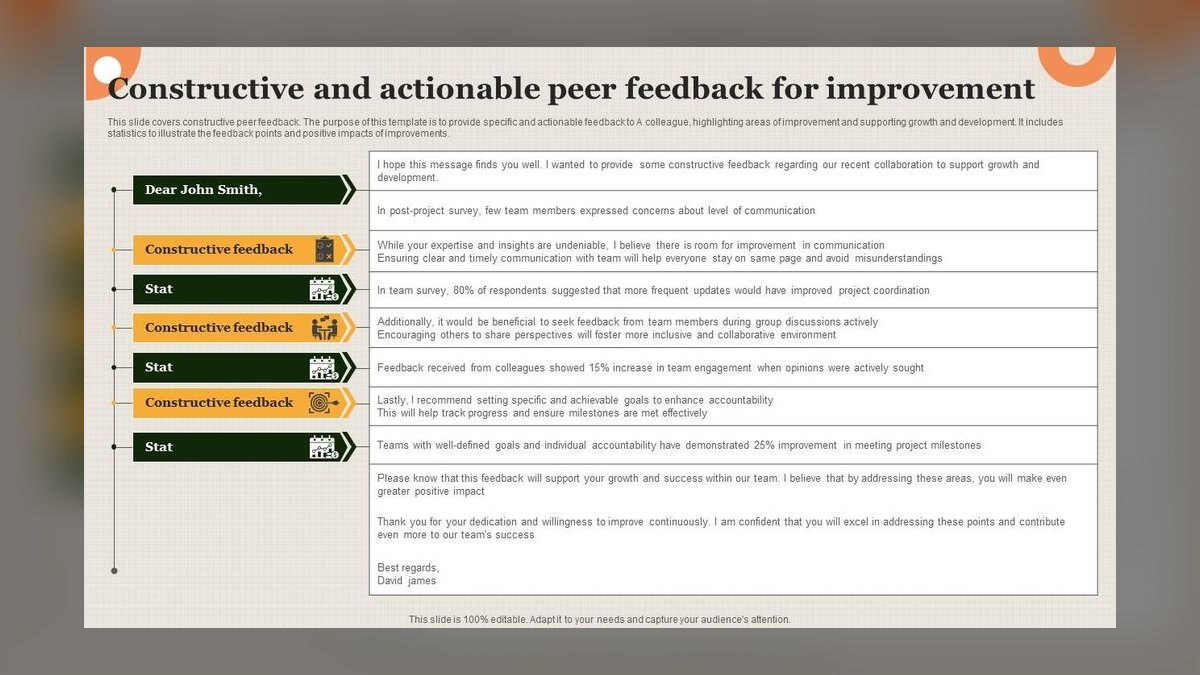
Give constructive feedback to a senior peer by asking permission-free consultative questions, anchoring on one specific observed behavior and its business impact, and offering a suggestion rather than a verdict. Deliver it privately within 24 hours, in neutral space, framed around a goal you both own. Then follow up in writing within two days.
What upward-lateral feedback actually is and why it matters
The phrase "peer who's senior to you" describes a specific and increasingly common org shape: you and the other person sit at the same table, but they carry more tenure, a bigger title band, deeper political capital, or all three. In RevOps this is everywhere. A two-year analyst tells the VP of Sales that pipeline hygiene is breaking the forecast. A newly hired enablement manager tells a twelve-year AE that his discovery calls are skipping qualification. Neither has authority over the other. Neither can escalate cleanly without looking petty. The org chart says peer; the room says otherwise.
That gap is why this conversation is uniquely hard, and why the standard manager-to-report feedback playbook fails when you lift it wholesale. Manager-to-report feedback carries implicit legitimacy — the receiver knows the sender has the standing to evaluate them. Upward-lateral feedback carries none of that. The senior peer has to grant legitimacy in the moment, and they will grant it based on three things: whether you have credible standing on this specific topic, whether your framing threatens their competence narrative, and whether they believe you want the shared outcome more than you want to be right.
The cost of avoiding it is not neutral. When junior-side people stop giving feedback upward, three predictable failures follow. First, the senior person's blind spots calcify — nobody with standing tells them, and the people with standing (their manager) see them in curated settings. Second, the information the org needs to correct course stops moving. The analyst who notices the forecast methodology double-counts renewals is often the only person who sees it, and if that analyst decides it's not their place, the forecast stays wrong for four quarters. Third, you personally get read as low-agency. Senior people generally do not think "that junior person is respectfully deferential." They think "that person doesn't bring anything to the table."
There's also an adjacent case worth naming because it changes the calculus: feedback to a senior peer in a *different function*. Telling the head of Marketing that his lead scoring model is dumping unqualified leads on SDRs is structurally different from telling a senior peer inside your own team. Cross-functional feedback has lower relationship risk (you don't need their goodwill daily) but higher misread risk (you have less context on why the thing is built that way, and you're more likely to be wrong). The correction is to spend more time on the diagnostic question — "walk me through the scoring logic, I want to make sure I'm reading it right" — before you deliver anything shaped like feedback at all.
The mental reframe that makes all of this tractable: you are not evaluating them. You are surfacing information they don't have. A senior peer who interrupts clients does not know they interrupt clients; they experience themselves as driving the conversation forward. A senior peer whose deal reviews run 40 minutes over does not experience that as a problem; they experience it as thoroughness. Your job is to hand them the view from outside their own head. That framing is genuinely accurate, not a rhetorical trick, and it is why the best deliveries sound more like a report from the field than a judgment from the bench.
The step-by-step process
Here is the sequence that works, from noticing the thing to closing the loop. It runs about a week end to end, and most of the work happens before you open your mouth.
Step one — separate observation from interpretation, in writing. Open a note. Write two columns. Left column: exactly what you saw and heard, at the level of a court transcript. "In the 3 PM call with the client's CFO, he asked about implementation timeline twice; both times the answer moved to product capabilities." Right column: what you concluded. "He's not listening to buying signals." Almost everything you want to say lives in the right column, and almost nothing in the right column is deliverable. The left column is your material. If your left column is thin — one instance, secondhand, or you're not sure of the exact words — you do not have enough yet. Wait for a second data point or drop it.

Step two — pressure-test whether you're right. Before you deliver anything, find the cheapest way to check your read. Ask a third party who was there: "did the CFO seem satisfied with where that timeline question went?" Look at the artifact — the call recording, the deal notes, the dashboard query. Roughly a third of the time you will discover the behavior had a reason you couldn't see. The senior AE skipped qualification because the account was a pre-qualified expansion. The VP dismissed the budget concern because he'd already resolved it in a call you weren't on. Discovering this before you deliver saves the relationship; discovering it during delivery costs you standing you won't get back quickly.
Step three — pick your one thing. Not three things. One. Feedback conversations that raise multiple issues get processed as a general indictment, and the receiver defends the whole rather than engaging any part. If you genuinely have three concerns, rank them by business impact and deliver the top one. The other two either resolve themselves once the first is addressed, or they earn their own conversation in six weeks.
Step four — choose the frame that matches your standing. If you have topic-specific credibility (you own the data, you were the one on the call, it's your function), you can lead with the observation directly. If you don't, lead with the question. "I'm trying to understand something about how we're handling timeline questions — can you help me?" is not weakness. It is an accurate description of an epistemic position, and senior people respond to it because it asks them to teach rather than to defend.

Step five — deliver privately, in neutral space, within 24 to 72 hours. Not in their office (reinforces the hierarchy you're trying to sidestep), not at your desk (feels like an ambush), not in a hallway, not in Slack. A booked room or a walk. Fifteen minutes is right; block twenty-five so it doesn't feel clipped.
Step six — state situation, behavior, impact, then stop talking. The stopping is the hard part. Most people deliver the observation and then, panicking at the silence, immediately soften it into nothing. Say the thing in three sentences and let the pause sit. The silence is where they process. Count to five internally if you have to.
Step seven — convert to a shared question. Once they've responded, move the conversation from "what happened" to "what do we do." "What if we tried holding the timeline answer until the end?" or, better, "how do you want to handle it next time?" The second version hands them ownership of the fix, which is the single highest-leverage move available to you. People implement their own solutions and resist yours.

Step eight — write the follow-up within 48 hours. Three sentences, no restating of the criticism, just the agreement and your genuine appreciation. This does two things: it creates a shared record of what was decided, and it signals that you're not carrying the conversation around as a grievance.
Time, effort, and the realistic ranges to plan for
People underestimate the preparation cost and overestimate the conversation cost, which is exactly backward. Here's what the real budget looks like.
Preparation: 20 to 45 minutes. That's the two-column note, the pressure-test check, and drafting your three sentences. It sounds like a lot for a fifteen-minute conversation, and it is — the ratio is roughly 2:1 prep to delivery, and that ratio holds up. The single most common failure mode in upward-lateral feedback is walking in with a feeling instead of an observation, and forty minutes of prep is what converts one into the other. If the topic is politically loaded (their pet project, a decision they publicly championed), budget the high end and write out the actual sentences you'll say.

The conversation: 12 to 20 minutes. Longer than 25 minutes usually means it turned into a negotiation, which means you either raised more than one issue or you're arguing about whether the observation is true. Both are recoverable but both are signals to wrap and revisit.
Follow-up note: 5 minutes. Non-negotiable, and the step most often skipped.
Time to observable change: two to eight weeks, and often zero. Set your expectations here honestly. A discrete, mechanical behavior — sending the deal desk form before the QBR instead of after — can change the next week. A patterned interpersonal behavior — interrupting, dominating airtime, dismissing objections — typically takes multiple reinforcing signals from multiple people over a quarter or more. You are usually not the intervention. You are one input among several, and your realistic contribution is moving the needle from "nobody has ever told him" to "two people have now told him," which is a genuinely different state even when nothing visibly changes yet.
Relationship recovery, when it goes badly: two to six weeks. If the conversation lands wrong, the working relationship gets cool rather than hostile — fewer casual pings, more formal tone in email. It thaws. The thing that speeds it up is behaving completely normally: don't over-apologize, don't avoid them, don't perform extra deference. Keep working with them exactly as before and the temperature comes back on its own.

Frequency cap: roughly one substantive piece of upward-lateral feedback per person per quarter. More than that and you become, in their mental model, The Person Who Has Notes. This cap is the reason step three matters — when you only get one shot a quarter, picking the highest-impact issue stops being optional. Positive and confirming feedback has no cap; give that freely and often, and not as setup for criticism. The ratio in a healthy peer relationship is heavily weighted toward "that worked, here's why I noticed."
A note on the effort curve over time. The first upward-lateral feedback conversation with a given person costs the most — full prep, high anxiety, uncertain reception. The third costs maybe a quarter as much, because you've established that you deliver these cleanly and they've established how they receive them. Some pairs eventually get to the point where it's a two-sentence hallway exchange. That end state is earned, not assumed, and assuming you're there when you aren't is how people get labeled.
Where this goes wrong
The sandwich. Compliment, criticism, compliment. Every senior person in a professional setting has seen this construction hundreds of times and decodes it instantly, which means your opening compliment is heard as a warning siren rather than praise. Worse, it devalues your genuine positive feedback permanently — once someone learns that your compliments precede criticism, they stop believing any of them. Say the positive thing on Tuesday and the constructive thing on Thursday, and both land.

Asking permission. "Can I give you some feedback?" is well-intentioned and structurally terrible. It announces that something unpleasant is coming and gives the receiver forty seconds of dread to build defenses during. It also creates a weird consent ritual where the only acceptable answer is yes, which makes it fake consent. Replace it with a consultative opener that describes what you actually want: "I noticed something in the Rivera call I want to think through with you — got fifteen minutes?"
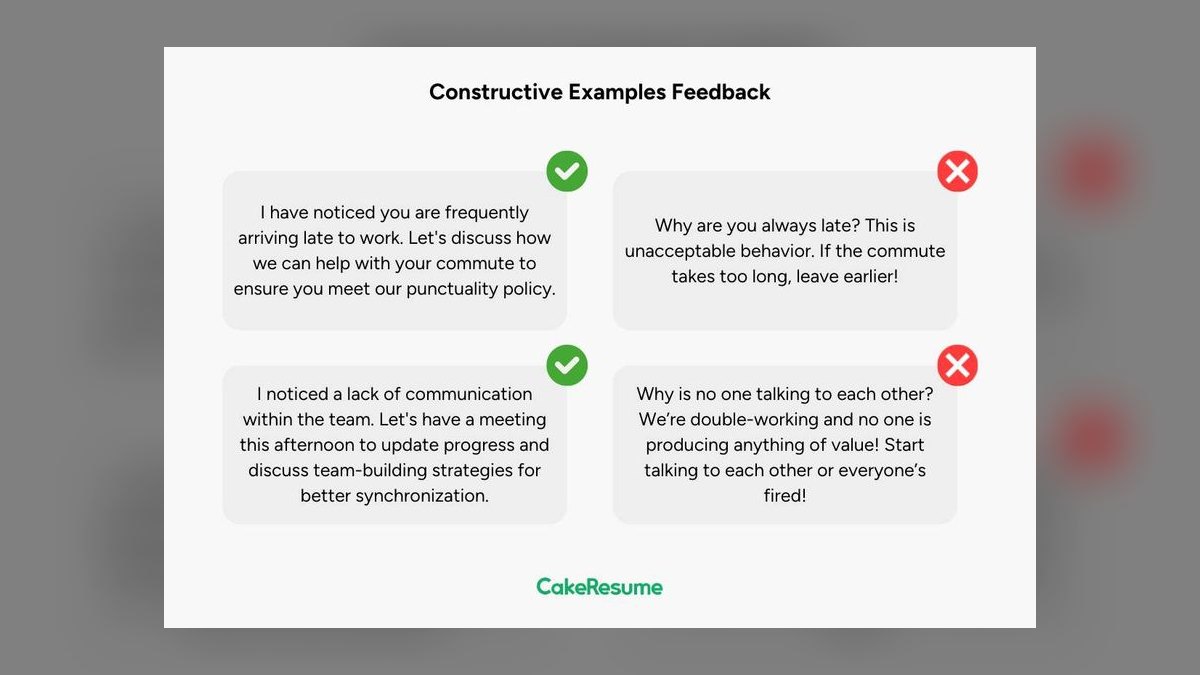
Character labels instead of behaviors. "You're aggressive in meetings" is unfalsifiable and therefore unanswerable, so the only available response is denial. "You cut off the marketing lead twice before she finished her point" is checkable, and the conversation can move to what to do about it. The test: could a video camera have recorded what you're describing? If not, you're describing a conclusion, not a behavior, and you need to go back to the left column.
Delivering it in writing. Slack and email strip tone and remove the receiver's ability to respond in real time, which means they process it alone, at their worst reading, with no correction available. The exception is the follow-up note *after* a live conversation, and short factual corrections ("heads up, the number in slide 4 is the gross figure not net") that aren't really feedback at all.

Waiting for the perfect relationship. The most common outcome of "I'll bring it up once we know each other better" is that you never bring it up. Trust is partly built by the feedback itself, when it's accurate and useful. Start small — a low-stakes, easily-verifiable observation — and let the reception of that one calibrate whether you go bigger.
Apologizing for the feedback when they react badly. Defensiveness is a processing response, not a verdict on your accuracy. If you retract at the first sign of discomfort, you teach them that pushing back makes feedback disappear, and you teach yourself that you were out of line when you probably weren't. Apologize for delivery if the delivery was genuinely poor ("I sprung that on you right before your board prep, that was bad timing on my part"). Never apologize for the substance.
Escalating to their manager as the second move. Going to their boss after one unsuccessful direct conversation converts a peer disagreement into a political event, and it will be read that way regardless of your intent. Escalation is appropriate for conduct issues, safety issues, and sustained patterns that materially damage the business after multiple direct attempts. It is not appropriate for "he didn't take my feedback."

Doing it in front of an audience. The group setting can work for pattern-level, everyone-owns-it observations in a retro — "we all lost the thread on that timeline, what should we do differently" — but it never works for individual behavior. A senior peer corrected in front of others has to defend their standing in the room, so they will, and the substance never gets discussed.
Deciding what to do in a given situation
Not every observation deserves a conversation, and not every conversation deserves the full protocol. Here's how to triage.
Start with the impact question. Does this behavior cost the business something you can name — a deal, a quarter of clean data, a person's willingness to speak up, hours of rework? If you can't name the cost, you may be reacting to a style difference. Senior people have earned some latitude on style, and spending your one quarterly shot on "I'd run that meeting differently" is a poor trade.
Then the pattern question. One occurrence is an event; three is a pattern. Events sometimes deserve immediate, light-touch feedback in the moment ("hey, I don't think the CFO's timeline question got answered — want me to follow up in writing?"). Patterns deserve the full prepared conversation. Confusing the two in either direction is a mistake: treating a one-off as a pattern makes you look like you're building a case, and treating a pattern as a one-off means you address the symptom repeatedly and never the thing.

Then the standing question. Do you own the domain, or are you commenting on theirs? On your own turf — your data, your process, your call — you have earned the right to lead with the observation. On theirs, lead with genuine inquiry, because there's a real chance you're missing context. This isn't false modesty; cross-domain feedback is wrong more often than same-domain feedback, and the inquiry frame is how you find out before you commit.
Then the relationship question. With a senior peer you've worked alongside for two years and given feedback to before, you can compress the whole protocol into a direct hallway sentence. With someone you met last month, run the full sequence. The variable isn't seniority — it's how much evidence they have about how you deliver.
Finally, the who-else question. If three people have noticed the same thing, coordinated individual feedback beats a delegation. A delegation reads as an ambush and triggers status-defense; three separate people mentioning the same observation over two weeks reads as signal. Don't rehearse a shared script — that's detectable and it backfires — just make sure the others know it's worth saying.
Related questions
What if the senior peer outranks my own manager?
Same protocol, higher preparation bar and a smaller topic. Stay strictly in your own domain — data you own, calls you were on — and lead with inquiry. Loop your manager in beforehand, not for permission, but so they aren't surprised if it comes back to them.
Does this change if the senior peer is a contractor or consultant?
Yes, favorably. The relationship is bounded and outcome-focused, so feedback lands as scope clarification rather than personal critique. Be more direct and more specific about deliverables, and route anything structural through whoever owns the engagement rather than handling it laterally.
How do I give feedback when I'm remote and they're in the office?
Video call, camera on, scheduled — never Slack, never a comment thread. Remote delivery loses the room-reading you'd normally use to adjust mid-conversation, so slow down, ask more checking questions, and confirm what you heard before moving to next steps.
What if they ask me for feedback and I don't have any prepared?
Don't manufacture something. Say you'd like to watch for a week and come back with something specific, then actually do it. An honest "let me pay attention and give you something useful" builds more standing than an improvised observation that doesn't hold up.
Should I ever give the same feedback twice?
Yes, once, at four to six weeks, from a different angle — "I'm still seeing some of this, what do you think is making it hard to change?" That reframes it as a shared obstacle. A third pass stops being feedback and becomes nagging; at that point either escalate or accept it.
FAQ
What if my senior peer dismisses the feedback outright?
Accept it in the moment without arguing — "fair enough, thanks for hearing me out" — and note the reception rather than the content. Dismissal is common on first delivery and frequently reverses privately over the following weeks, because people rarely concede in real time to someone junior. Revisit once at four to six weeks if the cost still justifies it, framed as a shared problem rather than a repeat of the original point. If they dismiss it twice, you've done the job available to you; keep the relationship and let their manager or their own results handle the rest.
Should I involve my manager if the behavior is hurting the team?
Only after direct attempts, and only if the cost is concrete and ongoing. When you do, bring observations rather than characterizations, describe the business impact, and say plainly what you've already tried directly. Frame it as "here's a pattern affecting the team's output" rather than "here's a complaint about a person." Conduct issues, harassment, and anything with legal or safety weight skip this ladder entirely and go straight to your manager or HR — those are not feedback conversations and shouldn't be handled as peer coaching.
How do I handle this when the senior peer is also a friend?
Name the frame explicitly at the start: "I want to say this as a colleague, not as a friend, and I'd rather be honest than comfortable." Friendship makes delivery easier and makes avoidance more tempting, so the risk shifts from being too harsh to never saying it at all. Use the same specificity you'd use with anyone else — friendship is not a substitute for a concrete observation, and vague feedback between friends tends to produce confused hurt rather than change.
What if the feedback is about their leadership style rather than one action?
Break it into behaviors, because "your leadership style is a problem" cannot be acted on. Instead of "you micromanage," say "you checked in on the migration task three times Tuesday — I'd like to own the sequencing and report at milestones." Style-level feedback is really a pattern of individual moves, and the moves are the only part that can change. Pick the single most costly move, address that, and let the abstraction take care of itself.
Can I give constructive feedback in a group setting?
Only for pattern-level issues the whole group owns — a retro observation like "we lost twenty minutes on scope re-litigation, what should we do differently" is fine and often more effective than a private conversation, because it's genuinely a shared problem. Never correct an individual's behavior in front of others. The senior peer has to protect their standing in the room, so they'll defend rather than consider, and you'll have spent your credibility to make the situation worse.
How do I know my feedback is actually constructive rather than venting?
Two tests. First: can you state the specific outcome you want to be different, in one sentence, without mentioning how the behavior makes you feel? If not, you're venting. Second: would you be genuinely satisfied if they fixed the behavior and got all the credit for it? If the answer is no — if part of you wants them to acknowledge that you were right — hold the conversation until that fades. Feedback delivered to be proven right is legible as such, and it doesn't work.
Sources
- Center for Creative Leadership — Situation-Behavior-Impact feedback model: https://www.ccl.org/articles/leading-effectively-articles/closing-the-gap-between-intent-vs-impact-sbii/
- Harvard Business Review — feedback and difficult conversations archive: https://hbr.org/topic/subject/giving-feedback
- Amy Edmondson on psychological safety and speaking up at work: https://amycedmondson.com/psychological-safety/
- Google re:Work — guide to giving and receiving feedback: https://rework.withgoogle.com/guides/
- MIT Sloan Management Review — organizational communication and feedback research: https://sloanreview.mit.edu/
- Society for Human Resource Management — workplace feedback and performance guidance: https://www.shrm.org/
- Gallup workplace research on manager and employee feedback: https://www.gallup.com/workplace/
- Radical Candor — care personally, challenge directly framework: https://www.radicalcandor.com/
Related on PULSE
- [How do I stop feeling invisible in group conversations with extroverts](/knowledge/ed1098)
- [How do I say no to a promotion without looking unmotivated](/knowledge/ed1096)
- [How do I disagree with my manager without damaging the relationship](/knowledge/ed1094)
- [How do I build credibility on a team where I'm the newest person](/knowledge/ed1093)
- [How do I handle a peer who takes credit for my work](/knowledge/ed1092)
@Kory-White- · if Venmo asks, the last 4 of my number are 2012
 edBest running shoes for flat feet and knee pain in 2027
 edWhat are the top 10 cities for remote workers in Latin America for 2027
 edHow do I stop comparing my career progress to my friends
 edWhat are the top 10 family-friendly vacation spots in the U.S. for 2027
 edBest credit cards for travel rewards in 2027
 edBest noise-cancelling headphones for open offices in 2027
 edBest ways to make passive income with a full-time job in 2027
 edBest smartphones for battery life and camera quality in 2027
 edBest electric bikes for commuting under $2,000 in 2027
 edHow to handle a friend who constantly one-ups your accomplishments