
How do I say no to a promotion without looking unmotivated
 Curated byKory White · Fractional CRO · Maryland
 PULSEKNOWLEDGE LIBRARY
Declining a promotion without appearing unmotivated requires framing the decision around your long-term growth, current performance capacity, or personal circumstances—not a lack of ambition. State your appreciation clearly, explain the specific reason (skill gap, bandwidth, timing), and propose an alternative contribution path. This positions you as self-aware and strategic, not disengaged, while keeping the door open for future opportunities.
The Thursday Afternoon Scenario That Frames Everything
Picture this: you are a senior individual contributor at a mid-sized B2B software company. Your manager calls you into a meeting, closes the door, and says they want to promote you to team lead starting next quarter. The salary increase is roughly 15 to 20 percent, the title carries weight in your industry, and your peers would likely compete for the role. But you know something they do not: you are three months into a part-time MBA program, your partner just accepted a job requiring relocation in six months, or you simply recognize that the role demands skills you have not yet developed—like managing underperformers or running quarterly budgeting cycles.
The instinct to say yes is powerful. Promotions are social proof. They signal to recruiters, family, and your own internal narrative that you are progressing. But accepting a role you are not ready for, or that conflicts with your life circumstances, often leads to burnout, underperformance, and a reputation worse than declining would have created. A failed promotion—one where you are let go or demoted within eighteen months—looks far worse on your record than a thoughtful, well-communicated decline.
The real problem is not the decision itself; it is the delivery. Most professionals have never been trained to say no to upward mobility. The default scripts in our heads are either defensive ("I don't want more responsibility") or evasive ("I'll think about it" and then hoping the topic disappears). Both read as unmotivated. The alternative—a structured, forward-looking decline—requires preparation, emotional intelligence, and a clear understanding of what you actually want next.
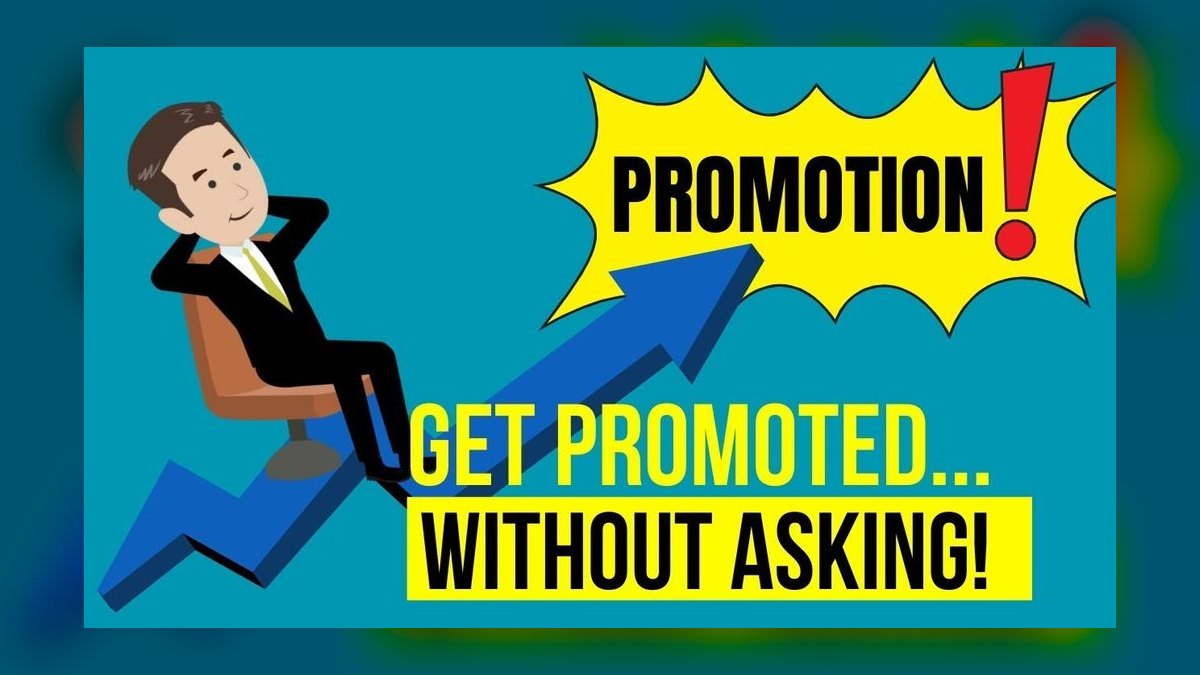
Consider the downstream effects of how you handle this conversation. Your manager will remember it for years. If you decline poorly, you may be excluded from future high-visibility projects, passed over for stretch assignments, or subtly moved to the "not ambitious" bucket. If you decline well, you can actually strengthen your relationship with your manager, gain influence over your own development plan, and position yourself for a different kind of promotion later—one that fits your actual trajectory rather than the default ladder.
How the Decline Mechanism Actually Works
The psychology of declining a promotion operates on three levers: perceived motivation, perceived self-awareness, and perceived commitment to the team. Your goal is to score high on all three while redirecting the conversation toward a mutually beneficial outcome. The mechanism is not about saying "no" once; it is about managing a multi-step negotiation that ends with your manager feeling like they gained insight, not lost a candidate.
Step one: Buy time without stalling. When the offer is first made, do not answer on the spot. Say something like, "I'm genuinely honored you're considering me for this. I want to give this the thought it deserves—can we schedule a follow-up in three to four days?" This signals seriousness, not hesitation. It also gives you time to prepare your reasoning and, if needed, consult with a mentor or coach. Avoid saying "yes" out of pressure and avoiding saying "no" so vaguely that your manager starts planning around your acceptance.

Step two: Separate the person from the role. In the follow-up meeting, open with genuine appreciation for the offer and the trust it represents. Then clearly state that your decision is about the role's fit with your current stage, not about the company or your manager. Use language like, "This is a great opportunity, and I've thought hard about it. The honest truth is that the team lead role requires X, Y, and Z, and I don't believe I can deliver those at the level this team deserves while also managing my current commitments." This framing puts the responsibility on the role's requirements, not your willingness.
Step three: Propose an alternative. This is the critical move that separates a "no" from a "no, but." Offer a concrete way to contribute that aligns with your actual strengths and availability. For example, if the promotion involves managing five people but you excel at technical architecture, propose taking on a mentorship role for two junior engineers while remaining an individual contributor. Or offer to lead a specific project that the team lead would otherwise own, such as the quarterly roadmap presentation or the hiring process for one open role. This demonstrates that your "no" is not a withdrawal from ambition but a recalibration of how you add value.
Step four: Set a timeline for revisiting. Close the conversation by expressing openness to future consideration. Say something like, "If the team lead role opens again in twelve to eighteen months, I'd love to be considered, especially if I've had the chance to develop my management skills through [specific project or training]." This keeps the door open without making a false promise. It also gives your manager a reason to invest in your development rather than writing you off.
The entire mechanism depends on your ability to articulate a specific, credible reason that is neither vague ("I'm just not ready") nor self-deprecating ("I couldn't handle it"). The sweet spot is a reason that is true, specific, and framed as a gap between the role's requirements and your current capacity—one you are actively working to close.

Real Numbers, Ranges, and Benchmarks
Understanding the actual stakes helps you calibrate your response. Data from leadership development firms and HR surveys consistently shows that the cost of a failed promotion is high—both for the individual and the organization. While specific figures vary by industry, several benchmarks are worth knowing.
Promotion failure rates. Studies of managerial effectiveness suggest that roughly 30 to 40 percent of new managers underperform in their first year, and a significant portion of those are either demoted, let go, or voluntarily step down within two years. The "Peter Principle"—where people rise to their level of incompetence—is not just a joke; it is a documented pattern in organizations with weak promotion criteria. If you have genuine doubts about your readiness, the probability that you will struggle is not trivial.
Compensation differentials. The salary increase for a typical promotion from individual contributor to first-line manager ranges from 10 to 20 percent, with 15 percent being a common midpoint. However, the total compensation impact is often larger when you account for bonus eligibility, stock grants, and benefits tiers. A 15 percent base salary increase on a $100,000 salary is $15,000, but the additional bonus potential might bring the total package increase to $25,000 or more. Knowing these numbers helps you weigh the financial cost of declining—and also helps you negotiate if you decide to accept.

Time-to-recovery for declined promotions. There is no formal statistic, but career coaches consistently observe that a well-handled decline does not permanently derail a career. The key variable is whether you remain visible and productive. Professionals who decline a promotion but then take on a high-impact project, publish internal thought leadership, or mentor others are typically reconsidered within twelve to twenty-four months. Those who decline and then go quiet are the ones who get sidelined.
The cost of accepting wrongly. Consider the hidden costs of accepting a promotion you are not ready for. A 2023 survey by a major HR association found that managers who left their roles within two years of promotion cited burnout (42 percent), lack of training (31 percent), and misalignment with their strengths (27 percent) as primary reasons. The financial cost to you includes potential severance, a gap in employment, and the difficulty of explaining a short managerial tenure in future interviews. The reputational cost is harder to quantify but often more damaging.
Benchmarks for alternative contributions. If you propose an alternative to the promotion, be specific about the value you can deliver. For example, mentoring two junior engineers for six months is worth roughly 20 to 40 hours of your time, which at a $100,000 salary translates to about $1,000 to $2,000 in direct cost—but the retention value to the company is often three to five times that, since replacing an engineer costs 50 to 200 percent of their annual salary. Framing your alternative in these terms shows your manager that you understand business value, not just your own preferences.

Industry variations. The norms for declining promotions differ by sector. In tech, declining a management track is increasingly common and often respected—the "individual contributor ladder" is a formal structure at companies like Google, Amazon, and Meta, allowing senior engineers to earn as much as directors without managing people. In finance and law, declining a promotion is rarer and riskier; partnership tracks are binary, and a "no" can be interpreted as a lack of commitment. In healthcare and education, promotions are often tied to certifications or seniority, so declining may simply delay your next opportunity rather than end it. Knowing your industry's norms helps you anticipate the reaction and prepare accordingly.
Trade-offs and Alternatives
Declining a promotion is not a single decision; it is a portfolio of trade-offs. You are trading short-term title and income for long-term alignment, but you are also trading your manager's immediate perception for a more complex long-term relationship. Understanding the full landscape of alternatives helps you choose the right path.
The "accept and manage up" alternative. Some professionals accept a promotion they are not sure about, betting that they can learn on the job. This works if the role has a strong support system—a good mentor, a patient team, or a formal training program. It fails if the role has high visibility and low tolerance for mistakes. If you accept, negotiate a 90-day onboarding plan, request a mentor, and set clear expectations for what success looks like. This converts a risky acceptance into a structured experiment.

The "decline and pivot" alternative. Instead of simply saying no, you can propose a different role that better fits your skills. For example, if you are being promoted to a manager role but you love client work, propose a "player-coach" role where you handle the biggest accounts while mentoring one or two junior staff. This is not always possible, but it is worth asking. The worst that can happen is your manager says no—and you are no worse off than if you had declined outright.
The "delayed acceptance" alternative. If the promotion is a good fit but the timing is wrong, ask for a delayed start. Say, "I'm honored and I think I can do this role well, but I have a personal commitment that will require significant attention for the next six months. Can we revisit this in Q3?" This keeps you in the running without committing to a timeline you cannot honor. It also shows that your concern is about quality, not motivation.
The "decline and negotiate development" alternative. Use the decline as leverage to get something else. If you say no to the promotion, ask for a development plan instead: a budget for a management training course, a stretch assignment that builds leadership skills, or a mentor from the executive team. This turns a negative into a positive and gives you a concrete path toward future readiness.

The "partial yes" alternative. In some cases, you can accept part of the promotion. For example, take the title and the responsibilities but defer the direct reports until you have completed a training program. Or take the salary increase but keep your current scope for six months. This is unusual, but it works in organizations that value flexibility and have the budget to accommodate it.
The "quiet decline" alternative. This is rarely advisable, but it exists. You can simply not engage with the promotion process—ignore the offer, avoid the conversation, and hope it goes away. This almost always backfires. Your manager will interpret it as disengagement, and you will lose the chance to shape the narrative. If you are tempted to go quiet, remember that the cost of a five-minute conversation is far lower than the cost of a damaged reputation.
Common Pitfalls and How to Avoid Them
Even with a solid script, professionals make predictable mistakes when declining a promotion. Recognizing these pitfalls in advance can save you from a conversation that goes sideways.

Pitfall one: Over-explaining. You do not need to justify your decision with a five-point presentation. Over-explaining signals defensiveness and invites your manager to argue with your reasoning. Keep your explanation to two or three sentences. If your manager pushes back, hold your ground calmly and repeat your core message. You are not asking for permission; you are informing them of a decision you have already made.
Pitfall two: Being vague about the future. If you say "I'm not ready" without proposing a path to readiness, your manager will reasonably conclude that you have no ambition. Always pair a "not yet" with a "here is what I am doing about it." If you are taking a course, say so. If you want to shadow a manager, ask. If you need more experience in a specific area, name it. This converts a negative into a development conversation.
Pitfall three: Badmouthing the role. Never say "I don't want to deal with managing people" or "that role seems like a headache." Even if true, this makes you sound disengaged and negative. Frame your reasoning in terms of strengths and fit: "I'm at my best when I'm deep in the technical work" is far better than "I hate meetings."
Pitfall four: Accepting out of guilt. Many professionals accept promotions they do not want because they feel guilty about disappointing their manager. This is a short-term fix with long-term consequences. If you accept and then fail, you will have disappointed your manager far more than if you had declined honestly. Remember that your manager's job is to fill the role, not to make you happy. A clear "no" helps them move on to other candidates faster.

Pitfall five: Letting the conversation end without a next step. A decline that ends with "okay, thanks for letting me know" is a missed opportunity. Always propose a next step: a development plan, a project you can take on, or a date to revisit the conversation. This keeps you engaged and gives your manager a reason to stay invested in you.
Pitfall six: Ignoring the emotional dimension. Your manager may be disappointed, frustrated, or even angry. Do not match their emotion. Acknowledge it: "I know this is not the answer you were hoping for, and I appreciate you taking the time to consider me." Then stay calm and professional. The conversation is about the role, not about your worth as an employee.
Pitfall seven: Making it about money. If the real reason you are declining is that the salary increase is not worth the added stress, do not say "the money isn't enough." This sounds greedy and will be remembered. Instead, frame it as a fit issue. If you want to negotiate the salary, do that separately—but do not combine a decline with a salary complaint.

Pitfall eight: Failing to follow up in writing. After the conversation, send a brief email summarizing your appreciation, your decision, and any agreed next steps. This creates a paper trail that protects you if the conversation is later misremembered. It also reinforces your professionalism and makes it clear that your decision was thoughtful, not impulsive.
Pitfall nine: Declining via email or Slack. This is a conversation you must have in person or over video. Text-based declines are too easy to misinterpret and too impersonal for a decision this significant. If your manager is remote, schedule a call. Do not hide behind asynchronous communication.
Pitfall ten: Letting the decline define you. After you decline, keep delivering at a high level. Do not go quiet, do not disengage, and do not dwell on what might have been. Your behavior after the decline matters more than the decline itself. Show your manager that your "no" was a one-time decision, not a shift in your overall commitment.
Related Questions
What if my manager pressures me to accept the promotion?
Stay calm and repeat your core message without adding new justifications. Say something like, "I understand you need this role filled, and I want to help. The honest truth is that I can't deliver at the level this role requires right now. Can we talk about what I can take on instead?" This acknowledges their pressure while holding your boundary.
How do I decline a promotion without revealing personal reasons?
You do not need to share personal details. Say, "I have some personal commitments that require my attention for the next several months, and I don't want to take on a role I can't fully commit to." This is honest, professional, and does not invite follow-up questions. You can always add that you remain fully committed to your current role.
Can I decline a promotion and still get a raise?
Yes, but it requires a separate conversation. After declining the promotion, you can say, "While I don't think the team lead role is the right fit right now, I do believe my contributions warrant a compensation review. Can we discuss that separately?" This separates the two issues and gives your manager a way to reward you without changing your role.
What is the best way to decline a promotion in writing?
Use writing only after a verbal conversation. The email should be brief: thank them for the offer, restate your decision, and propose a next step. Example: "Thank you again for considering me for the team lead role. After careful thought, I've decided to decline at this time, as I believe my current focus on [area] is where I can add the most value. I'd welcome the chance to discuss how I can support the team in other ways."
How do I decline a promotion when I plan to leave the company soon?
If you are planning to leave within six to twelve months, declining is often the right call. Say, "I'm flattered, but I'm not in a position to take on a multi-year commitment right now. I want to be transparent with you about that." This is honest and prevents you from accepting a role you would abandon quickly.
FAQ
Should I ever accept a promotion I don't want?
Only if you are willing to treat it as a learning experiment with a defined exit plan. Accept with a 90-day review: set clear goals, request a mentor, and be honest with yourself about whether the role is growing on you. If it is not, start planning your exit before the role damages your reputation. Accepting out of guilt or pressure is almost always a mistake.
How long should I wait before declining a promotion?
Take at least 48 hours, but no more than one week. Less than 48 hours looks impulsive; more than a week looks evasive. Use the time to write down your reasons, talk to a trusted mentor or coach, and prepare your talking points. If you need to consult your partner or family, factor that into your timeline.
What if my manager takes the decline personally?
If your manager reacts emotionally, stay calm and empathetic. Say, "I understand this is disappointing, and I appreciate that you thought of me. This decision is about my fit for this specific role, not about you or the team." If the relationship becomes strained, consider involving HR or a senior leader you trust, but give your manager a chance to process first.
Can declining a promotion affect my current role?
It can, but it should not. If your manager is professional, they will respect your honesty and continue to value your work. If they retaliate—by reducing your projects, excluding you from meetings, or giving you poor performance reviews—document everything and escalate to HR. Retaliation for declining a promotion is generally not acceptable, and most organizations have policies against it.
Should I tell my manager I plan to leave the company?
Only if you are certain and have a timeline. If you are exploring options but not committed, do not mention it. If you are leaving within six months, declining the promotion without mentioning your plans is fine; you do not owe them that information. If you are leaving within a month, consider whether the conversation is even worth having.
How do I decline a promotion in a small company where I am the only candidate?
Acknowledge the unique situation: "I know this puts you in a difficult position, and I'm sorry for that. I want to help you find a solution, whether that means recruiting externally, splitting the role, or having me take on some of the responsibilities temporarily." This shows that you care about the team's success, not just your own comfort.
Sources
- https://hbr.org/2019/11/when-to-turn-down-a-promotion
- https://www.forbes.com/sites/ashiraprossack1/2020/01/16/how-to-turn-down-a-promotion-without-hurting-your-career/
- https://www.themuse.com/advice/how-to-turn-down-a-promotion
- https://www.shrm.org/resourcesandtools/hr-topics/talent-acquisition/pages/how-to-decline-a-promotion.aspx
- https://www.fastcompany.com/90447704/how-to-say-no-to-a-promotion-without-derailing-your-career
- https://www.cnbc.com/2021/06/24/how-to-turn-down-a-promotion-at-work.html
- https://careersidekick.com/how-to-decline-a-promotion/
- https://www.indeed.com/career-advice/career-development/how-to-decline-a-promotion
Related on PULSE
- [How to negotiate a counter-offer without burning bridges](/knowledge/ed1042)
- [How to ask for a raise when your company is struggling](/knowledge/ed1031)
- [How to build a development plan when your manager won't give you one](/knowledge/ed1027)
- [How to handle being passed over for a promotion](/knowledge/ed1019)
- [How to transition from individual contributor to manager](/knowledge/ed1055)
- [How to tell your manager you are planning to leave](/knowledge/ed1063)
@Kory-White- · if Venmo asks, the last 4 of my number are 2012
 edBest running shoes for flat feet and knee pain in 2027
 edWhat are the top 10 cities for remote workers in Latin America for 2027
 edHow do I stop comparing my career progress to my friends
 edWhat are the top 10 family-friendly vacation spots in the U.S. for 2027
 edBest credit cards for travel rewards in 2027
 edBest noise-cancelling headphones for open offices in 2027
 edBest ways to make passive income with a full-time job in 2027
 edBest smartphones for battery life and camera quality in 2027
 edBest electric bikes for commuting under $2,000 in 2027
 edHow to give constructive feedback to a peer who's senior to you