
Best Milestone Birthday Party Venues in New York City (2027)
 Curated byKory White · Fractional CRO · Maryland
 PULSEKNOWLEDGE LIBRARY
Quality
Certified
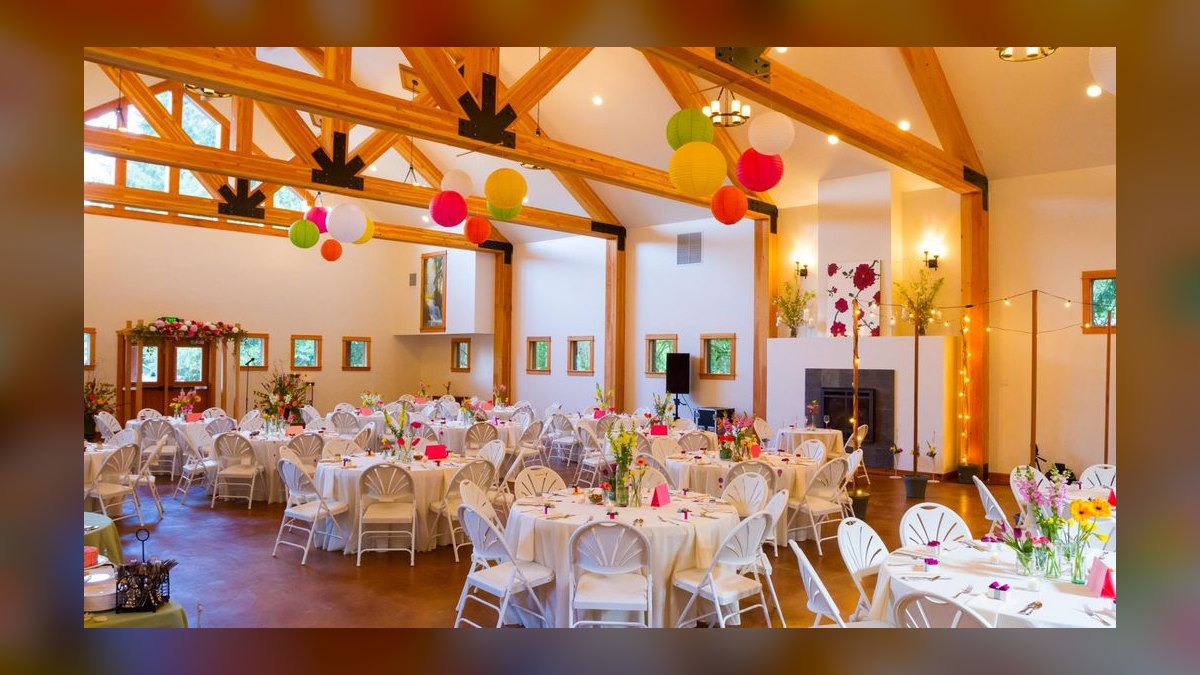
For a milestone birthday in New York City, book a venue whose capacity matches your real guest count, then negotiate the food-and-beverage minimum. Expect roughly $3,000–$6,000 minimums for a semi-private skyline lounge, $150–$400 per person for hotel ballrooms and restaurants, and $30,000–$75,000 for a full landmark buyout.
The outcome you should expect
A milestone birthday in New York City is not a restaurant reservation with balloons — it is a small event production with a contract, a deposit schedule, a floor plan, and a final headcount deadline. The outcome you should expect from a well-run booking process is a signed agreement six to twelve months before the date, a food-and-beverage minimum you can realistically hit without over-ordering, and a final invoice that lands within 15–30% of the number you were first quoted.
That last gap is the part most first-time hosts get wrong. A venue quotes you a $10,000 food-and-beverage minimum and you budget $10,000. The real number is closer to $13,000–$14,000 once New York City sales tax (8.875% on food and beverage) and a service charge or administrative fee of 20–24% are applied on top. Some venues apply the service charge to the minimum itself; others apply it to actual spend. Ask which, in writing, before you sign anything — the difference on a $30,000 buyout is thousands of dollars.
The second outcome to expect is a narrowing funnel. If you start with a list of twenty venues, roughly half will be eliminated on capacity alone, a third of the survivors will be unavailable on your date, and you will end up touring three to five. Milestone hosts who tour more than five venues almost always report decision fatigue rather than a better outcome. Build the shortlist on hard filters first — guest count, date availability, and budget ceiling — and only then evaluate the soft factors like atmosphere, view, and food.

Third, expect to spend real time on the guest list before you spend money on the venue. In New York City the practical difference between 70 guests and 110 guests is enormous: 70 fits comfortably into a semi-private lounge area with a minimum in the low four figures, while 110 pushes you into full-buyout territory or a larger loft, often doubling or tripling the spend. Nail the count within ±10 before you tour, because touring a room sized for the wrong number wastes everyone's time.
Finally, expect that the venue is only 55–70% of your total cost. Photography, a DJ or band, floral and decor, a cake, printed invitations, and transportation add up. A useful planning ratio for a mid-range milestone party in the city: if the venue and catering come to $20,000, budget another $8,000–$12,000 for everything else. Hosts who blow their entire number on the room end up with a beautiful space and a phone-photo album.
What drives the outcome
Five variables drive almost every dollar and every stress point in a New York City milestone booking: guest count, date, pricing model, inclusions, and the beverage structure. Understanding how they interact is what separates a host who negotiates well from one who simply accepts the first proposal.
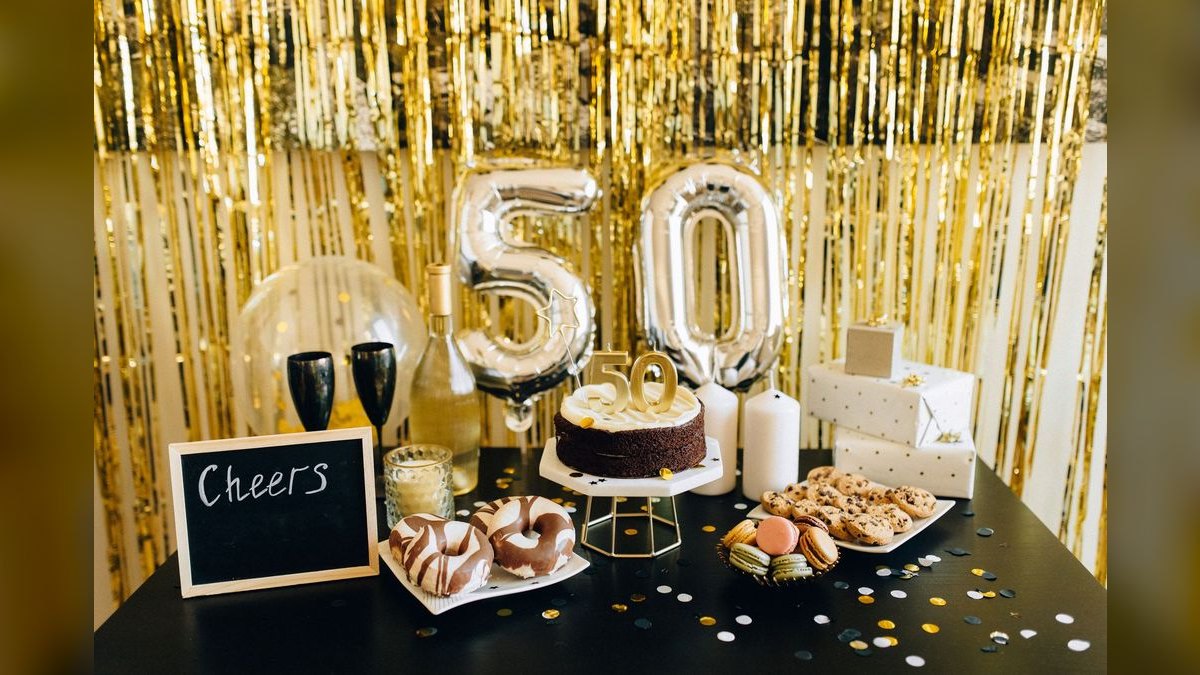
Guest count is the master variable. It determines which venues are even eligible, and it interacts non-linearly with price. Rooms have thresholds, not sliding scales. A lounge that holds 75 semi-private guests does not hold 85 for slightly more money — it requires a buyout, and the buyout minimum may be three times the semi-private minimum. Find the threshold, then decide whether you are staying under it or committing to the next tier.
The date moves price by 30–60% within the same room. In New York City, the expensive windows are Thursday through Saturday evenings, the entire month of December, and the May–June and September–October wedding shoulder seasons. The cheap windows are Sunday through Wednesday, January through early March, and August, when much of the city empties out. Moving a 50th birthday from a Saturday in October to a Sunday in February at the same venue can cut the minimum in half. If the actual birthday falls on a Tuesday, celebrating on the Tuesday is both accurate and cheap.
Pricing model determines what you are actually agreeing to. Hotels and full-service caterers usually quote per person: a plated dinner package at $200–$400 per head, inclusive of a set number of bar hours and a service charge. Lounges, clubs, and rooftops usually quote a food-and-beverage minimum: a floor you must spend, regardless of how many people show up. Per-person pricing punishes you for a big list; minimums punish you for a small one. If your list is soft, a minimum is riskier — 40 people cannot easily drink and eat their way through a $12,000 floor.
Inclusions are where quoted numbers become misleading. Ask explicitly whether the number includes tables and chairs, linens, glassware, staffing, a coat check, security, a sound system, a projector, and setup and breakdown labor. Purpose-built event spaces frequently include most of this. Raw lofts and industrial spaces frequently include almost none, and you will be renting through a third-party production company at a real cost of $4,000–$15,000 depending on scale. Two venues quoting "$15,000" can differ by $10,000 in true landed cost.

Beverage structure is the fastest lever you have. An open premium bar for four hours typically runs $70–$120 per person in New York City. A beer-wine-and-two-signature-cocktails bar runs closer to $40–$65. Consumption bar (you pay for what is poured) can be cheaper for a light-drinking crowd and much more expensive for a heavy one. For a milestone with a broad age range — parents, kids, colleagues — a limited bar plus a hosted toast usually satisfies everyone at 40–50% of the premium-package cost.
Benchmarks and realistic ranges for New York City venues
Concrete numbers help more than adjectives. The ranges below reflect how milestone bookings are commonly structured across the main venue categories in the city. Treat them as planning brackets, not quotes — every venue prices its own date, and any number you act on should come from a written proposal.
Landmark ballrooms and hotel ballrooms. The Rainbow Room on the 65th floor of 30 Rockefeller Plaza is the archetype: a restored 1934 Art Deco room with a revolving dance floor, seating roughly 220 for dinner and holding around 300 reception-style, with buyout minimums commonly landing in the $30,000–$60,000-plus range depending on night and season. The Pierre's two-story Grand Ballroom on Fifth Avenue seats up to about 480 for dinner, with plated packages typically starting in the $300–$400 per person band. Tavern on the Green's Crystal Room inside Central Park holds around 300, with per-person catering commonly quoted from $175–$300. These rooms buy you grandeur, in-house culinary teams, and staff who have run a thousand events. Book six to nine months out for fall and December.

Purpose-built event spaces. The Glasshouse at 660 12th Avenue, opened in 2021 on the far West Side, runs to roughly 1,875 reception and around 600 seated across its floors, with a wraparound terrace and Hudson River views; full-floor events commonly begin in the $40,000–$75,000 range. The advantage of a purpose-built room is infrastructure: loading docks, three-phase power, rigging points, and freight elevators designed for production. If your milestone includes a stage, a live band, projection, or elaborate lighting, that infrastructure saves you thousands in workarounds.
Rooftops and lofts. Tribeca Rooftop + 360° at 2 Desbrosses Street pairs a wood-beamed penthouse loft with a wraparound outdoor deck, running to roughly 400 reception and 250 seated, with all-inclusive packages frequently quoted from $200–$350 per person plus venue fees. Gallow Green atop the McKittrick Hotel in Chelsea — the "Sleep No More" building — is a string-lit rooftop garden holding roughly 150–250 for a buyout, with minimums commonly in the $10,000–$25,000 band. Rooftops carry weather risk; confirm the indoor backup plan, the cutoff time for the call, and whether tenting costs extra.
Skyline lounges — the value tier. The Skylark, a 30th-floor cocktail lounge at 200 West 39th Street with a south-facing terrace, accommodates roughly 50–75 guests in semi-private areas with minimums often starting around $3,000–$6,000; a full buyout of about 150 runs considerably higher. This is the sweet spot for a 30th or 40th where you want a dramatic view without ballroom money. The trade-off is that semi-private means exactly that: other guests are in the room, the music is the venue's, and you do not control the space.

Character venues and waterfront. Brooklyn Winery in Williamsburg — a working urban winery with an exposed-brick loft and barrel room — holds roughly 180 reception and 120 seated, with buyout minimums commonly in the $8,000–$20,000 range including house-made wine. Battery Gardens, inside Battery Park at Manhattan's southern tip, reaches about 300 reception and 200 seated with glass-walled rooms facing New York Harbor and the Statue of Liberty, packages frequently quoted from $150–$250 per person.
Nightlife. Marquee at 289 10th Avenue in Chelsea offers two levels, LED walls, and a serious sound system, with private and semi-private bookings scaling from about 100 to 800-plus; semi-private tables can start in the $2,000–$5,000 minimum range on bottle-service structures. This is the cheapest way to get a real dance floor and the least flexible on food.
Per-guest sanity check. Divide any proposal by your headcount. Under $100 per guest all-in is a lounge or bar package. $150–$250 is a solid mid-tier restaurant or waterfront event. $300–$450 is a hotel ballroom or landmark room with a plated dinner. Above $500 you are buying exclusivity, a view, or a name. If a proposal lands far outside the band you expected, something in the inclusions is different — find out what.

Risks, edge cases, and failure modes
The minimum you cannot hit. The single most common failure: a host signs a $15,000 food-and-beverage minimum expecting 100 guests, 65 show up, and the party ends up paying for $4,000 of food nobody ate. Minimums do not adjust downward for attrition. Protect yourself by negotiating the minimum against a conservative headcount — the number you are certain of, not the number you hope for — and by asking whether unspent minimum can be converted into takeaway bottles, an extended bar hour, or an upgraded cake service rather than simply forfeited.
Attrition and the final count deadline. Most venues require a final guaranteed count 7–14 days before the event and will bill for that number regardless of who actually shows. A 10–15% swing is often permitted up to two to four weeks out. New York City milestone parties reliably see 10–20% no-show among casual invitees, higher in bad weather and in December. Guarantee low and add rather than guarantee high and cut.
Hidden fee stacking. Beyond tax and service charge, watch for: a bartender fee per station, a coat-check fee or a mandatory attendant, security guards required above a headcount threshold (often one guard per 75–100 guests), a cake-cutting fee of $3–$8 per person, a corkage fee if you bring wine, overtime billed in 30-minute increments at a steep rate, and load-in or load-out windows that trigger extra labor. Ask for a line-item estimate that includes every one of these before signing.
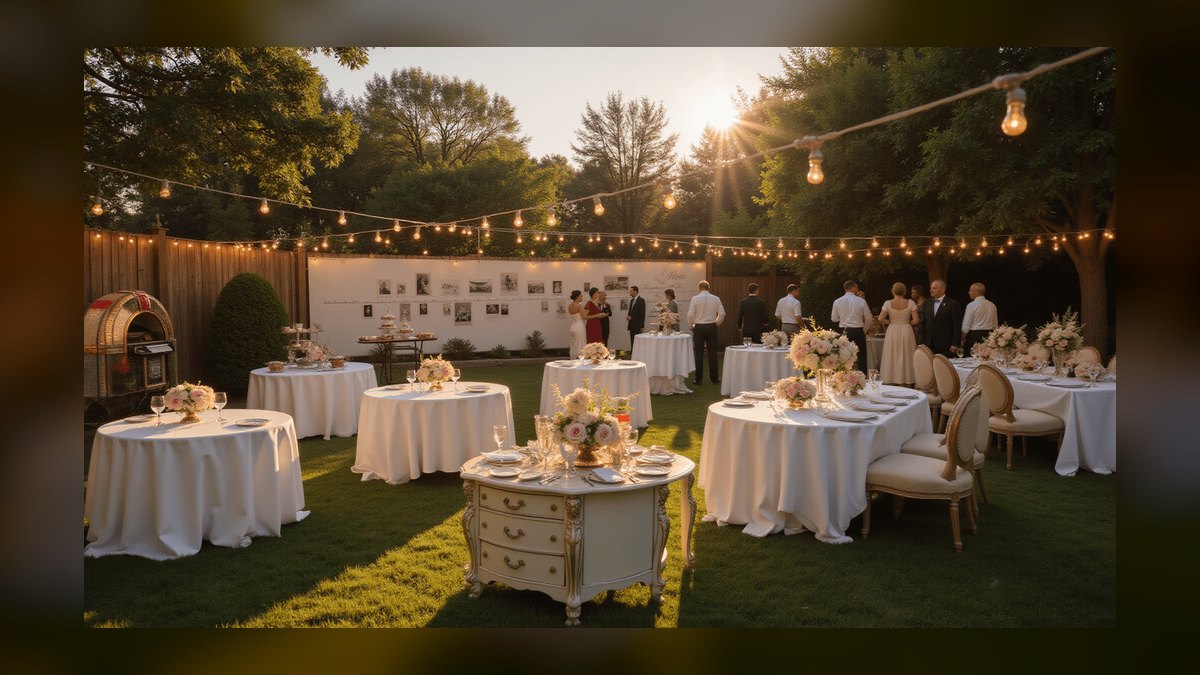
Vendor exclusivity. Many New York City venues maintain preferred or exclusive vendor lists for catering, floral, AV, and sometimes photography. Exclusive means you must use them at their price. Preferred means you can go outside but may pay a buyout fee — typically $1,000–$5,000 — for the privilege. If you already have a caterer or a band you love, confirm exclusivity on the first call, not after you have fallen in love with the room.
Noise, curfew, and neighbors. Rooftops and outdoor terraces in residential areas frequently have hard amplified-music curfews, often 10pm or 11pm, after which the party must move indoors or go acoustic. This blindsides hosts who planned a midnight toast outdoors. Get the curfew in writing and plan the schedule around it.
Accessibility and elevator reality. Loft and rooftop venues in older buildings sometimes have a single small passenger elevator. Loading 200 guests up eleven floors through one cab takes 45 minutes and wrecks your timeline. If any guest uses a wheelchair or has mobility limits — a real consideration for a 60th or 70th where elderly parents attend — confirm step-free access from the street, not just an ADA-compliant restroom.

Weather contingency. For any outdoor component between April and October, ask three questions: what is the indoor backup space, does it hold the full guest count, and when is the call made? A backup room that holds 120 when you invited 200 is not a backup. Tenting is a real option at some venues but adds cost and often needs to be committed a week out, before the forecast is reliable.
Date-shift risk. If you postpone, is your deposit transferable? Many contracts allow one date change within twelve months at no penalty if requested more than 90 days out, and become punitive inside that window. Read the force majeure and cancellation clauses — most venues retain the deposit entirely inside 60–90 days.
Overbooking the room. A room rated for 200 reception feels crowded at 200 once you add a bar, a DJ booth, a cake table, and a dance floor. Practical comfort is roughly 75–80% of the stated maximum. Under-filling is the opposite failure: 60 guests in a 250-capacity loft feels like a party nobody came to. Match the room to the count, not to the aspiration.
A practical rollout plan
Work backward from the date. The sequence below is what a controlled New York City milestone booking looks like from twelve months out to the day itself.
Twelve to nine months out. Fix the date range and the ceiling budget. Build the guest list in a spreadsheet with a confidence column — definite, likely, long shot — and use the definite-plus-likely total as your planning number. Decide the format: seated dinner, cocktail reception, or dinner-then-dance-floor. This one decision eliminates most of the venue market for you.
Nine to six months out. Send an identical inquiry email to eight to twelve venues on the same day. Include date, approximate headcount, format, and your budget band. Identical inquiries produce comparable proposals; vague ones produce a pile of documents you cannot line up side by side. Ask every venue the same five questions: what is the all-in cost including tax and service, what is included, what is the vendor policy, what is the final-count deadline, and what is the cancellation schedule.
Six to four months out. Tour three to five finalists, ideally at the same time of day as your event so you see the actual light. Walk the guest path from the street to the coat check to the bar. Check the restroom count against your headcount. Then negotiate — on a Sunday-through-Wednesday date, on the bar package, on an extra hour, on parking or a hotel block. Sign the contract and pay the deposit, typically 25–50%.
Four to two months out. Book the vendors the venue does not supply: photographer, music, floral, cake, invitations. Send invitations eight to ten weeks out for a milestone — earlier than a casual party because out-of-town guests need to book travel. Draft the run-of-show: guest arrival, bar open, dinner or stations, toasts, cake, dance floor, last call.
Six to two weeks out. Chase RSVPs directly by phone or text; email alone leaves a 20–30% silent tail. Confirm the menu, dietary restrictions, floor plan, and AV needs. Submit the final guaranteed count on the venue's deadline, guaranteeing conservatively. Do a walkthrough with the venue's event manager and every vendor who will load in.
The week of. Confirm load-in times in writing with each vendor. Assign one person who is not the host to be the day-of contact — the venue will call somebody at 4pm with a question, and it should not be you. Print two copies of the timeline. Pay the balance on the venue's schedule, usually due 3–7 days prior.
FAQ
How far in advance should I book a venue in New York City?
Six to twelve months for weekend dates at top-tier rooms, and eight to ten months for peak spring and fall. December books furthest out because corporate holiday parties compete for the same rooms. Sunday-through-Wednesday and winter weekday dates often have availability inside 90 days, sometimes at a meaningful discount.
What guest count works best for a milestone birthday?
Semi-private lounge areas typically top out around 50–75. Restaurant and loft buyouts commonly land at 120–200 reception. Ballrooms handle 200–480 seated. The practical comfort ceiling is roughly 75–80% of a room's stated maximum once you account for a bar, a DJ, a cake table, and a dance floor.
Does the food-and-beverage minimum equal my final bill?
No. Add New York City sales tax of 8.875% on food and beverage plus a service charge or administrative fee typically running 20–24%, and the final number commonly lands 25–35% above the quoted minimum. Ask in writing whether the service charge is calculated on the minimum or on actual spend — on a large buyout the difference is thousands.
What happens if my guest count changes after I sign?
Most contracts permit a 10–15% swing up to two to four weeks out, then lock the final guaranteed count 7–14 days before the event. You are billed on the guarantee even if fewer people attend. Guarantee conservatively and add late rather than guarantee high and try to cut.
Do venues require me to use their catering and vendors?
Frequently, yes. Hotels and full-service venues are almost always exclusive on catering and bar. Raw lofts and industrial spaces are often open or preferred-list, where going outside the list may trigger a buyout fee of roughly $1,000–$5,000. Confirm the policy on your first call — it materially changes the comparison between two proposals.
Is a rooftop worth the weather risk for a summer milestone?
Only if the indoor backup holds your full guest count. Ask when the rain call is made — typically 24–48 hours out — and whether tenting is available and at what cost. A rooftop with a genuine full-capacity indoor alternative is low risk; one with a 120-person backup for a 200-person party is a gamble.
How much does a milestone birthday party cost in New York City?
A realistic all-in range is $8,000–$25,000 for 75–125 guests at a mid-tier venue, and $40,000–$100,000-plus for a landmark ballroom buyout. Venue and catering typically account for 55–70% of the total; the rest goes to photography, music, floral, and cake.
Is a food-and-beverage minimum better than per-person pricing?
It depends on list certainty. A minimum is better when your headcount may grow, since you are buying a floor rather than a per-head rate. Per-person pricing is safer when the list is small or uncertain, because you never pay for guests who do not come.
When is the cheapest time to book a New York City venue?
Sunday through Wednesday evenings, January through early March, and August. Avoid December entirely — corporate holiday demand pushes minimums to their annual peak. Shifting a Saturday October date to a Sunday in February can cut the minimum roughly in half at the same venue.
Can I bring my own cake and decorations?
Most venues allow an outside cake with advance approval, often charging a cutting and plating fee of roughly $3–$8 per person. Decor is usually limited to non-permanent items — no nails, no adhesive, no open flame. Larger installations often must go through the venue's in-house or preferred decor team.
Sources
- https://www.rainbowroom.com/
- https://www.theglasshousenyc.com/
- https://www.thepierreny.com/
- https://mckittrickhotel.com/
- https://www.tavernonthegreen.com/
- https://tribecarooftop.com/
- https://www.brooklynwinery.com/
- https://www.nyc.gov/site/finance/business/business-nyc-taxes.page
- https://www.nycgo.com/
- https://www.theknot.com/marketplace/wedding-reception-venues-new-york-ny
Related on PULSE
- Top 10 Milestone Birthday Party Venues in the US in 2027
- Best 30th Birthday Party Venues in Nashville, Tennessee (2027)
- Best Retirement Party Venues in the Washington, D.C. Area (2027)
- Best Corporate Holiday Party Venues in Chicago (2027)
- The 10 Best New Year's Eve Celebrations Around the World in 2027
- The 10 Best Food and Wine Festivals in Australia and New Zealand in 2027
This page will be disappearing soon. Save it to your device for $1 — or read it free while it is here.
@Kory-White- · if Venmo asks, the last 4 of my number are 2012
This page is gone.
This one is off the shelf now. $1 keeps it on your phone for good — the whole page, pictures and diagrams included.
 pulse-eventsThe 10 Best Bachelor & Bachelorette Destinations by Vibe for 2027
 pulse-eventsThe 10 Best Barn Wedding Venues in the United States in 2027
 pulse-eventsBest 30th Birthday Party Venues in Nashville, Tennessee (2027)
 pulse-eventsThe 10 Best Scottsdale Bachelor & Bachelorette Experiences for 2027
 pulse-events10 Best Corporate Retreat Venues in the Northeast U.S. (2027)
 pulse-eventsIs Events worth it in 2027?
 pulse-events10 Best Large Vacation Rental Homes for Family Reunions in 2027
 pulse-eventsBest Retirement Party Venues in the Washington, D.C. Area (2027)
 pulse-events10 Best Beach Resorts for Family Reunions in 2027
 pulse-events10 Best Beach Resort Corporate Retreat Venues in the U.S. (2027)