
How many people attend the 10 largest music festivals in the world in 2027?
 PULSEKNOWLEDGE LIBRARY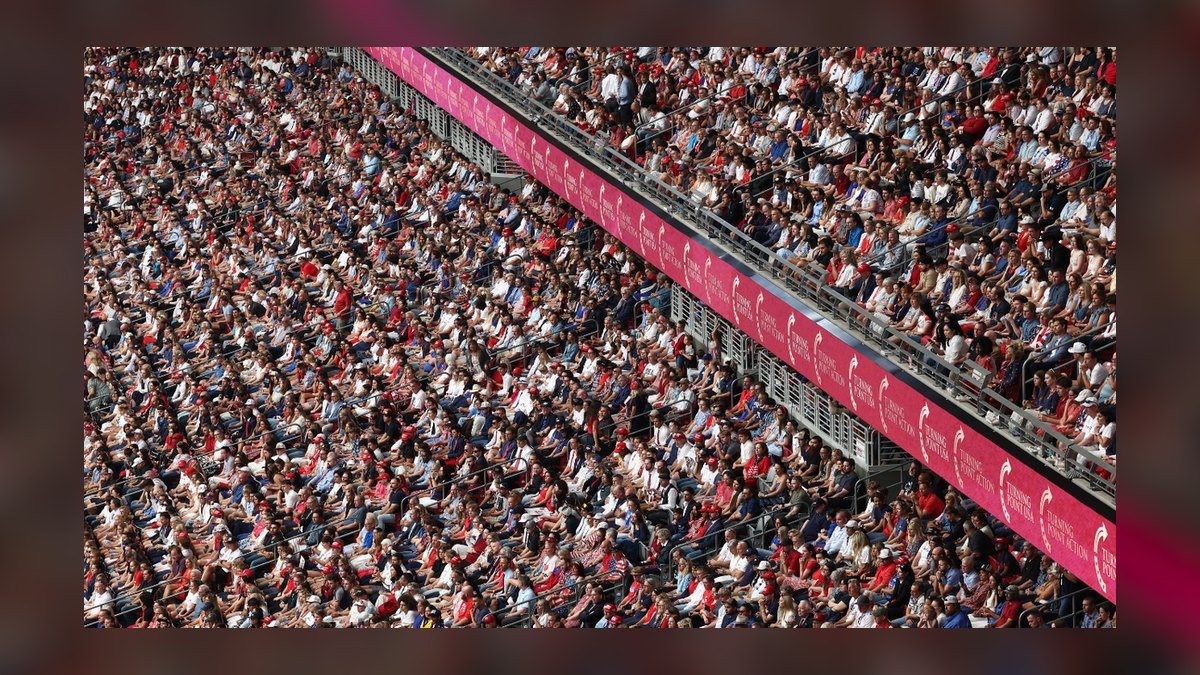
The 10 largest music festivals in the world draw roughly 5 to 7 million people combined across their 2027 editions. Free civic festivals like Donauinselfest and Mawazine dominate the totals with multi-million crowds, while ticketed giants such as Rock in Rio, Tomorrowland, Coachella and Glastonbury each attend to between 200,000 and 700,000 people.
A concrete scenario that frames the problem
Picture a sponsorship analyst asked a deceptively simple question on a Monday morning: how many people attend the ten largest music festivals in the world, and what does that mean for a 2027 media buy? She opens ten tabs. The first says Donauinselfest in Vienna drew "about three million." The second says Mawazine in Rabat drew "over two and a half million." The third says Coachella "sold out at 125,000 per day." The fourth says Glastonbury has a licence for around 210,000 people. Within twenty minutes she has ten numbers that cannot legally be added together, because each one counts a different thing.
This is the central trap of the question. The word "attend" is doing four incompatible jobs at once. At Donauinselfest, a free, open, un-ticketed event spread along an island in the Danube over three days, the headline figure is an estimate of total footfall — every entry, every re-entry, every person who wandered in for forty minutes on the way home from work. At Coachella, the figure is a hard capacity number set by a Riverside County permit, multiplied by the number of days, and then multiplied again by two identical weekends. At Glastonbury, the number is a licensed capacity that includes tens of thousands of crew, traders, performers and stewards who are not paying customers at all. At Rock in Rio, the number is tickets sold across seven non-consecutive nights, where a meaningful share of buyers return for multiple nights on separate tickets.

So the analyst's ten numbers are: an estimate, a permit ceiling, a licence figure, and a ticket count — plus six more variations. Adding them produces something between five and seven million, and that range is not sloppiness. It is the honest width of the uncertainty once you admit that free-event crowd estimates carry error bars of twenty to forty percent, and that person-days are not people.
The practical consequence matters more than the trivia. If she reports "the ten largest festivals reach seven million people," a media planner will treat that as seven million unique humans and model reach accordingly. The real number of unique individuals is far smaller — probably in the two to three million range once you strip out multi-day counting, re-entry double-counting and repeat weekend attendance. Conversely, if she reports only ticketed, deduplicated attendees, she will understate the on-site audience that a brand activation actually stands in front of, which is genuinely closer to the larger figure. Neither number is wrong. They answer different questions, and the only defensible output is one that states which convention is in use before it states a total.

For 2027 specifically, there is an added wrinkle: several of these events shift format year to year. Rock in Rio alternates between Rio de Janeiro and Lisbon editions on a rotating calendar. Glastonbury periodically takes a fallow year to let the farmland recover, and has done so roughly every five or six years. Tomorrowland's Belgian edition has run across two or three weekends depending on the year. Any credible 2027 count has to name which editions it is counting, or it is comparing a two-weekend year against a one-weekend year and calling the difference growth.
How the mechanism actually works
The number a festival publishes is the output of a chain, and each link in that chain changes the answer. Understanding the chain is what lets you convert one festival's figure into a form comparable with another's.

The chain starts with a legal ceiling. Nearly every large festival operates under a licence, permit or safety certificate issued by a local authority, and that document contains a maximum instantaneous occupancy — the largest number of bodies allowed on site at any one moment. This is a fire-and-egress calculation driven by exit widths, medical provision, water points, toilet counts and crowd-density modelling of the main stage pit. Glastonbury's licence figure of roughly 210,000, Coachella's site cap in the 125,000 range per day, and Reading and Leeds' respective caps are all instances of this. The ceiling is a per-moment number, not a per-day number and definitely not a per-festival number.
The second link is the multiplier. Take the daily ceiling and multiply by days, and you get person-days — sometimes called "attendances" in the industry, deliberately, because they are not persons. A three-day festival at 100,000 capacity reports 300,000 attendances. Nobody in that total is a new person on day two. When a festival runs identical duplicate weekends, as Coachella has done, the multiplier doubles again and the language gets even looser: "250,000 attendees across two weekends" is a person-day figure in which a meaningful minority are literally the same humans who bought both weekends.

The third link is who counts as an attendee. Large festivals employ enormous non-paying populations: stewards, medics, security, bar staff, traders, artists, artist guests, production crew, press and guest-list holders. At a site like Glastonbury the working population runs to tens of thousands. Some published figures include them because the licence does; some exclude them because the promoter is reporting commercial performance. A ten to twenty percent swing between the two conventions is normal.
The fourth link is measurement method, and this is where the free festivals diverge completely. Donauinselfest and Mawazine have no gates and no tickets. Their totals come from crowd estimation — some combination of police estimates, organiser estimates, aerial or drone density sampling, mobile-network cell data, and transit ridership deltas. Density-based estimation multiplies an occupied area by an assumed persons-per-square-metre figure, and that assumption is the whole ballgame: 2 people/m² versus 4 people/m² doubles the answer for the same photograph. Mobile-network methods count SIMs, then extrapolate for market share and multi-device users. Both approaches are legitimate and both routinely disagree with each other by large margins.
The fifth link is incentive. Attendance figures are marketing assets. They set sponsorship rates, they justify public subsidy for civic festivals, and they anchor "world's biggest" claims that drive ticket demand. There is no independent auditor for most of these numbers. That does not make them fabricated, but it does mean the published figure tends to sit at the optimistic end of a defensible range rather than the middle.
mermaid flowchart LR Q["How many people<br/>attend the 10 largest?"] --> M1["Person-days<br/>uncorrected"] Q --> M2["Unique people<br/>deduplicated"] Q --> M3["Ticketed only<br/>audited gates"] M1 --> R1["5-7 million<br/>reproducible, overstates reach"] M2 --> R2["2-3 million<br/>right unit, assumption-dependent"] M3 --> R3["1.5-2 million<br/>auditable, drops free giants"] R1 --> U["Use for logistics,<br/>site ops, consumption"] R2 --> V["Use for reach,<br/>marketing, public health"] R3 --> W["Use for commercial<br/>comparison"] </invoke>

Common pitfalls and how to avoid them
Pitfall: adding published totals without checking the unit. The single most common error. One festival reports a daily cap, another reports a full-run total, a third reports a two-weekend combined figure. Summing them mixes units the way adding miles to litres does. The fix is mechanical: for every event, write down the number, the period it covers, and whether it includes crew. Only then add.
Pitfall: treating a licence capacity as an attendance figure. A licence says how many may be present; it does not say how many were. Most large festivals run close to their cap because they sell out, so the error is usually small — but not always, and never for a free event, which has no licence-style cap in the same sense.
Pitfall: assuming free-event estimates are precise. Crowd estimates for open public events carry error bars that would be considered unacceptable anywhere else. Treat any free-festival figure as plus or minus twenty-five percent at minimum, and present it as a range. If you have to give a point estimate, take the lower bound of the credible range rather than the promoted headline, because the promotional incentive runs one direction only.
Pitfall: double-counting duplicate weekends. When a festival runs the same lineup across two weekends, a portion of the audience attends both. Reporting the combined figure as unique people overstates reach. There is no public dedup rate for this, so state the assumption you used.
Pitfall: comparing a fallow year to a normal year. If a major festival skips a year and you compare totals year over year without noting it, you will report a collapse in global festival attendance that did not happen. Always list which editions are in the count.
Pitfall: currency of the data. Attendance figures circulate for years after the edition they describe. A figure quoted in a 2027 article may originate from a 2019 edition. Trace every number to a named year and a named edition before using it. If you cannot find the year, do not use the number.
Pitfall: conflating "largest festival" with "largest music festival." Several of the biggest gatherings on earth are religious, civic or cultural events with music components rather than music festivals. Including them inflates the total dramatically and changes what the list means. Decide whether the defining feature is that music is the primary draw, state that test, and apply it consistently.
Pitfall: silent methodology. The failure that causes the most downstream damage is not a wrong number, it is a number without a stated method. A figure with a clear method and a wide range is more useful than a precise-looking figure with no provenance, because the first can be adjusted and the second cannot be audited.

A workable verification routine. For each of the ten events: find the organiser's own published figure and the year it refers to; find one independent report of the same edition; note the gap between them; check the site area against the claimed crowd for plausible density; classify the figure as capacity, tickets, or estimate; and record whether crew are included. Ten events, six checks each — an afternoon's work that turns an unusable pile of numbers into a defensible answer with an honest range.
Related questions
Which single music festival has the highest attendance?
By total reported footfall, the free civic festivals lead — Donauinselfest in Vienna is routinely described as the largest open-air festival in Europe, with multi-million reported attendance over three days. Summerfest and Mawazine also carry "world's largest" claims under different counting conventions.
Why do ticketed festivals like Coachella report smaller numbers than free ones?
Because their figures are gate-scanned and capacity-capped by permit, while free festivals report open-access footfall estimates. Coachella physically cannot exceed its licensed site occupancy; a free riverside festival has no gate to constrain the count.
Does attendance mean unique people or total visits?
Almost always total visits, expressed as person-days. A three-day festival at 100,000 capacity reports 300,000 "attendees," but the unique population is closer to 100,000 to 130,000. Always check which unit a source is using before comparing.
How much will 2027 totals differ from recent years?
Probably only a few percent, because these events are capacity-constrained rather than demand-constrained. The larger swings come from calendar decisions — fallow years, edition rotations, and whether a festival runs one weekend or two.
Is there an official body that audits festival attendance?
No global auditor exists for festival attendance the way one exists for album sales or box office. Figures come from organisers, local authorities and police estimates, none of which use a shared standard, which is why credible sources routinely disagree.
FAQ
How many people attend the 10 largest music festivals in the world in 2027?
Roughly 5 to 7 million person-days across the ten largest events, dominated by two free civic festivals that together account for more than half the total. Converted to unique individuals rather than repeat visits, the figure is closer to 2 to 3 million. The wide band is not imprecision — it reflects the genuine spread between crowd-estimate methods for free events and the different conventions each festival uses when it publishes a number.
Which festivals are actually in the top ten?
The list is stable year to year: Donauinselfest, Mawazine, Summerfest, Rock in Rio, Lollapalooza Chicago, Tomorrowland, Coachella, Glastonbury, Ultra Miami, and one of Sziget, Exit, Primavera Sound or Reading and Leeds depending on the year and the ranking method used. Ranking by revenue instead of headcount produces a substantially different list weighted toward high-priced Western events.
Why can't I just add the published numbers together?
Because they measure different things. One is a per-day permit ceiling, another is a multi-day ticket count, another is an estimate of open-access footfall including re-entry. Adding them produces a number with no consistent meaning. The fix is to normalise every figure to the same unit — person-days is the practical choice — and record for each event whether crew and traders are included.
What is a realistic error bar on these figures?
For gate-scanned ticketed events, a few percent. For free public festivals estimated by crowd density or mobile-network data, plus or minus twenty-five percent or more is normal, and two credible methods applied to the same crowd can differ by a factor approaching two. Any top-ten total is therefore dominated by the uncertainty in the two or three largest free events.
Do crew, traders and performers count as attendees?
It depends on the source. Licensed-capacity figures generally include everyone on site, which at a large greenfield festival can mean tens of thousands of workers. Commercial reporting usually counts paying customers only. The difference between the two conventions is commonly ten to twenty percent of the headline number, so it matters when comparing events.
What single number should I quote if I only get one?
Quote the person-day total with its unit named explicitly — "approximately 6 million person-days across the ten largest music festivals" — and add the unique-persons range in the same breath. A number with a named unit and a stated range survives scrutiny; a bare figure does not.
Sources
- https://www.pollstar.com/
- https://www.billboard.com/
- https://www.iq-mag.net/
- https://www.glastonburyfestivals.co.uk/
- https://www.coachella.com/
- https://www.rockinrio.com/
- https://www.tomorrowland.com/
- https://www.donauinselfest.at/
- https://www.mawazine.ma/
- https://www.summerfest.com/
Related on PULSE
- How festival organisers calculate site capacity and crowd density limits
- Why ticketed and free events report attendance using different units
- What sponsorship pricing actually buys at a large music festival
- How multi-weekend festival formats change reach and revenue economics
- Reading crowd-estimate methodology: density sampling versus mobile-network data
 eventsThe 10 Best Music Festivals by Attendance in 2027
 pulse-eventsThe 10 Best Texas Hill Country Wedding Venues in 2027
 pulse-eventsThe 10 Best Vineyard Wedding Venues in California (Outside Napa) in 2027
 pulse-eventsHow do you get started with Events in 2027?
 pulse-eventsTop 10 best Events options in 2027
 pulse-eventsThe 10 Best Tuscany Wedding Venues in 2027
 pulse-eventsIs Events worth it in 2027?
 pulse-events10 Best Lake House Rentals for Family Reunions in 2027
 pulse-eventsBest Corporate Holiday Party Venues in Chicago (2027)
 pulse-events10 Best Team-Building Destination Venues for Corporate Offsites (2027)