
Should I open or buy a McDonald's franchise in 2027?
 Curated byKory White · Fractional CRO · Maryland
 PULSEKNOWLEDGE LIBRARY
Quality
Certified

Only if you bring $750,000+ in non-borrowed liquid cash, a decade of multi-unit quick-service operations experience, and a plan to run three or more restaurants. Buying an existing store is faster and lower-risk than a new build; both demand full-time owner-operation. Single-unit cash flow of roughly $150,000–$300,000 rarely justifies the commitment alone.
Buying an existing restaurant versus building a new one
There are really only two doors into the McDonald's system in the United States, and they behave nothing alike. The first is acquiring an existing restaurant from a retiring or divesting operator. The second is a new-build site awarded by McDonald's after you clear the approval process. A third door — becoming a corporate employee and buying in later — exists but takes years and is not an investment decision so much as a career one.
The existing-restaurant path buys you a known quantity. You get trailing profit-and-loss statements, real sales history, an established crew, a trade area whose traffic patterns are already priced into the numbers, and a rent percentage already set in the existing lease structure. Per McDonald's USA's published franchising requirements, buying an existing restaurant carries a down-payment rule of roughly 25 percent cash for an existing restaurant and about 40 percent cash for a new restaurant, with the balance financed. That difference alone shifts the arithmetic: the resale route typically requires less cash as a share of the deal but a higher headline price, because you are paying a goodwill premium on proven cash flow.
The new-build path is the reverse. McDonald's Franchise Disclosure Document Item 7 puts the total initial investment for a new traditional restaurant in a range that runs from roughly $1.4 million to well over $2.7 million depending on site, equipment package, and market. You are buying an unproven revenue stream, and the ramp is real — a new location typically needs 12 to 24 months before sales settle into a stable run rate. The offset is that you get modern equipment, current-generation drive-thru configuration, and no inherited deferred maintenance. The risk is that your pro forma is a guess dressed up as a spreadsheet.
The practical answer for almost every first-time McDonald's franchisee is that you do not get to choose. McDonald's decides which opportunities you are shown. Registered applicants who clear approval are matched to available restaurants in the markets where the company has needs, which are frequently not the markets an applicant would have picked. Applicants who insist on a specific ZIP code often wait years. Treat geographic flexibility as part of the price of admission.
There is a quieter third comparison worth making: buying into a smaller franchise brand instead. Culver's, Wendy's, Burger King, Jack in the Box, and Dairy Queen all franchise to outside operators with lower liquid-capital thresholds and far less competitive application funnels. The trade is average unit volume. McDonald's US average unit volume sits near the top of the traditional quick-service segment, and that revenue base is what makes even a thin net margin produce real dollars per box. A brand doing half McDonald's volume needs roughly double the net margin to produce the same owner income, and thinner brands rarely deliver that.
Reading the two paths against your own situation
The decision is less about which path is better in the abstract and more about which constraint binds you first. Cash, experience, geography, and time horizon each disqualify different candidates, and they do it in a predictable order. Work through them honestly before you spend a year on an application.
Cash is the first gate and the hardest. McDonald's USA requires a minimum of non-borrowed personal resources — liquid assets you actually own, verified by documentation, not home equity lines, not retirement accounts you plan to raid, not a partner's promise. The published figure has sat around $500,000 for existing-restaurant purchases in recent years, and practitioners consistently report that competitive applicants bring considerably more. If your liquid number starts with a five and you are counting a boat, you are not close.
Experience is the second gate, and it is where most well-capitalized applicants fail. McDonald's is explicitly looking for significant business experience, and in practice that means multi-unit profit-and-loss ownership. A general manager who ran three Chipotles, a district manager from Panera, a Navy supply officer who ran food service for a base, a retail operator who managed twelve locations and a payroll of two hundred — those profiles get traction. A successful dentist with $2 million in cash and no operations background generally does not, no matter how good the credit report looks.
Geography is the third gate and the one people underestimate. McDonald's operators are expected to be present in their restaurants, and the practical standard is that you live within commuting distance of every store you own. That single rule eliminates the entire category of passive investor. If your plan involves hiring a general manager and checking dashboards from another state, this is the wrong franchise system and arguably the wrong industry.
Time horizon is the fourth. The training and approval process is not a formality. McDonald's requires an extensive, largely unpaid training program that runs many months and includes real shifts in real restaurants — closing shifts, fry station, drive-thru during a lunch rush. Candidates who cannot leave a current job for that period wash out at this stage. Add the search for an available restaurant and the financing close, and two years from first inquiry to first day as an owner is normal rather than slow.
The numbers that actually decide the deal
Ignore the franchise fee. McDonald's initial franchise fee is $45,000 per the Franchise Disclosure Document, and it is the least consequential number in the entire transaction. What determines whether you make money is the ongoing fee stack and the revenue base it sits on.
The ongoing structure has three components. The service fee, commonly called royalty, is a percentage of gross sales — McDonald's raised the rate for new franchise agreements from 4 percent to 5 percent effective January 2024, the first increase in decades, and any restaurant that transfers or gets rewritten lands on the current rate. Advertising contributions run roughly 4 percent of gross sales between national and local cooperative spend. Rent is the third and largest component, because McDonald's owns or controls the real estate at the overwhelming majority of US sites and charges rent as a percentage of gross sales. That percentage varies enormously by site and is disclosed in Item 6 of the Franchise Disclosure Document as a wide band. On a high-rent site it is the single line that decides whether the restaurant is a good business or a job.
Stack those and roughly 15 to 20 percent of every dollar of sales leaves before you have bought a single case of beef. Food and paper typically consume around 30 to 34 percent. Crew labor lands anywhere from the mid-20s to well over 30 percent depending on state wage law. Utilities, maintenance, insurance, and controllable expenses take another several points. What remains at the restaurant level is thin in percentage terms and only meaningful because the revenue base is large.
That revenue base is the whole argument for the brand. McDonald's average unit volume in the United States is among the highest in traditional quick service, and it is the reason a single-digit net margin still produces six figures of cash. Run the sensitivity yourself: on a $3 million restaurant, one percentage point of margin is $30,000. On a $1.6 million restaurant it is $16,000. The same operational mistake costs you twice as much in absolute dollars at McDonald's — and the same operational improvement earns you twice as much.
Then there is capital expenditure, which is where pro formas go to die. McDonald's mandates periodic reimaging and equipment reinvestment on a schedule the company sets, not one you choose. A major remodel is a substantial six-figure to low-seven-figure investment per restaurant, partially co-funded by the company in some programs but never fully. If you buy a restaurant that is two years from its next mandated remodel, that obligation is part of the purchase price whether the seller prices it in or not. Ask for the reinvestment schedule in writing during diligence and discount your offer by the operator's share.
Financing changes the answer as much as operations do. Lenders active in quick-service franchise finance generally underwrite these deals on shorter amortization than a real-estate-secured loan, because you are not buying real estate — you are buying a franchise interest and equipment. Shorter amortization at current rates means debt service consumes a large share of restaurant-level cash flow in the early years. A deal that pencils at a seven-year term and a modest rate can go cash-flow negative if either variable moves against you. Model the downside case at a sales decline of several percent and see whether you still cover the note.
Wage law deserves its own line. California's fast-food minimum wage of $20 per hour, established under Assembly Bill 1228 and effective April 2024, materially reset labor cost for quick-service operators in that state and set a reference point other jurisdictions have debated since. If you are underwriting a restaurant in a high-wage jurisdiction, the labor line is structurally different from the same restaurant in a low-wage state, and identical sales volumes produce meaningfully different owner income. Trade-area selection is not just about traffic anymore; it is about which legislature governs your payroll.
What the first three years actually look like
Sequencing matters more than most prospective franchisees expect, because several steps have long lead times that only overlap if you start them early. Here is the order that works.
Start with self-qualification, before you talk to anyone. Produce a personal financial statement, document liquid assets in a form a third party can verify, pull your own credit, and resolve anything ugly. If you cannot document the liquid requirement without borrowing, stop and go build capital. There is no version of this where you talk your way past the cash gate.
Second, talk to operators — not to McDonald's. Find current franchisees and ask direct questions: what does your rent percentage actually run, what did your last mandated remodel cost you out of pocket, how did your labor line move when your state changed wage law, how long did approval take, how many stores do you need before you can hire real management. Eight to twelve conversations gives you a distribution rather than an anecdote. Operators are generally candid with serious prospects because they remember being one.
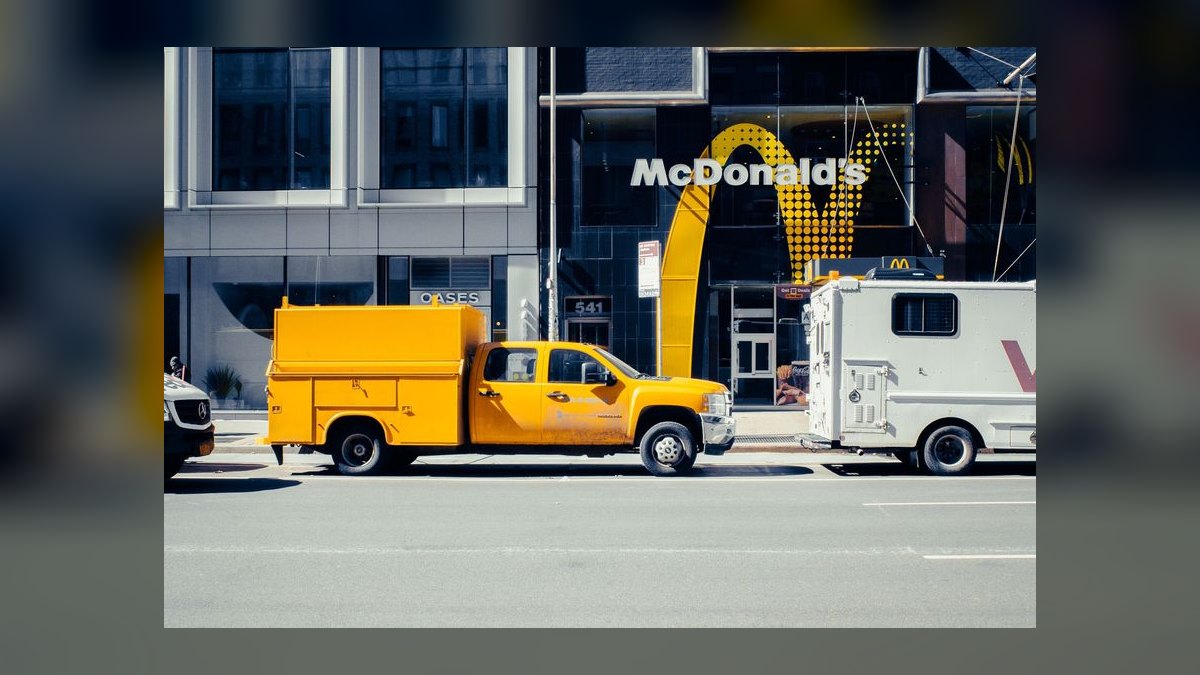
Third, submit as a registered applicant through McDonald's official franchising channel and expect a long process. Screening, interviews, financial verification, and the training program run in sequence, and the timeline is measured in quarters. While it runs, get the Franchise Disclosure Document and read all of it — not just Item 7. Item 6 tells you the real fee structure including the rent band. Item 11 tells you what the company will and will not do for you. Item 17 covers transfer, renewal, and termination, including the company's rights on resale. Item 19 is the financial performance representation and is the only sales data the company will stand behind. Item 20 shows unit counts and transfers, which is where you see whether operators are entering or exiting.
Fourth, line up financing before you have a specific restaurant. Get term sheets from lenders who actively finance quick-service franchise acquisitions so you know your real capacity, your rate, and your amortization. Walking into a deal without a term sheet means negotiating from a weak position and often losing the opportunity to a better-prepared buyer.
Fifth, run diligence on whatever you are offered as if the company's approval means nothing about the specific restaurant. Pull three years of profit-and-loss statements, not one. Look at sales trend, not just level — a restaurant declining 3 percent annually is a different asset than a flat one at the same volume. Check the remodel schedule. Walk the trade area at 7 a.m., noon, and 9 p.m. Count competitors within a mile and a half and find out what is under construction. A new competing chicken concept opening nearby is a real and measurable hit to your first year.
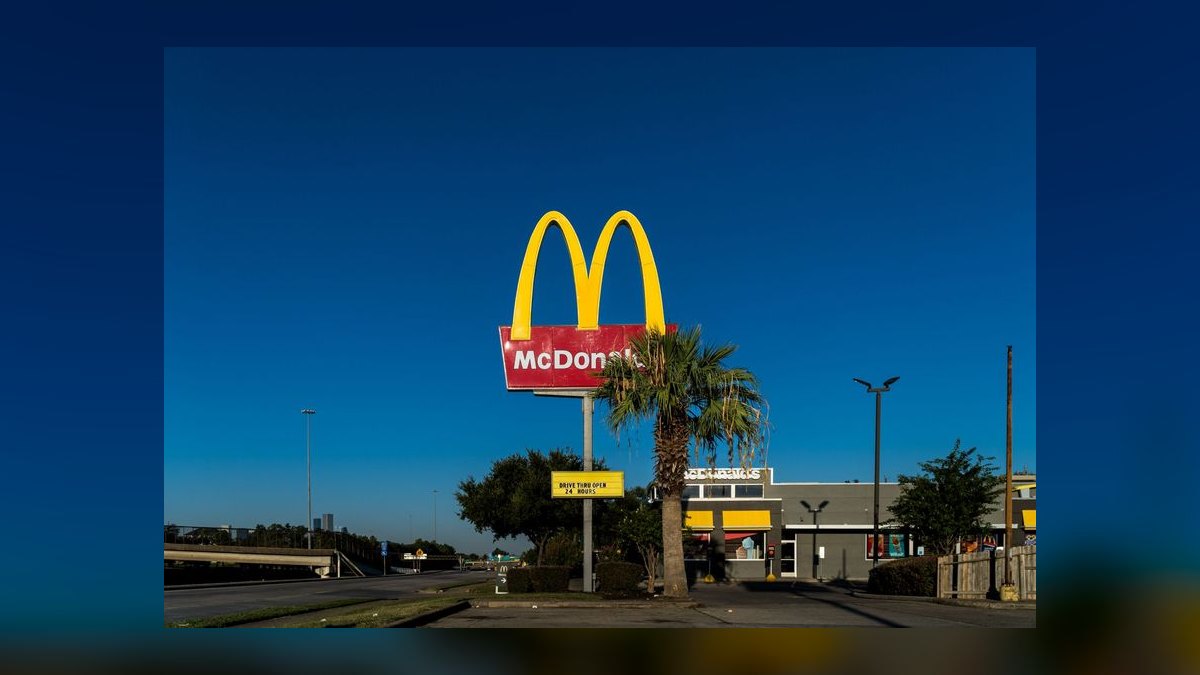
Sixth, plan for the first eighteen months to be brutal and the payoff to arrive later. Year one is presence: you are in the building, fixing service times, stabilizing crew turnover, learning the systems, and absorbing field consultant feedback. Year two is delegation: promoting or hiring a general manager strong enough that you can leave. Year three is the actual business model: acquiring a second and third restaurant, spreading fixed overhead across more volume, and hiring an operations director. Owner income at three to five restaurants is a different category of outcome than at one, and every experienced operator will tell you the same thing — the system is built for multi-unit operators, and single-unit ownership is a waypoint, not a destination.
One adjacent note worth carrying into the decision: everything above applies with modest variation to any real-estate-controlled, high-volume franchise system. The specific numbers change for Culver's, Chick-fil-A, or a Wendy's acquisition, but the structural questions do not. Who controls the real estate. What percentage of sales leaves before cost of goods. Who dictates capital expenditure timing. Whether the brand rewards scale or caps it. Ask those four questions of any franchise opportunity and you will underwrite better than most buyers.
Related questions
How selective is McDonald's franchise approval?
Extremely. The company screens on liquid capital, documented multi-unit business experience, credit history, and willingness to relocate and operate full-time. Most inquiries never become registered applicants, and the training program itself filters further. Plan on years, not months.
Can I own a McDonald's without working in it?
No. McDonald's expects owner-operators to be actively involved and present in their restaurants, and in practice to live within commuting distance of each one. Absentee or purely financial ownership is not part of the US franchising model.
Is a new build or an existing restaurant the better buy?
An existing restaurant, for almost every first-time franchisee — you get real sales history and immediate cash flow instead of a 12-to-24-month ramp. New builds require more cash down and carry unproven site risk. In practice McDonald's decides what you are offered.
What is the single biggest hidden cost?
Mandated reinvestment. McDonald's sets the remodel and equipment upgrade schedule, and the operator's share is a significant capital outlay that arrives whether or not the restaurant is having a good year. Always get the reinvestment schedule in writing before closing.
FAQ
How much liquid capital do I need to buy a McDonald's franchise?
McDonald's USA publishes a minimum non-borrowed liquid asset requirement for franchise candidates, historically around $500,000 for an existing-restaurant purchase, and competitive applicants typically bring substantially more. Borrowed funds, home equity, and retirement accounts you intend to liquidate generally do not count toward the requirement. Verify the current figure directly with McDonald's franchising, since the threshold is periodically revised.
What are the ongoing fees on a McDonald's franchise?
Three recurring items. A service fee — the royalty — currently 5 percent of gross sales for new agreements after the January 2024 increase from 4 percent. Advertising contributions of roughly 4 percent of gross sales across national and local spend. And rent as a percentage of gross sales, which varies widely by site and is the largest of the three at most locations. Item 6 of the Franchise Disclosure Document lists the actual ranges.
How long does the whole process take from inquiry to owning a restaurant?
Realistically two years or more. Screening and interviews take months. The required training program is extensive, largely unpaid, and involves working real shifts in real restaurants. Then you wait for an available opportunity in a market where McDonald's has a need, complete diligence, and close financing. Candidates who insist on a specific city routinely wait longer.
Can I buy multiple McDonald's restaurants at once as my entry?
Almost never as a first-time franchisee. New operators typically start with a single restaurant and earn the right to grow based on operational performance, financial capacity, and the company's assessment. That said, the system's economics clearly favor multi-unit operators, so entering with a credible plan to reach three or more restaurants strengthens an application.
What should I look at first in the Franchise Disclosure Document?
Item 6, because it discloses the full ongoing fee structure including the rent percentage band that determines whether a given site is viable. Then Item 7 for total initial investment, Item 17 for transfer and termination rights, Item 19 for the financial performance representation, and Item 20 for unit counts and transfer activity — the clearest signal of whether operators are entering or leaving the system.
Are there better franchise options if I do not clear the McDonald's bar?
Often, yes. Culver's, Wendy's, Burger King, Jack in the Box, and Dairy Queen franchise to outside operators with lower capital and experience thresholds and far shorter approval cycles. Understand the trade: lower average unit volume means the same net margin percentage yields less absolute cash per restaurant, so the multi-unit requirement to reach a target income is usually higher.
Sources
- https://www.mcdonalds.com/us/en-us/us-franchising.html
- https://www.mcdonalds.com/us/en-us/us-franchising/purchasing-your-franchise/costs-and-fees.html
- https://corporate.mcdonalds.com/corpmcd/investors/financial-information.html
- https://www.sec.gov/cgi-bin/browse-edgar?action=getcompany&CIK=0000063908&type=10-K
- https://www.dir.ca.gov/dlse/Fast-Food-Minimum-Wage-FAQ.htm
- https://leginfo.legislature.ca.gov/faces/billTextClient.xhtml?bill_id=202320240AB1228
- https://www.franchise.org/
- https://www.sba.gov/funding-programs/loans/7a-loans
- https://www.ftc.gov/business-guidance/resources/consumers-guide-buying-franchise
- https://www.qsrmagazine.com/
Related on PULSE
- [How long does it take to open a franchise and break even in 2027?](/knowledge/fr1104)
- [Should I open or buy a Culver's franchise in 2027?](/knowledge/fr1061)
- [Should I open or buy a Wendy's franchise in 2027?](/knowledge/fr1044)
- [Should I open or buy a Chick-fil-A franchise in 2027?](/knowledge/fr1039)
- [Should I open or buy a Painting with a Twist franchise in 2027?](/knowledge/fr1058)
This page will be disappearing soon. Save it to your device for $1 — or read it free while it is here.
@Kory-White- · if Venmo asks, the last 4 of my number are 2012
This page is gone.
This one is off the shelf now. $1 keeps it on your phone for good — the whole page, pictures and diagrams included.
 franchiseShould I open or buy a Re-Bath franchise in 2027?
 franchiseShould I open or buy a Cook Out franchise in 2027?
 franchiseShould I open or buy a Shake Shack franchise or open an independent sandwich shop in 2027?
 franchiseShould I open or buy a SafeSplash Swim School franchise in 2027?
 franchiseShould I open or buy a Lightbridge Academy franchise in 2027?
 franchiseShould I open or buy a Taco Cabana franchise in 2027?
 franchiseShould I open or buy a Cheba Hut franchise in 2027?
 franchiseShould I open or buy an Another Broken Egg Cafe franchise in 2027?
 franchiseShould I open or buy a Rita's Italian Ice franchise in 2027?
 franchiseShould I open or buy a Whataburger franchise in 2027?