
Should I open or buy an Ideal Image franchise in 2027?
 Curated byKory White · Fractional CRO · Maryland
 PULSEKNOWLEDGE LIBRARY
Quality
Certified

Buy an existing Ideal Image franchise rather than open a new one in 2027 unless you have $1M–$2M in capital, a signed medical director, and an affluent trade area. The med-spa model delivers high revenue per location, but medical staffing and compliance — not demand — decide whether you clear $200K or nothing.
The outcome you should expect
Set your expectations against the operating reality rather than the brochure. An Ideal Image center is a 2,500–4,500 square-foot medical-aesthetics clinic with treatment rooms, capital laser equipment, an injectables program, and a staff of licensed clinicians working under a medical director. It is not a retail store with a spa aesthetic. It is a small outpatient medical business that happens to sell beauty outcomes, and every consequential decision you make — hiring, insurance, protocol design, chart retention, refund policy — follows from that fact.
If you execute well, the realistic outcome is a center that grosses somewhere in the $1.5M–$3.5M range at maturity, with owner earnings landing roughly between $200K and $500K depending on how heavy your staffing model runs and how much of your revenue comes from injectables versus laser packages. That earnings band is wide for a reason. Two centers doing identical top-line revenue can produce dramatically different owner income if one is carrying three full-time nurse practitioners and the other runs two plus a part-time float. Labor is the swing factor, and it is the line item you control least once the local market for aesthetic clinicians tightens.
The second thing to expect is a longer ramp than a food or fitness franchise. Membership and package businesses build backward: you sell a multi-treatment laser package in month two and deliver the revenue-recognized value across the following eight months. Cash timing looks good early — you collect up front — but the profitability picture is misleading until you have a full delivery cohort flowing through the schedule. Plan for 12–18 months to breakeven in a moderately competitive market and 18–24 months in a saturated metro like Los Angeles, New York, or Miami, where both consumer acquisition costs and clinician wages are bid up simultaneously.

Third, expect the brand to matter less than it did five years ago. Ideal Image was founded in 2001 and built real national recognition in laser hair removal, which was genuinely differentiating when few consumers knew what a med-spa was. In 2027 the category is crowded with independent clinics, dermatology practices adding aesthetic service lines, private-equity-backed chains, and adjacent retail players testing laser services in-store. The membership structure that once distinguished Ideal Image has been widely copied. What you are buying is a system, a supplier relationship, a training program, and a national marketing spend — not a moat. Underwrite accordingly.
Finally, expect the buy-versus-open decision to be genuinely lopsided in 2027 conditions. Opening new means you personally absorb the buildout risk, the clinician recruiting risk, and the 12–24 month ramp with no revenue. Buying an existing center means you pay a multiple on proven cash flow and inherit a staffed, licensed, operating clinic with a membership base already delivering. When capital costs are high and clinical labor is scarce, the resale path usually wins on risk-adjusted return, even at a premium price. The exception is a genuinely underserved affluent territory where no resale inventory exists — then greenfield is your only route in.
What drives that outcome
Four variables explain almost all of the variance in med-spa franchise performance, and only one of them is demand.

Clinical labor supply and cost. Injectables and most laser modalities require an RN, NP, or PA depending on state scope-of-practice rules, with physician supervision structured to satisfy corporate-practice-of-medicine requirements in your state. Experienced aesthetic NPs and PAs command roughly $90,000–$130,000 annually plus benefits, and aesthetic experience carries a premium over general clinical experience because the injector's hand is the product. You need two to three full-time providers minimum for a center running a full schedule. Add front desk, a sales-capable consultation role, and a center manager and total payroll lands in the $400,000–$600,000 range. Against $2.5M in revenue that is manageable; against $1.4M it is fatal.
Occupancy cost. The locations that work are medical office parks and upscale shopping centers with visibility, parking, and proximity to affluent households. Those addresses run $40–$80 per square foot annually in major metros. A 2,500-square-foot center at the high end of that band is $200,000 a year in rent before triple-net charges. Signing a below-market space in a weaker trade area to protect the pro forma is the single most common self-inflicted wound in this category — you save $60K in rent and lose $400K in revenue because affluent consumers do not travel for laser hair removal.
Service mix. Laser hair removal is the volume anchor and the membership hook, but it is device-time-constrained and price-competitive. Injectables carry better margin per provider hour and generate a genuine repeat cycle every three to four months. Body contouring adds high-ticket transactions with lumpier demand. The centers clearing the top of the earnings band tend to be injectable-heavy, because that revenue scales with clinician skill rather than device hours.
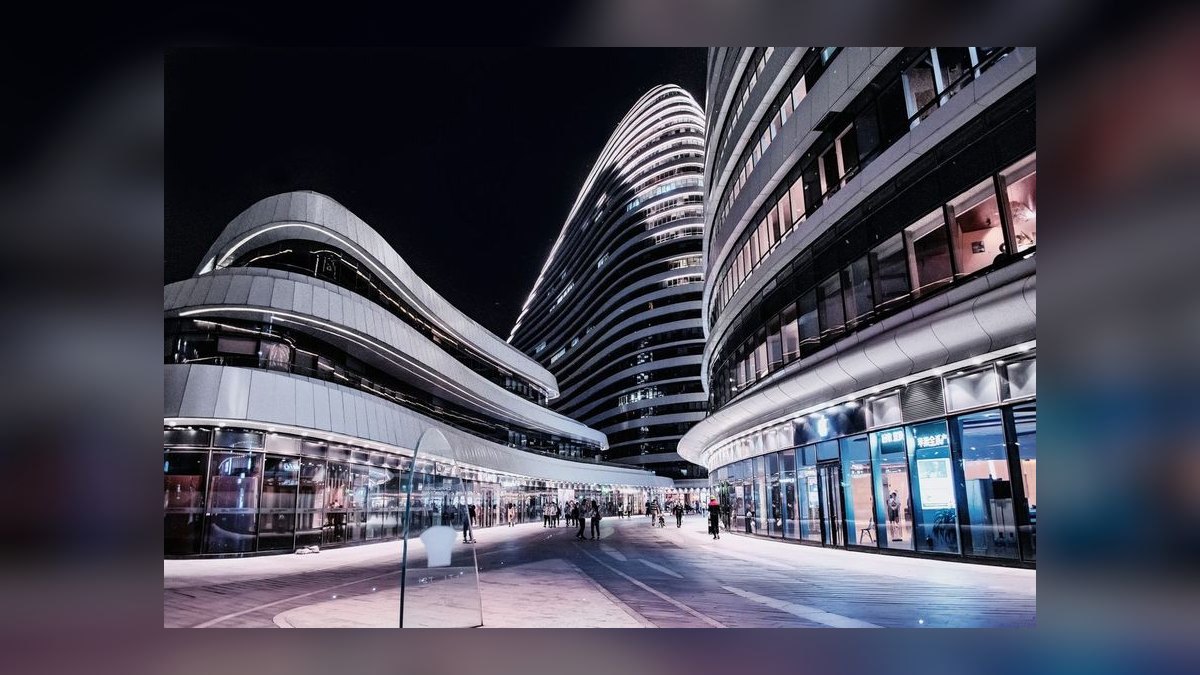
Membership retention. Package and membership revenue is real recurring revenue, but churn runs meaningfully — plan for a substantial share of your membership base to lapse annually, with the rate varying by market and service mix. Retention is an operations problem, not a marketing problem: rebooking at checkout, provider continuity, and honest treatment-plan expectations do more for churn than any promotion.
The diagram is worth reading as a causal chain rather than a flowchart of tasks. Notice that clinician supply sits downstream of demand and upstream of every profit outcome. You can fix a weak marketing funnel in a quarter. You cannot conjure an experienced aesthetic NP in a tight labor market in a quarter, which is why the staffing gate is the one that determines whether the center works.
This is also where the operating discipline you would recognize from RevOps applies directly. A med-spa is a funnel business with a capacity constraint: leads to consultations, consultations to packages, packages to delivered treatment hours, delivered hours to rebooking. Instrument each stage, hold a conversion benchmark per stage, and manage provider utilization the way a sales org manages rep capacity. Operators who come from a systems background usually outperform operators who come from a beauty background, because the binding constraint is throughput, not taste.

Benchmarks and realistic ranges
Here is the investment picture as disclosed in the 2026 FDD and what each line actually buys.
| Line item | Low | High | What it covers |
|---|---|---|---|
| Franchise fee | $50,000 | $50,000 | Initial territory and system rights |
| Buildout / leasehold | $450,000 | $1,100,000 | Medical-grade fit-out, plumbing, treatment rooms |
| Equipment & technology | $300,000 | $650,000 | Laser platforms, body devices, EMR, POS |
| Signage & decor | $25,000 | $80,000 | Brand-standard interior and exterior |
| Initial inventory & supplies | $30,000 | $90,000 | Injectable stock, consumables, PPE |
| Initial marketing | $40,000 | $100,000 | Pre-open membership campaign |
| Training & travel | $10,000 | $30,000 | Corporate training for you and staff |
| Working capital | $80,000 | $200,000 | First three to six months of shortfall |
| Total Item 7 | ~$1,000,000 | ~$2,000,000 | Per 2026 FDD |
Ongoing fees run approximately 6% royalty on gross plus a marketing fee in the ~2% range. Liquidity expectations sit around $300,000–$500,000 unencumbered, with the balance typically financed. Note what the working capital line does not cover: it assumes a normal ramp. If clinician hiring slips a quarter, you are funding rent, base salaries, and marketing against a schedule you cannot fill. Add a contingency reserve beyond the Item 7 range rather than treating the top of the disclosed band as your worst case.

On the revenue side, model three scenarios rather than one. A conservative case at roughly $1.5M gross with two providers, laser-weighted mix, and disciplined payroll produces owner earnings toward the bottom of the $200K–$500K band. A base case near $2.5M with a healthier injectable share and three providers lands mid-band. A strong case at $3.5M in a genuinely affluent, under-served territory pushes the top. Run the conservative case as your financing case. Lenders will underwrite the base case; you should underwrite the conservative one.
A useful expense frame at $2.5M gross: clinical and support payroll in the mid-30s as a percentage of revenue, product and equipment costs including injectable acquisition and device service contracts in the high teens to low twenties, rent plus royalty in the mid-teens, and remaining marketing and operating expense in the low-to-mid teens. What survives is the owner's return. The reason the earnings band is so wide is that each of those percentages moves several points based on decisions you make in the first ninety days — lease terms you sign once, the compensation structure you set for injectors, and whether you buy or lease device platforms.
If you are evaluating a resale instead of a new build, the diligence set is different and better. Ask for three years of P&Ls, the membership roster with active-versus-lapsed status and remaining deliverable treatment obligations, the provider roster with tenure and comp, the device fleet with age and service history, and the remaining lease and franchise agreement terms. That last one matters enormously: buying a center with three years left on a ten-year franchise agreement means a renewal negotiation and possibly a mandated remodel arrives right as you finish paying for the acquisition. The deferred-revenue liability — treatments sold but not delivered — is a real obligation you are assuming, and it should be priced into the purchase, not waved past as "goodwill."
Compare against the adjacent field before committing. Medi-Weightloss sits closer to the medical weight-loss lane. Restore Hyper Wellness and iCRYO operate in broader recovery-and-wellness with lighter clinical requirements and lower capital. Woodhouse Spa is a premium day spa with no medical overhead at all. An independent med-spa gives you full menu and pricing control at the cost of the brand, the supplier relationships, and the playbook. Each of those trades capital intensity against control and clinical burden differently, and the right answer depends on whether you actually want to run a medical business.

Risks, edge cases, and failure modes
The staffing spiral. This is the dominant failure mode. Provider leaves, bookings back up, reviews soften, marketing spend rises to refill the funnel, margin compresses, you hire cheaper, complication and dissatisfaction rates rise, more reviews soften. Every step is locally rational and the aggregate is a slow decline. The defense is structural: over-hire relative to current demand, build a retention comp structure that ties injector earnings to their own rebooking rate, and maintain a per-diem relationship with a float provider before you need one.
Compliance and corporate practice of medicine. State law governs who may own a medical practice, who may supervise, what delegation is permitted, and how the management-services relationship between a non-clinician owner and the clinical entity must be structured. This is not boilerplate. Get state-specific counsel before you sign the franchise agreement, not after, and budget for a medical director relationship that is real supervision rather than a name on a form. A medical director arrangement typically runs in the low-to-mid five figures annually in consulting fees.
The GLP-1 question. Medical weight loss using GLP-1 agonists is the most-discussed expansion path in the category, and Ideal Image has signaled interest in broader wellness offerings. The upside is genuine: recurring monthly medical weight-loss revenue per patient stacks on top of aesthetic spend and lifts revenue per customer materially. The risk is equally genuine. FDA has warned about compounded copies of GLP-1 drugs, several states have tightened med-spa oversight of weight-loss prescribing, and the regulatory picture is actively moving. If you add this service line, treat it as a clinical program with prescribing protocols, patient monitoring, documented follow-up, and legal review — budget five figures for compliance infrastructure, not a line item for marketing. Done casually, it converts a cash-flowing aesthetics business into a liability exposure.

Device obsolescence. Laser and body-contouring platforms have a service and refresh cycle. A center that looks profitable on paper may be deferring a six-figure equipment refresh. In a resale, get the device age, service records, remaining warranty, and consumable-per-treatment costs. In a new build, understand what the franchisor's approved equipment list will look like in five years, because you will be required to keep up.
Territory and cannibalization. Read Item 12 carefully. Understand exactly what protection your territory carries, what happens if corporate opens a company-owned location nearby, and how e-commerce or telehealth-delivered services are treated relative to your territory rights. In a category where the franchisor may expand into virtual consultations or direct-to-consumer wellness, territorial language written for a brick-and-mortar world can leave you exposed.
Saturated metro economics. In the densest markets you face simultaneous pressure on rent, wages, and customer acquisition cost while facing price competition from independents with lower overhead. The center still works, but the ramp is longer and the earnings sit lower in the band. If the only available territories are in saturated metros, that is information about the brand's remaining runway, not a challenge to overcome with effort.

Under-capitalization. The most preventable failure. If $1M–$2M represents your entire net worth, do not do this. The business requires the ability to fund a slow quarter without cutting clinical staff, and an owner who cannot absorb a bad two quarters will make exactly the decisions that cause the staffing spiral above.
A practical rollout plan
Work the diligence in a defined sequence, and treat each gate as a genuine stop rather than a formality.
Days 1–20 — the document and the law. Read the full 2026 FDD, not the summary. Focus on Item 5 and 6 for fees, Item 7 for the investment table, Item 12 for territory, Item 19 for any financial performance representation, and Item 20 for the franchisee turnover history. Item 20 is the most honest section in any FDD: outlet counts, transfers, terminations, and non-renewals over three years tell you what the brand's franchisees actually experienced. In parallel, engage a healthcare attorney in your specific state on corporate-practice-of-medicine structure, supervision requirements, and what an owner without a clinical license may and may not do.
Days 21–45 — talk to owners. Interview at least eight current franchisees, and make a point of reaching several from the Item 20 list who exited. Ask about time to breakeven, actual clinician wages in their market, membership churn, how much of gross comes from injectables, what corporate support looked like in a bad quarter, and whether they would sign again. Ask directly what their owner earnings were last year. Owners who are doing well will usually tell you.
Days 46–65 — market and medical director. Validate the trade area with real demographic data on household income and density, then walk the actual site at multiple times of day. Simultaneously, identify and have preliminary conversations with a medical director candidate and at least two provider candidates. This is the gate most buyers skip and most failures trace back to. If you cannot name the people who will do the clinical work before you sign, do not sign.
Days 66–100 — build and staff. Buildout and permitting on a medical-grade fit-out is slower than retail. Hire your lead provider early enough to participate in protocol setup and to be trained before opening, not the week of.
Days 101–130 — pre-sell and open. Pre-open membership campaigns exist to fill the first sixty days of schedule. A center that opens with an empty book burns clinician goodwill immediately.
Ongoing. Instrument the funnel, manage provider utilization weekly, watch rebooking rate as your leading churn indicator, and only evaluate wellness or weight-loss expansion after the core aesthetics business is stable and staffed.
One more consideration that sits just outside the franchise decision itself: think about whether you want one center or a multi-unit position. The economics of this category improve materially at two to three units in the same metro, because you can share a medical director, float providers across locations to cover absences, and amortize a center-manager-plus-marketing overhead across more revenue. A single unit carries all of that overhead alone and has no slack when a provider quits. If your capital only supports one center, understand that you are buying the harder version of the business. If you can see a path to three, negotiate area development terms at the outset rather than trying to add territory later at whatever price the brand sets.
Related questions
Is it cheaper to buy an existing Ideal Image center than to open one?
Not usually cheaper in headline price, but often better risk-adjusted. You pay a multiple on proven cash flow, yet you skip the 12–24 month ramp, inherit staffed providers and an active membership base, and see three years of real P&Ls before committing capital.
Do I need a medical license to own this franchise?
No. You need licensed clinicians on staff and a medical director for supervision, plus a state-compliant ownership structure. Corporate-practice-of-medicine rules vary significantly by state, so get local healthcare counsel before signing anything.
How long until a new center breaks even?
Plan 12–18 months in a moderately competitive market and 18–24 months in a saturated metro. Package and membership revenue defers delivery costs, so early cash flow looks better than actual profitability until a full treatment cohort cycles through.
Should I add GLP-1 weight loss to a med-spa franchise?
Only after the core aesthetics business is stable, and only with real prescribing protocols, patient monitoring, and legal review. The revenue upside is meaningful; the regulatory exposure from casual implementation is worse than the upside is good.
What single factor most predicts failure here?
Inability to recruit and retain experienced aesthetic clinicians. Demand is rarely the constraint. Staffing gaps cause booking delays, which cause churn and negative reviews, which raise acquisition costs and compress the margin that funds better staffing.
FAQ
What is the total investment to open an Ideal Image franchise?
Roughly $1,000,000 to $2,000,000 total per the 2026 FDD, including a franchise fee of about $50,000. The largest components are medical-grade buildout at $450,000–$1,100,000 and equipment at $300,000–$650,000. Actual cost depends heavily on lease terms, local construction costs, and how much existing infrastructure the space already has. Budget a contingency beyond the top of the range rather than treating $2M as your ceiling.
How much can a mature center actually earn the owner?
Mature centers report gross revenue of roughly $1.5M–$3.5M, with owner earnings generally in the $200,000–$500,000 range. The spread is driven mainly by staffing model, service mix, and occupancy cost. Injectable-heavy centers with disciplined payroll land higher; laser-weighted centers carrying heavy fixed clinical staff land lower. Underwrite the conservative end.
What are the ongoing fees?
Approximately 6% royalty on gross sales plus a marketing fee around 2%. Combined, roughly 8% of top line comes off before your own operating expenses. That is within normal range for the category, but at $2.5M gross it is $200,000 annually, which should be modeled as a fixed cost rather than mentally discounted.
Do I need medical experience to run this?
No, and most successful franchisees do not have it. What you need is the ability to recruit and retain licensed providers, secure a medical director, and operate a capacity-constrained service business. Operators with a systems or operations background — the kind of throughput thinking common in RevOps — often outperform those from a beauty-industry background.
Is membership revenue genuinely recurring?
Partly. Clients purchase packages and memberships that create predictable collected cash and a booked schedule, which is real. But churn is meaningful and varies by market and service mix, and package revenue represents a delivery obligation you owe rather than pure profit. Treat rebooking rate as your leading indicator and the deferred-treatment balance as a liability.
What should I read first in the FDD?
Item 20. Outlet counts, transfers, terminations, and non-renewals over three years tell you what franchisees actually experienced, which is more informative than any projection. Then Item 7 for the investment table, Item 12 for territory protection, and Item 19 for whatever financial performance representation the brand chooses to make.
Sources
- https://www.ftc.gov/business-guidance/resources/franchise-rule-compliance-guide
- https://www.sba.gov/business-guide/plan-your-business/buy-existing-business-or-franchise
- https://www.franchise.org/
- https://www.ama-assn.org/practice-management/scope-practice
- https://www.fda.gov/drugs/postmarket-drug-safety-information-patients-and-providers/medications-containing-semaglutide-marketed-type-2-diabetes-or-weight-loss
- https://www.bls.gov/ooh/healthcare/nurse-anesthetists-nurse-midwives-and-nurse-practitioners.htm
- https://www.plasticsurgery.org/news/plastic-surgery-statistics
- https://www.aad.org/public/cosmetic
- https://www.americanmedspa.org/
- https://www.entrepreneur.com/franchises
Related on PULSE
- [Should I open or buy an Image Studios 360 franchise in 2027?](/knowledge/q15503)
- [Should I open or buy an Image Studios franchise in 2027?](/knowledge/q15289)
- [Should I open or buy a Restore Hyper Wellness franchise in 2027?](/knowledge/q15412)
- [Should I open or buy a Medi-Weightloss franchise in 2027?](/knowledge/q15366)
- [Should I open or buy a Woodhouse Spa franchise in 2027?](/knowledge/q15398)
- [What is the ideal RevOps org structure for a $50M ARR company in 2027?](/knowledge/q12847)
This page will be disappearing soon. Save it to your device for $1 — or read it free while it is here.
@Kory-White- · if Venmo asks, the last 4 of my number are 2012
This page is gone.
This one is off the shelf now. $1 keeps it on your phone for good — the whole page, pictures and diagrams included.
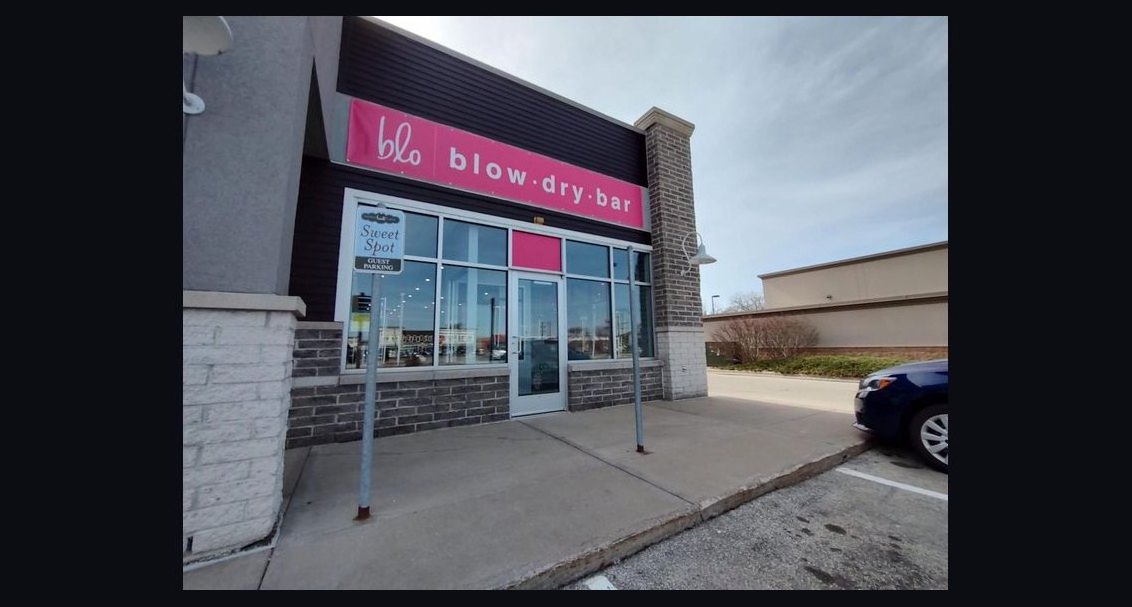 pulse-qShould I open or buy a Blo Blow Dry Bar franchise in 2027?
 pulse-qShould I open or buy a Junk Doctors franchise in 2027?
 pulse-qShould I open or buy a Minuteman Press franchise in 2027?
 pulse-qShould I Repair or Replace My Delivery Fleet Vehicles as My Landscaping Business Scales in 2027?
 pulse-qShould I open or buy a Roof Maxx franchise in 2027?
 pulse-qShould I open or buy a Garage Experts franchise in 2027?
 pulse-qHow Do I Set Attach Rates for My Service Fees?
 pulse-qShould I open or buy a Rita's Italian Ice franchise in 2027?
 pulse-qHow Do I Tie Commission to More Than One Product?
 pulse-qShould I open or buy a Cookies Crumbl alternative — Insomnia Cookies — franchise in 2027?