
Should I open or buy a Christian Brothers Automotive franchise in 2027?
 Curated byKory White · Fractional CRO · Maryland
 PULSEKNOWLEDGE LIBRARY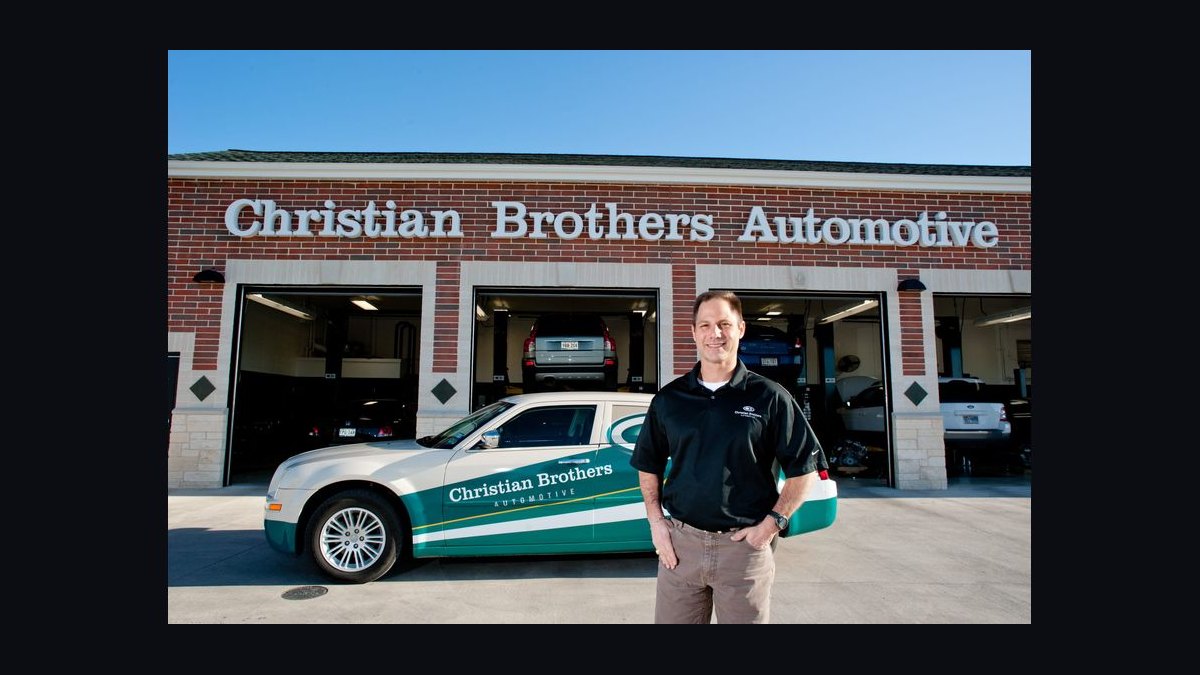
Buy or open a Christian Brothers Automotive franchise in 2027 only if you can put roughly $250,000 liquid to work, will personally run the front counter for at least eighteen months, and accept a 50/50 split-profit royalty in exchange for the franchisor carrying the real estate. Absentee investors and existing shop owners should look elsewhere.
What the Christian Brothers model actually is, and why the structure matters more than the brand
Most automotive franchises sell you a name, a supplier list, and a percentage-of-gross royalty. Christian Brothers Automotive sells you something structurally different, and understanding that difference is the whole decision. Two features define the system.
The franchisor owns the dirt. Christian Brothers acquires the land, builds a purpose-built shop of roughly 5,000 square feet to a standardized specification, and leases it back to the franchisee. Your initial investment therefore does *not* include a real-estate down payment, a construction loan, or the risk that you overpaid for a corner lot. The 2025 Franchise Disclosure Document — the governing document for any award landing in 2026 or 2027 — puts total initial investment in the range of roughly $530,000 to $645,000, with the franchise fee at $135,000 and the bulk of the rest going to equipment, initial inventory, insurance, training, and three months of working capital. What you get in exchange for the franchisor's real-estate capital is a long-term lease, in the neighborhood of fifteen years, at monthly base rent that varies sharply by market — the disclosed ranges run from roughly $22,000 to $38,000 per month depending on land cost in your metro.
That is a genuinely unusual risk trade. In a conventional franchise you might buy or lease a second-generation building yourself, keep the residual value, and eat the location risk. Here you surrender the real-estate upside and the site-selection control, and in return you avoid a seven-figure property purchase and get a site vetted by a team whose own capital is on the line. Franchisors who own the building have a structural incentive not to put you in a bad trade area — their asset is only worth what the shop's rent-paying capacity says it's worth. That alignment is worth something real, and it is the single most defensible argument for this system over a cheaper competitor.
The royalty is a profit split, not a revenue cut. Instead of remitting a percentage of gross sales every month, the franchisee splits monthly "split profits" with the franchisor on roughly a 50/50 basis, where split profits is a defined formula approximating operating profit after agreed expense categories. Practitioners consistently misjudge this. A 50% royalty *sounds* punitive next to a 7%-of-gross competitor, but the two numbers are not comparable — one is levied on revenue, the other on profit. On a shop running high-teens to low-twenties EBITDA margins, half the profit is materially more than 7% of revenue, so the effective royalty load is genuinely heavier. The offset is that a bad month costs you less in absolute royalty dollars than a percent-of-gross model would, because the split scales with performance. You are trading a fixed toll for a variable partnership.
There is a governance implication that candidates routinely miss. When your franchisor is your landlord *and* your profit partner, the franchisor cares intensely about your expense line — because your expenses reduce their half. Expect meaningful input on discretionary spend, staffing structure, and manager compensation in a way a percent-of-gross franchisor would never bother with. Some operators find that support; others find it intrusive. Read Item 6 and Item 15 of your specific disclosure carefully, and ask whether rent is paid above or below the split line in your structure — the answer moves your take-home by six figures a year and differs enough between structures that you cannot assume it.
Why does any of this matter more than the brand? Because the brand's operating playbook — free shuttle service, photo-documented courtesy inspections, closed Sundays, a stated Christian values culture — is replicable in spirit by any well-run independent. The capital structure is not. If you are comparing this to a Take 5 or a Big O Tires or an independent acquisition, compare the structures, not the logos.

The step-by-step process from inquiry to open bay
The path from first inquiry to first repair order is long — plan on somewhere between nine and fourteen months from signature, because the franchisor has to acquire land and build a building, and neither of those is fast. Here is the realistic sequence, with the decision gates where a candidate should be willing to walk.
Self-qualification, roughly the first two weeks. Confirm liquidity honestly, including what is actually accessible versus what is in a retirement account you'd take a penalty to reach. Pull your own credit. Then answer two non-financial questions with real candor: are you willing to stand at the front counter six days a week for eighteen months, and are you at peace with a company culture that closes Sundays and puts faith language in front of customers and staff? Operators who resent the culture churn out fast, and no unit economics fix that.
Request and read the disclosure document, weeks three and four. Read Item 7 (initial investment), Item 19 (financial performance representations), Item 20 (outlet and franchisee information, including the contact list), and Item 21 (audited financials) — in that order. Then do the cross-reference almost nobody does: take the average unit volume cohorts in Item 19 and lay them against the rent range in Item 6 *for your specific target metro*. A median-volume shop paying top-of-range rent in an expensive land market is a very different business from the same shop paying bottom-of-range rent in a cheaper one.

Franchisee validation, weeks five through six. Item 20 gives you every current franchisee's contact information. Call at least ten. Ask three questions and let them talk: what does your monthly split-profit payment work out to as a percentage of revenue; how many months until you were cash-flow breakeven; and would you sign again knowing what you know now. If three or more say they would not sign again, that is your answer.
Lending, weeks seven and eight. This deal is typically structured with an SBA 7(a) loan covering the majority of the project cost against a roughly 20% equity injection. Talk to lenders who do franchise volume rather than your local relationship bank — the specialists know the brand, know the FDD, and underwrite faster. Get a written pre-qualification before you spend money on travel.
Discovery Day, weeks nine through eleven. Go to headquarters. Tour the facility, meet the executives, sit in on a training cohort if they'll let you. Treat this as mutual diligence — you are evaluating whether the support organization is real, and they are evaluating whether you'll follow the system. If you leave and don't hear back inside a couple of weeks, read that silence accurately.

Agreement and site collaboration, weeks twelve and thirteen. Sign, fund the franchise fee, and begin working with the real-estate team on trade-area selection. Then wait, because from here the clock belongs to entitlement, permitting, and construction. Use the wait productively: shadow an existing shop, build local fleet relationships before you have a building, and get your service manager identified early.
Costs, timelines, and the ranges that actually govern your outcome
Take the disclosed figures as the skeleton and then layer on the things that decide whether the deal works.
The capital stack. Total initial investment sits in the roughly $530,000–$645,000 band per the 2025 disclosure, of which the $135,000 franchise fee is fixed and equipment plus initial inventory is the largest variable chunk — lifts, an alignment rack, diagnostic and scan tooling, a point-of-sale system, and the parts and fluids to open the doors. Training and travel is a small line. Working capital is disclosed as a three-month reserve, and that number is where undercapitalized candidates die. Three months of disclosed working capital assumes a normal ramp. Build your own reserve for six, because the dangerous window is not month one — it is months four through nine, after grand-opening traffic normalizes and before revenue reliably clears rent, payroll, and debt service in the same month.

The equity check. On a $645,000 project with a 20% injection, your cash at risk is roughly $130,000, with the balance financed. The liquidity requirement is higher than the equity check for a reason: lenders and franchisors both want to see reserve capacity beyond closing costs.
What mature revenue looks like. Item 19 in the 2025 disclosure reports a median average unit volume of roughly $2.8 million across a reporting base above 300 U.S. locations, with just under half of units exceeding that median and top-quartile shops clearing well past $3.5 million. Those are mature-store figures — do not model year one against them. Mature EBITDA margins in the high-teens-to-low-twenties range on a median-volume shop implies roughly $500,000–$615,000 of operating profit before the royalty split. Halve that for the split, and then subtract annual base rent, which at the disclosed monthly range runs somewhere between roughly $264,000 and $456,000 a year. Whether rent lands above or below the split calculation is the single biggest swing factor in your personal outcome, and it is structure-specific. Do not model this from a blog post. Model it from your Item 6.
The ramp and payback. Operating cash-flow breakeven typically arrives somewhere in the second half of year one — the ramp cohorts in Item 19 are the only credible source for your own market, and they are the tables to spend an afternoon with. A fully ramped owner take net of fees and debt service in the low-to-mid six figures against a roughly $130,000 equity injection returns the equity in something like four years. That is a strong payback for a bricks-and-mortar service business. It is not a strong payback if you underperform the median by $600,000 of revenue, which is exactly what happens to shops where the owner isn't present.
Post-opening capital you should budget for and probably won't. Advanced driver-assistance calibration is the big one. Camera and radar recalibration after a windshield, bumper, or suspension job has moved from a specialty to table stakes on newer vehicles, and the equipment and targets to do it in-house is a meaningful five-figure investment that some disclosures now flag as a post-opening item. You can sublet it out to a specialist at first — many shops do — but you will be giving away margin on an increasingly common ticket line. Model it as a year-two or year-three capital event rather than pretending it doesn't exist.

Labor, the cost line that has moved most. Technician compensation has risen sharply since 2023, and the structural shortage is well documented by industry workforce research — the gap between technicians retiring or leaving the trade and new entrants running through training programs is large and not closing. Practically, that means your service manager and your master technicians will cost more than a three-year-old pro forma assumes, and that the constraint on your revenue in year two may be bays you can't staff rather than cars you can't attract. The operators who solve this build an apprentice pipeline early — a relationship with a local technical college, a defined path from lube tech to B-tech to A-tech, and pay bands that make staying more attractive than the dealership down the road. That is a general-manager skill, not a mechanic skill, which is precisely why the system recruits second-career professionals.
The demand backdrop. The tailwinds are real and worth stating plainly because they support the whole thesis. The average age of vehicles in operation in the U.S. has hit successive record highs and continues to drift upward, and older fleets generate out-of-warranty general-repair work, which is exactly this system's lane. Dealership service capacity has not expanded to absorb that work as dealer groups consolidate. And the electric-vehicle transition, while real in new-vehicle share, moves the installed base slowly — internal-combustion vehicles will dominate vehicles in operation for many years, so the service demand pool for general repair is not at near-term risk. None of that guarantees your shop works. It means the category headwind risk is low and the execution risk is where your attention belongs.
Where candidates and operators get this wrong
Five failure patterns account for most of the disappointment, and four of the five are decided before you ever sign.

Buying it as a passive investment. This is the dominant error. The disclosure effectively contemplates an involved operating partner, and the profit-split math punishes the absentee owner twice — once because labor efficiency and parts margin degrade without an owner watching them, and again because the franchisor's half of a smaller pie still gets paid. Shops without a present owner underperform the median materially. If you want automotive-services exposure without the operating burden, the honest answer is not to franchise. It is to take a minority equity position in an existing multi-unit operator, or to buy into a different asset class entirely.
Coming from the auto industry. Counterintuitively, prior shop-ownership experience is a negative signal in this system, and the franchisor's own recruiting reflects it. The model depends on rigid adherence to a defined workflow — digital vehicle inspection, set labor rates, an approved supplier list, a scripted customer experience. An operator who spent fifteen years developing their own way of running a bay will find that suffocating, and the friction shows up in compliance disputes rather than in the P&L at first. If you have run an independent shop and you want to keep running it your way, buy another independent. You'll keep 100% of the profit and all of the control.
Misreading the royalty and then relitigating it monthly. Candidates who don't do the arithmetic before signing spend years resenting the split. Do it now: build a pro forma at median volume, compute the split, compute the same shop at a 7%-of-gross royalty, and look at the two numbers side by side. If the split number makes you flinch on paper, it will make you furious in practice. Sign only when you have priced the trade — a heavier effective royalty in exchange for the franchisor's real-estate capital and a vetted site — and concluded it's worth it.

Forcing an urban site. The physical format needs a suburban land cost basis: roughly 5,000 square feet of building, parking for a substantial number of vehicles, and visible drive-by traffic. In dense metro cores the land math simply doesn't support the rent the building would have to carry, which is why the system's footprint skews suburban. If you are geographically immovable and you live in an expensive urban core, this is not the franchise for you — and no amount of enthusiasm at Discovery Day changes the arithmetic.
Underestimating the trade-area screen. The site team filters hard on household income, daytime population, and registered vehicles within a tight radius. Candidates sometimes arrive with a location in mind and are surprised when it's rejected. Come with a *market* preference, not a *parcel* preference, and be genuinely flexible about which suburb of your metro you end up in. Rigidity here is a common reason otherwise-qualified candidates stall out for months after signing.
One operational error worth adding, because it shows up after opening: treating marketing as the franchisor's job. The national marketing fund buys brand-level presence. It does not build your local fleet book, your relationship with the three property-management companies whose vans need service, or your standing in the chamber of commerce. Mature shops in this system report high repeat-customer rates, and repeat business is built at the counter and in the community, not by the ad fund. The owners who ramp fastest treat local business development as their primary job once the shop is staffed.

Choosing between this and the alternatives
Run the decision as a sequence of disqualifiers, not as a scoring exercise — most candidates are eliminated by one hard constraint rather than by a close comparison.
If you need absentee ownership, stop considering any owner-operator franchise. The realistic paths are a minority stake in an existing multi-unit operator, or a manager-run independent you buy with a general manager already in place and a long-tenured staff — and understand that "manager-run independent" is a real business risk profile, not a passive one.
If you have $250,000-plus liquid, want to operate, and want maximum volume per location, this system is the strongest general-repair franchise argument in the category, largely on the strength of that median unit volume and the real-estate structure. Nothing else in general automotive repair reliably approaches it.

If your capital is thinner — call it $150,000 to $250,000 total — the quick-lube and tire-led formats are the realistic comparison. Drive-through oil change models carry lower total investment, dramatically simpler staffing (short ticket times, lower technician skill requirement, easier hiring in a tight labor market), and a conventional percent-of-gross royalty. The cost is volume: per-unit revenue in those formats runs a fraction of a general-repair shop's, so the model works through multi-unit development rather than single-unit economics. Tire-led franchises sit in between on both investment and volume. Older general-repair brands are cheaper to enter but carry materially weaker unit volumes and brand equity that has not aged as well.
If you want control and no royalty drag, buy an independent. An established shop doing $1.2–1.8 million in revenue typically trades at a low-single-digit multiple of seller's discretionary earnings, which can land the all-in cost in the same range as the franchise equity check plus reserves. You keep every dollar of profit. You also inherit the previous owner's reputation, staff, deferred equipment maintenance, and whatever the books don't show — and you get no site selection help, no training program, no marketing system, and no playbook. That trade favors buyers who already know how to run a shop, which is the same population the franchise system screens out. The symmetry is not a coincidence.
The adjacent consideration most candidates skip: think about the exit before you sign. A franchised shop with a defined system, a transferable lease, and disclosed system-wide performance data is generally easier to sell to a financial buyer than an owner-dependent independent, because the buyer is underwriting a system rather than a personality. Against that, the long lease term and the franchisor's transfer-approval rights constrain who you can sell to and when. An independent gives you a freer exit but a thinner buyer pool. Neither is strictly better; they suit different time horizons. If you plan to operate for twenty years and hand it to a child, the lease length is nearly irrelevant. If you plan a five-year flip, the remaining lease term at sale becomes a central negotiating point, and you should ask about renewal and transfer mechanics during diligence rather than discovering them at closing.
Related questions
How long from signing until the shop opens?
Plan on nine to fourteen months. The franchisor has to acquire land, entitle it, permit it, and construct a purpose-built building, and none of that compresses much. Budget personal living expenses for the entire gap, because you will have no revenue during it.
Can I own more than one location?
Multi-unit development is available but generally comes after you have demonstrated a successfully operating first shop for a couple of years and have a general manager trained to run it. The owner-operator expectation doesn't disappear at unit two — it transfers to a bench you built.
Do I need to be a mechanic?
No. The training program is designed for candidates from outside the automotive trade. You hire a service manager and certified technicians. Your job is the counter, the community, the hiring, and the numbers — which is why second-career professionals are the target profile.
Is the long lease a serious risk?
Yes. Base rent is a fixed obligation across a roughly fifteen-year term regardless of how revenue performs, and it is the largest fixed cost in the model. The mitigation is that the franchisor selected and capitalized the site, so their asset value depends on the location working.
What if I can't get SBA financing?
The liquidity threshold is not negotiable, and the equity injection has to come from somewhere. Candidates who meet the liquidity and credit thresholds are usually financeable; those who don't should fix the balance sheet before re-applying rather than hunting for exotic capital.
FAQ
How is a split-profit royalty different from a normal franchise royalty?
A conventional royalty takes a percentage of gross revenue every month whether or not you made money. A split-profit royalty divides the shop's operating profit — after defined expense categories — with the franchisor. Both parties earn only when the shop is profitable, which aligns incentives, but it also gives the franchisor a legitimate interest in your expense decisions in a way a percent-of-gross franchisor would never have. Verify in your own Item 6 exactly which expenses sit above the split line, especially rent and owner compensation.
Why does the franchisor prefer candidates with no automotive experience?
Because the system's value is process consistency, and process consistency is easier to install in someone with no competing habits. Prior shop owners have their own labor rates, their own parts suppliers, and their own ideas about diagnostic workflow, and the friction between those instincts and a prescribed playbook produces compliance disputes. Second-career professionals bring general management skill — hiring, numbers, customer experience — and no attachment to a different way of doing it.
Should I budget more working capital than the disclosure requires?
Yes. The disclosed working capital line contemplates roughly three months. The financially dangerous stretch is months four through nine, after grand-opening traffic normalizes and before revenue consistently covers rent, payroll, and debt service in the same month. Six months of true reserve, plus separate personal living expenses through the construction period, is the responsible plan. Running the ramp on fumes is how otherwise-viable shops fail.
Does the shift to electric vehicles threaten this investment?
Not on a franchise-term horizon. Electric vehicles are a growing share of new sales but a much smaller share of the vehicles actually on the road, and the installed base turns over slowly. General repair demand for internal-combustion vehicles remains large for many years. The nearer-term technical shift that actually affects your capital plan is advanced driver-assistance calibration, which requires equipment investment and training whether the drivetrain is electric or not.
What is the single most important number to verify in diligence?
Whether base rent is deducted before or after the split-profit calculation in your specific agreement. At the disclosed monthly rent ranges, that one structural detail moves franchisee take-home by a six-figure annual amount. It is also the question most candidates never think to ask, and the one existing franchisees will answer directly if you call them.
Is the faith-based culture optional?
No, and treating it as a marketing veneer is a mistake. Closed Sundays, faith language in customer-facing materials, and a stated Christian values culture are structural to the brand. Operators who are indifferent can manage; operators who actively resent it tend to leave the system. Decide honestly during diligence rather than assuming you'll adapt.
Sources
- https://www.sba.gov/funding-programs/loans/7a-loans
- https://www.franchise.org/
- https://www.ftc.gov/business-guidance/resources/franchise-rule-compliance-guide
- https://www.spglobal.com/mobility/en/
- https://www.bls.gov/oes/current/oes493023.htm
- https://www.techforce.org/
- https://www.entrepreneur.com/franchises/franchise500
- https://www.ibisworld.com/united-states/market-research-reports/auto-mechanics-industry/
- https://www.consumer.ftc.gov/articles/buying-franchise-consumer-guide
Related on PULSE
- [Best automotive service franchises to buy in 2027](/knowledge/fr1087)
- [Should I open or buy a The Brothers that just do Gutters franchise in 2027?](/knowledge/fr0987)
- [Should I open or buy a Hunt Brothers Pizza franchise in 2027?](/knowledge/fr0865)
- [Should I open or buy a Dunn Brothers Coffee franchise in 2027?](/knowledge/fr0711)
Read it free — or make it yours for $1.
@Kory-White- · if Venmo asks, the last 4 of my number are 2012
 franchiseShould I open or buy a Dippin’ Dots franchise in 2027?
 franchiseShould I open or buy a Main Event Entertainment franchise in 2027?
 franchiseShould I open or buy a Closets by Design franchise in 2027?
 franchiseShould I open or buy a Mountain Mike's Pizza franchise in 2027?
 franchiseShould I open or buy a Krispy Krunchy Chicken franchise in 2027?
 franchiseWhat is the step-by-step process for buying an existing franchise resale instead of building a new location in 2027?
 franchiseShould I open or buy a Tutti Frutti franchise in 2027?
 franchiseShould I open or buy a Rita's Italian Ice franchise in 2027?
 franchiseShould I open or buy a One Hour Heating & Air Conditioning franchise in 2027?
 franchiseShould I open or buy an L&L Hawaiian Barbecue franchise in 2027?