
Should I open or buy a Krispy Krunchy Chicken franchise in 2027?
 Curated byKory White · Fractional CRO · Maryland
 PULSEKNOWLEDGE LIBRARY
Yes — if you already own a convenience store, gas station, or travel center with an existing hot-food kitchen and 60-100 square feet of free counter space. Krispy Krunchy Chicken is not a traditional franchise — it is a licensed foodservice program with zero franchise fee, zero royalty, and zero advertising fee. Total startup runs $10,000 to $40,000 (equipment + initial inventory), breakeven typically hits in 6 to 14 months, and conservative Year-1 incremental cash flow lands between $60,000 and $180,000 for a c-store operator. Probably not — if you want a standalone restaurant, because Krispy Krunchy does not license freestanding builds. This is a store-in-store food-program play, not a restaurant business.
The Real Numbers
Krispy Krunchy Chicken is the fastest-growing premium c-store-based fried chicken program in the United States, sitting in 3,600+ retail locations across 49 states as of year-end 2025, with 600+ net openings in 2024 alone. Because it is a license model rather than a franchise, there is no FDD Item 7 or Item 19 filed with state franchise regulators — the program is not registered as a franchise under the FTC Franchise Rule. That changes the math meaningfully compared to a Popeyes or KFC build.
| Cost Line | Low (existing kitchen) | High (full build-out) |
|---|---|---|
| License/program fee | $0 | $0 |
| Royalty % | 0% | 0% |
| National marketing fee | 0% | 0% |
| Fryer (twin-vat, pressure-capable) | $4,500 | $12,000 |
| Hot holding cabinet + display merchandiser | $2,500 | $7,500 |
| Breading station, prep table, smallwares | $1,200 | $4,000 |
| Initial proprietary inventory (marinade, breading, sides, packaging) | $1,500 | $3,500 |
| Signage, menu boards, branded uniforms | $500 | $3,000 |
| Training + travel | $0 (online) | $2,000 |
| Working capital (60-day cushion) | $3,000 | $8,000 |
| Total startup | $13,200 | $40,000 |
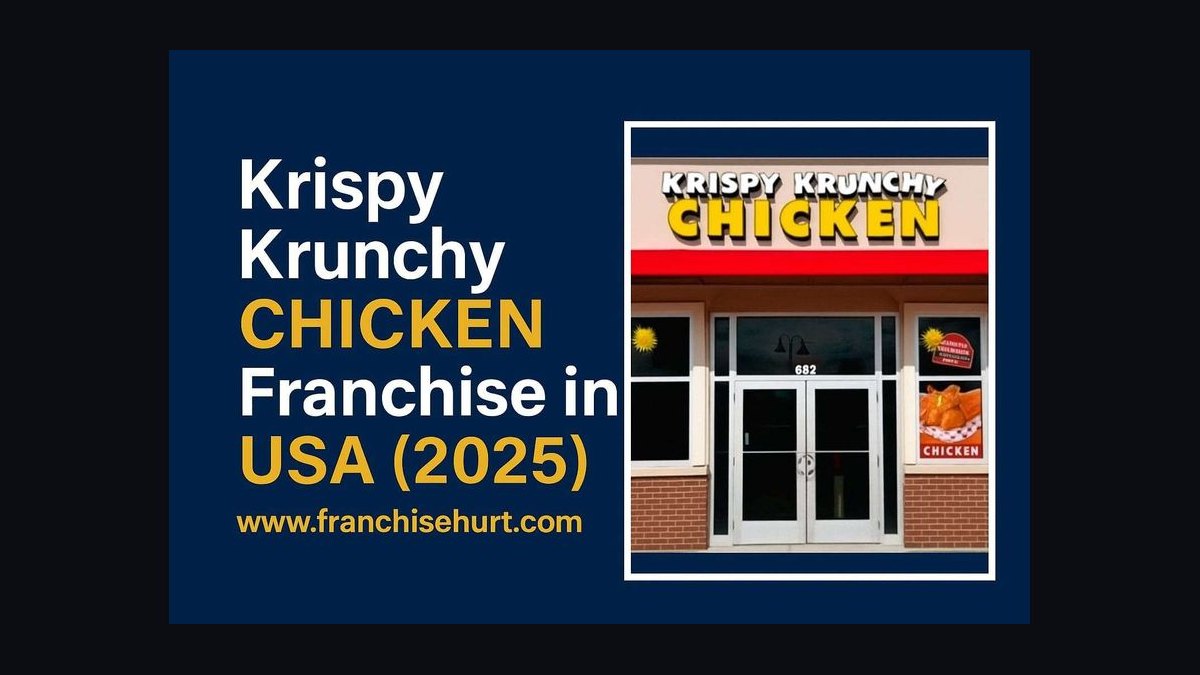
Revenue range: Public operator interviews put single-location weekly Krispy Krunchy sales at $7,000 to $15,000 gross, or roughly $360K-$780K annualized, with one widely-cited RaceWay location averaging $1,500/day (~$547K/year) and a T-Model's Pit Stop in El Dorado, Arkansas pulling ~$30,000/month in Krispy Krunchy tickets alone. EBITDA margin on the foodservice line typically runs 18-28% for c-store operators, because labor is shared with the main store and rent is already absorbed by fuel/lottery/beer. Payback period is 6-14 months at $400K+ annual chicken sales, which is dramatically faster than the 8-12 year payback seen on a Chick-fil-A or Raising Cane's franchise. The trade-off: you do not own a brand asset you can resell — the license terminates with the host store.
Who Wins With This Business
Existing c-store and gas station owners with underused kitchen space win biggest. If you already run a Sunoco, Shell, BP, or independent c-store and your hot-case is doing $3K-$5K/week in roller-grill hot dogs and taquitos, adding Krispy Krunchy typically lifts foodservice sales 60-100% based on multiple operator testimonials. Multi-unit c-store operators with 5-50 locations win because they can roll the program across the chain with standardized training and central purchasing. Travel center operators (Loop Neighborhood, Yesway, Refuel, Maverik) win because hungry interstate drivers will pay $11.99 for a 3-piece dark meal rather than a $4 hot dog. Operators in the Southeast, Gulf Coast, and Texas win on cultural fit — the Cajun-spiced product profile resonates strongly with regional taste preferences. Owners with $500K+ monthly fuel volume win because fuel margin is thin (8-12 cents/gallon) while chicken margin is 60%+ on food cost, so every chicken ticket is 5-8x more profitable than the gallon that drove the customer in.
Who Loses With This Business
Anyone trying to open a standalone Krispy Krunchy restaurant loses immediately — the company does not license that format. First-time operators with no c-store, no kitchen, no liquor license, and no hot-food permit lose because they will spend $300K-$600K building the host store before they ever sell a single piece of chicken. Operators in markets already saturated with Popeyes, Bojangles, Church's, and Raising Cane's find the per-piece pricing premium (Krispy Krunchy runs $1.99-$2.49 per piece vs. $1.79 at Popeyes) hard to defend when brand recognition is still limited outside the Southeast. Owners who refuse to source from approved suppliers lose because the entire margin model depends on proprietary marinades, breading, and Cajun sides that ship from Krispy Krunchy's Lafayette, Louisiana warehouse — there is no off-program ingredient substitution allowed. C-stores with under 1,500 daily customers typically struggle to hit the $300K minimum annual chicken sales needed to justify a dedicated fryer and a labor adder.
2027 Market Conditions
Chicken is the most resilient category in QSR. US chicken-segment sales hit $45 billion in 2025 per Technomic and are projected to grow 6-8% CAGR through 2028, outpacing burgers (2-3%) and pizza (3-4%). C-store foodservice is the fastest-growing channel inside that — NACS State of the Industry 2025 put inside-store foodservice sales up 8.7% YoY, with chicken the #1 hot-prepared category. Main Post Partners' 2024 PE investment in Krispy Krunchy injected capital for central commissary buildouts, mobile app, and loyalty — expect 3,000+ new openings between 2025 and 2028. Headwinds: wholesale chicken prices spiked 18% YoY in Q1 2026 on avian flu disruption, labor costs in c-stores up 11% YoY, and fryer-oil costs up 22%. Competitive pressure: Hangry Joe's, Champs Chicken, Chester's Chicken, and Bonchon are all pushing aggressive c-store partnerships, but Krispy Krunchy still holds roughly 2x the c-store footprint of its nearest peer.
The 90-Day Decision Tree
- Days 1-7: Confirm host-store fit. Pull your last 12 months of foodservice sales, your store's customer-count data, and your current hot-case category mix. If foodservice is under 8% of inside sales and customer count is under 1,000/day, stop here — the math will not work.
- Days 8-14: Submit the Krispy Krunchy program application at krispykrunchy.com/krispy-krunchy-program. The brand qualifies operators on location demographics, existing kitchen capacity, and operator track record — typical decision turnaround is 5-10 business days.
- Days 15-30: Site survey + kitchen design. A Krispy Krunchy area developer visits, measures your kitchen, specs the fryer placement, exhaust hood capacity, and counter layout. Expect 2 to 4 hours on site.
- Days 31-45: Order equipment + sign supply agreement. You sign a trademark license agreement (not a franchise agreement) and commit to sourcing all proprietary product from Krispy Krunchy's Lafayette commissary. Lead time on a Henny Penny pressure fryer is 6-10 weeks.
- Days 46-60: Permits + staff hiring. Pull a commercial kitchen permit, hot-food permit, and grease-trap inspection. Hire or reassign 2-3 staff per shift trained on chicken handling, breading SOPs, and 4-hour hold times.
- Days 61-75: Equipment install + initial inventory drop. First inventory order runs $1,500-$3,500 and ships from Lafayette. Online training modules take 12-16 hours per operator.
- Days 76-83: Soft launch. Run the program 3 days at 50% advertised hours to dial in fryer cycle times, breading station flow, and hold-cabinet rotation. Track piece-level waste daily.
- Days 84-90: Grand opening + first marketing push. Co-op marketing dollars from Krispy Krunchy run $500-$1,500 in custom signage plus social-media templates. Expect Week 1 sales at 40-60% of mature-store run rate, ramping to full volume by Month 4.
Alternative Plays
Champs Chicken offers a near-identical c-store program with no franchise fee, no royalty, slightly lower equipment cost ($8K-$30K), and a broader Midwest footprint — better fit if you operate in Iowa, Nebraska, or Kansas. Chester's Chicken is the largest c-store chicken program by raw count (3,000+ locations) with slightly higher proprietary-product margins but older brand positioning. Hangry Joe's Hot Chicken is the fastest-growing standalone Nashville-hot brand with a traditional franchise model — $50K franchise fee, 6% royalty, $400K-$700K total investment — better if you want a real restaurant. Bojangles licenses c-store programs in select Southeast markets and brings stronger brand equity but higher product cost. Operators with no host store should look at Hangry Joe's, Dave's Hot Chicken, or Slim Chickens rather than forcing a Krispy Krunchy build that the company will not approve.
FAQ
What exactly is a Krispy Krunchy Chicken franchise? It’s not a traditional franchise—it’s a licensed foodservice program designed to operate inside existing businesses like convenience stores, gas stations, or travel centers. There are no franchise fees, royalties, or advertising fees, and you only need about 60–100 square feet of counter space.
How much does it cost to start a Krispy Krunchy Chicken location? Total startup costs typically range from $10,000 to $40,000, covering equipment and initial inventory. This is significantly lower than most fast-food franchises, which often require $100,000 or more.
How long does it take to break even? Most operators reach breakeven within 6 to 14 months, depending on existing foot traffic and operational efficiency. The program is designed for low overhead, so profitability can come relatively quickly.
Can I open a standalone Krispy Krunchy Chicken restaurant? No—Krispy Krunchy Chicken does not license freestanding, standalone restaurants. The model is strictly a store-in-store program, meant to be added to an existing business with a hot-food kitchen.
How much money can I expect to make in the first year? Conservative estimates for a convenience store operator suggest incremental cash flow between $60,000 and $180,000 in Year 1. Actual results vary based on location, traffic, and how well you integrate the program.
Do I need prior food service experience to run this? Not necessarily—many successful operators come from retail or convenience store backgrounds. The program provides training and support, and the simplified menu (mainly fried chicken and sides) keeps operations straightforward.
Bottom Line
Krispy Krunchy Chicken is the highest-ROI foodservice program available to existing c-store and gas station operators in 2027. Zero franchise fee, zero royalty, $10K-$40K startup, and 6-14 month payback make the math nearly unbeatable for anyone with a kitchen already in place. It is not a restaurant business and not a wealth-building franchise asset — it is a margin-stacking add-on that turns underused hot-case real estate into $60K-$180K of incremental annual cash flow. Open it if you own the host store. Skip it if you want a brand asset, a standalone restaurant, or a sellable franchise unit — Popeyes, Bojangles, or Slim Chickens are the right plays there. *Krispy Krunchy Chicken review / reviews / rating / review 2027 / review of Krispy Krunchy Chicken franchise.*
Sources
- Krispy Krunchy Chicken Official Program Page
- Krispy Krunchy Chicken FAQ
- Krispy Krunchy Chicken Finishes 2024 with Over 600 Openings (Yahoo Finance / PRNewswire)
- Krispy Krunchy Chicken Outlines 2025 Growth Plans (Restaurant Dive)
- C-Store Foodservice Program Krispy Krunchy Chicken Wins Private-Equity Investment (Nation's Restaurant News)
- Winner Winner, Chicken Dinner (CSP Daily News)
- The Shortcut More C-Stores Are Taking to Grow Food Sales (CStore Decisions)
- Krispy Krunchy Chicken Franchise Cost & Profit (Vetted Biz)
- NACS State of the Industry Report 2025
- Technomic 2025 US Chicken Category Report
- Top 40 Convenience-Store Chains Ranked 2026 (CSP Daily News)
- Krispy Krunchy Chicken — Wikipedia
Related on PULSE
- [Should I open or buy a Krispy Kreme franchise in 2027?](/knowledge/fr0119)
- [Best chicken and wings franchises to buy in 2027](/knowledge/fr1125)
- [Should I open or buy a Dave's Hot Chicken franchise in 2027?](/knowledge/fr1025)
- [Should I open or buy a Champs Chicken franchise in 2027?](/knowledge/fr0830)
- [Should I open or buy a Hot Chicken Takeover franchise in 2027?](/knowledge/fr0829)
- [Should I open or buy a Big Chicken franchise in 2027?](/knowledge/fr0828)
Read it free — or make it yours for $1.
@Kory-White- · if Venmo asks, the last 4 of my number are 2012
 franchiseShould I open or buy a Visiting Angels franchise in 2027?
 franchiseShould I open or buy a Panera Bread franchise in 2027?
 franchiseShould I open or buy a Sharetea franchise in 2027?
 franchiseWhat is the step-by-step process for buying an existing franchise resale instead of building a new location in 2027?
 franchiseShould I open or buy a sweetFrog franchise in 2027?
 franchiseShould I open or buy a Mission BBQ franchise in 2027?
 franchiseShould I open or buy a One Hour Heating & Air Conditioning franchise in 2027?
 franchiseShould I open or buy a Little Caesars franchise in 2027?
 franchiseShould I open or buy a Bubbakoo's Burritos franchise in 2027?
 franchiseShould I open or buy a Blaze Pizza franchise or open an independent sandwich shop in 2027?