
Should I open or buy a Main Event Entertainment franchise in 2027?
 Curated byKory White · Fractional CRO · Maryland
 PULSEKNOWLEDGE LIBRARY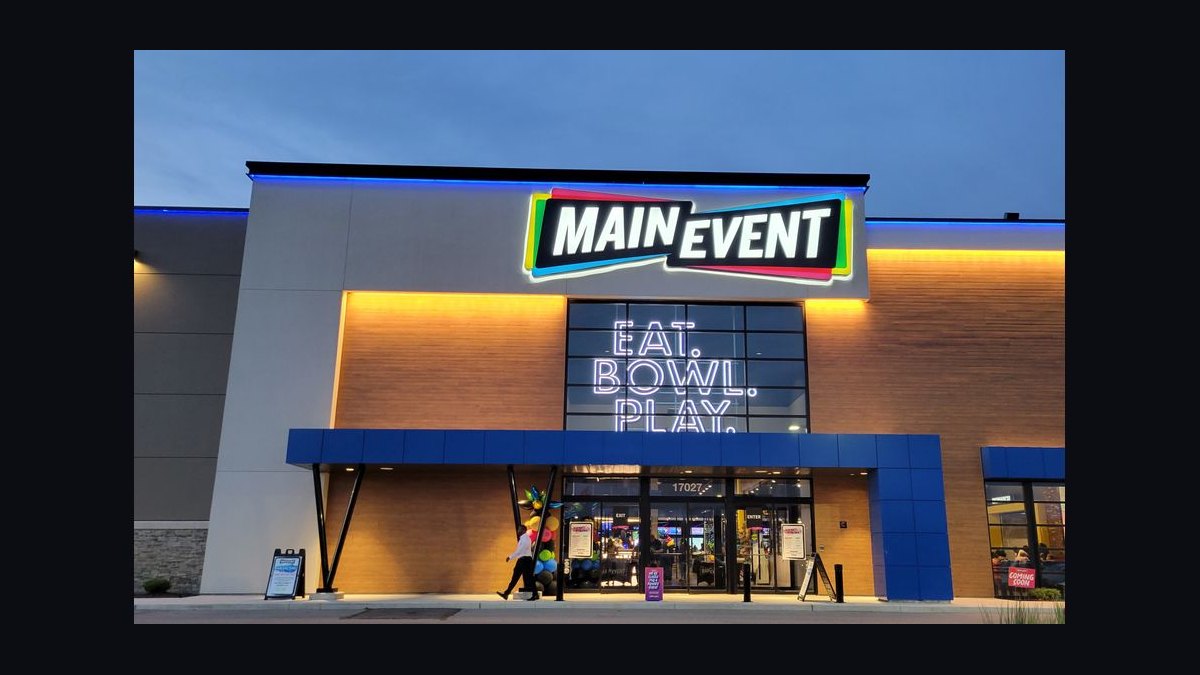
Main Event is corporate-owned by Dave & Buster's Entertainment and does not sell conventional single-unit franchises, so you cannot open one in 2027. The realistic paths are building or acquiring an independent family entertainment center at roughly $5M–$15M+, franchising a smaller format that does offer agreements, or buying PLAY stock.
What a Main Event unit actually is, and why the franchise question keeps coming up
The confusion is understandable. Main Event looks exactly like the kind of brand that should franchise: a recognizable national name, a repeatable box, a menu, a loyalty program, a defined trade area. Every other category that looks like this — pizza, fitness, trampoline parks, car washes — sells territory rights to independent operators. Main Event does not, because it is a wholly owned brand inside Dave & Buster's Entertainment, Inc. (NASDAQ: PLAY), which expands its footprint with corporate capital and corporate operators. There is no franchise disclosure document to request, no discovery day to attend, no territory map to negotiate over. When a search for "Main Event franchise cost" returns numbers, those numbers are almost always scraped from generic family-entertainment-center benchmarks or from Dave & Buster's public filings — not from an actual offering.
Understanding the *format* matters more than the brand name, because the format is what you would actually be replicating. A Main Event box typically runs 40,000 to 70,000 square feet and stacks multiple revenue engines under one roof: bowling lanes, laser tag, a gravity ropes course, billiards, a large arcade with redemption prizes, and a full-service restaurant and bar. The industry shorthand is "eatertainment" — a venue where food and beverage is not an amenity bolted onto an attraction but a co-equal profit center. That distinction drives everything downstream. A bowling alley with a snack bar is a different business, with different margins and different staffing, than a restaurant that happens to own bowling lanes.
The reason this matters for your decision is that the corporate-only model is not an accident of history — it reflects the capital intensity of the box. Large-format entertainment real estate is closer to development than to franchising. The site selection is complicated, the buildout is long, the equipment is specialized, and the ramp to stabilized performance runs years rather than months. Corporate parents keep these assets because the unit economics reward operators who can absorb a slow ramp and who benefit from national purchasing power on games, redemption inventory, and food. A single-unit franchisee carrying $12M of project debt through a two-year ramp is a fragile counterparty, and brands in this category have generally concluded that the risk is better held on their own balance sheet.

So the honest reframing of the question is: *do I want to be in the large-format eatertainment business, and if so, what vehicle gets me there?* That question has four real answers — build independent, acquire an operating center, franchise a smaller adjacent format that does sell agreements, or take equity exposure through the public markets. Each has a genuinely different capital profile, time commitment, and risk posture, and most people who arrive at "Main Event franchise" as a search query are actually best served by one of the last two.
The step-by-step process for entering the category
If you decide to pursue center ownership rather than passive exposure, the sequence below is the one that separates operators who open on budget from those who discover a $3M overrun during fit-out. The order is not arbitrary — each step gates the next, and skipping ahead is how projects die.
Step one: pick your vehicle before you pick your market. Build, acquire, franchise a smaller format, or invest. This decision determines your capital stack, your timeline, and whether you need a development team at all. People who skip this step start touring sites before they know whether they can finance a ground-up build, and they anchor emotionally on real estate they cannot fund.
Step two: model the economics on paper, at your own numbers. Do not use category averages. Build a monthly P&L for 36 months with separate revenue lines for attractions, arcade, redemption, food, beverage, and events. Model labor as a percentage that *starts high* — a new center is overstaffed by design while throughput is unknown — and steps down as you learn the floor. If the model does not clear debt service in month 30 under a pessimistic case, the project is not financeable regardless of how good the site looks.

Step three: validate the trade area with real demand math. Large FECs need population density, household income, and — critically — corporate density. Corporate events and team-building bookings are disproportionately profitable because they arrive pre-committed, at negotiated food-and-beverage minimums, on weekday afternoons when the box would otherwise be dark. A metro with the right population but no office park cluster will underperform its demographic profile.
Step four: secure the site and negotiate the deal structure. Large-format entertainment is a landlord conversation as much as a construction one. Build-to-suit arrangements, tenant improvement allowances, and percentage-rent structures are all negotiable, and the difference between a 12% and an 8% occupancy cost is the difference between a fragile center and a durable one. Visibility, parking counts, and ingress matter more here than in most retail because you are asking families to make a destination trip.
Step five: finance the project. Expect lenders to want meaningful equity, personal guarantees, and often a completion guarantee. SBA 504 structures work for some smaller formats; large boxes typically require conventional commercial lending, equipment financing on the games and lanes, and sponsor equity.

Step six: build, fit out, and hire ahead of opening. Attraction installation and kitchen buildout run on different critical paths and different inspection regimes. Hire and train the management team early enough that they own the opening rather than inherit it.
Step seven: open into a booked calendar, not an empty one. The centers that ramp fastest sell corporate events and party packages *before* the doors open. An opening week with three corporate bookings already on the calendar sets a very different trajectory than one that relies on walk-in curiosity.
Costs, timelines, and typical ranges
The capital required to open a large family entertainment center comparable to a Main Event box generally lands between $5,000,000 and $15,000,000+, with the spread driven mostly by whether you are taking an existing shell or building ground-up, and by how many attraction categories you install.
A workable line-item frame for a 40,000–70,000 square foot center:

- Building — lease improvements or build-to-suit contribution: $2,000,000–$7,000,000. The low end assumes an existing big-box shell with usable infrastructure and a landlord contributing meaningful tenant improvement dollars. The high end is ground-up development in a competitive retail corridor.
- Bowling lanes and major attractions: $1,200,000–$3,500,000. Lanes, laser tag arena, gravity ropes, and the structural work each requires. Ropes courses and multi-level attractions carry engineering costs beyond the equipment itself.
- Arcade and redemption: $500,000–$1,500,000. Games, card systems, and the opening prize inventory. Redemption inventory is working capital that never fully comes back — you carry it permanently.
- Food and beverage buildout: $800,000–$2,500,000. A full commercial kitchen and a real bar. This is the line people underestimate most, because they price it like a fast-casual kitchen and then discover they are running a full-service restaurant at volume.
- Technology and systems: $150,000–$600,000. POS, card readers, party booking, league management, and the integration between them.
- Pre-opening marketing: $100,000–$400,000. Regional launch spend.
- Working capital: $300,000–$1,000,000. Payroll and inventory through the months before cash flow turns.
On the revenue side, established large centers commonly gross $4,000,000 to $12,000,000 annually. The mix matters as much as the total. A typical distribution runs roughly 40–55% from arcade and attractions, 25–35% from food and beverage, and 15–25% from parties, leagues, and corporate events. Gross margins on arcade play and on beverage are high — the incremental cost of one more game swipe is close to zero — while food margins look like restaurant margins.
Operating expenses compress that gross into a thinner net than newcomers expect. Labor typically runs 25–35% of revenue in a full-service format. Occupancy runs 8–15%. Cost of goods on food, beverage, and redemption prizes lands in the mid-to-high teens as a blended percentage. Marketing, utilities, insurance, repairs, and equipment maintenance consume more still. Net margins in the 8–15% range are realistic for the first several years, with 12–22% achievable after a full ramp for well-run centers in strong trade areas.

The timeline is the part most first-time operators get wrong. From signed LOI to open doors is commonly 12 to 24 months for a large box, and the ramp to stabilized performance runs another 24 to 48 months. Many independent centers reach operating break-even within 12–24 months of opening, but break-even and stabilized are not the same milestone. Budget cash for both.
For comparison, smaller franchised formats in adjacent categories are materially cheaper to enter. Indoor karting concepts have historically been quoted in the low single-digit millions. Trampoline park and adventure park brands that do sell franchises sit well below a full eatertainment box. Axe-throwing and similar low-capital experiential concepts are cheaper again. If capital access is your binding constraint, these are the formats that actually accept franchisees — and they let you learn attraction operations before betting eight figures on one.
Where operators get it wrong
Treating food and beverage as an afterthought. This is the single most common failure. Operators come from the attractions side, build a great arcade, and staff a kitchen that cannot execute at Saturday-night volume. F&B and events are the profit engine in this format. A center that lives on game swipes alone has capped its margin and handed the highest-value guest occasion — the birthday party that also feeds twenty people, the corporate outing with a food minimum — to a competitor who can execute it.
Underwriting the market on population alone. A trade area with 400,000 people and no corporate density will fill weekend afternoons and go dark Tuesday through Thursday. Weekday utilization is where fixed-cost leverage lives. Corporate events, school groups, and league play are the products that fill that gap, and they require deliberate sales effort rather than passive marketing.

Under-capitalizing the ramp. The model that shows month-14 break-even is usually built on an optimistic ramp curve. Cost overruns during fit-out and a slower-than-planned ramp compound: you open late, you open over budget, and you enter the slow season with less cash than you planned. Carry a contingency that assumes both.
Competing on price against national chains. Dave & Buster's, Bowlero, Round1, and the regional chains have purchasing power, national marketing budgets, and loyalty programs an independent cannot match. Independents that win do so on differentiation: hyper-local community integration, school and youth-sports partnerships, niche attractions the chains have not saturated, a genuinely better bar program, or membership and subscription structures that create recurring revenue rather than one-off visits.
Ignoring maintenance economics. Attractions and games are capital equipment with real downtime. A dark laser tag arena on a Saturday is lost revenue you never recover. Budget a technician, a parts inventory, and a replacement cycle for redemption games — arcade lineups go stale, and a lineup that has not been refreshed in three years shows up in repeat-visit rates before it shows up in any report.

Assuming an exit multiple. Independent centers commonly change hands at roughly 3–5x EBITDA, with stronger centers and larger EBITDA bases reaching higher. If your return case depends on a 7x exit, the case depends on finding a strategic buyer, not on operating performance.
Decision framework: choosing among the four vehicles
Work down this ladder honestly, starting from capital and experience rather than from enthusiasm.
If you have under $500K to deploy and no hospitality operating background: buy the equity. Dave & Buster's Entertainment trades publicly under PLAY, and holding shares gives you exposure to the category — including Main Event locations — with zero operating risk, zero construction risk, and full liquidity. This is an unsatisfying answer to someone who wanted to own a venue, but it is the honest one for that capital and experience profile.
If you have $500K–$2M and want to operate: franchise a smaller format that actually sells agreements. Trampoline and adventure park brands, indoor karting, axe throwing, and mini-golf-plus concepts all have real franchise systems with training, supply chains, and site-selection support. You get the operating experience, the brand recognition, and a capital requirement that does not require institutional partners. Many multi-unit FEC operators started exactly here.

If you have $2M–$5M: acquire an operating center rather than building. Purchasing at 3–5x EBITDA on a center producing $500K–$1M of EBITDA lands in this range and buys you immediate cash flow, an existing customer base, and no construction risk. You inherit deferred maintenance and an existing staff culture, so diligence on equipment age and on the labor model matters more than diligence on the demographics. A smaller-format build — 15,000–25,000 square feet with two or three core attractions and a limited menu — also fits this band.
If you have $5M+ and a hospitality operating team: build the large box. This is the only band where a genuine Main Event competitor is realistic, and it requires a management team, not a founder. You are running a restaurant, an entertainment venue, a retail redemption operation, and an events sales business simultaneously.
A fifth path worth naming: management agreements. Some FEC developers and landlords want an operator rather than a tenant. You run the center for a base salary plus a share of net profits with no capital at risk. It is the fastest way to learn whether you actually want this business, and the experience makes you financeable later.

The adjacent bets that often beat the obvious one
Because the direct answer closes one door, it is worth walking through the doors that are actually open — and a few upstream and downstream positions that experienced operators take instead.
Supplying the category instead of operating in it. Every center needs redemption prize sourcing, game route servicing, party booking software, and attraction maintenance. These are lower-capital, higher-margin businesses with recurring revenue, and they scale across many centers rather than depending on one trade area. An operator who understands what breaks and what sells is unusually well positioned to serve the category rather than compete in it.
Owning the real estate rather than the operation. Large entertainment boxes are difficult tenants to place, which means a landlord who understands the format has leverage. Build-to-suit development for a credit tenant in this category is a different risk profile entirely — you underwrite a lease, not a P&L, and you are not exposed to Saturday-night labor.
Buying a portfolio position in the smaller franchised formats. Multi-unit ownership of three or four smaller entertainment franchises in one metro can produce aggregate EBITDA comparable to a single large box, with staggered capital deployment, diversified risk, and an easier financing path. If one location underperforms, it does not take the whole balance sheet with it.

Watching the consolidation cycle. The large-FEC segment has consolidated meaningfully — Bowlero's roll-up of bowling centers and Dave & Buster's acquisition of Main Event are both examples. Consolidation cuts two ways for an independent: it raises competitive pressure, but it also creates a defined buyer pool. Independent centers with clean books, a defensible trade area, and $2M+ of EBITDA are exactly what strategic and private-equity buyers shop for. Building explicitly *to be acquired* is a legitimate strategy, and it changes how you keep records from day one.
The membership pivot. Subscription structures — monthly unlimited-play tiers, family memberships, league packages — convert an occasional-visit business into a recurring-revenue one. Recurring revenue smooths the seasonality that punishes this category and materially improves how a buyer values the business. It is the closest thing to a durable moat an independent has against chain pricing.
None of these require a franchise agreement with a brand that does not offer one. All of them are available to someone who arrived at this question wanting to open a Main Event and discovered the door is closed.
Related questions
Can I ever buy an existing Main Event location from the parent company?
Corporate parents occasionally divest underperforming units or whole regions, but these are negotiated corporate transactions, not a published acquisition path. There is no application process. If you want to be in that conversation, you need to be a known operator with capital already deployed in the category.
Is a smaller format actually profitable, or just cheaper to enter?
Smaller centers of 15,000–25,000 square feet commonly generate $1.5M–$3.5M in annual revenue on $1.5M–$4M of investment. The revenue-to-investment ratio is often better than a large box, because you skip the most expensive attractions while keeping the high-margin arcade and party revenue.
How much does corporate events revenue really matter?
Substantially. Parties, leagues, and corporate bookings often represent 15–35% of revenue, arrive with pre-committed food-and-beverage spend, and fill weekday hours when fixed costs run against an empty building. Centers without a dedicated events salesperson consistently underperform their trade area.
Does owning PLAY stock give me any operational involvement?
No. Public equity is passive exposure only — no territory, no operating control, no say in where Main Event opens next. It is the right choice if you want category exposure without a decade of operating commitment, and the wrong one if the goal is to run a venue.
FAQ
Does Main Event Entertainment sell franchises in 2027?
No. Main Event is wholly owned by Dave & Buster's Entertainment and expands through corporate development. There is no franchise disclosure document, no territory offering, and no discovery process for prospective franchisees. Any site quoting a "Main Event franchise fee" is extrapolating from generic industry benchmarks rather than an actual offering.
What would it cost to open a comparable center instead?
A large independent family entertainment center in the 40,000–70,000 square foot range typically requires $5,000,000 to $15,000,000+ in total project cost, covering the building or leasehold improvements, attractions, arcade, kitchen and bar buildout, technology, pre-opening marketing, and working capital through the ramp.
How long until a new center turns a profit?
Construction and fit-out commonly run 12–24 months from signed LOI. Many independent centers reach operating break-even within 12–24 months after opening, but stabilized performance — the margins used in a return model — typically takes 24–48 months. Under-capitalizing that window is the most common cause of failure.
Which entertainment concepts actually do franchise?
Several adjacent formats sell franchise agreements, including trampoline and adventure park brands, indoor karting, axe-throwing concepts, and mini-golf-plus venues. None replicate the full eatertainment model, but they offer training, supply chain support, and site selection at a fraction of the capital requirement.
Is buying an existing center safer than building one?
Usually, yes. Acquisition at roughly 3–5x EBITDA removes construction risk and delivers immediate cash flow, though you inherit equipment age, deferred maintenance, and an existing staff culture. Diligence should focus heavily on the equipment replacement schedule and on how much of the revenue is genuinely recurring.
What is the single biggest predictor of success in this category?
Food, beverage, and events execution. Centers that treat the kitchen and the events calendar as core profit centers — rather than as amenities supporting the attractions — consistently outperform on margin, weekday utilization, and eventual exit multiple.
Sources
- https://investors.daveandbusters.com/ — Dave & Buster's Entertainment, Inc. investor relations and SEC filings
- https://www.sec.gov/edgar/search/ — SEC EDGAR full-text search for PLAY filings and brand disclosures
- https://www.mainevent.com/ — Main Event official site: center formats, attractions, and locations
- https://www.iaapa.org/ — IAAPA, the global association for the attractions industry
- https://www.franchise.org/ — International Franchise Association, franchise economic outlook and disclosure guidance
- https://www.ftc.gov/business-guidance/industry/franchises — FTC franchise rule and disclosure document requirements
- https://www.ibisworld.com/ — IBISWorld industry research, family and indoor entertainment centers
- https://www.sba.gov/funding-programs/loans — U.S. Small Business Administration loan programs and eligibility
- https://www.census.gov/ — U.S. Census Bureau metro population and business pattern data
- https://www.nrn.com/ — Nation's Restaurant News, foodservice and eatertainment industry coverage
Related on PULSE
- [Should I open or buy a Main Squeeze Juice Co franchise in 2027?](/knowledge/fr0924)
- [Should I open a event planning business in 2027?](/knowledge/fr0564)
- [Should I open or buy a Launch Entertainment franchise in 2027?](/knowledge/fr0208)
Read it free — or make it yours for $1.
@Kory-White- · if Venmo asks, the last 4 of my number are 2012
 franchiseShould I open or buy a Hungry Howie's franchise in 2027?
 franchiseShould I open or buy a Maaco (re-do) franchise in 2027?
 franchiseShould I open or buy a Shake Shack franchise in 2027?
 franchiseShould I open or buy a Carvel ice cream franchise in 2027?
 franchiseShould I open or buy a CertaPro Painters franchise in 2027?
 franchiseShould I open or buy a Dream Vacations franchise in 2027?
 franchiseShould I open or buy a Mountain Mike's Pizza franchise in 2027?
 franchiseShould I open or buy a Sharetea franchise in 2027?
 franchiseShould I open or buy a Panera Bread franchise in 2027?
 franchiseShould I open or buy a Pollo Tropical franchise in 2027?