
Should I open or buy a Joint Chiropractic franchise in 2027?
 Curated byKory White · Fractional CRO · Maryland
 PULSEKNOWLEDGE LIBRARY
Quality
Certified
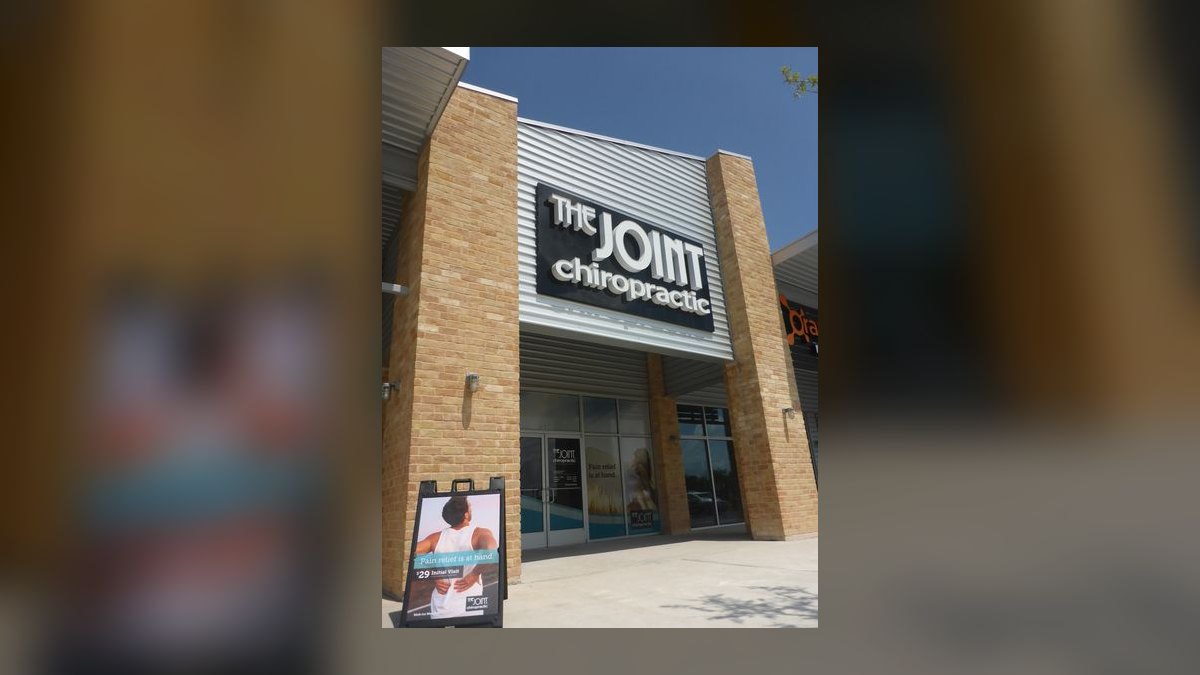
Probably not as a single-unit absentee buyer. Total investment runs roughly $245,000 to $573,000, breakeven lands around month 14 to 22, and The Joint Corp. is actively shrinking its clinic count. The model works for capitalized multi-unit operators in growing suburban markets — and buying an existing clinic usually beats building one.
The outcome you should expect
Strip away the franchise-broker enthusiasm and the honest expected outcome for a new Joint Chiropractic clinic looks like this: you spend twelve to eighteen months buying a patient base, not earning from one.
A greenfield clinic typically posts negative operating cash flow in year one — plan on burning $35,000 to $80,000 below your build-out capital before the clinic covers its own payroll, rent, and marketing minimums. The subscription model is the reason. Because The Joint sells monthly wellness plans in the $79 to $99 range rather than billing insurance per visit, your revenue is a slowly compounding book of recurring memberships. Every month you add net members, the base steps up; every month churn beats acquisition, it steps down. That's a good business at scale and a brutal one in month four, when you have fixed rent, two licensed chiropractors on payroll, a marketing minimum, and 180 members.
By year three, the realistic center of the distribution is roughly $570,000 in annual unit volume. At mid-teens to high-teens EBITDA margin, that produces owner earnings in the neighborhood of $80,000 to $105,000 — assuming you're not also paying yourself a manager's salary out of that same line. Payback on a fully-loaded $400,000 investment lands around three to three and a half years. Top-quartile clinics do materially better, clearing $900,000 in revenue and $200,000-plus in owner earnings, with payback under two and a half years. Bottom-quartile clinics never pay back at all; they close, get sold at a discount, or limp along as a job that pays worse than the one you left.
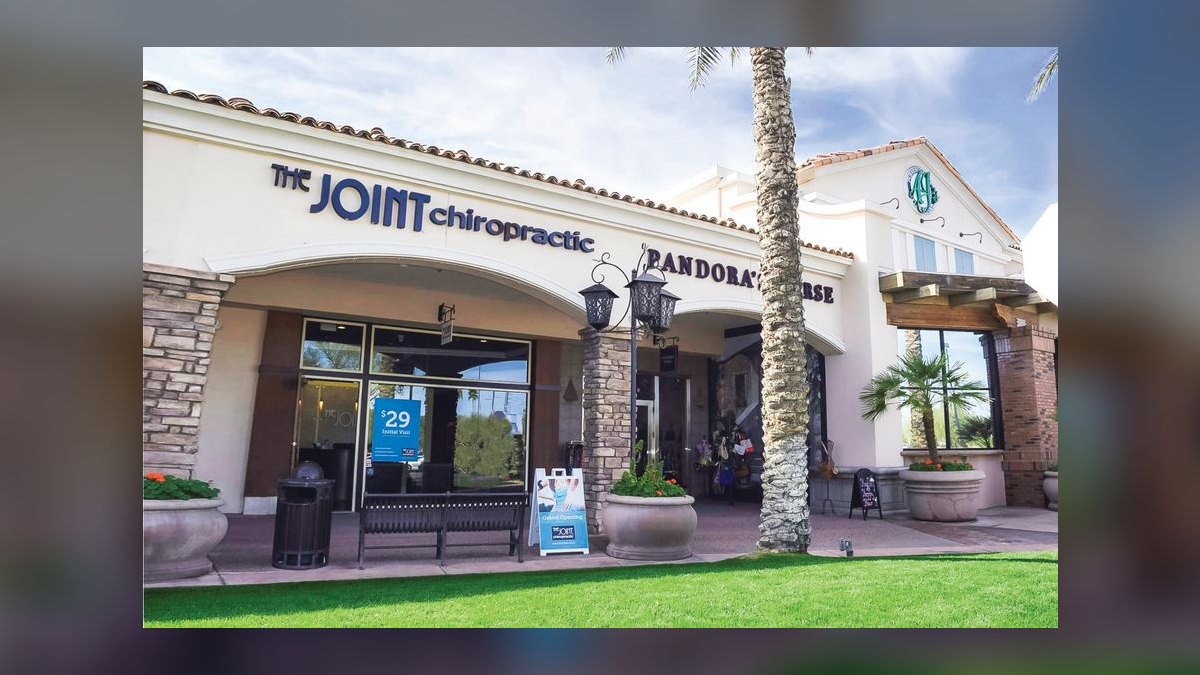
The second thing to expect is that you are buying into a system that is contracting before it grows. The Joint Corp. spent 2025 and 2026 refranchising almost its entire corporate clinic base — selling company-owned locations to franchisees and transforming itself into a near-pure franchisor. Clinic count has been declining, not climbing, as underperforming units close and weak operators exit. Management has been explicit that the network gets smaller before it gets bigger.
Read that correctly. A shrinking unit count in a franchise system is ambiguous news, not automatically bad news. When a franchisor culls sites that never should have opened, the surviving average gets healthier and the corporate support organization gets cheaper to run. But it also tells you the brand has already saturated its easiest markets, that the sites left on the map are the harder ones, and that "the system is growing fast" is no longer a reason to buy. You are underwriting your specific four walls, your specific trade area, and your own operating capability — not a rising tide.
What drives that outcome
Four variables explain most of the spread between a $913,000 clinic and a $285,000 clinic, and only one of them is the brand.
Wellness-plan conversion. The single highest-leverage number in the business is the percentage of first-visit patients who convert to a recurring monthly plan. A clinic converting near seventy percent and one converting near forty percent can sit in identical demographics with identical signage and land $200,000 apart on annual revenue. Conversion is a front-desk sales function, not a clinical one. It depends on whether your wellness coordinator can explain a subscription in ninety seconds, whether the DC reinforces the plan during the adjustment, and whether you actually track the number weekly instead of discovering it in a quarterly P&L.

Retention and churn. Recurring revenue only compounds if members stay. A member who lasts nine months is worth roughly triple one who lasts three. Churn is driven by perceived wait time, DC consistency (patients form attachments to a specific doctor and cancel when that doctor leaves), and whether anyone calls a member who has stopped showing up. This is the number most first-time owners never instrument.
Trade-area quality and cannibalization distance. Contractual territory protection in this category is typically narrow — on the order of a mile and a half radius — which is not the same as the distance at which a nearby clinic stops stealing your patients. Real cannibalization extends well past the protected radius, because patients choose by drive-time and shopping-center convenience, not by franchise map. A clinic opening within three miles of two existing units in the same brand routinely underperforms the system median by six figures of revenue. Territory protection also generally does not shield you from the franchisor's own national digital marketing, which can route a searcher in your trade area to whichever clinic ranks or bids better.
Chiropractor supply and cost. Licensed DC compensation in competitive metros has climbed hard — base salaries in the high-$70,000s to low-$110,000s plus per-adjustment incentive is now a normal range, and turnover in the category runs high. Every DC replacement cycle costs you recruiting time, a productivity dip, and some churn from patients loyal to the departing doctor. Two to three points of EBITDA margin have quietly migrated from franchisee to labor over the last few years, which is why older FDD vintages read more optimistically than current ones.

Notice what is missing from that diagram: brand advertising. National marketing helps you get found, but it does not convert, retain, or staff your clinic. Franchisees who believe they are buying demand generation are buying a logo and a playbook; the demand is local and you generate it.
Benchmarks and realistic ranges
Here is the capital stack you should underwrite, not the one on the brochure.
The initial franchise fee sits near $39,900. Real estate build-out for a small retail footprint runs roughly $110,000 to $285,000 depending on landlord contribution, whether you inherit a vanilla shell or a raw box, and local construction costs — this is the single most variable line and the one most likely to blow your model. Equipment, tables, and signage add $32,000 to $78,000. Technology, POS, and patient-messaging tooling run $6,500 to $12,500. Initial inventory and supplies, $3,500 to $8,500. Grand-opening marketing, $15,000 to $25,000. Insurance, permits, and legal, $8,500 to $22,000. Three months of working capital, $30,000 to $100,000.

Total: roughly $245,000 on the low end to $573,000 on the high end. Underwrite the middle-to-high side. Almost nobody lands at the bottom of an Item 7 range.
Ongoing fees deserve a hard look because they compound against you at low revenue. Royalty around seven percent of gross with a monthly minimum in the several-hundred-dollar range, a national marketing fund near two percent, and a local marketing obligation set as the greater of a flat monthly floor or a percentage of gross. At maturity that's approximately ten to twelve percent of top line leaving the building before you pay a single chiropractor. The minimums are the part that hurts: at $250,000 of revenue, a flat local-marketing floor is a far larger percentage bite than it is at $700,000, so the fee structure is regressive against exactly the clinics that can least afford it.
Performance tiers, as a planning framework:
Bottom quartile lands near $285,000 revenue at low-single-digit margins — $11,000 to $17,000 of owner earnings, which is not a business, it's a hobby with a lease. Median sits near $570,000 at sixteen to eighteen percent, producing $79,000 to $106,000 and a three-to-three-and-a-half-year payback. Top quartile clears roughly $913,000 at twenty-two to twenty-five percent, producing $200,000-plus and payback under two and a quarter years. The top decile pushes past $1.1 million.
Two things to note about that distribution. First, top-quartile performance clusters heavily among multi-unit operators — three or more clinics under one owner. That is not a coincidence: multi-unit owners spread a regional manager across locations, float DCs between clinics to cover gaps, negotiate better with landlords, and absorb one bad month without existential stress. Second, system-wide revenue guidance has been roughly flat-to-modestly-up against a declining clinic count, which means average unit volume is being propped up by closures at the bottom rather than growth at the top. Do not model an expanding average.
Your operating targets, if you buy: wellness-plan conversion north of sixty-five percent, monthly active member retention north of seventy percent, and new-patient acquisition cost under the mid-$40s. Track all three weekly on a whiteboard. Clinics that miss all three are the closure cohort.
Financing typically comes through an SBA 7(a) loan in the $200,000 to $350,000 range at a spread over SOFR with ten-year amortization, layered over your own equity. Franchisor-brand SBA eligibility and lender familiarity are genuine advantages here versus building an independent practice — a bank that has already underwritten forty clinics in the same brand asks easier questions. But debt service on $300,000 is real money against $79,000 of owner earnings, and the pro forma has to survive it.

Risks, edge cases, and failure modes
The absentee single-unit trap. This is the most reliable way to lose money in this category. One clinic, out-of-state owner, hired clinic director, no weekly operating cadence. The model demands local hustle — gym partnerships, corporate wellness contracts, community events, chamber presence — and none of that happens by remote instruction. Absentee single-unit owners are dramatically overrepresented in closures.
Late entry into a saturated metro. If your target market already has a dense cluster of the same brand, you are buying the leftovers. The good corners went first. Signing a site because it's the only territory the franchisor has available in a metro you happen to live in is a decision driven by your commute, not by economics.
The chiropractor who wants to practice. If you're a licensed DC and your motive is clinical autonomy, this is the wrong vehicle. High-volume, short-duration, cash-pay adjustment work at low net revenue per visit is a fundamentally different job than insurance-billed practice at multiples of that per-visit economics. Plenty of DCs sign, resent the model within a year, and sell. Buy this as a business owner or don't buy it.

Undercapitalization. The liquid-capital minimum a franchisor will accept is not the same as the liquid capital you need. Buyers who show up with the bare minimum and no reserve tend to run dry around month nine to twelve — precisely when the member base is finally compounding. Treat something in the $175,000 to $225,000 liquid range as the practical floor, and hold it as reserve rather than spending it into a bigger build-out.
Corporate-practice-of-medicine structure. In many states a non-chiropractor cannot own a chiropractic practice outright; the workaround is a management services organization where you own the business entity and a licensed DC owns the professional corporation. A meaningful minority of states impose stricter requirements or demand DC equity participation. The franchisor supplies a template, but state law governs and templates get stale. Pay a healthcare attorney in your specific state before you sign anything. Getting this wrong is not a financial risk, it's a licensing risk.
Pricing power is thinner than it looks. The monthly plan price has been walked upward over recent years, and price testing at the high end has produced measurable attrition. Do not build a pro forma that assumes you'll price your way out of a soft trade area.

Lease term mismatch. A ten-year lease against a business that takes eighteen months to break even and three years to pay back means a bad site is a five-figure-per-year mistake you cannot exit. Negotiate a personal-guarantee burn-off and a co-tenancy clause. If the anchor tenant that generates your foot traffic leaves in year two, you want an out.
Resale as the underrated path. Buying an existing clinic doing median-or-better revenue often trades in the range of two-and-a-half to three times trailing EBITDA. You skip the entire ramp, inherit the subscription book, and can diligence real numbers instead of projections. The trade-off is that you inherit the seller's staffing problems and their churn rate, and you need to verify why they're selling. But for a first-time franchisee, a proven resale beats a greenfield build almost every time.
A practical rollout plan
Give yourself ninety days and treat every stage as a gate you can fail.

Days 1–14: read the actual FDD. Get the current Franchise Disclosure Document directly from the franchisor, not a broker summary. Item 7 for the investment range. Item 19 for financial performance representations — and specifically look for the quartile breakdown rather than anchoring on the median, because your job is to figure out which quartile you'll land in. Item 20 for outlet and closure history, broken out by state; closures clustered in a market you're considering is the loudest signal in the document. Item 21 for the franchisor's own financials. Also read Item 6 in full — the ancillary fee schedule in this category is long, and technology, transfer, training, and audit fees add up.
Days 15–30: interview eight franchisees. Not the four the franchisor hands you. Pull the Item 20 list and cold-call: two high performers, two mid, and four who opened in the last two years — the recent cohort tells you what today's economics look like, not what 2019's did. Ask exactly four questions. What was your actual year-one cash burn? What's your current wellness-plan conversion rate? How many chiropractors have you cycled through? Would you sign again at today's investment range? Also call two franchisees who exited. They are the most honest people you will talk to.
Days 31–45: site select with real data. Commission a proper trade-area study rather than eyeballing a shopping center. Set hard gates before you look at any site: residential density above roughly 28,000 within three miles, median household income above the high-$70,000s, no same-brand clinic within three miles regardless of what the contractual protection radius says, and a co-tenant mix that generates genuine repeat traffic — grocery, fitness, coffee. Daily-needs retail beats destination retail for a subscription model, because your best member visits four times a month.
Days 46–60: stress-test three scenarios. Model year-three revenue at roughly $420,000, $570,000, and $760,000. The only question that matters: at $420,000, can you service debt and survive thirty-six months with no owner draw? If the answer is no, the deal is dead regardless of how good the upside case looks. Underwriting to the median is how people lose their houses.

Days 61–75: lock capital and coverage. Build the liquid reserve, get the SBA package fully underwritten rather than pre-qualified, and confirm professional liability coverage for the entity, every DC, and any non-clinical staff who touch patients. Have a healthcare attorney bless your ownership structure in writing.
Days 76–90: sign or walk, cleanly. Score five red flags — weak site, thin capital, absentee plan, saturated metro, single-unit-only. Three or more reds and you walk. The cost of walking is your diligence spend. The cost of signing wrong is four years and most of your capital.
One broader note worth carrying into the decision. The mechanics above are not specific to chiropractic — they are the underwriting logic for any subscription-based suburban retail service franchise. Boutique fitness, med-spa, IV therapy, physical therapy, and stretch studios all run the same engine: local acquisition cost, plan conversion at the front desk, monthly churn, licensed-or-certified labor scarcity, and a landlord who wants a decade of your life. If this specific brand fails your gates, the right next move is usually to run the identical ninety-day process against an adjacent concept rather than to lower your standards on this one.
Related questions
Is buying an existing clinic better than opening a new one?
Usually yes for first-time owners. A resale at roughly two-and-a-half to three times trailing EBITDA skips the twelve-to-eighteen-month ramp and lets you diligence real financials instead of projections. You inherit the member book — and the seller's staffing and churn problems. Verify why they're selling.
Do I need to be a licensed chiropractor to own one?
In most states, no. A management services organization structure lets a non-clinician own the business entity while a licensed chiropractor owns the professional corporation. A meaningful minority of states require modified structures or clinical equity. State law governs, not the franchisor's template — get local healthcare counsel.
How many units should I plan to own?
Three or more if you want top-quartile economics. Multi-unit ownership spreads a regional manager, lets you float chiropractors between locations to cover turnover, improves landlord leverage, and absorbs one weak month. Single-unit ownership only works with a full-time, present, locally-networked operator.
What kills these clinics most often?
Undercapitalization colliding with the ramp. Owners who fund only the minimum run out of working capital around month nine to twelve, just as the member base starts compounding. The second killer is absentee ownership of a single unit, and the third is signing a saturated trade area because it was the only territory available.
How does this compare to an independent cash-pay practice?
An independent practice starts far cheaper and gives full pricing autonomy, but you build the marketing engine, playbook, and brand yourself. Independents commonly plateau below the franchise median. Franchising buys a system and lender familiarity; you pay roughly ten to twelve percent of revenue for it.
FAQ
What is the realistic total investment?
Underwrite $245,000 to $573,000 all-in, and plan for the upper half of that range. The franchise fee is near $39,900; build-out is the wild card at $110,000 to $285,000 depending on landlord contribution and local construction pricing. Add equipment and signage, technology, opening marketing, insurance and legal, and three months of working capital. Separately, hold $175,000 to $225,000 liquid as reserve — not as build-out budget.
How long until the clinic is profitable?
Expect negative operating cash flow of roughly $35,000 to $80,000 in year one, breakeven somewhere in month fourteen to twenty-two, and three to three-and-a-half years to full payback at median performance. Strong operators in dense suburban trade areas occasionally break even inside a year. The subscription model compounds slowly by design, which means early months are structurally unprofitable no matter how well you execute.
What do the ongoing fees actually total?
Roughly ten to twelve percent of gross revenue before payroll: about seven percent royalty, about two percent national marketing fund, plus a local marketing obligation set as the greater of a monthly dollar floor or a percentage of gross. The monthly minimums are the trap — at low revenue a flat floor is a much larger effective percentage, so the fee structure bites hardest on the clinics least able to absorb it.
Does the shrinking clinic count mean the brand is failing?
Not necessarily, but it does change your underwriting. The franchisor refranchised nearly its entire corporate clinic base and simultaneously culled underperforming units, which makes the surviving average healthier and the corporate organization leaner. What it removes is the "rising tide" argument. You are underwriting one trade area and your own operating ability — not system growth.
Can I run this while keeping my day job?
Realistically no, not a greenfield single unit. Local demand generation — gym and corporate wellness partnerships, community events, front-desk conversion coaching, chiropractor recruiting — is the job, and it does not survive delegation to a first-time clinic director. If you need passive ownership, buy a stabilized resale with a proven manager already in seat, and accept a lower return for the reduced involvement.
What are the closest alternatives worth comparing?
Other franchised chiropractic concepts run lower investment with weaker brand pull and thinner average revenue, or higher investment with optional insurance billing and clinical-ownership requirements. Adjacent suburban wellness retail — massage, stretch, recovery, and med-spa concepts — uses the same subscription engine at a higher capital tier. An independent cash-pay practice is cheapest and most autonomous but has no playbook or marketing engine.
Sources
- https://ir.thejoint.com/ — The Joint Corp. investor relations: quarterly results, clinic counts, refranchising updates
- https://www.sec.gov/cgi-bin/browse-edgar?action=getcompany&CIK=JYNT — SEC EDGAR filings for The Joint Corp. (10-K, 10-Q)
- https://www.franchise.org/franchise-information — International Franchise Association: franchise structure, disclosure, and economic outlook
- https://www.ftc.gov/business-guidance/resources/franchise-rule-compliance-guide — FTC Franchise Rule compliance guide (what the FDD must disclose)
- https://www.sba.gov/funding-programs/loans/7a-loans — SBA 7(a) loan program terms and eligibility
- https://www.bls.gov/ooh/healthcare/chiropractors.htm — Bureau of Labor Statistics: chiropractor pay, employment, and outlook
- https://www.franchisebusinessreview.com/ — Franchisee satisfaction benchmarking and performance surveys
- https://www.entrepreneur.com/franchises/franchise500 — Entrepreneur Franchise 500 rankings and category benchmarks
- https://www.acatoday.org/ — American Chiropractic Association: profession standards and practice models
- https://www.census.gov/data/data-tools.html — Census data tools for trade-area density and household income screening
Related on PULSE
- Should I open or buy a 100% Chiropractic franchise in 2027?
- Should I open or buy a HealthSource Chiropractic franchise in 2027?
- Should I open or buy a Massage Envy franchise in 2027?
- Should I buy a franchise resale instead of opening a new location?
- How do I read an FDD Item 19 before buying a franchise?
- What liquid capital reserve does a first-time franchisee actually need?
This page will be disappearing soon. Save it to your device for $1 — or read it free while it is here.
@Kory-White- · if Venmo asks, the last 4 of my number are 2012
This page is gone.
This one is off the shelf now. $1 keeps it on your phone for good — the whole page, pictures and diagrams included.
 franchiseShould I open or buy a Sunright Tea Studio franchise in 2027?
 franchiseShould I open or buy a Scooter's Coffee franchise in 2027?
 franchiseShould I open or buy Cinnabon franchise or open an independent sandwich shop in 2027?
 franchiseShould I open or buy a Cold Stone Creamery franchise in 2027?
 franchiseShould I open or buy a Round Table Pizza franchise in 2027?
 franchiseShould I open or buy a Howard Hanna Real Estate franchise in 2027?
 franchiseShould I open or buy a Glory Days Grill franchise in 2027?
 franchiseShould I open or buy a Red Lobster franchise in 2027?
 franchiseWhat are the exact steps to open a franchise location, from signing the agreement to opening day in 2027?
 franchiseShould I open or buy a Salata Salad Kitchen franchise in 2027?