
Should I open or buy a SoBol franchise in 2027?
 Curated byKory White · Fractional CRO · Maryland
 PULSEKNOWLEDGE LIBRARY
Quality
Certified
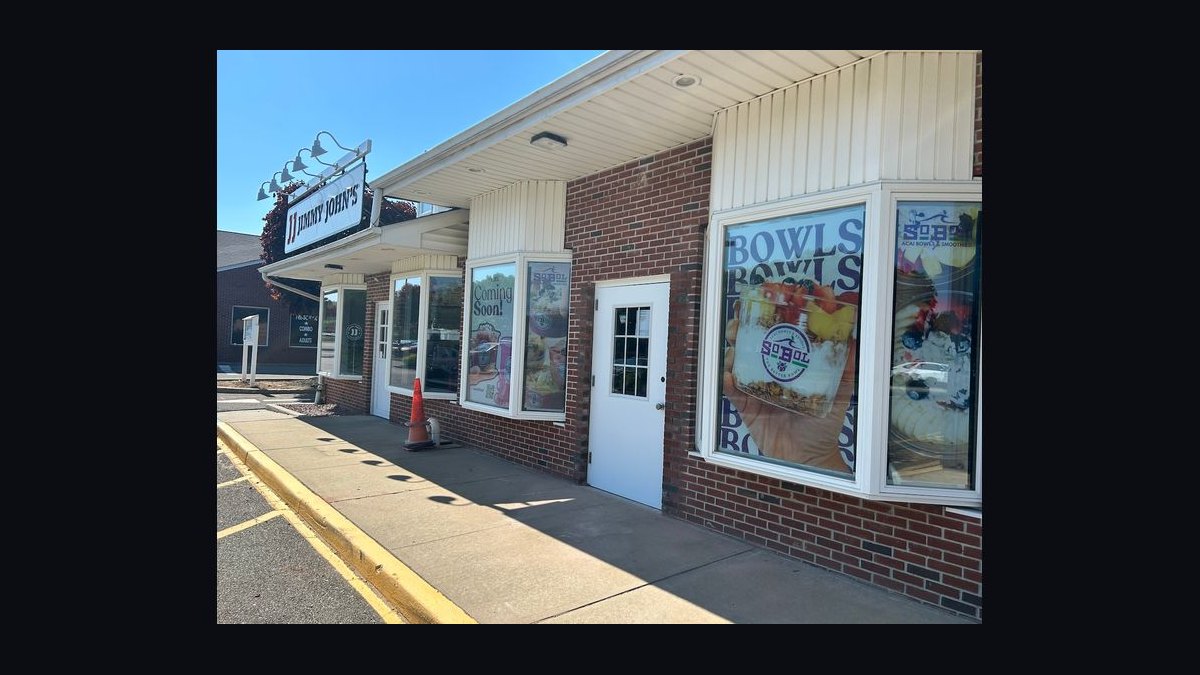
Yes — if you can land a high-traffic suburban or beach-town location in the Northeast or Mid-Atlantic, write a check covering the full $195,600 to $453,200 Item 7 range with at least $120,000 of liquid working capital, and personally run the shop for the first 18 months. SoBol's 2025 FDD Item 19 disclosed a system-wide AUV of roughly $612,000, with the top quartile at $817,729 and a median build cost near $310,000. Conservative Year-1 cash flow for a single owner-operated unit lands at $55,000 to $95,000 after the 6% royalty and 2% marketing fee, with breakeven typically in months 14 to 22. Probably not if you're an absentee investor in a saturated Long Island or Jersey Shore submarket — the 74% New York concentration means the brand's home turf is already crowded.
The Real Numbers
SoBol's most recent FDD Item 7 (filed 2025, governing 2026-2027 awards) discloses a total initial investment of $195,600 to $453,200 for a single traditional location. The initial franchise fee is $35,000 for the first unit, with multi-unit discounts on units two and three. The royalty is 6% of gross sales and the brand fund contribution is 2% of gross sales, paid weekly via ACH sweep. Item 19 reported a system-wide average unit volume of $612,000 across affiliate-owned and franchised stores open the full prior fiscal year, with the top quartile hitting $817,729 and the bottom quartile near $410,000.
| Line item | Low | High | Notes |
|---|---|---|---|
| Initial franchise fee (Item 5) | $35,000 | $35,000 | Single unit; $25k each for units 2-3 |
| Leasehold improvements / build-out | $80,000 | $220,000 | 800-1,400 sq ft inline, end-cap preferred |
| Equipment, smallwares, POS | $45,000 | $85,000 | Vitamix, blast freezers, Toast or Square POS |
| Signage, exterior | $8,000 | $25,000 | Variance by municipality |
| Initial inventory (acai pucks, granola, fruit) | $7,500 | $14,000 | Sambazon and approved distributors |
| Training fee, travel | $3,000 | $7,500 | 2-week corporate training, Long Island HQ |
| Insurance, deposits, licensing | $4,500 | $12,000 | GL, workers comp, food handler |
| Professional fees, LLC formation | $2,500 | $7,000 | Counsel + accountant + zoning |
| Marketing pre-open (Item 11) | $5,000 | $12,500 | Grand-opening package required |
| 3-month working capital | $25,000 | $55,000 | Payroll, rent, utilities, royalty float |
| TOTAL Item 7 range | $195,600 | $453,200 | Median actual build ~$310,000 |
| Royalty (Item 6) | 6% | 6% | Of gross sales, weekly ACH |
| National marketing fund (Item 6) | 2% | 2% | Of gross sales, weekly ACH |
| AUV (Item 19, FY2024) | $612,000 | $817,729 | System average vs. top quartile |
| Food + paper cost | 28% | 32% | Acai pucks are the biggest variable |
| Labor | 28% | 34% | Owner-operator at low end |
| Rent | 7% | 10% | $32-$58/sq ft NNN typical |
| Store-level EBITDA margin | 10% | 17% | After royalty, marketing, all opex |
| Year-1 owner cash flow (single unit) | $55,000 | $95,000 | Owner-operated, no manager salary |
| Payback period | 3.2 years | 5.8 years | Based on store-level cash on cash |
A $310,000 build generating the $612,000 AUV at a blended 13% store-level EBITDA margin throws off $79,560 per year before the owner pulls a salary or services any acquisition debt. SBA 7(a) financing at roughly 11% in 2027 on 70% of project cost adds $28,000-$32,000 of annual debt service, which is why owner-operator unlevered cash flow is the honest metric.
Who Wins With This Business
Owner-operators in the Northeast suburban beach and college-town corridor are the durable winners. Robert Cancelliere, an early SoBol multi-unit operator in Suffolk County, reportedly grew from one Patchogue location to five units across Long Island between 2018 and 2024 by running shifts personally for the first 90 days of each new opening. Operators who layer in catering and corporate wellness contracts — feeding gyms, yoga studios, pediatric offices, and Equinox-style boutique fitness clubs — push AUV past $750,000, the practical ceiling for the format. Multi-unit franchisees with three or more shops unlock economies on labor scheduling, district-manager leverage, and bulk acai-puck purchasing through Sambazon, Pitaya Foods, and Tambor, the three approved distributors.
Younger first-time franchisees between 28 and 42 years old with food-service management background — former Chipotle, Sweetgreen, CAVA, or Starbucks shift leaders — outperform second-career white-collar buyers by a wide margin on Glassdoor-tracked SoBol manager retention and store-level customer-satisfaction scores. The pattern is consistent across Vitality Bowls, Playa Bowls, Frutta Bowls, and Rush Bowls unit economics: operational experience beats capital.
Who Loses With This Business
Absentee investors lose. The 28% to 34% labor line is unforgiving once you add a $55,000-$72,000 general manager salary plus payroll taxes. A $612,000 AUV store running a manager-led model typically delivers 3% to 6% store-level EBITDA, which is $18,000-$36,000 per year before debt service — not enough to justify the $310,000 capital lockup. Saturated submarkets are the second trap: Long Island already has 50+ SoBol units, and Playa Bowls operates 216 U.S. locations with 188 franchised, concentrated in the same Northeast corridor. New entrants in those markets are competing for the third or fourth acai bowl shop on a single commercial strip.
Operators in low-foot-traffic strip centers at rents above $58/sq ft NNN are the third loser group. Acai bowls are an impulse-and-routine product — they require walk-by visibility, lunch-time office density, or beach-town tourism. A $32/sq ft NNN second-generation restaurant pad in Garden City, NY is a winner; a $68/sq ft NNN inline space in a declining Class B mall is a guaranteed loss. Cold-climate markets without a winter strategy — meaning no hot-bowl, oatmeal, or smoothie-forward menu rotation — lose 18%-22% of revenue between November and March.
2027 Market Conditions
The acai bowl and superfood category is projected to reach $2.1 billion by 2027 per Technavio and Grand View Research estimates, growing roughly 9% annually versus the 3.1% projected for full-service restaurants per IBISWorld report 72211. Playa Bowls, the category leader, posted 165% three-year unit growth through 2025 and is opening eight new shops a month with backing from Cava-Yo Capital Partners. Vitality Bowls holds 80 units with an allergy-friendly positioning that wins in school-proximate locations. SoBol's strategic edge in 2027 is the underserved Mid-Atlantic and Southeast — Virginia, North Carolina, and the Florida Panhandle still have fewer than three units each and remain prime territory under SoBol's current development agreement structure.
Acai-puck wholesale pricing rose 14% in 2025 following Brazilian harvest disruption but stabilized in Q1 2027 at roughly $48/case (4×3kg) through Sambazon's North American distribution. GLP-1 weight-loss drugs (semaglutide, tirzepatide) have suppressed casual-dining traffic but boosted demand for protein-forward, lower-calorie bowls — SoBol's Power Bowls line, with 25-35g of protein per serving, captures that shift. Minimum wage pressure in New York, New Jersey, Massachusetts, and California pushed labor to 31% of sales in 2026, the highest in the brand's history, making operator-run shifts more important than ever.
The 90-Day Decision Tree
- Days 1-10 — Pull and read the FDD. Request the most current SoBol Franchise Disclosure Document through franchise@sobolusa.com or the mysobol.com/franchise portal. Read Item 7 (investment), Item 19 (financial performance), Item 20 (franchisee list), and Item 21 (financial statements) before anything else. Note the list of every current and former franchisee in Item 20 — you'll call them in week three.
- Days 11-25 — Validate the territory. Use Placer.ai, Esri demographic profile data, or SiteZeus to confirm daytime population, household income above $95,000, and weekly foot traffic above 18,000 within a 1-mile trade area. Cross-check against existing SoBol, Playa Bowls, Vitality Bowls, and Rush Bowls locations within 5 miles — if there are two or more competitors, walk away.
- Days 26-40 — Call 12 existing franchisees. From the Item 20 list, prioritize 3 newest operators (under 18 months), 3 mid-tenure (2-4 years), and 3 long-tenure (5+ years), plus 3 former franchisees if any are listed. Ask: actual build cost vs. Item 7 estimate, actual first-year revenue, hours worked per week in year one, would they do it again.
- Days 41-55 — Build your financial model. Use the $612,000 AUV midpoint, 31% food cost, 31% labor (owner working 45 hrs/wk), 8% rent, 6% royalty, 2% marketing, 9% other opex. Stress test at $520,000 AUV (bottom 35th percentile) and confirm you can service debt at 11% SBA 7(a) on 70% LTV.
- Days 56-70 — Attend Discovery Day at SoBol HQ in Bay Shore, NY. Meet founder Jeremy Lacroix, the operations and training team, and at least one existing franchisee brought in by corporate. Tour 2-3 corporate or franchised stores.
- Days 71-85 — Legal review and lease LOI. Engage a franchise attorney (budget $3,500-$6,500) — Lusk Law, Goldstein Law Firm, or Internicola Law Firm are the three most-cited in franchisee threads on the Franchise Disclosure Document subreddit. Sign a Letter of Intent on a specific site with a 120-day due-diligence contingency.
- Days 86-90 — Final go/no-go. If your personal financial statement shows liquid post-close reserves below $50,000, stop. If your site, financing, and franchise agreement all clear, sign the Franchise Agreement, wire the $35,000 fee, and begin build-out.
Alternative Plays
If the SoBol economics don't fit, consider these adjacent franchise plays with overlapping operator profiles:
- Playa Bowls — Higher initial investment at $245,000-$610,000, AUV of $745,000-$910,000 per their 2025 FDD Item 19, but territory availability is constrained in the Northeast. 6% royalty, 2% marketing.
- Vitality Bowls — $210,000-$450,000 total investment, $580,000 AUV median, allergy-friendly positioning wins near schools and pediatric offices. 6% royalty, 1% marketing.
- Frutta Bowls — Smaller system (~50 units), $185,000-$365,000 total investment, slightly lower AUV near $480,000 but lower competition in secondary markets. 6% royalty.
- Tropical Smoothie Cafe — Adjacent category, $305,000-$630,000 investment, $1,072,000 AUV per their 2025 FDD Item 19, bigger system (1,400+ units) with proven national playbook. 6% royalty, 3% marketing.
- Independent acai shop — Skip the $35,000 fee and 8% combined royalty/marketing, source acai through Sambazon's wholesale program, and keep the 8% sales as incremental margin. The tradeoff is zero brand pull, higher marketing burden, and no operational playbook — a viable path only for experienced restaurant operators who already have local brand equity.
FAQ
What is the total investment range for a SoBol franchise in 2027? The initial investment typically falls between $195,600 and $453,200, as outlined in the Item 7 disclosure. This range covers franchise fees, equipment, build-out, and other startup costs. Expect the median build cost to land near $310,000.
How much working capital do I need to have liquid? You should have at least $120,000 in liquid working capital to cover operating expenses during the first year. This ensures you can manage payroll, inventory, and unexpected costs before the business becomes cash-flow positive.
What is the average unit volume (AUV) for SoBol franchises? The system-wide AUV is roughly $612,000, with top-performing stores reaching about $817,729. These figures come from the 2025 FDD Item 19 and reflect performance across the network, not a guarantee for any single location.
How long does it take to break even with a SoBol franchise? Breakeven typically occurs between months 14 and 22 of operation. This timeline depends on factors like location, local competition, and how actively you manage the store. Owner-operators often reach breakeven faster than absentee owners.
What are the ongoing royalty and marketing fees? You’ll pay a 6% royalty on gross sales and a 2% marketing fee. These fees support brand development, national advertising, and operational support. Combined, they total 8% of your revenue.
Is SoBol a good fit for absentee investors? Probably not, especially in saturated markets like Long Island or the Jersey Shore. The brand has a 74% concentration in New York, meaning competition is high in those areas. Owner-operators who run the shop for the first 18 months tend to see better results.
Bottom Line
SoBol is a credible acai-bowl franchise for the owner-operator with $150,000+ liquid, a Northeast or Mid-Atlantic territory, and the willingness to work 45-50 hours per week for 18 months. System AUV of $612,000, a 13% blended EBITDA margin, and a 3-5 year payback are honest numbers — not get-rich-quick, but above-median small-business returns when executed by an operational owner. Absentee buyers, saturated-market entrants, and undercapitalized first-timers are the three most-common failure modes documented in SoBol Item 20 disclosures. Do the Day 26-40 franchisee calls before you sign anything; the Item 20 list is the single most valuable disclosure in the entire FDD, and 80% of go/no-go answers live in those 12 phone calls.
Sources
- SoBol FDD, Costs & Fees (2026) — Franchise Payback
- SoBol Franchise FDD, Profits & Costs (2025) — Sharpsheets
- SoBol Franchise Investment Breakdown — mysobol.com
- SoBol Franchise Directory — Entrepreneur
- SoBol Franchise Cost and Requirements for 2026 — IFPG
- SoBol Franchise Review — FranchiseGrade.com
- SoBol Sees Enormous Growth in First Year as Franchise — mysobol.com
- SoBol vs. Playa Bowls Comparison — mysobol.com
- Acai Bowl Franchise Market Overview — Franchise Conduit
- Best Acai Bowl Franchise Opportunities — Vetted Biz
- IBISWorld Industry Report 72211 — Full-Service Restaurants in the US
- International Franchise Association — Franchise Business Economic Outlook 2027
Related on PULSE
- [How long does it take to open a franchise and break even in 2027?](/knowledge/fr1104)
- [Should I open or buy a Tommy Gun's Original Barbershop franchise in 2027?](/knowledge/fr1095)
- [Should I open or buy a Painting with a Twist franchise in 2027?](/knowledge/fr1058)
This page will be disappearing soon. Save it to your device for $1 — or read it free while it is here.
@Kory-White- · if Venmo asks, the last 4 of my number are 2012
This page is gone.
This one is off the shelf now. $1 keeps it on your phone for good — the whole page, pictures and diagrams included.
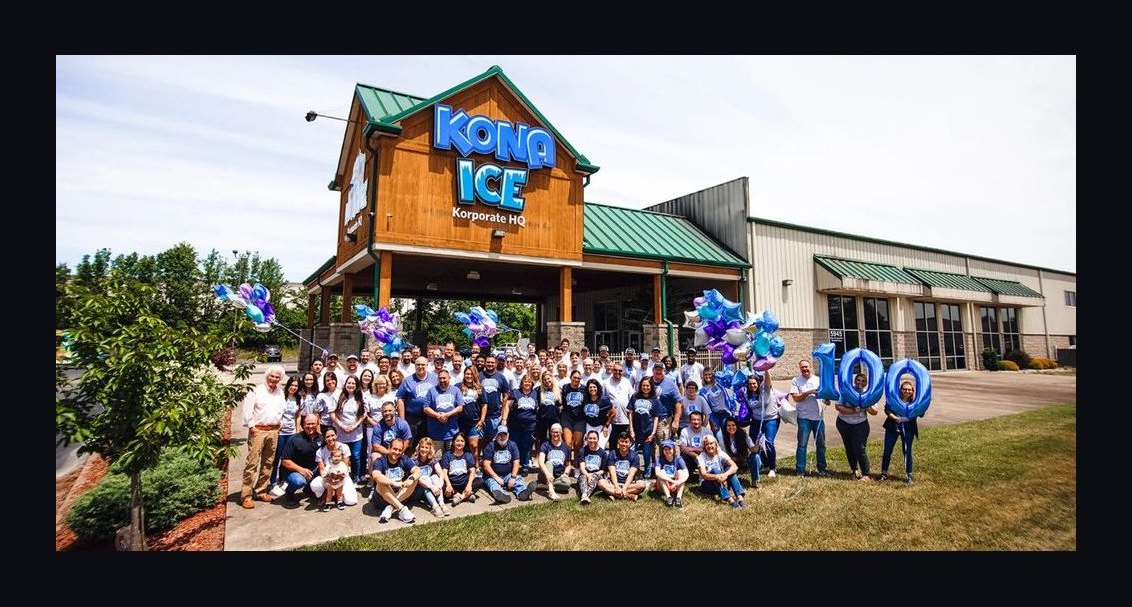 franchiseShould I open or buy a Kona Ice franchise in 2027?
 franchiseShould I open or buy a Twistee Treat franchise in 2027?
 franchiseShould I open or buy a Re-Bath franchise in 2027?
 franchiseShould I open or buy a Main Event Entertainment franchise in 2027?
 franchiseShould I open or buy a Taco Bell franchise or open an independent sandwich shop in 2027?
 franchiseWhat is the step-by-step process for buying an existing franchise resale instead of building a new location in 2027?
 franchiseBest franchise opportunities for veterans in 2027
 franchiseShould I open or buy an It's A Grind Coffee franchise in 2027?
 franchiseShould I open or buy a Jet’s Pizza franchise or open an independent sandwich shop in 2027?
 franchiseShould I open or buy a Salata franchise in 2027?