
Should I open or buy a Sharkey's Cuts for Kids franchise in 2027?
 Curated byKory White · Fractional CRO · Maryland
 PULSEKNOWLEDGE LIBRARY
Quality
Certified
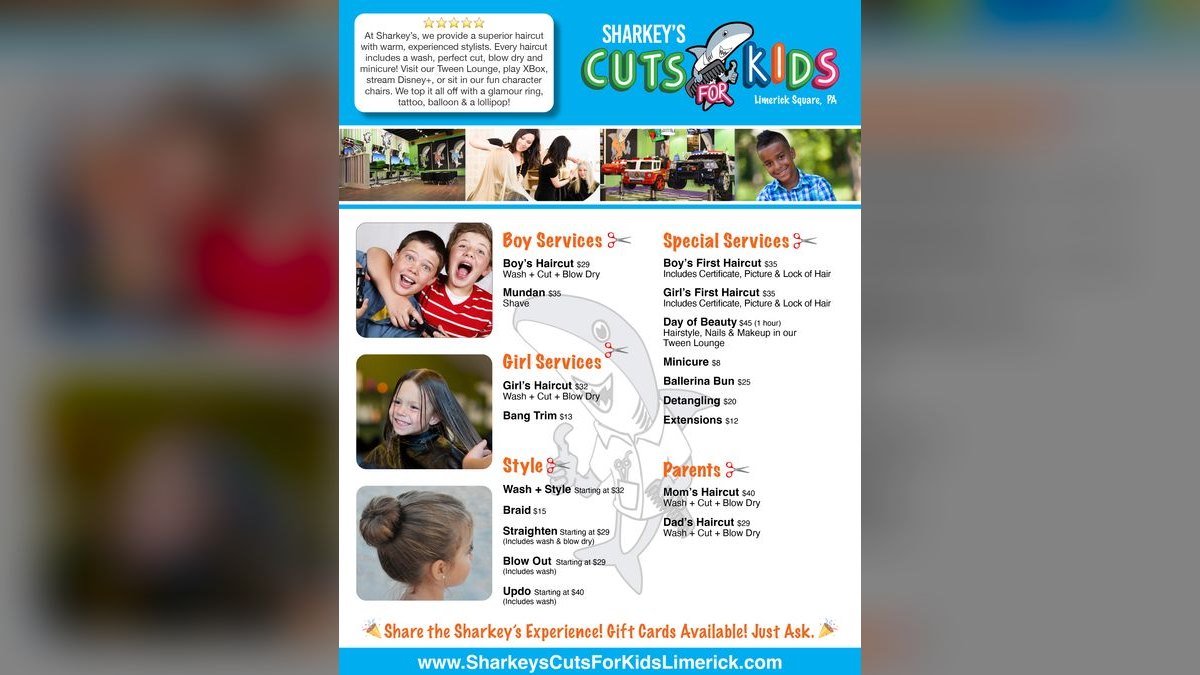
Probably not — unless you can self-fund $250K liquid, run the chairs yourself for 18 months, and sit inside a dense young-family suburb where median household income clears $110K and the under-12 population density beats 12,000 kids per 10-mile radius. The 2025 FDD reports $269,409 average gross sales across 141 franchised outlets and an Item 19 estimated owner earnings band of $37,718 to $48,494 — that is a 14% to 18% pre-tax owner-benefit margin before debt service. Total investment runs $197,415 to $336,240 (Package A and B blended), so the payback period stretches 6.7 to 8.7 years at the median. Breakeven typically lands month 14 to 18 for owner-operators who cut hair themselves. If you need passive income or are debt-funding past 70% loan-to-cost, this franchise will starve you.
The Real Numbers
The 2025 FDD (the most recent on file as of June 2026, with a 2026 update tracked by Franchise Chatter) is unusually transparent — Sharkey's reports Item 19 across 141 franchised outlets open at least a full 12 months as of December 31, 2024. 170 total outlets were opened by year-end 2024, so 29 were too new to include. The fee stack is also unusually structured: instead of a percentage royalty, Sharkey's uses a fixed-dollar ladder ($1,000/month months 4-12, scaling to $1,750/month from month 37 onward), which functions like a regressive royalty — heavy at low volume, light at high volume.
| Line Item | Low | High | Source |
|---|---|---|---|
| Initial franchise fee | $45,000 | $45,000 | 2025 FDD Item 5 |
| Turn-key package (build-out, equipment, themed chairs, video games, signage) | $119,990 | $119,990 | 2025 FDD Item 7 |
| Grand opening advertising | $15,000 | $15,000 | 2025 FDD Item 7 |
| Leasehold + improvements beyond turn-key | $7,500 | $80,000 | 2025 FDD Item 7 |
| 3 months working capital | $9,925 | $76,250 | 2025 FDD Item 7 |
| Total initial investment | $197,415 | $336,240 | 2025 FDD Item 7 |
| Monthly royalty (months 4-12) | $1,000 | $1,000 | 2025 FDD Item 6 |
| Monthly royalty (months 13-24) | $1,250 | $1,250 | 2025 FDD Item 6 |
| Monthly royalty (months 25-36) | $1,500 | $1,500 | 2025 FDD Item 6 |
| Monthly royalty (month 37+) | $1,750 | $1,750 | 2025 FDD Item 6 |
| Marketing fund | 3% of gross sales | 3% of gross sales | 2025 FDD Item 6 |
| Average gross sales (141-unit pool, 2024) | $269,409 | $269,409 | 2025 FDD Item 19 |
| Item 19 owner earnings band | $37,718 | $48,494 | 2025 FDD Item 19 |
| Implied owner-benefit margin | 14.0% | 18.0% | Calculated |
| Payback at median earnings | 6.7 years | 8.7 years | Franchise Payback |
A few things to underline. The $269,409 average is gross, not net — and the Item 19 band of $37,718 to $48,494 is reported before owner salary if you cut chairs, before interest expense on any SBA loan, and before personal-guarantee risk. If you finance $200K at the SBA 7(a) prime+2.75% rate (roughly 10.25% in mid-2026), monthly debt service on a 10-year amortization runs $2,670/month or $32,040/year — which alone consumes 66% to 85% of the reported owner earnings band. That is why the franchise only pencils for self-funded buyers or buyers running the chair seat themselves.
The multi-unit math is materially better: 2-packs at $153,495 per unit, 3-packs at $102,330 per unit, per Sharkey's franchising company disclosures. A 3-pack buyer with $700K liquid can hit blended payback inside 4 years if all three units clear the system average.
Who Wins With This Business
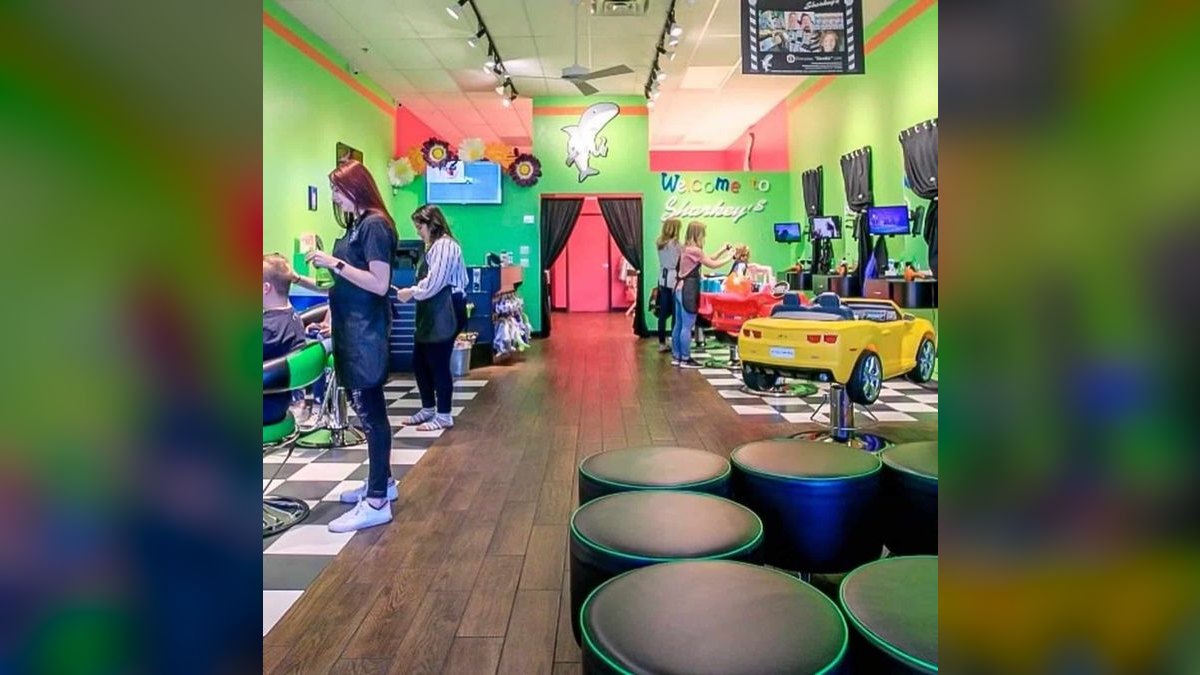
The hands-on owner-stylist wins first. If you already have a cosmetology license and you cut at the chair four days a week, you collect the $42K Item 19 owner earnings plus roughly $45K to $60K in stylist wages you would otherwise pay out — pushing real owner-benefit to $87K to $102K annually. That is the only configuration in which a single-unit Sharkey's clears the $85K median household income Sharkey's franchisees actually target as a personal income hurdle.
The dual-income suburban family-buyer wins second. Spouse keeps a $150K W-2 job for health insurance and SBA loan qualification; the franchisee spouse runs the salon, takes the Item 19 cash, and uses the fixed-dollar royalty ceiling at $1,750/month to keep operating leverage high if revenue climbs past $400K. Stores that ramp to $350K-$425K gross — top quartile by Franchise Chatter's read of the 2025 Item 19 — push owner-benefit toward $80K-$110K even with paid stylists.
The 3-pack operator with $700K liquid and an existing salon-ops background wins third. The $102,330 per-unit pricing in the 3-pack discounts the turn-key package by ~48%, and shared management overhead (one regional manager across three units) lifts blended EBITDA margin from the 14-18% single-unit band into the 22-26% range — the only path to genuinely passive ownership inside Sharkey's.
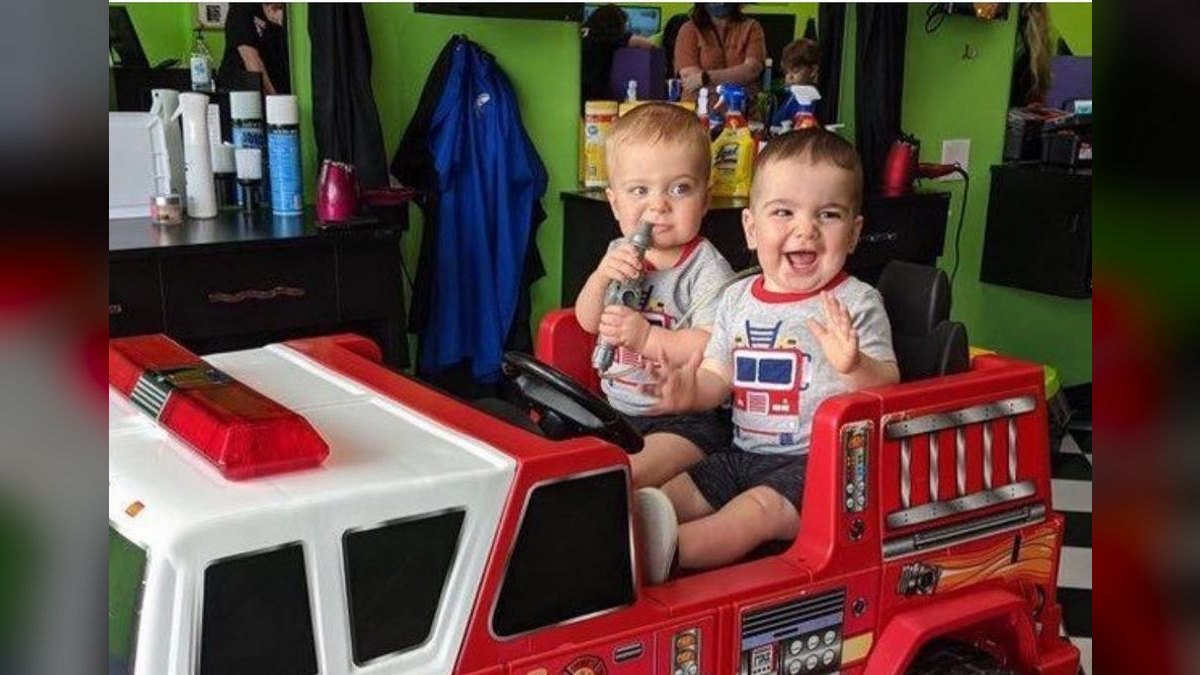
Veteran buyers get the VetFran 10% off initial franchise fee, dropping initial fee from $45,000 to $40,500 per Sharkey's franchising disclosure. Modest but real.
Markets that win: dense, young, affluent, suburban — Plano TX, Cary NC, Naperville IL, Frisco TX, Carmel IN, Bellevue WA, Pleasanton CA, Brookline MA, Westfield NJ. These are the metros where median household income clears $110K, under-12 population density beats 12K kids inside a 10-mile radius, and commercial retail rents stay under $32/sqft NNN for 1,200-1,500sqft inline space.
Who Loses With This Business
The absentee investor loses first. Item 19 owner-earnings of $37,718-$48,494 do not survive a $50K+ general manager salary. Absentee math on a single unit produces $0 to negative $12K owner cash flow after GM comp and debt service.
The SBA-maxed buyer loses second. Anyone financing past 70% loan-to-cost is in a Sharkey's where annual debt service equals 70-90% of Item 19 earnings. Default risk is real: SBA 7(a) charge-off rates in personal-services franchises ran 4.8% over 2020-2024 per SBA Franchise Loan data, with kids-services franchises tracking slightly worse at 5.6%.
Buyers in low-density or low-income trade areas lose third. The economics of children's haircut salons collapse when under-12 household density falls below 8,000 within a 10-mile radius or median household income falls below $85K. Sharkey's average ticket runs $26-$32 plus tip — you need 8,000-10,000 haircuts annually (about 30 per operating day) to hit the $269K system average. Rural and exurban trade areas physically cannot generate that traffic.
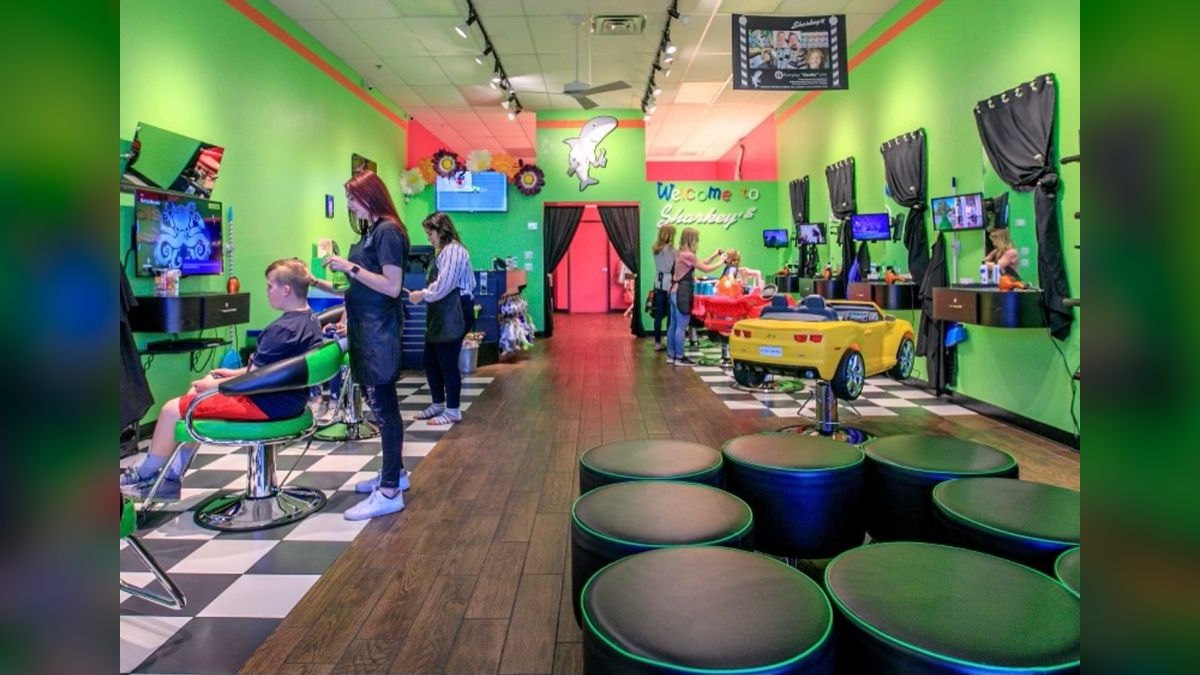
Buyers who underestimate stylist labor lose fourth. Cosmetology license vacancy rates ran 18-22% through 2025 per BLS Occupational Outlook data; kids-salon-specific labor is even tighter because stylists who can hold a 3-year-old's attention through a haircut are a narrow subset. Stylist turnover in kids-salon franchises averages 62% annually per IBISWorld Hair Salons in the US (industry 4410). If you cannot personally cover chairs during a vacancy, revenue falls 40-60% within 30 days of a stylist quitting.
Buyers chasing scale with no operations background lose fifth. The 3-pack discount looks attractive at $102K/unit, but the operational overhead of managing 6-12 stylists across three locations plus party bookings plus retail inventory plus parent CRM is a real $200K-$280K/year management overhead. Sharkey's franchising disclosures show 3-pack operator churn around 14% within five years.
2027 Market Conditions
Children's hair salon services is a recession-defensive niche — kids still need haircuts every 4-8 weeks regardless of macroeconomic conditions. U.S. hair salon industry revenue hit $60.0B in 2026 per IBISWorld (industry 4410), with the children's specialty subsegment estimated at $2.8B-$3.4B by Sharpsheets and Statista cross-reference. The category grew 3.1% CAGR 2019-2025 per IBISWorld, slightly ahead of the broader hair-salon category at 2.4%.
Three 2027 conditions matter for a Sharkey's buyer:
First, the consolidation wave is real. Cookie Cutters Haircuts for Kids (185+ locations as of mid-2026 per Entrepreneur Franchise 500), Pigtails & Crewcuts ($30K fee, $130K-$283K total investment, ~75 units), and Snip-its all expanded aggressively in 2024-2025. Trade areas in top-100 MSAs are increasingly saturated — Phoenix, Dallas-Fort Worth, Atlanta, and Charlotte each now carry 4+ competing kids-salon brands in primary suburbs. Site selection is the entire ballgame in 2027.
Second, commercial real estate softening helps buyers. National retail vacancy rose to 4.2% in Q1 2026 per CBRE U.S. Retail Figures, and suburban inline retail rents declined 1.8% year-over-year. Sharkey's franchisees signing leases in 2026-2027 are getting 2-4 months of free rent, $25-$45/sqft tenant improvement allowances, and 5+5+5 lease structures with rent caps below 3%. That is a structural margin advantage worth $8K-$15K/year versus 2022-2023 lease signings.
Third, labor remains the binding constraint. Stylist wages rose 5.9% in 2025 per BLS QCEW data for NAICS 812112 (Beauty Salons), faster than the 3.1% category revenue growth — a margin squeeze that will continue into 2027. The franchisees who built profit-sharing or booth-rent hybrid comp structures in 2024-2025 (Sharkey's allows both) are retaining stylists at 45% turnover versus the 62% category average.
The 90-Day Decision Tree
- Days 1-7: Liquidity gate. Confirm $250K liquid (cash, equities, retirement-rollover-eligible) and $450K net worth. If under, stop here or shift to Pigtails & Crewcuts ($150K liquid hurdle) or an existing-business acquisition off BizBuySell in the $150K-$220K range.
- Days 8-21: Demographic gate. Pull Esri Tapestry (segment by under-12 density, household income, owner-occupied housing) for 3 candidate trade areas. Reject any trade area with under-12 density below 10,000 in a 10-mile radius or median HHI under $90K.
- Days 22-35: Competitive gate. Walk every kids-salon and Great Clips/SmartStyle/Sport Clips inside 7 miles. Count Saturday wait-list length, parent satisfaction (Google reviews scored 4.4+), and party-room availability. If 2+ Cookie Cutters or Pigtails units already operate within 5 miles, deprioritize.
- Days 36-50: FDD validators call. Sharkey's 2025 FDD Item 20 lists franchisee contacts — call at least 10 operators, weighted toward year 2-5 unit ages. Ask 4 questions: (a) actual gross sales versus Item 19 $269,409 average, (b) actual hours owner works at the chair, (c) stylist turnover frequency, (d) whether they'd buy again knowing what they know now.
- Days 51-65: Site letter of intent. Negotiate 5+5+5 lease, free rent 60-90 days, TI allowance $35-$50/sqft, rent caps at 2.5% annual increase, personal guarantee burn-off at year 3. Sharkey's franchise development team will introduce a tenant-rep broker if you ask.
- Days 66-78: SBA pre-qualification. Live Oak Bank, Huntington National, and Wells Fargo all carry Sharkey's on their SBA franchise registry for streamlined 7(a) approval. Cap loan-to-cost at 65% — anything higher and the debt service eats Item 19 earnings.
- Days 79-90: Final go/no-go. If you have not personally cut hair in a Sharkey's shadow shift, do one before signing. Many prospective franchisees discover here that the daily reality of a 4-year-old crying through a haircut is not what they thought they were buying.
Alternative Plays
If Sharkey's screens out, four alternatives worth evaluating:
Pigtails & Crewcuts — lower total investment ($130K-$283K), $30K franchise fee, 5% revenue royalty (regressive becomes progressive — fine at low volume, painful past $400K gross). Better fit for owner-operators uncertain about ramping past $300K.
Cookie Cutters Haircuts for Kids — widest investment range ($118K-$365K), #1 ranked Entrepreneur Franchise 500 kids-salon brand, 185+ units. Strongest national brand recognition; downside is stricter site-selection requirements and longer franchisor approval cycle.
Existing independent salon acquisition — BizBuySell shows 40-70 independent kids-salons listed at any time, typically priced at 2.0-2.8x SDE ($120K-$240K total). You inherit revenue and clientele but no system. Best for operators with hair-industry experience.
Great Clips multi-unit territory development — not kids-specific, but adult-cuts franchise with $32-$45 average ticket, $1.2M average unit volume, 12-15% EBITDA margins, and far better stylist retention. Total investment $147K-$313K per unit per Great Clips 2025 FDD. Better cash-flow profile if kids-specific is not the personal mission.
FAQ
How much money do I need to have in cash to open a Sharkey's Cuts for Kids franchise? You'll need at least $250,000 in liquid capital. The total investment ranges from about $197,000 to $336,000, and franchisors typically want to see that you can cover startup costs without relying heavily on debt. If you're borrowing more than 70% of the total cost, the franchise may not generate enough cash flow to service that debt.
Can I run this franchise as a passive investment? No — this is an owner-operator business, especially in the first 18 months. Most successful franchisees cut hair themselves during that period to keep labor costs down and build a customer base. If you want a hands-off investment, this model will likely underperform or lose money.
How long does it take to break even and start making a profit? Breakeven typically happens between month 14 and month 18 for owner-operators who work the chairs. The payback period on your total investment stretches 6.7 to 8.7 years at the median sales level. That's a long wait for a return, so you need patience and enough personal savings to cover living expenses.
What kind of sales and profit can I expect? Average gross sales across franchised outlets are about $269,000 per year. After expenses, owner earnings typically fall between $37,700 and $48,500 before taxes and debt payments — that's a 14% to 18% pre-tax margin. Those numbers are modest for the investment required.
Where should I locate my Sharkey's franchise? You need a dense, affluent suburb with at least 12,000 children under age 12 within a 10-mile radius and a median household income above $110,000. The business depends on repeat visits from families who can afford premium kids' haircuts, so lower-income or older-population areas won't work.
Is it worth buying a Sharkey's franchise in 2027? Only if you meet the cash requirements, are willing to cut hair yourself for at least 18 months, and can find a location in a wealthy family suburb. If those conditions don't fit your situation, the numbers show it's a risky investment with a long payback period and modest returns.
Bottom Line
Sharkey's Cuts for Kids is a specialized owner-operator franchise, not a passive-income vehicle. The 2025 FDD numbers are honest — $269,409 average gross, $37,718-$48,494 owner earnings band, 6.7-8.7 year payback — and the fixed-dollar royalty ladder genuinely rewards operators who scale past $350K. Buy this franchise if you have $250K liquid, are willing to cut chairs personally for 18+ months, and sit inside a dense, affluent, young-family suburb where Cookie Cutters and Pigtails have not already saturated the trade area. Multi-unit math materially improves the case — 3-pack pricing at $102K/unit with shared overhead is the only path to 22-26% EBITDA margins and truly passive ownership inside the Sharkey's system. Pass on this franchise if you need passive income, are SBA-financing past 70% loan-to-cost, or have no operations background. The model works — for the right buyer profile.
Sources
- Sharkey's Cuts for Kids Franchise Review 2026 — Franchise Chatter
- Sharkey's Cuts for Kids 2025 FDD Item 7 + Item 19 Detail — Franchise Chatter
- Sharkey's Cuts for Kids Franchise Cost, Fees, Opportunities (2026) — Franchise Gator
- Sharkey's Cuts For Kids Franchise FDD, Costs & Fees — Franchise Payback
- Sharkey's Cuts For Kids Franchise FDD, Profits & Costs — Sharpsheets
- Franchise Deep Dive: Sharkey's Cuts for Kids — 1851 Franchise
- Sharkey's Cuts for Kids Franchise Insights — VettedBiz
- Start a Sharkey's Cuts For Kids Franchise — Entrepreneur Franchise Directory
- Sharkey's Cuts for Kids Veterans Discount — SyncRevenue
- Hair Salons in the US Industry Report 4410 — IBISWorld
- Pigtails & Crewcuts Franchise Cost — Franchise Gator
- Cookie Cutters Haircuts for Kids Franchise FDD — Franchise Payback
Related on PULSE
- Should I open or buy a Bishops Cuts/Color franchise in 2027?
- Should I open or buy a Kids R Kids franchise in 2027?
- Should I open or buy a Drama Kids franchise in 2027?
- Should I open or buy a Cookie Cutters Haircuts for Kids franchise in 2027?
- Should I open or buy a Snip-its kids haircuts franchise in 2027?
- Should I open or buy a Drama Kids International franchise in 2027?
This page will be disappearing soon. Save it to your device for $1 — or read it free while it is here.
@Kory-White- · if Venmo asks, the last 4 of my number are 2012
This page is gone.
This one is off the shelf now. $1 keeps it on your phone for good — the whole page, pictures and diagrams included.
 franchiseShould I open or buy an Andretti Indoor Karting franchise in 2027?
 franchiseShould I open or buy a BIGGBY Coffee franchise in 2027?
 franchiseShould I open or buy a Playa Bowls franchise in 2027?
 franchiseShould I open or buy a Dream Vacations franchise in 2027?
 franchiseShould I open or buy a Roto-Rooter franchise in 2027?
 franchiseShould I open or buy a Yogurtland franchise in 2027?
 franchiseShould I open or buy a Doc Popcorn franchise in 2027?
 franchiseShould I open or buy a Charleys Cheesesteaks franchise in 2027?
 franchiseShould I open or buy a Bibibop Asian Grill franchise in 2027?
 franchiseShould I open or buy an H&R Block franchise in 2027?