
Should I open or buy a Charleys Cheesesteaks franchise in 2027?
 Curated byKory White · Fractional CRO · Maryland
 PULSEKNOWLEDGE LIBRARY
Opening a Charleys Cheesesteaks franchise in 2027 works best for operator-owners with $250K–$450K liquid capital who can secure a captive-audience venue like a mall food court, fuel center, or military base. The $813K system AUV and 6%+1% royalty stack deliver 12–16% store-level EBITDA — but only if you personally operate and keep prime cost under 60%.
A tale of two operators: why venue type decides everything
Picture two franchisees who signed Charleys agreements in the same quarter of 2026, both with $340,000 to deploy. The first, a former restaurant manager named Dana, took a 1,100-square-foot food-court slot at a Class A regional mall in a Sun Belt metro. The second, a semi-absentee investor named Marcus, bought into a freestanding pad site with a drive-thru on a suburban arterial outside a mid-tier city. Eighteen months later, their P&Ls tell completely different stories — and the gap has almost nothing to do with how hard each of them works.
Dana's mall unit is running roughly $790,000 in annualized sales against a 58% prime cost, producing about $118,000 in store-level EBITDA after the 6% royalty and 1% national marketing fund. Her rent is structured as a percentage of gross sales with a modest base, so slow weeks don't drown her. Her labor model is tight — three shifts, a working manager, and a spouse who covers the Friday dinner rush. She is on track to break even in month 17 and recover her full investment inside four years.
Marcus's freestanding unit is doing about $720,000, but his prime cost is running 63% because his drive-thru mix is weak (cheesesteaks are a walk-up, sit-down occasion, not a grab-and-go one), and his fixed rent is brutal in the winter months. His store-level EBITDA is closer to 9%, or roughly $65,000. At that pace, payback stretches past six years, and he's already had to inject working capital twice.
The lesson is not that Charleys is a bad brand. It's that the venue type is the single biggest determinant of whether the math works. A Charleys franchise in a captive-audience location behaves like a different business than the same franchise in a suburban standalone. When you ask whether you should open a Charleys Cheesesteaks unit in 2027, the honest answer is: it depends almost entirely on which of those two businesses you're actually buying into.
How the Charleys unit economics actually work
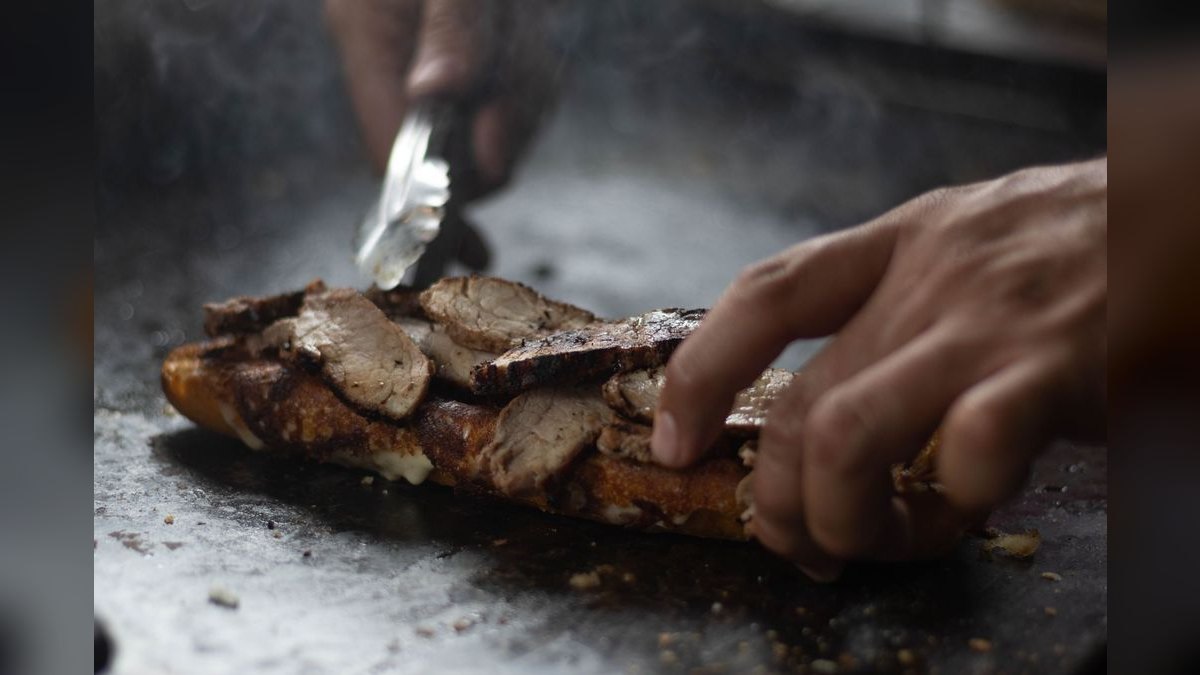
The mechanism behind a Charleys P&L is simpler than most QSR models, which is both its strength and its trap. The brand runs a narrow menu anchored by chopped ribeye cheesesteaks, fries, wings, and a combo platform. That narrowness means your food cost is unusually controllable — but only if you execute the prep discipline every single shift.
Here's the flow from capital to cash:
The critical lever is prime cost — food plus labor as a percentage of sales. Charleys' ribeye-only protein spec keeps food cost in the 30–33% band versus the 35–38% segment average, and that 4-point spread is where the unit economics actually live. But that advantage evaporates the moment your chopped-ribeye trim yield runs below 73% or your line cooks over-portion. A single percentage point of food cost on $800,000 in sales is $8,000 of annual EBITDA — which is why operators who treat the prep station as a cost center rather than a margin center consistently underperform.
Labor is the second half of the equation. Charleys is not a low-labor concept. The chopped-ribeye prep demands a 15-minute pre-shift mise en place that no $14/hour line cook executes without owner pressure. In markets where fast-food wages have climbed past $20/hour, the labor line alone can swing store-level EBITDA by 3–4 points versus a low-wage state. That's the difference between a 15% margin and an 11% margin on identical sales.
The royalty and marketing load sits at 6% royalty plus 1% national advertising fund, with up to 2% local co-op in some DMAs — a total of roughly 9% off the top in the worst case. That's above Subway's 8% but below McAlister's 11%. It's a fair load for the brand support you get, but it means you need to clear roughly 9 cents on every sales dollar before you've paid a single operating expense.
Real numbers, ranges, and benchmarks for 2027
The 2026 Charleys Philly Steaks FDD — the latest filing applicable to 2027 openings — discloses an Item 7 initial investment range of roughly $202,000 to $936,000 depending on venue type, with a $24,500 franchise fee. Item 19 reports a system-wide average unit volume of about $813,000 across roughly 893 operating units as of year-end 2026, with the top quartile clearing $1.2M+ and the bottom quartile under $540K. Those are wide bands, and the venue tier explains most of the variance.
| Line Item | Mall / Food Court | Inline / Strip | Free-Standing |
|---|---|---|---|
| Franchise fee | $24,500 | $24,500 | $24,500 |
| Build-out + leaseholds | $85K–$140K | $145K–$235K | $310K–$485K |
| Equipment + smallwares | $58K–$78K | $72K–$95K | $85K–$115K |
| Initial inventory | $8,500 | $11,000 | $14,500 |
| Signage + POS | $14,000 | $22,000 | $38,000 |
| Training + travel | $7,500 | $7,500 | $7,500 |
| 3-month working capital | $45,000 | $65,000 | $95,000 |
| Total all-in | $242K–$318K | $347K–$460K | $575K–$790K |
| AUV band | $710K–$925K | $640K–$880K | $880K–$1.15M |
| Royalty + marketing (7%) | $50K–$65K | $45K–$62K | $62K–$80K |
| Prime cost | 56–61% | 58–63% | 59–64% |
| Store-level EBITDA | 14–18% | 11–15% | 9–13% |
| Payback period | 2.8–3.6 yrs | 3.8–5.2 yrs | 5.5–7.5 yrs |
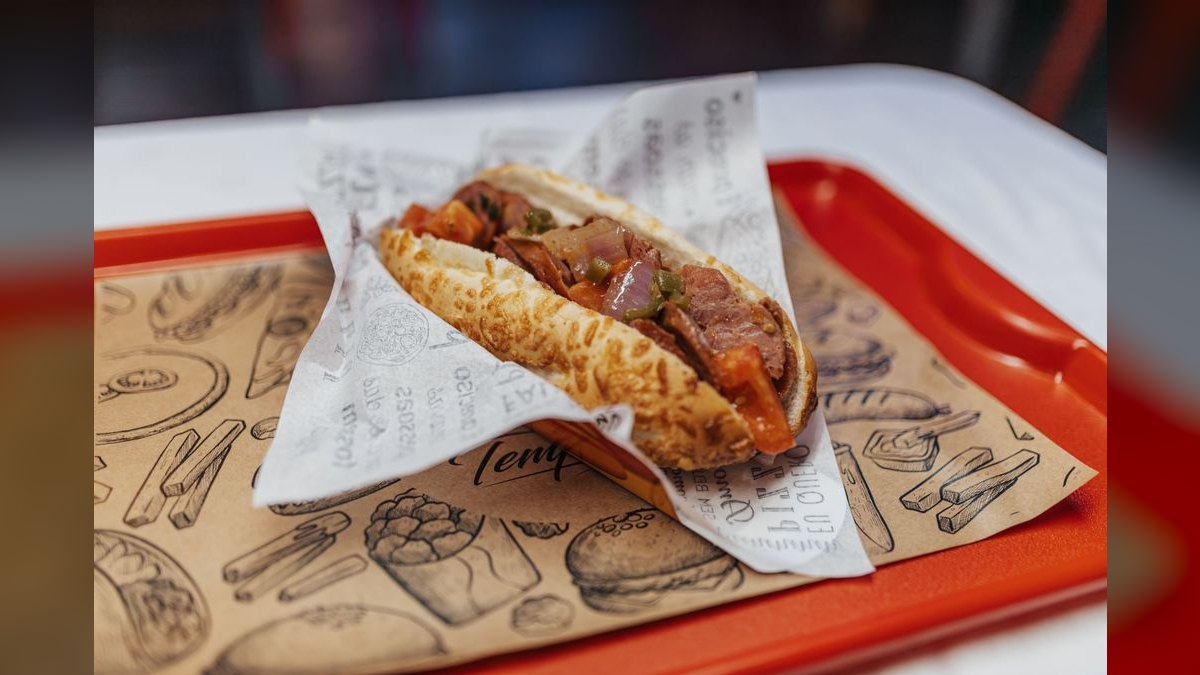
A few benchmarks worth carrying into your pro forma. The combo platform averages an $11.40 ticket with a 42% drink-and-wings attach rate, well above the $9.20 industry median for sandwich QSR. That attach rate is the quiet engine of the model — it's what pushes mall units into the top AUV quartile. On the cost side, USDA chuck eye roll spot pricing has been running well above the five-year mean, compressing food cost by 120–180 basis points unless you lock futures through the brand's supply chain program. And the segment itself grew at roughly 11% in 2026, more than triple the broader QSR sandwich average, so you're entering a category with real tailwinds rather than a flat one.
Conservative Year-1 owner benefit at a well-run mall location lands in the $95,000–$140,000 range. Breakeven typically arrives between months 14 and 22, with full payback in 3.5–5 years on a $340,000 all-in investment. Those numbers assume you're personally in the building and that prime cost holds under 60%.
Trade-offs, alternatives, and the buy-vs-open question
The "open or buy" framing hides a real decision: building new gives you a clean box, current branding, and the franchisor's site-selection help, but it also means 8–12 weeks of construction for non-traditional venues and 14–22 weeks for freestanding, plus a 14–22 month sales ramp. Buying an existing Charleys unit through a broker at a 2.6–3.2x SDE multiple lets you skip the ramp entirely — expect $280,000–$520,000 for a profitable single mall unit with audited books. You inherit the staff, the lease, and the customer base, but you also inherit whatever deferred maintenance and cultural problems the seller left behind.
If Charleys doesn't fit your capital or risk profile, several adjacent paths capture similar economics. Penn Station East Coast Subs trades AUV for a lower 5% royalty and stronger Midwest freestanding performance. Jersey Mike's costs more upfront but the higher AUV and brand-pull marketing fund deliver superior payback in suburban inline locations. Capriotti's Sandwich Shop pulls higher tickets and still leaves white space at roughly 40 units of annual growth. A non-franchised independent cheesesteak shop costs 40–55% less all-in, but you sacrifice supply-chain pricing, national marketing, and the segment-share moat — and independents close at roughly four times the rate of branded peers.
The trade-off that matters most: Charleys gives you a proven playbook and captive-venue economics, but it also gives you a 9% royalty load, no territorial protection for non-traditional venues, and a model that punishes absentee ownership. If you want a lower-risk, lower-ceiling path, buy an existing unit. If you want the highest-AUV corner of the system, chase the fuel-center and military-base co-locations before those territories are locked.
Common pitfalls and how to avoid them
The failures in this system are predictable, which means they're avoidable. Here are the ones that show up again and again.
Absentee ownership. Charleys' manager-run model fails below roughly $900K AUV because the prep discipline requires owner pressure. If you can't be in the building most days for the first 18 months, don't open one. This is the single most common cause of underperformance.
Suburban freestanding sites. The drive-thru cheesesteak occasion is weak — only about 23% of customers use drive-thru versus 62% at a burger chain — so a $575K–$790K standalone investment recovers slowly. Unless you have a proven high-traffic arterial with strong dinner daypart, the standalone box is a trap.
Underestimating trim yield. Chopped ribeye trim yield runs 71–74%, not the 78% many pro formas assume. First-time restaurateurs burn through working capital in months 4–8 when they discover this. Build your model at 72% and treat anything better as upside.
Ignoring territorial cannibalization. The FDD grants no territorial protection for non-traditional venues, and a new mall opening within four miles can pull 8–12% of comp sales in year one. Check the development pipeline before you sign a lease.
Leaning on third-party delivery. After a 30% delivery commission stacks on top of the 9% royalty and marketing load, delivery-heavy units margin out at 3–5% EBITDA. Treat delivery as incremental, never as your base case.
Skipping validation calls. The FDD lists every franchisee by name and phone in Item 20. Call at least twelve — eight in your target venue type, four out of state. Ask about prime cost variance, manager turnover, and unannounced QA visits. Operators willing to share P&Ls are the gold signal.
Financing too late. SBA 7(a) loans run 8–12 weeks to close. Start the process at day 30, not day 71, or your build timeline slips a full quarter.
Related questions
What liquid capital do I need to open a Charleys in 2027?
Plan on $250,000–$450,000 liquid plus roughly $750,000 net worth to clear Item 6. Mall and food-court builds sit at the low end ($242K–$318K all-in); freestanding units run $575K–$790K. Lenders typically want to see the full amount seasoned in your accounts.
How long until a Charleys franchise breaks even?
Breakeven usually arrives between months 14 and 22, with full payback in 3.5–5 years on a $340,000 all-in investment. Mall units pay back fastest (2.8–3.6 years); freestanding units stretch to 5.5–7.5 years. Sales ramp and prime-cost control drive the variance.
Which Charleys venue type performs best?
Captive-audience venues — mall food courts, fuel centers, military bases, and Walmart shop-in-shops — consistently outperform freestanding units by 18–25%. Military-base units through AAFES routinely beat mall units by $180K per year thanks to rent caps tied to gross sales.
Do I need restaurant experience to qualify?
Multi-unit QSR or food-service experience is strongly recommended, especially for multi-unit ownership. First-time restaurateurs without a QSR pedigree are the highest-risk cohort. Mediterranean, Greek, or pizza-shop backgrounds transition smoothly because the flat-top griddle workflow mirrors what they already run.
Can I buy an existing Charleys instead of opening new?
Yes. Resale units trade at roughly 2.6–3.2x SDE, or $280,000–$520,000 for a profitable single mall unit with audited books. Buying skips the 14–22 month ramp and hands you a trained staff, but you inherit the lease, the equipment condition, and any cultural problems.
FAQ
What is the total investment to open a Charleys Cheesesteaks franchise? All-in investment ranges from roughly $242,000 for a mall food-court build to $790,000 for a freestanding unit with a drive-thru, with the franchise fee at $24,500. Most operators land near $340,000 for a non-traditional venue. Actual cost depends heavily on venue type, local construction rates, and how much working capital you reserve.
How much can I expect to earn in year one? Conservative Year-1 owner benefit at a well-run mall location is $95,000–$140,000, assuming the $813K system AUV and 12–16% store-level EBITDA. Freestanding units typically earn less in year one because of the slower ramp and higher fixed costs. Personal operation is the biggest swing factor.
What ongoing fees does Charleys charge? You pay a 6% royalty on gross sales plus a 1% national advertising fund, with up to 2% local co-op in some DMAs — roughly 9% off the top in the worst case. That load sits above Subway's 8% but below McAlister's 11%. Budget it into every pro forma line.
Is previous QSR experience necessary to succeed? It's strongly recommended, especially if you plan to own more than one unit. The chopped-ribeye prep demands owner-level discipline that hourly managers rarely sustain. Operators without a food-service background should plan to be in the building daily for the first 18 months.
What are the biggest risks in 2027? Elevated beef commodity pricing, wage pressure in high-cost states, mall traffic declines, and territorial cannibalization from new non-traditional openings. The brand's expansion into fuel centers and military bases is a tailwind, but it also means more competition for prime captive-venue real estate.
Does Charleys offer any discounts for veterans? Yes. Veterans qualify for a $5,000 franchise fee discount under the IFA's VetFran program, reducing the standard $24,500 fee. Military-base operators through AAFES also benefit from rent caps tied to gross sales, which materially lowers real-estate risk.
Sources
- Charleys Philly Steaks official franchise site
- International Franchise Association — VetFran program
- U.S. Small Business Administration — Franchise Directory
- Federal Trade Commission — Franchise Disclosure Requirements
- QSR Magazine — restaurant industry news and unit-growth reporting
- Technomic — foodservice research and chain restaurant data
- IBISWorld — Limited-Service Sandwich Shops industry report
- USDA Agricultural Marketing Service — Boxed Beef Cutout Reports
- Placer.ai — retail foot traffic analytics
- SBA Franchise Directory
Related on PULSE
- [How long does it take to open a franchise and break even in 2027?](/knowledge/fr1104)
- [Should I open or buy a Tommy Gun's Original Barbershop franchise in 2027?](/knowledge/fr1095)
- [Should I open or buy a Painting with a Twist franchise in 2027?](/knowledge/fr1058)
- [What franchise due diligence should I complete before signing an FDD?](/knowledge/fr1120)
- [How do SBA 7(a) loans work for franchise acquisitions in 2027?](/knowledge/fr1131)
Read it free — or make it yours for $1.
@Kory-White- · if Venmo asks, the last 4 of my number are 2012
 franchiseShould I open or buy a Chipotle franchise in 2027?
 franchiseShould I open or buy a Cooper's Hawk Winery & Restaurants franchise in 2027?
 franchiseShould I open or buy a Wendy's franchise in 2027?
 franchiseShould I open or buy an L&L Hawaiian Barbecue franchise in 2027?
 franchiseShould I open or buy a Harvey's franchise in 2027?
 franchiseShould I open or buy a Pizza Inn franchise in 2027?
 franchiseShould I open or buy a Closets by Design franchise in 2027?
 franchiseShould I open or buy a Pollo Tropical franchise in 2027?
 franchiseShould I open or buy a Dippin’ Dots franchise in 2027?
 franchiseShould I open or buy a Huntington Learning Center franchise in 2027?