
Should I open or buy a SafeSplash Swim School franchise in 2027?
 Curated byKory White · Fractional CRO · Maryland
 PULSEKNOWLEDGE LIBRARY
Quality
Certified
Yes, open a SafeSplash Swim School franchise in 2027 if you can put $1.0M–$1.5M in liquid capital and financing capacity toward a Dedicated location, secure a 5,000–7,000 sq ft site that can bear pool-engineering loads, and accept an 18–30 month runway before breakeven. The category's tailwind — recurring drowning-prevention demand — is real, but labor retention, real estate quality, and swimmer count above 700 are what actually decide whether the unit becomes profitable.
A Concrete Scenario That Frames The Problem
Start with a realistic buyer rather than an abstract one. Picture someone in a metro of roughly 400,000 people who currently manages a gymnastics academy, has $450,000 in liquid savings plus access to a home-equity line, and is comparing three paths: a SafeSplash Dedicated build, a SafeSplash Hosted location, or staying employed. That person has never taught swimming, which turns out to matter less than it sounds — they have scheduled 40 part-time coaches through a booking system for years, and instructor scheduling, not swim technique, is the operational core of this business. Their trade area shows about 31,000 children under 12 within a 15-minute drive and median household income near $102,000, both comfortably above the thresholds that separate winning territories from marginal ones.
The capital gap shows up immediately. $450,000 covers roughly a third of a Dedicated build-out, so the honest options are bringing in an equity partner, financing 75–80% of the project through an SBA 7(a) lender, or opening Hosted first and reinvesting the proceeds toward a second, Dedicated unit once the model is proven with real cash flow. Note what SafeSplash does not give this buyer: the current FDD carries no Item 19 financial performance representation, so there is no company-provided benchmark to check assumptions against. That absence is exactly why a scenario like this one — stress-testing capital, trade-area demographics, and labor capacity together — has to substitute for disclosure the franchisor doesn't provide. The real decision this buyer faces isn't "should I open a swim school" as an abstract proposition; it's "which format matches my balance sheet today, and does that format still point toward economics that justify the multi-year commitment."
This scenario also generalizes past SafeSplash specifically. Anyone evaluating a children's-enrichment franchise — gymnastics, martial arts, coding, music — runs into the same three-variable test: population density of the target age group, income floor of the trade area, and whether the buyer's existing skill set (scheduling, staffing, retention management) transfers even without category-specific experience. Swim happens to add one more variable none of those categories share: physical plant risk, because a pool is mechanical infrastructure, not just a leased storefront.
How The Mechanism Actually Works
Strip away the "swim school" branding and a SafeSplash unit is a pool-utilization business first. Revenue is a function of lesson slots sold divided by lesson slots available, and understanding that ratio is what separates an operator who models the business correctly from one who gets blindsided in month eight. A single 25-yard, four-lane warm-water pool running 25-minute group lessons at instructor ratios between 1:3 and 1:6 can physically cycle somewhere between 180 and 260 slots per week at full utilization. Mature, well-run units settle at 70–85% of that ceiling. A brand-new unit starts near zero and climbs over 12 to 24 months as enrollment builds through word of mouth, local marketing, and — critically — retention, because swim lessons sell as a recurring monthly membership rather than a one-time purchase, much closer in structure to a gym membership or a subscription SaaS product than to a single transaction.
Average revenue per active swimmer runs roughly $115–$155 per month in the current pricing environment, which makes swimmer count the lever that moves everything downstream: gross revenue, instructor headcount, payroll, and the royalty-plus-brand-fund stack SafeSplash collects on top (6% royalty, 2% brand fund, so 8% of gross total). Below that top-line mechanism sits a cost structure that is unusually labor-heavy for a franchise category. Deck instructors plus front-desk staff typically run 38–46% of gross revenue, because swim instruction can't be batched or automated the way, say, a quick-service food line can be — every lesson still needs a human in the water at a fixed ratio. Occupancy costs run 10–16% of gross, utilities and chemical treatment another 5–9%, and the 8% royalty stack sits on top of all of it. The flywheel spins profitably only once swimmer count clears roughly 500 members; below that line, fixed costs — rent, base staffing, utilities — consume the entire contribution margin regardless of how well the location is run day to day.
The upstream implication is that marketing spend, instructor retention programs, and even the trade-area demographic screen aren't separate concerns from the financial model — they're the inputs that determine which side of that 500-swimmer line a given unit lands on. A location that opens in a saturated trade area, or that burns through instructors every six months, never gets the utilization curve to climb past the ceiling where the business turns profitable, no matter how strong the underlying brand is.
Real Numbers, Ranges, And Benchmarks
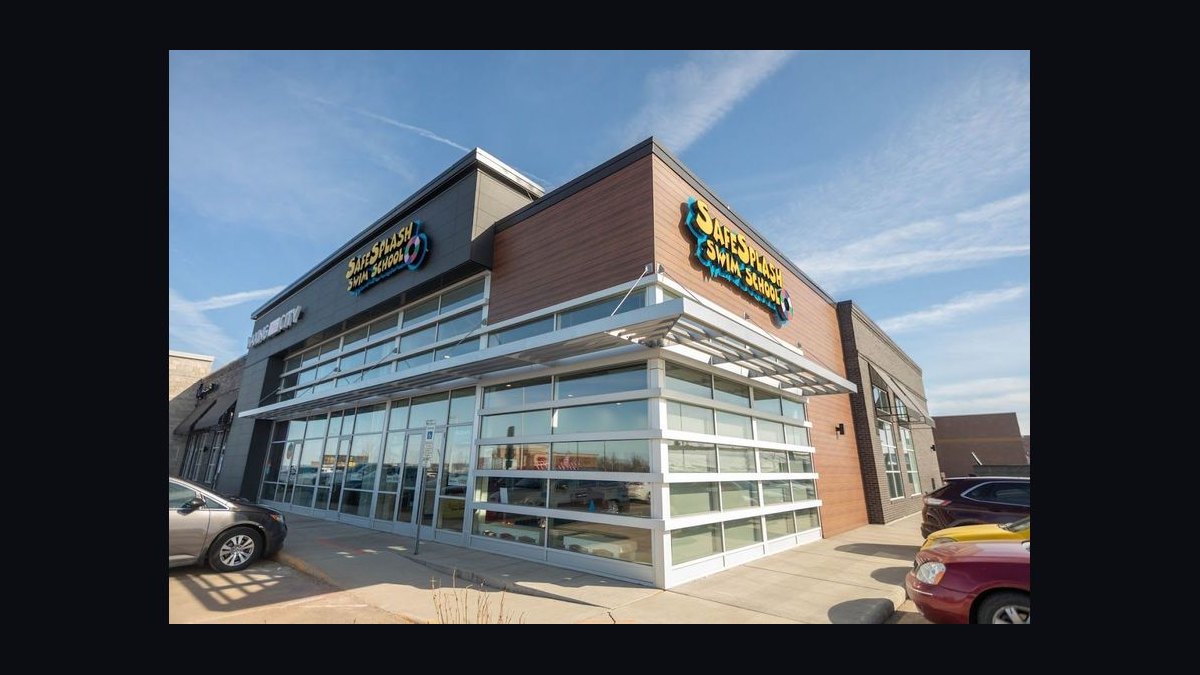
The 2026 FDD lays out three configurations, and the spread between them is the single most important number to internalize before evaluating anything else about this franchise. A Hosted Location — renting pool time inside an existing facility such as a hotel, apartment complex, or fitness center — carries total investment of $57,500 to $81,000: a $37,500 franchise fee, minimal equipment ($5,000–$9,000), light signage and technology ($4,000–$11,000), training and opening marketing ($6,500–$14,000), and roughly three months of working capital ($4,500–$9,500). A Dedicated Location — a stand-alone, purpose-built facility — runs $961,200 to $1,348,785, anchored by a $55,000 franchise fee and dominated by pool build-out and leasehold costs of $620,000–$880,000, plus equipment and pool systems at $95,000–$150,000, signage and FF&E at $42,000–$65,000, training and marketing at $34,000–$58,000, and working capital of $115,200–$140,785. A third configuration — Dedicated plus SwimLabs technology — pushes total investment to $1,071,200–$1,508,785 with a $65,000 franchise fee. Royalty and brand fund are identical across all three formats: 6% and 2% of gross revenue.
Revenue and margin outcomes track format choice closely. Hosted units, capped by the host facility's available pool time, typically land at $180K–$340K in Year 3 gross revenue with 18–25% stabilized EBITDA margins, but reach that steady state on a much shorter 14–24 month payback simply because entry cost is so much lower. Dedicated units make the opposite trade: Year 3 gross revenue of $1.1M–$1.6M and stabilized EBITDA margins of 12–18% — a lower percentage, but on a revenue base several times larger — against a longer 30–48 month payback period. Independent third-party estimates, including figures cited by 1851 Franchise and Sharpsheets, put average gross sales for an established Dedicated SafeSplash location near $1.3M, consistent with the FDD's implied range once a unit matures past 600–900 active swimmers.
Two cost lines are moving in the wrong direction heading into 2027 and deserve their own line item in any pro forma. General liability plus sexual abuse and molestation (SAM) coverage — mandatory for any children's-facility franchise — has risen 18–30% over 2024–2026, pushing annual premiums for a Dedicated unit to $22,000–$38,000; this is an industry-wide trend across youth-enrichment categories, not something specific to SafeSplash, driven by insurers repricing liability risk in facilities that serve minors. Deck instructor wages have climbed from roughly $13–$15/hr in 2022 to $16–$22/hr in 2026 in the metros where SafeSplash competes, the single fastest-moving cost line an operator needs a pricing strategy to offset — either through periodic tuition increases (which retention data should support once utilization crosses the 500-swimmer threshold) or through cross-training staff to cover both deck and front-desk shifts more efficiently.
Trade-Offs And Alternatives
The core trade-off inside SafeSplash's own system is format. Hosted buys optionality and a low downside at the cost of a hard revenue ceiling; Dedicated buys real scale and brand-building real estate at the cost of a seven-figure commitment and a multi-year patience requirement. That trade-off doesn't disappear once you look outside SafeSplash — it just resets against different brands and different capital tiers. Goldfish Swim School, the category leader, asks for $2.1M–$3.4M in total investment against a steeper 7% royalty, but mature units can reach $1.6M–$2.4M in revenue — the pick for an operator with capital depth who wants maximum brand recognition. British Swim School runs Hosted-only at $130K–$210K total investment and a 7% royalty, a genuinely capital-light entry for someone who wants swim-category exposure without taking on a real estate moat. Big Blue Swim School, Chicago-based and premium-positioned, sits at $2.0M–$3.0M with a smaller national footprint (roughly 25 units), appealing to operators who want a newer operational tech stack and don't need brand density to compete locally.
An independent, non-franchised build lands at $700K–$1.1M for a comparable Dedicated facility — meaningfully cheaper than SafeSplash's own Dedicated range — but forfeits the curriculum, training system, and brand pull, and only makes sense for a buyer who has already operated a swim school and knows exactly what they're rebuilding from scratch without that support. For a buyer who wants the recurring-revenue, children's-category dynamic without pool-specific mechanical and water-chemistry risk, adjacent youth-enrichment franchises are the honest alternative: KidStrong ($350K–$600K), The Little Gym ($200K–$575K), and Code Ninjas ($150K–$400K) all sit at a fraction of Dedicated SafeSplash's capital requirement, trading pool infrastructure risk for a different kind of category — fitness, motor skills, or STEM — that may have a lower demand ceiling per location but a much faster path to a first opening.
There's also a multi-unit angle worth naming: an operator who successfully clears the 18–30 month breakeven window on a first Dedicated location is frequently the same profile SafeSplash and its competitors court for area-development agreements covering two or three additional units. That path amortizes back-office and marketing overhead across multiple locations, but it also concentrates labor-retention risk — the same instructor-turnover problem that threatens one unit now threatens three simultaneously, which is a reason to prove the operating model fully at one site before signing for a second.
Common Pitfalls And How To Avoid Them
The most common and most expensive mistake is treating a Dedicated SafeSplash location as a passive investment. It isn't. Instructor scheduling alone runs 15–20 hours a week of active management, and owners who check out see instructor turnover spike past 60% annually — which directly degrades lesson quality, parent retention, and therefore the swimmer count the entire model depends on. The fix is non-negotiable: either the franchisee is the active operating partner, or the franchisee hires and directly manages a general manager with real accountability and real weekly visibility into scheduling and staffing.
The second pitfall is underestimating pool mechanical and water-chemistry risk. A filtration failure, a persistent chloramine off-gassing problem, or a cracked tile that forces a six-week closure can erase a full year of EBITDA on its own. Operators should line up a relationship with a commercial pool engineer before signing anything, and should have that engineer walk any real estate candidate before a lease is signed — not after the ink is dry.
The third pitfall is entering a trade area that already has a swim school. The first mover in a market captures the enrollment; the second competes on price or programming, and both erode the already-modest 12–18% margin band. Before committing to a site, map every existing Goldfish, Aqua-Tots, British Swim School, and Big Blue location within the trade radius — not just the raw child population count.
The fourth pitfall is skipping franchisee validation calls. SafeSplash had roughly 200 locations as of 2026, so a serious prospective owner can reasonably call 15–25 existing franchisees in a single week using the FDD's required disclosure list. Skipping this step — or doing only two or three token calls — is one of the clearest predictors of buyer's remorse in this category, because validation calls surface real breakeven timelines, real instructor turnover numbers, and landlord relationship quality that no disclosure document captures on its own.
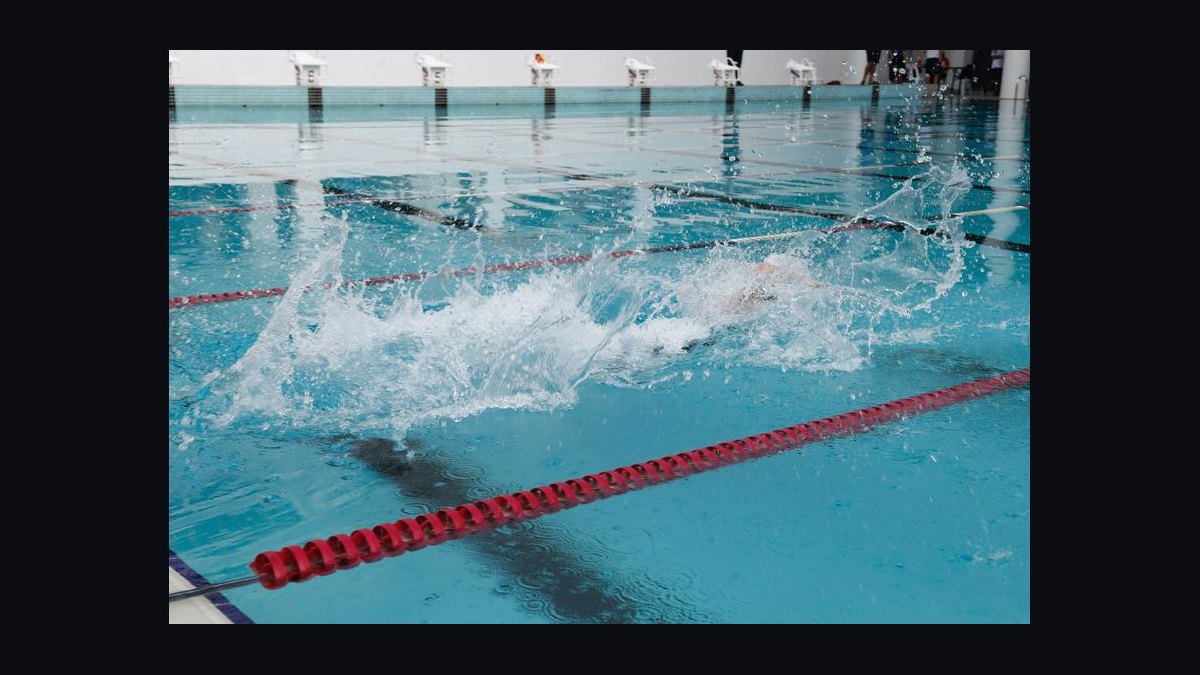
The fifth pitfall is choosing real estate without leverage. Pool build-out is the single highest-risk cost line in the entire investment. Operators who negotiate a strong landlord tenant-improvement package (roughly $60–$120 per square foot), avoid retrofitting a structure that wasn't originally engineered for pool loading, and lock a 10-year lease with two 5-year renewal options can cut $80,000–$180,000 off total breakeven exposure compared to operators who accept whatever site happens to be available in the moment.
Related questions
How long does it take a SafeSplash franchise to become profitable?
Most Dedicated locations reach breakeven between month 18 and month 30, as enrollment builds from zero to roughly 600–900 active swimmers. Year one cash flow is typically negative to break-even.
Is the Hosted SafeSplash model a good long-term business?
Hosted is capital-light but revenue-capped — gross sales rarely exceed $350K because lesson volume can't stack during peak hours. It works better as supplemental income than a primary wealth-building vehicle.
How does SafeSplash compare to Goldfish Swim School financially?
Goldfish requires more capital ($2.1M–$3.4M versus $961K–$1.35M for SafeSplash Dedicated) and a higher 7% royalty, but mature units can post higher revenue ceilings around $1.6M–$2.4M.
What demographic factors matter most before opening a SafeSplash location?
Target markets with 25,000+ children under 12 within a 15-minute drive and median household income above $95,000. Below those thresholds, enrollment growth stalls and fixed costs become hard to cover.
Can I finance a SafeSplash franchise with SBA financing?
Yes — SBA 7(a) lenders commonly finance swim school builds at roughly 75–80% debt against 20–25% owner equity, typically Prime plus 2.0–2.75%. A lender demanding 30%+ equity signals underwriting concerns worth investigating.
FAQ
What is the realistic timeline to break even on a SafeSplash franchise? Most Dedicated locations take 18 to 30 months to reach breakeven. Year one cash flow is typically negative to break-even as enrollment climbs from zero to a stable base of 600–900 active swimmers.
How much capital do I actually need to open a Dedicated SafeSplash location? The 2026 FDD shows total investment from $961,200 to $1,348,785. Plan on $1.0M–$1.5M in liquid capital or financing capacity, with a $55,000 franchise fee, a 6% royalty, and a 2% brand fund.
What are the ongoing fees and royalties I should expect? Franchisees pay a 6% royalty on gross revenue plus a 2% brand fund contribution. The initial franchise fee is $55,000 for a Dedicated location, with no unusual surcharges beyond what the FDD discloses.
How many students do I need to enroll to be profitable? Mature units typically need 600 to 900 active swimmers to reach stable revenue. At that level, gross revenue averages around $1.3M annually, with EBITDA margins of 12–18%.
What's the difference between a Dedicated and a Hosted Location model? A Dedicated Location is a stand-alone facility (5,000–7,000 sq ft) with pool-engineering requirements, costing $961K–$1.35M. A Hosted Location operates inside an existing pool facility for $57,500–$81,000 but caps growth potential.
Is there enough demand in my area to open a SafeSplash franchise? Generally, you need at least 25,000 children under 12 within a 15-minute drive. The business rides on recurring lesson revenue and drowning-prevention urgency, so youth population density is the deciding factor.
Sources
- SafeSplash Swim School 2026 Franchise Disclosure Document (Item 7, Item 12, Item 19), filed with the Minnesota Department of Commerce
- SafeSplash Franchise Opportunity site (safesplash.com/franchise)
- Franchise Times — "Swim School Franchisor Streamline Brands Consolidates Portfolio, Rebrands to SafeSplash" (2025)
- Youth Enrichment Brands corporate growth release (youthenrichmentbrands.com)
- 1851 Franchise — "SafeSplash Franchise Deep Dive: Costs, Fees, Profit and Data" (2026)
- Sharpsheets — "SafeSplash Franchise FDD, Profits & Costs" (2025)
- Franchise Gator — SafeSplash Swim School profile
- Verified Market Research — Swim School Franchise Market Report 2025-2033
- CDC — Drowning Facts and unintentional-injury mortality data (cdc.gov/drowning)
- American Academy of Pediatrics — 2019 Policy Statement on Prevention of Drowning
Related on PULSE
- [Should I open or buy a Big Blue Swim School franchise in 2027?](/knowledge/fr0521)
- [Should I open or buy a Goldfish Swim School franchise in 2027?](/knowledge/fr0519)
- [Should I open or buy a British Swim School franchise in 2027?](/knowledge/fr0297)
- [Should I open or buy an Aqua-Tots Swim Schools franchise in 2027?](/knowledge/fr0296)
- [Should I open or buy a School of Rock franchise in 2027?](/knowledge/fr1056)
- [Should I open or buy a Celebree School franchise in 2027?](/knowledge/fr0921)
This page will be disappearing soon. Save it to your device for $1 — or read it free while it is here.
@Kory-White- · if Venmo asks, the last 4 of my number are 2012
 franchiseShould I open or buy an L&L Hawaiian Barbecue franchise in 2027?
 franchiseShould I open or buy a Flame Broiler franchise in 2027?
 franchiseShould I open or buy a Bio-One franchise in 2027?
 franchiseShould I open or buy a Jet’s Pizza franchise or open an independent sandwich shop in 2027?
 franchiseShould I open or buy a Bubbakoo's Burritos franchise in 2027?
 franchiseShould I open or buy a Premier Garage franchise in 2027?
 franchiseShould I open or buy a Gracie Barra Brazilian Jiu-Jitsu franchise in 2027?
 franchiseShould I open a tree service business in 2027?
 franchiseShould I open or buy an Andretti Indoor Karting franchise in 2027?
 franchiseShould I open or buy an F45 Training franchise in 2027?