
Should I open or buy a Pollo Tropical franchise in 2027?
 Curated byKory White · Fractional CRO · Maryland
 PULSEKNOWLEDGE LIBRARY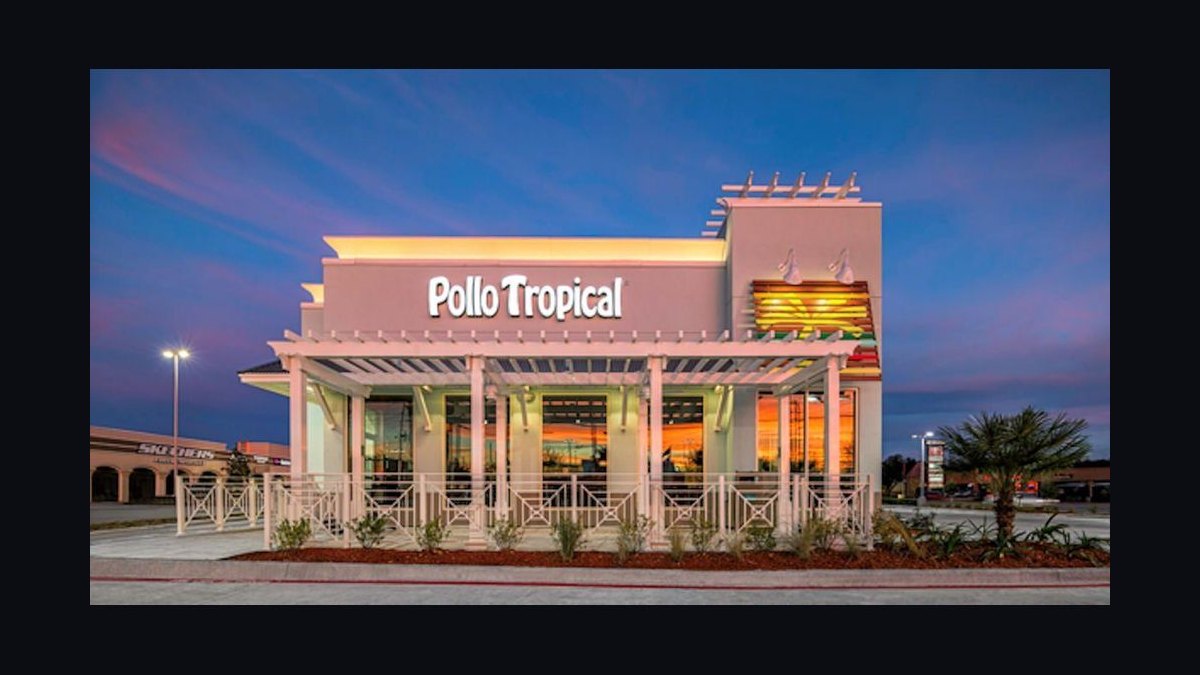
For most operators, buying into a Pollo Tropical franchise in 2027 is not realistic. The brand, owned by Authentic Restaurant Brands, effectively restricts new franchising to multi-unit operators with $5M+ liquid net worth and a five-store development commitment. If you clear that bar and operate in Florida, Puerto Rico, or the Caribbean, the economics are strong.
What the Pollo Tropical franchise opportunity actually is in 2027
Pollo Tropical is a fast-casual chicken concept built around citrus-marinated, open-flame rotisserie chicken, mojo pork, rice, beans, and plantains. It is not a fried-chicken brand and it is not interchangeable with one. That distinction matters in 2027 because the chicken QSR segment is crowded and capital is flowing into it. Pollo Tropical's differentiation is the cook method and the flavor profile, which travel well in Hispanic and Caribbean trade areas and travel poorly outside them.
The ownership structure is the single most important fact for anyone asking whether to open or buy a Pollo Tropical franchise. Fiesta Restaurant Group, the former public parent, was taken private by Authentic Restaurant Brands in a deal valued at roughly $225 million, or $8.50 per share, closing in August 2024. ARB also owns Primanti Bros. and other regional concepts. Since the take-private, ARB has run the brand as a disciplined operator culture, not a franchising growth machine.
What that means practically: the franchisor's incentive has shifted. A public company needed unit growth to feed the multiple. A private operator with a $230 million senior credit facility from Comvest needs cash flow and controlled expansion. ARB has refranchised select Florida company units, closed underperforming trade areas, and invested in the rotisserie supply chain. New franchised development in 2027 is targeted at roughly 8 to 12 units annually, almost entirely to existing multi-unit operators or international master franchisees.
The brand's footprint tells the story. Pollo Tropical has closed every market outside Florida and Puerto Rico at least once. Texas, Tennessee, Georgia, and New Jersey units all shuttered between 2017 and 2023. This is not a brand that has proven it can win in a new region. It is a brand that has proven it can win in a specific region and has stopped pretending otherwise. For a prospective franchisee, that is actually useful information: the trade-area thesis is narrow and testable, not speculative.
Why it matters for 2027 specifically: the chicken category is the hottest segment in restaurant M&A, with Raising Cane's, Wingstop, Chick-fil-A, Dave's Hot Chicken, Slim Chickens, and Bojangles all expanding. Wholesale chicken prices spiked in late 2026 on bird flu volatility, compressing category margins by roughly 150 to 220 basis points. Pollo Tropical's rotisserie method and marinade give it some insulation because the product is not a commodity fried chicken sandwich. But Florida and Puerto Rico labor costs have run up more than 6% year over year, and that is the next stress test. Selective development is the rational response, and that is exactly what ARB is doing.
The step-by-step process for evaluating a Pollo Tropical franchise
The path from interest to signed agreement is roughly 90 days and it is front-loaded with self-qualification. The franchisor will not do that work for you. Here is how a serious candidate should sequence it.
Days 1 through 14: run a self-qualification audit. Pull a personal financial statement on SBA Form 413. Confirm you have $5 million or more in verifiable liquid net worth, $2 million or more in unrestricted cash, at least five years of multi-unit operations history, and a defensible trade-area thesis. A defensible thesis means a specific Florida or Caribbean DMA with demographic match: roughly 18% or higher Hispanic population, $55,000 or higher median household income, and drive-thru-friendly retail. If any of those four items is missing, stop here. You will be rejected at the application stage and you will have saved yourself months.
Days 15 through 30: request the franchise disclosure document. Submit the multi-unit inquiry form through the brand's franchising channel. Under the FTC Franchise Rule at 16 CFR Part 436, the franchisor must deliver the current FDD within 14 days of your request. Read Items 3 and 4 first, which cover litigation and bankruptcy. Then read Item 7 for estimated initial investment, Item 19 for the financial performance representation, and Item 20 for the outlet table showing openings, closings, and transfers. Item 20 is where you learn how many units actually closed, not how many opened.
Days 31 through 45: validation calls. The franchisor will provide five to ten current franchisee references, which is mandatory under Item 20. Call every single one. Ask about actual Year-1 sales, time to break-even, the biggest operational surprise, candid views of field support, and whether they would sign again at today's terms. A franchisee who hesitates on the last question is telling you something.
Days 46 through 60: trade-area underwriting. Hire a restaurant-specialist site selector. Buxton, Tango Analytics, and Sites USA are established firms in this space, and the engagement typically runs $8,000 to $15,000. Generate a five-site shortlist with 24-hour traffic counts, demographic overlays, competitive-set proximity to Pollo Campero, Chipotle, Chick-fil-A, and El Pollo Loco, and a rent-to-sales ratio under 8%.
Days 61 through 75: capital stack and structure. Lock SBA 7(a) pre-approval, get a conventional restaurant lender bid from a specialist like Live Oak Bank or ApplePie Capital, and confirm equity partners. At 11% to 12% SBA 7(a) rates in 2027, a $1.1 million build at 80% leverage carries roughly $110,000 in annual debt service. Confirm three months of personal living expenses sit outside the deal.
Days 76 through 85: Discovery Day at Miami headquarters. ARB hosts these monthly. You meet the CEO, CFO, head of franchising, operations leadership, and supply chain. You tour three to five operating units across mature and ramp-stage trade areas. Treat it as a two-way interview.
Days 86 through 90: sign the Area Development Agreement or walk. A signed ADA commits you to five units across 36 to 60 months with non-refundable per-unit deposits. Default penalties run $75,000 or more per missed milestone. If any prior step surfaced a red flag, walk with your diligence spend and no further obligation.
Costs, timelines, and typical ranges for a Pollo Tropical franchise
The estimated initial investment range per restaurant runs from $650,000 to $1,400,000, excluding land if purchased. That range comes from the Item 7 disclosure and breaks down into recognizable buckets.
The initial franchise fee is $30,000 per unit, with reductions available for area development deals. Real estate and lease deposits run $20,000 to $75,000, with end-cap or freestanding locations preferred. Building and leasehold improvements are the largest line at $250,000 to $700,000, and a drive-thru build adds roughly $120,000 on top. Kitchen equipment including the rotisserie line runs $185,000 to $260,000. Furniture, fixtures, equipment, POS, signage, and decor run $90,000 to $150,000. Opening inventory is $15,000 to $25,000, covering five to seven days of protein and produce. Training and travel run $12,000 to $35,000, including mandatory Miami headquarters training. Grand-opening marketing is $15,000 to $35,000, separate from the ongoing ad fund. Working capital for three months runs $33,000 to $90,000 to cover payroll, utilities, and debt service.
Ongoing fees matter as much as build cost. The royalty is 5.0% of gross sales. The national advertising fund is 4.0% of gross sales. Local or co-op marketing can add up to 2.0% depending on the market. That is a combined 9% to 11% drag before you pay a single dollar of rent or labor. There is also a technology fee of $400 to $900 per month per unit, a renewal fee of 50% of the then-current franchise fee every ten years, and a $15,000 transfer fee per assignment.
On the revenue side, the Item 19 disclosure for the 2025 fiscal year showed Florida company-operated average unit volumes of $3.7 million across roughly 120 units, up from $2.8 million five years prior. System-wide same-store sales were positive at 8% or better in each of the last ten reported quarters. Median unit EBITDA margin at the store level ran 15% to 22% before general and administrative costs. At the median, that implies $555,000 to $815,000 of EBITDA per unit on the $3.7 million AUV, and cash-on-cash payback at a $1.0 million build midpoint of roughly three years.
The critical caveat: $3.7 million is the mature Florida company-store number. A new franchised unit in an unproven Caribbean or Central American corridor regularly opens at $1.4 million to $2.0 million in Year 1 and takes 24 to 36 months to mature. Conservative Year-1 underwriting should assume $2.2 million in sales, which is roughly 60% of the Florida AUV ramp, at a 17% store-level margin. That produces about $374,000 in store EBITDA. Subtract $120,000 to $150,000 in manager and assistant payroll burden and $40,000 to $80,000 in debt service on an SBA 7(a) at 11.25%, and net cash flow to the owner lands between $180,000 and $340,000 in Year 1, climbing as the trade area matures.
Where operators get this wrong
The most common mistake is underwriting to the $3.7 million AUV from day one. That number belongs to mature Florida company stores with years of trade-area development behind them. A new franchised unit in a fresh corridor will not hit it in Year 1, and a pro forma built on that assumption will fail its first debt-service coverage test.
The second mistake is treating this as a single-unit opportunity. It is not. The franchisor's stated minimum is a five-unit development commitment across 36 to 60 months. Single-unit applicants are declined. First-time franchisees of any kind are declined, because the brand absorbed multi-year same-store sales decline before 2023 and has no appetite for ramp-stage operator mistakes. If you have never run a 90-second drive-thru window, this is not the concept where you learn.
The third mistake is ignoring the trade-area constraint. Every market outside Florida and Puerto Rico has been closed at least once. Trade-area mismatch is the dominant failure mode for this brand, not operational execution. An operator who is excellent at running restaurants but picks the wrong DMA will still lose.
The fourth mistake is over-leveraging. At 11% to 12% SBA 7(a) rates, a $1.1 million build at 80% leverage carries roughly $110,000 in annual debt service. That eats half of conservative Year-1 cash flow. Operators who stack maximum leverage on a ramp-stage unit have no cushion when chicken costs spike or labor runs hot, both of which happened in the 2026 to 2027 window.
The fifth mistake is confusing brand affinity with business fit. Liking the food is not a qualification. Pollo Tropical is a speed-of-service business dressed in tropical decor. The rotisserie line and the proprietary marinade are the operational moat and also the steepest learning curve for anyone coming from a different kitchen format.
Decision framework: when to choose what
The decision is not binary between opening a Pollo Tropical and doing nothing. It is a question of which structure fits your capital, your experience, and your market.
If you are a multi-unit QSR or fast-casual operator with five or more stores under another concept, $5 million or more in liquid net worth, and a controlled trade area in Florida or the Caribbean, the Pollo Tropical franchise path is open and the economics are among the best in the chicken category. The three-year payback and 8%-plus same-store sales streak are real.
If you are a first-time franchisee, a single-unit applicant, an out-of-market operator, or a capital-light buyer, the answer is not to open a Pollo Tropical. The realistic alternatives are Pollo Campero, which is actively franchising single-unit and multi-unit operators with a lower build cost and a 6% royalty; El Pollo Loco, a public company with aggressive Sun Belt development incentives; or a Southeast chicken concept like Bojangles, Slim Chickens, or Huey Magoo's with lower fees and active territories.
A third path is buying an existing Pollo Tropical franchised unit in the secondary market. Watch franchise resale marketplaces and the franchisee referral network for deals at 3.5 to 4.5 times seller's discretionary earnings. You inherit the trade area, the lease, the staff, and the ramp, which removes the two hardest variables.
A fourth path, in Puerto Rico, Miami-Dade, and Broward, is buying a profitable independent Caribbean chicken restaurant for $300,000 to $600,000 and converting it. That is roughly half the build cost of a new franchise with zero royalty drag, though it comes with no brand system and no national ad fund.
Related questions
Can a first-time franchisee buy a Pollo Tropical franchise in 2027?
No. The franchisor requires a five-unit development commitment and a verifiable multi-unit QSR track record. First-time franchisees with under $5 million in liquid net worth are typically declined at the application stage. The brand does not run a beginner training program for owner-operators.
How much liquid net worth do you need for a Pollo Tropical franchise?
The practical floor is $5 million in verifiable liquid net worth and roughly $2 million in unrestricted cash. That is the threshold the franchisor uses to screen multi-unit applicants. Falling below it does not disqualify you on paper alone, but it makes approval unlikely.
What is the royalty and ad fund for a Pollo Tropical franchise?
The royalty is 5.0% of gross sales and the national advertising fund is 4.0%, for a combined 9%. Local or co-op marketing can add up to 2.0% depending on the market. There is also a technology fee of $400 to $900 per month per unit.
Where can you open a Pollo Tropical franchise?
Franchising is concentrated in Florida, Puerto Rico, and Caribbean or Central American corridors where the brand has proven trade-area density. Every market outside that footprint, including Texas, Tennessee, Georgia, and New Jersey, has been closed at least once since 2017.
Is it better to buy an existing Pollo Tropical unit or open a new one?
Buying an existing franchised unit at 3.5 to 4.5 times seller's discretionary earnings lets you inherit the trade area, lease, staff, and ramp. Opening new means a 12-to-18-month build and a 24-to-36-month maturation curve. For most buyers, resale is the lower-risk entry.
FAQ
What is the total investment range for a Pollo Tropical franchise in 2027? The estimated initial investment per unit runs from $650,000 to $1,400,000, excluding land if purchased. That includes the $30,000 franchise fee, leasehold improvements of $250,000 to $700,000, kitchen equipment of $185,000 to $260,000, and three months of working capital of $33,000 to $90,000.
Can I open a single Pollo Tropical franchise as a first-time owner? No. The franchisor's stated minimum is a five-unit development commitment across 36 to 60 months. Single-unit applicants are declined, and first-time franchisees without multi-unit QSR experience are screened out at the application stage. This is a closed-network, multi-unit-only opportunity.
What are the ongoing fees for a Pollo Tropical franchise? You pay a 5.0% royalty on gross sales and a 4.0% national advertising fund contribution, for a combined 9%. Local or co-op marketing can add up to 2.0% depending on the market. A technology fee of $400 to $900 per month applies per unit, plus a $15,000 transfer fee and a renewal fee every ten years.
How profitable is a Pollo Tropical franchise on average? Store-level EBITDA margins run 15% to 22% before general and administrative costs. On the $3.7 million Florida company-operated AUV, that implies $555,000 to $815,000 per unit. Conservative Year-1 cash flow for a new franchised unit in a ramp-stage trade area lands between $180,000 and $340,000.
Where can I open a Pollo Tropical franchise? Franchising is primarily available in Florida, Puerto Rico, and Caribbean or Central American corridors where the brand has proven trade-area density. The brand has closed every market outside that footprint at least once, so out-of-market applications are rarely approved.
Is the Pollo Tropical franchise opportunity open to most investors in 2027? No. It is a closed-network, multi-unit-only opportunity. Corporate-owned Florida units average $3.7 million in sales and the brand is targeting only 8 to 12 new franchised units annually, almost exclusively to existing multi-unit operators or international master franchisees.
Sources
- Pollo Tropical official franchising information — https://www.pollotropical.com
- QSR Magazine — https://www.qsrmagazine.com
- Nation's Restaurant News — https://www.nrn.com
- Restaurant Business Online — https://www.restaurantbusinessonline.com
- Franchise Times — https://www.franchisetimes.com
- FSR Magazine — https://www.fsrmagazine.com
- Comvest Partners — https://www.comvest.com
- SEC EDGAR, Fiesta Restaurant Group historical filings — https://www.sec.gov/edgar
- FTC Franchise Rule, 16 CFR Part 436 — https://www.ftc.gov/business-guidance/resources/franchise-rule
- IBISWorld chicken restaurant industry reports — https://www.ibisworld.com
Related on PULSE
- [Should I open or buy an El Pollo Loco franchise in 2027?](/knowledge/fr1028)
- [Should I open a Tropical Smoothie Cafe franchise in 2027?](/knowledge/fr620)
- [Should I open or buy a Pollo Campero franchise in 2027?](/knowledge/fr0400)
- [Should I open or buy a Tropical Smoothie Cafe alternative — Frutta Bowls — franchise in 2027?](/knowledge/fr0384)
- [Should I open or buy a Pollo Loco franchise in 2027?](/knowledge/fr0086)
Read it free — or make it yours for $1.
@Kory-White- · if Venmo asks, the last 4 of my number are 2012
 franchiseShould I open or buy a Dippin’ Dots franchise in 2027?
 franchiseShould I open or buy a Cooper's Hawk Winery & Restaurants franchise in 2027?
 franchiseShould I open or buy a sweetFrog franchise in 2027?
 franchiseShould I open or buy a Kitchen Tune-Up franchise in 2027?
 franchiseShould I open or buy a Panera Bread franchise in 2027?
 franchiseShould I open or buy a Pizza Inn franchise in 2027?
 franchiseShould I open or buy a NAPA Auto Parts franchise in 2027?
 franchiseShould I open or buy an Interim HealthCare franchise in 2027?
 franchiseShould I open or buy a One Hour Heating & Air Conditioning franchise in 2027?
 franchiseShould I open or buy a Rita's Italian Ice franchise in 2027?