


Should I open or buy a Heyday Skincare franchise in 2027?
Quality
Certified
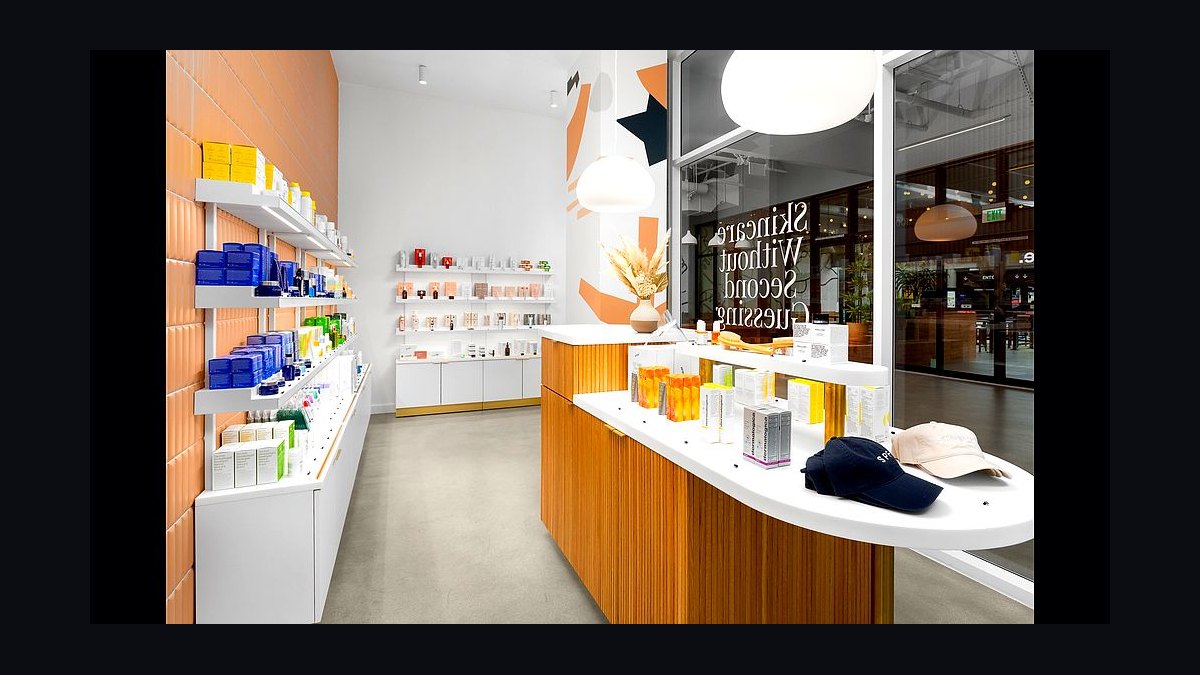
Opening a Heyday Skincare franchise in 2027 makes sense for a well-capitalized operator who can recruit and retain licensed estheticians and wants recurring, membership-driven revenue in an affluent market. The 2026 FDD lists total investment near $400,000–$800,000 with a roughly 7% royalty; mature studios gross $600,000–$1,300,000 with owners clearing $70,000–$200,000. Skip it without staffing capability, capital, or a self-care-conscious market.
Buy an Existing Studio vs. Open a New Heyday Skincare Unit
Anyone evaluating a Heyday Skincare franchise in 2027 is really choosing between two very different paths into the brand, and conflating them is the single most common mistake prospective owners make. The first path is opening a brand-new studio from the ground up — signing a lease, building out treatment rooms, hiring an entire esthetician staff, and building a membership base from zero. The second path is buying an existing, operating Heyday unit from a current franchisee who wants out.
Opening new gives you a clean territory, current lease terms, and the ability to pick your own site from scratch — but it also means 6–12 months with no revenue while you build a membership base, and you absorb 100% of the leasehold, buildout, and equipment cost yourself, typically $400,000–$800,000 all-in. You are also starting your esthetician team from zero, which in a tight labor market (40–60% annual turnover industrywide) means your first six months are disproportionately about recruiting, not selling facials.
Buying an existing studio changes the math substantially. A profitable Heyday unit doing $800,000–$1,000,000 in gross revenue with a stable membership base of 200+ active members typically sells for 2.2x–3.2x annual EBITDA in the beauty/wellness-membership category — meaning a studio clearing $150,000 in owner earnings might trade for $330,000–$480,000, often less than the all-in cost of a new build once you account for the immediate cash flow. You inherit trained estheticians (assuming they stay through the transition — get this in writing where possible), an existing membership base already paying monthly, and a location with proven foot traffic. The downside: you inherit whatever culture, pricing discipline, and equipment condition the seller leaves behind, and lease terms may be less favorable than what you'd negotiate fresh. You'll also need to underwrite retention risk — will members and staff stay through an ownership change, or will attrition spike in the first 90 days?
The franchisor's approval process differs too. A new-unit application is evaluated on your capital, your site, and your operating plan. A resale requires franchisor consent to the transfer, a review of the existing franchise agreement's remaining term (a studio with only 3 years left on its 10-year agreement is a different asset than one with 8 years left), and often a requirement that you complete initial training even though the studio is already running. Ask for the trailing-twelve-months P&L, the membership attrition rate, and the esthetician roster with tenure — those three documents tell you more than the asking price does.
How to Decide Between Opening New and Buying Existing
The decision hinges on three variables: your available capital, your risk tolerance for the ramp-up period, and whether a suitable resale exists in a market you want to be in. If you have $600,000+ liquid-adjacent capital, patience for a 12-month build, and a specific market (say, a growing suburb with no Heyday yet) you want to own outright, opening new lets you shape the territory and site from day one. If your priority is faster cash flow and you can find a stable resale with verified retention numbers, buying existing skips the unprofitable ramp period entirely.
A practical rule: if you cannot find a resale with at least 18 months of consistent membership growth and an esthetician team with average tenure over one year, treat every resale on the market as a caution flag rather than a shortcut, and default to opening new. Sellers exit for two reasons — they're retiring or relocating (a clean reason, worth pursuing), or the unit is struggling and they want out before it gets worse (the far more common reason in a franchise system experiencing the esthetician turnover pressures Heyday faces). The TTM P&L and staff tenure data are how you tell which one you're looking at.
Concrete Numbers Behind Each Option
Opening new — capital and timeline:

- Franchise fee: $40,000–$50,000
- Leasehold improvements and buildout: $150,000–$250,000, plus $20,000–$40,000 in permits and design
- Equipment and treatment-room furnishings: $50,000–$80,000 (facial beds, steamers, magnifying lamps, retail displays)
- Initial inventory (retail product): $25,000–$60,000
- Initial marketing / member acquisition: $15,000–$40,000
- Working capital reserve: $80,000–$120,000, covering 3–6 months of payroll, rent, and royalty on a slow-growth membership base
- Membership ramp losses: $30,000–$50,000 in pre-profit operating losses over the 6–12 months it takes to reach 150–200 active members
- All-in realistic total: $450,000–$900,000, with $600,000+ the more common entry point for a fully-capitalized owner
- Royalty: ~7% of gross; marketing fee ~2% of gross
- Timeline to stabilized profitability: 12–18 months from signing
Buying existing — capital and timeline:
- Purchase price: 2.2x–3.2x trailing annual EBITDA (a studio clearing $150,000 might run $330,000–$480,000)
- Franchisor transfer fee: typically $10,000–$20,000, separate from the purchase price
- Working capital for transition: $40,000–$70,000 to cover any staff or membership attrition in the first 90 days
- No buildout or ramp-loss period — the studio is cash-flowing from your first day of ownership, assuming retention holds
- Timeline to stabilized ownership: 30–90 days for transfer approval and training, versus 12–18 months for a new build
- Risk-adjusted total capital need: often $370,000–$550,000, meaningfully lower than a new build, but concentrated in a single upfront payment rather than staged over a build timeline
Esthetician economics apply to both paths equally and deserve their own numbers regardless of entry route: entry-level estheticians in metro markets command $18–$25/hour plus commission, lead estheticians $28–$35/hour or $50,000–$65,000 salaried. Commission structures run 10–15% on service revenue and 5–10% on retail, adding $15,000–$30,000 per esthetician annually to payroll. Turnover averages 40–60% industry-wide, and each departure costs $3,000–$5,000 in recruiting and lost bookings — a cost that hits a new-build owner harder (you have no bench) than a resale owner inheriting an established team.
Implementation Details and Sequencing
Whichever path you choose, the franchisor's process and your own diligence sequence follow a similar shape but with different milestones. For a new unit, the sequence runs: FDD and Item 19 review (days 1–20), operator interviews focused on esthetician retention and membership growth rates (days 21–40), market and site validation in an affluent, self-care-conscious trade area (days 41–60), lease signing and buildout with parallel esthetician recruiting (days 61–110), and grand opening with a deliberate push on founding memberships (days 111–140+).
For a resale, the sequence compresses dramatically but the diligence deepens in different places: request the TTM P&L, membership roster with join dates and attrition history, and esthetician tenure roster in week one; verify the remaining term on the franchise agreement and any deferred maintenance or equipment-replacement needs in weeks two and three; submit the transfer application to the franchisor and begin your own required training in weeks three through six; close and take over operations with a 30-day retention-focused transition plan for staff and members, since ownership changes are exactly when both groups are most likely to leave.

In either path, the franchisor's approval gate is the same underlying test: can you fund the investment and can you run a service business that depends on retaining skilled staff? A new-unit applicant is judged on projected capability; a resale applicant is judged partly on the health of the asset being transferred. Build your diligence checklist around whichever gate applies, and never skip the esthetician-tenure question — it is the single best predictor of whether either path performs.
Related questions
How long does it take to open a Heyday Skincare franchise from signing to opening day?
For a new build, plan on 12–18 months from FDD review to a stabilized, profitable studio, with the physical buildout and staffing running roughly days 61–140. A resale can be operating under your ownership in 60–90 days from initial contact.
Is a Heyday Skincare resale always cheaper than opening a new unit?
Not always — an overpriced resale above 3.2x EBITDA can exceed the realistic all-in cost of a new build. Price against verified trailing earnings, not the seller's asking number.
What's the biggest risk specific to buying an existing Heyday studio?
Member and staff attrition during the ownership transition. Members and estheticians who joined because of the prior owner's relationships may leave within 90 days if the transition isn't managed carefully.
Do esthetician wage pressures affect new builds and resales equally?
Yes — wage inflation and 40–60% turnover apply industry-wide regardless of entry path. A resale gives you a trained team on day one, but you still face the same market wages and turnover risk going forward.
FAQ
What is the typical investment range for a new Heyday Skincare franchise in 2027?
Realistic all-in cash need is $450,000–$900,000, including the $40,000–$50,000 franchise fee, buildout, equipment, initial inventory, marketing, and a working capital reserve covering the 6–12 month membership ramp.
How much does buying an existing Heyday studio typically cost? Purchase prices generally run 2.2x–3.2x trailing annual EBITDA, plus a franchisor transfer fee of $10,000–$20,000. A studio clearing $150,000 in owner earnings might trade for roughly $330,000–$480,000.
What ongoing fees apply to a Heyday Skincare franchise? A royalty near 7% of gross sales plus a marketing fee around 2%, standard across both new and resale units per the 2026 FDD.
How much can a Heyday franchise owner expect to earn once stabilized? Mature studios gross $600,000–$1,300,000 annually, with owner net income of $70,000–$200,000, depending heavily on membership base size, esthetician retention, and product-retail performance.
Why is esthetician retention such a central factor in this decision? Heyday's entire model runs on licensed estheticians delivering consistent facials and selling memberships and retail. Turnover of 40–60% annually costs $3,000–$5,000 per departure in recruiting and lost bookings, and it affects new builds and resales alike.
Can I negotiate territory protection when opening a new Heyday unit? Yes, though standard protection is a 2–3 mile radius that can shrink to 1–1.5 miles in dense urban markets. Review your FDD's territory clause carefully before signing, since some franchisees report overlapping territories in high-demand areas.
Sources
- https://www.entrepreneur.com/franchises/directory
- https://www.franchisebusinessreview.com
- https://www.ibisworld.com
- https://www.statista.com
- https://www.franchise.org
- https://www.bls.gov/oes/
- https://www.ftc.gov/business-guidance/resources/franchise-rule-compliance-guide
- https://www.sba.gov/business-guide/plan-your-business/franchise-businesses
Related on PULSE
- How long does it take to open a franchise and break even in 2027?
- Should I open or buy a Tommy Gun's Original Barbershop franchise in 2027?
- Should I open or buy a Painting with a Twist franchise in 2027?
- Should I open or buy a FACE FOUNDRIÉ franchise in 2027?
- Should I open or buy a MiniLuxe franchise in 2027?
This page will be disappearing soon. Save it to your device for $1 — or read it free while it is here.
@Kory-White- · if Venmo asks, the last 4 of my number are 2012
This page is gone.
This one is off the shelf now. $1 keeps it on your phone for good — the whole page, pictures and diagrams included.
 franchiseShould I open or buy an Image360 franchise in 2027?
 franchiseShould I open or buy an Aire Serv Heating & Air Conditioning franchise in 2027?
 franchiseShould I open or buy an Always Best Care Senior Services franchise in 2027?
 franchiseShould I open or buy a Cruise Holidays franchise in 2027?
 franchiseShould I open a real estate brokerage in 2027?
 franchiseShould I open or buy a Wetzel's Pretzels franchise in 2027?
 franchiseShould I open or buy a Black Bear Diner franchise in 2027?
 franchiseShould I open or buy a Big Apple Bagels franchise in 2027?
 franchiseShould I open or buy a HomeRiver Group franchise in 2027?
 franchiseShould I open or buy a Famous Dave's BBQ franchise in 2027?