


Should I open or buy a FACE FOUNDRIÉ franchise in 2027?
Quality
Certified
Opening a FACE FOUNDRIÉ franchise in 2027 makes sense if you can recruit and retain estheticians and lash technicians, operate in an affluent, self-care-focused market, and commit full-time to building recurring memberships. With $300,000-$650,000 in total investment and owner earnings typically in the $60,000-$190,000 range, this facial-bar concept rewards operators who master staffing and membership retention — and punishes those who don't.
The outcome you should expect
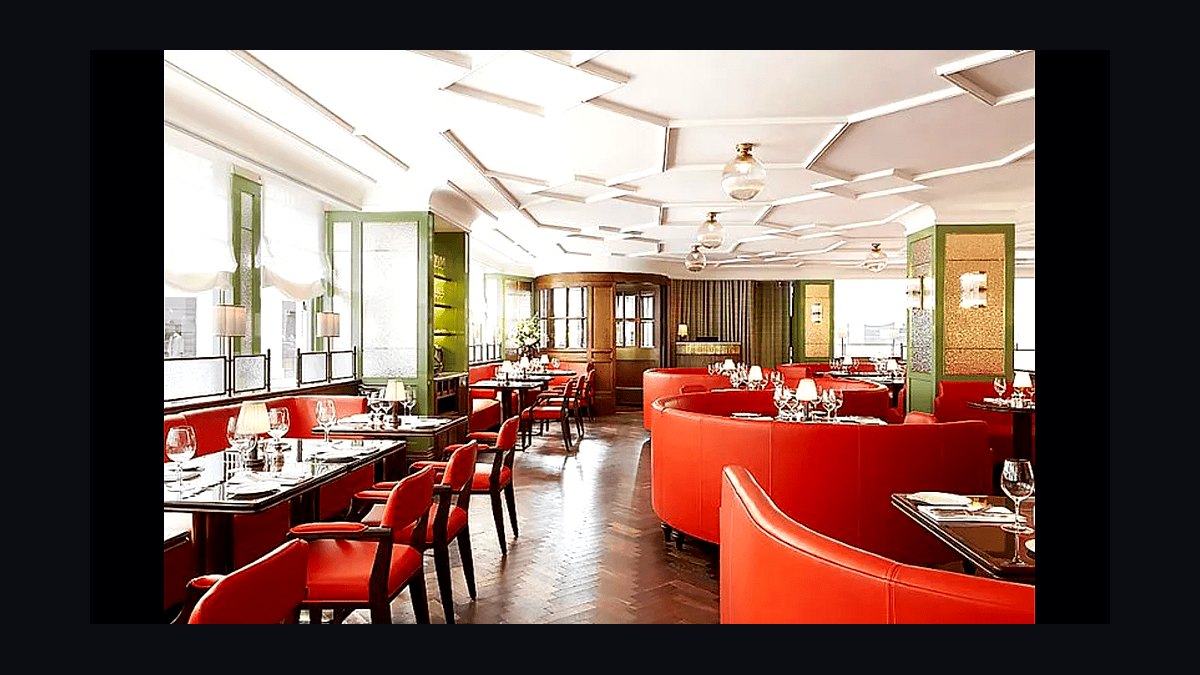
A FACE FOUNDRIÉ franchise is a facial bar — typically 1,200 to 2,000 square feet — built around facials, lash extensions, brow shaping, and skincare-product retail, wrapped in a membership program that drives repeat visits. The outcome you should realistically expect falls into two buckets depending on execution.
In the strong-outcome scenario, a studio opens in a dense, income-qualified trade area, fills its esthetician and lash-tech roster within the first 60-90 days, and builds a membership base of 300-600 active members by month 12-18. That studio realistically lands in the $500,000-$900,000 annual revenue range within two to three years, with owner earnings of $80,000-$150,000 after royalties, labor, and occupancy costs. The membership base becomes the studio's ballast — recurring monthly billing smooths out the seasonality that plagues single-visit beauty concepts, and lash-fill cadence (every two to three weeks) keeps chairs full even in slower months.

In the weak-outcome scenario, the studio never fully staffs its treatment rooms — a chronic problem in a tight esthetician and lash-tech labor market — and ends up with partial capacity utilization, longer wait times for members, and elevated churn as clients get frustrated finding appointments. That version of the business can still gross $350,000-$500,000, but owner earnings shrink toward $30,000-$60,000 once royalties (6-7% of gross), the marketing fee, and turnover-driven retraining costs are absorbed. The gap between these two outcomes is almost entirely a function of staffing execution and membership retention discipline, not brand strength or market timing.
Franchisees should model both scenarios before signing, using Item 19 data from the current FDD, and should weight their expected outcome toward the weak case unless they have a concrete staffing pipeline (local esthetics schools, sign-on bonuses, a referral network) already identified before opening.
What drives that outcome

Three levers determine which outcome a given studio lands in: staffing capacity, membership retention, and the multi-service mix (facials, lashes, brows, retail) that lifts per-client revenue above what a single-service facial bar can generate.
Staffing capacity sets the ceiling. A fully staffed studio with three to four estheticians and lash techs can handle roughly 25-35 appointments per day at a 50-minute average service time. Every unfilled chair-hour is unrecoverable revenue — unlike inventory, an empty appointment slot at 2 p.m. on a Tuesday cannot be sold later. Franchisees who under-invest in recruiting (job boards only, no relationships with local cosmetology and esthetics schools, no referral bonuses for existing staff) consistently under-perform Item 19 averages by 20-30%.
Membership retention sets the floor. Because memberships are billed monthly and lash extensions require fills every two to three weeks, a member who cancels doesn't just stop one purchase — they remove a recurring revenue stream that was assumed to continue for 12-24 months. Studios that build a structured "welcome series" (three visits scheduled at signup, proactive rebooking at the end of each appointment, staff trained to flag at-risk members) retain members longer than studios that leave rebooking to chance.

The multi-service mix is the amplifier. A client who books only a monthly facial generates one recurring line of revenue. A client who also gets lash fills every two to three weeks and buys retail skincare products at 40-50% margin generates three to four revenue lines from the same relationship. This is FACE FOUNDRIÉ's structural advantage over single-service facial-only concepts — but it only pays off if front-desk staff and estheticians are trained to cross-sell brow and lash add-ons during every facial visit, not treated as separate transactions.
Benchmarks and realistic ranges
Use these ranges to sanity-check any pro forma a franchise development representative hands you, and to compare against the current FDD's Item 19 figures (which supersede any general ranges cited here).
Investment. The franchise fee runs $40,000-$50,000. Buildout and leasehold improvements for a facial-bar fit-out run $130,000-$300,000, and equipment for facial, lash, and brow stations adds another $50,000-$120,000. Signage and decor run $18,000-$48,000, initial inventory for skincare-product retail runs $20,000-$50,000, and initial marketing runs $12,000-$32,000. Training, travel, and working capital typically add another $35,000-$90,000 combined. Total Item 7 investment lands in the $300,000-$650,000 range, with $100,000-$180,000 in required liquid capital.

Ongoing fees. Royalty runs approximately 6-7% of gross revenue, plus a marketing fee of roughly 2% of gross. Budget an additional 2-4% of gross for local marketing beyond the required fee — Instagram and Google Local Services ads targeting women aged 25-55 within a five-mile radius are the typical channels.
Revenue and earnings. Mature studios gross $500,000-$1,200,000+ annually, with owner earnings of $60,000-$190,000 depending on staffing stability, local competition, and membership penetration. A rough cost structure on a $750,000-gross studio looks like: labor (estheticians, lash techs, front desk) around 40% of gross, occupancy around 12-13%, royalty and marketing fees around 9%, and product COGS plus general operating expenses around 15-17%, leaving owner earnings in the $130,000-$160,000 range before debt service.
Membership economics. Facial-bar memberships typically run $49-$89 per month. Average retention runs 12-18 months, with top-quartile studios reaching 24+ months. A member retained 18 months at $69/month generates roughly $1,242 in membership revenue alone, before retail add-ons (average $25-$40 per visit, with 15-25% of total studio revenue coming from retail in strong studios) and lash or brow add-on services. Member acquisition cost typically runs $50-$150 per member through local social ads, referral programs, and grand-opening promotions.
Real estate. Lease costs for a 1,200-1,800 square foot studio run $4,000-$10,000/month in tier-2 metros and $8,000-$18,000/month in prime urban locations. Franchise agreements typically grant a protected territory of one to two miles in dense urban markets or three to five miles in suburban markets.
Risks, edge cases, and failure modes
Staffing is the dominant risk. Esthetician and lash-technician roles often take 8-12 weeks to fill in tight metro labor markets, and a single departure can disrupt membership scheduling for weeks if there's no bench of part-time or per-diem technicians. Franchisees who open without a pre-identified staffing pipeline — relationships with local cosmetology schools, sign-on incentives, cross-training plans — are the most common source of underperformance relative to Item 19 projections.
Membership churn spikes predictably in months 3-5, as initial novelty wears off and clients evaluate whether the monthly cost matches the value they're getting. Studios without a structured onboarding sequence (three visits in the first 60 days, proactive rebooking) see churn accelerate faster and lose the recurring-revenue advantage that justifies the membership model in the first place.

Retail real estate is a genuine constraint, not a formality. FACE FOUNDRIÉ's model depends on co-tenancy with complementary retail (Sephora, Ulta, coffee shops) and a trade area with median household income typically above $80,000. A site that looks affordable but sits in a low-traffic or lower-income corridor will underperform regardless of operator skill, and the lease term (commonly a five-year initial term with two five-year options) locks that decision in for a long horizon.
Competitive density is rising. Heyday, The Lash Lounge, Amazing Lash Studio, and Deka Lash all compete for the same membership-minded, self-care-focused consumer, and in some metros multiple concepts are opening within the same trade radius. A franchisee who doesn't validate local competitive saturation before signing risks splitting an already-thin pool of qualified members across too many studios.
No-show rates without scheduling discipline can run 10-15%, directly eroding the appointment capacity that staffing was built to fill. This is a solvable problem (automated reminders, deposit-on-booking policies) but an easy one to overlook during the rush of opening.
Multi-unit expansion amplifies both directions. An operator who has proven they can staff and retain members in one location is well-positioned to add a second or third unit; an operator who is still struggling with staffing in unit one should not sign for additional territory on the assumption that "it'll get easier."
A practical rollout plan

The path from signing to a stable, membership-driven studio runs roughly 130 days, and the sequence matters — staffing and site validation need to happen in parallel, not sequentially, because both have long lead times.
In the first 20 days, read the current FDD in full, with particular attention to Item 19 (financial performance representations) and Item 20 (unit counts, closures, transfers). In days 21-40, call existing franchisees directly — ask specifically about esthetician and lash-tech recruiting and retention, membership and lash-fill recurrence rates, product-retail mix as a share of revenue, and net profit after all fees. These conversations matter more than anything in the marketing materials.
Days 41-60 are for validating the site: confirm the trade area's median household income, co-tenancy, foot traffic, and territory protection, and cross-check local competitive density against Heyday, The Lash Lounge, Amazing Lash, and Deka Lash locations. Days 61-100 cover buildout and — critically — active staff recruiting, which should start well before the buildout finishes so the studio can open with a substantially filled roster rather than opening understaffed and trying to hire while already serving members.
Days 101-130 are for opening and building the membership base: run the pre-opening local marketing push (teasers, a waitlist, a grand-opening event), and immediately implement the welcome-series onboarding sequence for new members rather than treating the first 60 days as a ramp period to figure out later. Once the studio stabilizes — full staffing, membership retention tracking above 12 months, a clear read on true net profit — that's the point to evaluate whether the multi-service mix and territory support a second unit.
Related questions
How long does it take a FACE FOUNDRIÉ studio to break even?
Most studios reach cash-flow breakeven in 12-24 months, driven primarily by how quickly they fill staffing and build a membership base past the 300-member mark. Studios that open understaffed often push breakeven past 24 months.
How much does a FACE FOUNDRIÉ membership typically cost?
Facial-bar memberships in this category typically run $49-$89 per month for one monthly facial plus member perks, with lash and brow services usually billed as add-ons or separate recurring packages.
What's the biggest difference between FACE FOUNDRIÉ and a single-service lash studio?
FACE FOUNDRIÉ's multi-service model (facials, lashes, brows, retail) creates multiple recurring revenue lines per client, while single-service concepts depend entirely on one service's retention curve.
Can one owner run a FACE FOUNDRIÉ franchise without a hired manager?
It's possible in a single-unit operation, but most successful franchisees hire a studio manager to handle scheduling, inventory, and client experience, freeing the owner to focus on marketing and membership growth.
FAQ
What is the typical initial investment for a FACE FOUNDRIÉ franchise? Total investment typically runs $300,000 to $650,000, including a franchise fee of $40,000 to $50,000. This covers buildout, equipment, inventory, and working capital, and varies by location and lease terms — always confirm current figures against the FDD.
How much can a FACE FOUNDRIÉ franchise owner expect to earn? Mature studios typically generate $500,000 to $1,200,000 in annual revenue, with owner earnings ranging from $60,000 to $190,000. Actual results depend heavily on staffing stability, location, and local membership penetration.
What ongoing fees does the franchise require?

Franchisees pay a royalty of roughly 6-7% of gross sales plus a marketing fee, typically around 2% of gross. Many operators also budget an additional 2-4% of gross for local marketing beyond these required fees.
What services does FACE FOUNDRIÉ offer beyond facials? The model includes facials, lash extensions, brow shaping, and skincare-product retail, all built around a membership program. This service variety is designed to drive recurring revenue and higher per-client value than single-service concepts.
What are the biggest challenges of owning this franchise? Recruiting and retaining skilled estheticians and lash technicians is consistently the top challenge, followed by securing retail real estate in the right trade area and managing rising competition from other facial-bar and lash concepts.
Is 2027 a good time to open a FACE FOUNDRIÉ franchise? The self-care and skincare market continues to grow and the membership model provides more revenue predictability than transaction-based beauty concepts. Success still depends heavily on staffing execution and site selection, and growing brand awareness may increase local competition in some markets.
Sources
- https://www.ftc.gov/business-guidance/resources/franchise-disclosure-document-fdd
- https://www.entrepreneur.com/franchises
- https://www.ibisworld.com
- https://www.statista.com
- https://www.franchisebusinessreview.com
- https://www.franchise.org
- https://www.bls.gov/oes/current/oes395094.htm
- https://www.sba.gov/business-guide/plan-your-business/franchise-businesses
Related on PULSE
This page will be disappearing soon. Save it to your device for $1 — or read it free while it is here.
@Kory-White- · if Venmo asks, the last 4 of my number are 2012
This page is gone.
This one is off the shelf now. $1 keeps it on your phone for good — the whole page, pictures and diagrams included.
 franchiseShould I open or buy a Planet Smoothie franchise in 2027?
 franchiseShould I open or buy a Woofie’s franchise in 2027?
 franchiseShould I open or buy a Snap Fitness franchise in 2027?
 franchiseShould I open a junk removal business in 2027?
 franchiseShould I open or buy a Brain Balance franchise in 2027?
 franchiseShould I open or buy a MOD Pizza franchise in 2027?
 franchiseShould I open or buy a Biscuitville franchise in 2027?
 franchiseShould I open or buy a Big Apple Bagels franchise in 2027?
 franchiseShould I open or buy a Cruise Holidays franchise in 2027?
 franchiseShould I open or buy a TruBlue Total House Care franchise in 2027?