
Should I open or buy a U-Haul franchise in 2027?
 PULSEKNOWLEDGE LIBRARY
U-Haul does not sell franchises, so in 2027 you cannot buy one. It contracts independent businesses as commission-paid neighborhood dealers — no franchise fee, no royalty, no protected territory. Open a dealership beside an existing location with spare parking, buy a storage or service business that already holds a contract, or franchise a moving brand instead.
What a U-Haul "franchise" actually is — and why the distinction decides your whole plan
Almost every search for "U-Haul franchise" is built on a false premise, and correcting it changes the entire financial model. U-Haul, operated by U-Haul Holding Company, distributes its trucks and trailers through two channels: company-owned retail centers that it staffs and controls directly, and a very large network of independent neighborhood dealers who are contractors, not franchisees. U-Haul's own materials describe a network in the range of twenty thousand independent dealer locations alongside roughly a couple thousand company-operated stores. There is no franchise fee, no Franchise Disclosure Document, no Item 19 earnings claim, and no royalty on your other revenue, because none of the legal machinery of franchising applies.
That absence cuts both ways, and you should weigh each side honestly before you decide to open anything.
What you gain: near-zero entry cost. You are not buying a license to operate under someone else's brand. U-Haul owns the fleet, insures the fleet, repairs the fleet, and handles the reservation system and national marketing. Your capital exposure is the parking spaces you surrender, the staff hours you spend on contracts and inspections, and a modest insurance rider. You do not sign a ten-year term with a personal guarantee. You do not owe six percent of gross to a franchisor forever. If the program underperforms, you can generally exit without unwinding a decade-long agreement.

What you give up: control and protection. A real franchise typically grants a defined territory, a documented earnings history you can underwrite against, and contractual limits on how close the franchisor can plant a competing unit. A dealer contract generally grants none of that. U-Haul can and does open a company-owned store near a productive dealer. It can also reallocate equipment away from your lot based on network demand, which means your revenue depends on inventory decisions you do not make. Dealer agreements are commission arrangements that either party can typically end; you are building revenue on a relationship, not an asset.
That last point is the one that matters most if your actual goal is to build enterprise value. A franchise unit — a moving company, a junk-removal territory, a storage facility — is a saleable business with a transferable agreement and a valuation multiple. A U-Haul dealership is a revenue stream attached to a contract that does not automatically travel with a sale. If you buy a gas station or a storage facility because it "comes with U-Haul," you are buying an expectation, not a contract, and you should price it that way. The dealership adds cash flow and foot traffic to a business you already own; it is not, by itself, the business.
So the honest reframing of the question is: in 2027, do I want a low-cost revenue add-on to a location I already control, or do I want to own a moving-and-storage business outright? Those are two different projects with two different capital stacks, and conflating them is the single most common planning error in this category.

The step-by-step process, from application to first rental
The path to becoming an authorized dealer is short and mostly gated on your location, not on your capital. Work it in this order.
Qualify the real estate before you do anything else. U-Haul's decision is driven overwhelmingly by geography and physical fit. Ask whether your site sits on a road people already drive, whether it has visible frontage, and whether you can dedicate parking without strangling your core business. A standard box truck occupies roughly a ten-by-twenty-five-foot footprint once you account for maneuvering; a cargo trailer needs less but still needs a turning radius. If you cannot comfortably give up several spaces on your worst-case-busy Saturday, stop here. Also confirm zoning: many municipalities treat commercial vehicle rental as a distinct use, and some retail leases explicitly prohibit subleasing parking or storing rental vehicles. Read your lease's permitted-use clause and your landlord's parking allocation before you apply.
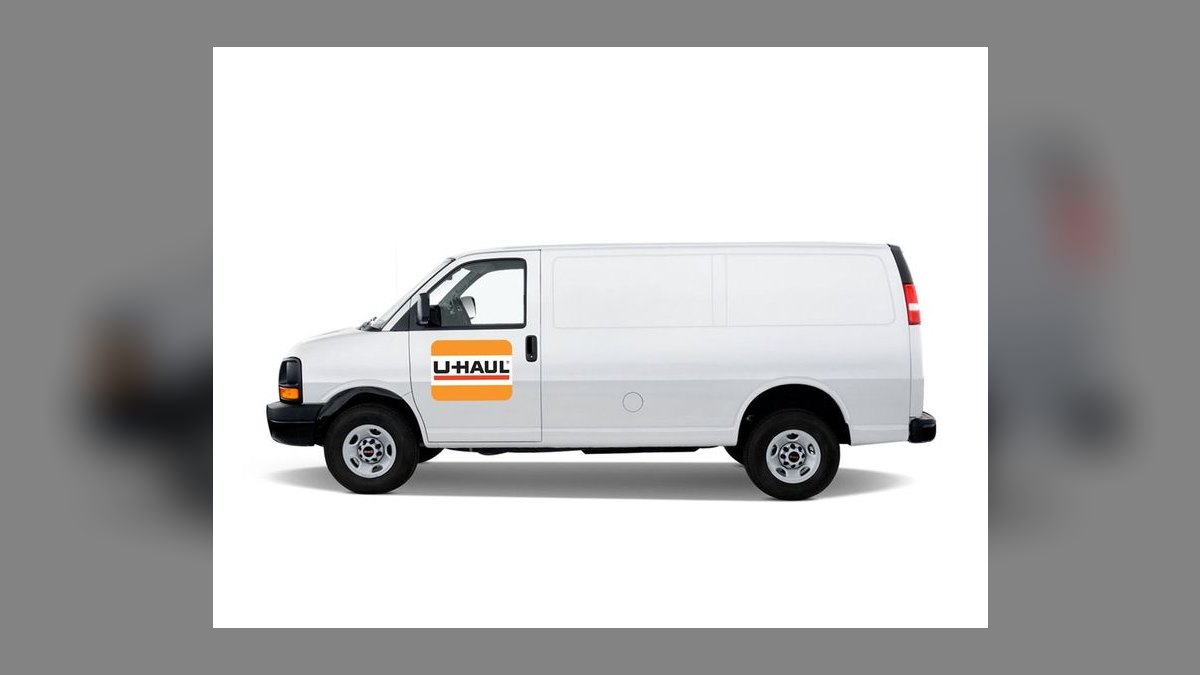
Submit the dealer application. This runs through U-Haul's dealer intake channel and is reviewed by a regional field representative — often called a marketing company president or an area field manager in U-Haul's structure. Expect them to visit in person. They are assessing traffic count, sight lines, hours of operation, and whether your existing customers overlap with movers.
Negotiate what you can, and understand what you can't. Commission structures vary by contract, equipment type, and market; U-Haul does not publish a single universal rate, and you should treat any specific percentage you read on a forum as unverified. Get your actual terms in writing. Ask specifically about: rate on in-town versus one-way rentals, treatment of trailer versus truck commissions, margin on moving supplies, whether U-Box container storage is available at your site, and whether hitch installation is an option if you have a service bay.
Complete setup. This typically involves installing the dealer-facing rental software, training staff on contract creation and equipment inspection, adding the required insurance coverage, and receiving signage. Your first equipment allocation arrives based on what the regional fleet needs, not what you request.

Go live and instrument it immediately. From day one, track four numbers: contracts written per week, gross rental revenue, commission earned, and attached supply sales. Also track a fifth that most dealers ignore — staff minutes consumed per contract. That number determines whether this is profitable labor or a distraction.
Costs, timelines, and typical ranges
Because there is no franchise fee, the cost question splits into three very different scenarios. Model whichever one you are actually pursuing.
Scenario one: adding a dealership to a business you already run. Your out-of-pocket is small — a commercial insurance endorsement, some staff training time, possibly minor lot striping or a gravel pad. The dominant cost is opportunity cost. Do the math explicitly: if you surrender six parking spaces at a retail site and each space supports a measurable amount of daily customer revenue, the dealership must beat that number. Timeline from application to first rental is commonly a few weeks to a couple of months, gated by the field rep's schedule and equipment availability.
Build the revenue model with your own assumptions, not someone else's. Illustratively: if your location writes forty rental contracts in a month at an average gross rental value of eighty dollars, that is thirty-two hundred dollars of gross rental revenue passing through your site. Your income is a contracted percentage of that, plus your margin on boxes, tape, pads, and mattress bags. Plug in your real contract rate rather than a rumored one. In many locations, the supply sales and the incremental foot traffic — people who came for a trailer and bought something else — matter as much as the commission line itself. Track them separately so you know which one is actually carrying the program.
Scenario two: buying an existing business that operates as a dealer. Here you are buying a gas station, hardware store, auto shop, or self-storage facility, and the dealership rides along. Costs are whatever the underlying business costs — commonly financed through an SBA 7(a) loan, which carries a program maximum of five million dollars, or an SBA 504 loan when significant real estate is involved. SBA rules for a complete change of ownership require a minimum equity injection of ten percent of total project cost, and lenders frequently want more. Timeline is a real acquisition timeline: sixty to one hundred twenty days from signed letter of intent to close is a reasonable planning range, longer if SBA underwriting or environmental review on a fuel site is involved.
Critical diligence point: confirm in writing whether the dealer contract survives the sale. It generally does not transfer automatically. You will likely need to apply and be approved as a new dealer. If the seller's asking price capitalizes dealership income, insist that a portion of consideration be contingent on your own contract being issued, or discount that income stream to zero in your valuation.

Scenario three: owning a moving or storage business outright. If your real goal is an owned, saleable enterprise, this is the honest path. A self-storage facility is a real-estate acquisition — underwrite it on net operating income and a market capitalization rate, which for storage has commonly been quoted in the mid-single digits for institutional-quality assets and higher in secondary markets. Verify current comps with a broker rather than trusting a national average. An actual moving or junk-removal franchise carries the standard franchise cost structure: an initial franchise fee, an ongoing royalty on gross revenue, a required marketing contribution, plus vehicles, insurance, and working capital. In this category, initial fees commonly land in the tens of thousands and royalties in the mid-single-digit to high-single-digit percentage range — but never accept those as your numbers. Pull the brand's current Franchise Disclosure Document and read Item 5 for the initial fee, Item 6 for ongoing fees, Item 7 for the estimated initial investment range, Item 19 for any financial performance representation, and Item 20 for the turnover table showing how many units closed or transferred. Item 20 tells you more about the brand's health than the sales deck ever will.
Working capital across all three. Whichever path you pick, hold enough reserve to cover a slow season. Moving demand is strongly seasonal, concentrating in late spring through summer and around lease-turn dates, then falling off hard in the winter in cold markets. A business that pencils on annual averages can still fail in February.
Where owners get it wrong
Treating the dealership as the business. The most expensive version of this error is paying an acquisition premium for a small retail business because its listing advertises U-Haul income, then discovering the contract does not convey. Underwrite the underlying business on its own merits. If it does not work without the dealership, it does not work.

Ignoring the parking arithmetic. Owners consistently underprice the space. Six spaces at a busy convenience store, a car wash, or a restaurant may be worth more in customer turnover than in commission. Run this as an actual comparison for your peak day, not your average day, because that is when the conflict bites and when your core customers form their impression of whether your lot is usable.
Assuming inventory is yours to control. One-way rentals move fleet across the country, and U-Haul rebalances accordingly. If you sit in a net-origin market — a place people leave more than they arrive — trucks flow out of your area and allocation can tighten. If you sit in a net-destination market, you may receive returned equipment you have nowhere to park. U-Haul publishes an annual growth index derived from its own one-way transaction data showing which states gain and lose movers; read it for your state before you commit lot space, and understand that it describes flows you will absorb, not flows you can influence.
Underestimating labor drag. Every contract requires staff time: walkaround inspection, damage documentation, contract creation, fuel and mileage capture, hitch check, return processing. If a single rental consumes twenty minutes of a clerk's time during your lunch rush, the commission may not cover the cost of the line that formed behind it. Measure staff minutes per contract for four weeks and convert to a loaded hourly cost before you judge the program.

Skipping the insurance conversation. Employees will move vehicles around the lot. Confirm with your own carrier — in writing — what is and is not covered when your staff operates equipment you do not own, and what your exposure is for damage discovered after a return. Do not assume the equipment owner's coverage extends to your operations.
Building on 2021 demand assumptions. Residential moving volume is not what it was. U.S. household mobility has trended down for decades, with the Census Bureau's annual mover rate hovering near eight to nine percent in recent years, far below mid-century levels. Existing-home sales fell to roughly 4.06 million in 2024, the weakest year since 1995 per the National Association of Realtors. DIY truck rental is tied to that turnover. It is also tied to apartment lease churn, which is steadier and less rate-sensitive — so a location near dense multifamily housing with heavy annual lease turnover is a materially different bet than one in a low-turnover owner-occupied suburb. Underwrite the demand you can actually see within a few miles of your door.

Forgetting the competitive set. You are not the only place to rent a truck. Penske operates its own agent network, Budget Truck runs a dealer network under Avis Budget Group, Enterprise rents trucks through corporate locations, and Home Depot rents load-and-go vehicles directly from stores. Drive your trade area and count them. A market with four existing options and flat household formation is a market where an added dealership mostly reshuffles share.
Decision framework: dealer, acquisition, or independent
Run your situation through this sequence rather than starting from the brand name.
Start with your objective. If you want incremental cash flow and foot traffic for a location you already control, the dealer path is almost always correct, because its downside is bounded and its entry cost is near zero. If you want an asset you can sell in ten years, the dealer path is the wrong tool entirely — you cannot sell a contract that does not transfer.
Then test your site. Frontage on a road with real traffic, surplus parking on your busiest day, lease and zoning permission, and staff with slack capacity. Fail any one of those and the answer changes.
Then test your market. Household turnover, multifamily density, existing truck-rental supply, and net migration direction. A destination market with tight rental supply is the strongest dealer setup available.
Then test your capital and risk tolerance. If you have acquisition capital and want ownership, compare a storage facility, an independent truck-rental operation where you own the fleet, and a genuine moving or junk-removal franchise. The independent fleet route gives you full margin and full risk: you buy or lease the vehicles, carry the insurance, absorb maintenance and depreciation, and build your own demand generation without a national reservation system feeding you. That is a real business with real operating leverage, but it competes head-on against a network with enormous brand recall and no capital cost to you as a dealer. Most operators who try it succeed by specializing — local commercial moves, junk and debris hauling, or a niche fleet — rather than by matching consumer self-move pricing.
Related questions
Does U-Haul charge a franchise fee?
No. There is no franchise fee because U-Haul does not franchise. Independent locations sign a dealer contract and earn commission on rentals plus margin on moving supplies. There is no Franchise Disclosure Document, no royalty on your other revenue, and no initial license payment.
Can I buy an existing U-Haul dealership from its current owner?
You buy the underlying business — the storage facility, gas station, or shop — not the contract. Dealer agreements generally do not transfer automatically; you apply and get approved separately. Never pay an acquisition premium for dealership income until your own contract is confirmed in writing.
How much parking does a dealer location need?
Enough to hold assigned equipment plus maneuvering room, without crowding your core customers on a peak Saturday. A box truck needs roughly a ten-by-twenty-five-foot footprint; trailers need less space but still need turning radius. Run the count against your busiest day, not your average.
Is a moving franchise a better bet than a U-Haul dealership?
Different products. A franchise costs an initial fee plus ongoing royalties but delivers a transferable agreement, a defined territory, and resale value. A dealership costs almost nothing and delivers commission with no protection. Pick by whether you want cash flow or an asset.
What kind of businesses make the best dealer locations?
Self-storage facilities, hardware stores, auto repair shops, fuel stations, and rural general stores — sites with visible frontage, surplus parking, long hours, and customers whose errands already overlap with moving. Businesses with tight parking or short hours consistently underperform in this program.
FAQ
Is U-Haul actually a franchise opportunity in 2027?
No, and nothing suggests that changes. U-Haul's expansion model is company-operated retail centers plus a large independent dealer network operating under commission contracts. If a listing or broker advertises a "U-Haul franchise for sale," what is being sold is a business that happens to hold a dealer contract, and that contract's continuation under new ownership is not guaranteed.
How long does it take to become an authorized dealer?
Commonly a few weeks to a couple of months from application to first rental. The gating items are the regional field representative's site visit, contract execution, software installation and staff training, insurance confirmation, and the arrival of your first equipment allocation. Sites needing lot work, zoning review, or landlord consent take longer.
What commission will I earn?
Terms vary by contract, equipment type, and market, and U-Haul does not publish a single universal rate — so treat any number you see quoted online as unverified. Get your specific rates in writing before signing, covering in-town rentals, one-way rentals, trailers, and moving-supply margin, and model your revenue on those figures only.
Do I get a protected territory?
Generally no. Unlike a franchise agreement, a dealer contract typically does not restrict how close the company can place another dealer or a company-owned store. Underwrite the program assuming competition can appear nearby, and keep your fixed costs low enough that a new entrant does not break your model.
What are the biggest risks I control versus don't control?
You control site selection, parking allocation, staffing, hours, supply attachment, and cost discipline. You do not control equipment allocation, one-way fleet flows, national pricing, marketing, or whether a company store opens near you. Concentrate your planning on the first list and stress-test your model against the second.
If DIY moving demand keeps softening, what's the safer play?
Anchor to a business with independent demand and treat rentals as an attachment. Self-storage, hardware, and auto service all generate their own traffic and pair naturally with movers. That way a soft moving year trims a secondary revenue line instead of taking down the whole operation, which is exactly the exposure a single-purpose truck-rental business carries.
Sources
- U-Haul dealer program overview — https://www.uhaul.com/Dealer/
- U-Haul Holding Company investor relations — https://investors.uhaul.com/
- My U-Haul Story, publisher of the annual U-Haul Growth Index migration data — https://www.myuhaulstory.com/
- FTC, "A Consumer's Guide to Buying a Franchise" — https://www.ftc.gov/business-guidance/resources/consumers-guide-buying-franchise
- U.S. Small Business Administration, 7(a) loan program — https://www.sba.gov/funding-programs/loans/7a-loans
- U.S. Census Bureau, geographic mobility and migration data — https://www.census.gov/topics/population/migration.html
- National Association of Realtors, existing-home sales statistics — https://www.nar.realtor/research-and-statistics/housing-statistics/existing-home-sales
- Self Storage Association, industry data and resources — https://www.selfstorage.org/
- Two Men and a Truck franchising information — https://www.twomenandatruck.com/franchising
- U.S. SEC EDGAR company filings search — https://www.sec.gov/edgar/searchedgar/companysearch
Related on PULSE
- How do I evaluate a Franchise Disclosure Document before signing?
- Is buying an existing small business cheaper than starting one?
- What does an SBA 7(a) loan actually require from a first-time buyer?
- How do I underwrite a self-storage facility acquisition?
- What margins does a junk-removal or local moving business really run?
- How do I value a small retail business with a contracted revenue stream?
 franchiseShould I open a storage franchise or a mobile storage business in 2027?
 franchiseShould I open or buy a StockX-authenticated resale business vs. a Stadium Goods franchise in 2027?
 franchiseShould I open a consignment sneaker shop or buy a Stadium Goods franchise in 2027?
 franchiseShould I open or buy a Sneakerhead.com franchise in 2027?
 franchiseShould I open or buy a sneaker resale business in 2027?
 franchiseShould I open or buy a CubeSmart franchise in 2027?
 franchiseShould I open or buy a Sola Salon Studios franchise in 2027?
 franchiseShould I open or buy a WOW 1 DAY PAINTING franchise in 2027?
 franchiseShould I open or buy an Extra Space Storage franchise in 2027?
 franchiseShould I open or buy a Stadium Goods franchise in 2027?