
Should I open or buy a StockX-authenticated resale business vs. a Stadium Goods franchise in 2027?
 PULSEKNOWLEDGE LIBRARY
Neither is a true franchise decision. StockX operates a marketplace and authentication network, not a franchisor, so "opening a StockX business" means running an independent sneaker resale operation that sells through it. Stadium Goods is a consignment retailer owned by Farfetch, historically not franchised either. Build the independent authenticated resale business.
The outcome you should expect
The honest outcome of this decision is that only one of the two options is actually available to you as a buyer in 2027, and recognizing that early saves you six months of chasing a franchise development team that does not exist. StockX has never operated a franchise model. It is a two-sided marketplace: sellers list, buyers bid, and the platform routes the shoe through one of its authentication centers before it reaches the buyer. There is no territory, no franchise agreement, no franchise disclosure document, no royalty, and no brand license you can purchase. What people mean when they say "a StockX-authenticated resale business" is an independent inventory business whose exit channel happens to be StockX — you buy sneakers, streetwear, watches, or collectibles at wholesale or retail, ship them into the StockX flow, and the platform's authentication step is what makes your goods liquid to a stranger halfway across the country.
Stadium Goods is a different animal but equally unavailable as a franchise. It began as a New York consignment retailer with a physical store and a large consignor network, and it was acquired by Farfetch in 2018 for a reported $250 million. Farfetch itself went through severe financial distress and was acquired by Coupang in early 2024. That ownership chain matters enormously to your decision: a brand that has been sold twice inside six years, with its parent nearly collapsing in between, is not a brand that is building out a franchise development pipeline. If anyone approaches you offering a Stadium Goods franchise, treat it as a red flag and demand the FDD before any conversation about money.

So the realistic outcome you should plan for is this: you build or buy an independent authenticated resale business, you use StockX and its competitors as sales channels rather than as partners, and you evaluate any "Stadium Goods-style" opportunity as either a consignment storefront acquisition or a wholesale supply relationship, not a franchise. That reframing changes your economics completely. You keep 100% of the equity and 100% of the brand risk. You pay platform fees per transaction instead of a royalty on gross revenue. You have no protected territory, which means unlimited upside and unlimited competition simultaneously. And your enterprise value at exit is tied to inventory turns and sourcing relationships, not to a franchise agreement that a franchisor could decline to renew.
What drives that outcome
Three structural forces drive the answer here, and understanding them tells you where the money actually is.

The first is that authentication is a platform utility, not a moat you can own. When StockX authenticates a pair of shoes, the value created accrues to the platform, because the platform is what the buyer trusts. You, the seller, are interchangeable. This is the single most important economic fact in this category: the authentication layer that makes the market work is owned by someone else, and they charge you for access to it. StockX's seller fee structure has historically run in the high single digits as a transaction fee, plus a payment processing fee typically around three percent, with the transaction fee stepping down as a seller's lifetime sales volume increases through their seller tiers. Every dollar of your gross margin passes through that toll booth. If you buy a shoe at $150 and sell at $200, you are not making $50 — you are making roughly $50 minus low-double-digit percentage fees on the $200, minus outbound shipping, minus the cost of any item that fails authentication and comes back.
The second force is that franchising exists to sell an operating system, and this category does not have one worth selling. Franchise models work when the franchisor has a repeatable unit economic template — a fast-food store with known food cost percentages, a gym with known membership churn — and when brand recognition drives walk-in demand. Sneaker resale has neither. Demand is driven by release calendars and hype cycles that no franchisor controls, inventory cost is set by an open secondary market rather than by a supply agreement, and the customer overwhelmingly transacts online. There is nothing for a franchisor to systematize except sourcing, and sourcing advantage is precisely the thing a franchisor would never dilute by handing it to hundreds of independent operators.

The third force is that the retail arbitrage window has compressed dramatically since the 2019-2021 peak. Nike's aggressive pivot toward direct-to-consumer reduced the wholesale allocation that fed independent sneaker shops, and then its 2024-2025 course correction back toward wholesale partners rebuilt some of that supply — but the general-release supply glut that came with it crushed resale premiums on exactly the shoes an entry-level reseller can actually get their hands on. Meanwhile competitors like GOAT, eBay's authenticity guarantee program, and Alias have all compressed the fee spread. The practical consequence is that "buy at retail, sell at resale" is no longer a business, it is a hobby with a spreadsheet. The businesses that work in 2027 are sourcing businesses — closeout lots, liquidation pallets, international arbitrage, deadstock buyouts from closing shops, and consignment from collectors.
Benchmarks and realistic ranges
Work the numbers before you fall in love with either path. A pure online authenticated resale operation can be started for very little — a few thousand dollars of inventory, a shipping station, a scale, and a spreadsheet. That low barrier is exactly why margins are thin. Realistically, gross margin on general-release sneakers sold into a marketplace runs in the mid single digits to low teens after fees, and net margin after shipping supplies, storage, insurance, returns, and failed authentications is often razor thin or negative for a first-year operator. Limited and hyped inventory can carry far higher spreads, but you cannot source it reliably at scale — that is the entire trap.

The variables that actually determine whether the business works are inventory turns and average selling price. A business turning $50,000 of inventory twelve times a year at 10% net is a very different animal from one turning it three times. Model it explicitly: annual gross merchandise value equals working capital times turns; net profit equals GMV times net margin percentage. At $50,000 working capital, six turns, and 8% net, you are looking at roughly $24,000 of annual profit before your own labor — which is a job, not an asset. To build something with real enterprise value you need either much higher working capital, a materially better sourcing channel, or a direct storefront where you capture the full retail spread instead of a marketplace slice.
If instead you buy an existing consignment storefront in the Stadium Goods mold, price it the way you would price any small specialty retailer. Small retail businesses commonly trade in a band of roughly two to four times seller's discretionary earnings, with inventory valued separately and often at a discount to cost because sneaker inventory ages badly. Demand a full aging report: any inventory sitting over 180 days should be marked down hard in the purchase price, and anything over a year should be treated as close to worthless for valuation purposes. Verify the consignment liability separately — a consignment shop's balance sheet includes goods it does not own, and you must know exactly what you owe consignors on day one.
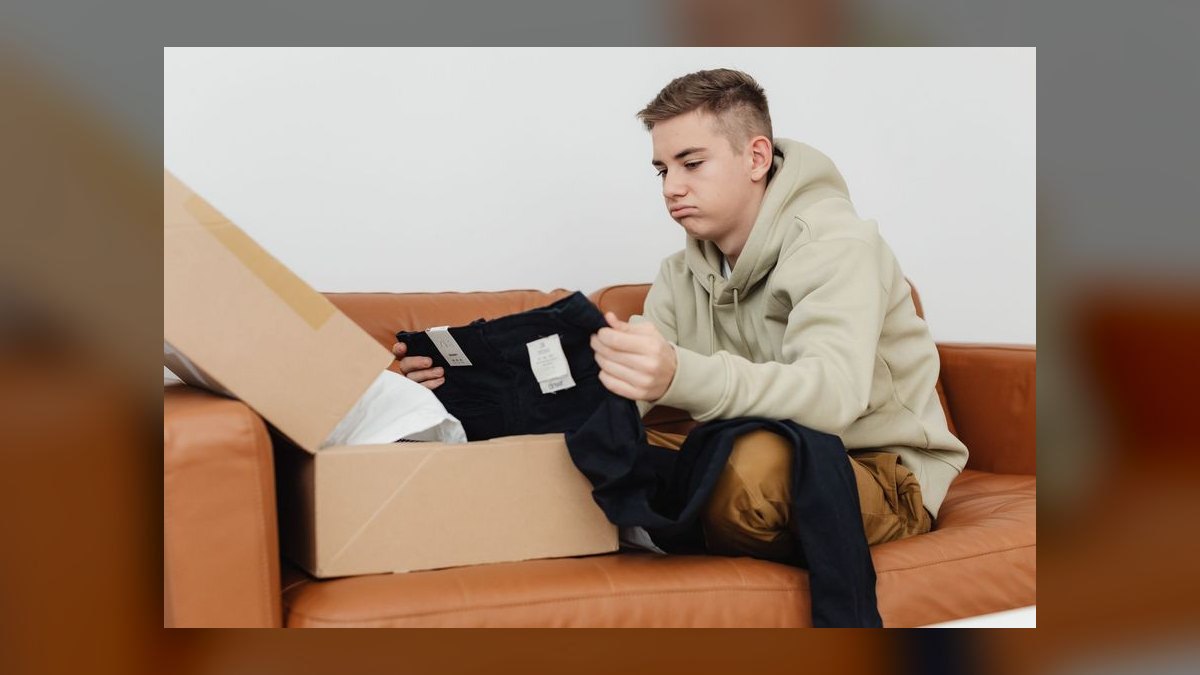
Also price the cost of trust. If you sell direct rather than through a marketplace, you take on the authentication burden yourself. Third-party authentication services exist and typically charge per-item fees in the range of tens of dollars depending on category and turnaround, and legitimate operators carry that cost rather than eyeballing it. Budget for it as a line item, not an afterthought. One counterfeit shipped to a customer who posts about it can end a young brand.
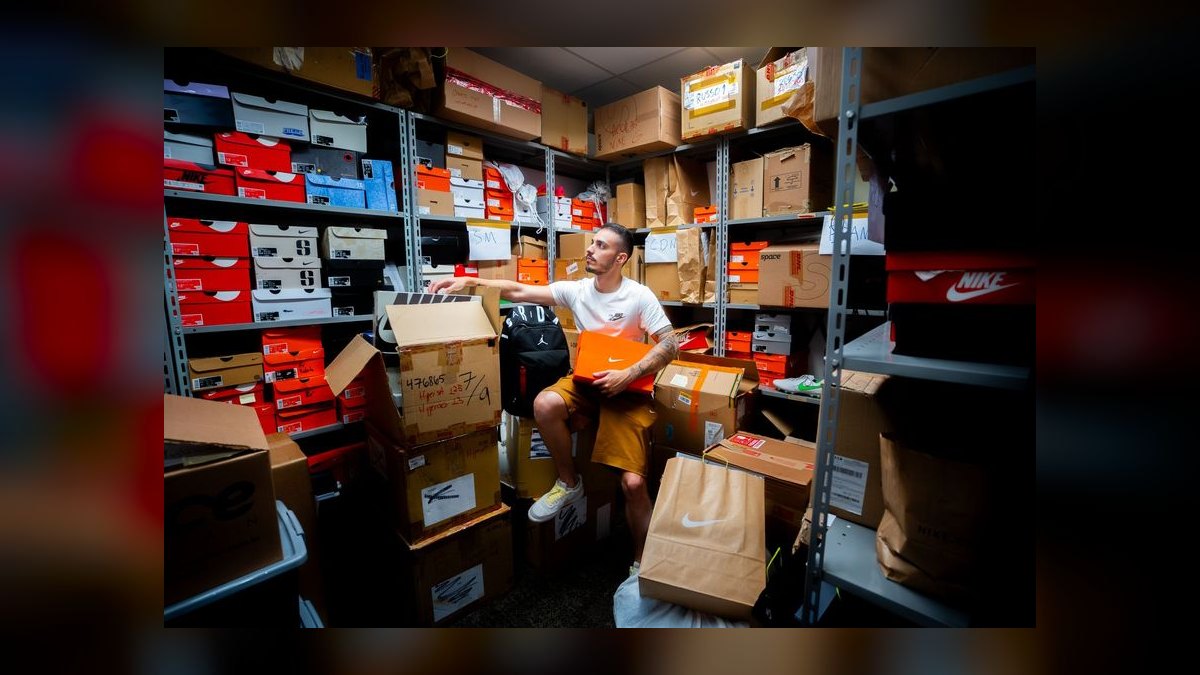
Working capital deserves its own line. Marketplace payouts are not instant; you ship, the item authenticates, then payment releases. That cycle plus inbound transit means your cash is tied up for a meaningful window on every unit, which caps your effective turns regardless of how fast you sell. Model a conservative cash conversion cycle and hold a reserve equal to at least one full turn of inventory so a slow authentication week does not stop your buying.
Risks, edge cases, and failure modes
The franchise-that-is-not-a-franchise scam is the first risk, and it is real enough that the regulatory framework exists specifically to catch it. In the United States, the FTC Franchise Rule requires a franchisor to give you a Franchise Disclosure Document at least fourteen calendar days before you sign anything or pay any money. If someone offers you a Stadium Goods or StockX-branded opportunity and cannot produce an FDD, the conversation is over. Read Item 19 (financial performance representations — note that franchisors are not required to make one, and silence there is itself information), Item 20 (outlet counts, including closures and transfers, which is where struggling systems reveal themselves), and Item 21 (audited financials of the franchisor). Several states require additional registration. Never wire a deposit to reserve a territory before an attorney has read the agreement.
Counterfeits are the second risk, and they have gotten dramatically better. "Superfakes" now defeat casual inspection routinely, which is precisely why platform authentication became the industry's center of gravity. If you buy inventory from a lot, a liquidator, or an overseas supplier, you are absorbing the fraud risk. Build it into your model: assume a nonzero failure rate on every non-verified purchase, and never source from a channel you cannot audit. A rejected item at a marketplace typically means return shipping, a seller penalty, and potential account restrictions — and account restriction is existential when the platform is your only exit channel.
Platform concentration is the third and most underrated risk. If StockX is your sole sales channel, you are a tenant. Fee changes, policy changes, payout timing changes, and account suspensions all land on you without warning and without appeal in any meaningful sense. Diversify deliberately: list across StockX, GOAT, eBay, and your own storefront from the beginning, even at lower volume on the secondary channels, so no single suspension zeroes your revenue.
Intellectual property is a live edge case. You are reselling branded goods. The first-sale doctrine generally permits reselling genuine goods you lawfully acquired, but it does not permit you to imply an affiliation, use brand logos in your marketing as if you were an authorized dealer, or sell anything altered or custom in ways that create trademark issues. Nike in particular has litigated aggressively over customs and over resale platform practices. Keep your marketing scrupulously clean: describe the product, never imply authorization.
The last failure mode is the boring one — inventory aging. Sneakers are a fashion product with a decay curve. A shoe that does not move in ninety days is usually not going to move at the price you want, and holding it is a bet against a market that has already voted. Build a hard markdown ladder into your operating rules: price cut at 60 days, deeper cut at 90, liquidate at 180. Operators who cannot execute that discipline end up with a storeroom full of capital they cannot recover, which is the single most common way these businesses die.
A practical rollout plan
Start narrow and prove the sourcing before you scale the capital. Phase one is a ninety-day test with a small, genuinely losable amount of inventory. Pick one category and one size range — do not spread across sneakers, watches, and streetwear at once. Buy, list on at least two platforms, ship, and record every cost: acquisition, inbound shipping, platform fee, payment processing, outbound shipping, supplies, and any authentication failure. At the end of ninety days you will have a real net-margin-per-unit number and a real days-to-sell number. Those two numbers decide everything downstream.

Phase two is channel diversification and operational tightening. Get your listings live everywhere simultaneously with a single source of truth for inventory so you never double-sell. Establish your markdown ladder and actually follow it. Track sell-through by acquisition source, not just in aggregate, so you learn which supplier lots are worth repeating. This is also the phase to decide whether you are building a marketplace-native operation or a direct storefront — they require different investments and you cannot do both well at $50,000 of capital.
Phase three is where the real decision from the original question gets answered. If your sourcing channel is genuinely differentiated — you have a liquidation relationship, a consignment network, or a geographic arbitrage nobody else is working — scale the independent business and never look back. If your sourcing is undifferentiated retail arbitrage, stop and either buy an existing storefront with real consignor relationships or exit the category. Buying an existing shop is the only path here that resembles the Stadium Goods model, and you evaluate it as a small-business acquisition with full due diligence: three years of tax returns, a bank-verified deposit trail, an aged inventory report, the consignor liability schedule, the lease and its assignment terms, and a seller non-compete.

Related questions
Does StockX offer franchises or licensed stores?
No. StockX operates as an online marketplace with its own authentication centers. It does not sell franchises, territories, or brand licenses to independent operators. Anyone offering a StockX franchise is not representing the company.
Is Stadium Goods a franchise I can buy into?
Stadium Goods is a consignment retailer that was acquired by Farfetch in 2018 and passed to Coupang through the 2024 Farfetch acquisition. It has historically operated company-owned, not as a franchise system. Demand an FDD from anyone claiming otherwise.
What does authentication actually cost a reseller?
On marketplaces it is bundled into the seller transaction fee rather than billed separately. Selling direct means paying a third-party authenticator per item, typically tens of dollars depending on category and turnaround speed.
How much capital do I need to start?
A few thousand dollars gets you testing. Meaningful income requires enough working capital that inventory turns produce real dollars — model working capital times turns times net margin honestly before committing.
Should I sell on my own site instead of a marketplace?
Eventually, yes, in parallel. Direct sales capture the full spread but require you to fund authentication and own the trust and returns burden. Run both; never depend on a single channel.
FAQ
Is buying sneakers at retail and reselling still profitable in 2027?
Rarely, as a standalone business. The general-release supply picture and platform fee structures have compressed spreads to the point where retail arbitrage is a hobby with a spreadsheet. Businesses that work source below retail — closeouts, liquidation lots, deadstock buyouts, consignment from collectors, or geographic arbitrage. If your only sourcing edge is a fast checkout, you do not have a business.
What legal document proves something is a real franchise?
The Franchise Disclosure Document. Under the FTC Franchise Rule, a franchisor must provide it at least fourteen calendar days before you sign an agreement or pay money. Read Item 19 for financial performance representations, Item 20 for outlet openings, closures and transfers, and Item 21 for audited financials. Some states impose additional registration requirements. No FDD, no deal.
Am I legally allowed to resell branded sneakers?
Generally yes for genuine goods you lawfully acquired, under the first-sale doctrine. What you cannot do is imply that you are an authorized dealer, use brand marks in ways that suggest affiliation, or sell altered or custom product in ways that raise trademark issues. Keep marketing factual and product-descriptive, and never claim a relationship you do not have.
What is the biggest hidden cost people miss?
Cash conversion time. Marketplace payouts release after the item ships in, authenticates, and clears. That window plus inbound transit ties up capital on every single unit and hard-caps your annual turns regardless of demand. Hold a cash reserve equal to at least one full inventory turn so a slow authentication week does not stop your buying cycle.
How do I value an existing consignment sneaker shop?
Price the operating business separately from inventory. Small specialty retail commonly trades around two to four times seller's discretionary earnings. Value inventory on an aging schedule — mark down anything past 180 days sharply and treat year-old stock as near worthless. Then verify the consignor liability schedule, because a consignment shop holds goods it does not own.
Should I rely on StockX as my only sales channel?
No. Single-channel dependence makes you a tenant on someone else's platform, exposed to fee changes, policy shifts, payout timing, and account suspension with no real recourse. List across multiple authenticated marketplaces and stand up your own storefront early, even at low volume, so no single account action can zero your revenue.
Sources
- https://www.ftc.gov/business-guidance/resources/franchise-rule-compliance-guide
- https://www.ftc.gov/business-guidance/industry/franchises
- https://stockx.com/help/en_US/HowSellingWorks
- https://www.sba.gov/business-guide/manage-your-business/buy-existing-business-or-franchise
- https://www.reuters.com/markets/deals/coupang-acquire-farfetch-2023-12-18/
- https://www.uspto.gov/trademarks
- https://www.sec.gov/edgar/searchedgar/companysearch
- https://www.cbp.gov/trade/priority-issues/ipr
Related on PULSE
- How do I evaluate an FDD before buying any franchise?
- What working capital do I need for an inventory-based ecommerce business?
- How do I value a small specialty retail business for acquisition?
- Marketplace vs. direct-to-consumer: which channel mix should I run?
- How do I build a sourcing advantage in a commoditized resale category?
 franchiseShould I open a storage franchise or a mobile storage business in 2027?
 franchiseShould I open a consignment sneaker shop or buy a Stadium Goods franchise in 2027?
 franchiseShould I open or buy a U-Haul franchise in 2027?
 franchiseShould I open or buy a Sneakerhead.com franchise in 2027?
 franchiseShould I open or buy a sneaker resale business in 2027?
 franchiseShould I open or buy a CubeSmart franchise in 2027?
 franchiseShould I open or buy a Sola Salon Studios franchise in 2027?
 franchiseShould I open or buy a WOW 1 DAY PAINTING franchise in 2027?
 franchiseShould I open or buy an Extra Space Storage franchise in 2027?
 franchiseShould I open or buy a Stadium Goods franchise in 2027?