


What is the best cooperative board game for beginners in 2027?
Quality
Certified

For beginners, the best cooperative board game is Forbidden Island, a 30-minute mission for 2-4 players who collect four treasures while their island sinks tile by tile, teaching teamwork, resource sharing, and risk assessment through an intuitive rule set that any new player can grasp in under five minutes.
What it is and why it matters
Forbidden Island is a fully cooperative board game designed for 2-4 players aged 8 and up, published by Gamewright in 2010. The game places each player in a specific role—Diver, Engineer, Pilot, Navigator, Explorer, or Messenger—each with a unique ability that changes how they interact with the sinking island. The shared objective is to collect four ancient treasures (the Earth Stone, Statue of the Wind, Crystal of Fire, and Ocean's Chalice) by gathering matching sets of treasure cards, then all players must reach the Fool's Landing helipad and escape via helicopter before the island completely submerges.
The game matters because it solves the fundamental tension that plagues many cooperative games: how to make teamwork feel necessary rather than optional. In Forbidden Island, no single player can win alone. The island's random tile layout means that treasure locations are scattered, and the flooding mechanism ensures that tiles sink in unpredictable order. This forces genuine collaboration—players must discuss who goes where, who holds which treasure cards, and when to sacrifice progress to shore up critical tiles. The game's 30-minute playtime is short enough to allow multiple rounds in a single session, which is crucial for beginners who need to learn through repetition without fatigue.

The cooperative genre has grown explosively over the past decade, with revenue in the board game industry shifting significantly toward team-based play. Forbidden Island sits at the entry point of this trend, offering a low-stakes environment where new players can experience the satisfaction of shared victory without the frustration of complex rules or long setup times. Its success has spawned a family of games—Forbidden Desert and Forbidden Sky—that gradually increase complexity, creating a natural progression path for groups that want to deepen their cooperative skills.
The game's design philosophy centers on making every decision consequential but never punishing. When a tile sinks, it's not a player elimination event; it's a shared setback that the team must adapt to. This teaches beginners that failure in cooperative games is a learning opportunity, not a personal defeat. The variable island layout, created by shuffling and arranging 24 double-sided tiles differently each game, ensures that no two sessions play identically, giving the game substantial replayability despite its simple rules.
The step-by-step process
Every turn in Forbidden Island follows a three-phase structure that is easy to teach and remember. The game's flow creates a natural rhythm of action, resource gathering, and escalating tension that keeps players engaged without overwhelming them.

Phase 1: Take up to 3 actions. Players can perform any combination of three actions from a menu of five options. Moving to an adjacent tile costs one action. Shoring up a flooded tile (flipping it from its flooded side back to its dry side) costs one action. Giving a treasure card to another player on the same tile costs one action. Capturing a treasure requires the player to be on the corresponding treasure tile and spend one action to play four matching treasure cards. The fifth action, "special ability," varies by role—the Engineer can shore up two tiles with one action, the Pilot can fly to any tile once per turn for one action, and the Diver can move through flooded or missing tiles.
Phase 2: Draw 2 treasure cards. The treasure deck contains cards for the four treasures, plus Waters Rise cards and special action cards like Helicopter Lift and Sandbags. Players add these to their hand, which is limited to five cards. If they exceed the hand limit, they must discard or play cards immediately. Waters Rise cards increase the water level marker, which determines how many flood cards are drawn each turn and how many tiles sink when a flood card is drawn.
Phase 3: Draw flood cards equal to the current water level. The water level starts at 2 on novice difficulty, meaning players draw two flood cards per turn. Each flood card corresponds to a specific island tile. If the tile is dry, it becomes flooded (flipped to its flooded side). If it's already flooded, it sinks completely and is removed from the game. If the Fool's Landing tile sinks, the game ends in immediate defeat.

The game's win condition requires all four treasures to be captured and all players to be on the Fool's Landing tile. Any player can then play a Helicopter Lift card to fly everyone to safety. This means the final turn is often a coordinated scramble where players must decide whether to go for the last treasure or cut losses and escape. The tension of this final decision is what makes the game memorable for beginners—it's a concrete moment where teamwork either pays off or collapses.
The lose conditions are equally clear. The game ends immediately if Fool's Landing sinks, if any player is on a tile that sinks and cannot be rescued, or if the water level reaches the skull and crossbones marker (which means the island is completely submerged). These clear failure states teach beginners that cooperative games have stakes, but the stakes are shared, not personal.
Costs, timelines, and typical ranges
Forbidden Island is one of the most affordable entry points into modern board gaming. The retail price typically ranges from $15 to $25, with the standard edition costing around $18 at major retailers like Target, Amazon, and local game stores. This price point is deliberately accessible—it's roughly the cost of a movie ticket for two people, making it an easy impulse purchase for families or friend groups curious about cooperative gaming.

The game's components are durable but not luxurious. The 58 cards are standard cardstock, the 24 island tiles are thick cardboard, and the six plastic pawns are simple but functional. The game comes in a compact box that fits easily on a shelf or in a bag for travel. For groups that want a more premium experience, the Forbidden Island: Target Edition includes foil-stamped cards and a larger board, priced around $25. There is also a digital version available on Steam and mobile platforms for $5 to $10, which is useful for solo practice or for groups that want to try before buying the physical game.
Setup time is consistently under 5 minutes. Players arrange the 24 island tiles in a random layout (the rulebook suggests a few preset layouts for first games), place the four treasure tokens on their corresponding tiles, shuffle the treasure and flood decks, and deal two treasure cards to each player. The water level marker starts at 2 for novice difficulty, 3 for normal, 4 for expert, and 5 for legendary. This scalability means the same game can serve a family with young children one night and a group of experienced gamers the next.
Playtime ranges from 20 to 45 minutes depending on difficulty and player count. At novice difficulty with 2 players, games often finish in 20-25 minutes because fewer tiles need to be managed and communication is faster. At expert difficulty with 4 players, games can stretch to 40-45 minutes as players deliberate more and the water level forces more frequent flooding. The sweet spot for beginners is 30 minutes at normal difficulty with 3 players—enough time to feel invested but short enough to allow a second game immediately after.
The learning curve is remarkably shallow. Most groups can play their first game with no rulebook consultation after a 5-minute explanation. The game's iconography is intuitive: treasure tiles have matching symbols on their cards, flooded tiles are clearly marked with water graphics, and role cards have simple text explaining abilities. This low barrier to entry means that the time investment to learn the game is essentially zero—players learn by doing.
Where teams get it wrong

The most common mistake beginners make in Forbidden Island is hoarding treasure cards instead of giving them away. Each player can only hold five cards, and capturing a treasure requires four matching cards played on the correct tile. New players naturally want to collect sets themselves, but this leads to inefficiency. The correct approach is to give treasure cards to the player who is closest to the matching treasure tile, even if that means giving away cards that would complete your own set. This feels counterintuitive because it seems like you're helping someone else win, but in a cooperative game, there is no "someone else"—there is only the team.
A related error is failing to manage the hand limit. When a player's hand exceeds five cards, they must discard or play cards immediately. Beginners often fill their hands with treasure cards and then are forced to discard valuable cards when they draw Waters Rise cards or special action cards. The solution is to give cards away aggressively early in the game, keeping the hand size low so that special cards like Helicopter Lift and Sandbags can be held for emergencies.

Another frequent failure is neglecting to shore up tiles proactively. Beginners tend to focus exclusively on collecting treasures, treating the flooding as a background timer rather than an active threat. This leads to situations where multiple tiles are one step from sinking, and a single flood card draw can cause a cascade of losses. The rule of thumb is that any tile that is flooded should be shored up on the next available turn, and any tile adjacent to Fool's Landing should never be allowed to flood at all. The Engineer role is particularly valuable here because they can shore up two tiles with one action, effectively doubling the team's maintenance capacity.
Poor role utilization is another common pitfall. Each role has a specific ability that changes how the game is played, but beginners often ignore these abilities or use them inefficiently. The Navigator, for example, can move other players up to two tiles per action, which is incredibly powerful for repositioning the team quickly. The Diver can move through flooded and missing tiles, making them ideal for reaching isolated treasure locations. The Pilot can fly to any tile once per turn, bypassing the need for a connected path. Teams that don't discuss and coordinate their role abilities are essentially playing with a handicap.
Communication breakdown is perhaps the most subtle but damaging mistake. In a cooperative game, players must share their plans, their card holdings, and their assessment of the board state. Beginners often play silently, assuming that everyone sees the same situation and will make the same decisions. In reality, each player has different information (their hand of cards, their role ability, their position on the board), and without explicit communication, the team will make suboptimal choices. The best teams establish a habit of announcing intentions at the start of each turn: "I'm going to move to the Earth Stone tile, shore up the tile next to me, and then give my two Earth Stone cards to you so you can capture it next turn."
Decision framework: when to choose what
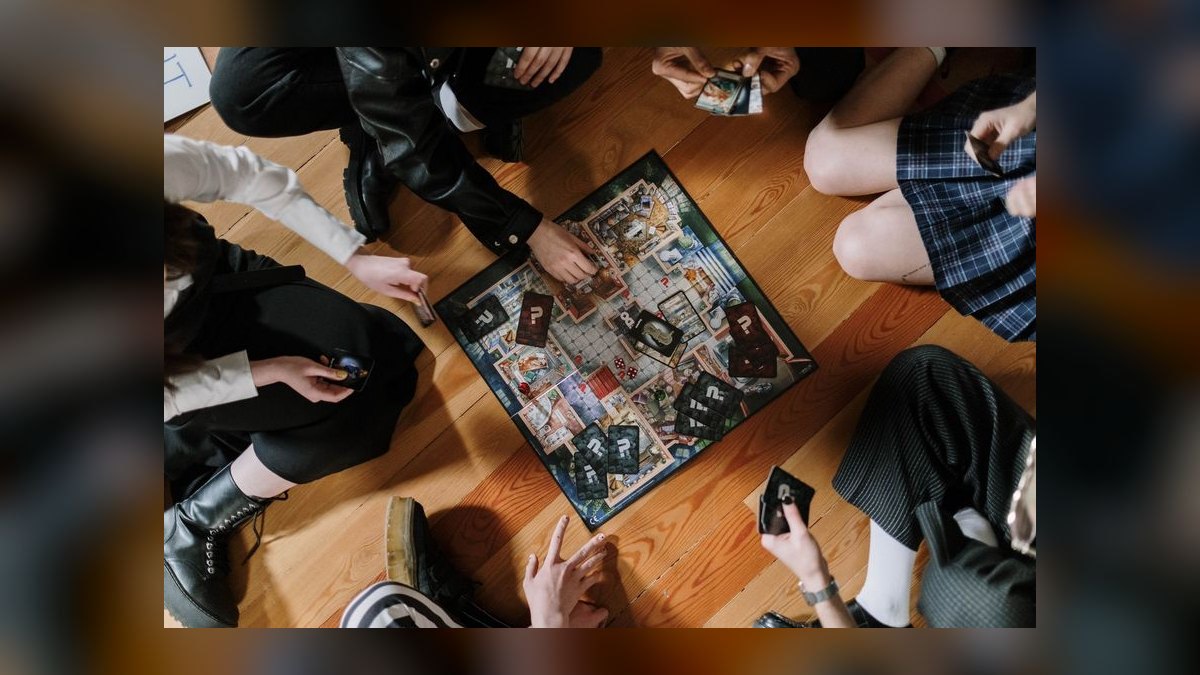
Choosing the right cooperative board game for beginners depends on group size, time available, thematic preferences, and the group's tolerance for complexity. The following framework helps match groups to the ideal game based on their specific circumstances.
For groups of 2-4 players with 30 minutes available and no prior board game experience, Forbidden Island is the default recommendation. Its simplicity, speed, and low cost make it the safest choice. The game teaches the fundamental cooperative skills—resource sharing, turn efficiency, and collective decision-making—that transfer to any other cooperative game the group might try later.
For groups of 3-5 players who enjoy card games and have 20-30 minutes per session, The Crew: The Quest for Planet Nine is an excellent alternative. This game uses the familiar trick-taking mechanic but adds a cooperative twist where players must complete specific missions by winning certain tricks. The communication restrictions (players can only share one piece of information per round) create a unique challenge that feels more like a puzzle than a traditional board game. It's ideal for groups that enjoy deduction and subtle communication.
For groups of 1-5 players who prefer a richer theme and have 45-60 minutes, Horrified offers a monster-hunting experience that is only slightly more complex than Forbidden Island. Players work together to defeat classic Universal Monsters, each with a unique defeat condition. The game scales difficulty by letting players choose how many monsters to face, making it adaptable for both beginners and experienced players. It's particularly good for groups that enjoy the aesthetic of classic horror without the actual scariness.

For groups of 4-7 players who want a more relaxed, conversational experience and have 45-60 minutes, Mysterium provides a cooperative deduction game where one player acts as a ghost communicating through abstract images. The game has no strict optimization or time pressure, making it ideal for groups that prioritize social interaction over strategic depth. It's also one of the few cooperative games that works well with larger groups, as the psychic players can discuss and debate interpretations openly.
For groups that want to progress beyond Forbidden Island, the natural next step is Forbidden Desert, which adds a modular board, sandstorm mechanics, and more complex resource management. After that, Pandemic introduces global-scale strategy with multiple roles and a more intricate action economy. The key is to increase complexity gradually—jumping from Forbidden Island directly to something like Eldritch Horror or Gloomhaven will overwhelm most beginners and may turn them off cooperative gaming entirely.
The decision framework also accounts for the "one experienced player" scenario, where a group of beginners is taught by someone who already knows the game. In this case, the experienced player should take a support role (Navigator or Messenger) rather than a star role (Pilot or Diver), allowing the beginners to make the key decisions while the experienced player facilitates. This prevents the common problem where the experienced player effectively solos the game while everyone else watches.
Related questions
What is the best cooperative board game for two players?
For two players, Forbidden Island works well but is easier because fewer tiles are in play. The Crew: The Quest for Planet Nine is excellent for two, as its trick-taking mechanic scales perfectly. Sprawlopolis is a tiny, quick tile-laying game ideal for couples.
How long does it take to learn Forbidden Island?
Most groups learn Forbidden Island in under 5 minutes. The rulebook is four pages with clear illustrations, and the iconography on cards and tiles is intuitive. First-time players can start playing immediately with minimal explanation.
Can Forbidden Island be played solo?
Yes, Forbidden Island supports solo play by controlling two characters. The cooperative mechanics translate well to solo play, and the digital version on Steam and mobile offers a dedicated solo mode with adjustable difficulty.
What age is Forbidden Island appropriate for?
The publisher recommends ages 8 and up. Children as young as 6 can play with adult guidance, as the game has minimal text and relies on visual icons. The cooperative nature makes it excellent for teaching teamwork and turn-taking.
Is Forbidden Island replayable?
Yes, the variable island layout created by shuffling 24 double-sided tiles ensures no two games are identical. The six different roles and scalable difficulty (novice to legendary) provide substantial replay value for a game in this price range.
FAQ
Is Forbidden Island good for two players? Yes, it works well with two players, though the game is easier with fewer players because there are fewer tiles to manage. The Diver role becomes especially useful for reaching isolated tiles.
How long does a typical game last? A typical game lasts 30 minutes, but on novice difficulty it can be as short as 20 minutes. Expert games may extend to 45 minutes as players deliberate more.
Can children play this game? Yes, children aged 8 and up can play with adult guidance. The simple rules and visual tiles make it accessible, and teamwork teaches valuable social skills.
What if we lose the game? Losing is part of the fun—it teaches strategic thinking and resilience. The game is designed to be challenging, and replaying to improve is encouraged. Most groups lose their first game.
Do we need to read a lot of text? No, the game uses icons and minimal text on cards. Most information is conveyed through color-coded tiles and simple symbols, making it language-independent.
Is there a solo mode? Yes, you can play solo by controlling two characters. The game's cooperative mechanics translate well to a single player managing multiple roles.
Sources
- https://boardgamegeek.com/boardgame/65244/forbidden-island
- https://www.target.com/p/forbidden-island-board-game/-/A-13187627
- https://www.amazon.com/Gamewright-251-Forbidden-Island/dp/B003D7F4YY
- https://www.dicetower.com/game/65244/forbidden-island
- https://www.shutupandsitdown.com/reviews/forbidden-island/
- https://www.thesprucecrafts.com/best-cooperative-board-games-for-families-4846547
- https://www.steampowered.com/app/1570010/Forbidden_Island/
- https://www.gamestop.com/board-games/products/forbidden-island-board-game/10145638.html
Related on PULSE
- What is the best board game for a family with teenagers?
- What is the most underrated board game from the last five years?
- What is the most fun board game for a group of four adults?
- What is the most replayable deck-building game?
- What is the best game for a game night with a competitive couple?
- What is the most immersive role-playing game for a one-shot session?
This page will be disappearing soon. Save it to your device for $1 — or read it free while it is here.
@Kory-White- · if Venmo asks, the last 4 of my number are 2012
This page is gone.
This one is off the shelf now. $1 keeps it on your phone for good — the whole page, pictures and diagrams included.
 gaWhat is the best game for a game night with a competitive couple in 2027?
 gaWhat are the essential steps to hosting a shared grief gathering that fosters healing without requiring attendees to speak in 2027?
 gaWhat is the best board game for a family with teenagers in 2027?
 gaWhat is the most immersive role-playing game for a one-shot session in 2027?
 gaBest Luxury Treehouse Rentals for Group Getaways in 2027
 gaWhat are the essential elements of a gathering designed to foster genuine vulnerability among strangers without crossing into emotional overwhelm in 2027?
 gaWhat is the most strategic two-player game that is easy to learn in 2027?
 gaWhat is the most underrated board game from the last five years in 2027?
 gaWhat is the best card game for a long road trip in 2027?
 gaWhat are the most common mistakes in Gatherings in 2027?