


What is the best game for a game night with a competitive couple in 2027?
Quality
Certified

The best game for a competitive couple on game night is 7 Wonders Duel — a 30-minute, two-player civilization duel with near-zero luck and three separate win conditions, so every loss is legibly earned. For mixed groups, Ticket to Ride or Splendor keep the rivalry contained inside a shared race everyone else can still win.
What it is and why it matters
"Best game for a competitive couple" is really a matching problem, not a shopping list. You are pairing two people whose default mode is direct comparison against a rules system, and the rules system either absorbs that energy or amplifies it into the room. Get the match right and the couple becomes the engine of the evening — the table leans in, the trash talk lands, and everyone leaves wanting a rematch. Get it wrong and one partner spends forty minutes eliminated, watching, quietly recalculating who wronged whom.
The mechanical variables that decide this are surprisingly few. First, luck ratio: how much of the outcome is determined by draw, roll, or reveal versus by decisions. Competitive players tolerate losing to a better line; they do not tolerate losing to a die. Second, elimination: whether a player can be removed before the game ends. Third, interaction vector: whether players hurt each other directly (attacks, blocking, take-that cards) or indirectly (racing for the same scarce resource). Fourth, length: a 30-minute game that ends badly costs you thirty minutes; a three-hour game that ends badly costs you the night. Fifth, information symmetry: whether both players can see the same board state, which is what makes a loss feel legible rather than arbitrary.
Games built on skill-heavy, no-elimination, medium-interaction, short-length foundations are the ones that reliably work. 7 Wonders Duel is the archetype: two players, an open card structure where the cards you can take are visible to both, a drafting mechanism where taking a card also denies it to your opponent, and three ways to win — military advance, scientific symbol collection, or civilian victory points at the end. The denial is the whole point. Every pick is simultaneously a build for you and a block against them, which is precisely the texture competitive couples enjoy, and it resolves in under half an hour so a bad result never metastasizes.

Why does the framing matter beyond the couple? Because the same variables govern any structured competition among people who have to keep working together afterward. Sales leaders who run team contests hit identical failure modes: a leaderboard with an elimination mechanic (bottom rep gets benched) breeds resentment; a contest decided mostly by territory luck rather than effort breeds cynicism; a quarter-long competition compounds a bad start into a lost quarter. The couple at your dining table is a two-person sales floor. The design lessons transfer in both directions, which is why "what game should we play" is a more serious question than it looks — you are choosing an incentive structure, and incentive structures shape behavior whether the stakes are victory points or revenue.
One more framing note: "competitive" is not one thing. Some couples are competitive *with each other* — the rivalry is the relationship's love language, and any game that keeps them apart feels like a wasted evening. Others are competitive *in general* and happen to be a couple, meaning they will both cheerfully gang up on you. A third type is competitive *asymmetrically*: one partner plays to win, the other plays to socialize, and the mismatch is the actual problem you are solving. Diagnose which type you have before you open a box, because the correct answer changes completely across the three.
The step-by-step process
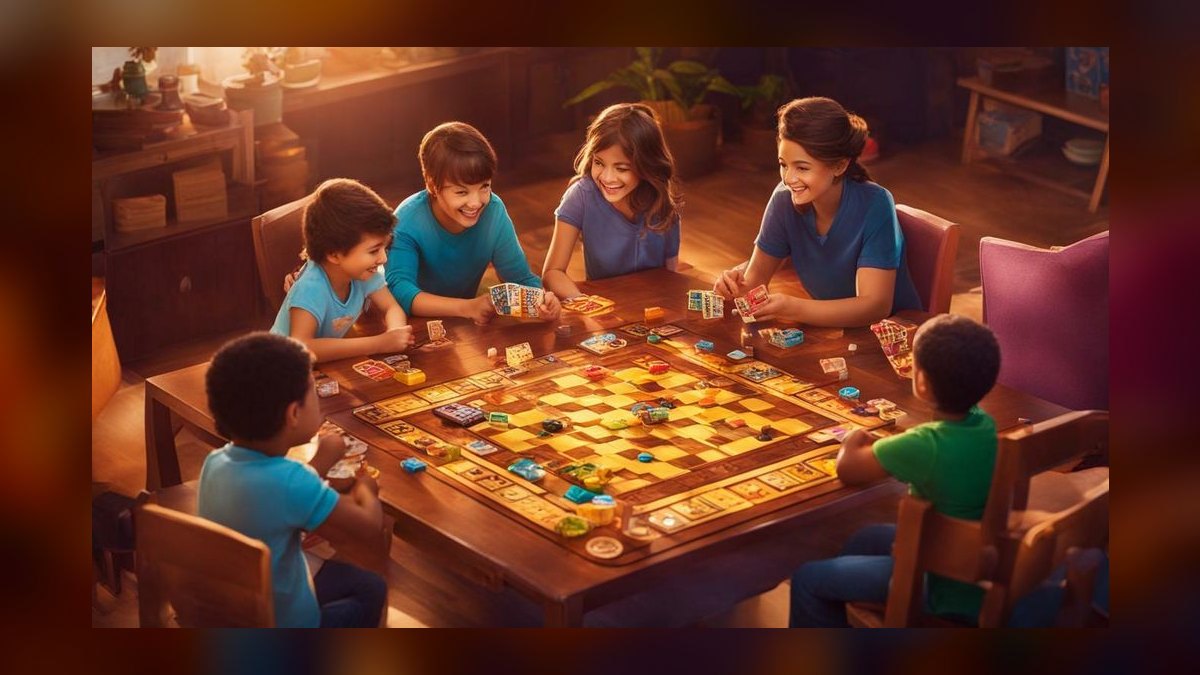
Selecting a game is a repeatable sequence, and running it takes about ten minutes of thought before anyone arrives.
Step one: count the seats. Two players means the two-player-only design space opens up, and it is the strongest shelf in modern board gaming — 7 Wonders Duel, Jaipur, Patchwork, Star Realms, Codenames Duet, Hive. Three to five players means the couple is competing inside a group, and you need a game where their head-to-head grudge cannot lock the rest of the table out. Six or more, and you are in party or hidden-role territory where the couple's intensity gets diluted by sheer headcount.
Step two: score luck tolerance. Ask, honestly, whether these two can lose to a card flip without narrating it for ten minutes. If the answer is no, cut anything with dice-driven combat or heavy draw variance. Splendor is the reference case for low-luck: gem tokens and development cards sit face-up on a shared board, both players see the same options, and the only randomness is which card replaces one that was bought. Wins in Splendor feel earned because they are.
Step three: pick the interaction vector. Direct-conflict games — area control, war games, take-that card games — are electric for couples who enjoy overt confrontation and corrosive for everyone else. Indirect-competition games such as Azul or Kingdomino let the couple block and needle each other through tile selection without any card that says "destroy your opponent's stuff." For most mixed groups, indirect is the safer default.

Step four: set the clock. Target 30 to 60 minutes per game for the main slots. Short games let you rotate, and rotation is your primary tension-management tool: if a match goes sideways, the next box is fifteen minutes away. Keep a 10-to-15-minute filler like Sushi Go! or Love Letter on the table specifically as a cooldown.
Step five: teach before you deal. Rules disputes are the most common ignition source for couple conflict at a table. Explain win conditions first, then the turn structure, then the edge cases, and state out loud who owns rules arbitration for the night. Having a designated referee — even if that referee just reads the rulebook aloud — removes the "you're making that up" argument entirely.
Step six: run it and watch the tells. Long pauses, clipped answers, one partner explaining the other's move to them — these are the early indicators. Break at the end of a round, not mid-turn, and pivot to the cooldown game.
Costs, timelines, and typical ranges
A game night library is a small capital investment with an unusually long amortization, and knowing the ranges keeps you from overbuying.
Price bands. Small-box card games — Love Letter, Sushi Go!, Jaipur, Star Realms — sit at the bottom of the retail range and are the cheapest way to add variety. Mid-weight boxes like Splendor, Azul, Kingdomino, 7 Wonders Duel, and Codenames occupy the middle band and are where most of your value lives. Full-size strategy boxes such as Ticket to Ride or Agricola sit at the top of the mainstream range, and expansions add a fraction of a base box each. Prices vary by region and retailer, so check a current listing rather than trusting a number from a blog post; the useful heuristic is that a mid-weight box costs roughly what dinner for two costs, and it will outlast several hundred dinners.
Play length. Filler games run 10 to 20 minutes. Two-player duels like 7 Wonders Duel and Patchwork land around 30 minutes once both players know the rules. Splendor and Azul run 30 to 45. Ticket to Ride and Codenames run 45 to 60. Heavier euros — Agricola, Root at full player count — stretch past 90 minutes and often past two hours with a teach. For a competitive couple, the sweet spot is the 30-to-60 band: long enough for strategy to matter, short enough that a blowout is survivable.
Teach time. Budget separately for this, because it is where evenings die. A filler teaches in two to three minutes. Splendor, Kingdomino, and Jaipur teach in five. 7 Wonders Duel and Azul take ten to fifteen for a first-timer. Anything with asymmetric factions — Root being the canonical example — needs thirty-plus minutes of teaching for a group that has never seen it, and teaching an asymmetric game to a competitive couple mid-argument is a genuinely bad night.
Evening structure. A three-hour block realistically holds one 15-minute warm-up filler, two 45-to-60-minute main games with a teach on one of them, a 10-minute break with food, and a closing filler. That is four to five plays. Plan for four; if the group is fast, you have a spare.
Library sizing. Eight to twelve well-chosen boxes covers essentially every configuration a home game night will encounter: two two-player duels, three mid-weight group games, two party games for six-plus, and three fillers. Beyond about fifteen boxes, marginal utility drops sharply — you start playing your favorites repeatedly and the tail gathers dust. If you want to test before buying, a local game café or library lending collection lets you try a box for the price of a coffee, which is the highest-return move in the whole category.
Replacement and durability. Card-driven games wear at the card edges; sleeves cost a few dollars per hundred and roughly triple the usable life of a deck that sees weekly play. Tile-based games like Azul and Kingdomino are effectively indestructible. If a couple plays the same duel game weekly, expect visible deck wear within a year unsleeved.
Where teams get it wrong
The errors are consistent, and nearly all of them are selection errors made before anyone sat down.
Reaching for Monopoly. It is the default because everyone owns it, and it is close to the worst possible choice for this group: outcomes hinge on dice, the leader compounds an early advantage into an unassailable one, elimination removes players for the last hour, and the trading rules are ambiguous enough to generate genuine arguments. Every failure mode in one box.
Choosing a long game to "make the night worth it." A two-hour game with a competitive couple is a two-hour exposure window. Three 40-minute games give you two natural reset points; one 120-minute game gives you zero. Length is not value — variety is.
Picking a heavy game the couple already knows and nobody else does. Asymmetric knowledge is a fairness problem masquerading as a preference. If the couple has fifty plays of a game and the rest of the table has zero, the couple wins and nobody learns anything about who is actually better. Bring out the shared-unfamiliarity option instead; a first play for everyone is the most level field available.

Assuming cooperative games neutralize competitiveness. They frequently do the opposite. Pandemic and Forbidden Island are notorious for the "alpha player" problem, where the strongest player quarterbacks everyone else's turns. Put a dominant competitive partner in a co-op and you may get a worse dynamic than a duel — one person playing five hands while everyone else moves pieces. If you go cooperative, choose designs that structurally forbid quarterbacking: The Crew and The Mind restrict communication by rule, which is exactly what makes them work here.
Ignoring the asymmetric-intensity case. When one partner cares about winning and the other cares about the evening, most hosts pick a game for the intense one and quietly burn the other. The better move is a team format that puts them on the same side, or a game with enough social texture — Codenames, Wavelength, Just One — that the socially-motivated partner has a real role.
Letting the rules be litigated live. Every ambiguous rule is an argument seed. Look up the edge case, apply a ruling, write it on a sticky note, move on. Deciding the rule *and* deciding who was right are two separate conversations, and only the first one belongs at the table.
Seating them side by side. A small thing with an outsized effect. Side-by-side seating enables whispered coaching and lets each partner read the other's hand-hovering. Seat them across from each other with other players between, and the couple's attention diffuses into the group.
Skipping the cooldown. After a close, contentious finish, going straight into another heavy game compounds the mood. A ten-minute filler resets the room. This is the same principle as ending a hard sprint with a retro rather than immediately starting the next one.
No stated end time. Open-ended nights end when someone gets frustrated. A declared stop — "last game starts by ten" — gives everyone a shared frame and prevents the "one more, I want a rematch" spiral that turns a fun rivalry into a grinding one.
Decision framework: when to choose what

Reduce the whole problem to four questions asked in order, and the answer falls out.
Question one: is it just the two of them, or a group? Two players, and you should be in the dedicated two-player design space — 7 Wonders Duel for strategic depth, Patchwork for quiet spatial puzzling, Jaipur for a fast trading duel, Hive for pure abstract skill with zero luck at all. Group, and you move to question two.
Question two: do they compete with each other or with everyone? If the rivalry is specifically between them, put them on the same team. Codenames with the couple as co-spymasters, or The Crew where communication is rule-limited, converts the rivalry into a joint performance the table watches. If they simply compete with everyone, a normal multiplayer game is fine and their intensity just raises the general temperature.
Question three: how much luck can they absorb? Low tolerance points at Splendor, Azul, Kingdomino, 7 Wonders Duel — shared open information, minimal randomness. Higher tolerance opens up Ticket to Ride, Sushi Go!, and the lighter card games where a good draw can swing a round.
Question four: how much time do you actually have? Under 30 minutes, play a filler. Thirty to sixty, play the mid-weight core of your library. Over sixty, and only if the group is genuinely engaged, bring out the heavier box — and teach it before the couple has had a contentious game, never after.

The framework generalizes past the dining table. Sales managers designing a quarterly contest face the same four questions: is this individual or team-based, is the rivalry internal or external, how much of the outcome is territory luck versus rep effort, and how long is the measurement window. Contests that produce durable revenue lift tend to look like good board games — short cycles, transparent scoring, no elimination, multiple paths to a win so a rep who is behind on new logos can still take the expansion-revenue crown. Contests that produce turnover look like Monopoly: one winner, luck-heavy inputs, and a long stretch where trailing participants have nothing to play for. A competitive couple is just the smallest possible version of that system, and if you can design a good night for two people who genuinely want to beat each other, you can design a fair incentive plan for twelve.
Related questions
What if only one person in the couple is competitive?
Choose games with a social or creative axis alongside the scoring one — Codenames, Wavelength, Just One. The competitive partner optimizes, the other partner enjoys the wordplay, and both have a real job. Avoid pure-optimization abstracts, which give the non-competitive partner nothing to enjoy but losing.
Should a competitive couple play on the same team or against each other?
Against each other when the rivalry is affectionate and they recover fast from losses. On the same team when losses linger or when the group is new. Team play converts their intensity into a joint performance, which the rest of the table generally finds entertaining rather than threatening.
Are cooperative games a safe default?

Not automatically. Co-ops invite the alpha-player problem, where a dominant player runs everyone's turns. Pick co-ops with rule-enforced communication limits — The Crew, The Mind — which structurally prevent quarterbacking, rather than open-table co-ops like Pandemic.
How do you stop rules arguments before they start?
Name a rules arbiter before the first turn, teach win conditions before turn structure, and rule on ambiguities immediately without debating who was right. Write the ruling down for the rest of the night. Most table arguments are about authority, not rules.
What is the single best two-player game to buy first?
7 Wonders Duel. Roughly 30 minutes, three distinct win conditions, near-zero luck, and every card pick simultaneously builds your position and denies theirs. Jaipur is a cheaper, lighter alternative if the couple prefers fast trading over civilization building.
FAQ
What is the best game for a competitive couple new to modern board games? Splendor or Ticket to Ride. Both teach in five to ten minutes, both reward planning over luck, and both are widely available. Splendor is the better pick if the couple wants a tight optimization race; Ticket to Ride is better if you want a map, a visible objective, and route-blocking tension that the whole table can follow.
How do I stop a competitive couple from taking over game night? Set the tone before the first turn, seat them across from each other with other players between, keep games in the 30-to-60-minute band so nothing drags, and hold a short filler in reserve as a cooldown after a heated finish. Announce an end time so nobody spirals into demanding rematches.

Can competitive couples enjoy party games like Cards Against Humanity? Sometimes, but expect friction. Games where the winner is decided by a judge's taste rather than by play give a competitive player nothing to optimize, and losing to someone else's sense of humor is more irritating than losing to a better strategy. Wavelength or Just One scratch the party itch while still rewarding skill.
What is a good game for just the couple, no group? 7 Wonders Duel for depth, Patchwork for a quiet spatial duel, Jaipur for a fast trading game, Hive for pure abstract skill with no luck whatsoever, and Codenames Duet if they want to cooperate. All run 20 to 30 minutes, which makes a best-of-three feasible in an evening.
Are there games where the couple plays as a team? Yes. Codenames as co-spymasters, The Crew and The Mind for rule-limited cooperative play, and any team-based party game where they give clues together. These convert their rivalry into a shared performance and are the right call when their head-to-head play has recently gone badly.
How do I handle a couple that wins every single game? Rotate to games nobody at the table has played, so shared unfamiliarity levels the field. Split them onto opposing teams. Or use asymmetric-faction designs like Root where each player has genuinely different powers and prior experience transfers less cleanly. Handicapping resources works mechanically but tends to feel condescending — change the game before you change the rules.
Sources
- https://boardgamegeek.com/ — community rankings, weight ratings, and player-count polls
- https://www.shutupandsitdown.com/ — long-form design criticism and recommendations
- https://www.dicetower.com/ — video reviews and annual top-100 lists
- https://www.polygon.com/board-games — mainstream board game coverage and buying guides
- https://www.nytimes.com/wirecutter/reviews/best-board-games/ — tested picks with methodology notes
- https://www.repos.net/en/ — publisher of 7 Wonders Duel, official rules and FAQ
- https://www.daysofwonder.com/ — publisher of Ticket to Ride, rules and expansion details
- https://www.spacecowboys.fr/ — publisher of Splendor, official rulebooks
Related on PULSE
- What is the best board game for a family with teenagers?
- What is the most replayable deck-building game?
- What is the most underrated board game from the last five years?
- What is the most immersive role-playing game for a one-shot session?
- What is the best card game for a long road trip?
- What is the best cooperative board game for beginners?
This page will be disappearing soon. Save it to your device for $1 — or read it free while it is here.
@Kory-White- · if Venmo asks, the last 4 of my number are 2012
This page is gone.
This one is off the shelf now. $1 keeps it on your phone for good — the whole page, pictures and diagrams included.
 gaWhat are the essential elements of a gathering designed to foster genuine vulnerability among strangers without crossing into emotional overwhelm in 2027?
 gaBest Luxury Treehouse Rentals for Group Getaways in 2027
 gaWhat is the most replayable deck-building game in 2027?
 gaWhat is the best card game for a long road trip in 2027?
 gaWhat are the essential steps to hosting a shared grief gathering that fosters healing without requiring attendees to speak in 2027?
 gaWhat are the most common mistakes in Gatherings in 2027?
 gaWhat is the most strategic two-player game that is easy to learn in 2027?
 gaWhat is the most immersive role-playing game for a one-shot session in 2027?
 gaWhat is the most fun board game for a group of four adults in 2027?
 gaWhat is the best board game for a family with teenagers in 2027?